

Mediacheck

Inside the DDT Propaganda Machine

Pretend to speak for poor Africans, lie about true causes of disease. That's how you get the news media to love a lethal pesticide.

By Donald Gutstein, 22 Jan 2010, TheTyee.ca

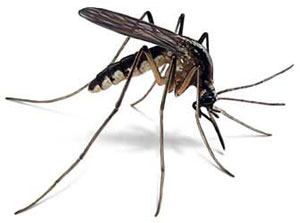
mosquito.jpg

Mosquitos' best friends, we're told, are 'eco-imperialists'

Related

[Editor's note: This article is excerpted from Not A Conspiracy Theory: How Business Propaganda Hijacks Democracy, by Donald Gutstein, Key Porter (2009).]

News is not propaganda, but the success of propaganda depends on reaching target audiences through the news media.

A debate has raged in newspapers around the world for over a decade about the ban on DDT. This pesticide, whose scientific name is dichlorodiphenyltrichloroethane, was widely used with great success during and after the Second World War to control insects that spread typhus and malaria. After the war, manufacturers made it available for use by farmers to protect crops like cotton. Production and profits soared. In just one year, 1959, 80 million pounds of the chemical were applied worldwide.

But even as DDT was coming into common use, scientists were expressing concern about possible environmental hazards. Rachel Carson's 1962 book, Silent Spring, raised the alarm that DDT and other pesticides were poisoning wildlife and endangering human health. She reported that thinning bird shells and declining bird populations were linked to DDT and cautioned that bald eagles eating fish laden with DDT were threatened with extinction.

The chemical was subsequently banned in the United States and Canada in the early '70s and in most developed countries by the '80s. Later research found that DDT is a persistent organic pollutant that migrates from warm to cold climates after its release into the environment, eventually poisoning the traditional foods of Arctic peoples. It is a recognized carcinogen linked to breast and liver cancer and is suspected of disturbing embryonic development and reproduction in humans.

In 2001, 92 countries and the European Community signed the United Nations Stockholm Convention, banning the production and use of 11 persistent organic pollutants, but allowing exemptions for DDT. The ban, which came into force in 2004, continues to be controversial.

The reason for the controversy is the resurgence of malaria. DDT was dramatically effective in reducing malaria in many Third World countries. When the flow of the pesticide to these countries was reduced to a trickle in the '70s, the incidence of malaria soared. The World Health Organization estimates that in 2006, 247 million people had the disease, causing nearly a million deaths, mostly of African children under five years of age.

Should DDT be completely banned, as environmental groups like Greenpeace wish to see as its ultimate fate?

Or should it be brought back into common use, at least in the Third World, as the Congress of Racial Equality (CORE) and Africa Fighting Malaria (AFM) argue? Isn’t it ridiculous, those two groups ask, to worry about declining bird populations when millions of children are dying? And when framed as a choice between birds and children, the answer should be obvious.

But is this the right question for the public to be asking? Might there be more to the debate? And how could someone get the facts on the controversy?

Most people rely on the news media to keep them informed. To make responsible decisions about the ultimate fate of DDT, Canadians need accurate information and balanced viewpoints on the subject, but the story Canadians received about DDT was neither accurate nor balanced.

Bashing the 'Eco-Imperialists'

In the years since the Stockholm Treaty was signed, readers of Canadian newspapers have not had an opportunity for Greenpeace’s position on DDT to be explained to them by Greenpeace itself. The only information they received about this environmental organization’s position on DDT was conveyed by the organization’s foes.

National Post readers learned, for instance, courtesy of then columnist Elizabeth Nickson, that "groups like Greenpeace... serve their own ideological agenda, and want to keep the Third World permanently mired in poverty, disease and death. So far it has succeeded," she commented. Greenpeace, with 100,000 members in Canada, actually supports limited DDT use to combat malaria, but readers of Canadian newspapers may have missed this information. CORE and Africa Fighting Malaria, on the other hand, have no members in Canada, yet were given space in the Canadian press to speak for themselves and to be represented in a positive light by their allies.

Early in 2004, the year the Stockholm Convention was to come into force, a National Post column introduced Paul Driessen, author of the book Eco-Imperialism: Green Power, Black Death, who railed at “wealthy, powerful First World environmental pressure groups" who "reveal an unbelievably callous, paternalistic, eco-centric attitude." Among their crimes, Driessen charged, these eco-imperialists pressured African governments to abandon DDT because it jeopardizes birds. Birds over blacks: is that what environmentalists want?

The Post repeated the eco-imperialism charge later in the year, when Driessen visited Winnipeg on a book tour. "Environmental activists who’ve never known starvation, never had to live without electricity, never had to watch their children die of malaria or dysentery, must no longer be allowed to put their anxieties, priorities and agendas ahead of the desperate pleas, the most basic needs, of destitute people who wish only to improve their lives and save their children’s lives." It was powerful rhetoric, with no reply from environmental activists in The Post.

The charges were repeated by The Globe and Mail’s Margaret Wente in a column titled "Bring back DDT: Eco-imperialism is killing African children." Wente featured Niger Innis, head of the Congress of Racial Equality, whose message was that wealthy Western countries had an "irrational aversion" to the use of DDT and successfully banned its use worldwide. As a result, African nations couldn't use this chemical to wipe out malaria and millions of African children were dying every year. Quoting Innis, she concluded that "First World environmentalists have saddled the Third World with debt and death."

Writing in the Ottawa Citizen, Richard Tren, director of Africa Fighting Malaria, claimed that new European Union regulations that may effectively ban pesticides such as DDT was "a victory for the environmental lobby and a defeat of sound science," putting "the lives of millions in poor countries in danger."

Dead wrong: how the media failed

The problem with the coverage of the DDT issue and with the eco-imperialism charge is that they are based on falsehoods that the media did not investigate. Former CBC-TV National News anchor Knowlton Nash once said that "...our job in the media... is to... provide a searchlight probing for truth through the confusing, complicated, cascading avalanche of fact and fiction." In this case, the media let their audiences down; fiction prevailed over fact.

Despite what the pro-DDT organizations alleged, DDT was not banned for use in mosquito control and could continue to be used in 25 countries in malarial regions. In these countries, limited amounts of DDT can be sprayed on the inside walls of houses to combat malaria-carrying mosquitoes. "The environmental community is collaborating with the World Health Organization to ensure that the phase-out of the remaining uses of DDT does not undermine the battle against malaria and the well-being of people living in malarial zones," the United Nations Environmental Programme reported when the treaty came into force.

Even Canada’s northern indigenous people, who were being poisoned by DDT, supported its continued use. According to Sheila Watt-Cloutier, president of the Inuit Circumpolar Conference Canada, "Canada’s indigenous people would refuse to be a party to an agreement that threatened the health of others," she wrote in a letter to The Globe and Mail during treaty negotiations, "notwithstanding the threat of POPs [persistent organic pollutants] to their own health." Spraying DDT onto the inside walls of houses is just one part of the battle. Other elements include hanging insecticide-treated bed nets to protect sleeping children, tracking outbreaks and treating people infected with the disease. As well, researchers are developing safe, affordable and locally effective alternatives to DDT. This information was largely omitted in media coverage of the issue, which was framed starkly as DDT or death.

The real reason malaria increased

Both CORE and Africa Fighting Malaria claim the incidence of malaria skyrocketed after DDT was banned in the United States and the developed world. This is not true either. Key to the resurgence of malaria was that mosquitoes developed resistance to DDT because of its widespread use in agriculture. Ironically, rather than improving life, using DDT actually resulted in the resurgence of malaria.

As early as the mid-'50s, researchers noted that DDT was losing its effectiveness. The rapid evolution of DDT-resistant mosquitoes was widely reported by such establishment media as The Economist, the Washington Post, and The Globe and Mail. Immunity to DDT was said to be the main cause of malaria’s comeback, yet this information seems to have fallen into a rabbit hole as far as current media coverage of the issue is concerned.

Funding ties to right wing think tanks

How did the media get it so wrong? The answer lies, perhaps, in a document that came to light as a result of the 1998 Master Settlement Agreement between U.S. state attorneys general and the tobacco industry. Among the 40 million pages of industry documents posted on the Internet were two letters from Africa Fighting Malaria’s Roger Bate to Philip Morris executives requesting funding for an anti-malaria campaign and a six-page document outlining AFM’s strategy of falsehood and misrepresentation.

Africa Fighting Malaria was formed during the negotiations that led to the Stockholm Convention. The name is misleading. The organization is based in Washington, D.C., not Africa. And the board of directors comprises not Africans, but Americans. Its staff and directors have links, not to African health and social movement organizations, but to Western libertarian and neoconservative think-tanks like the American Enterprise Institute, the Institute for Economic Analysis, Tech Central Station, the Liberty Institute and the Atlas Economic Research Foundation. The anti-malaria campaign was intended to beat back environmental regulation. Using the plight of poor people was the vehicle to achieve this goal.

Titled "International public health strategy," the document outlined the steps necessary to defeat the environmental lobby. Roger Bate introduced himself by explaining that "my work... has focused on highlighting the dangers for governments of concentrating on minuscule risks to health, primarily because of pressure from loud interest groups." But eliminating these minuscule risks, Bate argued, "reduce[s] wealth and freedom..." The environmental movement "has been successful in most of its campaigns," Bate offered, "as it has been ‘politically correct." Environmentalists are winning because they can claim to speak for the fish, birds, bears and whales, and in the case of Africa, the elephants.

Crafting 'the correct blend of political correctness'

Bate recommended picking "issues on which we can divide our opponents and win. Make our case on our terms, not on the terms of our opponents -- malaria prevention is a good example." Was a malaria-prevention campaign being offered to the funders because malaria was such a scourge it should be eliminated? Or was it, perhaps, being proposed for strategic reasons, such as defeating the "loud interest groups"? Bate recommended a recipe for success: fashion "the correct blend of political correctness" (having "oppressed blacks" as your membership) and arguments (being able to claim that "eco-imperialism was undermining their future and their right to self-determination").

According to Bate, to help disseminate the AFM message, sympathetic journalists should be recruited. "Target messages to show... journalists how to make political capital out of supporting our ideas," Bate recommended. "How do we recruit... journalists... to advocate the position?" he asked. One approach is the "contrast of western indifference to death in LDCs [less-developed countries]... and preoccupation with virtual risks in [the] west." The message Bate proposes to sell is that environmentalists fret about minimal risks at home while they ignore the deaths of millions overseas.

Bate denied that AFM received money from Philip Morris in response to his funding request. He also denied receiving any money from pharmaceutical or chemical companies. Nonetheless, Aaron Swartz of the national watch group Fairness and Accuracy in Reporting (FAIR) notes, "AFM has very much followed the plan Bate laid out in his original funding pitch to corporations." And CORE followed a similar route.

Globe's Wente climbs on board

In her Globe column on eco-imperialism, Margaret Wente assured readers that Roger Innis was "neither a shill for industry nor a raging neo-con," but the spokesman for the Congress of Racial Equality, which, she explained, was "a leading African-American advocacy group." In fact, Innis was a shill for industry and a raging neocon.

And the Congress of Racial Equality had not been a leading African-American advocacy group since the 1960s. At that time CORE had been at the forefront of the struggle for equal rights, as a pioneer in the use of non-violent direct action to challenge segregation. CORE collapsed in the '70s and the remnant was taken over by Roy Innis (Niger Innis's father), who moved the organization to the Republican right.

In recent years CORE used its African-American facade to work with conservative groups to attack organizations like Greenpeace and undermine environmental regulation. It’s fair to say that CORE was for sale to anyone with a need for visible black cheerleaders in its campaign. CORE also engaged in campaigns supporting genetically engineered foods. Innis could be seen leading a pro–free market, anti-Kyoto Accord counter-demonstration outside the ExxonMobil annual shareholders' meeting in Dallas, Texas, after CORE received $40,000 from the oil giant.

In 2003, Innis formed a partnership with one of the most aggressive anti-environmental organizations to launch a campaign to popularize the term "eco-imperialism." The Center for the Defense of Free Enterprise (CDFE) had earlier claimed credit for coining the term "eco-terrorism" and creating the so-called wise-use movement. Its funding comes from conservative foundations, forest-products companies, ExxonMobil and DuPont, a leading producer of DDT.

Leaning heavily on the use of symbolic days for their propaganda value, the two groups formed the Economic Human Rights Project on Martin Luther King Day, 2004, and kicked off their campaign on Earth Day with the publication of Eco-Imperialism: Green Power, Black Death by Paul Driessen, who is a fellow at the CDFE. Driessen is also a senior fellow at the Committee for a Constructive Tomorrow, a libertarian think-tank whose researchers and advisers are prominent industry-backed global warming deniers. (Roger Bate is on this organization’s board of advisers.) The committee received $540,000 from ExxonMobil between 1998 and 2003.

The strategy for the eco-imperialism campaign is to exploit the plight of poverty-stricken peoples in order to undermine environmental regulation and further the interests of its sponsors in the energy, chemical and forestry industries. These anti-environmental, pro-free market organizations have successfully used the media to persuade the public and decision makers that DDT should not be completely banned so it can be used to conquer malaria.

They set up one special-purpose organization -- Africa Fighting Malaria -- and utilized an existing one -- Congress of Racial Equality -- to put a poor, black face on their efforts.

But behind the facade was a network of free market, libertarian think-tanks and their corporate sponsors pulling the strings.

The strategy was effective. "Groups are latching onto the emotional impact of the malaria story, which is truly a human tragedy, to discredit environmentalists," admits John Balbus, chief health scientist with the American-based organization Environmental Defense.

Malaria was just the opening salvo. Already on the agenda are oil drilling in sensitive areas (the poor need as much cheap oil as possible), genetically modified foods (they will feed the hungry) and damming rivers for electricity production (the poor should not have to live without electricity).

But parading the plight of the poor in front of the world media was not accompanied by any plans to improve the poor’s social and economic conditions.  [Tyee]

40  Comments:

Login or register to post comments

  • Jeffrey J.

    3 years ago

    Best Book of the Year

    Not A Conspiracy Theory. Greatest book of the Year. I have five copies and am giving to friends. It doesn't get any clearer than the above article: sane, rational logic and evidence, against the hysteria of the Fraser Institute, Gordon Campbell and Stephen Harper. Many thanks to Prof. Gutstein for his courage and tireless effort to educate BC citizens.

    What will we choose: the green pill, or the red pill?

  • Gruvesome

    3 years ago

    Banning of DDT

    If DDT is available for domestic use, why can't we get some to kill our bedbugs?

  • Fiat lux

    3 years ago

    I've had a lot of experience

    I've had a lot of experience with DDT and other agricultural poisons. First, when I was working for the US Army in Austria and we and our querters were regularly dusted with DDT, and later when I was living and working on a commercial farm belonging to Chivers jams in England, about 5 miles from Cambridge.

    The mutation of bugs into immunity to sprays is the biggest problem our "scientists" and the profiteering crooks ignore, because the facts wouldn't be "scientific" or rather profitable.

    When we first started spraying fruit trees in 1948, we sprayed 2-3 times in the winters. By the time I quit in 1955, we did hardly anything else, but spray the most dangerous poisons, without any protection, with our faces, hands, and exposed skin permanently yellow from the exposure. All because of the mutation. As my dear old friend George Kester once said "I'm telling you Eddie mate, all we're doing here is breeding fucking super bugs !" And he was right, until the sprays killed him, but not the bugs

    We sprayed tar oils, nicotine, DDT, arsenic and lead etc other poisons. We sprayed constantly, as some farmers are still do, to cope with the mutation and immunity of the bugs.

    The guys I've worked with have long since died from cancers.I survived, but the accumulated poisons hit me 50 years later with a case of heavy metal poisoning that paralyzed me, with the doctors having not the slightest idea what to do , except giving me painkillers. Luckily, I found a homeopathic practitioner, who pulled me out, but my life was hell for months.

    There may be room for DDT as a form of prevention in small quantities and under tightly guarded conditions, forgetting the mutation problems (?), but advocating its, or the use of other poisons is one of the biggest crimes.

    Anybody who advocates these crimes must either be an idiot, or paid off crook, who should be hit on the head with a shovel.

    Now that we've been on organics for over 30 years, when we have to buy vegetables and fruits, we can taste the poisons, regardless of washing them because they're embedded inside.

    Does anybody ever ask where the present cancer rates coming from, especially in children when 50 years ago we only heard of cancers once in a blue moon and never in children. And let's not fall for the lie that it is because of "modern detection" potentials, because when I was young children just didn't have any and no child died, for all practical purposes.

    I had my bout with colon cancer last year, 3 weeks on life support, 5 operations, 44 days in the hospital altogether, but we never donate for cancer research, because it ignores the main cause, which is in our food, air, water and bodies stuffed full of poisons in everything we touch, breathe, or eat.

    To hell with DDT and ell its advocates. My friend Happy Kester knew it almost 60 years ago, but the practice is still going on, killing millions and making millions for the crooks who push these crimes.

    Ed Deak.

  • Intention Pure

    3 years ago

    False Duality and Problem, Reaction, Solution

    Excellent Article and I need to read this book! This quote from the article "As well, researchers are developing safe, affordable and locally effective alternatives to DDT. This information was largely omitted in media coverage of the issue, which was framed starkly as DDT or death."

    This stark framing is a well developed propaganda format called presenting false dualities (false representation of an issue as either one OR the other, nothing inbetween) that result in the general population missing the real alternative, which in this case would be an ecologically benign alternative to Persistant Organic Pollutants (POPs).

    Another quick way to find the bullshit is to look for the 20% massive lie amid the 80% minor truths in MSM. For example, the main crux of this propaganda story relies on us missing the 20% critical lie, which is that DDT was effective at reducing deaths from malaria. Next, flip the lie and you now have a possible truth extracted from the BS, which is that DDT implementation actually caused a major increase in malaria deaths (and continues to cause an epidemic of cancer in humans and destroy ecology and nature).

    There is absolutely NO WAY that DDT truely benefits ANYTHING alive on this planet. ARRRRRGGGGHHHH!

  • Marje Hecnt

    3 years ago

    DDT and Population Control

    This article misses some major facts.

    DDT was banned for political reasons, not on the basis of science. Its ban was directed at population control.

    Alexander King, a co-founder of the Malthusian Club of Rome, was forthright enough to say this. He commented that he had supported DDT use during World War II, but later regretted this, because its use had allowed population to flourish, instead of being killed off by malaria.

    The World Health Organization reversed its 30-year ban on DDT in September 2006, because it was clear that the so-called alternatives were failing to save lives, and that DDT was NOT harmful to human beings. Spraying minute amounts of DDT on the inside walls of houses once or twice a year continues to be a necessary tool in stopping the spread of malaria.

    DDT is more effective than other insecticides because it acts as a repellent; most mosquitoes, even those resistant to DDT, will not enter a house that has been sprayed inside.

    It should be noted that along with the ban on DDT in those 30 years came the taking down of the public health system in Africa and elsewhere through the budget-cutting anti-human policies of both the so-called right wing and left wing, and the defunding of the kinds of infrastructure projects that could bring up living standards on the continent. Millions of people have died as a result. This was the intention of the policy makers, who, like Bertrand Russell, see famine, disease, and war as natural ways of “culling” what they define as overpopulation. The official U.S. policy in the 1970s was to depopulate Africa and other Third World nations. National Security Study Memorandum 200 (NSM 200) makes this point explicit.

    It should also be noted that after the U.S. ban on DDT in 1972, the U.S. State Department policy was not to fund any aid program where any substance (like DDT) banned in the United States was used. U.S. AID carried this policy out with a vengeance.

    There is no magic bullet against malaria. But as one child in Africa dies of malaria every 30 seconds, DDT remains a necessary tool.

    For more on DDT, see www.21stcenturysciencetech.com

    Marjorie Mazel Hecht
    Managing Editor, 21st Century Science & Technology

  • Fiat lux

    3 years ago

    Marjory, have you ever used

    Marjory, have you ever used DDT, or any other of the farm poisons yourself ? Have you ever done any spraying, especially for months on end, or just advocating their use for others?

    If they are so useful, where have the cancer, diabetic, autistc etc epidemics originate ?

    Do you, or anybody else know ? E.g. When the first figures for autism were collected some 40 or 50 years ago, they showed 1 in 45,000. Now it is something like 1 in 250. Where did these figures originate ?

    When we first heard the words "breast cancer" we were in our 40s living in Vancouve in the '60s. What is now the percentage ? 30 or 40 % ?

    How about all the child cancer cases that didn't exist until recently ? Where did they come from all of a sudden ?

    Ed Deak.

  • RickOshea

    3 years ago

    Harry Kroto

    A few years ago, I was at a presentation given by Nobel chemist Harry Kroto of Bucky Ball fame...

    To my complete astonishment, he spent time slagging Racheal Carson (Silent Spring) and perpetuating the DDT/Malaria myth...

    I was thinking to myself - do you actually believe this propaganda or are you a despicable Chemical Industry shill?

    I could not believe what I was hearing. If I can track down his email address, I am going to forward this excellent article to him.

  • samuidave (not verified)

    3 years ago

    Thank you for the great read

    I thoroughly enjoyed this article!

  • Gruvesome

    3 years ago

    Banning DDT

    Will someone please answer my question: If DDT is available for domestic use, why can't we get some to kill our bedbugs?

  • SicPreFix

    3 years ago

    Fiat Lux ...

    said:

    Quote:
    ... where have the cancer, diabetic, autistc etc epidemics originate?

    The figures originated in the research.

    Seriously though, Ed, as for diabetes and autism, they sure as hell weren't caused by DDT. As to cancer, there are myriad causes, only one of which might be DDT.

    There is no evidence nor proof anywhere, except in the frightened, uninformed, and vivid imaginations of groups of rather credulous folks, that DDT (or vaccines) is a causal factor in such illnesses as autism or diabetes.

    Fiat Lux also said:

    Quote:
    When the first figures for autism were collected some 40 or 50 years ago, they showed 1 in 45,000. Now it is something like 1 in 250. Where did these figures originate?

    That is due to more rigorous and comprehensive screening, and decades worth of improvements in diagnostic tools, methods, and procedures.

    The same is true for your other implied though false associations.

  • RickW

    3 years ago

    Ed

    Quote:
    we never donate for cancer research, because it ignores the main cause, which is in our food, air, water and bodies stuffed full of poisons in everything we touch, breathe, or eat

    And, because they can never develope a pill for that, they blithely ignore this root cause. More than simply ignore -- they actively discourage Joe & Janet Lunchbucket from even considering that.

    BTW, SicPreFix is wrong (or to be more charitable, taken in by the propaganda). Heck, even the Nazis knew about tobacco and cancer 80 years ago.
    http://en.wikipedia.org/wiki/Anti-tobacco_movement_in_Nazi_Germany

  • SicPreFix

    3 years ago

    RickW

    siad:

    Quote:
    BTW, SicPreFix is wrong (or to be more charitable, taken in by the propaganda). Heck, even the Nazis knew about tobacco and cancer 80 years ago.

    That's a non-sequitor Rick. I never said in anything in any way whatsoever implying or concluding that lung cancer and smoking are/were not related.

    If you would be so kind as to re-read what I wrote, you will note that the main thrust of my comment was on Ed's making a causal correlation between DDT and autism and diabetes, which is unsubstantiated and unprovable, and so far as I know (and, yes, I know my knowledge is by no means limitless) completely lacking in any credible evidence.

    Furthermore, my only specific comment on cancer was that in so far as DDT goes, it is only one of many, many possible causes of cancer.

    How you derived that I am denying a link between smoking and cancer is completely beyond me. Could you clarify that?

  • RickW

    3 years ago

    Once upon a time.....

    .....it was insisted there was no causal link between toabacco and cancer (providing the German research was discarded - which it was because zay lozt zee vor). And then there was overwhelming evidence.

    Now you say there is no causal link between DDT and any variety of other afflictions. Yet the anecdotal evidence fairly jumps off the proverbial page:
    http://www.medicalnewstoday.com/articles/148926.php
    Nevertheless, some of those studies have suggested links between DDT and cancer risk, diabetes, developmental problems in fetuses and in children, and decreased fertility
    I don't know about you, but I don't want to be exposed to the stuff, only to find out I shouldn;t have been.

    Besides, if you read Ed correctly, he is saying there is a cumulative effect of the virtual cocktail of poisons we ingest, and very little research done on the thousands of combinations they are capable of forming and reforming.

    Did you know that once upon a time, the existence of smog was poo-pooed?

  • SicPreFix

    3 years ago

    RickW -- Once upon a time -- ...

    said:

    Quote:
    Now you say there is no causal link between DDT and any variety of other afflictions.

    No. I said there was no proof or credible evidence of a causal correlation.

    Rick also said:

    Quote:
    Yet the anecdotal evidence ...."

    Yes, okay. But anecdotal "evidence" is not, in fact, evidence. And "suggested" is neither proof nor evidence; it is nothing more than supposition.

    In time, we may find such a causal correlation, but there is none now. I stand by my statement. We cannot predict the future. At this time, Ed's implied causal correlation is not supported by evidence.

    Rick also said:

    Quote:
    I don't know about you, but I don't want to be exposed to the stuff, only to find out I shouldn't have been.

    I don't want to be exposed to it either. Please, don't get me wrong here. I'm not supporting DDT use. I'm not familiar enough with the research and scientific literature overall to make a stand for or aginst its use.

    My concern here is in in pointing out anecdotal, unsupportable, false claims about causal correlation. Such claims tend to be sensationalistic and can be a risk to legitimate knowledge, debate, and discussion.

    Rick also said:

    Quote:
    Besides, if you read Ed correctly, he is saying there is a cumulative effect of the virtual cocktail of poisons we ingest, and very little research done on the thousands of combinations they are capable of forming and reforming.

    Well, Rick, I have re-read the post to which I was commenting on, Ed's "Marjory, have you ever used" post. I still cannot see where in that post he is referring to what you describe as the "cumulative effect of the virtual cocktail of poisons we ingest".

    Rather, he makes some claims in that post for which there is no credible evidence, and that is specifically what I am commenting on.

    If we're talking about cumulative effects, then there is still, so far as I know, no credible evidence to prove a causal correlation between DDT and autism and diabetes.

    About cancer, you guys may very well be right that there may be a causal correlation, but as I have already stated, I was not primarily commenting on that.

    Rick also said:

    Quote:
    Did you know that once upon a time, the existence of smog was poo-pooed?

    Presuming you are referring to smog as a cancer causing agent being poo-pooed, then yes, but that's also a non-sequitor. Just because something now known to be true was once poo-pooed does not thereby prove that anything or everything else that is now or once was poo-pooed is also therefore a false poo-poo, so to speak.

    I am still befuddled by how you derived that I am denying a link between smoking and cancer. Can you clarify that? Or can we agree that I was not doing any such thing?

  • doggone

    3 years ago

    One interesting subject

    This argument could be about many issues "covering our world" today: AGW, Japan's "Whale Research", banker's bonus or what the D.C. yanks are feuding about just now? ----
    Oh yes: "Cap and Trade" or some such nonsense.

    Apparently numerous otherwise normal human people will go to great effort to support some "party line" whether the line is political, ecological (or not), religious (or not), Pro-war/anti-war . I give up!
    I take each such with a grain of bath salt.

    The problem seems to be that a significant majority of the unwashed (and well coiffed) absorb whatever information they get from modern media. Information now has no need to be correct or fair.
    It (information - and even B.S. is a form) simply needs to be repeated over and over on all available channels.
    So I'm a few decades behind the hired "think"tanks
    but I finally got it

  • Tchoutoye

    3 years ago

    DDT and Population Control

    re: the post by Marjorie Mazel Hecht

    21st Century Science & Technology is an organization run by Lyndon LaRouche, a notorious peddler of disinformation and crackpot paranoia.

    http://en.wikipedia.org/wiki/Lyndon_LaRouche

  • Fiat lux

    3 years ago

    Sic....I haven't made any

    Sic....I haven't made any specific connection with DDT , but with the myriads of artificial colouring, preservatives etc. etc, in our food system, of which DDT was ,or still may be only one.

    Do you ever look at the "Ingredients" in food packages and cans? Enough to scare the hell out of anybody and we don't even know what they don't list. Especially in the crap imported from Asia, because it is "cheap".

    I happen to have many friends in the sciences, including in chemistry and, as I understand, there are about 200,000 chemicals in use today, of which less than 15,000 have been thoroughly examined for effects and damage to human health, and none of the newest racket, the GM foods, protected by "intellectual property rights".

    There have been some blood samples taken from various people, including the artist Robert Bateman, widely publicized, who think they live "healthy lives", yet collected dozens of deadly chemicals, from everything they eat, drink, breathe, or touch .

    And this, overall poisoning of the human race is part of the "sciences" and "wealth creation", collectivizing the world's food and all other supplies in the interest of "economic efficiency".

    I have been involved in the agriculture racket long enough to know what is going on behind the scenes and how it is destroying and killing people.

    Cancers have been known and easily detected for hundreds of years. In my childhood in the 30s I have heard of 2 people who died of cancers. A few more during my years in England, but never any children.

    I was at Cambridge in the early 50s when Red Skelton brought his little boy of about 10 to Europe to show him the world before he died of a "very rare cancer of the blood, called leukemia", as it was reported in the papers.

    Some students in the medical school may have heard the name, but nobody else. Look at the figures now.

    Also the breast and other cancers. I had a lump removed from my chest a few months ago, the doctors feared it might be breast cancer, after I had one in my colon. It wasn't, but it is in tens of millions of both sexes now.

    Where did all this come from, if not from external sources that didn't exist before ? And why? Who benefits of this crime wave against humanity ?

    Ed Deak.

  • RickW

    3 years ago

    Sic

    Quote:
    I am still befuddled by how you derived that I am denying a link between smoking and cancer

    While you do not deny a link between smoking and cancer, it was, in spite of the "anecdotal" evidence to the contrary (ie. Nazi Germany among others) denied until only a couple of decades ago (for it seems, the sole purpose of selling smokes). Your stance on the denial of "anecdotal" evidence to the contrary concerning DDT and autism, diabetes, et al, falls into the category of tobacco and cancer.

    Yet, while you can't see a connection, you never-the-less don't want to be doused by DDT as a matter of course. To me, that indicates you don't mind it being used ON OTHERS, just not on yourself.

  • Fiat lux

    3 years ago

    Looks like my last posting

    Looks like my last posting disappeared, although it came on the screen .

    Was it censored for any reason?

    Ed Deak.

  • Fiat lux

    3 years ago

    Funny, now it came

    Funny, now it came back???????????

    Ed Deak.

  • RickW

    3 years ago

    The machines are alive, Ed!

    And they are malicious....

    :~)

  • SicPreFix

    3 years ago

    Fiat Lux ...

    Ed, I understand your point better now that you've clarified. However, in regard to the post you made that I've been commenting on, you did imply causal correlations.

    Nonetheless, I still think you overlook improved efficacy of detection versus that in the past. You say:

    Quote:
    Cancers have been known and easily detected for hundreds of years.

    That is too vague and overarching. Some cancers have been known for several decades; many more have not. Successful detection of many is a relatively new phenomenon.

    Ed, I don't deny that some cancers may be on the increase. But I think you're overlooking the provable fact that that increase is somewhat artificial due to improvements in technology, detection, access to doctors, and reporting.

    You go on to say

    Quote:
    In my childhood....

    As a child you would not have paid as much attention to such things as you do now. Also, human memory, especially over large time spans, is far, far too fallible to use as evidence of anything other than wishful thinking.

  • SicPreFix

    3 years ago

    RickW ...

    Rick, I'm having a tough time clearly understanding your point, but I'll try to clarify.

    You say:

    Quote:
    While you do not deny a link between smoking and cancer....

    The so-called anecdotal evidence was denied by some people, though not in total the science community.

    Much of the denial of the cancer link claims was cultivated by the tobacco industry, relying on its knowledge of the inertia of public opinion and the fact that tobacco addicts, heavily reluctant to admit addiction as well as negative health repercussions, provided their own reinforcing anecdotal evidence as to the benignity of smokes.

    Nonetheless, the science proved a link, but the anecdotal evidence of the tobacco companies' ad campaigns held sway for many years. Hence, one of the dangers of anecdotal evidence: wealth buys truth through advertising and the public vulnerability to anecdotal evidence.

    You also say:

    Quote:
    Your stance on the denial of "anecdotal" evidence to the contrary....

    Not at all. My point is that anecdotal evidence is not valid because it has no science behind it and almost completely relies on hearsay, personal prejudice, emotional bias, and other groundless and irrational opinions.

    If science backs a claim, then you have tangible proof of a claim, whatever it may be. If science does not back a claim, and/or actually refutes a claim, then to believe the anecdotal evidence over the science is almost surely a recipe for disaster.

    And under any circumstances, to give weight to anecdotal evidence is to, in effect, allow Sylvia Browne to plot your life for you. Anecdotal evidence is nothing more than an individual, who may or may not actually know anything at all, making emotinally biased claims without foundation. If time proves them right, that is as much luck and chance as it is anything else.

    You also say:

    Quote:
    Yet, while you can't see a connection, you never-the-less don't want to be doused by DDT as a matter of course.

    I don't want anyone to be doused with DDT if the science proves it to be as detrimental as some parties claim. However, if it increases survivability due to a decrease in malaria, then the problem becomes much more difficult to clarify.

    Lastly, you say:

    Quote:
    To me, that indicates you don't mind it being used ON OTHERS, just not on yourself.

    I never said any such thing. You make assumptions to reinforce your personal prejudice against my comments. Did you overlook this statement I made:

    Quote:
    ... don't get me wrong here. I'm not supporting DDT use. I'm not familiar enough with the research and scientific literature overall to make a stand for or against its use.

  • Fiat lux

    3 years ago

    Sci.....I can remember as

    Sci.....I can remember as far back as my year 4 and snatches even before. So can my wife.

    If there had been any cancer deaths people would have been dropping dead all over from "unknown causes", as they would now without modern treatments. I was lucky that my colon cancer was encased and didn't spread

    They weren't. In the 11 years I have spent in schools in Europe, I can remember 2 deaths, neither of them from cancers, apart from kids getting killed by the Allies' terror bombings.

    As I mentioned, leukemia may have been known by the medical profession, but not by the general public, because, for all practical purposes it didn't exist. Look at it now.....

    I mentioned before, that the first time we've heard the words "breast cancer", we were in our 40s in the '70s in Vancouver and nobody else has heard them either. Now some 30 or 40% of women come down with it. It just didn't exist.

    As far we're concerned, the vast majority of cancers and diabetes, which was also virtually unknown 50 years ago, are manmade, caused by chemical pollution.

    I remember reading an article in my Cambridge days that Scotland had more cancers, because they ate more smoked fish. In other words, smoke pollution, and now chemical pollution.

    Do you know what you eat in supermarket meats? Especially in pork and chicken ? Antibiotics, growth hormones, steroids, etc chemicals. Beef are bad enough, but we wouldn't touch pork or chicken with a flagpole Then look at people in the streets with asses like the rear ends of aircraft carriers.

    That's why we have 3 large freezers packed with home grown organic chicken, beef and other foods.

    Ed Deak.

  • RickW

    3 years ago

    SPF

    Quote:
    Much of the denial of the cancer link claims was cultivated by the tobacco industry

    And backed by scientists in their pay.......who happened to take the stance that, if it cannot be proven to kill anyone, it must be safe. That is in essence what you are saying. So then, why not receive regular dousings of DDT? After all, there is only anecdotal evidence that it is bad.

    Sorry to burst your balloon, SPF, but this is one of those instances where it's either deadly or it isn't. No waffling.

  • doggone

    3 years ago

  • SicPreFix

    3 years ago

    RickW ...

    You have quite thoroughly misunderstood what I've been trying to say here. I don't know if that's my fault, your fault, or some mix of both. But I'm at a bit of a loss how to clarify the issue.

  • SicPreFix

    3 years ago

    Fiat Lux ...

    Ed, no disrespect intended, but clearly you are unaware of how memory functions; how human memory actually works.

    Neither you, nor I, nor anyone else can claim to even reasonable accuracy over long periods of time, let alone absolute pefection, for their memories of the far past, or even reasonably recent times.

    Memory is not a photograph in the cellular structure of the brain. We remember by replaying events in our imagination to reinforce what we want to recall. As we replay those memories we cannot help but distort them. And this is even more true for long term memory.

    Have you ever played telephone, you know, where a group of kids get together and one whispers something to their nieghbour, and so on down the line, until the telephone message comes back to the originator quite changed. That is a perfect working example of how memory functions over time.

    Why not do some reading on Elizabeth Loftus's research into memory. She is a brilliant world authority on memory, and this Wiki link can provide you with a good starting point:

    Link: http://en.wikipedia.org/wiki/Elizabeth_Loftus

  • salty dog

    3 years ago

    http://bctrialofbasi-virk.blogspot.com/

    Aw shucks....More on this story!

  • salty dog

    3 years ago

  • Fiat lux

    3 years ago

    Sci......I have studied

    Sci......I have studied enough psychology to know how memory works Your example of the changing of messages is very true and we have practiced it in the cadets and the army. I'm extremely careful and had extensive training not to fall into that trap.

    The statistics for sicknesses are there and anybody who claims that we're not in cancer and other epidemics, compared to what we had 50 years ago is either mistaken, or lying.

    There were no cancers in children and no breastcancers to speak of.

    To the best of my recollection, and here I could be out some points, cancers were 2 in 1,000, now it is 3-400. I must have some stats on this somewhere , but have no idea where to find it right now among my 1,500 books and shelves and files full of papers. Yes, I'm a packrat in this regard, which can be a pain sometimes.

    Here's one, not on cancers, but semen, with parallel figures.
    http://www.bmj.com/cgi/content/abstract/305/6854/609

    Here's another one on the history of cancers. Worth looking at main the causes, basically the same over the ages, with the growth caused by more pollution.

    In any case in my youth nobody worried about cancers, because they were so rare.

    http://en.wikipedia.org/wiki/Cancer#History

    Ed Deak.

  • SicPreFix

    3 years ago

    Fiat Lux ...

    It's Sic actually, not Sci. But never mind....

    First, I have neither denied nor disagreed with you that cancer of many types may very well be on the increase due to a range of environmental factors. However, because you are the one making the rather extreme (in my opionion) claims, I think you should provide some evidence to back up your figures.

    As to your comment on breast cancer, Ed, this is from the Wiki linked article (truncated to fit the 3000 character limit):

    Quote:
    Hippocrates described several kinds of cancers.... Since it was against Greek tradition to open the body, Hippocrates only described and made drawings of outwardly visible tumors on the skin, nose, and breasts.

    That's Hippocrates talking about, among other things, breast cancer over 2000 years ago.

    Also from your Wiki link:

    Quote:
    The oldest known description and surgical treatment of cancer was discovered in Egypt and dates back to approximately 1600 B.C. The Papyrus describes 8 cases of ulcers of the breast."

    Ed, that's breast cancer from over 3600 years ago.

    Ed said:

    Quote:
    In any case in my youth nobody worried about cancers, because they were so rare.

    I'm sorry Ed, but that really is either wishful thinking, or it is restructured memory. Many cancers have been common causes of death over the last several centuries, since the onset of the industrial revolution -- which does indeed reinforce your claim to environmental poisons. For example, just one of many cancers gaining prevalence in the late 1800s and early 1900s:

    Quote:
    Lung cancer was uncommon before the advent of cigarette smoking; it was not even recognized as a distinct disease until 1761. Different aspects of lung cancer were described further in 1810. Malignant lung tumors made up only 1% of all cancers seen at autopsy in 1878, but had risen to 10–15% by the early 1900s.

    (http://en.wikipedia.org/wiki/Lung_cancer)

  • Intention Pure

    3 years ago

    DDT benefits NOTHING alive on this planet

    "I'm not familiar enough with the research and scientific literature overall to make a stand for or aginst its use."

    Sic Pre Fix then why the hell are you trying to tow the petrochemical business party line? Your pattern of posts denotes a possible agenda involving discrediting those posters who ARE FAMILIAR WITH THE RESEARCH and SCIENTIFIC LITERATURE and who ARE taking a stand AGAINST its use.

    Anecdotal is a type of EVIDENCE and is not associated with highly emotional biased judgements. For your information Sic Pre Fix our entire Vaccine Adverse Events Reporting system is anecdotally based. Perhaps you want to suggest to ALL THE NURSES AND DOCTORS WHO USE THIS SYSTEM THAT THEIR REPORTS ARE HIGHLY EMOTIONAL AND BIASED! Do something worth while and fill out the consultation on cosmetic pesticide use and save the lives of our coming generation of children and maybe a few frogs too!

    http://www.env.gov.bc.ca/epd/ipmp/regs/cosmetic-pesticides/consultation.htm

  • Fiat lux

    3 years ago

    Sorry Sic...Reminds me of my

    Sorry Sic...Reminds me of my long forgotten Latin years: "Sic itur ad astra", something I don't intend to do for some time yet.

    We're talking around in circles. I never denied the past existence of cancers, that's why I've forwarded the "history", only interested in the disgusting growth of numbers. If my fellow students at Cambridge have never heard of leukemia in the early 50s, with the exception of the medicals, it is obvious that it wasn't a daily occurrence, as it is today.

    Now, to change the subject slightly, here's a story about one of the two cancer deaths I knew of as a kid.

    I was born in the Hungarian city of Szeged in 1927. I remember very clearly going to visit an old lady, by the name of Mrs. Cseber (don't try to pronounce it) with my grandfather. She was in bed, waiting to die from cancer. We moved from there when I was 4, so I must have been about 3 at that time.

    She gave my family a large print of a painting by the painter Bihari, tiled "Her song" in a heavy gilded frame. I don't remember when it happened, but the glass of that picture was cracked diagonally through all my childhood, till I joined the army at 17 in 1944.

    According to my family that crack happened as the picture was hanging on the wall, at the time when Mrs.Cseber died and so they refused to have it repaired in her memory.

    Any rational explanation ?

    Ed Deak, Big Lake.

  • SicPreFix

    3 years ago

    Fiat Lux ...

    Yes, Ed, I think you are right. We are kind of talking in circles aren't we.

    I suspect we are much more in agreement, overall, than it appears on the surface, but our mutually different form and style of chatter makes it appear otherwise.

    After all, like you, I am extremely anti-corporate, anti-big business, and so forth. I just have a strong tendency to argue for excessive rational thought and some healthy devil's advocacy.

    "Mrs Cseber'> Aha, phonetically that must Mrs. Sabre Rattling-Smith. Right? ;)

    Rational explanation about why they refused to have it repaired? Or about the crack in the first place? Taking Occam's Razor into account I cannot think of a better explanation than simple, plain, old everyday coincidence.

    :)

  • SicPreFix

    3 years ago

    Miss aware-beware ...

    said:

    Quote:
    Sic Pre Fix then why the hell are you trying to tow the petrochemical business party line?

    I'm not at all. That is nothing more than your angry misunderstanding and incorrect assumption.

    Also, to some degree, things have gotten rather out of control here. My issue in this thread has been between me, and what I felt were some rather fuzzy claims of causal correlations between DDT and autism and diabetes that Fiat Lux (Ed) posted.

    That's it.

    All other issues were sidetracks that fell apart and lost their own logic.

    The rest of your post is such empty headed gibberish layered with misconceptions, misunderstandings, errors, and other nonsense that it does not really warrant a respectful response.

  • activator

    3 years ago

    Cancer rates are increasing

    Sic, stop arguing tiny sub points and semantics! Your need to be "right" blinds you from seeing the facts.
    Between 1977 and 2006, incidence rates for cancer in Great Britain increased by 25%, with a 14% increase in men
    and a 32% increase in women. However, in the last decade incidence rates have remained fairly constant.

    There are more than 200 different types of cancer, but four of them - breast, lung, large bowel (colorectal) and
    prostate - account for over half (54%) of all new cases. Breast cancer is the most common cancer in the UK even though it is rare in men. The 20 most commonly diagnosed cancers in the UK are shown in the figures below.
    http://info.cancerresearchuk.org/prod_consump/groups/cr_common/@nre/@sta/documents/generalcontent/018070.pdf

  • activator

    3 years ago

    Global cancer rates could increase by 50% to 15 million by 2020

    Please see the "big picture" and do some research to confirm the facts.
    http://www.who.int/mediacentre/news/releases/2003/pr27/en/

  • SicPreFix

    3 years ago

    activator

    My focus was Ed's statements regarding causal correlations between DDT and autism and diabetes.

    Not cancer. Okay? Repeat after me: Not cancer.

    And I have never said in here that cancer rates are not increasing. The only hard statement I made about that was the one of the factors that leads to figures showing an increase in cancers has to do with better detection techniques. I also said that I felt Ed was probably right that myriad environmental poisons were also a factor leading to increased rates of and types of cancers.

    So, please read what I said before you jump up on your angry horse.

  • Intention Pure

    3 years ago

    Angry Horse

    My angry horse ran away when someone showed up with a piss can of DDT and sprayed the inside of my stable walls! Or was that malathion sprayed from unmarked planes under the guise of West Nile Virus control. We don't have time to argue/debate the fine points. We need to present a united front of anecdotal and scientific knowledge and resistance to the falsehoods perpetrated by sponsoring industry and brainwashed individuals.

    • The discussion for this story is closed. No more comments can be added.