Mediacheck

The Value of Online Anonymity

The courts unmasked a nasty blogger and people cheered. But is secrecy the problem, or incivility?

By Allison Martell, 16 Sep 2009, TheTyee.ca

Online Anonymity

License for freedom, or hatred?

Related

Want to see a 747 landing into a wicked crosswind? Interested in behavioural biology? Can't figure out how to do your eye makeup? For all these things, you need not leave your desk, because YouTube is human society in miniature. Just about every facet of modern culture is there, if you look hard enough. So we should not be surprised to hear that the anthropologists have arrived.

Kansas State University's Digital Ethnography project is the brainchild of Michael Wesch, who won a U.S. Professor of the Year Award in 2008. Each year, with a team of students, he sets out to study digital culture, including YouTube. Wesch and his students use participant observation, which means that, like researchers in Papua New Guinea living with hunter-gatherers, they post their own videos and integrate into the YouTube community.

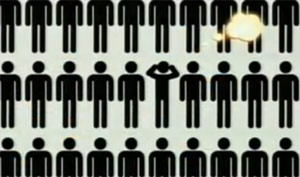
If you are into anthropology, or interested in some of the early memes and drama on YouTube, you might want to watch one of Wesch's full-length lectures. But I am more taken with one of his students' videos, about anonymity online.

Last month, the New York State Supreme Court ordered Google to reveal the identity of an anonymous blogger who had been making nasty posts Canadian model Liskula Cohen. The Calgary Herald called the case a "victory for civility" online, and Susan Krashinsky at The Globe heralded "the virtual end of online anonymity". Wesch himself has an equation for the way that anonymity promotes incivility online: "anonymity + physical distance + rare and ephemeral dialogue = hatred as public performance."

But Wesch has an alternate right-hand side of that equation: "freedom to experience humanity without fear or anxiety." This is what his student is getting at in her project. Online, we are all expected to be our own publicists, she points out, building our brand for potential employers or potential mates. By participating anonymously, we can express ourselves freely -- sharing opinions, feelings, memories, and secrets. In this way, anonymity can allow for more authentic interactions. Maybe these anthropologists are on to something. We should be thinking about how to encourage civility in anonymous settings, rather than stamping them out of existence.

15  Comments:

Login or register to post comments

  • Rexxfield Inter...

    2 years ago

    Internet libel, the 21st Century pandemic

    Anthropology is not the only science with interest in the digital generation. I am a professional advocate for victims of Internet libel, it appears that maybe more than one thesis being written on the human cost and psychological effects of those victimized by antisocial and poison penned antagonists.

    The case of Cohen vs. Google was thought by many in the media to be a new precedent with respect to unmasking anonymous bloggers. However, the order was issued from a low-level New York State court (although the name “Supreme Court” in other states would mean a high level court”). This court has no binding precedent over high-level New York courts, or courts in other jurisdictions. Notwithstanding, this case did set a few precedents in so much as it gained an impressive media following. Whereas our team was able to obtain two orders against Google recently, for two different cases, both ordering Google to provide the same type of information that was requested by Ms. Liskula Cohen. The difference being, our team was able to obtain ex parte orders for production against Google (in other words out arguments were compelling enough for the judge to issue the order without the need for Google or the unknown antagonist being advised of the hearing on the request).

    Respectfully submitted by Michael Roberts of www.Rexxfield.com

  • wayfarer

    2 years ago

    An idealistic vision of anon

    I think you are going to get responses that divide along generational lines. For those Gen-Me (ahem, excuse me, Generation Y'ers), who have not known a world without the Internet, these romantic ideals of anonymity are to be expected. But for those of us who predate the medium, I suspect you will get a bit more cynicism and old-fart wisdom. Social interaction, in my lived experience, was a lot more meaningful when I actually had to physically interact via human contact or even telephone.

    Online, we are all expected to be our own publicists, she points out, building our brand for potential employers or potential mates.

    Let's please call this medium what it truly is: a vast, digital vanity press rooted in narcissism. I believe there was a recent study out of San Diego State that found a significant majority of respondents who use social networking sites do so for self-admitted narcissistic reasons.

    Anonymity, in my experience online, is the great remedy for that niggling concern known as accountability and criticism. The very phenomenon of 'flaming' or 'flame war' and other types of slander are unique to the Internet medium and it's the direct result of a lack of accountability (i.e., anonymity).

    In this medium, anonymity allows everyone and their dog to be journalists, artists, writers and VIPs. The fact is, they are not. Anonymity promises all sorts of things, and I think it's important to separate out delusion from reality. These skills require hard work, study and credentials of some kind. It's not as easy as simply starting a blog and declaring yourself a journalist, poet, musician, etc....

  • wayfarer

    2 years ago

    An idealistic vision of anon (Part 2)

    ...anonymity can allow for more authentic interactions.

    Nonsense and bullshit. I suppose the operative word is can - to which I concede there's always room for possibility. But in my experience before the Internet and in the many years after, my conclusion is that the vast majority of online interactions are anything but authentic, precisely due to the allowance of anonymity, which results in a lack of accountability and a lack of civility. Sorry, my view of human nature isn't what it once was. And even if we entertain the hypothesis, how can we measure authenticity in this medium? I want to see the anthropologists offer up some scientific methodology for this quagmire. We can monitor and measure authentic interaction if we have some verifiable reference points that offer credential and identity and, well, verifiability. Otherwise, it's just some person, in some unknown location who is only as good as his/her word.

    The great irony, for me, of the Internet and claims to increased access to social interaction has always been that the use of the medium is necessarily a solitary, anonymous act. A person sitting in a room or a cafe using a digital portal to the 'social' world, believing the quality of interaction is real, social and healthy. It's not. The act of using this portal, itself, takes place in physical isolation. The results of that act are lacking in everything that defines us as human: real social interaction, social cues, body language, body touch, other crucial sensory data. The fact we think we can substitute these necessities with Twitter, Facebook, are acts of delusion that eventually lead to bigger psycho-social problems in society, such as increased rates of alienation and depression, which - surprise surprise - we are seeing.

  • Dussos

    2 years ago

    Name Calling

    Although the response above, is asserted to be from the senior litigator from Rexxfield, I have to say that identity is not confirmed. However, the firm is commended for breaking new ground; the issues raised should be settled.

    http://www.citmedialaw.org/threats/cohen-v-google-blogger

    Anyone who can read legal determinations, can see from the internal link to the pre-trial decision of Madden, J, that she abridged due process in rendering said decision.

    Google, a third party to a potential Defamation case, was made subject to loose case-to-meet criteria. Google is being asked to facilitate a private interest based on claims that intemperate statements made on the internet caused injury to the reputation of the plaintiff/petitioner. Disclosure obligations - viz the name of an alleged tortious party who used Google's communication channels - puts the company in a position of acting against settled trust obligations to a user. Said user is their principal, in terms of privacy regulation.

    Under the settled law of Trust, Google owes its billions of principals conduct to our benefit, and may do nothing to our detriment. Should the "Cohen" decision survive appelant' pleadings, then Google would be put in the position of presuming that the conduct of their principals is not protected by privacy law. Even if generalities are subject to specific case determination, Google would be compelled to effect resolution of matters of law, to which they have no party standing.

    I don't know anything about relevant, local court procedure regulation, but I would assume that a matter of Law would have to be decided, before Google would be declared a facilitative third party, in a potential action. Does name calling - based on attitudes founded on knee-jerk reactions - found a personal injury claim? Disclosure obligations should follow a finding on the Law of Defamation, and not simply reflect a short-sighted judicial indulgence of procedural claims that courts facilitate fact-finding, without reference to applicable law, if there is any. An appeals court would want the matter of law settled, before matters of fact are addressed. And third parties, like Google, shouldn't be compelled to breach trust.

    I am concerned that that the proceeding was ex parte - or without notice to the real second party - because the judgment was executed without defence. At Common Law, it appears that procedural rights and obligations were abridged in Cohen v Google.

    Under the circumstances, should someone from Rexxfield legal corporation reply to this post, I won't reply to same.

  • dorothy

    2 years ago

    Anonymity

    The problem of incivility 'protected' by anonymity isn't confined to the internet. We all know the guy in the grey SUV that bullies us on the road, and we will never get the licence number, being preoccupied with damage control; the woman in front of us at the supermarket, who has three items sitting on the counter, and then when you have committed to being in line behind her and invested your time, some companion shows up with thirty more things in a cart. All of these everyday situations, where people behave in a trashy way, because 'these are not people I am going to have to deal with again, and they don't know who I am'. Being rude and personal on line is not essentially different from those situations.

    It really boils down to who we are when we think ourselves under no scrutiny, down to our integrity.

    When one has followed a blog such as the Tyee for a while, it becomes obvious that some people are eager to 'get the numbers' of others. We wish to answer our disagreements with categorizations. It seems to me to be valuable, that we cannot do so, due to the anonymity, and so our arguments must stand on their merits - or demerits. If we cannot rationalize our differences of opinion by dismissing each other as 'that old commie, who made that dumb speech back in...', or 'she only says that because she herself has seven children', etc., etc., then we have to come up with valid argument, and that makes the debate a whole lot sharper and vastly more interesting.

    I believe, though, that the protection of anonymity only should last as long as we don't abuse it in a destructive way, as long as we remain civil, which is not that same as lame and tame. Many times in the Tyee, the branding of a diatribe as an 'ad hominem attack' shows most people share some standard here, we know where the line in the sand is, at least the majority of us do.

    But it also rests with us to self-control. We should proofread carefully and not send anything off in an angry mode. We should also take exception right there if we feel someone has overstepped, not brood on it and jab at them later out of context. I do not buy the exchange we can have here as something phony and entertainment-oriented. It is a new dimension, but a dimension nevertheless, of getting to know your neighbours, near and far. We should treasure it and do a proper job of it.

  • Chris Keam

    2 years ago

    anonymity

    I used to post anonymously. Now I post under my own name because it tempers my remarks and encourages me to be civil. It is also useful to me from a career standpoint. Make of that what you will.

    I think people should be free to post anonymously -- as it (can) remove the preconceptions we have about race, class, and makes it possible (however unlikely) to assess ideas based on their own merit.

    Anonymity also allows insiders to whistle-blow without fear of retribution. Dorothy's remarks are spot-on and I would add that when we post we need to be asking ourselves whether or not we are trying to engage in a productive dialogue or simply letting our ego run away with us in the race to win an argument.

  • dave49

    2 years ago

    My take on anonymity

    I think part of the issue with anonymity is the lack of restraint when there is no risk of censure or the normal checks and balances that occur in normal human interaction. Complaints to the website may get your fictional commenter blocked, so you create another.

    I can’t say I’ve spent a huge amount on the web rigourously researching, but I notice when people are commenting about celebrities, and particularly the downs in their lives, people can be extremely harsh and judgmental. Further, people often try to outdo a previous commentator in the inventiveness and nastiness of their insults. So, there’s a weird thing of competitiveness. Also, I think in some way this helps people vent anger and negativity about other things in their lives.

    But as for being judgmental, especially about celebrities, the whole mainstream media gives us a ‘shining’ model of how to behave badly. For example, just look at some of the commentary accompanying celebrity photos found on Dose.ca. The women who write these catty, bitchy remarks get paid to do it! No wonder their readers feel entitled to comment and go even further.

    From what I read of the Liskula Cohen case in New York, it was basically a case of jealousy and dislike that simmered for many years, then the offensive comments started appearing. This was clearly planned and intended to harm. Clearly, if there is malicious intent, someone can take advantage of Internet anonymity. However, given the billions of interactions people have with and through the Internet, it seems to be pretty civil.

  • wayfarer

    2 years ago

    The dilemma

    Dorothy, your optimistic take on the issue - this would be something approaching my hope and ideal. Unfortunately,I just don't see it, maybe because I'm a jaded Internet vet who has seen it all.

    Dave's comment is more in line with my experience:

    ... part of the issue with anonymity is the lack of restraint when there is no risk of censure or the normal checks and balances that occur in normal human interaction.

    I do believe that the issue does depend, in large part, on what media one surfs. The Tyee's anon user group is actually quite tame and civil compared the the norm out there, which is why I continue to participate here. Otherwise, I see no progressive trend toward the good types of social interaction. And I believe that key sociological factors will always prevent that kind of good, healthy, meaningful interaction from taking place, namely, our need as a species for physical, group contact in real lived settings. This medium discourages that and promotes the opposite.

    I was reading the latest data recently, which listed the average number of hours children spend inside, online, and the number was shocking; it's been growing exponentially for the past two decades. And even when kids these days are outside, they have wireless. No one on a bus or in a cafe talks to one another anymore because they are too buried in their wireless device. The once cherished institution of kids eager to get out of the damn house and play with other kids, from sunset to sundown in summer (when I was a kid) - a dying institution. My point is digressing a bit from the topic of anonymity, but you can see where I'm going and how it all gets back to the medium. I'm not sure you can talk about online anonymity without addressing the other stuff.

  • morechatter

    2 years ago

    keep it to yourself

    The hatred at least but the web is weird in that way as there is a great dea; of pent up hostility people are more than willing to let explode online.
    It could be a positive if people are permitted to rid themselves of anger or disappointment in a constructive way.
    Most of us understand what is said on line is mostly opinion, some having their facts more together than others.
    So often thats how I take it as an opinion one I either open my eyes up to or not. I have the final say as can stop reading the post anytime I feel like it or can rebuttle its all up to me.
    Celeberties are an natural as are already in your face.

  • morechatter

    2 years ago

    Cyber Stalker

    The women sounds like a stalker as set out to cause this women some serious harm, and I believe the judge made the right call.
    Face book and twitter get you to put a face to the name and that is okay to but I still think its fun to have a different handle, like 10-4 good buddie, over and out its Cookie(childhood nickname) cooking up a story as we check out the latest and keep each other up on the news.

  • dave49

    2 years ago

    Wayfarer

    I recently talked to a woman who was recently on two ocean cruises. She said only a few years ago, people would sit on the deck, sipping a drink and talking to people sitting nearby. The modern version is to sit in a deck chair with your laptop and surf the web or be interactive on-line via wireless broadband. People are so involved with on-line interaction and the virtual world, they are not talking to their neighbours.

    There was a point where television, with its nature as a broadcast medium and a handful of networks was a uniting force. However, advancing technology has allowed us to become more and more atomized.

    Not a good trend, but what can we do about it?

  • ME2

    2 years ago

    IMO

    Very apt comment, Dorothy.

    Even though I don't always agree with the call, I think Beers & Co have done a good job in keeping these threads civil, and by doing so, have forced posters to use reason rather than invective to make point - well, mostly :- )

  • Badger Billy

    2 years ago

    Marshall said it

    "The medium is the message." Marshall McLuhan championed print medium as permitting society to individuate, to move from tribal oral and group means of communication to a more private ordering of events. While television may engage the viewer in a way more immediate and intrusive than a book, what might he conclude about the Internet, e-mails, and blogsites ?

    The difference from t.v. is the Send key. While long accustomed to receiving visual inputs in rapid sequence, the arrival of the Send key occurred without society being prepared for the ultimate democracy : I am no longer just one of a shouting mob, now I can give my shout a moniker and make it stick, with words to be written or images captured on a screen, that are replayable.

    Personally I don't find my use of my real name or a nom de plume a factor in the words I write. Partly because I am so shocked at the incivilities, the unkindnesses, the anger that people this century now feel free to vent at top volume. And that, I say, is the key, not the anonymity piece. "Temper" is a good thing. "Temper" is what strengthens steel. We are so confused about anger we say "He has a nasty temper" when what we truly mean is "He has a LACK of temper, which is what makes him a nasty piece of work."

    Until we address new sociocultural conventions on public anger, and the limits to its acceptability, the dialogue on the place of anonymity is the 3rd ring in the circus of life, not the centre ring. So I stick with Voltaire -- defending to the death, one's right to say what they like.

    Meanwhile if Google is the medium through which a slander or a libel is transmitted, the only fair way to permit the victim to challenge the perpetrator is, ultimately, for the perpetrator's identity to be made known in a court of competent jurisdiction. If I as a contributor know what I write may face that eventuality by a recipient of a visceral attack from my keyboard, by my hand, what I write I write at my own peril, whether I'm Badger Billy or William Blaxton.

  • Chris Keam

    2 years ago

    Interpreting McLuhan

    always leaves one ripe to be the butt of the joke a la this scene in Annie Hall:

    http://www.youtube.com/watch?v=OpIYz8tfGjY

    but here goes....

    'WE' become the medium on the Internet, with its instant, seamless ability to interact with others -- as the technology to some extent is a hybrid of text, image, etc. It is truly an 'extension of man'. So, with ourselves as the medium, we ar also the message. Whatever value the message has is directly proportional to the amount of value we as individuals place on things like truth, accuracy, and respect for others. In part that's why the quality of content can run the gamut from pearl of wisdom to pie of cow.

  • snert

    2 years ago

    This article is about the "value" of online anonymity

    The only real value is to allow an exchange of ideas, sometimes controversial, without fear of retribution. Without anonymity there might be a few more punch ups when issues become contentious.

    Sure it has it's faults but the case referenced in the article just shows that anonymity is not 100% when it really matters. All other complaints are trivial.

    It's an interesting character test to see what someone's tolerance it to online anonymity. Those that can't abide it may well fall into the control freak category.

    The Tyee has managed to smooth out a lot of the bumps as mentioned by others but there was always something special about the well crafted insults that can no longer be used.

    • The discussion for this story is closed. No more comments can be added.