

 SHARE:
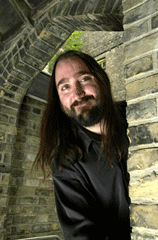
[Editor's note: To read the full transcript of the Senate panel discussion during the session Mark Leiren-Young spoke in, click here. His comments begin about half way down.]
The nice people at the Book and Periodical Council wanted me to be as well behaved as possible. The nice woman from the CBC really wanted me to say "fuck" on TV. And what the f*** were the senators going to say?
I was one of the people in the Canadian arts scene not named Sarah Polley who spoke to the Senate last week about the dangers of allowing the Canadian Heritage Minister to deny tax credits to films and TV shows deemed "contrary to public policy."
Being asked to appear before the Senate is like being called to the principal's office. You know how high school teachers talk about "your permanent record." I remember the day I realized there was no permanent record and I had a sudden urge to torch my guidance counselor's desk. Preparing to speak to the Senate Committee on Banking, Trade and Commerce, looking at the senators, then past them at the media control booth where people record every word and simultaneously translate it from English to French and vice versa, I suddenly realized that yes there is a permanent record and this is it.
While I work in film and television, I wasn't invited to the Senate as me. I was asked to speak as a member of the Book and Periodical Council because I serve on their freedom of expression committee on behalf of the Playwright's Guild of Canada. And if that sounds confusing, it was confusing, because while I'm personally appalled by the implications of C-10, the organizations I represented are probably closer to "concerned." So when we drafted our brief -- the BPC's official statement for that permanent record -- I wrote a toned down version of how I felt, that was toned down even more before it was approved to present.
Free speech? I'm speechless
Arriving at the Victoria building, I met the BPC's editor, Franklin Carter, who told me he was only going to talk in the event I lost consciousness. Looking across the street at the House of Parliament -- which seemed particularly imposing on Wednesday -- that seemed like a distinct possibility.
When we walked in, Franklin and I were subjected to a security check that was like the most polite airport security screening ever. I had to walk through a metal detector, put my shoulder bag though an X-ray machine, take out my computer, show that it worked and display my cell phone and charger -- but the guard was almost apologetic about the inconvenience, which has never happened to me at an airport.
As we approached room nine -- which had me picturing Room 101 from Orwell's 1984 -- somebody asked if I wanted to be interviewed by CBC TV. I was excited about the idea until the reporter asked who I was representing and what I was going to say and I froze like I was embezzling from widows and orphans and she'd just ambushed me for 60 Minutes.
I was in Ottawa to talk about free speech and suddenly I was utterly speechless. It took me a moment to realize the reason I'd frozen was that I didn't know quite what to say or how to say it, because while I knew exactly how I felt about Bill C-10, I wasn't really speaking for me. All the nuances we'd discussed in crafting the official BPC statement flashed before my eyes and blinded me.
CBC's wicked urgings
Then I remembered the only line in the original draft that I was slightly heartbroken about losing -- a reference to a film that keeps being mentioned in the debate over Bill C-10 that I was fairly sure no on wanted to name in front of the senators. "If the Ministry isn't planning to establish a system for viewing every film and television show, how will they know which ones are 'contrary to public policy?' Or is the Ministry only planning to withhold funding from films and television programs based on which ones have titles that can't be printed in certain newspapers?"
I was asked to lose the second line because it seemed a little on the partisan side, which I thought was pretty restrained of me since I'm generally a lot on the partisan side. Naturally, once my mouth started working I said almost exactly what I'd written to the CBC reporter and she looked at me hopefully and asked which titles I was referring to.
"You really want me to say it don't you?"
She smiled and it was unmistakable -- she really wanted me to say it.
So I did. Then she grinned.
I told her I was stunned by how much of this controversy seemed to be centered around a movie called Young People Fucking, which is being cited as "pornographic" by people who've never seen it. I noted that YPF has almost no explicit sex, minimal nudity and has already sold in countries like Israel and Turkey, which presumably have more restrictive community standards than Canada.
I'd actually checked with the film's former distributor -- who happens to be my film's producer -- to find out how many countries Young People Fucking had sold in (more than two dozen) and how many film festivals it was invited to (lots), so that if I got the opportunity during the Q&A, I could tell the senators the same thing.
I'll use my 'lifeline'
Once I walked into the hearing room, I was relieved I was delivering a prepared statement that had been polished, approved and fact checked. Reading a script suddenly seemed a whole lot more appealing than improvising.
I sat in the public gallery as a real woman from Real Women condemned the great Canadian "necrophilia" movie, Kissed. Then a woman against violence attacked the idea of even making a movie about the Montreal massacre. And as they spoke I realized that if I didn't answer questions as me I'd never forgive myself.
When the senators finished grilling the two speakers, my group was given two minutes to take our seats.
I grabbed my cell phone and called my producer. I told Tony I needed a "lifeline." I had to know how many major awards Kissed had won. And I needed to know in 90 seconds or less. Thank God and Al Gore for the Internet and the IMDB. I was in my seat with about twenty seconds to spare,
I was speaking after Noa Mendelsohn Aviv, director of the Canadian Civil Liberties Association's Freedom of Expression Project and Alain Pineau, national director of the Canadian Conference of the Arts, and I was so glad they spoke before I did. I've performed in front of 15,000 people at the Vancouver Folk Festival, but I don't think I'd ever tasted this level of stage fright until I saw the red light flicker on my microphone and I had to read my brief to the dozen or so senators in the room. I stumbled a few times on lines I'd rehearsed so many times I should have been able to sing them.
Then the questions started and I'm not sure who asked what except that I got the chance to let the senators know that the offensive film on necrophilia was nominated for the Genie Award for Best Picture and that if filmmakers could talk about September 11th, they should be able to deal with the tragedy in Montreal. I had my notes on Young People Fucking handy, but I didn't see an opening to talk about it.
Canada's gelatinous film funding system
I also forgot to say what I was dying to -- that Canadian film funding is about as stable as a house of cards built on Jell-O and taking away a labour tax credit from a completed film because you don't like the content is like taking away a farmer's grain subsidies because you don't like the taste of his wheat.
And the argument that extra safeguards should be in place because tax credits represent taxpayers dollars is ridiculous, because taxpayers are getting their money's worth since these credits weren't created to deal with content, but were developed as an incentive to employ Canadian talent in a multibillion dollar industry and employing this talent at a high level is part of how this has become a multibillion dollar industry.
I have no idea if I was articulate or babbled like an idiot -- and I haven't been able to bring myself to read the transcript to find out. But when a Senator asked me for a copy of our brief and a Senator's aide thanked Franklin and I for raising the issue of self-censorship, I felt like I'd done my job and knew that even if I hadn't, all would be fine because Sarah Polley was talking tomorrow. And I wondered if she'd find an excuse to mention Young People Fucking.
To read the full transcript of the Senate panel discussion during the session Mark Leiren-Young spoke in, click here. His comments begin about half way down.
Related Tyee stories:
- No Sex Please, We're Tories
For Bill C-10, the C stands for censorship. - No Tory Defence for Artistic Merit
Culture barely registers on the Conservative election platform, except as a shocking excuse for porn. - CBC Wants 'Intelligence' Dead, Says Show's Creator
Chris Haddock on politics, televised and not.
![[Tyee]](/design-article.thetyee.ca/ui/img/yellowblob.png)
Read more: Rights + Justice, Film








Tyee Commenting Guidelines
Comments that violate guidelines risk being deleted, and violations may result in a temporary or permanent user ban. Maintain the spirit of good conversation to stay in the discussion.
*Please note The Tyee is not a forum for spreading misinformation about COVID-19, denying its existence or minimizing its risk to public health.
Do:
Do not: