


 SHARE:
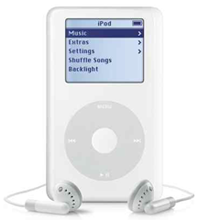
Canada's private copying levy, which adds 21 cents to the price of every blank CD to compensate the music industry for personal copying, has long been a magnet for controversy, yet few would have anticipated that it would thrust an overhaul of the Canadian copyright collective system onto the political agenda. In light of last month's copyright board decision that re-opens the door to placing a levy of up to $75 on iPods, however, that is precisely what could happen.
The case may create a sense of déjà vu, since it marks the second time that the Canadian Private Copying Collective, the collective that has pocketed more than $150 million from the levy since 2000, has sought to include iPods within the levy system. It first introduced an iPod levy in 2003, only to have the Federal Court of Appeal strike it down as the court declared that "it is for Parliament to decide whether digital audio recorders such as MP3 players are to be brought within the class of items that can be levied...as [the law] now reads, there is no authority for certifying a levy on such devices or the memory embedded therein."
Listen, criminals
Notwithstanding the court's unambiguous language, the CPCC reintroduced the iPod levy earlier this year, arguing that the MP3 player comments were "obiter" (a legal reference to a passing remark that does not form a necessary part of the court's decision). Canadian retailers and storage media companies unsurprisingly challenged that interpretation, leading to last month's ruling that sided with the CPCC.
The copyright board did not mince words, suggesting that the levy could also be applied to cellphones and personal computers, and warning that excluding the iPod from the levy system would "instantly [make] the conduct of millions of Canadians illegal, and even possibly criminal."
The decision will presumably be appealed, virtually guaranteeing years of litigation that promises to divert millions of dollars earmarked for artists to lawyers instead. While the legal challenges are important, the political repercussions carry greater significance since they may lead to dramatic changes to both the levy and the copyright board.
To copy abroad
The levy is likely to be on the chopping block, a victim of political promises -- the Conservative party pledged to eliminate it in its 2005 policy declaration -- and a global trend toward private copying without compensation.
The Recording Industry Association of America has acknowledged that transferring music between devices (such as from a CD to an iPod) is lawful, while Australia recently enacted legislation that legalizes format shifting of content such as music, newspapers and books. Similar laws are planned for the United Kingdom (which is planning a consultation this fall on format shifting without compensation) and New Zealand (which has a bill to address the issue currently before its parliament).
All of these countries have adapted their laws to meet consumers' expectation that they are entitled to listen to the music they purchase on the device of their choice, while allowing the music industry to account for such copying within the retail purchase price.
Canada's collectives
Changes to the private copying levy may be unavoidable; however, the bigger question will be whether Industry Minister Maxime Bernier and Canadian Heritage Minister Bev Oda will wade into the broader question of reform of the copyright board and Canada's emphasis on the copyright collective system.
Canadian policy has for years relied on the use of copyright collectives to efficiently license the use of copyrighted works such as music and books. However, the private copying decision highlights the growing dissatisfaction with the system. The copyright board's willingness to dismiss the federal court while characterizing millions of Canadians as criminals for copying CDs onto their iPods suggests that the institution may need reform.
Moreover, the copyright collectives are increasingly finding themselves on the wrong side of public opinion. In addition to the iPod levy issue, SOCAN recently sent hundreds of demand letters to Canadian hair salons seeking compensation for background music, while Access Copyright, an authors' collective, has established a financial reserve of more than two million dollars to be used for expenses in obtaining copying fees from Canadian schools.
The copyright collective system was designed to pave the way for paying creators and facilitating access to copyrighted works. With 34 Canadian copyright collectives, a prohibitively expensive litigation process that excludes many interested parties, price-distorting fees such as the private copying levy, questions about the fairness of royalty distribution, and a copyright board that seemingly places its views above the courts, changes to the system appear to be long overdue.
Related Tyee stories:
- Clicking Away Your Rights?
Top court Dell decision sets standards for online contracts. - New Media's 'Defining Challenge'
Job one for new CRTC chief: ensure 'net neutrality.' - Slow Canada
Mobile internet is powerful, but we're losing the race.
![[Tyee]](/design-article.thetyee.ca/ui/img/yellowblob.png)











Tyee Commenting Guidelines
Comments that violate guidelines risk being deleted, and violations may result in a temporary or permanent user ban. Maintain the spirit of good conversation to stay in the discussion.
*Please note The Tyee is not a forum for spreading misinformation about COVID-19, denying its existence or minimizing its risk to public health.
Do:
Do not: