

 SHARE:
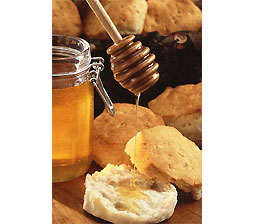
Slow Food, a growing international movement, is perhaps best defined as an alternative to its fast counterpart. McDonald's means unhealthy fare, ecological exploitation and usurpation of local idiosyncrasies; Slow Food means nutritious and tasty diets, preservation of food-source biodiversity and locally, sustainably grown food.
Slow Food's adherents are far-sighted hedonists, committed to protecting the sources of their treasured foods and fine wine. Gustatory pleasure is the cornerstone of Slow Food's philosophy, and environmentalism the corollary -- call it eco-gastronomy.
Mirroring Slow Food's multifaceted philosophy, the movement's followers promote its message in various ways. From chapters throughout the world, they plant gardens, hold tastings and educational events, disseminate manifestos and publish newsletters and guidebooks. This summer, events include the Second Annual Italian Wine Tour, hitting cities throughout the country, and a New York Taste and Learn Series Seminar focusing on the local dairies.
Another new Slow Food project is a guidebook, recently published by Chelsea Green, for "slow" New York City restaurants, bars and markets. The book, the first in a series, evaluates establishments on criteria typically unnoted by the likes of Zagat's, such as sustainability and conviviality. Patrick Martins, head of Slow Food USA and co-editor of the guidebook, recently talked to The Nation about both the movement and the book.
RTD: Can you talk about the origins of the Slow Food movement?
PM: Slow Food was founded by a journalist named Carlo Petrini in 1986, as a joke reaction to the opening of a McDonald's franchise near the Spanish Steps in Rome. Because fast food was a household name, he wanted Slow Food to become a household name as well. And so he started Slow Food through a pasta-eating protest in front of the Spanish Steps.
At the time, Slow Food was very much a gastronomic organization. It was about long, drawn-out meals, drinking delicious wine, cheeses, staying up until the wee hours of the morning talking about philosophy. Eventually, they understood that being purely gluttonous was not sustainable, and was not going to change the world. And Carlo looked around the world and saw that biodiversity was being threatened, and that we were losing many varieties of fruits and vegetables and farm animals, and so he decided that something needed to be done. That's when Slow Food became more of an environmentally conscious organization, and now we define ourselves as an eco-gastronomic organization, dedicated to preserving food and food traditions from soil all the way to the table.
Can you talk about the differences between the movement in the United States and the one in Italy? Italy seems like a country you'd think of as being ideally suited to something like this, and the US, as the home of fast food, less so.
It is a little different, Italy and the US. The US has a rich array of terroirs and tastes. It's just that in Italy people embrace these things more. Everyone knows what cheese is being raised in their backyard. Everybody knows what wine is local to their environment. What Slow Food in the US is trying to do is get people to understand that we have that same diversity, that same richness. The US is not just the fast food center that people think. We have farmers' markets, we have the richest beer-brewing culture in the world, great bread culture, a great artisanal cheese culture that's growing. Bourbon whiskey. We have some of the best wines in the world here now. So I think there's general quality of the foods. It's just that I don't think it's embraced in the same way as in Italy.
Can you say a little more about what exactly Slow Food USA does? I know you published the New York City guidebook...
We publish a newsletter called The Snail, which is really its own magazine now. We have projects, like the Ark of Taste, where we list products in danger of extinction because of the industrialization of our food supply. We have a children's education program. Short-term, we're opening school gardens and we're trying to teach children the importance of traceability in the food supply. The long-term goal of that is to introduce dietary education -- lunch class -- as a part of the curriculum, just like math or science. Then obviously our individual chapters -- there are 125 in the USA -- organize events on a local level: tastings, barbecues, picnics, but always with an educational component in mind.
We live in a very puritanical society here in the US, and pleasure is something to be avoided. And we're saying that it's OK to enjoy things. In fact, all of the foods we promote taste good. We really believe in promoting local, great-tasting foods. So we're a very positive organization. We don't believe in being dire, like many environmentalists. We believe that in order to be an eco-gastronome in the twenty-first century, you have to have respect for where your food comes from, but you also have to enjoy it. If you don't enjoy it, then what's the point? The exact reason it's important to save those farms is that they're producing the greatest-tasting, best-cared-for food in the world, and if we lose them then we're left to factory farms and genetically modified foods.
Maybe we can talk about the guide now. You mentioned in your introduction that it might seem counterintuitive to associate Slow Food with New York City, but that New York is actually a very "slow" city.
I think it's the slowest city of all. It's the care that people put into preparing their food, and the great availability of produce through one of the biggest and oldest green-market systems in the country.
Sustainability is the reason the guide was written. So that's why, if an establishment excelled above and beyond the call of duty for sustainability, we gave a snail rating [the book's equivalent of a Michelin star] to those eateries. Babbo is a restaurant like that. The vegetarian restaurant Angelica's is definitely on that level. I'm not a vegetarian, but in terms of the sustainability aspect, Angelica's excels. There are also some very cheap restaurants like Zum Schneider, an inexpensive German restaurant in the East Village that purchases all its foods locally, and buys Amish pretzels and local meats. We're trying to encourage restaurants to earn the snail rating. In New York, obviously, it's hard to ignore tradition and conviviality, so places like Katz's delicatessen and Sammy's Roumanian Steakhouse do well. And we put a lot of effort into remembering those great bagel shops and knisheries, and real old-school delis and restaurants. But the reason for the book was to get people to buy locally. Local foods from local farms taste better. And that is a very inspirational reason to stay healthy.
Are other guides going to follow this?
The Chicago guide is being published this month. And the Northern California guide will come out in the spring of 2005.
Slow food is not a protest organization, although we do often support in spirit organizations that do protest big business. We are also not anti-globalization -- we believe in a virtuous globalization, where small farmers and producers get the same advantages as the big guys. Our efforts so far in the USA have revolved around increasing business and attention for the farmers and producers who deserve it.
Does the movement have any plans to get involved in electoral politics in the United States?
I think the extent of it will be that we will come out with statements on obesity and about the direction that the United States should be going in terms of agriculture. We'll also issue manifestos, mission statements and declarations. But I think we'll still always stay connected to the pleasure aspect.
Rebecca Tuhus-Dubrow, a Nation intern in fall of 2003, is a freelance writer based in New York City.
More on the Slow Food movement in Canada and beyond can be found here. ![[Tyee]](/design-article.thetyee.ca/ui/img/yellowblob.png)




Tyee Commenting Guidelines
Comments that violate guidelines risk being deleted, and violations may result in a temporary or permanent user ban. Maintain the spirit of good conversation to stay in the discussion.
*Please note The Tyee is not a forum for spreading misinformation about COVID-19, denying its existence or minimizing its risk to public health.
Do:
Do not: