

 SHARE:
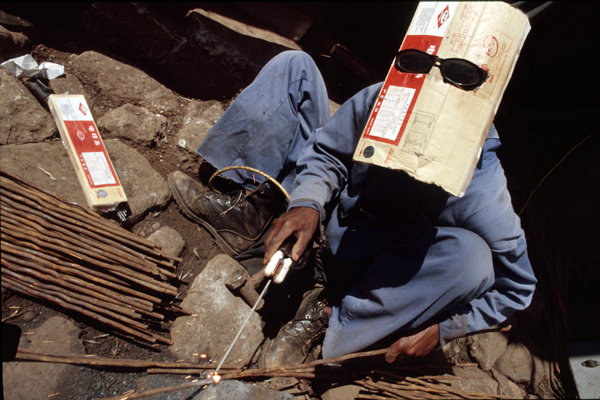
- Markets: Lost Connections
- Self-published (2012)
For someone who loves markets, Robert Semeniuk is certainly not a fan of capitalism. But it's not the Market as an abstract concept that Semeniuk enjoys. It's the smell, taste, energy and hues of a physical marketplace that draw him in.
Vancouver-based Semeniuk is an acclaimed and widely travelled photojournalist whose way of speaking, like the images in this book, is colourful and direct. He writes that he first fell in love with markets as a teenager on a trip to Mexico when he was young. He concludes a vivid account of his experience eating there with the blunt, telling sentence, "Back in North America, TV dinners were just becoming popular."
It's this contrast that underlies much of Semeniuk's work: rich and poor, waste and efficiency, powerful and powerless.
"That's basically what my career has been about," he explains. "Having a look at power structures in the world and who has the power and who doesn't, how'd they get this power, and what do they do with it?"
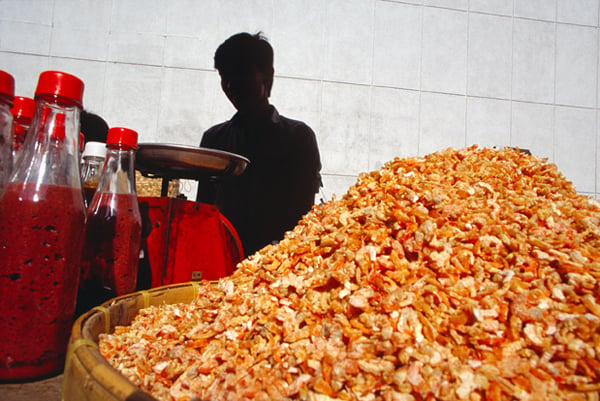
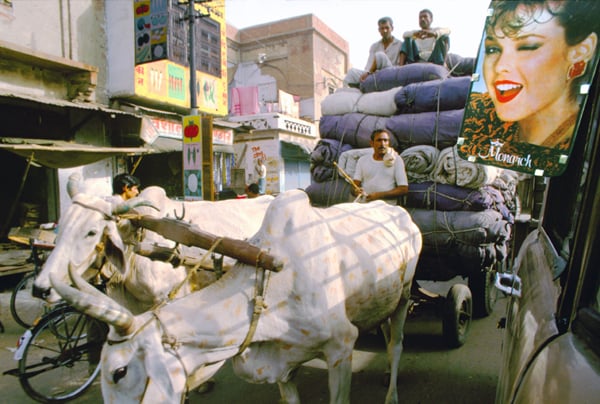
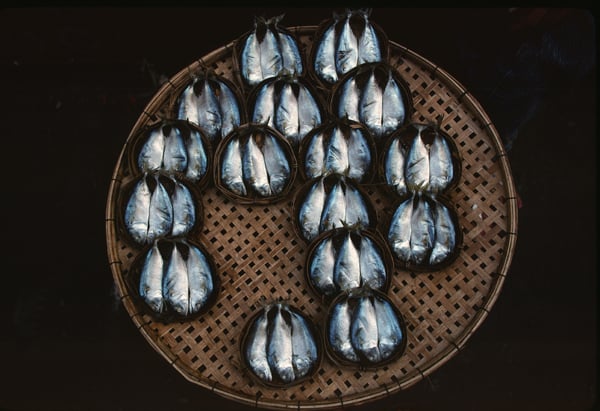
Semeniuk's Markets: Lost Connections explores vibrant local markets in countries all over the world, from Afghanistan to Thailand, and from Russia to Bolivia. Those places of exchange appeal to Semeniuk for their ability to resist the bland absurdities of globalization.
"That's one of the nicest things about markets, eh? They have a character. And I can't say that Walmart has much of a fuckin' character. There's more interaction. You can smell the food, and taste it, and bargain with people, as opposed to the checkout counter anesthetic. It's my response to globalization, these markets. I don't think globalization is working. I think we have to really, really start dealing with local markets. This idea of selling dirty oil and dirty coal to China so they can manufacture land fill-ups for us -- what the fuck's wrong with that picture?"
Semeniuk often takes months at a time on a subject. In his work with the Inuit on Baffin Island, Semeniuk spent two years living, working and hunting with the community. His process is thorough, and he likes his understanding to go far beyond what might be considered the normal standards for photography. But even the most engaged photojournalist is still a visitor, as he knows well.
"You have people engaged in food. It's a door in to any culture, to taste the food, and try different things. That's what I want to do as a photojournalist, I want to get inside people. I want to eat what they eat, I want to sleep where they sleep. Dance to the music they dance to, all of that -- as much as I can, knowing that I'm the one with the airplane ticket, usually. That makes all the difference in the world, boy, you got that airplane ticket. So try as you might to get close to people, you know that you can always jump on that plane and in 10 hours you're somewhere else."
Semeniuk does what he does, and chooses the subject he chooses, "mostly out of cynicism," he says, "about how the world could be a better place if people would just wake up. I see the spoils of our capitalistic, consumer society and the kinds of pressures it puts on the rest of the world. I see what's happening with the financial markets. I see that half the world's left out by the capitalist system. I see how our education system teaches people what to know rather than how to know.
"I'm pretty cynical," he says, "but I'm not a cynic. I have a 17 year-old daughter, and someday she's gonna look back and say, 'Well what the fuck did you do about all this shit,' you know? And I want to have some answers."
Read more: Urban Planning + Architecture




Tyee Commenting Guidelines
Comments that violate guidelines risk being deleted, and violations may result in a temporary or permanent user ban. Maintain the spirit of good conversation to stay in the discussion.
*Please note The Tyee is not a forum for spreading misinformation about COVID-19, denying its existence or minimizing its risk to public health.
Do:
Do not: