

 SHARE:
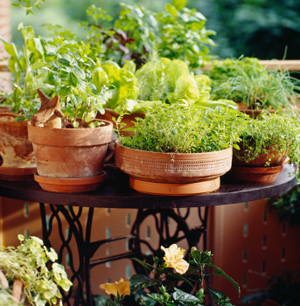
- Urban Agriculture: Ideas and Designs for the New Food Revolution
- New Society Publishers (2011)
[Editor's note: In a previous excerpt of his new book Urban Agriculture: Ideas and Designs for the New Food Revolution, David Tracey reveals some unlikely champions of city farming -- Detroit, Russia, and Zimbabwe. And while Vancouver's urban agricultural revolution is well underway, for every gung-ho green thumb, there's an anxious apartment-dweller. Today on The Tyee, Tracey's simple advice for anyone looking to fill their own plate: think like a plant.]
More people might become urban farmers if they had urban farms. What's an apartment-dweller with nothing but a narrow balcony in the sky to do?
Plant it. If the sun is shining on your space, you're in a farmable area. Even if it isn't, if you can see blue sky, you still have options.
Vegetables, edible flowers, cooking herbs, berry shrubs and fruit trees are all beautiful and nutritious, but they're also kind of dumb. They don't know if they're in a pot. They may have evolved over thousands of years to grow in the ground, but that doesn't make it the only place they will grow. Give your plants the basics they need and they will sprout and develop and flower and fruit even hundreds of feet in the air on a balcony or on a crowded ground floor patio outside your doorstep.
The secret to a successful container farm is to think like a plant. Just figure out what a plant needs, then provide it.
You can make this approach simple or complex. The complex part has its charms, in that you can spend a lifetime on horticultural experiments conducted in those fascinating mini laboratories we call pots. But let's stick with the simple here because, really, it's all we need to grow food.
So what does a plant need? Sun. Water. Nutrients. Space. Before we discuss each one, here's a primer in how the magic all starts, with the planting of a seed.
How to plant a seed
Poke a shallow hole in the soil with your finger, drop the seed in, cover it with more soil and add water. Now relax; you're done.
That's pretty much all there is to it. If you've never tried before, because you were worried about getting the technique just right, you now know enough to grow trainloads of food.
Much of my work in teaching newcomers to grow into urban farmers involves leading them by the hand past this first step.
Some beginners are intimidated by what they think will be difficult, something that needs expertise and the green-thumbed experience of a long-time grower or professional farmer. The truth is, I tell them, anyone can, and everyone should, grow food because all you're really doing is providing the conditions nature wants to do the real work. The seed knows what to do.
But that doesn't quite fill a workshop, so I go on to provide some details. The proper planting depth and spacing for the seeds? That's usually easy -- they're written right on the package. But I've yet to see a grower take out a ruler to determine whether the seed is half- or three-quarters-of-an-inch deep. Close enough works. A rule of thumb if you don't like reading instructions or were given the seeds with no package details is to plant them 3-4 times as deep as their width. So a tiny carrot seed goes just under the surface, while a pea would go a fair bit below that.
Space case
Seed spacing recommendations are also typically written on the package, but are ultimately up to the planter. Picture your mature radish or beet or zucchini plant to get an idea of how far apart you should plant the seeds. Growers often overseed to make sure they get crops even if the germination rate is less than 100 per cent, or because they find way too many seeds in the package and don't know what else to do with them (buying collectively with fellow farmers can help solve this problem).
This usually means they have to thin the new seedlings out later, leaving only the biggest and most promising plants with plenty of room to develop. But many beginners turn out to be bad at thinning. It can be tedious, but I think this has more to do with the fact that they're thrilled to have created a grand display of edible vitality, and killing most of it just seems wrong. Nevertheless, you must cull those extras. If you don't, you may be left with a thick, crowded row of, say, carrot tops that never manage to develop into carrots.
So when it comes time to thin, don't dwell on the seedlings you're taking out. Focus instead on the ones you're keeping, then simply remove the rest nearby that threaten your prizes. You can just yank out the unwanted growth, but if the roots are already growing together, it's safer and easier to snip the stems off near the base with scissors. And you will often get a tasty fresh salad from the sprouts and microgreens you thin.
Back to the seeds you just planted: cover them with some of the surrounding soil and press down lightly with your palm or foot to eliminate large air pockets. Germination doesn't start until the seed comes into contact with moist soil.
Take it outside
Now begins the most critical stage of the growing process. Once germination starts, you must keep the soil irrigated until the plant is established. If the soil dries out and the wisp of a root has no moisture to absorb, the plant will dry up and die. In containers, especially on a hot day, this can happen sooner than you might think, so keep a close eye out to make sure your babies stay well watered.
To extend the growing season, seeds can be started indoors and then transplanted outside once the weather permits. Tomatoes are a favorite choice for this in Canada, because you get to begin your farming activity as early as February, a worthy indoor pursuit to take your mind off winter. Remember to toughen up your seedlings in spring by placing them outdoors in a protected area for a few days before you transplant them. Plants don't like to be shocked by cold any more than people do. ![[Tyee]](/design-article.thetyee.ca/ui/img/yellowblob.png)
Read more: Food, Environment










Tyee Commenting Guidelines
Comments that violate guidelines risk being deleted, and violations may result in a temporary or permanent user ban. Maintain the spirit of good conversation to stay in the discussion.
*Please note The Tyee is not a forum for spreading misinformation about COVID-19, denying its existence or minimizing its risk to public health.
Do:
Do not: