- Ms Kaye is a Tyee Builder. You can be, too.
- Mary Carlisle is a Tyee Builder. You can be, too.
- Prem Gill is a Tyee Builder. You can be, too.
- Nancy Flight is a Tyee Builder. You can be, too.
- Justin Everett is a Tyee Builder. You can be, too.
- John Westover is a Tyee Builder. You can be, too.
- Nora Etches is a Tyee Builder. You can be, too.
- Edward Henderson is a Tyee Builder. You can be, too.
- Bharadwaj Chandramouli is a Tyee Builder. You can be, too.
- Dean Chatterson is a Tyee Builder. You can be, too.
- Marius Scurtescu is a Tyee Builder. You can be, too.
- Robert Parkes is a Tyee Builder. You can be, too.
- James Murton is a Tyee Builder. You can be, too.
- Susan Doyle is a Tyee Builder. You can be, too.
- Vincent Strgar is a Tyee Builder. You can be, too.
- Helen Spiegelman is a Tyee Builder. You can be, too.
- Subir Guin is a Tyee Builder. You can be, too.
- Kimball Finigan is a Tyee Builder. You can be, too.
- Joanne Manley is a Tyee Builder. You can be, too.
- David Leach is a Tyee Builder. You can be, too.
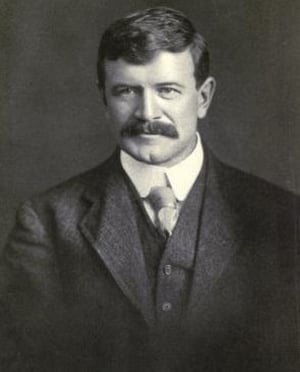
Stephen Leacock's Dark Side
The famed writer sure was a funny guy. And a misogynist racist.
Leacock opposed women's vote, disparaged Aboriginals and immigrants.
- Stephen Leacock
- Penguin Canada (2010)
In the autumn of 1919 the New York Times invited Stephen Leacock to write a series of articles presenting his views on the current political situation, in particular the challenge to the status quo being offered by the radical left. Leacock was writing in the middle of a "Red Scare," a widespread fear on the part of government and the public that both the United States and Canada teetered on the verge of Bolshevik-inspired revolution. It may seem like a paranoid fantasy today, but this concern was very real to the readers who turned to the pages of the Times for information and reassurance. The revolution in Russia, which was only two years old, had established the precedent of a small group of well-organized "Reds" appearing out of nowhere to impose a radical new political and social order. People saw conspirators everywhere, funded by Lenin's gang of ideological cut-throats and working to spread worldwide revolution.
"These are troubled times," Leacock began his series. "As the echoes of the war die away the sound of a new conflict rises in our ears. All the world is filled with industrial unrest." Making matters worse was the spreading "infection" of Bolshevism, he wrote. "Over the rim of the Russian horizon are seen the fierce eyes and the unshorn face of the real and undoubted Bolshevik, waving his red flag."
It is indicative of Leacock's reputation that America's most prestigious newspaper figured that a Canadian humorist was the best person to explain these momentous events to its readers. At the time, he was the most popular funny man writing in the English language. "His pieces were published in Canadian newspapers and magazines, of course, but also in New York and London," explains the historian Margaret MacMillan in her new book, Stephen Leacock. "Publishers begged him for his latest work. Theatre producers in London suggested he write plays. Charlie Chaplin asked him for a screenplay. A young F. Scott Fitzgerald wrote from Princeton to say how much his own writing was influenced by Leacock. Audiences paid handsomely to hear his lectures."
Conjuring a socialist 'abyss'
Leacock's occasional pieces were collected almost annually into bestselling books, such as Sunshine Sketches of a Little Town (1912 ) and Arcadian Adventures of the Idle Rich (1914), which gently satirized the foibles of everyday life. But for his articles in the Times, Leacock put on his academic hat. For as well as being a humorist, he was a trained political economist -- graduate of the University of Chicago, where he studied under the famed social theorist Thorstein Veblen, and a member of the department of economics and political science at McGill University in Montreal.
MacMillan, whose brief book is a sympathetic but not uncritical portrait, admits that Leacock was by most accounts an indifferent scholar with a surprisingly slight grasp of his specialty. "Humorists, it was said, thought him an economist, and economists thought him a humorist," she writes. As she points out, Leacock did not really care that much about academia. Although he was an entertaining lecturer, beloved by his students, he preferred to address a broader public. He was, in modern parlance, a public intellectual. Business and government leaders sought his advice; people took his thoughts on public issues very seriously indeed.
So what did Leacock have to say in the Times about the "National Hysteria" (his phrase) that was gripping North America? He was sympathetic to the voices of reform. He conceded that economic inequality was rampant and inexcusable, that something had to change, that labour's demands for a new deal were just. But he also warned that reform movements were being subverted by "the underground conspiracy of social revolution." As a result, the forces of extremism were drowning out the voices of moderation, and society was sliding "nearer and nearer to the brink of the abyss."
Deaf to progressive movements
Leacock, MacMillan argues, was that familiar Canadian hybrid, a pink Tory. Or, to express it in modern political usage, he was a social liberal but a fiscal conservative. He was happy enough to entertain ideas of an old-age pension, a minimum wage and a shorter work day. But socialism was a pipe dream, "a bubble floating in the air." If people made the mistake of taking it seriously, it would lead to chaos. "The blind Samson of labour will seize upon the pillars of society," he fulminated, "and bring them down in a common destruction." Leacock did not oppose change, but change had to come slowly and be measured against the more pressing need to maintain social stability.
In his articles in the Times (reprinted the following year in book form as The Unsolved Riddle of Social Justice), Leacock reveals himself to be a man of his time, class and gender. As such he opposed equal rights for women, disapproved of immigration by Asians and blacks, and disparaged Aboriginal cultures. It is a truism that we should not judge historical figures by the ethical standards of our own day. Leacock may have been a misogynist and a racist, the argument goes, but so was everyone else; it is unreasonable to condemn him for it.
Fair enough. Except that not everyone else was a misogynist and a racist. Leacock had contemporaries, men even, who supported women's suffrage, who welcomed Asian immigrants, who did not think Aboriginals were inferior human beings. Such people may have been in the minority, but they existed and they spoke out, and Leacock was not among them. It is not holding him up to the standards of the present to point out that he could have had a better sense of which way the world was moving instead of trying to stop it.
A Canadian hero?
MacMillan's book appears in a series titled Extraordinary Canadians. Isn't someone extraordinary if they rise above the standards of their day, if they hold opinions that are not simply conventional wisdom, if they do or think something that breaks with public opinion to espouse a more progressive point of view? No question, Leacock was successful (and funny). If he'd only transcended the prejudices of his audience instead of pandering to them, I'd be more willing to admit him to the ranks of the extraordinary.
But that's not MacMillan's fault. If the other books in this series are as sensible and well written as hers, Penguin will have performed a useful service by giving the general reader access to a set of Canadians who, if not always extraordinary, are at least provocative and important. ![]()


12
Login or register to post comments
puppyg
1 year ago
A thought.
I'm not sure that I see the point of assessing figures in history by today's standards of political correctness.
I can see that it is instructive to dissect the personal beliefs of people like Winston Churchill and Stephen Leacock.
Still, it makes me nervous that people who are not here to defend themselves or to clarify context can have their recorded thoughts processed in the PC mill. I shudder to think of past scholars (in pre-Mao China, for example) who were later ground to dust by waves of revisionist thinking.
This piece provides valuable analysis of Leacock's legacy (he was controversial even in his day in my home town of Orillia, Ontario). From where, then, my discomfort?
I see, just now, a need to consider motive in the calling up past records and reputations. The risk is that honourable legacies will be erased or sullied to serve darker agendas.
Just a thought.
Van Isle
1 year ago
Back 100 years ago most
Back 100 years ago most people were rascist. Go to places like India (cast system) or Africa (inter tribal hatreds) and the samething is still there. Its not just a white man's sickness.
Social Cretin
1 year ago
Read and decide for yourself
Suggest your readers take some time and read The Unsolved Riddle of Social Justice. Its at www.gutenberg.org/etext/22651
Here is a random quote from this “man of his time, class and gender” – ‘It should be recognized in the coming order of society, that every child of the nation has the right to be clothed and fed and trained irrespective of its parents' lot. Our feeble beginnings in the direction of housing, sanitation, child welfare and education, should be expanded at whatever cost into something truly national and all embracing. The ancient grudging selfishness that would not feed other people's children should be cast out. In the war time the wealthy bachelor and the spinster of advancing years took it for granted that other people's children should fight for them. The obligation must apply both ways.’
Clearly Leacock did not like what he saw happening in Russia. Read the article and draw your own conclusions about how he got to that position.
G West
1 year ago
@ Social Cretin
Excellent point...Interestingly enough, the social inequity that Leacock was exercized about has not yet been addressed by the 'idle rich' he was at pains to lampoon in his humourous writings.
In fact, the preponderance of evidence suggests it never will be.
Given the current climate of concen in the USA (since Leacock's musings were meant for an American audience) about the fact that the Bush tax cuts for the rich may be coming to an end I would suggest that the move toward social justice is still a long way from reaching any kind of a positive conclusion.
Skywalker
1 year ago
Maybe we should take comfort...
...in the knowledge that the sentiments of the past might have been racist and all that because that was considered conventional at the time, but today we are much more civilized. Looking back gives us a basis for feeling superior. History has a tendency to paint the past without all the warts and blemishes. So maybe the truth gives us comfort that things have improved.
It really shouldn't because 50 years from now just imagine how they will look on decisions and actions taken today.
jnewcomb
1 year ago
Nelly McClung...Tommy Douglas
Notable Canadian suffragette Nelly McClung was a famous racist, opposing voting rights for Asian women. Tommy Douglas' masters thesis supported eugenics.
snert
1 year ago
Sounds like pretty normal guy for his time.
"The famed writer sure was a funny guy. And a misogynist racist."
Where's the issue?
puppyg
1 year ago
Thanks, So-Cret... That link was informative.
Thanks, So-Cret... That link was informative. I'll revisit to read more.
canuck
1 year ago
This is madness to expect
This is madness to expect one of Canada's foremost humorists to be totally in touch with what society will advocate years later. I'd highly recommend laughing when reading his books and frowning/crying/screaming when modern writers jokingly advocate racism or make remarks which are now considered sexist.
I've grown up in the period when it was mandated to slap a man for pinching my bottom. I'd be arrested in today's world or at a minimum charged with assault for defending myself in such a spirited manner.
This author needs a different author to complain about or get a life where humor is part of it.
samuidave (not verified)
1 year ago
canuck does have a sense of humour
"I've grown up in the period when it was mandated to slap a man for pinching my bottom. I'd be arrested in today's world or at a minimum charged with assault for defending myself in such a spirited manner" ...
though I suspect the man should be more fearful of being labelled a sexual predator ;)
THANKS for the terrific article. Between the read itself and a few informative comments (thank you Social Cretin for the link) clearly nothing is cut and dried.
As Emma Goldman noted the most forward-thinking people are considered radical in their day.
I don't particularly care so much what one's personal views are but, simply, whether they have something informative or intriguing to say. And Stephen Leakcock most certainly satisfies this requirement.
anarcho
1 year ago
Missing the point
The previous commentators are missing the point clearly stated in the article that other people, although a minority were not misogynist or racist. I will name them, on fact. They were the very socialists, anarchists and IWW that Leacock and the other paranoids of his day thought were Bolshevik agents.
Sandwichman
1 year ago
Read The Unsolved Riddle of Social Justice!
From this article I get the impression that Daniel Francis hasn't actually READ The Unsolved Riddle of Social Justice but is passing second-hand judgment on Leacock based on hearsay evidence from a "sympathetic but not uncritical portrait". What marvelous scholarship! Perhaps readers could take a cue from Daniel and form their views third-hand. That way they could avoid the trouble of reading MacMillan's book, either.
One would get better insight into the quality of Stephen Leacock's thought -- and his compassion -- if one ACTUALLY READ The Unsolved Riddle of Social Justice. Written 90 years ago, it is a very timely book today.
In that book, Leacock advocated a "rest cure" for society. "The nerves of our industrial civilization are worn thin with the rattle of its own machinery," Leacock wrote, "The industrial world is restless, over-strained and quarrelsome. It seethes with furious discontent, and looks about it eagerly for a fight. It needs a rest." Leacock argued that reducing the hours of work "should be among the primary aims of social reform," and recommended "such a shortening as will strain the machine to a breaking point, but never break it."
Leacock's argument rested on four pillars. The first two were his repudiations of both laissez-faire and socialist doctrines. The third was the recent experience of increased war-time production, aided by mechanical power and invention, in the face of a much reduced labor force population. "There need be no fear that with shortened hours of labor the sum total of production would fall short of human needs. This, as has been shown from beginning to end of this essay, is out of the question." The fourth was a call for an imaginative break of 'public opinion' from outdated and grotesque conventions. The only real difficulty Leacock foresaw to the shortening of the hours of work was that moving too fast to alter things "may dislocate the industrial machine." Nevertheless, he implored, the nation "ought to attempt such a shortening as will strain the machine to a breaking point, without breaking it."