

 SHARE:
- Pill Head: The Secret Life of a Painkiller Addict
- Hyperion (2009)
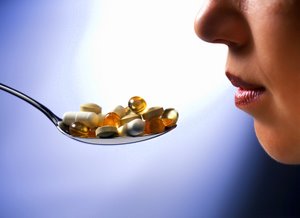
Joshua Lyon, a Brooklyn-based journalist, first bought prescription painkillers over the internet in 2003 as part of an assignment for Jane magazine. Like everyone else at the time, his inbox was flooded with offers of "Cheap Rx!" (many from Canadian pharmacies), and he was curious to know just how easy ordering these drugs could be. Pretty easy, it turned out. Within 48 hours of ordering a bottle each of Vicodin, Xanax, and Valium from the internet, Lyon was staring at the bottles on his desk. A brief, fib-filled phone conversation with the website's "doctor" served as his only screening.
While Lyon promised his editor that he would flush the contents of his new orange bottles down the toilet after finishing his assignment, curiosity and an anti-authoritarian streak led him to try a few instead. And that was it -- he was in love. After downing his first three Vicodin, Lyon decided that "this is what I've been waiting for my whole life." He describes the pills as curing depression, social anxiety and physical pain all at once, producing a feeling akin to lounging in a sauna, or a constant, low-grade orgasm.
Less stigma, same risks
Lyon wasn't alone in his newfound chemical romance. Statistics show that about 33 million Americans have used prescription painkillers like Vicodin, Oxycontin, and Percocet non-medically, while Canadian research estimates that between 300,000 to 900,000 in the general population are abusing prescription opioids (as much as three per cent). Research has yet to uncover the full picture in Canada, although Professor Benedikt Fischer of Simon Fraser University's faculty of health sciences recently got a multimillion-dollar grant to study the problem.
While it's harder these days to buy prescription drugs off the internet, they are easily purchased on the black market and often traded among friends. For many, they don't have the same stigma as street drugs, yet can be used to produce the same euphoric effects. And because they were created by white-suited people in a lab, many think prescription painkillers must be safe. Right?
Wrong. While the majority of people who use these painkillers have a legitimate medical need, they can also become enormously addictive. Lyon's first three Vicodin led to a five-year habit which saw him taking much stronger drugs, like morphine and Dilaudid, just to feel high. When Lyon actually needed during the drugs after having his appendix removed, he discovered that they no longer worked -- forcing him to suffer agonizing pain. When he finally went through rehab, he describes the feeling of withdrawal as being like razors scraping away at his bones. Still, at least he never overdosed. Prescription drugs cause lethal respiratory depression when taken in doses that are too high, or in combination with other drugs and alcohol -- as Heath Ledger found out last spring.
Grandma's supply
Lyon takes a long road to get clean, and brings the reader along for the ride. Rather than writing a purely "literary" memoir, he weaves in tales of other young addicts, as well as interviews with addiction researchers and U.S. drug control officials. The mix works -- first, we read about his New York nightclub adventures spent procuring his substances, and how he gains access to a notorious dealer called the "Candyman," who supplies millionaires in the West Village. Then we read about bored suburban Californian kids robbing delivery drugs to get their supply, and about others who steal prescription pads and forge doctors' signatures. Scientists explain the mechanics of painkiller addiction, while DEA officials explain their (sometimes-misguided) attempts to control the supply. And finally, we read about Lyon's multiple stays in rehab, where he discovers a system a little like your worst boarding school nightmare. By the end of the book, Lyon is slowly, but surely, working to stay clean.
Throughout the entire book, Lyon's tone is unflinchingly honest -- a position that creates a real bond with the reader. I admit it, I cried when he describes trying not to steal his grandmother's Percocet after surgery. In fact, Lyon's relationship with his grandmother is the most moving part of the book, especially when it seems like caring for her is going to be the key to him getting clean (unfortunately, it wasn't quite that easy).
Higher and higher we go
Over the past several years a subset of memoir has followed a predictable pattern: substance addiction, bottoming out, and redemption, usually with a little help from family and a higher power. Such stories have been a favorite of book clubs and talk show hosts like Oprah -- but the attention around them can feel a little uncomfortable, as if its as much about taking pleasure in pity as it is about inspiration.
Lyon could have simply contributed one more of these guided tours through personal hell. Instead, he uses his own experiences as a prism to reflect pervasive issues. I've never struggled with substances stronger than coffee, but I began to wonder (again) about that addiction while reading this book. Lyon uses his drugs to treat depression, social anxiety and the boredom of daily life, and many of us have similar relationships with one substance or another. I's a testament to Lyon's work that his writing provokes such reflection, helping us to understand addicts as human beings.
At the end of the book, I couldn't escape the conclusion that just as human ingenuity will create ever-more-advanced ways to treat pain, we'll also search for new ways to get high. As scientists struggle to understand these addictions, and the government works to control them, Pill Head is an essential read for anyone who wants to understand the problem. Reading the book feels like pulling back a curtain on a secret and darkened -- yet very crowded -- room. ![[Tyee]](/design-article.thetyee.ca/ui/img/yellowblob.png)
Read more: Health










Tyee Commenting Guidelines
Comments that violate guidelines risk being deleted, and violations may result in a temporary or permanent user ban. Maintain the spirit of good conversation to stay in the discussion.
*Please note The Tyee is not a forum for spreading misinformation about COVID-19, denying its existence or minimizing its risk to public health.
Do:
Do not: