

 SHARE:
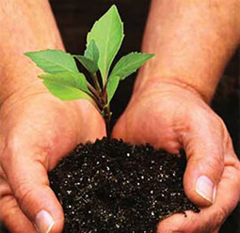
[Re: Chris Wood, "How the Carbon Casino Pits Ecologist Against Ecologist" -- Feb. 25, 2009]
No one questions the value of trees. But many people have raised concerns about planting trees as a way to generate carbon offsets.
In order to address global warming, we need to reduce the flow of greenhouse gases into the atmosphere, preventing this insulating blanket of gases from thickening and warming the planet further.
Because it is often impossible to immediately reduce one's emissions to zero, more and more people and companies are turning to carbon offsets, in an effort to become "carbon neutral."
These offsets allow people and businesses to buy "credits" for the emissions they produce. The money is used to purchase the rights to emissions reductions that were generated elsewhere by carbon offset developers. These offsets are produced precisely because of the money to be earned from their sale.
Carbon offsets are not in themselves a solution to global warming, because they are unlikely to produce the overall deep greenhouse gas reductions required to avert dangerous climate change. But buying offsets can be an effective interim strategy that can be implemented immediately.
Many reputable projects funded through offsets -- such as wind energy or solar power projects -- are emission reduction offsets that reduce overall fossil fuel use. By conserving energy and switching from fossil fuels to renewable and clean energy sources, we significantly reduce human-caused greenhouse gas emissions.
Saving natural ecosystems
Another important means of reducing the flow of carbon dioxide into the atmosphere is to stop our ongoing destruction of natural ecosystems, especially old-growth forests, wetlands, grasslands, and peatlands. Natural ecosystems store massive amounts of carbon in their vegetation and soils, but when they are cleared for agriculture or pasture, destructively logged or mined, flooded, and degraded by human-set fires, much of their stored carbon is released back into the atmosphere as heat-trapping carbon dioxide. Thus the destruction of natural ecosystems is not only a primary driver of the extinction of species but also a driver of global warming as well.
Quite apart from their value as potential carbon stores, trees and forests provide a plethora of environmental goods and services that directly benefit our lives. Trees are not just sources of wood products; they provide medicine, food and clean drinking water. They stabilize steep slopes and increase property value. Forests provide habitat for over half of all terrestrial biodiversity on the planet. All of these reasons for preserving our intact forests are crucial, and the ecological services provided by forests would be essential even in the absence of climate change.
'Artificial forests' aren't the answer
But despite their many benefits in other areas, the David Suzuki Foundation has concluded that tree-planting projects -- the creation of brand-new artificial forests -- are not the most effective way for us to avoid dangerous levels of global warming, since a tonne of carbon stored in a growing forest is not equivalent to a tonne of offsets produced from energy efficiency or renewable energy projects.
For one, it is much more difficult to quantify the amount of carbon that trees take out of the atmosphere than it is to quantify reductions in fossil-fuel use. The amount of greenhouse gases sequestered by tree-planting offsets can vary considerably, depending on the species planted, the local site conditions of the project, and the amount of fossil-fuel greenhouse gases emitted in the course of establishing and maintaining a project.
While Robert Falls is quoted in The Tyee article as saying that he "fears that a fixation with 'accounting procedures' is distracting from [the David Suzuki Foundation's] ultimate environmental objectives," we believe that these considerations are appropriate given that offset purchasers are paying real money in exchange for a precisely-stated amount of emission reductions.
Trees are also vulnerable to natural disturbances such as wind, insect infestations, and fire, and thus the carbon they store can still end up in the atmosphere. And climate change itself is causing B.C.'s forests to die, as a recent UBC study has demonstrated.
Plant trees, be realistic
Moreover, we know that we don't have much time to deal with the climate change problem. So it's not realistic to treat offsets from tree-planting projects that may only be generated decades in the future as being equivalent to those that have already been produced by a wind turbine or an energy-efficiency project.
So yes, by all means, we should be planting trees. And we should be doing everything we can to avoid deforestation. But when it comes to carbon offsets, we believe that purchasers should invest their money in the products most likely to prevent dangerous climate change. Among other things, offsets must be timely, permanent, and accurately quantified. We believe that emission reduction offsets verified by the Gold Standard (one of the strongest standards in the world for carbon offsets) offer the best assurance that these essential criteria are met. Offsets from tree-planting projects do not.
Relates Tyee stories:
- How the Carbon Casino Pits Ecologist Against Ecologist
Robert Falls was inspired by the creation of the David Suzuki Foundation. Now he calls it an obstacle to restoring degraded ecosystems. - The New Carbon Cash, Explained
BC's about to dive into a vast market that limits and trades emissions. How it will work (or not). - Who Will Revive BC's Forests?
World relies on our 'lungs,' but replanting is lowest in 20 years.
![[Tyee]](/design-article.thetyee.ca/ui/img/yellowblob.png)
Read more: Science + Tech, Environment





Tyee Commenting Guidelines
Comments that violate guidelines risk being deleted, and violations may result in a temporary or permanent user ban. Maintain the spirit of good conversation to stay in the discussion.
*Please note The Tyee is not a forum for spreading misinformation about COVID-19, denying its existence or minimizing its risk to public health.
Do:
Do not: