Opinion

A Tyee Series

Trees and Us

Our new podcast series asks: what does the forest mean to you? First up, Severn Cullis-Suzuki.

By Mark Leiren-Young, 17 Aug 2007, TheTyee.ca

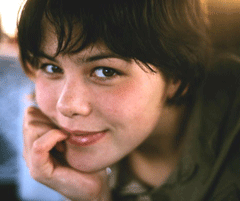
Severn Suzuki

Severn Cullis-Suzuki: audio interview.

[Editor's note: This is the first installment of a new podcast series on trees in which Mark Leiren-Young talks to people about the issues defining our forests.

Mark first started writing about forestry issues while he was working as a reporter at the Williams Lake Tribune in 1985.

Click on the link to hear Mark's conversation with Severn Cullis-Suzuki (editor of Notes From Canada's Young Activists: A Generation Stands Up for Change) about why she doesn't call herself an environmentalist, how she'd run B.C.'s forests, and staying optimistic about the world no matter how much it heats up.]

Trees. If you're from BC, you're probably already picturing a rainforest.

When people from outside B.C. arrive here, they assume we're defined by the mountains or the ocean, but what really defines the province aesthetically, economically, politically and spiritually is trees.

Environmentalism is a British Columbian's birthright. Our province launched Greenpeace, The Sea Shepherd Society and helped unleash Dr. David Suzuki, who's so iconic that when I used to play an environmentalist in my comedy troupe, Local Anxiety, I'd refer to him as my spiritual leader.

But cutting trees is a B.C. birthright too. Our economy -- and many of our communities -- have historically been fuelled by forests.

In 1991, director John Juliani and I started talking about creating a series of stories about trees for CBC Radio or TV. My favourite title -- until coming up with The Green Chain -- was Shoot the Spotted Owl, which was inspired by former B.C. IWA boss, Jack Munro. After logging was stopped in some U.S. forests because of the discovery of endangered owls, Munro told The New York Times, "I tell my guys if they see a spotted owl to shoot it."

After John Juliani passed away in 2003, I wrote a script to tell the stories we'd always talked about. I had the pleasure of working with John on several projects for radio and stage and whenever he directed something he always hoped it would spark a conversation.

The Green Chain podcast is part of that conversation -- and I can't think of a better place to be talking about trees than The Tyee.

Every two weeks we'll post a new interview with someone who has a unique perspective on forests and the environment.

Just before we started shooting the movie, I met John Wiggers, the former chair of the Forest Stewardship Council of Canada and he told me, "B.C. is ground zero for global logging issues." He said there is nowhere else that the passions -- and the divisions -- run so deep. This is a place for people to share those passions.

I can think of a hundred people I'm excited about talking to -- and I'm sure you can think of thousands more who I should be talking to. So please post those suggestions and I'll add them to the list.

And please take advantage of the comments section here at The Tyee to talk about trees, forests and our planet.

Click to listen and subscribe to Tyee podcasts on iTunes.  [Tyee]

62  Comments:

  • dorothy

    16-08-2007

    a suggestion for an interview

    Hi, I would really like to hear Daniel Igali's input into this, if he is willing to be interviewed.

  • Cynic

    16-08-2007

    We recently hosted a couple

    We recently hosted a couple from Paris and after two weeks on the west coast they agreed that the most impressive thing they saw was the trees.

    Sure, cutting trees fuels our economy, but not nearly as much as they could. Shipping raw logs hurts our economy, anyone can see that and there's no need to rehash the many reasons again. Like almost all areas of our economy, the forest industry is rigged to maximise profits for "shareholders", workers and communities be damned. It's tyrannical but people are too scared to truly fight back because we labour under our burden of debt brought to us by our wonderful banking industry.

    While I appreciate Severn's credentials and concern and commitment, where is her understanding of the financial system? The fundamental underpinning of environmental degradation is banking. She follows in her father's footsteps by failing to make this most crucial connection. And so her efforts too will be futile.

    Mark my words, Severn and Mark. Learn where money comes from. Cheers!

  • nightbloom

    17-08-2007

    Quote:Mark my words, Severn

    Quote:
    Mark my words, Severn and Mark. Learn where money comes from.

    Why, trees of course...

  • Working Memory

    17-08-2007

    Fools

    I totally agree with Cynic.

    The economy does not come from trees, it comes from what you do with them.

    Greedy British Columbians ship raw logs out of the province irresponsibly.

    It's a joke.

    BC can't see the forest for the trees.

    Open your eyes. Grandstanding does not count.

    The only thing that matters are results.

  • Working Memory

    17-08-2007

    Pick your battles

    Wars are won one battle at a time.

    Respective of one's image, it's safer to get onside with something that you know you have a very slim chance of winning, than it is to put your credibility on the line for a battle that is timely and where the results can be seen and are tangible.

    The 2010 Olympics is literally pissing in the Suzuki's backyard.

    The Suzuki Foundation went on record long ago to state that the Hydrogen Highway is a waste of time, but I don't see any follow up.

    The Vancouver Sun excitedly supports the Hydrogen Highway, which is an Olympics' initiative.

    I am genuinely disappointed that The Suzuki Foundation does not challenge this very dangerous alliance.

    Instead I see The Foundation getting in bed with The Sun in an effort to boost each other's visibility. Every time I see one of those green ads, it turns me green, but not in the way Dr. Suzuki envisioned.

    With all due respect to Severn and the Suzuki family, and with sincere thanks for everything they have accomplished in the past .... I suggest that if you want to save a tree, that you literally save the one in your backyard first.

  • dr evil

    17-08-2007

    are we suppossed to be talking about trees here

    or the Suzuki family.

    Tolkien loved trees. His Ents were evidence of that. Trees have a lot of power.
    When I was young growing up on the farm the trees seemed to speak to me when there had been a heavy snowfall followed by rain.
    Their branches would weigh down with the wet snow and you could almost hear them groaning. I would race around knocking the snow off the branches about to break but there were so many.
    I have on occasion actually been moved to hug a tree.
    Trees have it all don`t they?
    I love the trees very much.
    There is something of the divine revealed in the trees.

  • dorothy

    17-08-2007

    Of credit and credibility

    "If Suzuki was a bearded woodsman living off the land without a penny to his name,talking about the damage to the environment, you would afford him credibility and your respect. Yeah. Sure!"

    Now, my respect is not a given. I consider respect a very serious commodity. But credibility, maybe. If you read the stuff written by Henry David Thoreau, you must admit it has the ring of authority, born of experience. You can tell the guy's been out there, during good times and bad, and stuck his hands into the soil and wrested a living from it.

    So, urbanites, peasants or not, have at best some sort of second-hand feel for this. I am not discounting all the 'scientific' stuff, but simply saying it has to have its feet on the ground or it won't go anywhere as an enterprise in social engineering. I spent my childhood toddling in the footsteps of a grandfather, who worked his allotment garden to take care of a whole extended family. You have to know the quirks of the life 'down there', and its not about politics, or even much about money; its about a different kind of respect. You can't buy it in a bottle or read it in a glossy book, or learn it through lectures in an auditorium or on TV. You gotta get wet and dirty and hot and cold and use all your five or more senses, you have to KNOW you're IN that picture, not above or beside it, then maybe we will have a chance...

    I'm not saying Dr. Suzuki should pack it in, I'm just saying he'll not do all by himself, and I don't propose to know what his own thoughts are on this, but others do tend to deify him as some sort of panacea or even saviour, and thats a bit much for any professor.

  • ME2

    18-08-2007

    Suzuki's OK

    It is amusing to witness people fulminate in regard to this or that media star. They seem to derive, one suspects, a rise in elf-esteem in flaming a celebrity.

    Well, I’m no particular admirer of the 2007 Dr Suzuki – and for reasons none of you folks would agree with – but I will be forever be an admirer of what he has achieved, however flawed that may seem to some.

    He started out as a respected geneticist, but his success with environmental proselytising in the mid-seventies (when few others were doing it) prompted him to give up academics to do it full time. My bet is he took a financial hit in risking it.

    David Suzuki is no phony and became famous – and rich – because he earned it, not because he set out to achieve those objectives. Moreover, millions of people now have an awareness of the environment they wouldn’t have had had he not come along.

    There’s plenty of envirofrauds around, but Suzuki ain’t one of them.

  • carrotwax

    18-08-2007

    connecting with trees

    Trees are central to being here for me. In fact, I regularly go into the forest at night and breathe with the trees. Compared to other areas of the world, the forests are so full of life, untamed by human control and yet so gentle. BC is a place where we can have a relatively direct connection with nature where you don't have to drive hundreds or thousands of miles.

    Actually wrote about an experience in the forest in my blog, titled:
    An experience of the forest

    (The general URL for my blog is http://blog.myspace.com/carrotwax )

  • dorothy

    18-08-2007

    seeing the trees AND the forest

    Carrotwax - thank you for sharing your piece of walking in the forest, it is darn good and describes even better what I was trying to say in my gardening piece earlier. It also bears out what Ed Deak is always trying to get through to people: You cannot 'create' anything new, because everything is already of a piece, no 'otherness', just as you say. Maybe this is the new understanding, which, according to the 2012'ers, our children's generation should possess, and which should make them able to go forward and put this tired old world to rights.

    If this is true, it is, of course, a very old understanding rediscovered, not a new one, and I am not reassured the new generation as a whole has it. Between filling the house with electronic junk and using some of that junk to take endless pictures of seagulls, you don't know which side they'll come down on, when they are older and maybe have a bit of political weight.
    I've done my part, I think: taken them out camping rough from when they were little, without a flashlight even, and as young adults, they love the woods. I have raised trees in my garden from inch-tall seedlings picked up among hundreds of others in a city park - you know, the kind the gardeners get with their rakes in the fall cleanup. Now two of them have become giants in my care, and the kids understand the value of doing such a thing, but getting the whole picture - I don't know, but we can perhaps hope...it is a sharp game of walking the talk, the onus in on us to show respect for the seriousness of this in our choices and provide a better role model than the one we ourselves had.

  • Moosebeer

    18-08-2007

    Trees keep us alive

    Nightbloom says:

    Quote:
    Mark my words, Severn and Mark. Learn where money comes from.

    Why, trees of course...

    Trees provide us with oxygen to breath. So you decide what is more important: Money or Life?

  • dorothy

    19-08-2007

    thank you

    G West:

    Thanks for clarifying things. I believe we almost have a grip on all the loose ends that were dangling in the winds...

    Daniel Igali: My reason for thinking of him is, that he has a background, I imagine, without a lot of trees, and with a good deal of hardship living more 'on the edge' than many other Canadians. And then I remember that he showed great passion in his expression of solidarity with Canada, when he won his chamionship, so I am thinking he values Canada, and maybe her trees, and it could be interesting to hear how he would express that. I thought he might be interested, since he was getting involved in politics for a while. I think he may be able to offer some fresh perspectives. Many other 'newer' Canadian might qualify equally, but I don't happen to know of them idividually.

  • estero mtn

    20-08-2007

    What trees mean to me

    To me, trees in all their variety of species mean -- life. Trees help the land retain water; trees moderate our climate; trees feed and protect a great diversity of life.

    When we deforest the land, we make our climate drier and less temperate; we allow snowpack and rainwater to run off faster, and we encourage erosion -- loss of soil. We also take away habitat from many animals, lowering their populations.

    Forests, to me, mean wealth -- a wealth of life. Cutting our forests, as we are doing planet-wide, for short-term monetary gain seems to me to be a way of slowly eliminating life on earth -- or too much of it, anyway, and making life ever more tenuous for what's left.

  • HawkEyes

    20-08-2007

    Trees deserve better

    I will always remember when some departed Greenpeace honcho was featured front page for stating that if every tree on the face of the planet were removed, it would make absolutely no difference. I growled for a week.
    I like David Beers’ own “Thanks to global warming, fire suppression and monoculture forest management, the pine beetle and its cousins may well chew their away across Canada. The jack pine so common in Canada's boreal forest may fall victim, causing forest fires and soil erosion to accelerate and wiping out long term carbon sequestration provided by the swath of forest across our northern crescent.” (August 20/07 Tyee).
    Now you’re talking. I love trees and am blessed to have mature trees featured through every window in my house but I do not get that they define BC spiritually???
    Trees, rain, the mountains, all are a part of BC and each has their own spirituality…
    “Deep Release”? What?????
    This podcast is a cheat in some ways; the words would not read well.
    It is too revealing other ways! If Severn marries Mark would their children be “Cullis-Suzuki-Leiren-Young”? Ha, ha.
    Who to talk to?
    Rather limiting your perspective, no? Unless this is for a sequel?
    Chief Seattle. Colleen McCrory.
    How about a chat on the massive consumption of paper by educational institutions, churning out papered fools more often than not?
    Talk about wood that is treated, how toxic the process is and if treated wood is used in food gardens and vineyards?
    Who’s that man in BC who, a generation ago, practiced and taught sustainable wood harvesting practices that he learned from Finland?
    So come on, a sheltered 27 year old, 2nd generation environmental globe trotter? And whose mother is American, so what??????
    Suzuki simply followed Rachel Carson and others. His offerings for environmental enlightenment always fell short of any meaningful push in my mind.
    I have clippings 32 years old that are more relevant than this offering.
    As with the fish, one hundred disagreements later, it’s suddenly too late…Severn and other people imagine there will be a BC left to enjoy after Campbell is gone. Sure, at one time the government guaranteed the salmon for an eternity. BC has a comparatively short post-contact history compared to most of North America but we don’t seem to be behind in the pillage and plunder at all.
    Severn shouldn’t assume and speak about what I need to learn and even she won’t be able to bring back what the previous generation has lost -and what we are still losing. But be happy, of course.
    Trees are the superior life form.

  • MBCGA

    20-08-2007

    Log Export Bans and Export Taxes

    I understand (and largely support) what motivates people to oppose raw log exports. I still think an export ban is bad policy. The legitimate reasons for the ban (reasons that I do support) are to increase value-added processing and to increase employment. The reason I think an export ban is bad policy is that it acts too indirectly in support of value-added processing and employment and it also has highly undesirable side-effects. A log export ban, if effective at all, boosts employment by lowering the cost of wood to local processors. This is not a "good thing" because, relatively speaking, lower prices for raw materials encourages wastage, or at least discourages more intensive utilization of already cut wood.
    Would it not be much better to directly support value-added production, either by subsidizing employment directly, or by providing more assistance to potential entrepreneurs in this emerging sector ?
    A log export ban is a hidden subsidy - neither those who pay the cost nor those who benefit are particularly clear about what is going on. I prefer explicit subsidies over hidden subsidies anyday.
    I also think we would have a much healthier economy, ecologically and financially, if we added more value to the same amount (or less) in natural resources; rather than fooled ourselves into thinking how productive we are as we simply liquidate our endowment of natural capital ever faster.

    I am not as opposed, however, to an export tax. In fact, an export tax on raw logs could be a politically useful way to finance a subsidy for the secondary processing sector. The revenue could be split evenly between potential employers
    or employees. And it could be justified economically, to the taxpayers of BC in general, as being a "maintenance investment" directed at preserving the great endowment of capital that is represented by our still uncut forests.

    Michael Barkusky

  • G West

    20-08-2007

    A carefully modulated tax policy

    Is clearly preferable to subsidies but I think the process needs to begin with a ban on raw log exports now. Given the probability that the American housing sector will not recover until early 2009 the temptation to continue to dump logs on the export market is simply too great at the present time.

    Adding to that is the huge and growing stockpile of pine beetle wood which will force prices for manufactured wood products and dimension lumber still lower in the next few years. Until those stocks have been processed the idea of additional harvesting of live trees - particularly to export as unprocessed logs - is simply insane and only, as you point out, serves to squander a shrinking asset.

    Subsidies and sweetheart deals have seldom worked long-term in this industry; however, if the government was actually interested in improving the situation one could make a case for more local control and revenue sharing with district municipalities. Such elected bodies might be expected to care a little more deeply about the future of the communities that depend upon a viable industry and a manufacturing base which is not the 'property' of foreign investors or hedge fund honchos.

    The current situation with Pope and Talbot is a good example of this.

  • Working Memory

    21-08-2007

    Raw Exports

    Here's a quote from the NY Times this morning August 21, 2007

    - QUOTATION OF THE DAY -

    "We are back where we started. Sending raw materials out, bringing cheap manufactured goods in. This isn't progress. It is colonialism."

    - WILFRED COLLINS WONANI, head of the Chamber of Commerce in Kabwe, Zambia, where a Chinese company once manufactured finished cloth but now exports only raw cotton.

    http://www.nytimes.com/2007/08/21/world/africa/21zambia.html?th&emc=th

  • The discussion for this story is closed. No more comments can be added.