Opinion

Dr. Day's Doublespeak

How Canada's top MD views medicare.

By Michael McBane, 19 Jul 2007, TheTyee.ca

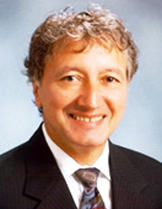
Brian Day (Dr. Profit)

Critics call him 'Dr. Profit'

"Listen to what I say and not what people say I say," Brian Day, president and CEO of Cambie Surgeries Corporation, said at his first news conference last August after being elected as the next president of the Canadian Medical Association (CMA), a position he assumes this August.

Unfortunately, Day, whose claims about Canada's health care system have been widely reported in the media, says different things to different audiences. So no matter how closely one listens to his words, one is left in some confusion as to his real agenda. In his capacity as president-elect of the CMA, Day spends a lot of time speaking behind closed doors to private health insurance companies.

On March 28, for example, he addressed the Los Angeles Association of Health Underwriters, a trade organization of over 500 health underwriters in California.

An ad for the conference went as follows: "Day will discuss at length the disadvantages of providing and receiving care in a government-run delivery system," in what was slated to be a "frank" discussion.

"Day refers to his election as evidence that doctors there are ready to give private health care a bigger role in the Canadian system," the ad continued.

'Profit, profit, profit'

Here's what Day says that interests private health insurance corporations. It is posted on the San Mateo Medical Association's web site in California: "The coming changes will create a massive new industry and enable the Canadian health industry and its workers to enter the international health market and participate in the $2 trillion American health economy. On the basis of extrapolations from other countries, we may see $40 billion a year added to the Canadian health system."

Clearly, in Day's view, there is a lot of money to be made by wrecking Canada's single-payer public health care system. Day estimates $40 billion a year in additional health care spending in Canada.

Why open a private surgical facility? To quote Larry Teuber, founding partner of Black Hills Surgery Center addressing the American Neurological Surgeons Annual Meeting in 2000, "Profit, profit, profit."

Slashed taxes

But wait a minute. Day also claims -- on the same California web site -- that Canada's current level of health care spending is unsustainable: "Health care is approaching 50 per cent of all spending in the provinces," he writes.

This claim is misleading because tax cuts have reduced government revenue and so inevitably public health care spending is rising as a percentage of provincial budgets, but not rising as a percentage of the economy and therefore is sustainable.

So why would someone concerned about rising health care costs give the impression to an American audience that driving up Canada's health care spending to U.S. levels -- Canada's health care spending as a percentage of GDP is 55 percent that of the US -- is a good thing? And why would he deny to the Canadian public that he is advocating the adoption of a U.S.-style system? After all, he stated, "No doctor in Canada I know wants a U.S. system."

Money trumps need

Canadians should not be fooled by Day's double-speak. He is bringing the U.S. model of investor-owned health care to Canada, while convincing people that this is the only way to remedy wait times and other problems in our health care system. Every informed health care analyst has reached the opposite conclusion: we have some serious problems in Canada with our health care system but every one of these problems would be aggravated rather than cured if we were to move towards an American for-profit system of health care.

Remember, every doctor who leaves the public system to work at Day's for-profit clinic makes waiting times longer for those who seek care in public clinics and hospitals. Peer-reviewed evidence shows this seriously compromises access to care in the public system by taking badly needed surgeons, nurses, technicians, and other scarce resources out of public hospitals. Poaching publicly educated and trained health care professionals out of the public system does not add capacity to deliver more health care.

As Shirley Douglas, daughter of Canadian medicare visionary Tommy Douglas, reminds us: "You either want a single-payer system in this country or you want an American-style system. And don't kid yourself that there's anything in between." This is especially true because of the trade agreements Canada signed with the United States and other initiatives to integrate our economies. Advocates of U.S.-style minimal tax rates can't expect European-style deluxe public health care.

Day also claims that Canadian governments can't keep their promise of equal access to health care for everyone. Addressing the annual meeting of the Canadian Science Writers' Association in June 2007, Day said: "We can't make it equal, but we can make it good for people." This claim -- that we can't make it equal -- gets to the heart of Day's values. Roy Romanow called it a perversion of Canadian values to accept a system where money, rather than need, determines who gets access to care.

On the record

The context for Day's conviction that we should forget about equal access is found in his submission to the Romanow Commission in 2002. He called for the repeal of the Canada Health Act, increased privatization and contracting out, the introduction of user fees, and the de-insurance of services. Day also intervened in the Chaoulli case before the Supreme Court of Canada calling for Quebec's health insurance and hospital legislation to be struck down.

Day knows a lot about for-profit, investor-owned health care as president and CEO of Cambie Surgeries Corporation in Vancouver and past-president of the Canadian Independent Medical Clinics Association. Peer-reviewed evidence shows that for-profit investor-owned facilities have a strong tendency to skimp on staff. As a result, patients' lives and health are put at risk. According to Day, at his Cambie clinic, "We spend only 30 per cent of our gross revenue on wages and salaries, compared with 70 per cent in the public hospitals, yet we pay our nurses more." So where is the rest of Cambie's revenue going? Profits?

The American Hospital Association explains why private, for-profit surgical clinics and limited-service hospitals are so profitable. They avoid emergency and complicated cases, focus on patients in good overall health, focus on well-reimbursed procedures, and focus on patients with good insurance coverage. In other words, they cream off the easy cases leaving the difficult ones for the public system.

You too can make pots of money as a physician if you select your patients with a view to maximizing your profit!

Broken trust

The CMA has elected as its new president a corporate CEO whose claims about the merits of private for-profit health care are not supported by the evidence. Brian Day's corporate duties and responsibilities make it impossible for him to represent the merits of the case against for-profit health care. This is known in ethics as a financial conflict of interest.

By blocking major changes needed to solve the problems in Canada's public health system (e.g. team-based care, home, continuing, and preventive care, and accountability for appropriateness, outcomes and quality of care) the CMA appears determined to "drive it South" and put their own financial interests ahead of fixing the problems.

Canadians can no longer trust the CMA to represent the interests of the public health-care system. Canadians should not heed the advice of the CMA and its new leader, Dr. Brian Day, to rely upon the miraculous powers of the market and private insurance. If we do, we will pay dearly for our gullibility.

More dubious claims

Here are other claims made by Brian Day, along with responses made in consultation with physician members of Canadian Doctors for Medicare:

Claim: "The Canadian health system has been ranked 30th in the world by the WHO."

Fact: The 2000 World Health Organization study presented a misleading representation of health care systems, including Canada's. The WHO abandoned this ranking system because of seriously flawed methodology.

Claim: "In Canada 65 per cent of sick children wait a "medically unacceptable" period of time."

Fact: There is no evidence for this claim.

Claim: "At $4,400 per capita [Canada] is the most expensive of all countries that offer 'universal' coverage."

Fact: Canada's per capita spending in 2004 was $3,165 US. It is above the OECD average but below Norway, Switzerland and Luxembourg. The U.S. spent $6100 per capita in 2004.

Claim: "The assertion that our single-payer system is administratively efficient is hogwash."

Fact: Before Canada introduced a single-payer system, spending in Canada and the U.S. was escalating in parallel. After 30 years of single-payer administration, Canada now spends almost fifty percent less than what Americans spend (9.9 per cent of GDP in Canada versus 15.2 per cent in the U.S.) while providing equal or better care. All Canadians are covered while the U.S. has 46 million citizens with no coverage.

Claim: "All other models of universal health care differed from the Canadian model in one fundamental way: They did not exclude competition from the private sector. Canada shared this distinction with just one other country -- North Korea!"

Fact: 30 per cent of what Canadians spend on health care is private expenditure. Canada is below the OECD average on public health care spending. The argument that private for-profit health care does not play a significant role in Canada is false.

Claim: "In our country a dog can get a hip replacement in under a week, but a human may wait two years."

Fact: Access to veterinary care for animals is based on ability to pay. Dogs are put down if their owners can't pay. Access to care should not be based on ability to pay.

Related Tyee stories:

 [Tyee]

32  Comments:

  • Lefty

    18-07-2007

    The value of health

    I was brought up to understand that good health is invaluable, personal observation confirms this to be true.

    What value does he have in mind when he can look after me for 40 percent less expenditure on wages and salaries? Yeah where exactly does that money go? I imagine under his system in a desperate situation it might cost more than my net worth to to save that 40 percent.

    Time to overhaul the CMA, I say. Lets make our medical system better, we don't need a different one.

  • Frank

    18-07-2007

    The real enemy

    The author is right, Dr Day tailors his message depending on his audience. But its still easy to figure out where he stands because now and then he's quite generous with the truth. He wants to get rid of medicare because he's an ideologue.

    The real enemy of course is the CMA because its the doctors of this country that elected him knowing full well where he stands.

  • avandoc

    19-07-2007

    Day does not represent views of all physicians

    "After a tightly contested six-candidate race, Vancouver surgeon Brian Day has emerged as British Columbia's nominee to lead the CMA in 2007-08," according to a Feb. 2006 news release from the CMA. The election of the CMA president rotates among the provinces, and in 2006 it was BC's turn to nominate someone. Day had not been involved in BC medical politics, but he had a high profile given his activites, and he capitalized on the dissatisfaction of some physicians with provincial policies to get elected. But the important point is that he was not elected by the CMA at large but by the BC Medical Association, and only by a small majority. Many physicians are wary of him, and quite a few loathe him. He he has difficulty keeping his roles straight when he speaks. His promotion of the commercialization of medicine is not universally embraced by his colleagues.

    Thanks for the expose, but next time consider getting views from his opposition.

  • switek

    19-07-2007

    Cherry Picking from Public Health Care

    The author makes the comment…..

    “Canadians can no longer trust the CMA to represent the interests of the public health-care system”

    It’s important that we realize be it the CMA, BCMA, HEU, BCNU, HSBC these are all organizations that are there to serve the needs of their own membership first and foremost and the public should always be aware of that.

    However I am disappointed that the author tries to mislead us and tries to hide the fact that health care costs are rising. Trying to hide the increases in costs by making convenient comparisons to current economic and GDP growth trends solely because they are at present increasing as well is irresponsible. When our boom and bust BC Liberal economy eventually tanks our economic growth and GDP will begin to plummet; but will our health care costs and demands decrease accordingly? They will not.

    We must be vigilant to protect our public health care system. At present we can afford it. But we must be able to keep it affordable and ignoring the rise in costs or assuming that the economy well continue to keep pace is not prudent or responsible. We have to keep for profit interests away as they too; will only further drive up costs.

    Sure people like Mr.Day can operate a clinic for less money than a public one. But his clinic does not have to operate 24 hours a day and he has the luxury of turning people away that he cannot treat. I am certain if his clinic had to run like a small hospital, treating everyone, 24 hours a day, he would find that his overhead would be far more than 30% of gross revenue. In essence his clinic cherry picks from the health care system, and cashes in accordingly.

  • Fiat lux

    19-07-2007

    The destruction of Canada's

    The destruction of Canada's health care system was one of the policies advocated by the Reform Party and Harper was later the head and a lobbyist for the National Citizens' Coalition, set up for the express purpose to get rid of universal health care.

    In short, the writing is on the wall and it is not only Day who does the doublespeak.

    There was some kind of health care conference at Whistler good many years ago, when professor emeritus Herb Grubel of the SFU was still a Reform MP. He was shown on TV standing up and saying: "No country can afford universal health care".

    Which means that those who can't pay $300. to $1000.and up, private insurance rates, as people pay in the USA, are welcome to rot and die. The horror stories our American friends are telling us of their system is utterly disgusting and shouldn't be permitted in any democracy.

    But then, this is what "economic competition" is about: You steal and survive, stay honest and croak!

    At the same time, we should also consider why the health care system is overloaded?

    The answer is very simple: Because, thanks to the wealth creating schemes of our economists and big business, we're getting poisoned in our foods, our waters and our air.

    As Wacky Bennett's highways minister Phil Gaglardi said it: "Pollution is the sweet smell of money".

    And he was right, with the exception of the word "sweet", as the scores of bald little kids with leukemia, the daily growth of all forms of cancers easily prove.

    50 years ago the overall cancer rate was about 2% of the population and whne medicare was first introduced, there were no waiting lists for anything, for many years.

    Now we have a cancer rate moving to the 50% mark, our stores are filled with chemically laden foods, Chinese products and we're selling the country to "foreign investors", who bring nothing but hot air, through their bought politicians and economists who with their crooked accounting systems are misleading the public into a false euphoria that everything is A-OK.

    Or as dear Maggie Thatcher said: "There's no other way !"

    Well, I can remember when there was no other way than the nazi and communist ways and hope for the day, when people wake up to the fact that they're being led up the garden path by another set of crooks, into the slaughter house, in the name of "wealth creating competition"

    Ed Deak.

    ]

  • NoLeftNutter

    19-07-2007

    Author's "facts"

    Quote:
    This claim is misleading because tax cuts have reduced government revenue and so inevitably public health care spending is rising as a percentage of provincial budgets, but not rising as a percentage of the economy and therefore is sustainable.

    Clearly, the author is very selective about his reporting of the facts as well. In the latest 5 years consolidated government expenditures across Canada have risen from $481B to $601B, about 25%. Hardly the stuff of reduced government revenue.

  • Frank

    19-07-2007

    Health care costs

    Quote:
    However I am disappointed that the author tries to mislead us and tries to hide the fact that health care costs are rising. Trying to hide the increases in costs by making convenient comparisons to current economic and GDP growth trends solely because they are at present increasing as well is irresponsible. When our boom and bust BC Liberal economy eventually tanks our economic growth and GDP will begin to plummet; but will our health care costs and demands decrease accordingly? They will not.

    Our GDP is going to plummet? You mean go into negative numbers? No chance unless you're expecting a 1930's style depression.

    Comparing health costs to GDP is the best way to measure it. Because so much of our GDP is driven by adding people to the economy. Just as many health care costs is driven by adding those same people. They go hand in hand. Adding 200,000 immigrants a year increases our GDP but it also costs our health system more money.

    What we need are people that can manage money better. The Liberals can't. In spite of the fact they spend more money they get worse results than the NDP achieved. Because they're blinded by ideology they refuse to change their course and believe that if they simply do more of what they've been doing somehow it will all work out.

    Quote:
    We have to keep for profit interests away as they too; will only further drive up costs.

    Agreed. Wouldn't it be prudent to look at where costs are being driven up and notice that its the private side of the health care equation where costs are skyrocketing the most and think to ourselves maybe we need more public and less private?

  • James Burns

    19-07-2007

    Physicians are a BIG part of the problem

    Far too many physicians are a part of the problem. Far too many physicians put profit before patients. Far too few of the physicians who claim to support universal health care put much effort into defending it.

    One of the biggest problems in health care today are the barriers physicians have created, through their professional associations, that restrict entry into their profession. In the late '80s and early '90s the CMA was concerned about a physician oversupply that would reduce their economic clout. They successfully slowed the growth of physician numbers by greatly slowing the growth of medical undergraduate spaces at universities, by making getting admitted into a medical program vastly more difficult, and by using their influence to greatly increase the costs of tuition in comparison to other programs. They also greatly increased the restrictions placed on foreign trained physicians (including those trained in the US) who seek to practice medicine in Canada. In fact, Canada probably has the most restrictive policies in the world for foreign trained physicians. They turned general practice medicine into a specialty called family practice that requires 3 years of specialty training. I could go on.

    At the root of all this, to be blunt, is greed. Physicians have positioned themselves so as to dominate the delivery of health care at all levels. The CMA effectively functions as a massive union that maximizes the cost of physician billing, and works tirelessly to eliminate any competition, and squelches the voices of any physicians who step out of line. Ironically, all this domination of health care delivery has led to the situation where many physicians are over worked, and do not have the ability to properly care for many of their patients. This has led to a growing public distrust of western medicine, as more and more people have negative experiences with phsyician care.

    If we really want to decrease the costs of health care, decrease wait times, and increase the quality of care then one of the best ways is to increase the number of quality physicians. It's just simple economics. But the biggest opponents to that solution would be most physicians, because it conflicts with their financial interests.

  • G West

    19-07-2007

    Dr Day

    I think he looks quite a bit like a young Danny Kaye - perhaps that's why I find what he says and seems to believe so very funny.

    Electing him to lead the docs of BC and thinking he'll do anything effective to further privatise medicine in this country was a big mistake.

    Just as the phony round of Health Care Conversationshere in BC have revealed exactly what Canadians feel about universal health coverage for ALL citizens (not just Gordon Campbell's rich friends) - the reactions to Dr Day will result in less, not more, support for his self-centered dodging of the truth.

    He'd have been better to stay in hiding!

  • cghzd

    19-07-2007

    health care

    I was a one of the unwashed that was able to take part in the Conversation On Health.
    According to the Gordo Campbell's Government own figures published in the cover information handed to each participant to try and scare us into believing that our health care costs are not sustainable,and after the BS is factored out, we in BC pay pay $8.14 per day each in heath care.
    Most people in BC piss away twice that amount on coffee and beer per day, so is our health care system sustainable, you bet your it is.
    Our health care syte

  • greengreen

    19-07-2007

    Can one find out what

    Can one find out what physicians work at the Cambie Center? I recently got a family doctor at a Yaletown clinic. He apparently works only two mornings a week there and I am wondering what else he does????

    PS. Please get rid of the "expand this comment" notation.

  • switek

    19-07-2007

    Costs are increasing

    I find those who elect to criticize the Conversation on Health as extremely short sighted. We should all embrace the Conversation on Health for allowing British Columbians from all corners of this province to come out and overwhelmingly support public health care. The message was loud and clear and we should be thankful the turnout has been generally strong. We in BC may disagree on our ideas to make health care better, but we are united in our views that the solutions must be found through public and not private health care.

    I am sorry to Frank, that I did not do a better job in expressing my thoughts earlier. I am not suggesting that our GDP is going to experience a 1930’s type of recession. I am only trying to point out that it is unrealistic and dangerous to think that our current economic and GDP growth rates will keep pace with the increases in our health care costs and demands.

    GDP and political ideology aside, our population demographics are very transparent and recently confirmed by Stats Canada. Our BC population is getting older, and as we age we place more demands and costs onto our health care system. These facts, and the increases in health care spending trying to keep up with demands, should not be in disrepute.

    Our health care system is getting more expensive and we need to accept that and find public solutions to keep the costs under control. Trying to bury our heads in the sand and pretending otherwise will only result in a further justification for privatization down the road. The Auditor General does not lie. We are spending more money on Health Care year after year. Why do some people try to pretend otherwise ?

  • G West

    19-07-2007

    switek

    The conversation on health care was a waste of time, in my view, because:

    a. it was clear from the beginning that Abbott and Campbell weren't listening; and

    b. the Romanow report covered all the issues much more deeply and comprehensively; and

    c. the Romanow report has the advantage and value of providing practical and economic advice and solutions going forward.

    Check it out:
    http://www.hc-sc.gc.ca/english/care/romanow/hcc0086.html

  • DPL

    19-07-2007

    A few years ago I broke a

    A few years ago I broke a few things in my leg while holidaying in Victoria. A few days later I was back in Vancouver at the UBC Hospital and being cared for by Dr. B. Day, using my CARE Card.
    It took four more bits of day surgery to sort things out. I have no reservations on his ability. The interesting thing was he mentioned more than once that they simply don’t get enough operating room time. Maybe he set up his own deal to get the required time in operating rooms. And money flowed into his system. I do notice that at least one doctor in a Vancouver clinic works at the Vancouver General as well. So the argument is a doctor in a clinic is one less in the public system is still a sound statement, at least part of the time.

    I noticed that a Liberal MLA, a couple of years ago had a back issue and whipped out his credit card to the tune of around 7,000 reported dollars and he was fixed at a private clinic. I don’t know what a surgeon doing the same procedure in the public sector would be paid but it looks like a few of those dollars were spread around to staff and facilities . We have, or had the facilities and the staff already paid for by our tax dollars.
    I guess the private system has a few folks investing in the clinics. In my view, if the waiting times were drastically reduced folks like us who now wait for a year or so for a two hour operation would stick to the public system. Would make short work of the private units. But long term pain sort of makes folks who can scrape up the money do just that. Sad way to run a system so let’s lay some blame on the governments who see to restrict a lot of services including operating times. But it was the doctors who voted Day into the position he holds.

  • Jeffrey J.

    20-07-2007

    We must protect Universal Medicare

    Excellent article. In the early 1960's, at the beginning of Medicare, Canadian doctors took preemptive action by withdrawing their services. Yes, doctors went on strike. Why? To oppose Medicare. Once Medicare became universal, doctors have accepted our more humane system. But as our corporate elites unravel Canadian society, doctors are being lured by greed to help destroy a great culture. Very sad.

  • alive

    20-07-2007

    Cold blooded surgeon

    Some doctors are clearly aiming for maximum profits!

    I was referred to a surgeon who was happy to "fix" me within a month provided I paid well over $4000 for his private time.

    When I replied that I was not prepared to pay, the smile disappeared and he said there could be up to a four year waiting time!

    After about 6 months I called his office, on a hunch, and was told that my case had been approved, would I care to make an apppoinment?

    They had not contacted me, and seemed to have no plans to do so. I was treated as a charity case because I did not agree to pay for his private enterprise.

  • Fiat lux

    20-07-2007

    There was a similar case

    There was a similar case shown by Ron Bencze on BCTV some months ago, where a relatively young woman was suffering from growths on her heels and hardly could walk. She was told $3,000, or 3 years waiting for an exam.

    I wrote to the station that she most likely was suffering from "spurs", and if she drank a half glass of warm water with a tablespoon of applecider vinegar mixed in it every morning for a few days, the spurs should disappear by themselves. Happened to me several times and know others who also got rid of them this way.

    Don't know whether they ever passed it on to her, but a whole slew of illnesses can be cured with the simplest, natural methods
    people have been using for centuries, but now have forgotten and everything is up for cutting, or doping.

    We haven't taken any prescription medications for many years, hardly ever see a doctor, are perfectly healthy and can work full days out and inside at 80 and 79.

    Sorry if this isn't on topic, but I couldn't resist commenting on how the system is misused and could be lightened.

    Ed Deak.

  • DPL

    20-07-2007

    Someone wanted to know if a

    Someone wanted to know if a certain doctor worked for a private clinic. Easy to find out as they have web sites and list their doctors and what parts they work on.And their wait time can be as little as the next day. I mentioned awhile back that one name shown was a fellow at Vancouver General and he worked at a private clinic as well. The sad thing is when I needed a MRI, the specialist told me it should be sooner than later so maybe I should get it done privately. I know he even wrote that down in his specialist report. He didn't like the private bit but was concerned about delays. I told him no way was I paying some vulture $1400 for a 20 minutes test on a machine my taxes paid for and some private guy gets to rent on off hours. The damn things run 24 hours a day but hospitals are too cheap or poor to staff them with technicians. Same with nerve testing, no techs. so the specialist spends a lot of hours a week in the hospital doing those tests which of course mean longer wait times for his patients. Many of the specialist reports are written and faxed by the specialist themselves. Another waste of specialist time but faster for the customer. Nobody seems too inclinded to streamline the system so delays get longer. Hey what's another year or so as the client gets sicker less flexible and less liable to have a successful procedure when it all comes together.

  • Fiat lux

    20-07-2007

    This line seems to be dying,

    This line seems to be dying, but here's a health story from today.

    My wife was talking to one of our local neighbour/friends, a rather large lady in her 70s, who has a homemaker coming to help her once a week, and twice a week in the summer to help her have a bath, etc.

    The homemaker came today and told her that she can't come next week, but would she mind if a man came to give her a bath ?

    Guess what? She said "no way".

    This little story is typical of our healthcare system today.

    Ed Deak.

  • G West

    20-07-2007

    Texada Island

    Interesting story about the only GP on the Island. He's been doing 24/7 for the last two to three years because the ministry changed its policy and stopped paying for a locum on weekends etc so he could have a break.

    The doc there has appealed this in every possible way, to no avail. Now, this weekend, for the first time the local doc has said enough - 'I'm not on call this weekend!'

    The Campbell government is and has been doing everything it can to subvert health care in this province.

  • Selranospm

    21-07-2007

    Public Health Care

    Doctor Day known very well that the public health care system subsidizes the private care clinic he runs for a profit. If private for-profit health care could provide a universal and comprehensive health care for this country more efficiently everyone would adopt it. But anyone who has looked into this subject knows very well that private for-profit cannot provide a universal and comprehensive health care delivery more efficiently and therefore has to piggyback the public health care system by cherry picking certain health care services, such as Dr. Day does, and certainly can make a profit. However, this is only advantageous to those with money and to people like Dr. Day who is interested in making a profit primarily.
    What he is doing is not a surprise or even remarkable. He is simple exploiting the public health care system for his own pocket book. Unless Canadians deal with this, the single-payer and more efficient public health care system will be undermined further for the likes of more such so-called Doctors like Day.

  • Selranospm

    21-07-2007

    Taxes and Health Care

    If Canadians are going to continue to allow successive governmnents of both levels to cut and cut taxes, the level of health care services will continue to be lessened or eliminated. This is to the advantage of the wealthy who will continue to receive a proper level of health care regardless. It is not difficult to grasp the results that neoConservative governments are aiming for. Stephen Harper has a life-long objective to eliminate universality and he has not stated he has abandoned that objective. He has stated he wants Canada to be the lowest taxing country and to achieve that outcome will naturally affect universal health care delivery provided by a public system.
    Corporate taxes represented over 50 percent of the public treasury back in the 1950s; today is less than 9 percent.
    So-called free trade doesn't involve the professions such as doctors because if it did, it would never have been signed. It deals with manufacturing and this allows corporations to shift jobs offshore. If doctors, for example, were competiting with doctors internationally, their incomes would come down and health care costs would decline too. The other robber barons are the drug companies. After the Patent Act drug companies have been granted monopoly control over pricing as a gift from the Mulroney government. End this monopoly and return to compulsory licencing instead of the twenty plus years of market exclusivity for drungs and costs will be lower too. After all drugs are a higher costs than physican cost these days.
    The solutions are there but it will take political will that will have to be forced on the politicians by the population.

  • alive

    21-07-2007

    Come the revolution!

    Quote:
    The solutions are there but it will take political will that will have to be forced on the politicians by the population.

    Good post Selranospm!

    Now, how do you envision this to happen?

    Considering that the establishment already has its safeguards in place and owns the media, it will take civil disobedience, uprising or to be blunt a revolution!

    There are no democratic means left to undo what has been done in the name of free enterprise!

    If you see an alternative,please speak up!

  • Fiat lux

    21-07-2007

    One of these days people

    One of these days people will also have to realize that private enterprise and free enterprise are opposing theories and systems.

    Private enterprise works on the principle of supplying the necessities of life, while "free enterprise" is a gilded version of Soviet style collectivization and the biggest enemy of real private enterprise as its purpose is to reduce services and the wages and incomes of producers, while raising profits to obscene levels, dictated by the stockmarkets. E.g US health insurers, already counting their expected profits after Canada is sold to the SPP and NAU.

    Ed Deak.

  • The discussion for this story is closed. No more comments can be added.