
Opinion

Money Where Your Mouth Is

Why private dental insurance really bites.

By Marc Lee, 26 Apr 2006, TheTyee.ca

smallteeth

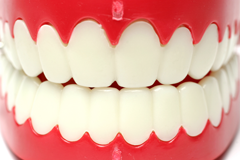
Let's talk about teeth. Our experiences with dental care are a great way of getting our heads around how private health insurance works and whether this is a road we want to travel. For Canadians, going to the dentist approximates what our American cousins experience when they go to the doctor.

Take me, for example. A couple months ago, while crunching on a pistachio nut, I broke off a big piece of one of my molars. A week later, it was good as new after half an hour in the dentist's chair.

What about payment? Simple. I didn't pay anything. Behind the scenes, an electronic form was processed and my private health insurance company paid the dentist directly. I never saw a bill and had no idea how much the cost of my treatment was.

Out of curiosity, I looked up my recent visits to the dentist on my insurance company's website. I received about $600 in dental services last year. My semi-annual checkups come to $190 per visit, plus an extra $220 to fix the broken molar.

Unlucky 40 percent

I am one of the lucky ones with gold-plated coverage. Thanks to my employer, who pays the bill for a workplace extended health care plan, my family gets excellent dental care.

My own access to dental care is a model for the way it should be for everyone - health care should not stop where your mouth begins. But according to the Canadian Institute for Health Information, only three-fifths of people are covered in some form by a private health insurance plan. There are differences in the quality of private insurance plans. Some people have to pay a monthly fee, and have a co-payment or deductible associated with their treatment. But they are still fortunate, as the bulk of their dental costs are paid for.

The remaining two-fifths of the population, those without any coverage, have a simple choice: pay up or go without. And the data shows that the majority of those without coverage simply do not get the care they need. Over a quarter of adult Canadians did not seek needed dental care in 2004 because of cost.

This is essentially how private health insurance works: some get top-notch coverage, some get adequate coverage, others get nothing. And the higher your income, and the better your job, the more likely you are to have private health insurance.

There are a few exceptions: most provincial health care plans cover dental care for people on welfare, and if you were ever in really bad shape, the public system would cover an operation (at a greater cost than preventative checkups, of course).

Huge hidden subsidies

Ironically, private health insurance is highly subsidized by the public system. Going to the dentist has an economic value to me, but I pay no tax on the "income" I receive in the form of health benefits. And if my employer were a for-profit operation, they would be able to deduct the costs of the workplace health plan.

All counted, the Canada Revenue Agency's forgone tax revenue is a subsidy to the private health insurance industry of around $5 billion per year, according to UBC Health Economist Robert Evans. In the US, the subsidy is closer to $250 billion, worth one-third of companies' premium revenues.

In spite of the large public subsidy to private insurance - and public coverage for the very poor, seniors and veterans - there are 45 million uninsured Americans who live in fear of a health care crisis. And rising health care costs are prompting companies to reduce or eliminate their private health insurance benefits in the name of staying "competitive."

US switcheroo?

As a result, Canada's public insurance model is getting some attention. American economist Paul Krugman points out that in the US system "government pays directly or indirectly for more than half the nation's health care, but the actual delivery both of insurance and of care is undertaken by a crazy quilt of private insurers, for-profit hospitals and other players who add cost without adding value. A Canadian-style single-payer system, in which the government directly provides insurance, would almost surely be both cheaper and more effective than what we have now."

Just as Americans are starting to wake up, private health insurance in Canada is on the verge of intruding into the public system. Last year's Supreme Court Chaoulli decision was heralded as a victory for private health insurance in Canada - and without a single shrill cry of "judicial activism" by conservatives. This year, private options are on the move in BC, Alberta and Quebec.

We should be moving in the opposite direction, by rejecting the inequities and inefficiencies of private health insurance and by expanding the coverage of the public system. For starters, let's put our money where our mouth is and add dental coverage to the list of publicly insured health care services.

Marc Lee lives and works in Vancouver, where he is a Senior Economist with the BC Office of the Canadian Centre for Policy Alternatives.  [Tyee]

10  Comments:

Login or register to post comments

  • Cycling Commuter

    5 years ago

    Comments on "Money Where Your Mouth Is"

    Vancouver Sun reporter Gillian Shaw wrote a fascinating article about dental insurance about 10 or 15 years ago. She explained how a medium-sized business that was in a financial bind examined all their costs under a microscope to see where there was wastage. They found they were paying something like a million dollars per year in dental insurance, but their employees were receiving only half that amount in dental services.

    The company decided to dump the insurance and have their personnel department pay employees' dental bills directly. The personnel department was already spending lots of time doing dental insurance paperwork anyway. Paying employees' dental bills directly didn't make much difference to the personnel department's workload. Once it started paying employees' dental bills directly, the company also had some motivation to get rid of junkfood vending machines and put more fresh salads etc. in the cafeteria.

    The trouble with most proposals floated by the Canadian Centre for Policy Alternatives is that they completely insulate people from the consequences of their actions much like Quebec's no-fault auto insurance. No-fault auto insurance causes auto collisions and deaths to increase due to the fact that it doesn't identify and discourage dangerous drivers.

    Instead of going to a no-fault model of dental insurance, it would be better to provide universal dental insurance with the premiums being paid by the industries that cause dental damage to begin with, much like the Workers Compensation Board covers workplace injuries. Dental insurance premiums should be gathered through taxes on such things as pop, candy and hockey thugs.

    The world cost of sugar is artificially low. The EU has been massively subsidizing their sugar farmers for years. EU politicians are addicted to sugar farmers' votes. EU sugar farmers are addicted to subsidies. Exported subsidized EU sugar is artificially lowering the cost of sugar everywhere. If sugar wasn't artifically subsidized, food manufacturers would add less sugar and more of other ingredients.

    The World Health Organization has proposed an eight percent sugar tax to pay some of the health care costs caused by excess sugar consumption. The best approach would be to end the sugar subsidy and impose a sugar tax as well. Eight percent is a good start, but considering how much damage excess sugar consumption does to health through dental damage, diabetes, and secondary effects of diabetes such as heart disease, kidney disease, blindness, limb amputations, impotence etc., the sugar tax should eventually be a lot higher than eight percent. Given that sugar is ultimately behind a lot of cases of impotence, the $500 per year that the BCTF pays it's $100,000 per year staff for Viagra should be covered by a sugar tax instead of being squeezed out of struggling property tax payers.

    As for hockey players, why should struggling taxpayers get stuck with the bill to fix teeth knocked out by multimillionaire hockey thugs? A dental tax on hockey that precisely matches the cost of hockey-related tooth damage will motivate the hockey industry to provide more tooth protection and take stronger action against thugs in their midst.

  • skeptikool

    5 years ago

    It's not only with dental work. When the recipient is insured, I feel there is too often indifference to what is billed for the procedure. One prominent Vancouver talk show moderator admitted that he didn't care whether certain tests were done by the hospital or private clinic. He chose whatever suited his convenience.

    It wouldn't be for everyone to make or repair their own dentures but I believe there is an entrepeneurial opportunity for a business in do-it-yourself kits.

    I was further persuaded of such a scheme when I learned, as I recall, of an aged and senile woman being charged $17,000 for dental work.

  • Jack's

    5 years ago

    Normally, dental insurers charge an arm and a leg for private insurance and have a set maximum for what they will pay in a certain fiscal year. Even with insurance the woman who paid the $17,000 bill would still be liable for about $14,000 of it in most cases.

    If you find a dentist who is honest and responsible and reasonable, stick with him and you will be ahead of the game moneywise.

  • Bytesmiths

    5 years ago

    Dental care is health care!

    Chronic inflammation that correlates with common heart and vascular disease is also correlated with poor dental health.

    Therefore, it is in Canada's interest to take care of her citizens' teeth, as Canada will see lower health care costs as a result.

    That's the beauty of government-funded, single-payer systems: all sorts of feedback loops provide incentives for better health. In the US, the government collects more tax revenue when people are unhealthy -- a negative incentive to provide for common good health.

    I am immigrating to Canada next week, due in no small part to your excellent health care system. As a self-employed "cultural creative," I find it impossible to afford health insurance in the US.

    In fact, were it not for my "four magic words," I would not have health care at all. But I've discovered a phrase that is good for at least a 50% discount whenever I go to a doctor: "I don't have insurance." Is this a dysfunctional system, or what?

    Unfortunately, it will be three years before I can vote for Canadian politicians who will protect your health care system. (But you don't have to be a citizen to campaign and make a lot of noise!)

  • Logjam 603

    5 years ago

    and the dental system works well, no lineups, na annual strikes, lots of dentists to chose from.

    maybe we should look at the Dental services delivery model and retrofit our Healthcare system.

    Publicly insured, mix of private and public delivery would be the best.

    Without any incentive, the public system won't change, it will get more inefficient - we shovel more and more money off the truck every year and services get worse and worse very year - go figure, there has to be huge inefficiences and wastage in the current system.

    There is no such thing as an efficent monopoly.

  • Percy

    5 years ago

    My dentist always asks, "Still working in the same place?", which I understand to be code for "am I free to bill the limit?" (actually, he bills above the fee schedule). I have always believed that uninsured people pay more reasonable fees.

  • Isabella2

    5 years ago

    Thanks to Marc Lee for his excellent opening article - we need more of this type of open discussion. In fact, BC could well do with holding regular forums, organized on the Citizens' Assembly model. When a dysfunctional healthcare system costs us around 43% of the provincial budget, anyone with a brain must recognize something needs to be done - and fast.
    When the Campbell Liberals ascended to the throne, they made indiscriminate cuts to the system and, if we did not know it then, we know now that they did not have a clue what the end product should look like. The system went from bad to seriously worse - and the very worst thing they did was to eliminate from coverage, most of the ancilliary services that allowed for preventative and/or lower cost procedures. Here is one example of how such ill-conceived actions negatively impact the provincial bottom line:

    About ten years ago, a 40-year old female was in excruciating pain from a back problem that followed packing around her 3 little ones on one hip. Ended up lying on the floor, unable to move. Trips to the primary care physician did no good and resulted in a referral to a Neurosurgeon, who immediately recommended an operation to fuse 3 vertebrae. The patient, who believes in knowing all sides of the story, asked some questions. The attitude of the surgeon was, I don't have time to explain everything, you would not understand it anyway and that's my recomendation, do you want it or not?'
    Luckily for her, she thanked the surgeon, told him she'd be in touch, and left his office for good. She did this in part because, while waiting for the appointment, she heard of a local, fully-qualified, Chinese-trained physician who was working wonders on such back conditions, using a form of needle treatment which, in lay terms, is best described as a type of acupuncture. [If anyone is interested they can Google on Dr. Chan Gunn and ISTOP - Institute for the Study and Treatment of Pain]
    Now back to preventative health care: The cost of 6-7 treatments by Dr. Gunn was less than $1,000. and the patient remains pain and trouble-free.
    Today, that female has a friend who is on his second back fusion operation because the first one caused problems with adjacent vertebrae, and so the neurosurgeons are gradually working their way up the spine, with more a more limitations of movement as a result. Can anyone guess how much that all costs? My guess is that costs to the system for that patient have already exceeded $10,000, and so it continues. Can anyone tell me why the Premier and his government so stubbornly refuse to see the light?
    My guess is that, when one takes into account all of the complementary support networks required for an acute care/chronic care patient in the regular system, preventative dentistry, healthcare, pharmaceuticals and eye examinations would save the provincial budget about 25% overall.
    The question is, does the government have the wit to tackle the problem - or are they happy just sending the Premier on out-of-town "fact-finding trips" that achieve absolutely nothing?
    As a final comment, this blog discussion shows that the Canadian immigration system is also dysfunctional. $54/month premium for new arrivals who are not yet citizens is supposed to fund his/her health care? Give me a break -and make non-citizens - those who are not genuine refugees that is - carry their own private healthcare premiums until they at least get the Citizenship certificate in their hands. So long as such a plan is not in place, Canada is a mark for any Tom, Dick or Jane who sticks their big toe on the beach.

  • kootowl

    5 years ago

    Dental work for welfare recipients is far from good. Many friends of mine on fare-well have had to have their teeth extracted. While it is true that restorative work might have been avoided had these folks had the means and inclination to go for regular check-ups and cleaning, etc., cost was often a deterrent, as the article points out.

    We have had benefits, locally, for some folks who needed dentures. When you've had several teeth extracted, health problems often follow, and welfare was not going to cover the cost of dentures. Go figure.

    My plan is not gold-plated, but when I last went to have a chunk of lost tooth replaced, I had to make some decisions about the kind of crown I wanted, and whether or not I wanted to have my old amalgam fillings (in the same quadrant) removed and replaced with a healthier composite material. Even with the workplace extended health care plan kicking in, I walked out of the dentist's $745.00 poorer.

    Isabella2, thanks for the ISTOP connection.

  • Isabella2

    5 years ago

    Kowtool:

    The fact that you were $745 poorer when you left the dentist's office, tells much of the story. I don't know the amount of the current average monthly welfare cheque, but would be willing to bet that a single person would be expected to exist for a month on less than the amount you paid your dentist.
    I'm not advocating that professionals should be paid less and have no resentment against the wealthy. What I am saying is that the billions of taxes we pay to all levels of government need to be spent more effectively. We need more value for our money. I'm sick of seeing it squandered on huge severance packages and boondoggle projects, while the working poor struggle to get a roof over their heads and a filling in their tooth.
    I'm beginning to think that a week spent on the Downtown Eastside should be a prerequisite for any candidate for political office. I they were to realize that about half the population or more is only one step away from vagrancy, maybe they'd think twice before crowing about our "booming economy."
    And you're almost right when you say, "when you've had several teeth removed, health problems often follow". Fact is health problems alwaysfollow.
    Keep on talking, Kootowl, sooner or later someone will have to listen.

  • freebc

    5 years ago

    I was on a plan recently where I shared the premiums with my employer. After some quick figuring, I was far better off self insuring. For what I was paying out each month, I could afford to spend some very comfortable time in the chair.
    Besides, insurance companies are in their biz for PROFIT$. $$$$$ rules everything an insurance company does.
    Did you know that any form of insurance policy is a form of gambling?
    It is. You are betting that you will get more out of them than they will out of you before you die or go to the dentist ect.
    Did you ever wonder why life insurance has a two year provision? You have to pay premiums for two years before they will pay out. Check your policy.

    • No best comments selected by an editor for this story yet. To see all comments, click the All Comments tab, above.
    • The discussion for this story is closed. No more comments can be added.