- Ms Kaye is a Tyee Builder. You can be, too.
- Mary Carlisle is a Tyee Builder. You can be, too.
- Prem Gill is a Tyee Builder. You can be, too.
- Nancy Flight is a Tyee Builder. You can be, too.
- Justin Everett is a Tyee Builder. You can be, too.
- John Westover is a Tyee Builder. You can be, too.
- Nora Etches is a Tyee Builder. You can be, too.
- Edward Henderson is a Tyee Builder. You can be, too.
- Bharadwaj Chandramouli is a Tyee Builder. You can be, too.
- Dean Chatterson is a Tyee Builder. You can be, too.
- Marius Scurtescu is a Tyee Builder. You can be, too.
- Robert Parkes is a Tyee Builder. You can be, too.
- James Murton is a Tyee Builder. You can be, too.
- Susan Doyle is a Tyee Builder. You can be, too.
- Vincent Strgar is a Tyee Builder. You can be, too.
- Helen Spiegelman is a Tyee Builder. You can be, too.
- Subir Guin is a Tyee Builder. You can be, too.
- Kimball Finigan is a Tyee Builder. You can be, too.
- Joanne Manley is a Tyee Builder. You can be, too.
- David Leach is a Tyee Builder. You can be, too.
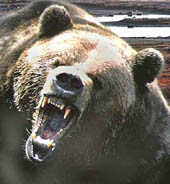
Article Missed the Grizzly Truth
Raincoast rebuts Tyee piece on buying hunting rights.
While the rest of the global conservation community applauded Raincoast Conservation Society's purchase of commercial trophy hunting rights throughout a vast region of BC's central coast, Eric de Place of Northwest Environment Watch (NEW) chose to produce an opportunistic hit piece, published in The Tyee, targeting this cutting-edge initiative.
The NEW article was extremely uninformed and exhibited a significant lack of understanding of grizzly bear biology, as well as the ecological, political and cultural context in which Raincoast's initiative has occurred. But it is easy for an armchair critic like de Place to take pot shots from his ivory tower "think tank" when his criticism is based on such superficial arguments.
De Place's views are particularly uninformed when it comes to the conservation rationale behind Raincoast's initiative. To make a sweeping statement such as "I'm not sure that hunting is bad for the species being hunted" is not only glib, it echoes the anti-scientific dogma that is at the core of the BC trophy hunting lobby's agenda. In addition, de Place naively ascribes the BC trophy hunting lobby a conservation ethic based on his American experience with what he terms "the hook and bullet crowd." If de Place had done even a modicum of research, he would have been made aware that trophy hunting special interest groups have actually been hostile to protecting sufficient habitat for grizzlies throughout the Great Bear Rainforest, and in some cases, have even advocated for increased logging.
Proposed land use plans for the central and north coasts would allow grizzly (and other carnivore) hunting across the majority of the landscape, as well as trophy hunting within most protected areas. Equally troubling, is that the kill quotas are based on the province's wildly inflated grizzly population estimates in which virtual bears predominate and statistical uncertainty is conveniently ignored.
Given that the land use plans will likely leave more than 70 percent of grizzly habitat on the central and north coasts unprotected from logging and other industrial activity, the lack of protection for the bears themselves from the unnatural mortality represented by trophy hunting becomes even more problematic. In light of this, Raincoast's initiative becomes even more important.
Some key points
Habitat protection and species protection are inextricably linked; artificially separating these issues is an old school approach to conservation that is scientifically outdated and ignores the ecological impacts associated with the direct killing of top predators. Here are a few points de Place would have done well to take under consideration before penning his article:
In an exhaustive scientific review of the BC government's approach to grizzly management, wildlife scientists Dr. Brian Horejsi, Dr. Barrie Gilbert and Dr. Lance Craighead concluded that "there is evidence to suggest that grizzly bear density estimates for coastal BC represent populations suffering from substantial decline." Grizzly bears have the lowest reproductive rate of any land mammal on the North American continent. One reason for this is the late sexual maturation of female grizzlies, as they do not start breeding until five to eight years of age. If optimum conditions exist, breeding females will produce only one to three cubs at two to three year intervals. In addition, there is a relatively long two to three year attachment of young grizzlies to their mothers. Grizzly bear populations are especially susceptible to the impacts of sport hunting because of these reproductive limitations. Grizzlies do not have the biological characteristics of a prey species; they reproduce slowly and their populations recover slowly from human induced mortality.
Cost of trophy hunting
Scientists are now learning that trophy hunting can change the very nature of the exploited species. Conservation biologist Chris Darimont of the University of Victoria points out that the evolutionary impacts from trophy hunting have been neglected for far too long. Darimont states that "trophy hunting, which targets larger (and, as a byproduct, reproductively mature individuals), selects for slower growth rates and favours reproduction at earlier ages and smaller sizes. The implications are serious; these human-imposed evolutionary changes can reduce population growth rates. We are now seeing this in everything from fish to mammals. This has not been examined in hunted carnivore populations, but could very much apply on First Principles."
Compounding matters is the unsettling nature of the BC government's ever-changing grizzly population estimates, from which the province crafts a "harvestable surplus." From 1972 to 1979, the province estimated a population of 6660 grizzly bears.
The population estimate of 6660 was nearly doubled in 1990 to 13,160 grizzly bears, using a questionable "habitat suitability" model. In 1995, the province "adjusted" the estimate to a range of 10,000 to 13,000 grizzlies. The province has arbitrarily upped their population estimate once again, claiming there are now 17,000 grizzlies in BC. None of the population estimates crafted by the province have been vetted by the hallmarks of scientific process, such as peer-reviewed publication. A few years ago, a former BC government biologist revealed that the Ministry of Environment calculates "a theoretical potential huntable grizzly bear surplus based on inappropriately applied habitat suitability indices . . . virtually all grizzly bears could be exterminated in BC by sport hunters, while government habitat suitability measurements alone would continue to calculate a theoretical potential bear abundance and continue to establish a harvestable surplus."
In Quammen's tracks?
Quoting from fellow American David Quammen, a popular devotee of the aforementioned old school wildlife management approach, de Place implies that eco-tourism as an alternative economic activity on the BC central coast will somehow be untenable. But once again, his opinion belies the facts. Three years ago, Raincoast collaborated on a comparative economic study with the Centre for Integral Economics (ironically, a BC based affiliate of de Place's organization, NEW) that showed that grizzly bear viewing generates twice the annual revenue as the grizzly hunt.
Large carnivore expert Dr. Paul Paquet has this to say about de Place's invoking of David Quammen: "De Place suggests that the only way to conserve large carnivores is to allow the most magnificent individuals of these species to be hunted for big bucks, thus making extant populations commercially attractive. His thinking, which Quammen clearly influenced, is deeply flawed, ecologically and ethically. Like Quammen, de Place confuses economic hypotheses for facts, using new terms that describe old ideas, which history shows all failed on application. Both Quammen and de Place seem to lack the requisite ecological knowledge and background to understand the conservation implications of their proposals. Philosophically, both commit the fundamental ethical crime of justifying the means (killing of trophy animals for money) by the end (putative preservation of carnivore populations)."
De Place clearly has no concept of what grizzly hunting entails on the BC coast as he facilely claims that trophy hunting and wildlife viewing are compatible. The sport hunting of coastal grizzly bears often resembles some sort of high-tech war effort. Drs. Horejsi, Gilbert and Craighead state that "outfitters and resident hunters charter float planes, fly along the coast, land at road staging areas, and drive roads or take jet boats up salmon spawning rivers; some use permanent, illegal, elevated stands overlooking salmon spawning sites. This type of hunting has been characterized, reflecting its dependence on technology, as a search and destroy mission, referring to the speed and efficiency with which a hunting party can arrive at a stand, shoot grizzly bears where they are known to aggregate and leave the area."
Not just about bears
While uninformed statements in de Place's article are myriad, his assertion that the funds which made Raincoast's initiative possible could have been better spent on buying or restoring land on the central coast has to be the most egregious. The grizzly habitat in question on the central coast is exclusively crown land. It cannot be purchased. The exorbitant cost of attempting to "restore" watersheds trashed by clearcut logging in remote areas of coastal BC renders de Place's suggestion irrelevant, as well. De Place also fails to understand that this isn't just about grizzly bears, as Raincoast's initiative will have a positive impact on all carnivore species in this enormous guide outfitting territory, which encompasses over 20,000 square kilometers.
De Place's article also fails to acknowledge the perspective of First Nations, vis-à-vis, the trophy hunting of carnivores on the central coast. First Nations in the region strongly supported Raincoast's initiative; their support was borne not only out of a desire to further carnivore conservation, but also as a result of deeply held cultural beliefs. At the press conference announcing the guide outfitting purchase, one First Nations representative stated that his people believe it is sacrilegious to hunt these animals for sport.
To paraphrase a recent Victoria Times Colonist editorial praising Raincoast's guide outfitting initiative, we backed up our words with cash. Raincoast also developed a creative and precedent setting solution that can serve as a template for future wildlife conservation efforts. One would think that American NGO's such as NEW would have their hands full dealing with the virulently anti-environment Bush administration, as opposed to spending their time composing poorly researched screeds criticizing Canadian conservation organizations that are actually getting substantive things done on the ground.
Chris Genovali is Executive Director of Raincoast Conservation Society. ![]()


49
Login or register to post comments
chippy
6 years ago
Comments on "Article Missed the Grizzly Truth"
Same Question ...
tessa
6 years ago
Way to go. It's good to hear the other side of the arguement i was missing in the last article.
jamez
6 years ago
I for one applaud your efforts. Leaving something alone and letting nature take care of it is the best way, always.
Stump
6 years ago
Chippy:
You sure like "quotes" and "buzzwords". Answer your own question and tell us what the facts are if you suspect something so terrible as people choosing to redirect money from bad to good purposes. The horror!
O'Reilly
6 years ago
Congratulations to the Raincoast Conservation Society for their astounding achievement! B.C. will surely be better off by the addition to the endangered species list of a most unwelcome creature – the big game hunter!
DenisB
6 years ago
If the numbers and science demonstrate that the end of hunting in Raincoast's guide area has a negative impact on other species, humans or the grizzlies themselves will Raincoast impliment limited hunting again or will they let the affected species suffer?
Snoqualman
6 years ago
Way to go, Raincoast! From "down here" in Seattle, it becomes more apparent every day that there is a large and growing list of so-called "environmental entities" (I hesitate to call them "groups,") whose main reason for existence seems to be vacuuming up as many foundation and other dollars as they can, while doing little or nothing to actually protect real places on the ground. De Place and N.E.W. seem to fit that mold. It's bad enough that they suck up resources and don't themselves do anything useful. But when they start attacking the efforts of those, like Raincoast, who know the ground and walk the talk, it's inexcusable and unforgiveable. Thank God there are still some people out there, like Raincoast, for whom fundraising is a means to an (in this case, very good) end rather than an end in itself.
northislander
6 years ago
Raincoast has cut thru the crap and put their money where their mouth is. Kudos to them. Armchair enviros and the hunters can carry on the debate till the ink runs dry. Raincoast is busy getting the job done. That job is protecting the coastal grizzly bear from a slow extinction.
Eco-tourism isn't perfect to be sure. But its amazing how many dyed in the wool hunters including Ellis are seeing the writing on the wall and realizing that there are big bucks to be made shooting griz with cameras instead of guns.
Sam Salmon
6 years ago
The Big Winner is of course Leonard Ellis-who was already doing Grizzly Watching tours and is now Bella Coola's newest and only millionaire.
Concerned Citizen
6 years ago
Too bad that a charitable organization had to step in to do something the BC government should have done -- buy back trophy hunting rights and retire them permanently. Killing for fun is just plain wrong, even if there is an economic benefit. It's not a passtime that should be endorsed by governments.
Right to Bear
6 years ago
Chris Genovali is right on with his rebuttal to Eric de Place’s scientifically vacant, knee jerk, agenda motivated, dark ages conservation model, “hit piece†on the G\O initiative which was bravely executed by the Raincoast Conservation Society.
If ecotourism and residential trophy hunting are done on the same lands, there is a good chance there will be a greater number of the people present who care for the animals and want to learn about them, then those individuals who have elected to kill them. If this mix occurs, I wonder about the unfortunate chance meeting of the two. Would it result in pictures, and visual memories of the carnage possibly witnessed by the artists, and photographers as they respectfully explore this land? I can imagine the outcry would be huge…
I have always wondered about the social unrest in society, and whether it is the result of a sense of separation from the natural world. Our artificial habitats, our fears, and our seemingly eternal and pointless search for “safetyâ€, have perhaps literally chased us out of the woods… Is this perhaps the result of the media, or\and the hunting groups who would prefer the “lands†all to themselves? I am not sure, but today there seems to be a definite movement whereby people are searching out their serenity, and their necessary sense of “placement†within the natural world. Some care about this world, and through the wonders of being in the wilderness…some are learning to. They see it as their world, and a world that they would like to proudly leave intact and healthy to their children …
Chief Dan George said it best:
“If you talk to the animals,
they will talk to you
and you will know each other…
If you do not talk to them
you will not know them,
and what you do not know,
you will fear. What one fears,
One destroysâ€
Fiat lux
6 years ago
The long and short of it is that hunting is not a sport and anybody who hunts for fun is sick in the bloody head.
Ed Deak, Big Lake.
Colin
6 years ago
Well Ed, knowing the general area where you live, that would include quite a few of your neighbours.
The one thing I have learned from reading all of the environmental impact reports and listening to the meetings is that there is a fundamental disagreement on the number of bears there are in the Province and neither side can precisely say what the real number is.
Just speaking to pilots and forest workers around the Province that have spent their careers in the bush, almost all of them feel that there has been an increase in both the black bear and Grizzly population. The most I have seen in one day is 10 Grizzlies scattered over a 100 mile long area.
From what I understand, one of the advantages of having the dominant male in the area gone is that the female is more likely to successfully raise more than one cub. Dominant males have a tendency to cull the male cub population to reduce threats.
As soon as the article mentioned “Great Bear Rainforest†I began to doubt the author’s information. This “rainforest†is nothing more than a marketing gimmick and not a real place.
Fiat lux
6 years ago
I didn't exclude my neighbours and friends, but I don't know any hunters around here. They ususally come from the cities and shoot up the countryside.
On the other hand, the deer and moose are feeding on our hay and one of my neighbours has just bought two huge, very expensive bales of Alfalfa for the deer to feed on. Must have cost him up to $250.
We grow cattle for slaughter and I have no problem with people hunting for food, if they really need it. Also, sometimes people have to kill a bear for safety reasons. I never had to, but if it came to that, I would do it without any hesitation. This also goes for human predators coming here with weapons in their hands. In another life I was a battalion staff master marksman and regimental champion, detailed to a heavy machinegun squad to protect
the crew from infiltrators, and I did.
But hunting and killing for fun anything is a sick obsession.
Ed Deak.
DenisB
6 years ago
Question: I seem to recall that deer and related ungulates cannot properly digest alfalfa. Ed, it may be that your friend is doing the deer more harm then good. Does anyone out there know?
Also, what about poachers? Usually, poachers avoid areas where there are hunters. Is Raincoast doing anything to increase patrols to discourage poaching?
Fiat lux
6 years ago
My friend and neighbour is a lifelog rancher and the deer around here are eating our cattle's hay, which contains quite a bit of alfalfa, without any visible harm.
You may be right, but I can't remember seeing any dead deers around, so it could be that the deer know when you quit eating the stuff.
Ed Deak.
Bobb999
6 years ago
A Note on Hunting:
Traditional cultures, as found in North America and elsewhere, view animals hunted with a reverence. Mythologies placed animals, in the scheme of things, on a level equal to and in some cases even higher than the human.
Mythologies also linked humans to certain creatures in kinship, whereby a human clan mythologically descended from an "animal spirit", which is seen as a human-like version of the animal in question (or an animal-like version of a human, if you like).
The myths that relate to hunting, acknowledge a kind of sacred pact with the animal, whereby the animal spirit willingly yields animals to the hunter, so long as the tribe does its part to perform rituals that help maintain the animals, and the pact. Hunting then becomes a sacred act. The hunter is grateful, respectful and reverent toward the animal hunted.
(Aside from rural western culture folk who hunt deer, moose, etc. not for sport, but primarily as a dependable food source that's likely healthier than store bought meat - the animals also are likely to have lived better lives than agribiz livestock do- ...)
...Compare this traditional attitude with modern day trophy hunters of western culture, who obtain what appears to be a perverse, perhaps sadistic gratification from stalking and killing, thus asserting dominance over "the wild beasts", and asserting the rifle man's "formidable macho toughness" (using their modern super efficient weapons). Then keeping the head or skin as a grisly souvenir "trophy".
It could be argued this motivation has parallels with serial killers, with choice of hunted mammal being the only difference!
I was impressed with a National Geographic, on recent scientific studies on the origin of mammals.
Evidence now suggests that mammals presently alive on earth all descended from a single mammal line. After the catastrophe (asteroid?)
that wiped out the dinos, only one type of mammal appears to have survived (actually a small rodent!) - This is going back 200 million plus years - All modern day mammal species evolved over a couple of a hundred mill. yrs. from the same ancestral species, it's believed.
Thus I look at my cats today and think that they are in a sense my cousins, and that we had the same great,great,great(etc)...grandparents, so to speak!Personally, I choose not to kill or eat my "cousins". Another good reason to be a non-meat eater (or hunter).
allan
6 years ago
Colin, have you ever been to Biggar Saskatchewan?
It's not either, but they still call it that and I've never heard anyone complain that it's "just a marketing gimmick."
Colin
6 years ago
Allan
So where did the name “Great Bear Rainforest†come from and who?
I personally not into trophy hunting, but I also know a few people that are. One person was telling me how they got some goat tags and went hunting for a week and what a great time they had. I asked how many animals they shot. He said none. They were never able to get close enough to ensure a clean shot and so did not shoot. Yet they still enjoyed themselves and being outdoors. Their idea of fun seems to be lying perfectly still for hours on end or slowly crawling through wet heather in the hopes of getting the perfect shot. Not exactly the image of the “Blood thirsty hunterâ€
Bobb999
6 years ago
Colin:
What need for the lethal weapon then?
Instead,one could take a camera, and try for aesthetically "perfect shots", zoom lenses improving ones chances.
I'm content having photo "trophies" of my own wilderness adventures, as reminders of enjoyable trips - more meaningful than a preserved dead head on the wall.
Colin
6 years ago
I guess different people have different needs.
I try not to condemn because I don’t personally like it. Guiding also puts food on peoples tables and I am reluctant to take jobs away from people where jobs are scarce. I know that some guides also give the meat to local people, although I can't speak for all of them.
Eric de Place
6 years ago
Response, part 1
(Tyee has a word limit on comments, so I broke my response up into two sections.)
Chris,
I must confess that I’m baffled by the venom in your response. A plain reading of my article reveals that--far from being “an opportunistic hit pieceâ€--it was a set of musings and questions about the merits of Raincoast’s buyouts and the larger question of which conservation strategies are most effective at protecting biodiversity. (I encourage readers to take a look at my original article and decide for themselves.)
As a lifelong advocate for wildlands and species protection I’m thrilled by much of what Raincoast has accomplished in BC. But I’m disappointed that Raincoast’s good work is marred by an inability to brook even mild questioning. It is, I believe, worth pointing out that the ecological implications of hunting, even big game hunting, are complex. Personally, I find the trophy hunting of predators abhorrent, but that alone doesn’t mean that, on the whole, it is bad for biodiversity. In fact, the totality of the ecosystem implications of hunting are far from clear and are a subject of ongoing debate among wildlife biologists.
My main objective with the article, a point that I fear may have been overlooked, was to suggest that conservation decisions can benefit from rigorous accounting practices. That is, we need to consider costs and benefits, leverage points, and opportunity costs. Conservationists may have additional ethical issues in mind—the rights of indigenous peoples, trails and access for users, and concerns about hunting, just to name a very few—but these issues ought to be treated separately from the essential question: how can we protect native biodiversity most effectively and efficiently?
In the original post on NEW’s Cascadia Scorecard Weblog, and in its re-publication on The Tyee, I invited information from readers that would prove to me the wisdom of Raincoast’s actions. Your article in response provides some (along with an unfortunate amount of embittered name calling).
Eric de Place
6 years ago
Response, part 2
For example, it’s clearly germane—as you pointed out—that Horejsi et al. concluded that coastal grizzly populations are depressed and that sport hunting is contributing to the decline. But I remain unclear about why it matters, from a purely conservation perspective, whether guide-outfitter hunting resembles a search and destroy mission. A good conservation accounting would demonstrate that guide-outfitter hunting is especially damaging to grizzly populations in a way that other activities are not—such as hunting by BC residents, clearcut logging, road-building, and even ecotourism. At the least, a solid case could perhaps be made that these other threats cannot be addressed with the resources at hand, and so guide-outfitter rights are the best available buy. I would like to hear that case and be convinced that the buyouts were directed primarily at conservation and not simply at alleviating a practice that some (myself included) find disturbing (that is, trophy hunting).
It’s also relevant that trophy hunting can have ecological implications that ripple beyond the individual animal killed, as Chris Darimont, the conservation biologist you cite, points out. This is a meaningful strike against trophy hunting and, while it is not the only consideration, it is precisely the sort of evidence that is worth weighing in the balance.
I admit, however, to being perplexed by carnivore expert Paul Paquet’s argument, which you quote at length. For one thing, I never suggested that the “only†way to conserve large carnivores is to allow trophy hunting. Instead, I pointed out that trophy hunting has perversely beneficial effects in some contexts. As another example, I was recently fortunate to visit the world’s leading cheetah conservation center in South Africa. While interviewing their staff biologists I was surprised to learn that a large contingent of experts who have devoted themselves to protecting cheetahs actually support trophy hunting—on the grounds that not hunting cheetahs is actually worse for the animals in the long run. They were willing to take a hard look at the conservation realities and conduct a genuine accounting of the costs and benefits of limited hunting. Perhaps Raincoast has conducted such an analysis. If so, sharing it would help me, and many others, to understand the rationale for your strategy.
Finally, the overall strategy seems confused. If the point of buying the guide-outfitter rights is truly to protect native biodiversity, then the payoff seems small for such an expensive investment. As I understand it, because the buyout includes only certain guide-outfitter rights (not the less expensive rights for BC residents) it prevents the killing of a fairly small number of grizzlies per year and, if I’m not mistaken, the kill rate has been even lower in recent years.
Still willing to be convinced,
Eric de Place
Chris H
6 years ago
Colin: "I know that some guides also give the meat to local people, although I can't speak for all of them."
Ever tasted bear, Colin? If you had, you'd know that their meat is no reason to kill a bear.
loblollyboy
6 years ago
There was an interesting book about twenty years ago about non-subsistence hunting and receational hunters. The author deliberately eschewed polemics and attempted, as much as possible, to maintain an anthropologist-from-Mars neutrality. Part of his sociological research involved reading many of the hunting and fishing outdoors magazines of the time, to explore the semi-mystical bond between hunter and hunted to which so many writers in the field referred, and still refer. The more he read, the more he was haunted by the realisation he had read about this predator-prey relationship before somewhere. Then, he wrote, he remembered; in a criminology course he had taken, he had read some of the journals kept by serial killers in which they described the same relationship between them and their victims using precisely the same terminology and vocabulary regarding the the selection of victim, the hunt, the attack and the 'mystical' fulfilment of the victims' deaths.
Right to Bear
6 years ago
Eric,
See Eric, my concern with killing anything… both big and small, is that we do not know enough to know what we don’t know… An intact and naturally existing habitat has no uncalculated excesses, and has no uncalculated scarcity. It is perfect…
Your questions and comments are so science orientated… My point is, I believe the necessary funds for this initiative could have easily been raised based purely on ethics and our compassion for the grizzly bear and other predators that inhabit this unique and glorious coast …
Your quote as follows Eric… “In fact, the totality of the ecosystem implications of hunting are far from clear and are a subject of ongoing debate among wildlife biologists.â€
Eric, do you feel that perhaps the ALL hunting should stop until things “clear upâ€.
Bobb999
6 years ago
loblollyboy:
Wow. Your post with that anthropologist's
findings of parallels between the motivations of hunters and serial killers is chilling, and
confirms my worst suspicions, as I posted earlier!
I take issue with the use of the term "mystical" relationship between non traditional trophy hunters and their prey ... Pseudo mystical, at best (if at all).
Pathology is not mysticism or mythology!
Colin
6 years ago
Chris
Yes I have and cougar to. I certainly don’t have a preference for the meat of predators, although I do know a few people that like bear meat, to each their own.
Bobb999
What is worst the bond between the hunter and their prey or the Industrialized food distribution that we have now where most people have no idea where there food comes from or how it lives and is treated?
I know lot’s of hunters and for the most part they are decent people who care quite a bit about the nature around them. They also get to see nature in all it’s glory and it’s misery. There is a video shot by a hunter of a bear taking a young moose calf. The cries of the young moose calf to it’s mother while the bear is munching on it and the mother standing there helplessly really touches the heart strings.
Real nature is a extremely hard struggle to survive, for an animal to be wounded/injured it can be a slow miserable death. There are lots of cases of hunters freeing animals that were trapped by fences, ice etc. Painting hunters as “closet serial killer†based on a study of magazine articles is like becoming a sex expert by listening to a Roman Catholic priest explain how to make love to a woman.
jill_erin
6 years ago
Geez, the rancor in Raincoast's response (and some other comments) seems totally inappropriate given a sensible reading of de Place's article. The article merely asked a series of questions that encouraged us to take a hard look at our environmental investment decisions. The hostile response suggests to me that there is very little room for dissent in the environmental movement. I, for one, find this very troubling. How can ideas possibly evolve if you can’t voice a little skepticism now and again?
Chris H
6 years ago
Colin: "Chris
Yes I have and cougar to. I certainly don’t have a preference for the meat of predators, although I do know a few people that like bear meat, to each their own."
You know a few people that like bear meat? Wow, I know a few people that have mental illnesses too, but I don't go around justifying their actions. Some people like playing with their own feces ... to each their own I guess. No one in their right mind could like bear meat, sorry.
DenisB
6 years ago
Sorry Chris but I disagree. Bear meat, as long as it isn't a garbage bear, is nice. After all a bear is just a large furry pig (their closest cousins).
As for the comment about giving meat away. The conservation officers used to give all edible road kill of large animals to needy families in their area. Back when helping the poor and needy was an OK thing to do. Unfortunately, that program has been discontinued with all the cut back at Fish and Wildlife.
Right to Bear
6 years ago
Jill, If there ever was a time people that care should pull together in all ways, it is when the Obvious Good has been done... I mean really...Lets celebrate...!! Discussions about about archaic "conservation" practises at this point are ridiculous. Lets save that for the trophy hunting groups...
atom
6 years ago
[QUOTE Bear meat, as long as it isn't a garbage bear, is nice. After all a bear is just a large furry pig (their closest cousins).]
DenisB, GOOD GOD. Are you kidding? Bear meat is totally unlike pork. As a kid, I had to eat it more times than I care to count. TOUGH. MUSKY. RANCID FAT. OLD FARTS. That's bear meat tastes like. Even when washed down with a gallon of cherry kool-aid. I'd eat an ungulate, even goats and aardvarks, any day over a bear.
Moreover, as a former poor kid, I think I'd pass on your enthusiastic endorsement of roadkill too. I'd rather eat Kraft dinner than bruised, unbled, purple meat hit by a truck.
Gotta get rid of that lead crystal...
atom
6 years ago
On bear meat:
http://www.canadiancontent.net/forums/about9744-60.html
Stump
6 years ago
Don't worry carnivores, one day we'll truly grab sustainability by the horns and sup on long pig like there's no tomorrow. Then the well-marbled and well-heeled will realize 'eat the rich' is no longer just a rally cry ;-).
mMMM, SOYLENT GREEN.
Bobb999
6 years ago
Colin:
I drew distinctions between traditional hunting
by aboriginals, hunting for meat by rural folk, and hunting for trophies and the "thrill of the kill".
My sometimes roommate in Vancouver had another life as a rural person living in small coastal communities of Vanc. Island. She herself did a bit of deer hunting.
The folks who live in those communities typically hunt deer to fill their freezers.
There is next to no sport or challenge involved
in some places because the deer are so tame! One place she visited , maybe a coastal hamlet, I forget, even had an informal rule: No hunting deer within 2 km of the place, because the deer close by were considered pets, were fed treats, and not to be molested!
I don't view hunting for food as pathological.
Some folks still think meat is an important part of a human's diet.
Personally, I've come to view meat as being less healthy than plant foods (there's growing evidence of this). So, for myself, I can't help but see meat as totally unnecessary, an indulgence and extravagance I don't desire.
Modern meat production leaves much to be desired. If people did learn more about where their meat came from and how the animal who died for their pleasure was treated and slaughtered - I bet we'd see a lot of newly converted vegetarians!
I don't know the details about that anthro study. It wasn't my post, but the magazine reading may have been introductory background. If the guy's an academic and wrote a book about his study, I tend to think it was likely a more legit and in depth study (likely using academically accepted parameters for conducting anthro studies), and not based on a casual
reading of mags! Well, I'd like to know more.
One personal bit of shame from my own closet:
As a young teen I owned a pellet rifle. When I would visit my 2 farm boy cousins in summer we would shoot,entirely for "sport" (not food)mostly birds such as sparrows or pigeons(sometimes we'd try for squirrels, or bats that roosted high in the barn).
I can recall my frame of mind of the time.
Respect for the animals shot did not really figure into it. There was a power trip element I believe. Even a degree of what looks to me now as a sadistic motivation, or meanness,at least. I suppose the only "sport" aspect was the challenge of making the shot.
I wonder, are rich trophy grizzly hunters partly mean, ignorant little boys who never quite grew up?
If I could relive my life, my teen "hunter" phase is one I would choose not to repeat.
Step easy
6 years ago
Why on earth would anyone want to kill a grizzly or any other animal for sport?
What a sad individual.
Whether or not the scientists and experts claim there are one, ten, or a hundred thousand grizzlies on the coast, it's all really irrelevant isn't it?
Nature has done a pretty good job of taking care of herself in the past.
OK, this is a little off topic but, on the subject of meat-eating: I have struggled with the 'ethics' of eating meat for about two years now.
The vegetarians/vegans tell me it is unnatural and unhealthy, that we don't need to eat meat, that the human animal can live just fine without it. I've also read that raising animals for slaughter is hard on the environment. (Though, in my opinion it can't be any worse than the automobile industry or the third world coal-powered generation plants)
But I have also heard from others, (historians and anthropoligsts, etc.)who claim that the 'original' homo-sapien diet consisted of meat, fruits, and above ground vegetables. The only thing I really know for sure is that when i follow the paleolithic diet (moderate amounts of meat, fruits, nuts and lots of vegetables, and avoiding complex carbs) i do feel healthier, stronger, and much calmer. Could there be something to this? Including modest amounts of meat in the diet that is?
And a question for the vegetarians: Does not widescale agriculture also have adverse effects on the environment?
I don't know, at this point i don't see ever giving up meat (i just love it too much!), though whenever i hear about some of the questionable practises used in raising animals in large scale operations today i get sick to my stomach. (I do try to buy organic or farm fed whenever and wherever i can.)
OK, back on topic, somewhat. Now why is it that we (myself included)feel such an affinity for these magnificent animals (grizzlies) in the first place? So much so in fact, that some humans will fly thousands of miles just for a chance to destroy them (perhaps in their case it's not so much an affinity as a strong feeling of personal dissatisfaction, enough to make them want to destroy another living creature, under the guise of 'sport'.) Perhaps in order to give them that feeling of satisfaction that they're missing......? Meanwhile, the rest of us are fighting to protect them?
Sounds to me like a case of man with small penis having need to drive monster truck. Control and domination of the beast?
As far as I'm concerned the argument for trophy hunting has absolutely no merit whatsoever.
and I think Right To Bear got it exactly right with Chief Dan George's quote. That's a great quote and thank you for posting it. There really is so much we don't know, so much we have't considered, so much yet to learn........
While we are making decisions determining the fate of grizzly bears I am wondering how it would be if the shoe was on the other foot, er paw......and it was the grizzlies having group discussions on what to do about those damn encroaching humans. 'but for salmon's sake Millie i really like the look of a human skull hanging in the den!'
'but Benjamin it's so cruel, i mean they're such cute little fur-less creatures, even if they are unpredictable.'
'Yes, but what if they're population grows too big? What will we do then? They'll become a nuisance!'
'No, nature takes care of itself Ben, you know that, they'll just die of disease and starvation...'
alright, alright. More happy thoughts. I have a feeling that being the solitary and relatively shy animals that they are, Grizzlies would probably show us a surprising level of mercy.
In any case, I applaud the courageous actions of the Raincoast Conservation Society. Way to go Raincoast!
Step easy
6 years ago
OK, this is also a little off topic but............I have a question for fellow Tyee readers: Why is it (according to several people posting here) that bear meat tastes so awful? And why, at the same time, is it that beef tastes so darn good?
Did we start raising cattle and chicken because they tasted good to begin with, or because they were so abundant and easy to catch and raise? (Compared with wild animals) Perhaps it was a matter of ease and convenience?
Maybe in the beginning this meat (cattle, chicken, pork, etc) tasted just as bad as bear meat does to us today (or so we concurred at the time), but over millenia we've now gone and acquired a special taste for it? I don't know, just raising hell here, wondering/speculating is all......
vera gottlieb
6 years ago
What else would I expect from the land of the well armed???
chippy
6 years ago
Bear meat, properly harvested (read a single lethal shot - similar to the way most of your hired your chicken, turkey and cattle killers perform their duties) from young (read 3-5 year olds - similar to your weeks old chicken, months old turkey and 2 year old cattle) high mountain berry raised bears (similar to your grain fed chicken, turkey and cattle) tastes better than any beef I have enjoyed. Bears shot a multitude of times, when old, near salmon streams, or human waste piles tend to be off (similar to traumatized domestic animals).
Oh yeah, Stump, if I had the answers I would not be asking the questions. If the questions make you uneasy, perhaps you need to find the answers. How many of my previous queries apply?
How many of these anti hunters rely on transportation provided by those "environmental prostitutes" who are willing to do the dirty deed of mining the minerals that that are then processed into their cars, trucks, buses, or bicycles. Who do these anti hunters count on to drill for and process the oil for their use in home heating and transportation. What of the "environmental prostitutes" who develop the forests, etc., into subdivisions so these anti hunters feel safe from the wildlife around them. I can already hear the kayakers and campers scream as they grab their factory provided gear and point to their SUV's!
Where do Raincoast and other conservation groups get their funds? Are the funds "environmental clean"? Or are the funds just being "environmentally laundered" by those whose conscious bothers them because they have hired "environmental prostitutes" to do the daily dirty work that keeps them warm, dry, well fed and mobile.
Compare how much money is spent per capita on the "demand for the natural existence of wildlife" by these conservationists with the money that is spent by those who actually make the effort to go out and harvest the fish and game for their own use.
Bobb999
6 years ago
CHRISTMAS DAY: Turkey Kill!
...The day I revert to bird killing (by proxy), for a day (guilty pleasure).
Well, it's either that, or else insult my relations by turning my nose up at their kindly intended food offerings.For social reasons, I prefer not to be vegetarian fundamentalist for ALL 365 days a year! Hypocrite? Perhaps.
Who out there is indulging in a Christmas bear feast, I wonder?
HAPPY CHRISTMAS, Y'ALL.
Bobb999
6 years ago
Does Chinese Sage Lao Tzu (circa 500 BCE) have some wisdom to offer on this subject?
It so happens he does!
"...Racing and hunting cause ones mind to be mad".
-From Tao Teh Ching, ch.12
twotoques
6 years ago
yer supposed to cook it first, ya dingbat.
Have eaten black bear meat occasionally. If somebody knows how to cook, it tastes pretty good. Maybe a little greasy.
But then some folks, being philosophically averse to hunting, would never admit that any meat not bought at safeway or mcdonalds is good to eat.
"Mcdonad's Big Mac with special sauce. Mmmm mmm, Good." -Lao Tzu
So we probably shouldn't be helping to clean up after a flood or something like that. Right? Just let the buzzards and other scavengers "take care of it".
anne cameron
6 years ago
All trophy hunting is SICK.
I do not object to hunting. I grew up learning "if you kill it, you eat it". I'd rather have venison than beef.
But there is something just plain wrong about people coming from all the corners of the earth to pay significant amounts of money to be put in a boat, taken for a comfortable ride along the west coast of Vancouver Island so they can scan the shoreline with binoculars.
Then these mighty Nimrods see the black bear family, out on the beach, scavenging. They turn off the motor and ride in on the waves until they're close enough to pick off the biggest one...or maybe two...often leaving still-dependant cubs orphans. An orphaned cub probably will not survive.
Then the guide-outfitter beaches the boat, they skin the deer and leave who knows how much meat on the beach. They don't eat what they slaughter. All they want is the hide.
Okay, so some "guide outfitter" supports his family on this sick and ugly business. Well, the same can be said for any other mercenary. In all probability the SS supported their families on their army pay.
It doesn't make it right.
I know of NOTHING which gets "put back into the resource".
We have black bears, I've only once seen a grizzly and that was in a "wild game park" (I left feeling sick). Black bears are still quite numerous here, people who know how anti trophy hunting I am often argue there are "lots" of them, some have even said "too many". Yes, I have had problems with black bears, it's impossible to have a compost pile here, you can't leave dog or cat food out on the porch at night and gee, what an inconvenience, you have to take your garbage up to the bear proof dumpster at least a minute and a half away from my house...and yes, some cats and dogs have vanished...but I've never had a bear sneak up on me and my family and pop off Grandpa or Grandma.
Trophy hunting should be banned. I don't care if it's mountain goat heads, grizzly pelts or moose racks, it's sick. A good start would be to deny hunting licenses to ALL foreigners.
Then deny fishing licenses to non-residents, too.
Otherwise we'll wind up with absolutely nothing left of what ought to be part of the natural heritage of our grandchildren.
(not that I feel strongly about it or anything, you understand!!)
anne cameron
6 years ago
Obviously, I need to learn how to edit...I wrote about skinning out the "deer" and of course it should have been bear...sorry!!
AnthonyB
6 years ago
I was raised in the bush many years ago, and we hunted deer for meat out of necessity. When we left the area (after 13 years) the deer population was as healthy as when we arrived. But the idea that wild animals in a large area, such as the one discussed here, somehow need human interference to maintain stability and integrity, is foolishly wrong. Where it is still possible, such areas should be left alone.
Remember that human skills presided over the death of the East Coast cod fishery, and human interference has wiped out or endangered animal species in many parts of the world. Trophy hunting is obscene, and in the economic sense can easily be replaced by wildlife viewing. We shouldn't pay attention to those who count on the slaughter of noble animals for profit.
Colin
6 years ago
Anne
No hunter worth their salt will shoot a bear with cubs, beside it being illegal and certainly not under the directions of a certified guide.
I was up near Bakerville when the Sow with cubs was shot by a guy in a truck on the side of the road. (those are the cubs on Grouse mountain) Every hunter I knew wanted to lynch the guy for doing that and I believed he was charged for shooting the Sow.
I am not a fan of trophy hunting, but I not ready to outright condemn it either. I like Bears to have a healthy aversion to humans, it’s better for us and the bears.
loblollyboy
6 years ago
Two observations: first, most hunting, subsistence or trophy involves perfecting the art of the ambush, the bushwhack; second, many recreational hunters grow up to be conservationists; extremely rarely does the change take place in the other direction.
Stump
6 years ago
"Then deny fishing licenses to non-residents, too."
Better tag every fish then, cuz sometimes Canadians catch American fish and vice versa.