- Ms Kaye is a Tyee Builder. You can be, too.
- Mary Carlisle is a Tyee Builder. You can be, too.
- Prem Gill is a Tyee Builder. You can be, too.
- Nancy Flight is a Tyee Builder. You can be, too.
- Justin Everett is a Tyee Builder. You can be, too.
- John Westover is a Tyee Builder. You can be, too.
- Nora Etches is a Tyee Builder. You can be, too.
- Edward Henderson is a Tyee Builder. You can be, too.
- Bharadwaj Chandramouli is a Tyee Builder. You can be, too.
- Dean Chatterson is a Tyee Builder. You can be, too.
- Marius Scurtescu is a Tyee Builder. You can be, too.
- Robert Parkes is a Tyee Builder. You can be, too.
- James Murton is a Tyee Builder. You can be, too.
- Susan Doyle is a Tyee Builder. You can be, too.
- Vincent Strgar is a Tyee Builder. You can be, too.
- Helen Spiegelman is a Tyee Builder. You can be, too.
- Subir Guin is a Tyee Builder. You can be, too.
- Kimball Finigan is a Tyee Builder. You can be, too.
- Joanne Manley is a Tyee Builder. You can be, too.
- David Leach is a Tyee Builder. You can be, too.
Time to Join the 'Eurosphere'
Europe is figuring out a better future. Canada belongs there, too.
The softwood lumber dispute is in its twenty-third year. Canadian free-traders and their opponents alike are hopping mad. Most everyone will acknowledge that the once-vaunted dispute mechanism is broken and short of a full out trade war, our options are few.
"Hold up the oil," say some. "Just wait until they get thirsty," say others.
It's hard not to think back to Trudeau's warnings about getting into bed with an elephant and his hope for a 'third way'.
At least this was the thought I had when I read a new book by British foreign policy expert, Mark Leonard. Why Europe Will Run the Twenty-First Century is a hopeful and compelling book that explains why, in Leonard's view, a new kind of European spirit is stirring - one that could come to have as great an impact on the twenty-first century as America did in the twentieth.
If so, perhaps it is time for Canada to get in touch with its own inner-European spirit and work harder to not just emulate what the Europeans are doing so well, but to think about the EU as a way to counterbalance a lopsided relationship with the United States.
The truly new EU
Of course, those eager for the sight of Chinese President Jiantao Hu touring Canada last week, or placing their cards on the pure scientific muscle of a rapidly modernizing India, old world Europe fails to excite.
But Leonard asks that we take a second look.
His book - really a manifesto of the sort that is rarely seen in Canada but enjoys much greater prominence in the UK - sets out to tell another story about the EU. His account isn't larded with the tales that delight the tabloid press of anonymous Eurocrats regulating the size of Spanish tomatoes and Swedish buses. Instead, it's a vigorous account of what he believes is a historic partnership between European nations that are committed to 'pooling sovereignty' in order to pursue a more or less common vision of justice and prosperity.
In Leonard's version, the EU isn't a megalith deaf to the demands of its citizens, nor is the European Union destined to become a United States of Europe. Rather, the EU has created a new category: neither nation-state nor international forum like the G7 or the UN. Instead, he says, think of Europe as a network - one whose power is quickly growing as it works out new systems to exchange economic, social and cultural capital among its members.
Forgotten land?
Consider, for instance, that some 450 million people now carry an EU passport. The European Union's GDP already matches America's and is poised to grow. EU protocols, each ratified by their national governments, have afforded better labour rights, stronger environmental protection, and a pan-European commitment to sustainable energy and high-quality public transport.
Europe is not without its backwaters and high unemployment remains a problem, but its cities are increasingly clean, green and prosperous. They bustle with both business and culture, and the most successful have capitalized on their historic beauty, while reorganizing their economies towards the high-tech, high-design industries and professional services that are the leading creators of new wealth. Couple this with easy and affordable access to post-secondary education and massive, EU-funded investments in scientific research and the sources of Europe's new renaissance are clear.
It should give Canadians pause.
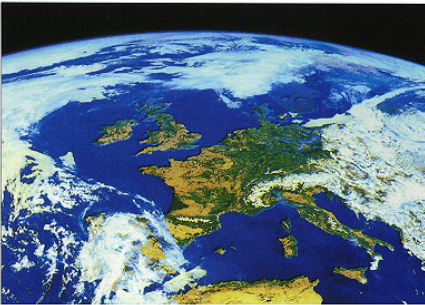
Especially since Leonard lists 109 members of what he contends are part of the "Eurosphere" - countries which are influenced by or are members of the European Union - and Canada doesn't merit a mention. Not one, even though we are the country that didn't rebel and which remains the fourth largest investor in the EU after the US, Switzerland and Japan.
This is an oversight, both Leonard's but also our own. Preoccupied by the US and the mixed promise of North American integration, we've failed to see the EU for what it has become: an alternative.
A natural fit
Run through any OECD league table. From health to education to culture - our natural partners are the Europeans. Line up the Stockholm consensus alongside Washington's equivalent and you'll have a good summation of two worldviews: one which places a premium on balancing open markets with social justice and equality of opportunity and the other that believes in the untrammelled power of markets. Compare and contrast foreign policy. You won't find anyone in Brussels advocating pre-emptive invasions or missile shields.
Of course, Canada's political and social consonance with Europe is an open secret. The real question is why this parity has so far failed to translate into a more active partnership.
Part of the reason is surely based on the outdated idea of "old world" Europe. As North Americans, we naturally clamour towards the new while our public perception of Europe is still stuck firmly in the past. Cutting-edge architecture, software and social policy haven't yet replaced an outdated image of Cold War Europe, with its high taxes, and trade unions.
If true, then this is a perception that needs to change. Otherwise, we risk a future where Canada is squeezed by not just one elephant, but two. The United States and China offer us their market. What they don't offer is a peer group or any of the cooperative structures necessary to address the trans-national challenges created by integrating economies. The prospect of Canada caught between two hyper-economies, trudging fruitlessly to the WTO or court systems for round after round of un-enforced arbitration is not one that anyone should relish. Stated plainly, Canada doesn't need out of NAFTA, but perhaps it needs special membership in the EU. The choice doesn't need to be either/or - the genius is the 'and'.
Begin with Hans Island
So where to start? Read Leonard's book, then mail it to your MP. Encourage Ottawa to beef up its diplomatic representation in Europe. (Having a few more reporters there wouldn't hurt either.) We may not have liked the expense, but outgoing Governor-General Adrian Clarkson's instincts were right to tour Scandinavia. Now we need to follow-up. Start by looking to join specific EU protocols and agreements, including Erasmus, the EU's remarkable university exchange programme that has standardized tuition and credits allowing students and faculty full mobility across borders.
And as for that desolate chunk of rock somewhere near Ellesmere that's been getting all the press of late: don't seize it. Split it. Hans Island is the perfect excuse to bind the Europeans in a shared pact, protecting the north and ensuring our sovereignty through engagement rather than a unilateral claim we can ill afford or defend.
Leonard's book is a wake-up call to think more imaginatively about Europe. We should use it as an opportunity to think more imaginatively about ourselves. The idea of not putting all your eggs in one basket is an old one. I think the word for it is 'strategic.'
The next time Pettigrew meets his Danish counterpart, stop worrying about who owns what. Draw up a timetable for accession talks instead.
That would get Brussels' attention. And Washington's.
Peter MacLeod is a doctoral candidate at the London School of Economics and convenor of The Planning Desk, an evolving studio for public systems design. In 2004, he drove across Canada visiting nearly 100 federal constituency offices. ![]()


41
Login or register to post comments
Fiat lux
6 years ago
Comments on "Time to Join the 'Eurosphere'"
A very rose coloured and ideologically warped description of the EU. The reality, coming from the real sources and not from academic eggheads divorced from realities, is quite a bit different.
The reality is that some countries in Europe are being colonized by the Western powers with the imaginary power of artificial capital. Just as Canada is being colonized with worthless US dollars.
Millions of people are thrown off their lands, out of their homes , young people can not afford the ridiculous real estate prices, driven up by Western "investors", buying up everything as toys, summer retreats and for speculation.
France and the Netherlands have voted against the EU Constitution exactly for the same reasons glorified by this author, who may be just an warped economic enthusiast, or paid to write this glowing account, as our media is being controlled by the rulers.
I'll forward this article to some of my European friends and see what the response will be.
Ed Deak, Big Lake.
Colin
6 years ago
I have to agree with Ed that this author is defiantly wearing his rose coloured glasses. While the EU has some success, it has huge issues boiling under the lid. Economic disparity, racism, a huge bungling bureaucracy to name a few.
The author also fails to grasp the key elements behind Hans Island dispute. Canada must protect and actively enhance it’s Arctic sovereignty, we are already perilously close to losing it. Our claims have been weakened by years of neglect. If we lose it, the next thing you will see is tankers using the NW passage and perhaps even Chinese drill rigs.
I think this author is driven more from a dislike of the US, then from a completely logically point of view. Although I do agree that we should have strengthened our other ties before considering NAFTA.
nightbloom
6 years ago
I’m inclined to agree with Fiat lux – this article does indeed present a rose-coloured view of the E.U. Robert Kaplan has written that the principle difference between the U.S. and the E.U. is that one has power and the other does not. If the E.U. were actually capable of flexing its muscle in the international arena in the same manner as the United States, it would. Its seemingly progressive pose is chiefly the result of strategic weakness. Otherwise it would be Dreadnoughts and the Foreign Legion all over again.
As for Canada, there are enough peripheral members of the E.U. who are fed up with having to subsidize French farmers – why would Canada want to be a part of such a massive patronage apparatus? Canada has enough trouble maintaining its own infrastructure and integrating its own new citizens – do we really want to be responsible for post-Communist Eastern Europe as well? How about Turkey (if it joins) – how many Canadians really want an open border in the Middle East? Right.
The Pierre Trudeau/Mitchell Sharp ‘Third Option’ never showed any viability, however attractive the notion may have been. This had as much to do with economics as it did with Trudeau’s slashing of Canada’s defence commitments in Western Europe. The Germans were hardly pleased with us, and the Gaullists weren’t going to have anything to do with the Trudeau-Marchand-Pelletier posse in Ottawa. Perhaps times have changed, but the underlying reasons have not.
A far more practical solution than the one the author proposes would be to float the British Isles across the Atlantic, moor them somewhere between St. Johns and Martha’s Vineyard, and give them associate membership in NAFTA. That would delight the French and the Germans (not to mention the British Tories) while providing a bit more ballast to the North American economic balance.
Lee Hamilton, Vancouver
Ignition
6 years ago
Wow. Gotta say I'm surprised by the responses so far. I though most of us Canadians were pretty open to Europe.
I can understand resistance to full EU membership, but surely there's room for stronger ties. From a purely economic perspective, why wouldn't we want greater access to a huge, wealthy, well-developed marketplace?
The EU may not be perfect, but NAFTA sure as hell isn't either. The writer's most salient point lies in the last sentence: We may need Europe to make NAFTA work. The US knows how dependent we are on them - that a trade war is simply something we cannot afford. Further, our reliance on this one economy - currently in decline - is nothing short of dangerous.
It's time to invest energy, both diplomatic and political, in our relationship with Europe. We need some internal dialogue on what new kinds of ties would make sense, then we need to make this new relationship a priority.
Steve P
6 years ago
I think most of us are "open to Europe". The issue here, I think, is whether it would be of benefit to pursue closer political integration. I think nightbloom said it well when he said that the main difference between the US and Europe is one of power. Europe's military might is weak, and its power is decentralized and difficult to harness in one direction.
In an ideal world, the benefits of greater cultural union with Europe would be complemented by economic and security benefits. Until then, it is rose-coloured glasses to think that they could replace our relationship with the US.
Frank
6 years ago
First, I'd like to see more internal integration of the Cdn economy. I'd like to see provinces decline in power and a new federal system where the senate is elected and effective or dismantled altogether.
I'd like to see the end of free trade with the US. Canada has a lot going for it and the fact is we're like the cute co-ed who has tied herself to the flashy drunk who likes to bully others. Canada will never have any shortage of willing trade partners. Blessed as we are with natural resources that everyone else is willing to pay for. So why make trade deals that are supposed to protect our natural resource sales? We don't need free trade to sell lumber, oil or water or anything else.
Closer ties with Europe? By all means. And everyone else too but there's no reason to accept any countries' ring at this time.
Fiat lux
6 years ago
Living isolated out in the boondocks as ranchers and others as acreage lot owners, we know each other, have some close friends, we trade and help each other, but we don't tell anybody what to and what not to do.
When we invite somebody for dinner, or buy a load of hay from another, they have no right to take over our houses and remain permanent guests.
We were shipping some calves yesterday with the great help of some of our neighbours, but they didn't stay after the job was done and demand special privileges. The same with the neighbour who delivered our hay supply a couple of weeks ago . If I want to buy hay from somebody else next year, I'm free to do so, exactly the same way as we do our shopping in town, where we know all our suppliers and they know us, but have no right to demand any business from us.
If I'd pick up the phone right now and call one number and shout in it "HELP!!" we could see a string of vehicles tearing up on our road in minutes, some we've never met, doing their best, even risking their necks, to help us, without even asking what the trouble was.
To me this is free trade, mutual cooperation, the best of life and of economic systems, not that ideological and legal garbage and chains put on people's necks with various treaties curbing their rights in their own homes and telling them what to do.
I'm European born and raised, but I would lobby and vote exactly the same way against joining the EU as I was fighting against the FTA and NAFTA 18 - 20 years ago. Canada is one of the few countries on Earth that can stand up on its own and squandering this away on idiotic and fraudulent ideological nightmares would is already bordering on societal suicide.
In any case, the end of the oil economy is here, even if economists yet have to realize it, because they can't find an appropriate quotation from Adam Smith they could twist around to justify the selling off everything.
The author of the article is at the London School of Economics, which is one of the blowholes for the neoclassical theory, based on a whole string of fraudulent claims and calculations. It shows. Ed Deak, Big Lake.
lynn
6 years ago
Frank writes:
And that is really at the heart of the matter... expressed so well here by Frank and also by Ed.
As Canadians we must realize how blessed we are by the resources we have, we don't need to settle. Extending Frank's metaphor, we are the girl at the dance that everyone wants to dance with. We can control our own dance card...how and with whom we will dance. Time we realized that.
nightbloom
6 years ago
C’mon – if it were really as easy as that to create overseas markets for our goods, it would have been done long ago. There have been many attempts to diversify Canada’s trade, with little or very mixed success. Our provincial tendency to regard ourselves as hewers of wood & drawers of water is part of the problem. Sure, we have resources. But why are the Scandinavians famous for their furniture (i.e. a finished product requiring resources, innovative design and skilled labour) and we’re known for our vast expanses of timberland wilderness? Why is French Perrier water a recognized symbol of leisure culture worldwide while we protest any such commercialization of our most renewable resource? Some Canadian beer and wine labels are the finest in the world, yet what paysan or bürger would be caught dead drinking it at their local watering-holes? It’s a little more complicated than simply having resources to sell. Besides, why should German homebuilders buy timber from Canada when they can bring it in by rail from Russia more cheaply? Why aren't we renowned for our Ikea and Danish furniture and other finished products? [and pls nobody say maple sugar...]
mgeoghegan
6 years ago
Actually western Europe is in a hell of a mess. Employment in Germany is at an all time post WW II high. Those areas of Europe that are doing well are those that are still recovering from the nightmare of communist totalitarianism.
But even that growth is relative as these former Soviet repressed areas still have a long way to go in terms of catching up to the West.
If not for our restrictive immigration rules right now Canada would be flooded with middle aged people wanting to leave countries like Germany in order to try and find a better life here.
bartsboy
6 years ago
As a citizen of the UK (but a long term reader of thetyee) let me assure the people of Canada that Europe as an economic and political model is an utter disaster. Although I haven't read Leonards book many similar have been published. They promulgate ideals which are fine in theory but will never work in practice. That's why communism fails. That's why the Soviet Union broke up.
I am a photojournalist who travels extensively in Europe and I have come across many many people who have had their lives ruined by the EEC. Italy, where I work a great deal, is on an economic precipice and that's not due entirely to the governments incompetence which is well documented.
Germany, once the economic powerhouse of europe, is now in economic chaos. Yes, part of that is due to successive governments and union power preventing essential macro economic changes but the nub of their problem has been the EURO and Euro legislation which strangle economies. There are parts of Germany where the citizens operate their own currency to shop because the euro has escalated the cost of basic essentials in life to obscene levels. Trust me, there is an undercurrent of discontent about the way Europe is being operated and significantly by unelected civil servants whom do as they wish. Even well established EEC members like the Netherlands are deeply concerned by the direction of European policies.
You may wonder why there is a queue of countries to join Europe and why many joined up last year. It's simple. Europe is a gravy train for the poor undeveloped countries, especially former eastern bloc. They are guaranteeed billions of Euros in subsidies for current and capital expenditure which in turn creates the perfect environment for corruption and criminal activities by the likes of the mafia.
Extending such huge benefits to the poor countries also enables them to export produce for a fraction of the labour costs thus threatening the future of home producers in developed countries like the UK,Germany, France.
The accounts for the EEC have not been signed off for the past 12 years because the auditors refused to do so on account of unanswered questions about dubious accounting. Corruption at Europe HQ is rife and costing tax payers billions of euros every year.
The irony is that while unelected ministers have been phaffing around trying to create a harmonious club to counter the economic power of the USA and the threat of the Soviet Union the former is spending all it's money in Iraq and the latter has broken up. Meanwhile China has powered down the outside lane and is outmanouevering the lot of them!
You would think from the tone of my message I'm a right wing extremist but I'm not. I believe in enterprise and democrocacy but they are seriously at risk of being evicted from European vocabulary the way things are progressing. I'm glad the UK is not in the Euro; it has saved us from disaster thus far.
I know Canada has its problems and many of you have cause to be concerned about many issues but trust me, the Europe Model is not the one for you to drool over. The UK trades more outside Europe than in which speaks volumes. If Canada can trade with Europe that's fine but leave it at that.
Frank
6 years ago
nightbloom, that's exactly the problem. We're in trade deals like the FTA and NAFTA, we dismantled FIRA in order to stoke our economic engine and where did it get us? We're still hewers of wood and drawers of water. There is no Cdn Ikea and there never will be. Any successful Cdn company is quickly taken over by a foreign one and becomes a branch plant of it.
What is so great about foreign investment when it consists of buying up Husky Oil or whatever?
Because of free trade and the dismantling of FIRA Canada will continue to act as if has only the same economic independence as Montana.
It says a lot when our economic policy boils down to making enough concessions to keep a car plant in Ontario from moving south. That's the extent of our economic vision.
If Canada is going to sign trade deals where the other party gets access to our resources to the same degree we ourselves do, there had better be something pretty great in it for us. Something that will mean Cdn companies can expand their operations and sell into foreign markets while remaining Cdn, keeping both their
plants and head offices here. We haven't signed any such deal and its no wonder every other country from Korea to Chile to China and Mexico want the same deal we gave the US, after all its clear we'll do whatever we have to do to please our trade partners and won't ask for anything in return.
Frank
6 years ago
mgeoghegan and bartsboy, I'm not a Euro-joiner anyway but Europe is not doing that bad.
Here's a link to a global competitiveness report.
http://www.weforum.org/
Country Rankings 2005-2006
1. Finland
2. USA
3. Sweden
4. Denmark
5. Taiwan
6. Singapore
7. Iceland
8. Switzerland
9.Norway
10.Australia
11.Netherlands
12.Japan
13.United Kingdom
14.Canada
15.Germany
16. New Zealand
Frank
6 years ago
I would also like to add that in order to gain 2nd place US workers work more hours per week than most of the others. Their productivity per worker is high but its much less when you compare hours worked.
Fiat lux
6 years ago
This backs up my long held and obvious contention that so called "competitiveness" is a fraud and increases costs, by forcing people to waste their lives for less benefits.
I gave up on this idiocy 35 years ago, when I was in the custom furniture business in Vancouver and realized that my commercial customers, like Woodward's, Eatons, HB, etc, were pushing me down. So I wrote letters to all my customers that from then on everybody will have to pay the same price, no difference between private and commercial customers.
There was a lot of screaming and threats, but sooner or later they all came back with very few lost.
Canada has lost hundreds of thousands of jobs with the FTA and NAFTA, when whole industries were killed by our own economists as "sunset industries". I wish we could make the Fraser Inst, CD Howe and our university economics departments "sunset industries" and start establishing locally based, logical and productive economic systems.
Canada doesn't need those foreign markets. They are an aberration of logic and economics, developed to make people addicted to them, while destroying their own bodies and minds
Ed Deak Big Lake
nightbloom
6 years ago
Frank – those are good points, but I wonder if the advent of FTA and NAFTA are really the symptoms rather than the cause. We’re talking about economic patterns that pre-exist both agreements by generations. From pre-Confederation to WWII our trade was overwhelmingly directed towards the United Kingdom, and Sir Robert Borden and Loring Christie’s efforts to diversify trade throughout the Empire were consistently frustrated. The wartime and immediate post-war era simply saw that center of gravity shift quite suddenly to the United States (on Mackenzie King’s watch). We’ve never been able to effectively diversify, and indigenous industry has often been crushed just as it was getting off the ground. It didn’t take NAFTA to sink AVRO, after all.
dangrice.com
6 years ago
Canada is in an unique position, we are at the cross roads of nearly all major superpowers. To the south we have the States, land kin, to the east we have a strong alliance via the commonwealth with England, and to the west, we are the gate to Japan, China, and India. While the EU isn't the model of perfection, I think the authors point is that we are missing out on a great partner if we don't make common ground.
For all our land, we're really a puny country, (#35 overall, beat by blaces such as Bangladesh, Vietnam, Congo, Burma, Poland, Tanzania, and other known world powers) but we have a great ability to make a different. And that involves reaching out to all blocks, and be to the world what Switzerland has been to Europe for such a long time. A place which all the rest surround.
Frank
6 years ago
nightbloom, agreed. NAFTA didn't kill Avro. And the shift in our economy that linked us closer with the US was occurring long before Mulroney took over the reins of power. No question. The trends were in place even in the 60's. There were certainly books being written even then worried about the foreign ownership of many of our key industries and what it would mean for our future.
We have to reverse that trend and I thought FIRA was a necessary step. After all, why not have an agency that looks at foreign money buying a Cdn company and deciding whether its in our interests? As you said, first it was the UK, then the US that is reaping the benefit from ownership of our resources when it should be us.
Few other developed countries would allow it to happen. If China threatened to own 90% of the US oil and gas industry you can bet Congress would be in full protectionist mode to make sure it didn't happen.
Yet in Canada we always want to "send the right signal" without the other side having to send any similar signal. So we get screwed over and over and our resources continue to be shipped out of the country and even the profits on those resources go with them because the companies doing the extracting are also usually foreign owned.
There is nothing in it for us except temporary jobs and royalties. Sweden could have sold every log in the country to Germnany and France but they realized that was short-term thinking because they wouldn't gain any lasting benefit from it. They have a smaller population than us but they do create companies like Ikea, Volvo and Saab and even build their own military equipment.
That's how they power their society. All the money from their resources is spent in the country supporting that society. They get lasting benefit from every stick of wood.
I would like to see a government that looks further ahead than 4 years. We need a national economic strategy which we generally stick to regardless of which party is in power. If that means taking back control of our resources, fine, if it means taking back control of key manufacturing industries, fine and so on. Our resources should be used to invest in our long-term future, not spent in general revenue. Because if our resources and other key sectors are Cdn owned and the profits from those ventures stay in Canada then it will create a "virtuous circle" which will inflate the coffers of general revenue year after year.
scylla
6 years ago
Ever since the beginnings of the EEU, I haven't been able to shake the idea that its goal is NOT to form a power - economic or political - to rival the US. Rather, I see the EEU as just a stepping-stone on the way to the "New World Order" where everything is subject to the self-interest of the Globalised corporation, which views nationalism as a hindrance to its operations.
The insistance upon neocon market economics as a requirement for joining that group is proof enough for me. This allows EEU corporate farmers to dominate local markets for example, in the process destroying the economics of tens of thousands of small farms and putting hundreds of thousands of farmworkers out of work. As usual, the rich will get richer, and the poor poorer.
We want to get out of that system, not get deeper into it.
Fiat lux
6 years ago
As long as the banks are permitted to create unlimited amounts of imaginary capital to take over and control our economies and divert the benefits into the pockets of a special interest ruling class, there won't be any change for the better.
Why do people put up with it, why do they waste time in protest rallies, when the real menace are the economics departments of universities ?
Ed Deak, Big Lake.
skeptikool
6 years ago
Fiat lux,
So, I'm ready to go, Ed. What do I do?
I'm, daily, getting to feel that anarchy becomes more attracive.
From cradle to grave we are exploited. Not only has government abandoned consumer advocacy; it is as much, an exploiter - if not the most significant.
I see a little hope if the NDP should win federally, but having to challenge, not only other Parties but the mainstream media, makes it difficult to break that Liberal/Conservative pendulum swing.
Fiat lux
6 years ago
skepti, I can diagnose the problem, but it would take specialists, genunine scientists and public support to come up with the solutions.
Unfortunately, all the specialists are bought for the wrong people and instead of working on solutions, they're spreading lies and make things worse.
How to stop this overall, global brainwash, controlled by biggest set of self appointed aristocrats, is an almost impossible task.
The only thing we, the unwashed, can do is to keep on spreading that something is very wrong and hope that more and more people will wake up.
On the other hand, I was involved in the fight against the MAI (Multilateral Agreement on Investments) back in 1997 and we won through the power given to people by the Net. This is the biggest power humanity ever had in history.
The treaty was ready for signing by the 29 OECD countries in May of 97, but a copy was leaked in France in the Fall of 96, which spread through the Net and became an avalanche. The French govt. became afraid of a revolution and walked out, which broke the back of that criminal attempt to enslave the OECD and ultimately the whole world with the power of imaginary capital.
Now the same wording is included in all new free trade treaties, including the worst of all, the GATS, under the auspices of the WTO.
Do you, or anybody who may read this know and realize what the GATS is about? If not, better find out fast before the crooks in our governments sign it in secret, as they did with the NAFTA and sign away all the democratic decision making powers of all governments under the WTO.
I'm 78 and don't have much to worry about for the future, but I'm concerned about my own grandchildren and all the young people on Earth, who will have no future at all if these criminal treaties are accepted.
In the meantime, I know how to survive, how to make things, how to organize small, energy efficient industries, how to grow foods, and when this present mess collapses, perhaps it will come handy to help others to learn the facts of life. This is about all we can do at this time.
The breakdown of this persent system could happen tomorrow, or in 10 years. On the other hand we have witnessed the unbelievable collapse of the Soviet empire with a whimper, so nothing is impossible.
The problem with revolutions is that they usually bring up a worse set of crooks than what they replace, so I'm a believer and supporter of evolution and logical thinking.
Ed Deak, Big Lake.
BC Mary
6 years ago
Ed: Have you read "A Short History of Progress" by Ronald Wright? Or perhaps you heard him give the Massey Lectures, upon which the book is based.
I'd be interested in what you might have to say about his premise.
Meantime, thanks for sharing your steady, logical thinking.
Fiat lux
6 years ago
I haven't read the book you mention, but have his "Stolen Continents", which I found very impressive. Of course, to be expected from a Cambridge man.
My reading was very poor this year, I have several books I must read this winter and will try to get this one. Our summers are short here and we were up to our ears in work. Spent 4 months building a twin axle stock trailer and still have a long list of things to do in the next 4 weeks.
When the snow comes, which usually lasts 5 months around here, I can get back to my artwork and some reading. Ed Deak, Big Lake.
kent
6 years ago
I have no comment on the story, but I very much enjoy Fiat Lux' postings. Hope you continue to find time to post Ed.
peefer
6 years ago
I am surprised at the attacks on EU. Considering the huge mistake NAFTA you'd think diversifying Canada's markets would be a good idea. It is absolutely true that the US can run roughshod over us any time they choose because they are very aware how willingly we've laid ourselves down before it. They know that we will make a few squealing sounds as they proceed to screw us yet again, but that soon enough we become quiet, having convinced ourselves that we're actually enjoying it. Diversifying our markets fails because of laziness and/or fear on the part of our corporations and investors who take the easy way out and go with the tried and familiar. So lets not join the EU but foster closer ties with all trading blocs. It is certainly not perfect but the EU does many things better than the US, especially regarding labour and environmental standards. Lets face it, it is Canada's continual fascination with our southern neighbour that is doing us in, closer ties with Europe are not the threat some make it out to be. Our biggest problem is the US and we need to get alot smarter alot faster in dealing with it.
BC Mary
6 years ago
Ronald Wright's premise in A Short History of Progress is that this planet has had 4 previous civilizations, each of which has self-destructed after about 1,000 years.
Ours is the 5th and we're different in two ways:
1) Our civilization covers the entire planet,
2) We know why the previous civilizations failed.
Our challenge will be to convince people to take the precautions which will save us. But the precautions seem to run counter to the wasteful capitalist system.
How will people be convinced to safeguard the planet? I hadn't realized just how huge a problem that will be until I tried to discuss it with one intelligent-looking man. "That's a very large, deep question," he said. "I think we'll have to ask God to answer it."
Thunderstruck, I yelped "But he's already had 4 chances!" End of conversation. Bi-i-ig problem.
scylla
6 years ago
Another premise of Wright's is that aboriginal cultures are, and have been, just as quick as "civilisations" to fatally abuse resources when new technologies have offered the opportunity for "progress", aka "greed".
For many, this is a completely unpalatable thought. :-)
kurt
6 years ago
Canadians have enjoyed a trade surplus with America every year since the NAFTA deal went through. This means that 100s of billions of dollars have left the US, bound for Canada (last year it was $100 billion), so I don't see the problem for Canada. China is a problem because we send them billions in trade deals every month and they don't really reciprocate - and in a country with major earthquakes you would think we should be able to sell them plenty of timber for housing. I know I'd rather be inside a two-storey wood-frame house than a multi-storey mortar and brick house when the "big one" hits.
As for softwood, well, the American government is taxing its own citizens for using superior BC hemlock and fir, instead of inferior southern US pine. That hurts employment in our BC timber industry but it's not as though it's our money that's sent to US government coffers when Canadian firms sell lumber to the Americans.
BC Mary
6 years ago
Scylla: a wise man once said, "Give a squirrel a chain-saw and he'll cut down the forest." Which is what the Easter Islanders did ...
But Wright says we, the 5th civilization, are the first to understand this.
Logically (if not practically) then, we're the first who have the chance to save ourselves. In our case, if we can save ourselves, he says, we will save the planet too.
The same wise man, quoted above, then said that we're all implanted with evolutionary chips; that history has moved too quickly for us to evolve; therefore, we still adopt positions which are so outdated as to be destructive.
But we know this now. Do you think we can put our new knowledge into action globally?
Frank
6 years ago
kurt, we had a trade surplus prior to NAFTA too.
You assume that the money the US sent across the border stayed here. Yet since most of our trade is US-owned companies it seems likely that much of that money was repatriated to the US in the form of profits.
This was actually my point, if we don't own and profit from what we're selling we're literally giving it away.
Whether its Exxon or GM, profits made in Canada by US corporations leave the country after they make our trade surplus look rosy.
15 years ago Mel Hurtig said the rate of profits being repatriated ot the US was 4 million dollars per hour. I would assume its much higher now.
If we were really making 100 billion a year in trade we'd be the richest country in the world and our taxes would be very slim indeed.
Frank
6 years ago
"That hurts employment in our BC timber industry but it's not as though it's our money that's sent to US government coffers when Canadian firms sell lumber to the American"
Most of the large players in the forest industry aren't Canadian.
scylla
6 years ago
BC Mary
The knowledge is there, but ignored by our media, and thus this generation.
That in turn colours our ability, which it looks like we're not going to use - a la Wright's previous 4 civilisations.
The only issue then remaining is whether once the pain starts to overcome the "gain" if we'll have the time for a "technofix".
The smart money says "Then, it will be too late".
I don't think it will be the end of humanity. I think we'll be like the goatherd on a barren, rocky island in the Mediterranean, which Pliny the Elder described 2000 years as "once having rivers, meadows and game aplenty - probably the Garden of Eden of the Jews" (Sorry, I paraphrased, I read of this in John Perlin's A Forest Journey)
Finster.
6 years ago
Bartsboy,
Good to hear from the other side of the pond - but are things really all that bad?
I remember travelling through Europe, before the days of the EU, and having problems at every border. Our luggage was even searched for such mundane 'contraband' as coffee. Work permits were hard to get and travel through (former) Yugoslavia was a nightmare.
I worked in many European countries at that time, including (refugee) work camps in Austria and Greece.
Today travel is so easy and the free movement of labour may present some problems but also many advantages. Germany and France offer their workers better compensation and working conditions than Canada or the U.S., and Berlin and Paris are now lovely clean cities - in contrast to the grey drab places of yesteryear.
It could well be that Europeans have had it too good for the past four decades, and though their experiment with "capitalism with a conscience" (see Ludwig Erhard) has done wonders for that society, it is time for change - and advancement to, whatever, future. 'Twas nice whilst it lasted though - nicht Wahr!
scylla
6 years ago
I hope you're right, Finster. On another positive note, it appears the Europeans - including the British - seem to be much more environmentally aware than Can/US, with many more Gov't programs.
Maybe that's because they've found they don't have that much left to waste. :-)
jaspersky
6 years ago
Good heavens. Of course we should make a deal with the EU for special associate status. We're going to need Europe's protection!
By 2050, according to the Population Reference Bureau, the population of the USA will be around 420 million (up from 293 million today). Canada's population is projected to be around 37 million then. Thus, the demographic and economic preponderance of the USA will be even greater than it is today -- far greater. If all those energy-hungry, water-thirsty US citizens decide they want our resources at a discount, under some future US government even more belligerent and undemocratic than the crew presently occupying the White House and Congress, who or what is going to stop them? Nice legal arguments? The Canadian Forces? Santa Claus? We'd better line up some powerful allies that have an active interest in preventing a direct takeover - and a real institutional obligation to do so, too.
Even today, the USA at the federal level is not a real democracy. Virtually all Congressional seats have been jerrymandered to ensure there's no way the incumbent party can lose, and at least one recent presidential election has been stolen. Presidential campaigns cost somewhere between a quarter and a half billion dollars in advertising per party, so politicians must sell themselves to wealthy interests to get elected. The US is now a military-industrial corporate oligarchy moving towards becoming a state in which one party has long-term control. One-party states aren't real democracies. The situation shows every sign of getting worse, not better. What kind of US government system is evolving? What will be the medium-term consequences to Canada?
We'd be well advised to deepen our ties to Europe, which is becoming broadly more democratic and more influential rather than less so, so that any US administration a couple of decades from now doesn't even think about a direct takeover of Canada, knowing that any such attempt would be an attack on the European Union.
If this scenario seems far-fetched, keep in mind that sixty years ago, Adolf Hitler ruled Germany. Times change. The EU's main purpose is to create a network of states which will never again go to war with each other (nor be vulnerable to attacks by non-EU states) by embedding them all in a larger political entity which shares economic, demographic, military, and diplomatic resources and shares some aspects of political decision-making. Canada would do well to join this club.
scylla
6 years ago
I don't know what the percentage of American ownership of Canadian industry/resources is today, but I do know that 30 yrs ago Canada had the largest percentage of foreign ownership in the Western World, surpassing that of most Third World countries.
Considering America's reluctance to bomb its own German industrial plants prior to its entry into WW2, I'm sure it would be similarly reluctant to do so here too.
Nor is it even remotely likely that our fearless leaders would stand up to the US if things got really sticky, given their past performance even in times of relative peace.
Does ANYONE really believe Martin in his grandstanding threat to cut off oil and gas supplies to the US if they do not honour their court order to cease and desist on the lumber dispute? If he was serious, he would threaten to pull out of NAFTA, which is the only legal way he can do so.
Can we start switching our trade preferences to Asia and Europe without breaching NAFTA? I don't think so.
Frank
6 years ago
jaspersky, the only thing is, being closer to Europe won't save us. To invade Canada America doesn't have to project force around the world or deal with language and cultural issues. The best Europe could do for us in that situation is a boycott. We'd be America's "Tibet".
scylla
6 years ago
By the way, Frank, what ever did became of Mel Hurtig?
I still treasure his book A New and Better Canada, on the strength of which we sold seventeen memberships and raised fifteen hundred bucks for the National Party in a rushed six weeks.
It's too bad a bunch of crazies were dispatched to successfully destroy the Party at its first convention in Vancouver.
Even now, I think his ideas are still worth giving a try.
BC Mary
6 years ago
scylla: go to Vive le Canada where Mel Hurtig is featured prominently, including:
Mel Hurtig's Keynote Address to the 2005 Association of World Citizens Conference
Frank
6 years ago
Hey scylla I voted National Party in that election.
I would have liked that party to have stayed around.