Opinion

Are You an Eco-Chump?

'Green' marketing: Who's getting played?

By Bill Penrose, 5 Aug 2005, Grist.org

Doritos III

"I don't trust 'natural.' People are always dying of natural causes." -- Woman looking at food labels, in a Richard Guindon cartoon

Shoppers of the world, I have just one question: Are you an eco-chump?

Lots of us try to shop green. We buy unbleached paper towels and recycled products, some with more than 5 percent post-consumer content. Commend McDonald's for banning Styrofoam, and shun them for lying about beef fat in the fries. Save our paychecks because we suffer from Prius envy. Wouldn't be caught dead at Wal-Mart because, well, it's Wal-Mart. But a green consumer is still a consumer, and the evil marketing geniuses who run the world know this. They prey on our longings: love your mother, do well by doing good, live simply that others may simply live ... They put symbols of renewal on plastic packaging. They market products with terms the FDA has yet to define. They overcharge, because they know eco-chumps pay more, eagerly, if it helps us feel a reverent connection with all things.

I know just when I started to feel like one of Barnum's one-a-minutes. Years ago, our bathroom sink started draining slowly, and my wife ordered some eco-friendly drain cleaner from a catalog. What showed up looked like it belonged less in the pipes than in the hamster cage. Earnestly we read and followed the instructions, which directed us to dump this mish-mash of twigs and dirt down the drain and wait for its magical, bio-logical cleaning action to take place.

Patience has never been my long suit. After half an hour of watching the water refuse to drain from our little Zen bog, I grabbed a wrench and removed the J-trap, now clogged with enough humus to cover the floor of an ancient bonsai forest. Then I dumped the whole mess in the compost bin. The incantation I muttered lacked reverence.

Peace of mind: Your price?

Look, we're all vulnerable. The armies of progressive shoppers mulling which species they should unendanger this week by overpaying for cereal ("What'll it be, kids: Gorilla Munch or Cheetah Chomps?") are motivated by a noble impulse, and it's not one I mean to discourage. All I'm promoting is a bit of viridis caveat emptor (with apologies to the Latin professor I never had): green buyer, beware.

Because if you've ever paid $8 for toilet-bowl cleaner, you might be an eco-chump.

If you pay extra for coffee beans that grew in the shade of trees providing endangered-species habitat, you might be an eco-chump.

If you wear clothing made from hemp -- or from wool shed by carefree Andean llamas and gathered between 9 and 5 by indigenous folk in native garb who have dental coverage, get regular breaks, and harvest Earth's bounty using customs learned from their ancestors -- you might be an eco-chump.

Chump change?

What to do? It's been said that you have to work within the system to effectively change it. Of course, it's also been said that doing so makes you a sellout, man. And this conflict gets to the heart of the issue.

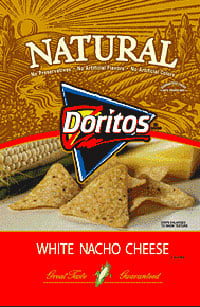
Take a long-standing addiction of mine: Nacho Cheese Doritos®. Normally I avoid artificial flavors and colors (especially public carcinogenemy No. 1, Yellow #5) with an obsession verging on the pathological, but Doritos are a weak spot. Now the green-marketing wizards have saved me from myself: enter Natural White Nacho Cheese Doritos.

In test markets, these organic white-corn spin-offs are flying off the shelves. People are snapping them up, and no wonder; read the back copy, targeted toward chumpish you and me: "You want to bring home the best for yourself and your family. That's why your favorite Frito-Lay brands are going natural." The term "natural" appears on the bag in some form, including inch-high capital letters, no fewer than eight times. That term remains undefined by the FDA ... naturally.

I'd guess Frito-Lay, headquartered in Texas and an arm of the gigantic multinational conglomerate PepsiCo, is a big donor to, shall we say, unsympathetic causes. Yet the company wants to reach across the grocery aisle into blue-state food co-ops, riffling through hemp wallets in search of the almighty dollar. If I buy these chips, am I chumping at the bit, or changing the world? While companies like this pick our pockets, can we change their ways? Think about it: a billion-dollar Texas corporation is considering, however cynically, doing business differently. It's up to us to ensure capitalist exploitation goes both directions.

If we create demand for consumer goods that champion our goals, we start the corporate world on the long journey toward sustainability. Encouraging them to take this path can make us -- dare I say it -- eco-champs.

After all, the journey of a thousand miles begins with a single chip.

Bill Penrose, a freelance writer based in Seattle, wrote this for Grist Magazine. The article is distributed by Alternet.org  [Tyee]

20  Comments:

Login or register to post comments

  • tommymoore

    6 years ago

    Comments on "Are You an Eco-Chump?"

    Corporate world and sustainability in the same sentence. Uh huh. Right. When pigs soar over the frozen wastes of hell. Monsanto pigs.

    "..padded with power here they come
    international loan sharks backed by the guns
    of market hungry military profiteers
    whose word is a swamp and whose brow is smeared
    with the blood of the poor
    .."
    (Thanks to Bruce Cockburn)

  • Rhea

    6 years ago

    I freely admit to buying organic coffee and generally trying to consider what impact my consumer choices have. Some of it's a taste thing - Kicking Horse coffee tastes 1000x better than Starbucks crap. And I love my hemp shirt - it's lasted for years longer than my regular cotton ones. On the whole, though, I'd rather buy local than buy an "ecologically friendly" product that's been shipped 10,000 km. By the time you factor in all the fossil fuel *that* uses, it's not so ecologically friendly any more, is it? Better to buy local produce/products and maybe look into alternatives you can find closer to home - it's easy to do, but lots of people won't make the effort.

    The author's example of the drain cleaner is a perfect example. The J-wrench or boiling water/vinegar/baking soda would work just as well and have no financial or ecological impact. Of course, that would require critical thought rather than the consumer knee-**** of "let's buy a trendy GREEN label product before looking at cheap/easy/healthy alternatives closer to home!". This is the same kind of attitude I see from people who tell you they recycle everything but have 4 kids and drive a gas guzzling SUV. Cognitive dissonance, much? People who buy green to "look cool" without actually doing their research deserve to get fleeced.

  • skeptikool

    6 years ago

    The markups on some of those organic and eco-friendly items are often such that you know that it's not alone driven by altruism. That is not to say that the products or not superior.

    I don't know whether those less-cancer-prone cheezies cost more, but if so, the buyer paid more for having an ingredient left out - the suspect coloring.

    I think that much of what passes for bread today is disgusting. In England during the 2nd World War you could not buy white bread because everything was left in the grain when milled. The bread was a greyish color but we thrived on it.

    A short while back I read that at a popular park in England warnings were posted about feeding white bread to the swans because it was killing them.

    Mostly it's common sense. Grow your own, if able. If you want to avoid MSG, make your own soups, etc.

  • MJK

    6 years ago

    Up near the top of this piece "But a green consumer is still a consumer..." is the heart of the matter.

    Everyone is a consumer whether one shops at WalMart or Capers. The trick is to consume less. But just about everyone makes too much money and just has to spend it on something - an iPod, a Prius, a condo or Doritos.

    Rapant consumerism can be fought by stepping out of the 9-5 workaday world and live on the margins. If you ain't got money to burn, you won't. Pretty simple.

    But as Peter Weiss said in Marat Sade, the revolution just won't happen, 'cause one person wants to keep his land, another his gold,... yadda-yadda-yadda.

    Bring on the revolution, but please let me keep my President's Club cheese popcorn.

  • dangrice.com

    6 years ago

    Kind of on topic, but one of my favourite marketing trends nowadays is to put in big bold letters "Designed in Canada" or "Designed in the USA" on products that are manufactured in China.

  • seanorr

    6 years ago

    On one hand, you have multinational corporations seemingly exploiting our values with massive advertising campaigns attempting to remake a tarnished image- a practice coined “greenwashing”. Take Starbucks’ “More Than Our Logo Is Green” campaign, trumpeting their social worth by proclaiming the importance of Fair Trade and their commitment to coffee growers, when the reality is that Fair Trade constitutes less than .1% of their total sales. (organicconsumers.org). Or take British Petroleum’s Beyond Petroleum advertisements. According to Paul Driesen of the Centre for the Defense of Free Enterprise, BP’s total six-year investment in renewable technologies was US$200-million – the same amount it spent on its “Beyond Petroleum” ad campaign. Or take the catch line to Ford’s new Escape Hybrid SUV, “Finally, a vehicle that can take you to the very places you're helping to preserve", when the Environmental Protection Agency recently found that Ford Motor Co. had the worst fleetwide fuel of any major U.S. auto manufacturer for the fifth consecutive year. Geoffrey Johnson of the L.A. Times writes that greenwashing succeeds by “dealing in lies of omission. The claims made aren't false exactly - but they're only a tiny portion of the truth. Ford is making a hybrid vehicle. BP is investing in alternative energy. But when considered in the context of the company's other endeavors, emphasizing those things presents a highly skewed picture.”

    “Corporate executives often lament that they would gladly supply greener products if only there were sufficient demand. It's Economics 101, they say. But their logic neglects an essential lesson from the same course: Unless consumers have access to accurate information about products, such as their environmental and social costs, then the market will not reflect people's true considerations.”

    Another piece of conventional economic wisdom is that consumer demand creates the marketplace. But as Betsy Barnum poignantly points out, this logic “leads directly to the ludicrous idea that consumers have "demanded" things like genetically modified organisms in our food or baby toys made of toxic materials like PVC, to say nothing of leafblowers, jet skis, botox, and--add your list of useless, destructive, outrageous products that no consumer ever thought up and demanded.”

    On the other hand, there appears to be a visceral reaction to the endless parade of mass produced gizmos, gadgets, fads, and must-haves. Epitomized by the current craze for organic produce, the success of the fair trade movement, and the ever growing popularity of Buy Nothing Day; people are beginning to crave a more authentic and responsible market. This is evident in the affection for all things independent: small budget film, alternative media, Indie music, off the beaten path tourism, and local DIY fashion. Companies such as the non sweat-shop American Apparel appear to be cashing in on this trend. Nevertheless, one must be wary of sub-cultural cooptation.

    The problem thus lies in the structure of the economy itself. The GDP is outdated. It rewards pollution, cancer, war. Its time to factor in social and environmental elements into our concept of progress. See truecosteconomics.org

  • Fiat lux

    6 years ago

    For one thing, there are no "consumers" because we can not consume anything, only turn resources and products into other forms. Like garbage and climate change.

    The word "consumer" has been invented as a propaganda buzzword to remove the guilt trip from the mindless waste forced on our society by screwball economic theorists in the service of various ruling classes, regardless which ideologies they use to cover up their crimes.

    Neither are there any "bottom lines", because the real costs of any and everything start and progress into eternity. This means that there's no such thing as "cheap" foods, or cheap anything, because we don't know the real costs of anything.

    Today's so called "cheap" goods, like electronics, cars , clothes and mechanical devices could easily be made to last many times their present life span, which would eliminate much of the waste and pollution. E.g. the TV and other electronic reapair trades have been wiped out by "cheap" Chinese imports, now clogging up our landfills, spreading sickness and pollution, etc. I can replace the headlights on 25 year old my truck for about $25. each. On today's cars and trucks the incredibly complicated sculptural desings cost huge monetary and resource inputs to make and replace. There's no logical reason for this. The car industry prospered and survived for over 80 years with universal, standard headlights.

    The same goes in the case of foods. Agribiz operations, feelots and chicken factories do not cut, but increase costs in the forms of pollution, sicknesses and epidemics.

    Artificial monetary prices cover up the real costs and transfer them onto other sectors, future generations and the environment. The purpose of economic theories is not the stated "The science for the management and distribution of scarce resources", but to cover up real costs and decide which sector will pay them.

    Whenever a large, especially multinational corporation claims going "green" they're up to something fraudulent and criminal, because the energy and resource waste of their manufacturing processes wipe out all benefits. Small is still the most beautiful because it represents physical realities. Ed Deak, Big Lake.

  • Bobb999

    6 years ago

    The food industry example evokes some of my pet peeves...
    Large food companies have for years been in the habit of deliberately misleading the public about the healthfulness of their products. They would do ongoing marketing research tracking studies to discover whether putting the words "No Cholesterol" on a package was still continuing to work to create an image of a healthy product in the minds of consumers. Of course, it's been known for I'd guess 20 years that cholesterol as an ingredient is not the issue re. processed foods. The biggest health issue has been trans fat in the form of hydrogenated or partially hydrogenated vegetable oils as well as vegetable shortenings. These worst-of-all-ingredients oils have been rife among processed packaged foods and in frying oils of fast food restaurants.Years ago, industry switched from animal fats (with cholesterol) to hydrogenated vegetable oils which have turned out to be much more dangerous.
    The industry tried for years to ignore ever mounting evidence that the trans fat they laced their products with was slow poison implicated in greatly elevated risks for cardio vascular disease, and cancer, among other effects. For years they did nothing while at the same time working hard at creating false impressions of healthfulness.At some point canola oil was established as being more healthful than many other oils.Cynically, the industry switched to using hydrogenated canola, loudly proclaiming that their product contained "healthful canola". They knew full well that the hydrogenation process rendered canola just about as dangerous as any other hydrogenated oil.
    It has taken far longer than it should have for the trans fat issue to become visible enough that even companies like Pepsico are finally beginning to ofer trans fat free foods.
    I place blame for the lack of movement for too many years, on the food industry, the media, and government, all 3. The media, although the issue has been covered, really has downplayed a major health issue. The Canadian gov't is finally legislating severe restrictions on trans fat, which is laudable. But why has it taken decades to get to this point?
    I too marvel at the inflated prices on foods with healthy ingredients. It's really unconscienable. Healthy food should be accessible and affordable by all, not just by the well heeled who can afford to do all their shopping at a Capers.
    eg. I have a favourite brand of 100% whole wheat healthy ingredient pita bread (PBF, baked in Burnaby) which I buy at a small independent corner store for 89 cents a package of 6. I've seen other stores charge 99 cents, sometimes a little more. So I was shocked to see the same brand, same package, in the health food store Sweet Cherubim for approx. double the price I pay elsewhere! This suggests to me there is stuff that's wrong with not only the large mainstream food companies , but also with the Health Food industry which has had a pattern of gouging customers. They seem to be have been successful in planting the idea in consumers' minds that healthy ingredients should cost bundle ,and that healthy eating should be almost luxury priced.
    ...Bathroom sink clogs? Forget the drain cleaners! A stiff wire (eg. a coat hanger)
    poked down, rotated and moved with an in and out motion works every time, in seconds!
    It works 'cause bathroom sink clogs are typically found not too far down from the sink.

  • Fiat lux

    6 years ago

    The brainwash saturating today's life, especially in foods, is astonishing. I wrote about this before that we can sell organic veal, 5-6 month old calves, butchered in a government inspected facility, cut to customers' specifications, frozen and delivered locally, for $3./lb., but there's no market for it.

    At the same time, we see people in the supermarkets buying fat, hormone and steroid fed garbage meat at several times the prices. So, we have to sell our calves at the auction sales and get pennies per pound, then as they're loaded onto the buyers' trucks they're shot full of antibiotics, steroids and hormones. The same process is repeated every time they change hands, sometimes 5-6 times the recommended dosages, which are unnecessary even once and the public buys and eats that junk.

    So, how do you educate people who're happy to remain ignorant and live in a propaganda dream world ? There used to be food buying clubs and co-ops around here, in the Williams lake area, 25 years ago, when prices were much lower, now there's nothing and people pay through the nose for junk foods that makes them sick. Oh well, I certainly won't lose sleep over it. Ed Deak, Big Lake.

  • Bobb999

    6 years ago

    Right, Ed. Fewer people are opting to eat junk meat. Study after study over years suggest cancer and heart disease rates are higher among regular eaters of red meat. How much of this is due to the substances injected into and fed to the animals is unclear, although these are no doubt a big part of the problem.
    Common belief used to be that meat was a necessary part of a healthy diet. People are nowadays coming to the opposite conclusion, that a primarily vegetable based diet is far more healthful. I used to believe fish was very healthful. Now we know PCBs, mercury, dioxins
    and other toxins are commonly found in fish.
    I find I don't trust fish as a food source anymore either!
    -Veg Man

  • Ron Erwin

    6 years ago

    Imagine how long a bag of nacho's would last if the "consumer" was 1 ft. tall and wieghed only 35 lbs. ( 16 kg )? I have. I don't understand why all the enviro-kooks don't spend their time and money working on this. Things would go a whole lot further.

  • Bobb999

    6 years ago

    Ron may be a big red meat eater.
    Well, some opt for indulgence over long life.
    So what if 30 years gets shaved off a potential lifetime, so long as one can enjoy gorging on corpses, while it lasts!

  • freebear

    6 years ago

    HI there:

    Hey here is a suggestion Re: Ron Irwin-let us just ignore him, no matter what he says do not refer to him , respond to him, etc.

    As to the subject of this article and the comments:

    Obviously peole who post here have given some thought to the issue and many others.

    What is the rest of society thinking about? I am amazed at how little people seem to think-Are they so caught up in chasing the next dollar that they can not see the folly? Or do they know but decide that denial is the best course of action? I suppose our "Leaders" are also swept up in the chase of the dolar and /or living in denial.

    Hey things will change soon-oil is pushing $63 per barrel today!

  • clubofrome

    6 years ago

    You may not be able to afford the best in choices at Capers or Whole Foods, but there are other choices. Organic beans, rice and lentils are cheap by bulk, and they are nutritious too. Where the product is more expensive, you can justify the purchase by knowing the organic choice is far more rich in nutrients than its petrol. grown cousin. Better for you, better for the land, possibly even sustainable. So eat less and it works out the same, or just be happy you made the right choice.

    The series on eating locally has made me think about the choices I make. I will search for local first, regional, provincial etc... beyond that I don't buy it. Except for mangoes to which I am addicted...and pinnapple.

  • beyond dualism

    6 years ago

    what exactly is meant by 'eco chump'? if one chooses to buy bird-friendly coffee (meaning it's grown the way coffee beans should be grown, under the canopy of a rain forest which provides a habitat for many birds, especially many migratory birds) this 'might' make one an eco chump?? i don't get what is being implied. is it bad to be an eco chump? should i even care what this writer thinks, since he's wrapping many issues into one cheesy phrase, which isn't even explained well?

    do your research, learn about QUALITY and SUSTAINABILITY and we won't have to have this discussion. no matter how much we choose to 'consume' we can make good or bad choices within that matrix of choice. make good ones, if you care to.

    i do.

    i'm no kind of chump, thanks.

  • Fiat lux

    6 years ago

    I was always wondering what people are eating that makes them become Campbell, Harper, Bush and generally neocon, market economy supporters ? Somebody must be making a lot of money from it. Ed Deak, Big Lake.

  • Fii

    6 years ago

    That was funny, what Ron wrote...

    Famous Foods on Kingsway! As good or better than Sweet Cherubim, Capers, Choices yada yada-just happens to be in good ol' EAST VAN, thank ya very much.... all the organic, healthy, bulk food you can get your hands on for really decent prices (relatively). Love that place.

  • Bobb999

    6 years ago

    Fii: Thanks for mentioning Famous Foods. I keep forgetting to check that place out, though I don't live too far away, and like to try to buy "healthy".
    If they are charging reasonable prices, I hope it becomes a trend that spreads. Those high end gold-plated, buffed and shiny health food stores p*ss me off (got to be careful with the Tyee's new words blacklist)!

  • apollyon

    6 years ago

    I'd say there is a line between being an eco-chump, ie. someone who is being manipulated by the corporate world and being eco-friendly or wise, etc.

    Being green definitely sells, a lot of companies see the payoff in the stock market for being listed as a eco-friendly corporation. Even oil companies are trying to be "green" as ironic as that sounds.

    Despit the BS, there are tonnes of truely environmental and as important (but more often overlooked) social factors to consuming. Shade-grown coffee generally goes hand-in-hand with fair trade, and shade-grown itself symoblizes a better utilization of land (grown on elevations, on hillsides, etc, freeing traditional spaces for traditional sustenance crops).

    IMHO, the chumps are those who are consuming for their purposes. IE. the author and his doritos. That's not even an example of being an "eco-chump" if anything he conflated environmentalism with health and health (which is by far the larger motivator than the environment), which is an individualistic motive that benefits only himself.

    Eco-chumps are those feel the need to buy into, to consume the environmental trend. And just like any passing trend it'll get a lot of bandwagon jumpers, but I don't think that negates what a lot of people with true social-ecological viewpoints are trying to do...

  • Sunny Samson

    6 years ago

    I was very disappointed with this article. The author is just too uninformed about the subject to be credible.

    Why does the author complain about the word "Natural" on the packaging, but doesn't seem to read the ingredients listing? Read labels -- that's the best place to figure out what you're consuming. I know they could be faking the labels, especially knowing how "Health Canada" "works" but it's better than just scanning the marketing lines on the packaging.

    Also, the author implies that anything "green" or organic, etc. is automatically suspect if it costs more. Why? Most organic or environmentally-friendly foods and goods are not produced by the monster multi-nationals like Cargil, et al (although they are starting to muscle in on the trend). So, it costs more money to produce a product if you're a small operation -- it's just a matter of scale. And, just because small scale operations cost more in simple economic terms, it doesn't mean their products are not more valuable. On the contrary, organic and environmentally-friendly products come with huge benefits to each and every one of us -- less cancer, more clean water, etc.

    What I fear is the entry by the big multi-nationals into the "organic" business because they have the money and the track-record to buy off the politicians and pervert the organic movement.

    Anyway, read your product labels (and beware those products that don't tell you what the ingredients are, like most mainstream "cleaning products" for example. Ever notice that they don't list a single ingredient. Isn't that curious? Just protecting their secret formula? Don't think so, because environmentally-friendly cleaning products have ingredients listed. Just a word of warning.

    So, stick to the simple solutions, and to the products that disclose their ingredients. And, do some research on which of those long chemically-sounding ingredients hasten your demise, and those which are merely unfamiliar. There are differences.

    • No best comments selected by an editor for this story yet. To see all comments, click the All Comments tab, above.
    • The discussion for this story is closed. No more comments can be added.