Spreading pipelines, vulnerable to sabotage, fuel our growing appetite.
Last year, one of the most surprising findings of a new regional index of progress called the Cascadia Scorecard was that -- of seven key trends -- British Columbia and the rest of the Pacific Northwest scored most poorly on energy efficiency.
Yes, despite Cascadians’ interest in renewable energy, clean energy, and hybrid cars, the average northwesterner consumes nearly as much highway fuels and nonindustrial electricity as a Texan. British Columbians are more energy efficient than folks from Washington, Oregon, or Idaho, but still consume relatively high levels of energy -- almost 50 percent more per person than Germans.
This year’s edition of the Cascadia Scorecard, released last month, confirmed the region’s poor performance on energy and added a surprise twist to the story -- as well as some good news.
Vulnerable to attack
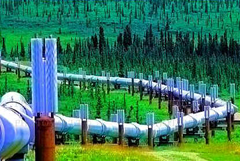
The surprise is that not only does the region’s energy consumption remain high—despite high gas prices, British Columbians’ per-person energy use actually increased in 2004 -- but the region’s energy system is also highly insecure on an infrastructure level. Cacadia’s pipelines and powerlines are highly vulnerable to sabotage that, if realized, could seriously disrupt the regional economy.
British Columbia, for example, gets most of its oil from Alberta through the Trans-Mountain Pipeline, which crosses hundreds of miles of hinterlands before reaching the lower Fraser Valley. Like similar pipelines, the Trans-Mountain is almost impossible to secure against determined attackers. The region’s five natural gas pipelines are more explosive than oil pipelines, and—unlike oil—gas has no alternative mode of transport.
The good news is that there is a solution that pays for itself -- a clean-energy revolution that promises to make BC’s energy system secure, efficient, and more profitable. Strategies such as clean-car standards and innovative incentives for energy efficiency can bombproof the Pacific Northwest’s energy system, generate thousands of jobs, and help the region improve its “score” in energy efficiency.
Clean car ‘feebates’
In transportation, one of the most promising strategies is “clean cars,” the super-efficient, advanced-technology vehicles that British Columbia will get if Ottawa honors its Kyoto pledge and demands steep cuts in new-vehicle emissions. Clean cars are like a decentralized petroleum reserve. Their fuel tanks and those at filling stations hold several weeks’ supply -- a security buffer, should pipelines stop flowing.
The Canadian government and the big automakers recently signed an agreement to reduce emissions of greenhouse gases from new vehicles. With Canada firmly on board for clean-car standards, as well as seven states in the US, the auto industry will have a much greater incentive to design more fuel-efficient cars.
On the consumer side, the drive toward clean cars would be accelerated by a powerful efficiency incentive called feebates, which is getting traction in Canada. The basic idea is elegant in its simplicity: In the case of vehicles, cars that are more efficient than average come to the showroom carrying a rebate for their buyers. Those rebates are proportional to the efficiency of the vehicle, so superefficient vehicles come with whopping big rebates.
Conversely, cars and trucks that are less efficient than average, come with a fee -- a fee that grows with the vehicle’s inefficiency. The fees pay for the rebates each year, so it’s revenue neutral. Even better, feebates would have a “snowball” effect on efficiency because they are designed to continuously tug the entire car and truck market toward better fuel efficiency.
Correcting a market flaw
Economists like feebates because they correct a market flaw by making purchase prices a better reflection of the real costs of energy-inefficient products. Environmentalists like feebates because they put prices in line with Canada’s Kyoto commitment. Ottawa is considering implementing vehicle feebates as part of its 2005 budget, but they could be used for any energy-using product.
Similar energy savings are readily available not only in transportation, but also in buildings and industry. Energy efficiency can save energy less expensively than new sources can provide it, as BC Hydro’s ambitious PowerSmart plans make clear.
Investment in renewable energy can also add dramatically to the province’s energy security by diversifying and decentralizing energy sources. Western Canada is already benefiting economically from an emerging base of businesses that specializes in energy efficiency and renewables, green buildings, and alternative fuels. Ballard Power Systems of Burnaby leads the world in hydrogen fuel cells, which have potential for both transportation and distributed power generation.
A new ethanol
Another quick-maturing technology, which Canadian firm Iogen is pioneering, is cellulose ethanol, a fuel made from crop and forest residues and urban wastes that could be locally produced in rural British Columbia. Other areas with potential are passive-solar design, highly efficient woodstoves in nonmetro areas, and windpower.
Saving oil and natural gas through efficiency gains and investment in renewables would also generate profit by allowing BC to import less oil from Alberta and to export more of the natural gas it already extracts. All told, the province’s economy stands to gain up to a maximum of $10 million a day: up to $5 million by not importing as much oil and another $5 million by increasing exports of gas. Instead, the money will circulate locally, creating jobs and supporting BC businesses.
Such changes won’t appear magically. They will require leadership and the embrace of innovative new incentives detailed in Cascadia Scorecard 2005. But the payoff will be enormous: British Columbians keep home more of their energy money. They get an energy system that’s less vulnerable to sabotage. And future editions of the Cascadia Scorecard may start by lauding the region’s energy efficiency -- instead of lamenting its low score.
[Tomorrow: How BC sustainability stacks up against U.S. Northwest on health, economy, population, sprawl, forests, pollution and energy.]
Alan Durning is executive director of Northwest Environment Watch. The Cascadia Scorecard, launched in 2004, monitors seven key trends critical to the future of the Northwest, including health, economy, population, energy, sprawl, forests, and pollution. See sidebar, “Keeping Score,” for more information on the province performed in these trends. And for regular updates on the Scorecard, click to subscribe here. ![[Tyee]](http://thetyee.cachefly.net/ui/img/ico_fishie.png)
14
Login or register to post comments
Frank
8 years ago
Comments on "How to Curb BC’s High Risk Hunger for E
if BC can save $5 million a day by not buying Alberta oil I'm all for it.
Peter Dimitrov
8 years ago
...why the Tyee prints articles such as these on the "Cascadia scorecard" is beyond me....there is enough drivel coming from the Federal Liberals, the Conservatives, the Council of Chief Executives, Fraser Institue, CD Howe, ...all pushing for more continentalism - deeper integration with U. Sam. There is no Cascadia, there is BC, Canada, USA, Washington & Oregon State, etc...and may each keep their respective sovereignties.
That said, BC and Alberta, are the major exporters of oil & gas to U. Sam's permanent war econony...and we, in Canada, and in BC, despite, the respective platform's of the NDP and Fiberals, have no energy policy that respects our sovereign energy needs looking 100 years plus to the future. ...as a recent CCPA article stated, given the volume of natural exports from BC...we are "indeed running on empty"...yup, that is Real BC Fiberal Leadership"...and where, can someone tell me,. are the BC NDP on that issue---it sure isn't in the platform...one thinks British Columbian's may want to know!
Morgan
8 years ago
Peter,
I think one of the purposes of the Cascadia Scorecard and other bioregional analyses is to illustrate our impacts on the real, physical world. The fish, bugs, and forests don't recognize political boundaries; neither do greenhouse gases or smog.
Northwest Environment Watch has produced some very valuable reports -- highly readable (often funny, even) and well researched.
KWD
8 years ago
Peter Dimitrov, you are absolutely right; the article is beyond you. Morgan has pretty much nailed it: Fish, bugs, forests and pollution (political or otherwise) don’t recognize the artificial constructs of human silliness like BC, Alberta, Canada and the land of U$A.
Whether or not Cascadia is ever viewed as a geopolitical entity is absolutely irrelevant.
Birch
8 years ago
Check Canadian Center for Policy Alternatives newsletter for criticism of the ethanol solution.
We should be pushing very hard for distributed energy systems: wind, geothermal, heat pumps, etc. on a small scale, whose surpluses, when they exist, can be fed back into the grid. To my knowledge there is still no provision through BC Hydro for them to buy back power from consumers who also produce. Would that I were wrong. (However, I expect it would be harder to sell a BC Hydro that was dependent on very small scale surpluses for a substantial chunk of its power. Pardon my cynicism.)
There should be considerable tax relief for any consumer willing to refit homes for energy efficiency, etc. Our days as energy gluttons are numbered.
Peter Dimitrov
8 years ago
..well ...Morgan and KWD...you are right ...Northwest Environment Watch does us all a service by illustrating the human impact on the environment.
Matters such as global warming, air pollution, degradation of water quality in rivers and lakes, species extinction, heavy metal & toxic chemical pollution ..are all trans-boundary issues - which I "get" fairly well.
But, to clarify, to continue to speak of 'Cascadia' and its "problems" and "needs" , and then to speak, as this article does , of the possibility of increasing even more our natural gas exports to the US - when the CCPA has published an article stating that "we are already running on empty" with respect to our gas exports , is not only 'plainly stupid' from a Canadian energy perspective, - but it adds fuel to the already burning fire of continentalists on both sides of the border.
So, Morgan & KWD...while I do get the transboundary issues and that "Mother Nature" is under severe strain regardless --do you get the issues of 'continentalism" and that the 'permanent war economy of U. Sam are reasons why I'm not pleased with this continual drivel about "Cascadia"---and its "needs" and "urgencies" and how if we reduce our oil consumption by going more to 'green energy' - well, that will allow us to export more natural gas to the USA. Why don't these American researchers focus on how they can green their own economy, particularly by reducing its highly consumptiive and wasteful nature - fueled as it is by the permanent military industrial -technological complex and the frivolity of its consumer economy, and highly dependent on Canada for energy, timber, and soon our water too. ..."Cascadia - one happy North American family, indeed where we share it all amongst friends - --just what the continentalist are pushing for - 'deeper integration'.
Morgan
8 years ago
Peter,
I wholeheartedly share your concerns. It troubles me that Canada's "official" plans (see National Energy Board Supply & Demand Scenarios and North American Energy Working Group Gas Vision 2005) are to get more than half of our natural gas from coalbed methane, "frontier" gas and LNG imports by 2025. We got less than 1% of it that way in 2003 and this forecast is just 20 years down the road.
But we're working on alternative solutions! Check out the BC Sustainable Energy Association for projects, policy recommendations, and heaps of info on renewable energy and conservation options. bcsea.org
Budd Campbell
8 years ago
Hello, Birch,
You state that "To my knowledge there is still no provision through BC Hydro for them to buy back power from consumers who also produce."
It's my undertanding that the Alberta electrical utility companies does do this because they are required to by law.
KWD
8 years ago
Peter Dimitrov, like you, I don’t entirely agree with all of the reasoning expressed in this article, nor do I like the economic colonization taking place as we speak, but I do agree with, and support, changes in thinking and behaviour designed to promote energy diversity, less dependency on hydrocarbon technology and greater energy efficiency. In that respect it matters little whether the article’s concern is BC, Cascadia or North America.
As far as ‘continentalism’ is concerned, you must be aware, like it or not, that NAFTA Chapter 11 has made ‘deeper integration’ with big U$A a fait accompli. And market globalization – which will see China placing far greater demands on little u$a resources north of the 49th – has made discussions about sovereignty nothing more than political and intellectual pastimes. I’d be interested in hearing how you plan on changing those facts.
Controlling the movement of primary resources across boundaries and borders is no longer a sovereignty issue; it has reified into an issue of controlling human migrations across those same borders. Despite arguments about softwood and mad cow disease; raw logs, minerals and oil move across the border with impunity while people, who for some reason actually want to travel south of the 49th into Disneyworld, are subjected to all forms of gross indecencies. They’re considered terrorists until proven otherwise.
Rob_
8 years ago
Hello Birch and Bud,
"To my knowledge there is still no provision through BC Hydro for them to buy back power from consumers who also produce."
That changed about a year ago. BC Hydro now allows net-metering grid-tie systems.
There is already one house in Victoria and one in the tri-cities area that have the ability to sell back to the grid. There are also a few installations at BCIT that do this.
I am currently working on a project here in Vancouver that will be selling clean power (solar PV) back to the grid by July.
And if you want to do it on your home contact the Vancouver Renewable Energy Co-op ( recov.org ).
Peter Dimitrov
8 years ago
Hi KWD & Morgan,
I'm onside with your statement about "... thinking and behaviour designed to promote energy diversity, less dependency on hydrocarbon technology and greater energy efficiency."
...and Morgan, the site you referenced in your post, I have visited, it is excellent. thanks!
...I do not however agree that discussions about sovereignty are nothing more than political and intellectual pastimes. Certainly Chapter 11, NAFTA, has resulted in a serious erosion of sovereignty ...but we are not at the end of history yet...at some point, the issue of our energy exports to the USA, to be followed by need for the bulk export of Canadian water, is going to considerably raise the ire of Canadians
....and thus, KWD, by your personally deciding that the sovereignty issue is a 'fair accompli' ..and discussions thereof a mere intellectual past-time - it seems you are closer to joining the Board of Trade and Council of Chief Executives in their advocating of even more integration...rather than the Council of Canadians which educate the public about these matters and attempt to modify government positions...as they did on the Ballistic Missle Defence issue.
Is it correct to infer therefore, that since 'sovereignty' is according to you -'fait accompli'...that you were therefore in favour of BMD...and have no problems with water export, or the extensive export of Canadian natural gas...to the point of endangering Canadian energy security. Where are you on bulk water exports!. Are you in line with Campbell's Transmission Co...joining the Northwest Electrical Grid under a supposedly "independent Grid operater"...to shift our electricity to the USA?
KWD
8 years ago
Sorry Peter, it’s not correct to assume anything. I’m pointing out the obvious, not agreeing with it.
I find it interesting that you think there still exists great opportunity for evolution in our mouse/elephant relationship with U$A. But you can’t accept other forms of geopolitical evolution: Cascadian or otherwise. Boundaries and borders, around the globe, are in a constant state of flux. The most noteworthy change, as you surely know, being the recent changes in Europe.
But you haven’t dealt with the underlying question: How are you going to stop the elephant? You can’t do it economically. They already control most of the natural resource sector. Perhaps you can do it culturally? Personally, a two channel universe would suit me fine but I think it might be a hard sell to the rest of little u$a. Militarily? Politically? Now there’s a couple of sad jokes for you. I’m not sure our second-hand sub can handle it. And the Feds … well we’ve got a Prime Minister that has so much faith in Canada that he has moved all of his wealth into off-shore numbered accounts, and an opposition party that is so insecure about their sexuality that they want to pass laws trying to keep everyone straight.
OhSullivan
8 years ago
If anyone is following the fiasco in Nanaimo where a white elephant gas-fired power plant is getting pushed through the process for strictly political reasons (all the experts agree it has no environmental, or economic benefits to the province) you will wonder just what is driving the energy policies of our federal and provincial governments. Certainly not science, economics, or logic.
Colin
8 years ago
I get to review a lot of the wind and small hydro projects. As far as providing renewable energy for stationary needs, such as housing, industry and street lighting. Much of that can be met with local infrastructure and technologies already existing. Certainly BC Hydro was not interested in meeting the needs of small producers and consumers and needed to be pushed, they are getting better but can do more.
For a small hydro project, a proponent needs roughly 2 million a MW to develop. Wind farms need large scale to successful and solar power works best as a supplement for individual houses up north.
As far as vehicles goes, I am bewildered by the resistance I meet to the modern turbo-diesel. (TD) Most vehicles produced overseas are now diesels. When I changed my truck to a TD it cut my fuel consumption in half and this was not a high tech engine either (landrover) I figured I was saving 800-900 gallons of fuel a year. That means that amount of fuel did not need to explored for, drilled, transported, refined, transport, sold and then consumed. Now I see the Volkswagen TDI gets close to 60 mpg and my truck was getting 30 mpg.
Now they have bio-diesel and the modern diesel with computerized fuel management. Combine these with diesel hybrid using a built in electric motor and we can cut emissions and fuel consumption by a considerable amount. Battery technology still needs to improve though.
Hydrogen is presently a very expensive fuel to make, store and transport, although there is a group that hope to be able to simplify the process. The only benefit of Hydrogen fuel cells in cars is to reduce emissions in areas of high smog, by moving the power generation to another point.
People do forget that we likely put out far more pollutants in the mid 40-50’s per person than today. The fog that Vancouver was famous for was the result of burning wood and coal and oil. Also I find comparisons of a German and Canadian energy use not to useful. Canada is the 2nd largest country in the world with a small population and large temperature swings.