- Ms Kaye is a Tyee Builder. You can be, too.
- Mary Carlisle is a Tyee Builder. You can be, too.
- Prem Gill is a Tyee Builder. You can be, too.
- Nancy Flight is a Tyee Builder. You can be, too.
- Justin Everett is a Tyee Builder. You can be, too.
- John Westover is a Tyee Builder. You can be, too.
- Nora Etches is a Tyee Builder. You can be, too.
- Edward Henderson is a Tyee Builder. You can be, too.
- Bharadwaj Chandramouli is a Tyee Builder. You can be, too.
- Dean Chatterson is a Tyee Builder. You can be, too.
- Marius Scurtescu is a Tyee Builder. You can be, too.
- Robert Parkes is a Tyee Builder. You can be, too.
- James Murton is a Tyee Builder. You can be, too.
- Susan Doyle is a Tyee Builder. You can be, too.
- Vincent Strgar is a Tyee Builder. You can be, too.
- Helen Spiegelman is a Tyee Builder. You can be, too.
- Subir Guin is a Tyee Builder. You can be, too.
- Kimball Finigan is a Tyee Builder. You can be, too.
- Joanne Manley is a Tyee Builder. You can be, too.
- David Leach is a Tyee Builder. You can be, too.
Terrorism: Today’s ‘Yellow Peril’?
Author Roy Miki studied the official language that stripped his Japanese Canadian family of rights. He sees lessons for today.
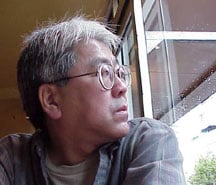
When Roy Miki hears today’s alarms about “the forces of terrorism,” he’s reminded of the hysterical fear of the “yellow peril” in the last century.
The connection, for Miki, is extremely personal.
Ripped from their farm in the Fraser Valley, Miki’s family felt the full force of the War Measures Act a few months after Japan attacked Pearl Harbour on Dec. 7, 1941. Using the act’s provisions, the government effectively stripped Japanese Canadians of their homes, their possessions, and such limited citizenship rights as “Asiatics” enjoyed at that time.
Miki has written a book, Redress, recounting the long march from internment to reparations – how our government trampled on the rights of Japanese Canadians during World War II, and then took half a century to acknowledge its wrongdoing.
Although it focuses on a specific historical moment, Redress also charts the political uses of language. Miki argues that the federal and provincial authorities exploited language to subvert human rights, and then shuffle off responsibility for doing so.
And he says officials are at it again, whenever they engage in “racial profiling” or conjure a vague enemy called “terrorists.”
‘A specter out there’
"Language can work to erase identities for one purpose and remake them for another purpose, and we’re seeing that now,” Miki said late one recent afternoon in his pin-neat study in his Kitsilano home. “Terms like terrorism—which really doesn’t identify anybody—is a specter that is simply out there. And that allows the government at this point to institute all kinds of actions that strip you of your rights. As long as that thing is out there you can have laws—the Patriot Act, for instance is very similar to what we had which was called the War Measures Act.”
Until 1949, Canadian citizens of Japanese ancestry were denied full citizenship rights. They were barred from medicine and law. They couldn’t vote. They were subject to capricious changes in laws to protect white economic interests, as when the fishing licenses of hundreds of Japanese were pulled in the 1920s.
Racism was hardly confined to the wing nuts of the Asiatic Exclusion League. In 1937, for instance, a Liberal MP from New Westminster, Thomas Reid, wrote, “This dominion is primarily a white man’s country, and the interests of the white man should be paramount.”
The B.C. Security Commission was set up to seize Japanese Canadians’ property and to ‘safeguard’ their possessions. But its most pressing concern was to implement a new government policy of forcibly expelling the 23,000 Japanese Canadians settled along the coast of B.C. “It is the government’s plan to get these people out of B.C. as fast as possible,” explained Ian Mackenzie, a cabinet minister. “It is my personal intention, as long as I remain in public life, to see that they never come back here. Let our slogan be for British Columbia, ‘No Japs from the Rockies to the seas.’”
‘The power of language’
The Miki family was uprooted from their farm in May, 1942, and sent work the bleak sugar beet fields of Manitoba. There, six months into his family’s exile from the coast, Roy Miki was born.
“My mother tended to look back upon the life in B.C. in a very idyllic way,” Miki told The Tyee. His parents lost not only a comfortable lifestyle, but also cherished notions about democracy and the nature of Canadian society. They felt “regret and also that sense of betrayal,” Miki says. They asked themselves, “‘How could they do this to us? And then after the war do nothing about it?’”
Now an English professor at SFU, Miki is best known for poetry crammed with vivid images and political intensity. As he was growing up, he wanted to “tell the story of internment from the perspective of Japanese Canadians,” Miki said.
“If I learned anything from the redress movement, it’s to respect the power of language,” he said. Using the sweeping powers of the War Measures Act, the government reclassified Japanese Canadians as “persons of the Japanese race,” transforming them, both legally and politically, into persons who could be treated as if they were ‘enemy aliens.’
Maher Arar case
“Had they said ‘a Canadian citizen of Japanese ancestry’ is being uprooted, they would have had a much more difficult time justifying it,” Miki says. “Japanese were Canadians by birth, but publicly that Canadian-ness was erased and they were remade as enemy aliens. And it was the enemy alien that was interned, not the Canadian citizen.”
Governments continue to practice this kind of sleight of hand, Miki says, with terms like “racial profiling,” which is “a kind of benign way of talking about racializing people. In other words, treating people on the basis of some assumed racial type.” Miki argues that racially profiling Arabs as potential terrorists is analogous to the transformation of Japanese Canadians into ‘enemy aliens’ half a century ago.
As he wrote Redress, Miki kept the Maher Arar case in mind. Arar is the Canadian engineer whom American authorities detained between flights in New York City. Claiming he was an al-Qaeda suspect, Americans ignored his Canadian passport, and deported him to his birthplace, Syria. A public hearing is currently investigating the situation.
Miki laments the lack of public outrage over the Arar case. Fear of terrorism has helped normalize racial profiling, so that when someone like Arar is arrested, “people are saying, ‘of course he must have done something wrong.’”
Likewise, he said, during the Second Word War, white Canadians treated Japanese Canadians “very suspiciously--because they felt they must have done something wrong for them to be uprooted and lose their property, because the government wouldn’t just do this to innocent people. So the violation of Japanese Canadians’ rights was just normalized.”
‘We have to redress you’
It took over forty years for Japanese Canadians to win an apology and compensation from the federal government for its many wartime losses. In 1988 the federal government agreed to give $21,000 to each person who had been interned, relocated, or deported solely on the basis of Japanese ancestry. A further $36 million was allocated for an array of cultural, educational, and social programs meant to promote human rights and foster racial harmony.
In Miki’s view, redress allows a wronged community to accept the past, and face the future with dignity and hope. A democracy is not foolproof, he said, and when things inevitably do go wrong, redress can lead to reconciliation. “We often abandon the most vulnerable people in a time of crisis, because we say ‘we can’t be bothered with you, somebody’s got to be sacrificed.’ But the strength of a democracy is when the crisis subsides to a certain point, and you examine it, if somebody is wrong, then the collective has to say, ‘for the good of all we have to redress you.’”
Judith Ince is a staff writer for The Tyee. ![]()


39
Login or register to post comments
The REAL barking mad fox channel (not verified)
7 years ago
I think redress to the Doukhabor community for expropriated lands and children forced into parochial schools would be a great place to start.
And.... (not verified)
7 years ago
And it would be very nice to see the government of Japan acknowledge and make amends for war crimes commited during that period!
The REAL barking mad fox channel (not verified)
7 years ago
Frankly, I don't care if they do or not. Yeah, it would be nice, but I live in Canada and want to see our government held to higher standards.
Bailey (not verified)
7 years ago
Something there is in the human heart that loves to feel superior. To grind others into a mold which somehow makes them less, as if that somehow makes us more. Some kind of schoolyard insecurity or something. Grind them down, steal their stuff, their hope, their identities. Then blame them for their victimhood, and even for the ills we all suffer, our share of the human condition. If it's all their fault, we won't need to be forgiven our failures, as if we have no faults of our own.
I've never really understood this. It seems so unnecessary, so petty and it causes so much misery in the world, when all we need to do is offer our hands to one another. Be considerate, compassionate and helpful, and everything will be as good as it can be.
The oddest part of it is that the process is always the same no matter what the group or issue being singled out, and the judgement of history is likewise always the same; that it was evil.
Why can we not just see the evil before it all plays out again, like it has so many times in the past, and skip it for once. It's not like we don't know how it will end.
Coyote (not verified)
7 years ago
The issue of Japan's clear need to apologize for its Second World War crimes, including the rape of Nanking, is an entirely separate issue from what was done to Japanese-Canadians. Who were afterall, Canadians, not Japanese per se, let's be very clear about that-, rather than fall into over simplified racism or national chauvanism, as "And" seems to want to do.
To lump Japanese-Canadians into the crimes committed by Japan , would be like lumping all Anglo-Canadians into the need of Great Britain to redress its many crimes committed during the time of the colonial wars of the British Empire, such as the Opium Wars in China, of which there were also many other outrages, small and large. Which would be foolish and erroneous, of course. Whatever hyphenated Canadian nationalism we sprang from, we are all, afterall, Canadians, and cannot be held liable for the crimes or follies of our former and distant ethnic/historical homelands, any more than I can reasonably be held responsible for the original sin of Adam. (If one buys that poppycock.)
And I agree with The Real Barking Mad Fox Channel, completely. What was done to the Doukhabor community in this province is the still unaddressed crime of still another right wing government(Social Credit), of the still not so distant past, that these wingnut's heirs have also yet to redress. And they are the historical and ideological political womb out of which this current crop of nutters were spawned.
There is much history, past and present, for which these goon spawn have still to receive their own just rewards.
Waiting for the page to turn.
allan (not verified)
7 years ago
Nice howling, coyote.
Burgess (not verified)
7 years ago
When and where does 'redress' end? From the Chinese Head tax to the Ukrainian forced labour up in Banff and everything else in between. It never ends. And to have lived on the West Coast during WWII was not pleasant with the possibility of an invasion likely. There are so many facets to this question that the arguments that will appear here will be just so much wasted hot air.
Anonymous
7 years ago
"There are so many facets to this question that the arguments that will appear here will be just so much wasted hot air." Dear me, yes! Let's shut down the discussion before anyone has a chance to say anything at all. Condescension and saboutage jump to mind. Maybe a fear that the issue will get out into the larger public domain where it can alter social attitudes.
I think there is real value in itemizing the many missteps our civilization has taken during its formation, to acknowledge the errors and where possible, provide redress. Yes, most of us are the descendants of colonial settlers. Even the name "First Nations" is debatable -- since there may have been prior nations for all the historical records that were kept. So what? Let's acknowledge there was harm done and try to forge some peace with the survivors.
The REAL barking mad fox channel (not verified)
7 years ago
That was me.
Guy (not verified)
7 years ago
OK, Lets repeat the obvious mistakes of the past, and use Bill C36 to do it. Or, should we recognise the the fact that racial and/or political profiling, is a threat to all, and we should kill the bill, by any means fair or foul.
Decisions in Wartime (not verified)
7 years ago
We like to disparage the motives of our predecessors as racist and unenlightened. But the government's decision had broad consensus and support at the time. Even the CCF and major trade unions in BC editorialized at the time that the internment was a wartime necessity. Despite being a longtime advocate for equal voting rights for the Japanese, the CCF nevertheless supported the internment, and saw no inconsistency in this position. On December 24, 1941, the Federationist, the CCF's weekly newspaper in BC, editorialized that "we are not quarreling with the government action; it is unfortunately a necessary precaution, no matter how innocent the local Japanese may be...". On January 8, 1942, it editorialized that "Policies evolved to avoid harsh and inhuman treatment of Canadian-Japanese and other minority groups, must not err on the side of over-leniency. It is better that a few innocent persons whould suffer along with the guilty through internment than subject the great mass of population to unnecessary risks due to insufficient precautions." On March 19, 1942, the Federationist editorialized under the heading ACT NOW!(capitals in original) that "ALL JAPANESE MUST BE REMOVED FROM THE COAST FORTHWITH AND NOT NEXT SUMMER". On February 23, 1943, Harold Winch, leader of the CCF, was quoted in the Daily Province as demanding an acceleration of the removal of the Japanese: "Ottawa's inactivity amounts almost to criminal negligence in some cases. Japanese are still permitted to live alongside the dykes on Sea Island." And so you see, things were more complex than an exercise in racism.
Bailey (not verified)
7 years ago
Granted your premise has some weight, Wartime, how did the confiscation of land and property, businesses, fishboats and such, coupled with their sale at pennies on the dollar to local 'worthies' protect the dykes, or the population?
There's always a clever reason why the good stuff should be stolen from some and given to the more influential.
Just look at who owns now what we used to own in BC the last few years. How close did Jimmy Pattison come to owning the Coquihalla highway and the right to tax motorists at will? There were clever arguments put up for that little piece of policy, too.
George (not verified)
7 years ago
Roy Miki is consistently an engaging and thought-provoking writer. His insights into the language of progaganda being used today are extremely relevant. This is not about what happened 50 years ago, this is about what is ongoing right now in headlines before our very eyes.
Coyote (not verified)
7 years ago
The REAL barking mad fox channel writes: "That was me."
And a good one it was again.
And "Decisions In Wartime" makes some valid points, though I think not quite the ones he intended. He is right, in my memory recall, that there was "broad" support, even amongst "progressives" at the time, for expropriation and internment of the Japanese-Canadians. Much arise out of the hysteria of wartime that is still wrong, wrong, wrong, into which many well meaning people can even be drawn, as part of the process of creating a villified enemy brought even into our midst, as Bush is now doing in the U.S. with its citizens of Middle Eastern descent, outside of the normal criminal law and order processes. It is STILL wrong, and needs preferably to be opposed beforehand, but at least aknowledged and redressed as soon as there is the return to a more "objective" public sanity.
Very many Japanese-Canadians had been in this country as long as most Anglos, though compelled by racism to live in communities apart, and there was no reason they should have been suspect more than any other group, of harbouring interests against their own country-, this country.
What there was there, amongst that Anglo majority though, was a sense of guilt that made them fearful of the Japanese. (As we still see in public attitudes to Natives.) They knew how they had long treated and discriminated against the Japanese and all orientals, and it was that made them "suspect" the Japanese might have, with some justification, questionable loyalties. The Anglos created their own guilt driven Bogeyman fears.
Which are always more quickly dispelled with 'fessing up and shining in the light of day-, in this case, reason.
Decisions in Wartime (not verified)
7 years ago
I guess my point was only that many people concurred in an unfortunate decision, but in good faith, in the circumstances of the times. Somehow we want to imagine that unfortunate decisions were always made by evil villains, and that those villains were also racists...but sometimes it's just ordinary honest folk making tough calls. If the internment decision was racist, then you'd have to hang that tag on MJ Coldwell and probably on TC Douglas, too. Which is unlikely....I think we'd all agree on that.
Burgess (not verified)
7 years ago
In the unpleasantness of WWII a South Vancouver Scoutmaster who was German, was no end of problems for the local ARP (Air Raid Police) and claimed he would support an air raid by any AXIS attack on Vancouver by removing blackout curtains and turning the house lights on. He got to stay for the duration and our Japanese neighbours who never made any threats were sent to the Okanagan. The officials at the time were 'racial profiling' in their own way. The German family stayed and the Japanese family went because the 'excuse' was 'who could tell the Canadian Japanese from the possible invaders? Canadian and American ships were being torpedoed off Vancouver Island, light houses were being shelled all along the coast from Alaska to California, an oil refinery shelled at Long Beach, an American fort on the Columbia River shelled as well and even a bombing on the Oregon Coast by a submarine launced airplane (twice) helped the urgency of the removal of the Japanese. Attu and Kiska Island in Alaska were invaded and occupied by the Japanese thus threatening not only the West Coast but Europe as well. The greatest number of casualties in battle in WWII for the Americans to that point of the war was the retaking of Attu. The Candians were to attack Kiska next and expected the same treatment at the hands of the Japanese Army. Only the retreat from the island by the Japanese prevented a nasty toll of casulties there. The fear that the invaders just might win does strange things to folks who think they are about to lose a war. The seizure and sale of Japanese assets was unforgivable and amounted to highway robbery. It was possibly driven by the greed of a few well placed citizen and political opportunists as well as the war scare. As for my 'hot air' comment have any of the posters here written to our MP's and PM on the issue? Ottawa and Victoria seem to pick and choose which letters to respond to. The easy ones are sent pablum and ministerial BS. The tough ones are ignored and go unanswered. Responses to my letters run 50/50. Minister Sgro and the PM still has not responded to my 'pole dancer' letter. As for the racial profiling going on today. Well history is repeating itself isn't it? Fear of a repeat of a US/Canadian 9/11 seems to be driving officials now. And for some reason the powers that be haven't realized Canada has already had its own 9/11 - Air India. One has to wonder where 'redress' will come when the court trial is over? Seems the Liberals pick and choose who will be profiled. Does it have to do with political bloc supporters? In a typically Canadian Goverment fashion they will continue their policies and then wait for those affected to die of old age. IE Questions of Japanese Internment, Chinese Head Tax, WWII Merchant Sailors, Gas Tested Soldiers in Alberta, Korean vets ignored because that was a 'UN Police Action", soldiers poisoned in Croatia and the Gulf War, Hong Kong prisoners in WWII Japan, etc. etc. We can look forward to Mr Arar having his claim redressed about 2060 or so and maybe by his children after he is dead. Roy Miki is right on the money. Here we go again folks.
Coyote (not verified)
7 years ago
"Somehow we want to imagine that unfortunate decisions were always made by evil villains, and that those villains were also racists..."
And indeed, as Burgess helps make clear, racism and racist profiling, by otherwise good people, is involved. The tone for which is most typically set and passed on to desiring loyal citizens by the media, ruling class "society" and state authorities, also needs to be aknowledged. Beyone which, as suggested by both Bailey and Burgess, we ALL need to begin to move as a society, as a world culture struggles to emerge.
And I would be clear, it is not only Eurocentric societies that have racism and national chauvanism as part of their historical cultural profiles. Racism and national chauvanism are pretty much universal phenomena. Eurocentric societies have merely been the best positioned politically, economically, and other power-wise, to do the most damage with it. Which is also why, as the global ethno-cultural mix evolves, we have the highest obligation to set an example in rooting it out. If one truly wants to lead, either in a reactionary or progressive direction, there is still the same primary rule; the first and most effective obligation is to lead by example.
It is said by those who knew Hitler the closest, that he could really be quite charming, and loved children. Evil is always more complex than the stereotypes we tend to create of it.
Dave A (not verified)
7 years ago
The lessons of history are not well learned, are they? The government of the day increases the insecurity with programs such as yellow, orange and red alerts, and attempts to pass legislation giving them carte blanche to persecuting, arresting and depriving their citizens of their livelihoods. A situation such as described, is now playing out before us, and it not only is it aimed at non-white citizens, new Canadians, but also at multi-generational Canadians. And the brunt of this attack is being directed against…wait for it… the UNIONS. Airport employees, longshoremen/women, customs officers, anybody employed at any facility of transportation, are being targeted with screening requirements to disclose their political, medical, financial information; and not only of themselves, but their families also. Refusal to do so, would result in instant dismissal from their job and subject them to detention and close scrutiny, without any recourse through the courts. (the enemy within…again). What a field day the corporations will have breaking up the unions! Seniority will mean nothing, as we have already seen Gordon Campbell set the ball rolling by tearing up union contracts. I’ve already sent my federal MP (Chuck Cadman, independent conservative?) a letter voicing my concerns, but two months have passed and no reply. His big thing is "Youth and Crime", and in his constituency letter, he makes no mention of the progress of the Transport Security Clearance Act, now coming before Parliament in the next House of Commons session.
Bailey (not verified)
7 years ago
There are always ones who prey on our fears, use them to make us look away from the main show while they pick all the pockets they can reach. For them, patriotism, principle, whatever; it's all a matter of profit.
If we want to stay free, we have to be a little brave. The world holds many dangers, but we have to defend each other in order to defend ourselves.
We have to resist the desire to blame all our fears on somebody or other. Resist the urge to paint some group with a broad brush to discredit them, to remove our attention from them. Because every single time we shift our eyes away, some con man's hand suddenly gets quicker than the eye and we get fooled again.
anarcho (not verified)
7 years ago
Burgess asked "When and where does 'redress' end?" I would suggest it will end when justice is done. We are evolving out of a culture that was racist and authoritarian and did an incredible amount of damage to minorities, working people, and women. The very land we live on is stolen, t.he corporations are built on fraud and theft. I could go on and on. What we need is some kind of Jubilee whereby everyone gets redress.
anarcho (not verified)
7 years ago
It was shocking to see the CCF's pandering to war-time hysteria and anti-Japanese racism. Undoubtedly it was true that many CCFers were not racists, but this makes it more, not less troubling. Were their any politicians or political groups that had the guts to stand up and say that this action was wrong?
allan (not verified)
7 years ago
Some British Columbians participated in government organized discrimination (or racism) about two years ago when they willingly took part in a referendum on negotiations with First Nations. The highly controverial set of questions put to participants (some of which the province has no jurisdiction or involvement in), we're, in my opinion, crafted to elicit as much emotion as possible. I did take some solace, however, in the fact that the vast majority of British Columbians did the right thing by tossing the questions into the garbage. But pitty the poor Muslims residing in the U.S. Cornell University just release a nationwide poll, reported in today's Globe&Mail, that found one in two Americans think their fellow Muslim-Americans should have their liberties restricted. Americans who see themselves as highly religious or Republican were more likely to support these restrictions, the university found. Seems like the past isn't very far away.
Coyote (not verified)
7 years ago
"And the brunt of this attack is being directed against…wait for it… the UNIONS." wrote Dave A.
And we should kid ourselves not, they know, as should we, that Unions are the most basic tool ordinary folks have in their arsenal of responses, for effectively defending themselves and advancing their interests. And which is why, so much attention is being directed against them in law, to limit their ability to effectively organize and function, and to discredit them.
The New Capitalism, post the (temporary?) collapse of progressive, socialist, communist and anarchist ideas, like I keep saying, wants to forces us all before the bosses, as powerless and disconnected individuals, cap in hand, grateful for whatever crumbs they brush off the table, and allow us to feed on. Which should tell us something about what we should be really wanting and working to do.
There is much too much emphasis and compliance with legal niceties, which I call legalism. Capitalism is looking back in time, to a point it wants to return us all, pre-trade union, and a more obedient and compliant working class. We might just need to as well, look back to the legally marginal, and if necessary, surreptitious methods and forms of organization employed by those who first built the trade union movement as the foundation for a dreamed of working class power.
Peter Lahay (not verified)
7 years ago
Dave A makes excellent points. Dockworkers have be villfied and marginalzed out of the security debate. But they remain resolved to knock back the transportation security clearance. They are now the last line of defense for all of us. Be really clear, if the government is successfull in stripping their fundamental rights then it will be seafarers and truckers next. Probably followed by refinery workers, telecommunications, hydro. Really the list of workers are endless. History will not look kindly on the federal liberals, this period will be remembered in the same light as J. Edgar's time. I really think The Tyee should feature this issue.
Coyote (not verified)
7 years ago
Obviously, the "good" guy Lahay. The "other" Lahay would be on the "other" side.:-)
Peter Lahay (not verified)
7 years ago
Coyote, Thanks for that, just so theres no mistake this other fellow spells his name Lahey. Not sure if he is trying to impersonate me or not but it did cause me some discomfort.
poiuy (not verified)
7 years ago
As i recall a book by Joy Agawa pointed out that land that farms were located on in a west vancouver area namely British Properties, was taken because of lack of payment of taxes while the interned could not possibly pay! No land was returned! Redress for this theft of property is hardly been done with $23,000 dollars many years later. Many people have pasted away that were never able to acheive redress. This canadian scandal is not addressed until the property is returned! As most canadians are aware property is valued highly by those whom occupy it,and not in current dollars. Currency values wither but land remains just that land. Mr Miki is a very admirable canadian and i for one appreciate his loyalty to his country.
anne cameron (not verified)
7 years ago
A beautiful piece, Roy. Language can be a tool or it can be a weapon. What is happening now is frightening. The "war on terror" spreads terror and the "terrorists" are not the ones we are being told they are. Genocide is happening in the Tigris-Euphrates valley, where the Garden of Eden is said to have been. But, of course, "they" don't look like us, eat like us, dress like us, think like us, it's all a case of mind over matter, we don't mind and they don't matter. The "Homeland Securities" Act in Amerikkka impacts us here. And howcome the CIA has an office in Vancouver? The B.C. Liberals have given what should have been private personal information on B.C. citizens to the U.S. security forces...we're all sure to be on somebody's list! The only reason this nation moved against Canadian citizens of Japanese origin and not against those of German or Italian origin is that they LOOKED different and were easy to pick out in a crowd. Until we stop denying that obvious fact we're ripe to do it all again to someone else. And one day someone will do it to us. Blessings, Roy. A voice like yours is needed and should be cherished.
Third and Yukon (not verified)
7 years ago
Here's my question: Why hasn't the Japanese community come out in force to question the current treatment of Arabs in Canada and the US? Besides Mr. Miki, why haven't they been more vocal in defending these people? I hate to voice an unpopular opinion, but why aren't the Japanese-Canadians up in arms over the treatment of aboriginals in Canada? Along the same lines, why haven't Chinese-Canadians, upset over the head tax, shown similiar disdain for the internment of Japanese-Canadians? Anyone?
anne cameron (not verified)
7 years ago
Third and Yukon: how do you know they haven't. I'm sure when "canadians" protest those people you just took pot shots at are involved.
jcolvin (not verified)
7 years ago
It would be helpful if Roy separated the issue of internment from that of land confiscation. For while there seems little justification for the latter, it is mainly an exercise in 20/20 hindsight to criticize the former. We should not forget that at the time of internment the western allies were losing the war and there was a very real possibility that Japan might invade the west coast of North America. Some 30% of Japanese Canadians held dual citizenship, and thus could technically be drafted into the Japanese army and become enemy combatants; and most of the "Canadian-born" Japanese were small children. I'm certainly not convinced that, utilizing the precautionary principle, internment was not the correct choice in a time when Canada was facing a real existential threat.
Earnest Canuck (not verified)
7 years ago
Actually, Anne, we did "move against" many "Germans and Italians" in Canada, not only during WWII but also during the First; there was also a good deal of internment of such Mitteleuropa types as Ukrainians, if I'm not mistaken. I'm sorry if this undercuts the hypercorrect, racemongering theories of many of those posting on this subject, but it's true. It's also true that *world wars* were being fought at the time; of all the valour and horror sweeping the world during those apocalyptic conflagrations, Canadian Japanese internment seems pretty damned minor to me. I accept that it didn't feel that way to those who were interned and whose property was taken; they are entitled to an apology. They've got mine. Now, is there any room in this typically self-flagellating Canadian discussion for a look at the suffering endured by Canadians who fought in the Pacific theatre? Is the defense of Hong Kong completely irrelevant here?
allan (not verified)
7 years ago
Earnest Canadian, perhaps you were a bit too earnest in your comments about "hypercorrect, racemongering theories". You are correct that Ukrainian Canadians were also interned during those horrible wars. Many, I beleive, were stationed around Banff, while others were kept in northern Ontario. But I suspect it was the same ignorance-induced fears that stole their freedom as it was shortly after WW One when many of them and other Eastern Europeans were seen as part of a red (as in Communist) plague sweeping out of Russia. Read up on the history of the Winnipeg General Strike of 1919 and the efforts of employers and their supportive politicians to deport without appeal anyone with an accent who objected to the anti-worker sentiments of the management class at that time. Tell me there was no racism or at least ethnic hatred, involved there, EC. Now, I also agree with you that many Canadians fought and suffered badly in the hands of the Japanese military. But to try to equate their individual suffering to the individual suffering of fellow (Japanese) Canadians imprisoned by their own government in their own country, is a bit hard to swallow. Both groups certainly suffered, but the suffering of one had little (other than ignorance) to do with the suffering of the other. Your rationale suggests that one wrong negates another. Isn't that called revenge?
anne cameron (not verified)
7 years ago
Perhaps I am overly sensitive. Right now "racial profiling" is a reality, whether it is openly acknowledged or not. Years ago the FBI lied to the Canadian government and Leonard Pelletier was sent across the border. Since which time he sits in jail and even Amnesty International cannot get him out. Now the Amerikkkan government is trying to extradite John Graham and have lied about the "evidence" they have... this goes on at the same time people are scooped in transit and sent off to countries where they are tortured and we hardly hear how the RCMP helped make that happen...and why? To me it just is not fair! Flat out! And I know "fair" is not really an option in our world, but I will argue it ought to be. The same kind of fear-founded reaction which led to the head tax, the internment of canadian citizens, and the theft of Doukhabour lands and children is at work today in the "Homeland Security" cow cack in which Paul Martin's gov't and both CSIS and the RCMP are complicit. I guess I feel it's really long past time for those of us who are not YET the target of this fascist shit to decide what kind of country we want for our grandchildren to inherit. Union busting and anti-union propoganda is rampant, and now the gov't of Ontario, against the loud protests of several muslim women's groups, is going to alter the law to allow and include Shia law in family disputes and inheritance disagreements. I'm not sure what this will mean but it seems to me that if the ones who will be most affected are protesting someone should take another look. Two wrongs don't make anything right. The worst treatment the survivors of the Canadian defenders of Hong Kong ever got was at the hands of their own government who, for decades, refused them pensions. If we want a decent nation we have to begin, as individuals, to behave decently. I am not optimistic.
Frank (not verified)
7 years ago
Good discussion. I just want to add my voice to those who say that equating the internment with the Japanese military's treatment of Canadians is a different issue entirely.
I wouldn't argue that the Winnipegs and RR's (I believe?) suffered after the fall of Hong Kong at the hands of people who did not recognize the Geneva Convention. But the tit-for-tat argument would only hold water if those Cdn soldiers had been Japanese citizens. They weren't, so the comparison is invalid.
As for the CCF, well old JS, conscience of Parliament, is a hero of mine, I wish I had a bust of him for the office. That said, I somewhat agree with the CCF of the time. I think the internment was a terrible way to treat fellow-citizens but I could forgive it as a wartime "thing" if only the property had been restored after the war. It wasn't.
Let history judge as they say. It has and Canada was wrong.
Bill (not verified)
7 years ago
It's interesting to hear 'terrorism' equated with old fears of what the Japanese might be up to and why they should be sent off to camp. I tend to think of 'terrorism' as the new Communism, as in a one-size-fits-all 'threat' that can now be used to justify anything from illegal imprisonment of a country's own citizens (a person who might have been smeared as a 'communist sympathizer' is now a 'supporter of terror/enemy combatant') to invasion or overthrow of an uncooperative government. But hey, whatever works...
Earnest Canuck (not verified)
7 years ago
I'll agree that you can't draw a direct analogy between Canadian soldiers fighting in the Pacific theatre and what happened to Japanese Canadians here at home. Except obviously these events are *connected*... I guess what I object to is the almost-total disappearance of our Pacific war from modern cultural memory, and its apparent replacement with these post-modern narratives of Canada's relentless iniquity and bigotry through the ages. Hey, I'm not looking to sand off all our warts, nor whitewash the nature of our past. Internment was a nasty, shitty thing. But I'll bet you large coin that every university student in the country today is far more familiar with the unpleasantness of internment than with -- d'you remember -- y'know, that blood-soaked war against totalitarianism we had to fight? I guess I just get weary of the way Canadians immediately fire our achievements down the memory hole -- bragging might offend someone, y'know -- while lovingly picking at every historical scab we can find. Internment was wrong; an apology is due (and has been tendered). But when we're trying to sort through the events of the 20th century, particularly the chaos, upheaval and bloodshed of 1939-45, it would appear pretty far down the list of what was important.
allan (not verified)
7 years ago
Earnest Canuck, you seem determined to downplay the impact of internment on thousands of innocent Canadians. A lot of things "would appear pretty far down the list of what was important" if no one had complained about the unfairness of their situation. In fact, you appear to be a good example of why some Canadians have had to take such strong measures to have the wrongs inflicted upon them turned into public discussion. Yes, we have lots to be proud of as Canadians. But that doesn't eliminate or balance out some of those negatives we as Canadians shouldn't be proud of. Our problem is we live far too close to our southern neighbour, where criticism of the myths of nationhood and presumed purity are dubbed a communist, no a terrorist plot. You certainly never learn from a mistake you deny. Quite frankly, if some greedy capitalist can milk this country and then scheme to avoid paying taxes on the gains and still be treated as a positive, I see no reason why anyone harmed shouldn't speak out. I know I would feel a lot more proud of this country if it actually lived up to its claim of being a kind and caring country where children don't go to bed hungry at night when others puke their wealth out in ugly displays of consumer excess. I would feel a lot more proud of this country if governments wouldn't hold referendums aimed at limiting minority rights and I would feel a hell of a lot prouder if government and the investors who purchased the loot were to compensate Japanese Canadians for the outright theft of their property in BC. The related internment without trial issue could easily be resolved with a sincere apology. Go ahead and accuse of amusing myself pulling at scabs, but I would suggest those scabs will heal and disappear as soon as you, I and other Canadians accept that the red hue around the sore is an indication of a problem still festering within.
Joseph (not verified)
7 years ago
Why does nobody talk about what the Japanese did, and still do to the AINU people, the Native people of Japan??? Maybe what goes around comes around. However, I 100% despise what Canadians did, as I despise what Japanes still do.