Opinion

What Money Can't Buy

New breakthroughs in the field of "happiness research" point to the need for a gross national happiness indicator.

By Alan Durning, 4 Aug 2004, TheTyee.ca

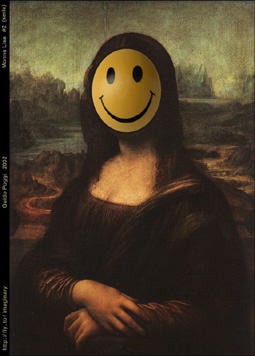
monnalisasmile

It was only a matter of time before someone quantified the benefits of regular sex.

As reported by the New York Times in July 2004, two economists recently published a paper  titled "Money, Sex, and Happiness: An Empirical Study." Using data from surveys of 16,000 Americans, they found that, not surprisingly, people who had more sex were happier. In economic terms, "increasing the frequency of intercourse from once a month to at least once a week provided as much happiness as putting $50,000 in the bank."

Not just any sex, though. The economists--David G. Blanchflower of Dartmouth College and Andrew J. Oswald of the University of Warwick in England--found that the monogamous, lasting-relationship kind was found to have significantly more value than, say, sex with a prostitute. Married people, they observed, have more sex than singletons and are happier--calculated to be worth about $100,000 in annual income.

Revolutionary finding

Interestingly, though, the media downplayed the most revolutionary finding of this study: that money--the most obvious candidate for purchasing power of any sort--apparently only has limited ability to "buy" happiness. In general, wealthier people are a little happier than the less well off, but it takes an awful lot of income to "buy" the happiness that companionship and community provide for free. Studies in the growing field of "happiness research" also suggest that as nations become wealthier the correlations between income and happiness become weaker.

In other words, financial indicators such as GDP, the Dow Jones, and consumer confidence--the standard methods by which societies such as the US and Canada gauge their well-being--are a poor measure of how happy we are. We've been scratching in the wrong place. We've been trying to maximize GDP instead of gross national happiness.


What is happiness research? It's a field populated by economists, psychologists, and other social scientists who are trying to figure out empirically sound ways to measure people's sense of satisfaction with their lives and communities. Happiness heavyweights include John Helliwell of the University of British Columbia, a professor of economics who has studied social capital and subjective well-being.

GDP doesn't rate happiness

Several years ago, our organization, Northwest Environment Watch, investigated including a "happiness indicator" in a regional index of progress for the Northwest that we developed (the Cascadia Scorecard, which we released in March). But the cost of gathering such data, and the technical challenges of reliable measurement, proved prohibitive. Now, though, the field of happiness--or subjective well-being, as it's often called in academic circles--is exploding, and becoming a respected area of specialization. There's even a Journal of Happiness Studies, published in the Netherlands.

All this means that the day is drawing near when we'll be able to track "happiness quotients" in B.C., Idaho, Washington, and Oregon.

Recent advances in the field were highlighted in June, when a stunningly complete review  was discussed at a Brookings Institution panel. Authored by Ed Diener, of the University of Illinois and the Gallup Organization, and Martin Seligman, of the University of Pennsylvania, the review spotlighted the disparities between economic indicators, on the one hand, and trends in how happy and satisfied in life people are, on the other.

Studies show, for example, that over the past 50 years, while income in the U.S. has soared and per capita GDP has tripled, life satisfaction has remained virtually flat, even as Americans' mental health has plummeted.

"Across nations," Diener and Seligman reported, "there are diminishing returns for increasing wealth above U.S. $10,000 per capita income; above that level, there are virtually no increases or only small increases in well-being. Moreover, health, quality of government, and human rights all correlate with national wealth, and when these variables are statistically controlled, the effect of income on national well-being becomes nonsignificant."

It's true that within a society, richer people report being happier than poorer people. But they're no happier than the much-poorer elites of poor countries, nor than the much-poorer rich of bygone years. Cross-cultural comparisons underline the findings: In a ranking of life satisfaction among 10 groups, the Pennsylvania Amish were found to be as happy as members of the wealthiest sector of the United States.

Plummeting mental health

Meanwhile, for reasons that no one really understands (social isolation? pollution? competitive individualism? media saturation? secularism? modern conveniences?), as societies around the world have grown richer at a galloping pace, their mental health has plummeted. Depression rates in the United States have climbed perhaps tenfold in the span of 50 years, and the incidence of anxiety disorders has also skyrocketed. Mental illness strikes at earlier ages as well. The average age of depression's first onset is now in the already-vulnerable adolescent years. (And this isn't a fluke of better reporting; researchers have designed their methods to prevent such biases.)

The researchers make a strong case that measuring well-being--and maximizing it through policy shifts--would benefit society as a whole, not just individuals. Compared with less-happy people, happy people go on to earn more money, have stronger immune resistance to cold and flu viruses, suffer fewer fatal accidents, and live longer (nine years longer, in one study). Research also suggests that happy workers are more productive.


They even offer a partial formula for joie de vivre: "Live in a democratic and stable society that provides material resources to meet needs….Have supportive friends and family….Have rewarding and engaging work and an adequate income…Be reasonably healthy and have treatment available in case of mental problems….Have important goals related to one's values….Have a philosophy or religion that provides guidance, purpose, and meaning to one's life."

At last, the wisdom of the ages has been confirmed empirically, at the 95 percent confidence interval!

Getting serious about happiness

Seriously, the implications of this research are profound and far-reaching. We still have a long way to go: Diener and Seligman devote a section in their paper to the need for a more systematic approach to happiness research, which includes a wide variety of measurements and methods.

But at bare minimum, it reinforces our hope that an indicator of well-being will some day be feasible for the Cascadia Scorecard. (Are British Columbians happier than residents of Northwest states? Stay tuned!)

A measure of human quality of life could put into proper perspective such flawed indicators as the Dow and the consumer confidence index, and--even more important--help us better assess the world that we are creating for our children.

Alan Thein Durning is executive director, and Elisa Murray is communications director, of Northwest Environment Watch, a Seattle-based research center that publishes the Cascadia Scorecard, an index of seven key trends shaping the future of the Northwest. See http://www.cascadiascorecard.org/ for more information.  [Tyee]

19  Comments:

Login or register to post comments

  • Kit (not verified)

    7 years ago

    This is an important subject indeed. A person can't be happy and genuinely fearful at the same time. We've a culture of fearmaking as a commercial driver - and as a control mechanism of the work producers. There are a lot of "free for all" dysfunctionals involved in many acts of commerce (that's not to say that "exchange" itself is fundamentally flawed). Our fanatical drive towards "production" (and subsequent obsessive consumption) really needs to be looked at. hmm, yes...by an "Institue" think bucket..with a report card..

    The mania of "power" and production is too like "sex" for some dyfunctionals (well..duh) - hence places like stock markets and places that have obsessive "make/score/accumulation" patterns. This branches to all levels of competitive commerce (and communications) - and now seems to have become an intrisic part of our mediated (ie "the press") vocabulary.

    Those who utilise such terminolgy have agendas. Disarming some our (own personal, and external to others) messaging patterns ("terror" for one), might be a first step toward effective change in this regard; toward the freedom - of connection. From this pattern might come a sense of safety, and from that..maybe a few more regular feelings the article refers to as desirable.

  • omg (not verified)

    7 years ago

    I didn't get past the fact that making deposits and withdrawals can amount to $100,000 in the bank or happiness. I guess it depends on to whom you make the deposit or withdrawal---the wrong institute can lead to being destitute and thus unhappiness. Better keep it in a sock so there are no unpleasant surprises.

  • Tom Cornwall (not verified)

    7 years ago

    This is a fascinating topic. If you accept the utilitarian premise that the purpose of government is to deliver "the greatest good to the greatest number" this seems to show that government isn't doing a very good job. However, governments may not be able to affect happiness that much. Genetics plays a big role. Also, I remember reading somewhere that Nigerians are the happiest people on earth - and I don't think anyone is agitating for more corrupt, oil dependent, or indebted governments as a result.

  • Stuart (not verified)

    7 years ago

    After the horrors of Sep 11 in the US , many people tended to stay home and spend more time With loved ones etc. More time talking and contemplating life in general. The news blamed it On fear to go out and shop, I blamed it on a wake up call to action. People were starting To reevaluate their priorities. Then the mainstream put out a call for Americans to go out And shop , shop , shop, they said shopping is a form of patriotism .

  • BuN (not verified)

    7 years ago

    "The Economics of Happiness" has been a topic for 'dialogue' at the Wosk Centre in Vancouver a couple of times, most recently about two months ago. There an economics prof from Bologna, Italy, and John Helliwell from UBC gave talks. One interesting tidbit : the italian professor claimed that 'economics' was used to study and hopefully improve human happiness prior to the renaissance (enlightenment ? can't recall) and only afterwards did it become the 'dismal science' charged with studying resource allocation and scarcity. so what is old is new again.

  • Fi Maxwell (not verified)

    7 years ago

    Revolutionary finding?? Is that sarcasm? DUH. And what's this nonsense with equating monogamous sex and marriage?? Pardon my bluntness, but what the heck do the two have to do with one another? There are plenty of people out there having monogamous, great sex and they ain't married... haha... None of this was news to me- David Suzuki discusses this "happiness indicator" - or GNP (genuine progress indicator)- by the Redefining Progress org. in his reader, and if anyone stopped and thought about it for 7 seconds it's common sense, isn't it??

  • Kit (not verified)

    7 years ago

    Though happiness is certainly important - I've always wondered who (and "how") someone even answers some of these types of 'polling' opinion questions. With regard to Nigeria having the 'happiest people on Earth' - they'd been going through massive social unrest with Oil companies (Shell and others). A pretty implausible sounding climate for a "happy" people.

  • John (not verified)

    7 years ago

    In the video I watched by Marilyn Waring ( Whos Counting ? ) one of the things she touches on immediately is how far out of touch GDP or economic indicator is with personal or social happiness. Ex...when personal work...such as when a woman will go 12-14 hrs a day raising a family to help produce our next generation..there is happiness and obvious worth to society...but this " value " isnt even recognized or valued in our society when its based on " growth and wealth ..and economic standing " You would not have to dig too deep in BC to find that besides all the trumpets Campbell is blowing about how great BC economic picture is ...he completely ignores the happiness and social well being of the majority of the province. ( that will happen when you sell off BC assets, throw our natural resources to the highest bidder, export our jobs, fire our workers , claw down at earnings, ( hard to buy a 400,000 house on $8 /hr...but dont worry ..we have a " healthy economy )eliminating social programs, killing education, lie to your province...do everything in secret, use our money to make commercials to make you look better...the list is so long and people pretty much know this stuff...Yeah send a poll around in BC asking how happy people are ( everyone ..not just carefully selected areas that make LIb look good ..) and then let everyone see the results...not just some..or results washed through the Global media laundry tub.

  • Shirin (not verified)

    7 years ago

    I had a similar reaction as FiMaxwell in regards to this being a "revolutionary finding". From the first time my parents had taken me to various comparatively poor countries in Africa as a youth - I realized how miserable we are here in our lofty wealth and well being in the West. Imagine people and kids running around laughing - smiling spontaneously to themselves and curious enough to ask strangers about themselves. These people did not have an SUV to upgrade, a speedier internet connection to get, or a life-organizing palmpilot to gloat over - lucky them. Coming back here where people walk with eyes averted, usually rushed, swearing at traffic, or grimacing at anything and everything in front of them - I could have told the researchers that money does not fill the self contentment bank - and saved them a bundle while I was at it. I realized that seeing such carefree behaviour here would make most suspicious of the out-of-place glee and would lead to the speculation of either drugs or mental disturbance. There is a point when we expect material things to bring satisfaction - and like greedy kids grabbing the cookie jar and eating all and more - we end up with a sense of despair and a belly ache to boot. We will never be satisfied because there is always something better we want to get to fill that void we feel. It would be more helpful if perhaps we first try to define happiness - and then follow Maslow's Hierarchy of Needs to get ourselves there - where we can join those without the plasma TV - but with a life.

  • Coyote (not verified)

    7 years ago

    Happiness. I actually never think about it much. I never really had a desire to be "rich", per se, but I hated being poor, that's for sure-, so it's definitely better now that I can afford a "few" toys to play with. I've got a good woman of long standing, which is important, and my loins have borne their fruit, which is satisfying. And being healthy is important.

    Lord liftin' jeezus though, I did hate working for "the man", and now that I don't have to any longer, I'm definitely a whole bunch happier. It's like being a kid again. My time is my own.

    Which is good enough for me.

  • Coyote (not verified)

    7 years ago

    Power! Power is the really important one, for me, now that I really think about it. And I'm not talking about the "Lord It Over The Peasantry" type of power, which I suspect is what the rich man gets it all mixed up with, in his/her pursuit of "GNP Happiness".

    Certainly, from the ancient "passing on the genes" perspective of it all, for the male at least, it does improve your accessibility to the arguably "choicest" gene pool of females. I think most of us understand that. :-) The attraction of "le femme" to males of wealth and power is certainly a well enough known phenomena, is it not? It is, or should be, to men. :-) (Which is not an argument advanced to denigrate women in any way. The reasons for it are of great weight in the females successful passing on of "her" own genes, coming out of the historically brutal primordial swamp which we all have. I simply state the obvious, I think. No sense folks, males or females, fooling themselves.)

    And in the equation is "power", nay largely "because" of its importance at all levels, starting from the most basic, not only an enhancer of success, but flowing therefrom, again I suspect, also a no less important measure of "happiness". Which is why, for example, I always hated working for "The Man" so much; the powerless "subservienceness" of it.

    Which is why the simple possession of "goods and services" alone, as important as they are in some measure, is not, in and of itself, an adequate indicator of that elusive element defined as "happiness". And it confuses the rich man no less than the poor one, though his absence of full happiness will almost certainly be more comfortable, and hence, easier to bear. :-)

    I want some measure of material wellbeing, no doubt, over squalor and material dependance, but it is mostly "Power" over my life and circumstances I want. And I'm not greedy. I understand the need to share it.

    Its the absence of it and the resulting subservience which comes out of that, which is so unbearable-, and so much a source of gnawing, cancerous unhappiness.

  • allan (not verified)

    7 years ago

    Aside from the Northwest name itself, which sounds a bit silly in Canada's southwest (with apologies to Windsor), I truely appreciate the work this organization does on behalf the entire region. Having toyed with the dismal science myself on occasion in attempting to see how my own region (Kamloops) is fairing, I congratulate you on this happiness indicator, which seems to place emphasis on the people rather than on profits. While the latter may be important to those still chasing the brass ring (in their own nose), the Happiness Indicator lets us cut through the financial bullshit and spits out results that are readily understandable without the need for a degree in that stuff.

  • Coyote (not verified)

    7 years ago

    "...the Northwest..." observes Allan.

    I'm not really a "Nationalist" per se, but I do find the way in which especially U.S. writers ( The entire hemisphere is "American".) presume to describe phenomena in a manner that tends to lump us in with them. Indeed, we are not part of "their" Northwest, which they need to endeavour to be clear about and sensitive to, but our own "Southwest". I appreciate there are, probably, significant numbers of "outed" and closet U.S. wannabes in this country, it going along with the largely "colonial mentality" of our ruling class, and imbued into its official "culture", who might be flattered to be "included" in the U.S. juggernaut in such a way, but I, even an internationalist, find it to be a "minor", but irritating annoyance, this "nationalist" U.S. presumptiveness. It is another one of those manifestations of that country's general insensitivity to other people's "cultural senstivities" and ways of looking at the world.

    What is worse, is that we have our own among us, I have encountered, who include ourselves as part of this "pacific northwest". It is part of the "patheticness" one feels for this country sometimes.

    My "internationalist" predilections demand, at this stage of historical development anyway, as a prelude to eroding the prevailing boundaries, that we all respect and be mindful of each others particular "national" sensitivities, especially coming from that over-developed and aggressive Great Behemoth Empire to our immediate "south".

    We have not been absorbed into its Borg style collective yet, at least not entirely. Though it is sometimes hard to tell, I grant.

  • FMaxwell (not verified)

    7 years ago

    Have to disagree with you on one point, Jerry- and it's been awhile...

    As a woman, I can honestly say whether a man has "riches" (in the sense of money) or not is sooooo not important to me. I think that is the basis of this whole article. We're all blindly chasing our own tails, cause "power" and "wealth" are illusions. It's a silly game people spend their sad lives playing- pretension... ugh... makes me sick!! Why would a woman be attracted to "wealth and power"?? That is a very good question, a historical one. Unless, of course, she felt it was her only chance to HAVE wealth and power, through "her man" having it. Even then, what in the end does it all mean, anyway? And there is the flipside of that "well enough known phenomena"- the attraction to the pauper, the rugged man; not the slick business guy driving the fancy sports car. I roll my eyes when those frosty-haired dudes cruise by- and do a double take as the nicely-cut bicyclist whizzes by- the bike messenger! But hey, then again, I'm not your average "material gal".

  • Coyote (not verified)

    7 years ago

    "Have to disagree with you on one point, Jerry- and it's been awhile..." writes FMaxwell.

    Assuming it is me your comments are addressed to, of course. :-)

    Firstly, in most respectful reply, I think, I understand, as I frequently say, the role of "exceptions" which always exist in any "general rule". That being, exceptions serve to make the general rules clear, and help define their limits. Assuming again, that you know yourself as well as you think you do, about being the "non-material gal", and unconcerned with such a base thing as "power". :-) Which I have no reason to doubt.

    Except, by way of example, I think you overlook the significance of the underlying issue which the entire female vs male "thing" has been about of recent decades-, nay actually much, much longer historically. If it has not been about "power" Fiona, and "equal" access to materiality, it has been a tempest in a teapot on the part of ladies, all about nothing-, which you could have then certainly spared us poor, hapless males the stress. :-) And I don't think it has been about "nothing" at all.

    It has fundamentally been about the "unhappiness" of women with what is still very often, their "subservient" position, in their relationship to the male and his "power position". "Subservience", in all its blatant and more subtle forms, being that which exists in the absence of, at least, an "equal power" in ANY relationship.

    I suggest that, on this one, you have maybe not put it all entirely in perspective yet-, which I certainly know you are smart enough to do. :-) And see that "material well being" at some level, and "power" over the defining economic and socio-political elements of one's life, if not the sole elements of, are certainly critical to personal AND social "happiness". And a woman, or women, should certainly understand that better even than men, I think. Indeed, if I know nothing else about women, even if they might not put it in my precise terms, I know that they do understand that, by and large. The experience of my life with women screams it out.

    And that is anything but an insult to women, as I've already said, who have actually helped me understand its importance in my own life. It is rather, a "supreme" compliment. :-)

  • OhSullivan (not verified)

    7 years ago

    "Hit your thumb with a hammer, and see how good it feels when it stops hurting" anon. My daily happiness quotient rose when my wife and I survived cancer. Now, as my peers die of various causes - health or otherwise - I feel perversly happier because I am alive. I suspect many Nigerians are happy for the same reason.

  • FiMaxwell (not verified)

    7 years ago

    Rather than "equal access to materiality", I like to think of the "female v.s male" thing, or rather, feminism, as a movement to take control of life choices, to redefine everything from the top down that one does not agree with. Certainly many women have sought power and wealth in an attempt to be "equal", but many of us see now (or knew all along) that like I said earlier, it is all an illusion anyway. It's crap. It doesn't make you free, or happy, or content. "It doesn't make the world a better place"...

    But if women have to stumble along and figure that out for themselves, as us brilliant homo sapiens seem to take forever to do, so be it. In the meantime those of us who have figured it out will use our freedom to do the things that truly make us happy... I totally agree with "power" over defining eco and socio-political elements being important to personal happiness- but I don't need to control and define everyone else's lifestyle. That's where I have a problem; when those in "power" try to tell others how to live their lives.

  • Coyote (not verified)

    7 years ago

    Actually, I agree pretty much with everything you said, especially in your second paragraph.

    "I like to think of the "female v.s male" thing, or rather, feminism, as a movement to take control of life choices, to redefine everything from the top down that one does not agree with." But in this quote from your first paragraph, I think, just a tad maybe, :-) you are toying with the meaning of words, instead of confronting them and their implications. (Which is unusual for you; a straight up kind of gal otherwise. Which I am tempted to say is pretty much a female kind of thing, but I won't. :-) And which depends pretty much upon how we define "power", and even "materiality" (the necessities of sustenance and shelter, and some simple physical/intellectual pleasures). For there are many types and kinds of "power" especially, and levels of it. Of which, I address the "need" for the evolution of a very specific kind of individual and collective "participatory power" in personal/social, political and economic affairs, and oppose "elitist", dominance/monopoly based power, such as exists in current "capitalist" society, in these specific areas.

    So, I suspect, if we could get beyond the semantics, we might actually discover that we agree more than we disagree. (Plus, we both have a "slightly" abrasive style, and tend to rub each other the wrong way. :-)

    You want, "...to take control of life choices...), you say? Eh, I'll buy that. Working class males could use that kind of "Power" as well. You use the more flowery female preference in terminiligy. We "guys" prefer to cut more directly to it, and call that "take control of life choices" mouthful for what it is; "Power".

    The need, mostly, is for a common language, or at least, better translations of each others. You know, that old Men Are From Mars - Women Are From Venus thing.

  • Fi (not verified)

    7 years ago

    Yeah, the words are definitely loaded with many meanings. Interpretation is the key. By "taking control of life choices" I mean mine, only. Not shaping how life should be for everyone around me- and in the process if they don't like it that way and can't keep up- too bad, sorry, have a tough life. I mean "power" over MY life. When that begins to infringe on others' lives "power" takes on a more sinister meaning...the "elitist", dominance/monopoly based power you mentioned. As for materiality, I mean in the sense of the excess to which our society has taken it- not simple sustenance and simple pleasure- but pure gluttony and senseless, blind desire for junk. I look around at the world we live in and I see very few people who are "content" with basic sustenance and simple pleasures, mostly because of that infringment by others that make us believe we have to keep up, buy this, have that, look like her, be DOING something all the time or your life is senseless and empty... it's such a dizzying Merry-go-round-and-in-the-process-go-crazy... and on that note, I agree about the abrasive style- it's so much fun; isn't it? Must walk the beast and have some green tea...

    • No best comments selected by an editor for this story yet. To see all comments, click the All Comments tab, above.
    • The discussion for this story is closed. No more comments can be added.