

Moore vs. BC will have big effects, but only if we understand the binds North Van trustees faced.
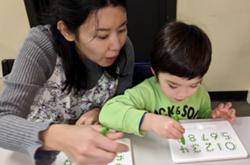
Jeffrey Moore as a young child in the 1990s when he was diagnosed with dyslexia. North Vancouver public schools cut the program he needed to learn. Photo obtained by CTV. Watch the CTV report here.

-
The province refuses to meet the true cost of sustaining our public schools, as a close analysis shows. We all will pay a price.
-
Study finds $135 million shortfall in funding, traces the source.
-
School trustees, administrators sound alarms.
When the Supreme Court of Canada handed down its decision last week in Moore v. British Columbia, I had mixed feelings.
The Court resolved a 15-year dispute between North Vancouver School District and the family of Jeffrey Moore, who in the early 1990s had been diagnosed as dyslexic and in need of special education in the district's Diagnostic Centre. When the district then cut the centre to save money, the Moore family had to put Jeffrey in a private school at the family's expense. Jeffrey did well there, and is now a young man reported to be working as a plumber.
I rejoice for the Moore family, and I admire their determination in fighting their case all the way to the Supreme Court.
But as a former North Vancouver school trustee, I sympathize with the trustees who made the cut, and with their successors who now must pay the Moore family for the costs they incurred to get their son the help he needed.
I served on the North Vancouver board from 1980-82, just as the role of school boards began a momentous change. Until then, boards could tax both homeowners and businesses within their districts. If they raised taxes too much, voters could oust them at the next election. And if the programs funded by those taxes didn't serve the kids well, the voters could oust them for that also. Trustees therefore had real power, and real responsibility.
That changed when the Bill Bennett Socreds diverted our business and industrial tax revenue into the provincial share of the school budget. This measure gave poor districts a fairer share of funding. But it sharply limited school boards' ability to provide programs tailored to their communities' needs. Now we could raise taxes on homeowners only, if we dared.
Inflation and recession
Compounding the problem was the impact of rampant inflation. North Vancouver came to an agreement with its teachers in that era that put us right on the provincial average: a 15 per cent increase in salaries and benefits. But those were also the days of 20 per cent interest on mortgages, and that eventually ended the inflation -- by inflicting a serious recession on all of North America.
Running for re-election in the fall of 1982, I could see how the recession was scaring people. With the B.C. economy sinking and businesses laying off people or just shutting down, voters wanted to minimize taxes like any other expense. Criticizing the schools for supposedly poor performance made it easier to justify cutting education funding, and the B.C. right-wing did just that. All-candidates' meetings got scary, and as a supporter of school spending I was briskly turfed out. Less than a year later, the restraint era began (now we'd call it austerity); B.C. teetered on the edge of a general strike.
A year after that, the Socreds fired the Vancouver School Board for failing to submit an acceptable budget, and we were well into the Thirty Years' War between teachers and provincial governments.
Doing Victoria's dirty work
In the course of that war, boards have lost all taxation and bargaining powers. The ministry of education tells them what their budget will be, and they must make do with it. If it's not enough for everything they think their schools can or must do, then they have to decide which programs to cut and schools to close. In effect, they do Victoria's dirty work.
Something else was going on in those years. Up until the late 1960s or early 1970s, Canadians and Americans alike had regarded education as a kind of reality show in which not everyone would stay on the island. Schools were selecting for particular academic skills, and flunking those who lacked them -- or shunting them into "vocational" programs.
Everyone accepted that in education, as in professional athletics or in paratroop training, not all would make the cut, nor should they. Few noticed, and fewer cared, that those cut tended to be minorities, working class, and those with physical and learning disabilities.
Gradually that attitude changed. Here in B.C. we saw it as early as the 1940s, when communities began to agitate for easier access to post-secondary education. As one of the early teachers in our provincial community college system in the 1960s, I saw the demand and was happy to try to meet it.
Moreover, the higher the education level achieved, the better a student's chances of employment, even in fields with no real need for traditional academic credentials. So by the time of the latest version of the B.C. School Act in 1996, the Preamble explicitly stated:
"The purpose of the British Columbia school system is to enable all learners to become literate, to develop their individual potential and to acquire the knowledge, skills and attitudes needed to contribute to a healthy, democratic and pluralistic society and a prosperous and sustainable economy."
The Supreme Court has rightly taken "all learners" to include Jeffrey Moore and students like him.
Punishing school districts
It was also in 1996 that Art Charbonneau, then the NDP minister of education, fired the North Vancouver School Board for failing to deal with a budget deficit. This carried on a tradition begun in 1986, when the Socreds had sacked the Vancouver board. Like the Socreds before them and the Liberals after, the NDP was underfunding the public system and punishing the districts that tried to maintain their programs.
Before that happened, the North Vancouver board already had years of experience in cuts and closings, including the 1994 shutdown of the Diagnostic Centre that Jeffrey Moore had needed. I can imagine the grim mood around the board table on the night that vote was taken.
The Supreme Court, second-guessing the board years later, said it should have considered cutting "discretionary" programs like North Vancouver's Outdoor School instead. But the Outdoor School has hung by a thread for most of the last 30 years, despite its demonstrated educational value to thousands of kids. Cutting it would have deprived all the district's children of a major learning experience.
This is not to say that Jeffrey Moore and kids like him should have been sacrificed for the greater good of their classmates. But neither should those classmates have been sacrificed.
A momentous change for Canadian schools
If I read the Court's decision (and the School Act) correctly, this and future provincial governments are now bound to provide funding that will ensure that all B.C. students, regardless of talents or disabilities, receive the kind of education set out in the School Act.
That would be a momentous change for schools across Canada as well -- perhaps comparable to Brown vs Board of Education, the 1954 U.S. Supreme Court decision that struck down racial segregation in the schools.
Many of our school-funding problems boil down to demographics: we built a system to serve the baby boomers that was too big for the baby bust of the 1970s and 1980s. Then the echo boomers arrived and put new stress on the system, followed more recently by immigrant kids. And precisely because we must increasingly depend on fewer working-age Canadians to support us all, every student should have the value of scarcity.
We have no disposable students; we need to give every possible kid both useful skills and a productive way to apply them in our economy. Jeffrey Moore is doing that, thanks to the investment his family made in him -- an investment the North Vancouver board should have been able to make 18 years ago. Instead the government of the day, like most B.C. governments, played for short-term political gain: Look how responsibly we control school boards' crazy spending!
Well, the long term has arrived. Governments and voters alike have to see that it's in their own interest to maintain the best possible education system for everyone. We failed to do that in the 1980s and thereafter, and now we are paying the price for it -- not just the North Van board, which must repay the Moores, but all of us. ![[Tyee]](http://thetyee.cachefly.net/ui/img/ico_fishie.png)
Crawford Kilian is a contributing editor of The Tyee.
16
Login or register to post comments
Stickman
27 weeks ago
The future costs of funding cuts
An astute advocacy for all kids. But I don't think the "long term has arrived" yet. The last 10 years of brutal funding reductions under Gordon and Christie's Liberals have devastated programs for special needs kids, counselling and even "regular" kids who have to cope with ever increasing class sizes. The cost of those cuts has yet to hit. Consider a 7 year old who does not get the special attention he needs now - what will be the cost to society 10 or 15 years from now in social agencies, unemployment, lost productivity, or even the justice system.
Please let me pay more taxes to properly fund an education system.
Victor Schwartzman
27 weeks ago
Ongoing discrimination
While I sympathize with Ms. Kilian's personal statements, unfortunately by her own account the did not appear to at the time believe that students with challenges deserved the same education as other students. The proof is in the pudding--did Ms. Killian or any of her colleagues make public protests about the lack of education for students with challenges? Did she go on record as being concerned? Or is she only now jumping on a bandwagon?
I am sure that Ms. Killian is a lovely person. But she did not favours to students with disabilities requiring education. Her well after the fact explanation for North Vancouver's lack of action: it was someone else's fault.
Yes, it is true that society repeatedly has decided to provide minimal funding to helping people with challenges. The old saw that the BC Department of Education can not afford better is undercut by the fact that it could afford better--all it has to do is raise taxes to pay for the better services.
That all Provincial governments decided to deny services to students with challenges because it meant raising taxes--that says some very ugly things about our society.
David Beers
27 weeks ago
Victor Schwartzman
Thanks for engaging. To clarify some misunderstandings in your post, Crawford Kilian is a man and did not serve on the North Vancouver school board when the decision was made to cut the program in question. In fact, as he notes, he lost re-election when he advocated bigger budgets for public schools: "...as a supporter of school spending I was briskly turfed out."
You are correct, however, that Crawford is a lovely person.
DRP
27 weeks ago
One family can make a difference
I applaud the Moore family for their diligence in following up what they believed was the right thing to do; they fought their case to the level of the Supreme Court of Canada, and in so doing, ensured that special needs children would be able to acquire an education promised to them by the constitution. One family can make a difference. Likewise a group of likeminded individuals can also make a difference. Do not fear to have your voice heard.
Skywalker
27 weeks ago
As I see it.
If you have the resources or if you have the parental support and if they are willing to risk everything to make sure you succeed then you can take the school board to court and win to get your money back. what if you don't have that opportunity? Now you are in the same school district and their resources go to pay out a settlement for one case, how does that effect education for all the others when there is even less to go around? Who is responsible for funding cuts and who is paying the price?
I applaud the Moore family's win, but what about all the others who were not part of the decisions to cut costs but now make the sacrifice.
The award should be paid out of the Legislative Assembly's Expense budget. They might take notice.
Sky Captain
27 weeks ago
I only wish that this happened to me when I was young
...Because I was a young Afro-Canadian growing up in the 1970's in Ontario (Toronto, North York public school board with a learning disability (now diagnosed to be having Asperger syndrome) and I suffered greatly, with little help in learning homework and study skills, as well as people skills, from Grade i to 6. As a result, when I entered Grade 7, I was in trouble, and couldn't accomplish anything, lading to all sorts of academic, social, and emotional trouble that got me kicked out of the public school system and had me placed into a rip-off private school-from there I've pretty much slid into shit to the point where I am on ODSP and living in public housing. Now, at the age of 44, I don't know what the frack I'll be doing with my life.
Something has to be done to help the next generation of people with learning disabilities a lot better than what we have now in Ontario and British Columbia, so that they don't end up on welfare, in jail, in the armed forces, or homeless.
sz
27 weeks ago
This is an important
This is an important commentary and certainly it's true that the impossibly dysfunctional relationship between School Boards in this province and the Ministry of Education is much to blame for what happened in North Vancouver and continues to happen today to children with learning difficulties in the public education system. But our experience as a family suggests that budgets are not the only issue-there is also a culture within schools that treats children with learning difficulties as if they don't belong in the system, as if their existence is somehow an unpleasant surprise, even though we know that dyslexia and other related disabilities are incredibly common.
We have been told as a family that we are "too demanding" in asking that an individualized education plan be developed and followed as required, that "children like your son are really hard for our system", that "there isn't really much we can offer" and that the accommodations we were asking for were "not fair to other children." In other words, we have been asked in many different ways to simply go away. We have not, but we have come close and I know MANY other families who have left. There are excellent and visionary teachers and administrators who are trying to hold things together, but what the majority of their colleagues do not realize, I think, is that a strong system for supporting children with learning difficulties will serve ALL children well. There is a time in every child's life when they will need extra support. Let's plan for that, treat it as usual and expected, and ensure we have teachers trained for diversity, rather than trained to teach a typical children that does not exist.
sz
27 weeks ago
This is an important
This is an important commentary and certainly it's true that the impossibly dysfunctional relationship between School Boards in this province and the Ministry of Education is much to blame for what happened in North Vancouver and continues to happen today to children with learning difficulties in the public education system.
But our experience as a family suggests that budgets are not the only issue-there is also a culture within schools that treats children with learning difficulties as if they don't belong in the system, as if their existence is somehow an unpleasant surprise, even though we know that dyslexia and other related disabilities are incredibly common.
We have been told as a family that we are "too demanding" in asking that an individualized education plan be developed and followed as required, that "children like your son are really hard for our system", that "there isn't really much we can offer" and that the accommodations we were asking for were "not fair to other children." In other words, we have been asked in many different ways to simply go away. We have not, but we have come close and I know MANY other families who have left the public education system. This is just what the Ministry wants.
There are excellent and visionary teachers and administrators who are trying to hold things together, but what the majority of their colleagues do not realize, I think, is that a strong system for supporting children with learning difficulties will serve ALL children well. There is a time in every child's life when they will need extra support. Let's plan for that, treat it as usual and expected, and ensure we have teachers trained for diversity and senstive to the issues the families experience. There is no 'typical' child.
sz
27 weeks ago
This is an important
This is an important commentary and certainly it's true that the impossibly dysfunctional relationship between School Boards in this province and the Ministry of Education is much to blame for what happened in North Vancouver and continues to happen today to children with learning difficulties in the public education system.
But our experience as a family suggests that budgets are not the only issue-there is also a culture within schools that treats children with learning difficulties as if they don't belong in the system, as if their existence is somehow an unpleasant surprise, even though we know that dyslexia and other related disabilities are incredibly common.
We have been told as a family that we are "too demanding" in asking that an individualized education plan be developed and followed as required, that "children like your son are really hard for our system", that "there isn't really much we can offer" and that the accommodations we were asking for were "not fair to other children." In other words, we have been asked in many different ways to simply go away. We have not, but we have come close and I know MANY other families who have left the public education system. This is just what the Ministry wants.
What teachers and administrators need to know is that a strong system for supporting children with learning difficulties will serve ALL children well. There is a time in every child's life when they will need extra support. Let's plan for that, treat it as usual and expected, and ensure we have teachers trained for diversity and senstive to the issues the families experience.
sz
27 weeks ago
This is an important
This is an important commentary and certainly it's true that the impossibly dysfunctional relationship between School Boards in this province and the Ministry of Education is much to blame for what happened in North Vancouver and continues to happen today to children with learning difficulties in the public education system.
But our family's experience suggests that budgets are not the only issue-there is also a culture within schools that treats children with learning difficulties as if they don't belong in the system, as if their existence is somehow an unpleasant surprise, even though we know that dyslexia and other related disabilities are incredibly common.
We have been told as a family that we are "too demanding" that "children like your son are really hard for our system", that "there isn't really much we can offer" and that the accommodations we were asking for were "not fair to other children." In other words, we have been asked in many different ways to simply go away. We have not, but we have come close and I know MANY other families who have left the public education system. This is just what the Ministry wants.
What teachers and administrators need to know is that a strong system for supporting children with learning difficulties will serve ALL children well. There is a time in every child's life when they will need extra support. Let's plan for that, treat it as usual and expected, and ensure we have teachers trained for diversity and senstive to the issues the families experience.
sz
27 weeks ago
This is an important
This is an important commentary and certainly it's true that the impossibly dysfunctional relationship between School Boards in this province and the Ministry of Education is much to blame for what happened in North Vancouver and continues to happen today to children with learning difficulties in the public education system.
But our family's experience suggests that budgets are not the only issue-there is also a culture within schools that treats children with learning difficulties as if they don't belong in the system, as if their existence is somehow an unpleasant surprise, even though we know that dyslexia and other related disabilities are incredibly common.
We have been told as a family that we are "too demanding" that "children like your son are really hard for our system", that "there isn't really much we can offer" and that the accommodations we were asking for were "not fair to other children." In other words, we have been asked in many different ways to simply go away.
What teachers and administrators need to know is that a strong system for supporting children with learning difficulties will serve ALL children well. There is a time in every child's life when they will need extra support. Let's plan for that instead of working so hard to exclude.
sz
27 weeks ago
This is an important
This is an important commentary. The impossibly dysfunctional relationship between School Boards and the Ministry of Education is much to blame for what happened in North Vancouver and continues to happen today to children with learning difficulties.
But our family's experience suggests that budgets are not the only issue-there is also a culture within schools that treats children with learning difficulties as if they don't belong in the system, as if their existence is somehow an unpleasant surprise even though we know that dyslexia and other related disabilities are incredibly common.
We have been told as a family that we are "too demanding" that "children like your son are really hard for our system", that "there isn't really much we can offer" and that the accommodations we were asking for were "not fair to other children." In other words, we have been asked in many different ways to simply go away.
What teachers and administrators need to remember is that a strong system for supporting children with learning difficulties will serve ALL children well. There is a time in every child's life when they will need extra support. Let's plan for that instead of working so hard to exclude.
sz
27 weeks ago
This is an important
This is an important commentary. The impossibly dysfunctional relationship between School Boards and the Ministry of Education is much to blame for what happened in North Vancouver and continues to happen today to children with learning difficulties.
But our family's experience suggests that budgets are not the only issue-there is also a culture within schools that treats children with learning difficulties as if they don't belong in the system, as if their existence is somehow an unpleasant surprise even though we know that dyslexia and other related disabilities are incredibly common.
We have been told as a family that we are "too demanding" that "children like your son are really hard for our system", that "there isn't really much we can offer" and that the accommodations we were asking for were "not fair to other children." In other words, we have been asked in many different ways to simply go away.
A strong system for supporting children with learning difficulties will serve ALL children well. There is a time in every child's life when they will need extra support. Let's plan for that instead of working so hard to drive people away.
Kreditanstalt
27 weeks ago
Out of control courts...
The problem with this precedent is that courts are now ating as another arm of government, one over which we taxpayers have no control or influence.
These courts are now effectively deciding spending levels, tax rates and spending priorities.
All decisions on spending - and taxation - should rightfully be made by elected legislative bodies, which are able to balance ideologies, competing demands, ability to pay, willingness to pay and fiscal reality...
sz
27 weeks ago
dyslexia and school culture
The dysfunctional relationship between School Boards and the Ministry of Education is much to blame for what happened in North Vancouver and continues to happen today to children with learning difficulties.
But budgets are not the only issue-there is also a culture within schools that treats children with learning difficulties as if they don't belong in the system, as if their existence is somehow an unpleasant surprise even though we know that dyslexia and other related disabilities are incredibly common.
We have been told as a family that we are "too demanding" that "children like your son are really hard for our system", that "there isn't really much we can offer" and that the accommodations we were asking for were "not fair to other children." In other words, we have been asked in many different ways to simply go away.
It would be nice if teachers, parents and admin alike knew that supporting children with learning difficulties will serve ALL children well, and if we could work toward that vision instead of working so hard to exclude.
sz
27 weeks ago
dyslexia and school culture
The dysfunctional relationship between School Boards and the Ministry of Education is much to blame for what happened in North Vancouver and continues to happen today to children with learning difficulties. But budgets are not the only issue-there is also a culture within schools that treats children with learning difficulties as if they don't belong in the system, as if their existence is somehow an unpleasant surprise even though we know that dyslexia and other related disabilities are incredibly common.
We have been told as a family that we are "too demanding" that "children like your son are really hard for our system", that "there isn't really much we can offer" and that the accommodations we were asking for were "not fair to other children." In other words, we have been asked in many different ways to simply go away.
It would be nice if teachers, parents and admin alike knew that supporting children with learning difficulties will serve ALL children well, and if we could work toward that vision instead of working so hard to exclude.