Opinion

MLAs Blow Chance to Help Us See BC's Next Forest Industry

Here's what's missing from the Timber Supply Committee report on life after the pine beetle.

By Bill Bourgeois, 22 Aug 2012, TheTyee.ca

Woodworkers

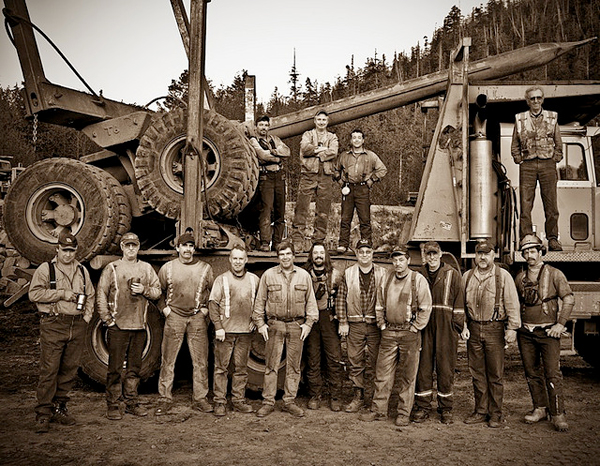
Woodworkers at Mt. Waddington, B.C., 2008. Photo by Hans Peter Meyer from Your BC: The Tyee Photo Pool.

Related

The Special Legislative Committee on Timber Supply has completed their report intended to help the forest sector and communities impacted by the Mountain Pine Beetle and more specifically address the issues related to possible re-building the Burns Lake sawmill destroyed by fire in January. The Committee positioned the report as the answer to the future of B.C.'s forest and forest dependent communities. However, they chose to limit their comments on the issues specific to their narrow Terms of Reference while not taking the opportunity to provide leadership and innovation on key issues affecting the overall management of B.C.'s forests. The Committee grossly missed the point of what is needed for the future of B.C. forests.

This is an opportunity lost!

The report recommends increasing timber supply to help Burns Lake even as it acknowledges that timber supply will drop dramatically in the coming years due to pine beetle devastation and speaks vaguely of consulting communities and First Nations in figuring out a way forward. But the report had no surprises and nothing new regarding the issues identified through the consultation process. The issues were consistent with the 2011 results arising from the Healthy Forest-Healthy Communities' community dialogue sessions and those from forest management experts. The issues and recommendations are generally known within Government or the bureaucracy for some time. There is a fear Government will position the Committee report with the Roundtable on Forestry report as the blueprint to revitalize the forest sector. This would be totally incorrect as key issues are not addressed in either report. A comprehensive strategic action plan is required rather than piece meal short-term economic actions as recommended by the Committee.

Farther down the logging road

The report has deficiencies in a number of critical items required to move towards healthy and productive forests that support communities and provincial revenue. Unfortunately, the Committee continued to support the Government focus on short-term economic actions and include only a few long-term sustainability actions. Missing are references to:

The need for an updated Sustainable Forest Management framework;

An independent assessment of the forest inventory;

A focus on enhanced forest research, environmental protection and forest health;

Improvements in forest management;

A reduction in the amount of Not Significantly Regenerated land;

And a comprehensive community diversification action plan.

All these issues were raised during the consultation process. Government and industry continue to brag about B.C. forest management but this is based on 20th century actions. Others, such as Alberta are well ahead of us now. A major update of the system is essential, if we are to meet the needs of communities and the public. The Committee report does nothing in this regard.

Where are time and money targets?

Communities and the public could be misled as no timeline or cost estimate is provided to implement the recommendations. It will take time (5-10 years) to get meaningful results. Implementing the recommendations will be costly. It is doubtful the costs can be covered within existing Ministry budgets as they have been decreased substantially over the last several years. The Committee should have made it clear that Government needs to provide the funding and resourcing, if the overall timber supply objective is to be achieved. Without additional resources, the tendency will be for Government to limit actions to those that are superficial and support political expediency so a message of acceptance can be given with little change.

The lack of solid recommendations to assist communities in adapting to the "post-beetle era" is disappointing. Limiting recommendations to the Ministry giving consideration to policy changes to meet community needs is grossly inadequate. Communities need money to implement the adaptation strategies developed through the Beetle Action Coalitions. Without adequate funding, the communities will struggle like the cod fishery in the Maritimes!

Business as usual?

The report does have a few positives.

It is encouraging the Committee recommended re-establishment of the Land Use Implementation Committees to review the status of the land use plans and make recommendations on the future. Encouraging, too, are the recognition by the Committee of the importance of more involvement by communities in forest management decisions, and the Committee's recommended measured approach using science to evaluate functionality of forest reserves.

But the report's general lack of vision and innovation is evident in the fact it lacks the simple recommendation to create a value-added sector by dealing with log exports and bio-energy. The minimum should have been recommending a comprehensive strategic action plan that integrates forest management with community diversification opportunities and business needs.

There is a fear Government will make a political decision to allocate one million cubic meters per year of Allowable Annual Cut to Hampton to justify re-building the Burns Lake mill. This will be based on superficial inventory information and without the analysis recommended by the Committee. If Hampton needs a decision by Sept. 30, the mill business requirements and the report recommendations are not in sync. Reliable data and analysis will not be available. The inventory itself will take a year or more to do properly. Re-establishing the Land Use Implementation Committee to evaluate logging in forest reserves will not be done until October at the earliest and if field work is required, will not occur once the snow comes. Therefore, it will be next year before reliable data is available. Creating a non-sustainable Allowable Annual Cut is an injustice to Hampton and the communities and a recipe for disaster.

The report is limited and does not solve the B.C. forest management problem.  [Tyee]

15  Comments:

Login or register to post comments

  • Hakuin

    39 weeks ago

  • Fiat lux

    39 weeks ago

    Unfortunately, Bill forgets

    Unfortunately, Bill forgets to mention that the biggest problem of the forest industry is gross and disgusting overcapitalization that strips the forests bare with very little benefits to the public.

    The people of Burns Lake could make a good living with a string of small mills, set up with low capital investment. It can be done.

    It should be obvious to anybody that when a single job has 70-80 wage years of investment and requires 400 loads of logs per year to keep one person working, disaster is just around the corner.

    All to repay the imaginary money created from the air by some bank, or "wealth creating foreign investor".

    40 years ago the BC forest industry employed 3 times the present number, all making decent wages and communities were thriving all over.

    All we can see now are schools closing, some 14 in the PG area alone and people jammed into the chicken coops of mega cities.

    All for the sake of "economic efficiency", of course.

    Ed Deak.

  • woodworker

    39 weeks ago

    waste of wood

    Fiat Lux forgets that the small mills he talks about were extremely wasteful in their use of wood. Modern mills have almost no waste. Also because of all the waste the small mills were an environmental disaster. Do we really want beehive burners all over again. Take one burner for every twenty people working time 3 time the number of present forest industury workers. Pretty bad. But thats is what Fiat Lux wants. Back to horse logging, diesel powered small mills, 50% less utilization of the wood harvested. And a much lower grade final product due to air dry vs kiln dry.

  • Fiat lux

    39 weeks ago

    How about going back to stone

    How about going back to stone axes and living in caves, as any good "conservative" should ask ?

    Can you give me one rational and logical reason, why small mills can not be run in physically efficient ways ?

    There are pigs in any profession and the bigger they are the worse. The waste of the forests to pay for the overcapitalization to get rid of the workers and the sale of raw logs are the biggest crimes.

    Ed Deak. Not hiding behind a phony name like chickenshit in the grass, like some good "conservative".

  • hanspetermeyer

    39 weeks ago

    Thanks

    Hey The Tyee - thanks for using my forest industry pic as your cover for this article. Thanks also for providing an opp for critical comment on what's happening in the industry. I'm working on a photographic essay about the coastal industry and am always amazed at how much things have changed (some good, some bad) since I was "working in the woods." FMI about my project visit www.coastalforestindustryproject.com
    For more contemporary images of the coastal industry, http://j.mp/ForestPics
    cheers,
    hpm

  • Starla

    39 weeks ago

    @woodworker "Modern mills have almost no waste."

    If I had a penny for every time somebody confused modern with corporate... Beehive burners don't go hand in hand with small mills. You don't need to be a large mega corp mill to sell wood waste for paper.

    Corporations are formed to avoid litigation not because they make Bladerunner look like a trip to Dayton OH.

  • woodworker

    39 weeks ago

    @starla

    true that small mills don't go hand in hand with burners. most small mills just let the waste pile up and burn it as an open fire in February that smolders until May. Or is left to rot slowly if the mill is moved.

  • Waltz

    39 weeks ago

    Report of the Special Committee on Tmiber Supply

    Given the scope and quality of the public presentations, oral and written, the final report is utterly reprehensible. Why?

    Even the title is enough to make one gag. The main thrust of what the Special Committee on Timber Supply heard from presentations to its members had little to do with “growing fibre and growing value”(sic) and the report had only weak bureaucratic drivel to say about communities, replanting backlog NSR and the need for a value-added industry.

    So how did the Burns Lake issue distract and sideline the Committee from the central issue of timber supply? Why were the recommendations written in weak, lose bureaucratese (ensure this, maintain that, place priority here, work with others, etc)?

    And what are the relationships between the NDP and the Burns Lake first nations’ group, between the first nations and Hampton Affiliates Ltd, and the NDP and the Steelworkers Union? And how many NDP members of the Committee have worked for the Steelworkers Union, which made its position on the leaked Cabinet document clear from the outset?

    Answers to these questions will unearth why the NDP members of the Committee played into the BC Liberal agenda and failed to act in the public interest.

  • paisley

    39 weeks ago

    @woodworker

    That's really hilarious you complaining about waste from small sawmills. You want to talk about waste. In just one year a sawmill on the west coast lost 73,000 M3 of sawlogs. Yes lost.
    How could one sawmill lose that many sawlogs? Simple. They sank to the bottom of the ocean. But wood floats they say. Well coastal hemlock doesn't always float. So you want to talk waste, that's one sawmill in one year. Maybe we should talk about what is left on the ground in the TFL's. Gee, I wonder what happens to that wood? You don't think the forest companies pile it up and burn it. Ever check out the waste scales from any TFL or TL. If you leave merchantable wood on the ground the government charges the license holder 25 cents a meter. Thousands upon thousands of meter of wood left every year. Yeah, lets talk about waste. I remember having a conversation with a DFO officer operating the Pisces V deep water submersible near a pulpmill, quote, " I turned the main lights on and it looked like we were in a forest, you couldn't tell where the bottom was. The logs were everywhere."

  • Terrys_Hot

    39 weeks ago

    Forestry

    I used too work in a sawmill making good wages now I make lousy wages as a Security Guard Thank you Liberal Government. Thank you for not replanting the forest after you gave permission to butcher the forests to line your buddies pockets. I didn't need a committee of your buddies to tell me what I already knew that the logs were destined for off shore to other countries and to the States. If one wants to see what goes on take a trip to Youbou on Vancouver Island for example they shut down the mill and are hauling the logs to the United States to process for one example and it is still going on this Lieberl government needs too have their wages cut down too basic wages $10.25 and see what the real world of BC people indure every week, day hour get back to reality Christy.

  • Amor de Cosmos

    39 weeks ago

    Small mills that never shut down

    Contrary to @woodworker's posts, there are small mills operating in this province that have not shut down at all for many years.

    This either (1) demonstrates their efficiency or else (2) confirms that "efficiency" as defined is an inappropriate measure upon which to judge a sawmill.

    While the bigger mills have been closed more than open, there are small independent mills that continue to operate 24/7, as they have throughout the entire so-called economic crisis that began in 2008.

    I'd take successful and value-added over unsuccessful and efficient any day of the week.

  • Skywalker

    39 weeks ago

    Small Mills

    I used to run into a local who owned a small mill. He repeatedly reminded me that he could get more wood out of a tree than the big mills. He had the evidence to prove it.

  • Fiat lux

    39 weeks ago

    For one thing, small mills

    For one thing, small mills don't need 400 loads of logs per worker.

    If that's not a criminal waste of resources, I would like to know what is ?

    Ed Deak.

  • rangerkim

    39 weeks ago

    Greece is the model

    I'm afraid that Mr's Deak and Cosmos have it right in this case. Any system can only have growth and development until it's limit is breached. This is true of BC's timber supply. We've had a good run of about 100 years but the current provincial AAC is way over long run sustained yield, LRSY to the initiated.
    The point being made here is that the demand for timber is even greater than LRSY. The only rational path ahead is severe austerity in the woods, of the order of what's going on in Greece. This is going to impact communities in a huge way and for the short term not in a good way. Dr. Bourgeois takes pains to point this out but doesn't mention that this kind of community plan DOES NOT involve forest resources but does involve a lot of cash from somewhere. As an example many dozens of individuals in many communities could make a good living converting NSR to SR but that cash has to come from the non-forest sector.
    The forest sector has to retreat, check out, piss off for the most part while the forests replenish, otherwise known as grow, to the uninitiated. Before we had the MPB beetle manna fall from heaven (?) all the discussion was about the fall down effect in each and every TSA, except Dease Lake if I remember correctly. So before the last 10-15 years of enhanced harvest levels the Chief Forestor had shown that the BC timber inventory was short between 5-65% to maintain existing AAC. Now, where are we?
    Bc never did have a sustainable cut of more than 55-60 million m3 and we've been cutting so so much more than that.
    There may be room for a few super mills but it's Mr Deaks small local mills that are going to save BC's forest industry. They definitely are not labour or cost efficient because they employ lots of people and spend their cash in the community but they are certainly ecologically efficient because they can take from the resource all day long and not kill it off.

    On a different matter: there are no circumstances in which any knowledgable observer could say that Alberta was ahead of BC in regards to resource management. The Alberta advantage was (and still is to a large extent) simply no rules and regulation, or integrated planning. Where regulations unfortunately existed Alberta government regulators were trained to not know what they were or confused by executive directive. Industry simply takes what they can get away with. This has been so since the demise of the Lougheed era.

  • cariboocooper

    39 weeks ago

    waste wood

    the biggest waste of wood is the wood-headed people on this committee and in Gov't forest management

    • The discussion for this story is closed. No more comments can be added.