News

Did Ancient Drifters 'Discover' British Columbia?

Legends and bits of evidence tell a story of Asians arriving here long, long ago. Part one of two.

By Daniel Wood, 3 Apr 2012, TheTyee.ca

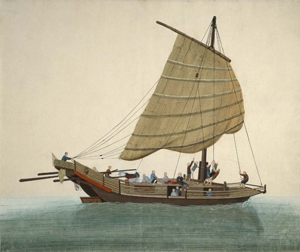
A Chinese ship

A 1,500-year-old Chinese legend recounts the journey of adventurer Hwui Shan's sail across the Pacific, along the coast of British Columbia, and beyond.

Related

"Even pale ink is better than memory." -- Chinese proverb

As the tide creeps over the sand flats of Pachena Bay south of Bamfield, it brings ashore the flotsam of the Pacific that -- on occasion -- hints at extraordinary travels and a mystery of historic proportions. Amid the kelp, in decades past, hundreds of green-glass fishing floats would arrive intact on the Vancouver Island coast, having ridden the powerful Japanese Current in year-long transits from Asia. But on rare occasions, entire ships would arrive -- like the derelict, Hokkaido-based, 54-metre squid-fishing boat located recently 260 kilometres off Haida Gwaii, part of the estimated 5 million tonnes of debris headed this way from last year's Fukushima earthquake and tsunami.

Even more rarely, these ghost ships would carry survivors of this slow drift, men who spoke Chinese, or Japanese. Such was the case of the Hyojun Maru that was left rudderless in a typhoon off Japan and drifted for 14 months before being washing up in 1834 on the Cape Flattery headlands just across from Pachena Bay. It contained three fishermen. It is, in fact, one of 100 known Asian drift boats that have crossed the Pacific accidentally. (The last one to arrive came ashore on the Queen Charlotte Islands in 1987, empty.)

But no one knows what to make of the evidence hauled up from the wreck that lies 16 kilometres off Pachena Bay in almost 150 metres of water, or the two wrecks that are purported to have yielded strange artefacts from beneath nearby Clayoquot Sound. For all three have produced barnacle-covered Asian pots -- probably Chinese -- whose age may predate the earliest European visitors to this coast.

Legend of Fu Sang

No one knows how to factor in the source of early iron implements in the Pacific Northwest -- where iron was unknown; or the origin of the 100 Asian plants and human parasites that suddenly appeared in Latin America a few millennia ago; or the recently revealed linguistic similarities between early Chinese and Mayan words. How did the bones of chickens -- an Asian fowl -- get into a prehistoric American midden? What explains the similarities between Japanese and Zuni blood types? And no one can figure out how it is the 1,500 year-old Chinese legend of Fu Sang could have come about. It recounts the journey of Chinese adventurer Hwui Shan, who claimed to have sailed across the Pacific, along the coast of British Columbia, then southward to a sub-tropical place he called Fu Sang. Many of the details in his chronicle of this 40-year journey are breathtakingly accurate.

Where does coincidence end and incident begin? Were people crossing the Pacific long before Europeans crossed the Atlantic?

In the past 100 years, a lot of eurocentric views of history have collapsed, and a lot of old myths, once viewed as fantastical, have proven true. Not long ago, no one guffawed when school teachers intoned Gutenberg had invented the printing press and Columbus had "discovered" America. Believing these was part of the conceit of European superiority. This view extended to old myths and legends that 20th century academics dismissed as the imaginings of primitive minds. The Vinland saga was a tale told by uncouth Vikings, and nothing more. Atlantis was something Plato dreamed up. A lost Incan city somewhere in the Andes? How romantic. But today, there's Newfoundland's L'Anse au Meadow and the Greek island of Santorini and Peru's Machu Picchu to remind the dogmatic that the ink of history is not indelible, that history is, in fact, a palimpsest of rewritings -- as new discoveries obscure old beliefs.

No person has been more influential -- or, with his conclusions, more wrong -- in exploring the possibility of early trans-Pacific travel than the late Norwegian adventurer, Thor Heyerdahl. He's the man behind the 1947 Kon-Tiki expedition, widely considered one of the greatest feats of human endurance in history. Few know that Heyerdahl's famous ocean-crossing raft journey had its origins in Bella Coola, B.C. in 1939, when the young anthropologist spent the winter there looking for evidence that might link natives of the Americas to ancient cross-Pacific human migrations.

Curiously, the first clues to this supposition were reports he heard from Bella Coola fishermen of glass Japanese fishing floats entangled in their nets, and the equally provocative anthropomorphic petroglyphs at nearby Thorsen Creek. To Heyerdahl's mind, the big-eyed, stone creatures were identical to ones he'd seen previously in Hawaii and Easter Island, far out in the Pacific off Chile. Could it be, he asked himself, the east-flowing ocean currents that were bringing Japanese fishing floats to Bella Coola have also carried early westbound native Americans to Polynesia? Perhaps the Pacific was not a impediment to prehistoric mariners, but -- with its endlessly circling currents -- an invisible river? With his successful east-to-west journey of Kon-Tiki, the door to an important new vista opened for scientific investigation: people could have utilized primitive vessels to cross the Pacific. (Heyerdahl's error -- and it was a huge one -- was to assume these ocean migrations originated in the Americas, not in Asia.)

Urned credibility

In the late summer of 1979, captain Mike Tyne, then 31, was fishing with his trawler Beaufort Sea above Big Bank, a shallows off Pachena Bay in the Straits of Juan de Fuca, when his drag net hauled up an unusual catch. Amid the cod and sole were pieces of rotten wood and a large, intact, brown-glazed pot, its exterior encrusted with marine worm casts and its interior holding an octopus. The three-man crew discussed the likelihood they'd snagged an unknown shipwreck 150 metres below. The wood was promptly discarded, but Tyne told himself the urn would make a good planter for his wife, Patsy, and brought his find back to Ucluelet. Word got around town that Tyne had pulled up an old, Chinese-looking pot, and speculations began -- and continue to this day -- that Tyne had found the first evidence of an ancient Asian shipwreck on the North American coast. There were stories in the local paper. An American visitor offered him $2,000 for the pot. Archeologists appeared.

Over the next few years, as news of the 75 centimetre-high urn circulated, three institutions provided differing assessments of its age. According to Tyne, the British Museum in London said, based on photographs, it was probably 300 years old; the University of Toronto and UBC, using carbon dating, said it could be 700. However, no one could confirm its significance. Even if it were a very old Chinese urn, there was no proof the wreck itself was the same age. With an estimated 2,000 sunken ships along the B.C. coast -- most unsurveyed -- the old pot could have been carried on an unknown 19th century vessel that foundered off Pachena Bay. But uncertainty about the pot's origins did little to deter interest.

As a boy in Grade 5, Tom Beasley, now 54 and a Vancouver lawyer, read Thor Heyerdahl's famous book Kon-Tiki, and was fired by the anthropologist's conviction the Pacific was a crossroads of ancient travel. Beasley learned to dive, studied maritime histories and Pacific Northwest folklore, joined the Underwater Archeological Society of B.C., and came to believe the B.C. coast held myriad untold secrets. In 1983 in Tofino, searching for the sunken 19th century fur trading vessel Tonquin, he watched as a man appeared with a barnacle-covered Chinese pot that he claimed came from a second Asian wreck in nearby Clayoquot Sound. Tofino forestry employee and diver Robert Pfannenschmidt refused, however, to reveal the location of his alleged discovery, claiming he was keeping the shallow-water site secret in order to extract its artefacts at a time lucrative to him. (Pfannenschmidt was informed then that pillaging a historic shipwreck in B.C. is illegal, and has since rejected all requests for interviews.) Not long after that, two more old Chinese pots appeared in trawl nets off Tofino, prompting reports of a third Asian wreck.

'It will be found!'

To Beasley's mind, these underwater pottery finds were further hints Chinese voyagers reached North America long ago. And he lists a few of the other curious linkages: B.C. native myths of non-European strangers arriving from the sea; conical hats common to both Asians and local natives; the use of mortuary poles on both sides of the Pacific (and nowhere else); and the profoundly odd story of Fu Sang. "The story line is wonderful," he says of the mounting evidence that ocean-crossing Asian travellers did, in fact, venture here. "All we've got so far is pieces of the puzzle. We have to follow to the myths. Fu Sang's like the old Norse sagas describing Vinland. Now... with L'Anse au Meadow, we know the sagas were correct: the Vikings got to the New World 500 years before Columbus. But here... we haven't found the Holy Grail -- the shipwreck. But it will be found!"

The idea the Chinese may have reached the New World at least 500 years before the Vikings and 1,000 years before Columbus is as tantalizing as it is controversial. In the History of the Liang Dynasty, recorded almost 1,500 years ago, the story is told of an itinerant monk named Hwui Shan who set sail with his four Buddhist companions on a four decade-long, trans-Pacific odyssey -- with the intention of introducing their religion to the peoples they encountered across the "Great Eastern Sea."

Utilizing the Japanese Current, the legend reports the men travelled from China 4,000 kilometres northeast to a land where people had striped faces. The direction, distance, and details fit remarkably with the tattooed Aleuts of southern Alaska. Hwui Shan then sailed 2,700 kilometres further east to a land of "mile high" trees where people's wooden houses were surrounded by decorations. He called the place the Great Land of Rushing Waters. In distance, direction, and details it sounds like British Columbia.

Turning south, the men journeyed 10,600 kilometres to a country the monk called Fu Sang, named after local trees that produce a red, pear-shaped fruit. The people, he reported, had a rich culture -- with an aristocracy, a writing system, complex rituals, and domestic animals that today suggest Mayan Mexico. Again, things fit almost perfectly. Hwui Shan returned to China in 499 A.D. only to find his homeland wracked by civil war.

Some elements of the Fu Sang story are, however, so odd that critics dismiss the account as the product of imagination. Hwui Shan reported he heard stories in Fu Sang of a nearby society composed exclusively of Amazonian women who took snakes as husbands, and nursed their children from nipples on their shoulders. He said he saw deer pulling wheeled carts, and dog-faced men. Time and transcription can, of course, turn gods to dogs. Such is the nature of myth. But no less an authority than the late British sinologist Joseph Needham counted, on visits to Mayan Mexico, over 100 parallels -- in complicated rain-making ceremonies, in the construction of suspension bridges, and in a belief in the magical properties of jade -- that indicated the two civilizations had ancient links.

Tomorrow: Where researchers are looking for evidence of ancient Asian visits to our part of the world.  [Tyee]

36  Comments:

Login or register to post comments

  • doggone

    1 year ago

    Earliest explorer

    Hwui Shan tells of villages and civilizations seen on his journey. That would mean that people had arrived on the west coast long before he did.
    I'm looking at Renee Hetherington's map of "The Late Pleistocene...." ( a google search brings up mainly politics, but I bought the chart in a map store on Georgia Street a while ago)
    Looks to me as if the real "early explorers" could have walked along the water's edge up till about 10,000 years ago.

  • doggone

    1 year ago

  • Granville

    1 year ago

    Just a minute....

    If it is ever established who "discovered" British Columbia, they will start negotiating with the federal government for property rights. We have enough trouble as it is. Leave well alone. Besides, everyone knows it was the Vikings.

  • Frank

    1 year ago

    Fascinating

    Look forward to more in the series. I'm a sucker for this sort of thing, loved the book 1421 too :)

  • SteveA

    1 year ago

    Fascinating subject..

    Having spent a great deal of time researching the history of human habitation in the Americas one thing is cetain; The subject is still an open book. IF there was an opportunity to see what there is to see on ancient shoreline when sea levels were much lower I believe the commonly held beliefs of today regarding who was here "first" would be smashed.

  • edward01ca

    1 year ago

    St. Brendan

    was a 6th century monk who supposedly "discovered" north america 400 years before the Vikings. There are many legends about who "first discovered" the Americas. It has been pretty much accepted that people crossed the Bering land bridge many thousands of years before the Vikings, St. Brendon, or the Chinese "discovered" the Americas. It is often a case of racism that modern day amateur archaeologists cannot accept the fact that modern day aboringals actually got to the Americas first. As far as Thor Heyerdahl is concerned, he only proved that crossing on a balsa raft could cross part of the Pacific, not that anyone actually did it. Besides, he went the wrong way: west to east.

  • snowdance

    1 year ago

    Euro-centric history

    If you have not read 1421 by Gavin Menzies, it is worth the read. Controversial as it is, he hypothesizes a fleet of junks sailed around the world between 1421 and 1423, exploring and establishing settlements along the pacific coast of North and South America ( among other places).

  • Luck

    1 year ago

    CANADA AT LARGE

    WHO EVER WAS HERE EATING DINOSAURS AND OTHER PREHISTORIC ANIMALS WERE THE FIRST ONES HERE.

    SEEMS THEY WALKED HERE WHEN THE CONTINENTS WERE CONNECTED FOLLOWING THE ANIMALS THAT THEY HUNT AND EAT.

    SOME SORT OF EXTINCT PREHISTORIC CAVE MAN WE ARE TOLD.

  • FatherTheo

    1 year ago

    Walking vs sea travel

    Given that Australia was settled by boat--and had to be--60,000 years ago, European scholarship is remarkably reluctant to admit that non-Europeans sailed anywhere. This is evident in some of the remarks on this thread.

    Most likely the original settlement of the Americas was done by boat, by people sailing down from Beringia--what we usually refer to as a "land bridge" but, at the time, was just land. It is just as appropriate to refer to the Arabian Peninsula as a "land bridge" between Africa and Eurasia.

    There was hardly any other route to the Americas available except along the coast, nor any evidence that people took any other route. Nor was that route available for walking. The Laurentide Ice Sheet still dominated the Canadian landscape, including British Columbia, during the time when the Americas must have been settled. This would have made land travel off the BC coast virtually impossible.

    Yet people made the journey as the evidence makes clear.

  • RickW

    1 year ago

    40,000 years and counting

    http://www.atlantisquest.com/America.html
    Barely thirty years ago experts in the field of American Archeology would not admit to the presence of man anywhere on the continents of North and South America earlier than 12,000 years ago. American Upper Paleolithic archeology was not a part of the curriculum in the universities of America. During a class in European Prehistoric Archeology at the University of Oklahoma under Dr. Robert Bell, we were informed of his participation in an important dig at Sandia Cave near Albuquerque, N.M. Although the lower level of occupation was clearly dated at 27,000 B.C. (Hibben, 1941), the experts refused to recognize it (Haynes & Agonino, 1986; Preston, 1995, et al.). Thirty years later things have changed somewhat. Site after site has been discovered in the Americas accumulating reliable dates back to roughly 40,000 years ago

  • Amor de Cosmos

    1 year ago

    West Coast cultures purely indigenous

    DNA evidence proves that the First Nations of the West Coast of B.C all descend from a very ancient migration at least 14,000 years ago. More specifically, First Nations males descend from Haplogroup Q (of course, this does not include Athapaskans who have a different history and represent a more recent migration to the Americas than the rest).

    While it is quite clear that the odd Chinese or Japanese vessel could have come through over the years, it is also evident that the ancient West Coast peoples and cultures ARE NOT descended from any such encounters.

    The genetic and linguistic evidence clearly confirms the very ancient and purely indigenous source of the impressive West Coast cultures, which developed in sitio over thousands of years.

    While it is very possible that St. Brendan made it to the St. Lawrence before turning back to spread the good news, and that the odd asian seafarer may have drifted to B.C., genetics proves that neither stayed.

    Incidently, the same genetic research confirms that the closest related big male lineages to First Nations males (haplogroup Q) are the R Haplogroups (R1B and R1a etc) which are most often asociated with Europeans and Indo-Europeans.

    As such, First Nations males descending from Q will actually share a more recent common male ancestor with an Irishman (R1B) or a Russian (R1A) than any of them will share with a "German" (Haplogroup I). (Although, to be clear, current Germans and Scandanavin populations are actually a big mix of R1b, R1a and I - and the most common haplotype for Germans is actually R1B).

  • RickW

    1 year ago

    Amor de Cosmos

    http://www.gavinmenzies.net/china/book-1421/gavin-menzies-speeches/talk-c-the-first-panama-canal-and-the-first-suez-canal-were-built-by-the-chinese-and-the-egyptians/
    Some months ago we started serious research into the DNA of the native Indian peoples of North America. This quickly threw up a mystery: why were there so many clusters of Indian peoples on the borders of Panama, Ecuador and Colombia – no less than nine different peoples – who had DNA with such strong affinities to the Chinese and Japanese? Obviously Chinese and Japanese seafarers had settled in those areas – but why choose such an inhospitable country where there appeared little opportunity for trade compared with the rich Maya civilisation further north or the Incas further south? Why settle in the jungle?

  • realisticman

    1 year ago

    Looking at Altai

    Mitochondrial DNA and Y Chromosome Variation Provides Evidence for a Recent Common Ancestry between Native Americans and Indigenous Altaians.

    http://www.cell.com/AJHG/abstract/S0002-9297%2811%2900549-0

    'Altai in southern Siberia sits right at the centre of Russia. But the tiny, mountainous republic has a claim to fame unknown until now - Native Americans can trace their origins to the remote region.

    DNA research revealed that genetic markers linking people living in the Russian republic of Altai, southern Siberia, with indigenous populations in North America.

    A study of the mutations indicated a lineage shift between 13,000 and 14,000 years ago - when people are thought to have walked across the ice from Russia to America. ...'

    Read more: http://www.dailymail.co.uk/sciencetech/article-2092258/Native-Americans-actually-came-tiny-mountain-region-Russia-DNA-research-reveals.html#ixzz1r2nDckuf

  • Amor de Cosmos

    1 year ago

    Menzies is fruitcake

    Rickw - I believe Menzies is essentially fraudelent and that there is no legitimate evidence regarding any ancient "Japanese and Chinese DNA" as cited. For the record, ancient Japenese male lines (haplogroup "C" and "D") are not related to Han Chinese males. They last shared a common ancestor with Han Chinese tens of thousands of years ago, perhaps still in Africa)

    Reaslisticman - The studies you cite are consistent with the evidence. Of note, 14,000 years ago is so long ago that it is almost beyond comprehension, culturally speaking. Notably, current theory postulates that the closely related R haplogroups (chiefly R1a and R1b) which gave rise to most European men also arose in central Asia around that time, with migrations to Western Europe more recently ( likely in the mesolitic or neolithic).

    My point is just that the local indigenous cultures are truly ancient and no other group, Asian or European, deserve any credit for their development.

    I find the fact that First Nations male lines happen to be most closely related (other than to fellow haplogroup Q members) to European and IndoEuropean men to simply be interesting.

  • ireckon

    1 year ago

    Pacific Highway

    Good article Daniel. It always amazes that some people find it difficult to imagine our ancestors might travel by boat. One could tavel from here to Asia(or the reverse)and barely lose sight of land.

    How difficult it must be for these people to conceptualize our navigating to this solar system in times forgotten.

  • RickW

    1 year ago

    amor de cosmos

    Quote:
    I believe Menzies is essentially fraudelent

    And I believe he has at least a germ of the truth. There is much more to history than we are led to believe.
    http://en.wikipedia.org/wiki/The_Holy_Blood_and_the_Holy_Grail
    “History is written by the victors.”
    - Winston Churchill

  • Amelia Bellamy-Royds

    1 year ago

    The Fu Sang fruit

    I have spent far too much time today clicking through wikipedia chasing ideas stimulated by these articles.

    One thing that caught my attention was the mention that the land of FuSang was "named after local trees that produce a red, pear-shaped fruit." If the fruit was sufficiently dominant that he named the country after it, it is surely still an agriculturally important plant. If you could figure out which tree fits the description, that would support the argument.

    Using the translation quoted in Wikipedia, we know the FuSang tree:

    "produce oval-shaped leaves similar to paulownia and edible purplish-red fruits like pears. ... [The people] produced paper from the bark of the Fusang plants for writing and produced cloth from the fibers of the bark, which they used for robes or wadding. Their houses or cabins were constructed with [Fusang] wood. The fruits and young shoots of the plants were one of their food sources."

    Working backwards from the assumption that FuSang was Mayan civilation, what fruits would fit the description?

    Some Wikipedia contributer has suggested the Red Mulberry, but no one would mistake a mulberry for a pear (although the leaves are similar to the Paulownia).

    However, both mulberry and fig plants were used by Mayans to make paper (called Amate or Amatl) and cloth. Figs definitely sound more like something you'd describe as a purplish-red pear -- but their leaves no longer fit the description, and their wood is apparently not good for building. Perhaps the two plants were confused by the foreigner being shown one type of tree and the other type of fruit, with both described by referring to the paper.

    Of course, FuSang the country was not necessarily Mayan Mexico: The legend also describes "deer" used as domestic animals. That sounds more like llamas of South America. But since the stories only persist in a second-hand retelling, it is also possible that multiple civilizations have been merged into one.

    The vast majority of Mayan writings (on Amate paper) were destroyed by the Conquistadors and/or Christian missionaries. It is tragic to think that the clues which might have confirmed the story of Hwui Shan from the side of the other culture would have been destroyed with them.

  • Sam Salmon

    1 year ago

    Mish Mash

    This article is a hodge podge/mish mash of things we've known for a long long time.

    If you're at all interested do some reading on the Kelp Highway-also http://www.centerfirstamericans.com/ has all kinds of info.

    Googling Solutreans in North America will keep you up for hours.

  • MalcolmIslander

    1 year ago

    Debunked "History" Isn't Improved Though Recycyling - Part One

    With all of the fictional history we have been exposed to in faux scholarly studies like Gavin Menzies' 2002 book, 1421: The Year China Discovered the World (definitively debunked by a real historian writing in a peer-reviewed journal: How Not to (Re)Write World History: Gavin Menzies and the Chinese Discovery of America, http://www.historycooperative.org/journals/jwh/15.2/finlay.html), I have to admit that I was extremely sceptical as I approached this series by Daniel Wood, Did Ancient Drifters 'Discover' British Columbia?.

    Let me deal first with the last of the five impenetrable mysteries that Daniel Wood has adduced as suggestive evidence of the untenable historical claims he is making here.

    "And no one can figure out how it is the 1,500 year-old Chinese legend of Fu Sang could have come about. It recounts the journey of Chinese adventurer Hwui Shan, who claimed to have sailed across the Pacific, along the coast of British Columbia, then southward to a sub-tropical place he called Fu Sang. Many of the details in his chronicle of this 40-year journey are breathtakingly accurate"

    Even the choice of the word "legend" to describe the wild tale of Hui Shen recorded in the Liang dynastic history (covering roughly the first half of the VIth century C.E.) seems inappropriate when referring to recorded events that took place (circa 499 C.E.) some two thousand years after the beginning of the historical period in China, where there is a surprisingly accurate historical record stretching back to about 1500 BCE.

    The incorrect "Hwui Shan" transcription of the Chinese name Hui Shen (慧深) that Williams adopts here apparently derives from Buddhist Monks Discovered America Before Columbus, an October 11, 1998 article by Lindsey Williams (archived at http://www.lindseywilliams.org/index.htm?LAL_Archives/Buddhist_Monks_Discovered_America_Before_Columbus.htm~mainFrame, debunked extensively at http://www.chinahistoryforum.com/index.php?/topic/9554-huishens-land-of-fusang/). Williams' article could be charitably described as an "imaginative" fabrication which completely distorts and fancifully embroiders the information contained in the actual 梁書 dynastic history.

    Wood repeats the earlier fabulation of Williams in such demonstrably incorrect claims as "[Hwui Shan (sic)] claimed to have sailed across the Pacific , along the coast of British Columbia...". That's a gross and imaginary distortion of what the monk Hui Shen is actually said to have claimed in the Liang Dynastic History. He claimed to be a Buddhist from Fu Sang, not that he had journeyed there. There is no reference anywhere to a "40-year journey", and many of the details of the tall tale Hui Shen related were anything but "breathtakingly accurate" (see the quotation below of the description of the Women’s Country).

  • MalcolmIslander

    1 year ago

    Debunked "History" Isn't Improved Though Recycyling - Part Two

    [continued from Part One]

    The land of Fu Sang (扶桑) was a originally a (genuinely) legendary land that it is mentioned in the early work 山海經, "Classic of the Mountains and Seas", a collection of early geography and myth dating from roughly 400 BCE. Fu Sang at this time was a truly legendary place somewhere "over the eastern seas, north of the country of black teeth". Eventually, by the Tang dynasty (618 - 907 C.E.) Fu Sang had become standardized as another name for Japan, and remains in use today in the Chinese cultural sphere.

    According to the Various Barbarians chapter of the History of the Liang Dynasty, Hui Shen claimed to be from Fu Sang and described the country briefly. He also had this to say about a nearby country:

    "Over a thousand li east of Fusang, there is the Women's Country (Nuguo 女国), where the women are beautiful and very fair-skinned. Their skins are hairy and the hair on their heads is so long it touches the ground. In the second and third months, they rush into the waters and become pregnant, giving birth in the sixth and seventh months. The women have no breasts, and on the back of their necks there are hairs with white roots which produce a juice which they feed to their children. The children can walk within 100 days, and become adults within 3 or 4 years. When they see people, they are alarmed and hide, and they are especially afraid of men. They eat the salty grass in the manner of animals - the salty grass has leaves like wormwood (i.e. feather-like) and is fragrant but has a salty taste."

    I'm quoting from what looks like a reliable translation from the Liang Dynastic History included in some comments at chinahistoryforum.com (link in Part One). I think this gives you an idea of the credibility of the monk's tall tale, and the "breathtakingly accurate details" that Daniel Wood writes of.

    This may help explain why I had never encountered this fanciful story during my studies for an Honours degree in Chinese language and history, which began forty years ago this fall, or subsequently.

  • MalcolmIslander

    1 year ago

    Debunked "History" Isn't Improved Though Recycyling - Part Three

    [continued from Part Two]

    Wood mentions several more oddities that just defy all explanation other than early trans-Pacific contact. I'll leave the iron, the chickens, the parasite and plants, and bloodtypes for someone else to comment on. I'd like to say a word about the "recently revealed linguistic similarities between early Chinese and Mayan words".

    One word. And that word is "Nonsense!" As a onetime student of the early history of the Chinese language and someone with a clear idea of the kind of evidence that demonstrates genetic relationships between languages, perhaps I could be more polite and say that I cannot imagine that "linguistic similarities between early Chinese and Mayan words" have been revealed in a peer-reviewed scholarly publication anytime in the last hundred years.

    The only thing that googles up on the Mayan-Sino-Tibetan connection is a 61-page pamphlet by Bede Fahey (of no known academic affiliations or qualifications) of Fort St. John, B.C. You can read the introduction at http://www.sino-platonic.org/abstracts/spp130_mayan_chinese.html, or perhaps I can save you the trouble by quoting the opening paragraph right here:

    In 1995 I had the opportunity to visit the National Palace Museum in Taipei. I had already seen photographs of the old Chinese bronzes, which caused a second take based on the perception that a Mesoamerican fingerprint was readable in the various designs of these ancient Chinese artifacts. Looking at the real bronzes for the first time however, brought that experience into a new arena, where I felt that what I had been seeing more or less casually in the photographs, was too real to be coincidental. The problem however, was an aesthetic one with no rational explanation, and I had no idea of how this recognition could be brought into the realm of science.

    I'm quite sure that any amateur who suffers a "second take based on the perception that a Mesoamerican fingerprint was readable in the various designs of these ancient Chinese artifacts" not only writes atrociously, but will be able to lose himself forever in his completely absurd "research" bringing Mayan into the Sino-Tibetan family. More foolishness has been written about genetic linguistic relationships by more well-meaning fools than you can shake a stick at. The catalogue is long and rather tedious, and, alas, remains an open book.

    I don't think any of us are well-served by the ceaseless repetition of this arrant nonsense.

  • MalcolmIslander

    1 year ago

    Debunked "History" Isn't Improved Through Recycling

    The intended title. How mortifying. Q.E.D

  • jimmmmy

    1 year ago

    Its sad how everyone seems to

    Its sad how everyone seems to need to own History. All these factoids make my head spin. Fortunately for me I have no need to really know what the truth of this is . I just enjoyed the article. I'm guessing this type of controversy exposes the real problem of politically motivated research grants.

  • gmclark

    1 year ago

    Ancient visits...

    It has been entirely clear for at least two decades that Sam Bawlf discovered the northern Pacific latitudes...

  • Dahlia

    1 year ago

    Travels and origins

    A Native gent I met a few years go (Anishnabe) told me that their legends say this: Once originally all people, yellow, red, white and black races lived together in the Americas. Then the White, Yellow and Black Brothers left, but said they would return. Well today they are returning.

    That's the legend. He himself speculated that the aforementioned brothers left because the continents drifted away with them. It would mean that people have been on this earth longer than we think, but, hey, we keep coming up with new info all the time, so why not?

    And some Chinese military are already saying Canada really belongs to them, and they will need the land to settle their untold surplus millions. For the time being they are only buying up the resources (oil).

    Am I glad I'm old!

  • solstice

    1 year ago

    hi Dahlia that is very

    hi Dahlia
    that is very interesting and sounds very much like what a book called "sailing to paradise" said. only they said the reason for the departure of other races was that they where pushed out by one dominant race which came from china.
    there is lots of evidance of the Chinese and others from before Columbus in bc, but it is frowned upon and any artifacts found are against the law to expose.

  • jimlauri361

    1 year ago

    We are offering best

    We are offering best embroidery digitizing services in the market with our massy experience of over 50,000 designs , thus if you are looking for hats logo , jackets embroided designs or official logos , determine your item with galaxy digitizing , visit our official website for your scoop of detail. Embroidery Digitizing Services

  • edliu

    41 weeks ago

    Documentation is relevent

    The poor Chinese monk and his entourage sure encountered strange things but not so strange anymore now that information is accessible and readily available so anyone here can do research on it...
    Fu shang just means Mulberry in Chinese, indeed Americas have various types, some were brought here by ppl who came before him, the Shang ppl, along with their jade sculpture techniques,arts and symbols.
    Mayan do wear mask of all types, leopard mask, bird mask, notably snake mask was very popular, so one do see husbands have snake like heads when they have their feather snake mask on as their custom dictated to wear, a fashion statement of sort at the time.
    Meso-Americans though mostly have modern Chinese features like the Mexicans do, but some were descendants of more ancient Chinese like the Shang such as Olmec/Toltec etc who had shorter nose slanted eyes thicker lips who did look like dog, or bulldog to be exact, so "man with dog head" description is very fitting. And if you carry your kid on the back and feed him on the back that's like feeding kid on back that's what he meant.
    What seems to be strange and weird is not anymore, use some common sense, description is fitting not a bit exaggerated at all.
    Most importantly, know more about other ppl's custom and culture, Chinese writing is not myth but factual, it just encourages one to research more, to learn more, there is much to learn everyday...

  • edliu

    41 weeks ago

    can't find comment

    I posted

  • jfgty

    36 weeks ago

    That's the legend. He himself

    That's the legend. He himself speculated that the aforementioned brothers left because the continents drifted away with them. really helpful article , keep posting

  • jfgty

    36 weeks ago

    That's the legend. He himself

    That's the legend. He himself speculated that the aforementioned brothers left because the continents drifted away with them.
    http://www.genericviagratab.com

  • alston lindley

    30 weeks ago

    I think so because if they

    I think so because if they recovered from earthquake,tsunami then this is the small thing for them.
    Regards,
    http://www.trustviagra.com

  • ronb23

    19 weeks ago

    Fascinating

    Fascinating piece of information, this. Glad I read through it.
    http://pleasingpics.com/

  • mikelu

    18 weeks ago

    Very informative post of Fu

    Very informative post of Fu Sang story of Asians arriving… Your article has helped me a lot in clearing my doubt on this subject…thank you!
    http://www.buy-arearugs.com/

  • arthurkg

    13 weeks ago

    Great Discovery

    That was a great discovery no matter who discovered it. We need to do a more thorough research on the following subject and come out with correct result.
    http://www.genericviagra123.com/

  • arthurkg

    11 weeks ago

    Interesting

    This was very interesting as well as extremely informative article on the related topic. I enjoyed going through it.
    http://www.genericviagra123.com/