
News

Province Gumming up New Victoria Sewage Plant: Critics

Project said to be delayed by Partnerships BC's private sector agenda.

By Andrew MacLeod, 2 Mar 2011, TheTyee.ca

Victoria Wastewater Plant

Related

Even though the Capital Regional District (CRD) has decided that its new $760-million wastewater and sewage treatment system should be mostly public, greater private sector involvement in the project continues to be pushed.

That's the assessment of a public sector union after seeing a market sounding report released last week.

Meanwhile, a CRD board member says the report was only necessary to satisfy the provincial government agency Partnerships BC that the project can be done the way the CRD wants and that PBC is delaying the project.

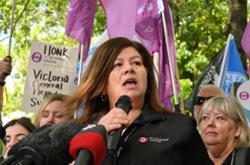
"It is very surprising to learn that a private operating contract is now under active consideration," CUPE research representative Blair Redlin wrote in a Feb. 25 letter to members of the CRD committee who are working on liquid waste management.

Redlin was referring to a Feb. 23 report Ernst & Young Orenda Corporate Finance Inc. prepared for the CRD, PBC and the provincial ministry of community, sport and cultural development. The report summarized how 11 companies responded to questions about their interest depending on how the project proceeds.

But none of those questions asked specifically whether they would bid on a straight design-build project, like the CRD had approved, Redlin's letter said.

Rejected options raised again

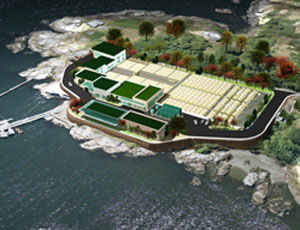
Instead they introduced the possibility of operating the facility, planned for McLoughlin Point in Esquimalt, for as long as 20 years after it's built.

"Would you bid the McLoughlin Plant with a 3 to 5 year operating contract which may be renewed by the CRD?" asked one question.

Another asked the companies to comment on the "pricing and risk transfer implications" of going with a 20-year fixed price contract where the CRD could get out after five years instead of a five-year contract.

Redlin said asking those questions made little sense, considering the CRD had already rejected including operating the facility in the contract.

"The CRD's decision to use traditional procurement methods was made after detailed review of financial, technical and social factors -- including extensive public input," he wrote. "The value for money analysis specifically determined that public operation combined with a design-build or design-bid-build construction model would be the most cost effective delivery method."

Public prefers public operation

Greater Victoria citizens supported the CRD's decision, Redlin said. "Throughout the public engagement process on procurement, citizens expressed a strong preference for public operation of the wastewater treatment facilities."

CUPE BC has an ongoing campaign aimed at keeping CRD sewage treatment public.

While it would make some sense to have a transition or warranty period once the facility is built, three to five years is a long time, Redlin said. "The private contractor would be responsible for all important operating requirements, including day-to-day operations," he said. "This is a proposal for privatized operation of wastewater treatment."

As for the 20-year operating contract the Ernst & Young report considered, "This is clearly way beyond the scope of the CRD Board decision." It's unclear why the option was even being discussed, he wrote.

He noted, however, that the report hinted at one reason politicians might prefer a short, renewable operating contract: "Having a long term operating contract has the potential to slow the project down, given the politics that go along with 'privatization', not often received favourably by the public. A shorter term project is an easier sell as part of the [design-build] project."

The renewable operating contract "is an obvious foot in the door for long term private operation of the plant," Redlin wrote.

Transition period makes sense: councillor

Judy Brownoff, a Saanich Councillor and former chair of the CRD's Core Area Liquid Waste Management Committee said she's not as nervous as Redlin about including a temporary operating contract, but the details and limits should be tied down before any agreement is signed.

"It's kind of like a warranty period," she said. "We want to ensure all the components we get are viable."

Responses from the companies varied on the need for such a period, by the way, with some saying it was an appropriate length of time and others saying it would be longer than normal in similar situations.

In the long run the facility should be run by CRD staff, Brownoff said. "The CRD has the experience and knowledge to run wastewater and sewage treatment systems."

The Ernst & Young report was done to satisfy Partnerships BC that the CRD's approach will work, she said. "I'm blaming Partnerships BC."

The provincial government set up PBC as a Crown corporation to assess and promote public private partnerships, where companies are given a greater role in delivering public services.

PBC responsible for delays?

"Partnerships BC needs to stop interfering at this stage because they're tying up our funding at the federal government," said Brownoff. The federal government is waiting for a provincial decision, she said.

And with a federal election looking likely, it would be wise to get the federal commitment solidified as soon as possible, she said. There are also municipal elections scheduled for the fall and the new BC Liberal leader Christy Clark has said she will likely call an election before the 2013 fixed date.

The Ernst & Young market sounding repeats similar work done previously and was done to prove to PBC that the CRD's approach will work, said Brownoff. She said it confirmed that "people will bid on it."

A PBC spokesperson took questions Tuesday afternoon, but did not have a response ready by the end of the work day.

Brownoff also noted that the Ernst & Young report validated the CRD's decision to break the project into smaller contracts, despite PBC's push to take bids on the whole system, estimated to cost around $760 million.

"I think this will be the turning point with Partnerships BC trying to say 'one big P3,'" she said. "It's time to stop trying to push local government to a full P3."  [Tyee]

12  Comments:

Login or register to post comments

  • boondoggle

    1 year ago

    The Liberal P3 legacy

    It is unfortunate the public is still unaware of the disastrous P3 (pay,pay,pay) agenda of the corporate Liberal party. From the Golden Ears Bridge to the Olympic Village and even the ongoing hidden tax burden of the Sea to Sky highway taxpayers are left on the hook. Metro Vancouver's twin-tunnel watershed P3 turned into a nightmare which was hardly reported to the public. What should be obvious to every taxpayer is private corporations enter into these agreements for one reason... massive PROFIT. The Liberals love these projects because it makes them look good in the short term at the expense of taxpayers for generations to come. If only people would wake up!

  • jnewcomb

    1 year ago

    VICTORIA SEWAGE PLANT NOT NEEDED - HUGE WASTE!!

    This additional, land-based Victoria sewage plant shouldn't be a P3, shouldn't be public, nor should it be private - it just should NOT be built at all.

    Our current, marine-based sewage treatment system, plus source controls, works well for Victoria's unique marine geography. Don't take my word for it - read what several oceanographers, marine biologists, engineers and public health doctors have said, that another land-based sewage plant will NOT provide significant benefits to the marine environment, but WILL create thousands of tons of sewage sludge and greenhouse gases.

    Like so many such mega-projects, it will probably end up costing more than a billion capital, not to mention costing more than the $15 million annual operating/maintenance budget.

    CUPE supports this unnecessary sewage plant as a public project - and the only NDP voices against the Campbell Liberals have been to shill for CUPE and say it should be public. Andrew MacLeod doesn't discuss how much CUPE will benefit from it being public versus P3 (which would still be CUPE workers, but without the deep pockets of local taxpayers to fleece), nor does he discuss the fact that a big part of the sewage project will be an energy plant - something that is only contemplated because the sewage plant advocates KNOW that this boondoggle plant will be creating so much sludge and greenhouse gases that they have to offer a way to try to reduce those - even if the energy plant will end up costing a fortune to run!

    For more information on the unnecessary sewage treatment plant:
    http://aresst.ca
    http://rstv.ca
    http://sites.google.com/site/sewageplantsvictoria/

  • G West

    1 year ago

    NICE sites Mr Newcomb - readers might want to check this too

    http://www.georgiastrait.org/files/share/PDF/VSA-Sewage-FAQs.pdf

    I'm actually sick of knowing how irresponsible this city and this province have been about this issue for, say, the last 60 years.

    Before the outfall was extended, the matrons of Oak Bay and Gonzales had to clean the shit off their windows when the wind blew like it has today.

    Out of sight, out of mind I guess.

    Time to pay up Victoria.

  • frank2

    1 year ago

    jnewcomb has it right (for

    jnewcomb has it right (for all the reasons set out in his references). Maybe the P3 controversy will delay things sufficiently to kill this bad project (if senior gov't contributions disappear).

    This is a good file for Christy Clark to review early, if, she is indeed interested in dispensing with unnecessary expenditures, and not just kicking unions and teachers and poor people in the teeth while enriching corporate parasites.

  • G West

    1 year ago

    Fortunately frank2

    jnewcomb and a few other dinosaurs aren't likely to win this debate. It is illegal to dump untreated sewage and that's exactly what Victoria is doing - to its everlasting discredit.

  • jnewcomb

    1 year ago

    Response to G West

    G West:
    In maintaining this marine-based sewage treatment system, Capital Regional District has been very responsible - and sustainable. The original system installed in the early 1970s was preceded and accompanied by significant research of impacts. One of my UVic marine biology profs, Dr. Derek Ellis supported the system completely, arguing effectively that one aspect of what we are doing is returning valuable nutrients to the marine system - not landfilling or incinerating them.

    Response to GSA FAQ (in all caps):

    a) Bring Victoria’s discharge into compliance with federal and provincial environmental regulations;

    - REGS ARE DRIVEN BY INADEQUATE, BUREAUCRATIC/LEGAL END-OF-PIPE MEASUREMENTS THAT THOSE REGS ARE WRONG TO NOT ASSESS REAL ENVIRONMENTAL IMPACT OF EFFLUENT ON MARINE LIFE BUT WE ARGUE THAT THEY MUST DO THAT.

    b) Immediately reduce toxins entering the marine ecosystem;

    - VICTORIA'S LACK OF INDUSTRY PRODUCES FEW TOXINS AND CRD'S OWN IMPACT STUDIES SUGGEST THAT THE LOW VOLUME OF TOXINS DISCHARGED HAVE NO SIGNIFICANT IMPACT ON MARINE ENVIRONMENT. HOWEVER, IF THOSE TOXINS CONCENTRATED IN SEWAGE SLUDGE, WILL BE A PROBLEM FOR LAND ENVIRONMENT.

    c) Reduce the health risks to mariners and other water users;

    VICTORIA'S PUBLIC HEALTH DOCTORS HAVE RESEARCHED POSSIBLE HEALTH IMPACTS AND FOUND NONE. RETIRED VICTORIA PUBLIC HEALTH CHIEF DR. SHAUN PECK FORMED OUR RSTV GROUP. CURRENT PUBLIC HEALTH CHIEF RICHARD STANWICK AGREES.

    d) Lead eventually to the reopening of closed fisheries;

    DFO PUTS SANITARY CLOSURE OF 300 METRES RADIUS AROUND ANY SEWAGE EFFLUENT DISCHARGE - NO MATTER WHAT LEVEL OF TREATMENT. VICTORIA HAS MANY CONTAMINATING STORM DRAINS WHICH WON'T BE ADDRESSED BY ANY LAND-BASED SEWAGE PLANT BUT WILL CONTINUE TO CONTAMINATE NEAR-SHORE AREA WHERE MANY SHELLFISH ARE.

    e) Provide opportunity to recover the value of a wasted resource.

    DR DEREK ELLIS ARGUED BETTER TO RECYCLE NUTRIENTS TO MARINE AREAS TO HELP REPLACE NUTRIENTS REMOVED THROUGH FISHING AND HABITAT LOSS. ALSO, CLIMATE CHANGE ACIDIFYING OCEAN MEANS SEWAGE (SLIGHTLY BASIC, ALKALINE) GOOD TO HELP BALANCE OCEAN PH. ONLY REASON FOR LAND SEWAGE ENERGY PLANT IS TO REDUCE GREENHOUSE GASES AND SEWAGE SLUDGE FROM LAND-BASED SEWAGE PLANT - BUT CURRENT MARINE-BASED SYSTEM PRODUCES NO SLUDGE AND VERY FEW GREENHOUSE GASES.

    Really, Victoria's current marine-based system is more sustainable than any land plant and my personal opinion is that within 20 years, we will be shutting down a land plant to return to marine based system - after wasting more than a billion dollars to build and operate a white elephant boondoggle.

    For more information on the unnecessary sewage treatment plant:
    http://aresst.ca
    http://rstv.ca
    http://sites.google.com/site/sewageplantsvictoria/

  • G West

    1 year ago

    ummm! jnewcomb - I can cut and paste too...

    Dumping raw sewage is against the law, and Victoria residents and others are increasingly aware of this fact. Since the Sierra Legal Defence Fund's tests showed Victoria's sewage kills fish, the current situation contravenes the Federal Fisheries Act and the Provincial Waste Management Act.

    Environment Canada has considered charging Victoria under the Fisheries Act but so far has worked hard to change Victoria’s raw sewage discharge without resorting to legal actions. Acting now to get secondary sewage treatment will also reduce the risk of US parties taking legal action ( Washington State farmers vs. Cominco in 193; EPA and Colville Confederated Tribes vs. Tech Cominco in 2004).

    Apart from the astonishingly high levels of Biological Oxygen Demand (BOD) and Total Suspended Solids (TSS)3 in untreated effluent, testing by the Sierra Legal Defence Fund in 2002 proved that Victoria's sewage fails scientific fish toxicity tests and carries several kilograms of PCBs per year into the environment. In addition, the CRD's own reports show sewage contains a staggering list of heavy metals, hydrocarbons, and other pollutants.

    According to Capital Regional District (CRD) reports, the CRD's engineers, and Environment Canada studies, sewage carrying faecal coliform bacteria does rise to the ocean surface for as many as eight months per year. Wind surfers, leisure boats, eco-tourist, fishing, and other vessels routinely travel through these polluted surface waters, exposing the public to third-world health risks.

    Victoria's sewage situation doesn't even meet the basic WHO guidelines for wastewater treatment in developing countries.

    Although experts can't agree on the most significant sources of PCBs in ocean waters, Victoria's sewage contribution of several kilograms per year is a notable contribution to the contamination.

    The long-term impact of dumping raw sewage into the ocean is unpredictable, but soil contamination studies already show serious impacts4. If society doesn't allow industry to pollute in this way, how can we tolerate polluting behaviour from our own government?

    As untreated sewage decomposes, it generates carbon dioxide and methane – which are current carbon greenhouse gases. Enough methane gas could be recovered from Victoria’s sewage to run a large number of Victoria’s buses, reducing reliance on fossil fuels and overall greenhouse gases. The Greater Vancouver Regional District’s (GVRD) sewage treatment plants recover enough energy to generate 7 megawatts of electricity, worth over $1,600,000/year.

  • G West

    1 year ago

    And finally,

    I don't really think YOUR PERSONAL opinion means much when compared with the fact that Victoria's reputation has shit all over it.

    I'm tired of being laughed and embarrassed about my city and its dirty habits so that some people in Oak Bay can continue to pay lower taxes than they ought to.

    Time to clean it up. Way past time in fact.

  • jnewcomb

    1 year ago

    VICTORIA'S MARINE TREATMENT WORKS FINE

    Victoria's marine-based sewage treatment system WILL be against new fed law, but why should bad laws prevail over evidence-based science?

    The LC-50 caged trout test used by sewage plant advocate Sierra Legal Defense Fund has been criticized by fisheries scientists on several grounds, including species chosen (freshwater fish in saline environment). Most importantly, no dead fish are piling up at he effluent pipe diffuser because unlike caged fish, they just swim away a metre and they continue to respirate just fine.

    TSS and BOD are the ONLY BC Municipal Sewage Regulations that treatment systems are required to meet (and Victoria's does), and its crazy for Victoria's system - dicharging into a massive, high-volume, strong current system, to have meet such regulations.

    This is the problem with always relying on "end-of-pipe" regs, when it should be environmental impact assessment measurements.

    Effluent discharged is 99.7% plain water, and given that the discharge is 12/24/7, the infrequent times that it manages to reach the surface, its been further diluted a thousand times and very shortly, viruses and bacteria killed. Again - CRD public health doctors have no problem with our current system.

    In marine environment, sewage degradation does not emit significant amounts of methane. However, land-based treatment does, which is why the sewage plant advocates have been promoting all sorts of sewage-energy schemes to try to reduce this.

    PCBs have no known source, whether through sewage or not. Several scientists think they come from long range air deposition. What comes through Victoria's sewage is not significant amount.

    Long term impact of land-based treatment systems is "unpredictable", but marine-based sewage treatment has been around for millenia. The amount of human sewage discharged through Victoria's 2 long screened ocean outfalls is minor compared to non-point source (run-off) organic effluent going into the Strait.

    You feel embarrassed and laughed-at by our current system, but its not sound public policy pay a billion dollars and to create further environmental problems because of your embarrassment. Unfortunately, the proposed land-based sewage treatment plant will NOT clean up anything anywhere - there is massive amounts of metals, toxics and organics flowing into the Strait from both storm drains and from non-point sources.

    IMHO, in 25 years, Victoria will be shutting down billion-dollar white elephant and returning to marine-based sewage treatment. I hope to be alive to see that day!

    For more information on the unnecessary sewage treatment plant:
    http://aresst.ca
    http://rstv.ca
    http://sites.google.com/site/sewageplantsvictoria/

  • G West

    1 year ago

    You know what else I'm embarrassed by

    That anyone actually thinks they can suggest, and be taken seriously, that dumping the untreated crap out of close to a half-million assholes a year - along with a whole lot of other noxious effluvium - including heavy metals, solvents, unused medications and god knows what else - into the natural environment is a good thing.

    Give your head a shake. No other civilized jurisdiction in the western world (including, for once, Vancouver) would even suggest such a thing.
    That kind of cherry-picked science is more than questionable - it's insane.

    No serious scientist would make such a claim.

    Furthermore, the suggestion that Victoria's present flush it and forget it 'solution' could be labelled sewage 'treatment' is risible.

    I hope to be alive for several decades after Victoria cleans up its act and enters the 20th century.

    Pretending we should put off this decision to save a few taxpayer dollars is incomprehensible.

  • jnewcomb

    1 year ago

    VICTORIA'S SUSTAINABLE MARINE SEWAGE TREATMENT

    Geographically, Victoria's enjoys a marine environment capable of assimilating the sewage effluent we discharge, and historically, since the 1960s, Victoria has lost the previous major industrial base that produced hard-to-assimilate volumes of heavy metals and related toxins.

    Several BC scientists DO support our current marine-based sewage treatment system (link below to Sewage Treatment Wasted...)

    Not at all a "flush it and forget it" approach, constant monitoring of Victoria's system has confirmed its environmental effectiveness.

    Vancouver has several primary-stage sewage treatment plants and Vancouver taxpayers will be expected to pay more than a billion dollars to "upgrade" these plants - along with paying many millions for additional energy to run the "upgraded" plants, and to find more landfill space for additional sewage slude. Unfortunately, the same bureaucratic rationale for a land-based plant in Victoria - "end-of-pipe" measurements, and not actual environmental impacts - will result in more billions wasted in Vancouver.

    While land-based concrete-and-steel approaches to waste management have been traditionally seen as the only option for inland regions, there is NO reason to demand that regions (Victoria and some other coastal cities) adopt the same, expensive approach that trades off one environmental benefit (sewage treatment) with other environmental costs (sewage sludge, GHG production, etc).

    NFB online video "Crapshoot" (link below) explores Canada and Europe's sewage waste management and sludge problem, and ends up proposing the clivus multrum toilet - which unfortunately isn't yet widely available. Even then, Victoria's marine-based sewage treatment system could well be a portent of future, low-impact, relatively uncomplicated systems.

    Scientists'Sewage Treatment Waste Editorial Letter link:
    (https://sites.google.com/site/sewageplantsvictoria/Home/SewageTreatmentWasted-TheVictoriaExample.pdf)

    Crapshoot video:
    http://www.nfb.ca/film/crapshoot_the_gamble_with_our_wastes/

  • Aim Higher

    1 year ago

    It's time

    Jnewcomb,you are so full of it,it's spewing out of your mouth.GW has it right,it is way past the time to get this treatment plant done.It is interesting to argue both sides of an issue but this one has run its course.I am no scientist but I don't think one needs to be to figure it out.If one has trouble with the concept try filling your bathtub up with water and then defecating in it.Do this everyday,have your family and friends join in,occasionally drain the water and refill it. It shouldn't take long for you to get the idea.The ocean is like the bathtub,bigger yes,but the effects are the same.It takes longer to get there but we are there,it is time.Just because we don't always see the pollution doesn't mean that someone else downstream wont.And I can guarantee the sea life will appreciate it as well.
    Graham,Van.

    • The discussion for this story is closed. No more comments can be added.