

 SHARE:
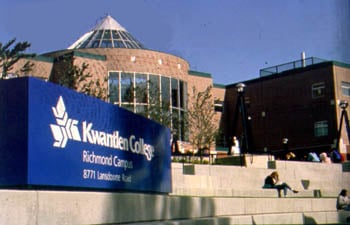
Call it the Christmas Surprise. At B.C.'s five newly minted special-purpose teaching universities last December, faculty associations received unexpected letters from their schools' administrators -- letters that make them wonder if their abilities to negotiate better pay and job conditions might be under threat.
At Kwantlen Polytechnic University, the University of the Fraser Valley, Vancouver Island University (formerly Malaspina College) Capilano University and Emily Carr University of Art and Design, administrators informed their faculty in similarly worded letters that they now believed, on the basis of legal advice, that the schools' Senates might be able to unilaterally strike down agreed upon provisions in existing university collective agreements. At Vancouver Island University, the letters went to CUPE and BCGEU locals as well as to the faculty association.
Those Senates were formed at the five schools when their new university statuses were conferred by amendments to the University Act two years ago.
Now many sources at the new universities are telling The Tyee they worry the creation of the Senates might be a domino that leads to tumbling labour relations where they teach.
A range of reactions
"This represents management trying to increase management rights and reduce collegiality," said Tom Becher of the Emily Carr Faculty Association. Becher sees an "aggressive" new policy coming from government and the Post Secondary Employers' Association.
Dan McDonald of the Vancouver Island University Faculty Association told the Tyee that the new claims about Senate powers to veto contracts could well be a "strikable issue." McDonald said the labour relations atmosphere at his university had become much more adversarial, and that his local was "flabbergasted" to receive the letter about newly claimed Senate powers.
Gillian Gray, president of the CUPE local at VI U, sounded angry and resolute when she told The Tyee that "we have a collective agreement. If they want to negotiate, they should come to the table."
In contrast, at the University of the Fraser Valley and Capilano University, administrators seem to be minimizing the possible impact of the new Senates on labour relations and union leaders are consequently less combative.
"I don't see the same problem some of my colleagues do," said Mark Evered, president of the University of the Fraser Valley. "We need to pay attention as we go forward, but it is important that we respect past agreements."
At Capilano University, President Greg Lee told The Tyee that his administration would try to "work around" the existing collective agreement with faculty. "I have no interest in having a legal challenge," Lee said.
'Kwantlen is a flash point'
But several well-informed observers within the university system told the Tyee that Kwantlen University seemed to be the place where trouble might erupt in response to the disputed new claims about university Senate powers.
"Kwantlen is the flash point," said John Wilson, president of the Capilano University faculty group. "The law will be tested there."
A letter addressed to Terri Van Steinburg, president of the faculty association at Kwantlen, arrived over the signature of Board of Governors Chair Scott L. Nicoll on Dec. 1, 2009 (the first day that bargaining between the university and its faculty could legally begin). It read in part:
"Kwantlen is now governed by the University Act rather than by the College and Institute Act. As part of this new legal identity, our governance structure has also changed. We now have a bicameral model where operational governance is still vested in the Board but academic governance is vested in the Senate. The Board is not allowed to enter into agreements that fetter the discretion of Senate in carrying out its statutory duties."
"It is possible that there are some current provisions in the collective agreement that were bargained in good faith at the time but that deal with areas that may now be under Senate's jurisdiction. If, in the future, the Senate, in carrying out its statutory duties adopts policies that may conflict in whole or in part with the existing collective agreement language, our understanding of the law is that such a conflict would render those parts of the collective agreement in conflict with the particular Senate policy void and of no effect."
This innovative approach to collective bargaining proposed by Kwantlen administrators prompted an immediate and unhappy response from the University's faculty union and its allies.
'Intimidation through misinformation': Oliver of FPSE
Cindy Oliver, president of the Federation of Post Secondary Educators of BC, wrote to John Waters, CEO of the Post-Secondary Employers' Association, the bargaining agent for all of B.C.'s public colleges, special purpose teaching universities and institutes, on Dec. 3, strongly protesting the content of the letters sent to faculty associations at all five of the new special-purpose teaching universities.
Oliver called these communications, which echoed the content and wording of the letter to the Kwantlen faculty group "a bold faced attempt to disrupt the bargaining preparation process that our locals have a legitimate right to undertake." Oliver called the December communications to faculty "intimidation through misinformation."
Contacted by email, Moira Stilwell, who as B.C.'s Minister of Advanced Education and Labour Market Development is responsible for the new teaching universities, told The Tyee that she thought it would be inappropriate for her to comment on this matter.
The Tyee reached the PSEA's John Waters at his office. He confirmed that letters similar to the Kwantlen document had gone to faculty and staff associations at the other four special purpose teaching universities. He denied that his organization was dictating tactics to university administrations and insisted that PSEA had not originated the five letters. Waters refused to comment on the source of the supportive legal opinion cited in the letters.
He did say, however, that he did not think that Kwantlen or any of the other universities was relying on an opinion provided to Kwantlen in September of 2008 by D.Lawrence Munn of Clark Wilson LLP. (The opinion, drafted by Mr. Munn for the Office of the Board and President at Kwantlen, has been posted on a website currently being maintained by the Kwantlen Faculty Association.
Sandi Klassen, executive administrator to the board and president confirmed that the posted document is authentic and was delivered to her in 2008. The Munn opinion includes this note about the impact of new Senate at Kwantlen on existing collective agreements:
"Finally, it should be noted that the continuation of Kwantlen University College as a university and the designation of faculties will not affect the validity, term or content of the two collective agreements. Those remain in place."
Munn declined to comment on the document or his advice, citing solicitor-client privilege.
A controversial arbitration
Oliver told The Tyee that Kwantlen was the "most aggressive" of the five teaching universities in its approach to the claims of new Senate power.
"We want to sort this out with the employer," Oliver said. "When you play around with the collective agreement, you endanger students' best interests."
On the same day the FPSE letter went to John Waters, Leo McGrady, a senior labour lawyer acting for the Kwantlen faculty group and FPSE, communicated with Kwantlen Board Chair Nicoll, informing the board that his clients rejected the version of the law spelled out in the Dec. 1 letter. McGrady’s letter pointed out that the BC Labour Code provides at section 48(b) that a collective agreement binds "an employer who has entered into it," and added that he had advised his clients that they should engage in collective bargaining as usual.
On Dec. 4, Terri Van Sternburg wrote to President Nicoll with more of her association's response.
"The Kwantlen Faculty Association categorically disputes your interpretation of the University Act," she wrote. Van Sternburg acknowledged that a recent decision by labour arbitrator David McPhillips "has created controversy about the power of research university Senates to override collective agreement provisions," however that decision is being appealed and doesn't apply to the new universities, she wrote. (For more on the McPhillips arbitration, see sidebar.)
Van Steinburg told The Tyee her members were very concerned about the right to a Senate veto on collectively bargained contracts being claimed by Kwantlen management.
"I worry about how dug in the other side is," she said. "If they are tying their claims to the McPhillips ruling, this could take a long time. My membership is strong, and we are not ruling anything out, including a strike."
No one in the Kwantlen administration took calls from The Tyee; however, a media relations officer emailed this statement from Gord Schonberg, vice chair of the Kwantlen Board of Governors:
"The Board of Governors respects the privacy of correspondence which may shape the negotiations of collective bargaining agreements at Kwantlen. The Board recognizes that governance roles have changed by now being governed under the University Act and, because of the difference of view expressed between the Board and the KFA on this matter, find no useful purpose to begin what could amount to a public debate in the media."
President Ron Burnett of Emily Carr University of Art and Design also declined to comment for this story.
National attention
At least one other administrator involved in this potential labour relations mess was willing to go on the record. Vancouver Island University President Ralph Nilson told the Tyee via email:
"As an organization that was previously governed by the College and Institute Act, Vancouver Island University entered into our three existing Collective Agreements in good faith. As a new Regional University now governed under the University Act, we do not know what the powers or jurisdiction of our new Senate might be. It is possible that there are some current provisions in collective agreements that were bargained in good faith, but that may now fall under senate jurisdiction. Providing notice to our three unions that our governance structure has changed was a recognition of this fact."
The national umbrella group that represents the Kwantlen Faculty Association has weighed in on this emerging dispute as well. On March 17, in a letter to Kwantlen President Scott L. Nicoll, the president of the Canadian Association of University Teachers James Turk, described himself as "deeply troubled" by Nicoll's response to an earlier letter from CAUT.
"It is a shame that Kwantlen, in its desire to affirm its status as a university, has chosen a path that sets it at odds with its own faculty association, with the Federation of Post-Secondary Educators and with CAUT. Worse still, your position calls into question the integrity of the institution if it now claims it does not have to honour commitments it has made in the past," Turk wrote.
Jim Sinclair, president of the BC Federation of Labour, agrees. In a March 23 interview, he told The Tyee that the move by university administrations might look like an academic matter, but was in fact something far more serious for working people in B.C.
"This shows the government hasn't learned its lesson yet. They think that if it's a contract with workers, they can tear it up at will. They wouldn't do this if the contracts were with Howe Street firms," he said.
'Collective begging' in previous times
Mark Thompson, a professor emeritus at UBC’s Sauder School of Business, remembers some of the history behind the current fracas about faculty associations, unionization and administrative powers. When he came to UBC in 1971, the powers of the faculty association were so attenuated that their communication with the employer amounted to "collective begging," Thompson recalled.
He remembered too that in the 1980s the Socred government of the day amended the labour code to prevent university faculty from seeking union certification. The Harcourt government later reversed that clause of the labour code, he said, and faculty at most B.C. universities are now unionized.
Thompson, himself a veteran of three years service on the UBC Senate, was skeptical about the claims made by Kwantlen and other new university administrations that their new Senates ought to be able to veto negotiated contracts with faculty. "I guess," he said sardonically, "that's what they call collaborative bargaining." ![[Tyee]](/design-article.thetyee.ca/ui/img/yellowblob.png)
Read more: Education, Labour + Industry












Tyee Commenting Guidelines
Comments that violate guidelines risk being deleted, and violations may result in a temporary or permanent user ban. Maintain the spirit of good conversation to stay in the discussion.
*Please note The Tyee is not a forum for spreading misinformation about COVID-19, denying its existence or minimizing its risk to public health.
Do:
Do not: