


 SHARE:
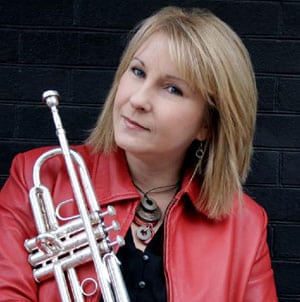
Hugh Fraser played his trombone and Lorae Farrell played her trumpet in their Oct. 7 appearance before a provincial budget committee in the Legislature's wood-pannelled Douglas Fir Room.
The jazz musicians were playing "the budget cut blues," Fraser explained in the hallway outside the committee room where they'd backed a presentation by Nanaimo musician Andrew Homzy. "As musicians, our first language is the sonic language of sound and music so we thought we'd just punctuate the very end of his presentation."
The occasion was a meeting of the Select Standing Committee on Finance and Government Services to hold a public consultation on what should be in the 2010 budget.
Arts and culture have been singled out for more cuts than any other area of government spending, Homzy told the committee chaired by Chilliwack MLA John Les. "Cuts to the arts will lead to cultural bankruptcy," he said.
"As a result of these cuts, art galleries will close, theatres and dance companies will be forced to cancel events, books and magazine publishers will scale back, cultural workers will lose their jobs, and artists and writers everywhere will find their livelihood threatened more than ever," Homzy said.
He reminded the committee, as did other presenters later, that a provincial study shows that every public dollar spent on the arts and culture brings $1.36 in revenue back to the government.
'Let us all have music'
Riffing on a Charles Mingus quote, with Fraser and Farrell playing in his pauses, Homzy concluded, "Let your children hear music. Let his children hear music. Let her children hear music. Let this province hear music. Let the cities hear music. Let the islands and coastal communities hear music. Let the mountain regions and the north hear music... Let us all have music."
Les observed, "You've added a new dimension to public hearings."
Outside the committee room, Homzy said, "Musicians are probably the least organized among all the artists." They are vulnerable to these cuts and need support, he said. "We have intellectual resources, cultural resources that cannot be measured in dollars and cents."
Fraser said arts grants make a big difference to musicians getting established. "If I didn't have this kind of funding as a student, I wouldn't be able to do this," he said.
Fraser said he'd had the good fortune to once teach jazz singer Diana Krall. "I know everyone talks about her as an overnight success, but it was 20 years of hard work and a lot of B.C. Arts Council funding that got her out into the world and made her who she is," he said. "When people see models like that, they all of a sudden believe they can do it."
A 90 percent cut
The 2010-2011 budget cuts funding for arts and culture by 90 per cent, said New Democratic Party critic and Vancouver-West End MLA Spencer Herbert. That's on top of the cuts to gaming grants made this year.
"The B.C. Liberals currently have cut 50 per cent of the gaming grants to arts and culture organizations," he said. "Next year they're planning to cut 90 per cent of all government investment in arts and culture."
Many of the festivals across the province will be cancelled if the cuts go ahead, he said, which he called "a huge loss to the economies of those regions." The Kaslo Jazz Festival, for example, has become essential to the Kootenay town's economy. "You talk to businesses there, many of them survive just because of that festival," he said. "It's pretty bleak times right now."
B.C. is the only province in Canada slashing arts and culture spending, he said, adding that even the federal Conservatives have expressed concern about B.C.'s cuts.
Spending on the arts should be seen as a good way to stimulate the provincial economy at a time when it needs it, he said. "The BC NDP believes in the creative economy," he said. "We've looked at the studies and see that investing in arts and culture actually produces more results for the provincial treasury. We're not creating a bigger deficit, in fact we believe it may be possible to shrink the deficit because of investments in arts and culture."
He added, "Artists are very good at taking a small investment and turning it into something much bigger for our province."
Clear-cutting the arts
Members of the Professional Arts Alliance of Greater Victoria spoke to the committee later in the morning.
"We are seeing the artistic equivalent of clear-cutting," said the Belfry Theatre's artistic director Michael Shamata. "Slashing without thinking."
Even if there's a change in government and another political party restores funding, he said, it will take a long time to heal and bring arts groups back to where they are now.
He asked the committee to bring back the funding through the Tourism, Culture and the Arts ministry, to honour the commitment to provide a third of gaming profits to charities and to make those grants available to arts groups.
"Art is not a matter of life and death," he said. "It is much more important that that. All our masterpieces have not been created."
"To varying degrees we all share a passion for the arts," said committee chair Les. "We will see as the committee deliberates what we can do, what we can recommend, but we have to recognize these are difficult times."
The government has to do what it can to bring the province out of the recession as strong as possible, he said. "It's a question of affordability. There are so many competing pressures for government funding."
'Tough decisions'
Minister Krueger said he would like to restore the funding to arts groups. "People really know we have no more money to give this year," he said. "We're hoping next year will be a lot better than this year."
The Liberal government has been a strong supporter of the arts, he said, and has given $124 million in grants through the B.C. Arts Council since it was elected in 2001. He also said the government used $150 million to set up a legacy fund that would act as an endowment where the BCAC can spend the earnings on the fund's investments and $25 million for a fund to provide matching grants to arts groups that set up their own foundations.
"We've done a lot. This was a tough year," he said. "We've provided more to the BC Arts Council in the past seven months than the NDP ever did in a full year."
Krueger also acknowledged the economic impact the arts have. "We don't question at all that the arts are contributors to the economy and huge contributors to the social fabric of the province."
Coleman echoed comments he's made in recent weeks saying grants went to areas that were higher priorities.
"The reality is we made the tough decisions," he said, noting the $19 million that still went to arts groups was a decrease from past years. "They're not being reversed this year because the money's been committed to things like public safety and social development issues such as food banks and meals for kids in schools. That's not going to change."
"I would say Rich Coleman's arguments are disgusting," said the NDP's Herbert. "Trying to pit artists against starving children when we already know artists often are people who have very low incomes already."
Consultations continue
The executive director of the Victoria Symphony, Mitchell Krieger, said the government's position is "a bit disingenuous."
There are hundreds of millions available for things like Olympic security and subsidizing oil and gas exploration, he said. "Make no mistake, that's helping companies that are in profit-making industries, not the non-profits that the arts are," he said. "There's money focussed on very, very narrow things. It's not true it's a choice between this and that."
In his presentation, Krieger told the committee that young people involved in the arts are less likely to get involved in drugs or gangs. "The arts build community and social cohesion," he said.
He also stressed the economic benefits, saying cuts will worsen the economy. "We are part of the solution to the downturn in the economy."
"The amount that has been allocated to the arts is a very, very tiny percentage," Krieger told reporters outside the committee room. "We'd love to see an increase. We think it's a good investment. We understand in economic times such as these that might not be in the cards."
The committee will hold further public hearings before Oct. 16 in Courtenay, Cranbrook, Dawson Creek, Smithers, Prince George, Kamloops, Kelowna and Surrey. The finance minister will present the budget on March 2, 2010. ![[Tyee]](/design-article.thetyee.ca/ui/img/yellowblob.png)
Read more: Politics






Tyee Commenting Guidelines
Comments that violate guidelines risk being deleted, and violations may result in a temporary or permanent user ban. Maintain the spirit of good conversation to stay in the discussion.
*Please note The Tyee is not a forum for spreading misinformation about COVID-19, denying its existence or minimizing its risk to public health.
Do:
Do not: