News

Did You Want Your Milk Raw?

Unpasteurized milk activists are testing the law by making it more available in BC.

By Heather Ramsay, 11 Sep 2009, TheTyee.ca

pouring-milk.jpg

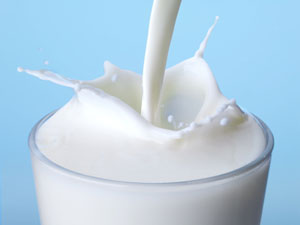
Pouring on controversy: Healthy or dangerous?

Related

Milking the cows is so important that it isn't even on her huge list of things to do. Lisa Graham-Knight is 22 years-old and running a cow-share co-op on Haida Gwaii. An unlikely revolutionary, she is tanned, smiling and up every morning around 6:30 am to relieve Ebony and April, a Jersey Holstein and a pure Jersey, two cows who now find themselves living on a small island across the inlet from the tiny village of Queen Charlotte.

Between tending the garden and the pasture that feeds them; milking and bottling; and making plans for a winter barn, Graham-Knight doesn't have much time to worry about the laws that say selling and distributing raw milk is a federal offence. Under the Food and Drug Act, no one can sell the "secretion obtained from the mammary gland of a cow" unless it has been pasteurized (heated to a high temperature to kill bacteria that might cause disease). Raw milk is, by definition, unpasteurized -- straight from the cow's udders, and Graham-Knight is right in there pulling teats every morning in order to provide.

She has a clear conscience about the law, she tells me the day I visit her farm, because she's not selling the milk of her labours. Instead she's part of what some might consider a revolutionary act. She sells shares in her small herd and buyers become part of a cooperative, paying her a maintenance fee each week. The milk produced by the collective cows is divvied up between owners.

Graham-Knight doesn't dwell on the legal issues, but she is aware of the political choice she's making and the movement she's joined. Last year she cut her chops (no offence to the cows!) at Home on the Range, a Chilliwack-based farm. Activist Gordon Watson, who has been trying to get raw milk legalized for the last decade, says the cow share program at Home on the Range (he helped get it underway) has grown from one cow to 23 in just two years and now 300 people across the Lower Mainland have shares in the herd.

Shareholder approach contentious

While it is illegal to sell raw milk in Canada, he and many others involved in cow share programs across the country argue that it is not illegal for those who own cows to consume the milk from their own animals. Near Durham, Ontario, Michael Schmidt, a 53 year-old farmer who has been providing raw milk to people through a similar shareholder system, had milk, equipment and animals seized from his farm by armed police officers in November 2006. He was charged with contempt of court for refusing to obey an order to stop selling raw milk and he is now putting forward a constitutional challenge, which should be heard in court in August 2009. Schmidt says forbidding people from selling and receiving raw milk violates the Charter of Rights and Freedoms.

Whether to buy and consume raw milk or not should be a choice all Canadians can make, say activists and some feel that Schmidt's challenge may eventually turn the law around.

Still, in the summer of 2008, provincial health officials visited farmer Alice Jongerden who owns Home on the Range and gave her an order to quit distributing raw milk. Watson appealed the order, on her behalf, and the appeal is still pending. Shareholders are still getting milk, but Jongerden is not distributing. She leaves the milk on her farm and shareholders pick it up.

"And they have not stopped us. That proves they know it's safe," Watson told me.

'Only pasteurized milk is safe': BC Dairy Foundation

But according to the BC Dairy Foundation fact sheet on raw milk, "only pasteurized milk is safe milk." Health Canada has issued regular warnings over the last several years reminding Canadians that bacteria like Salmonella, E. coli and Listeria can be found in raw milk and these can lead to food borne illnesses involving fever, vomiting, diarrhea, and, more seriously, kidney failure, miscarriage and death. Children, pregnant women, the elderly and those with compromised immune systems are particularly at risk.

Watson says the argument about public health safety may be why Canadian regulators banned the sale of raw milk in the first place, but he and others believe that concern is outdated. Selling raw milk is legal in all G-8 countries except Canada and in 28 states, he says.

Pasteurization, he explained, began at a time during the late 1800s when industrialization was ramping up, but health standards were not. Factory-like farms were producing milk for large cities and distributing over large networks. Disease and bacteria were easily introduced at any step along the way. For example, some argue that cases of tuberculosis-infected milk, were likely caused by TB-infected farm workers, not from anything inherent in the milk itself.

'Healthy cows create healthy milk': dairy farmer

But consumer concern about the safety of raw milk persists. Even my mother, a registered nurse, chastised me for imbibing. "They started pasteurizing milk for a reason, you know," she said by telephone from Alberta. "Have they tested it?"

When I queried Graham-Knight about this, she replied honestly."I haven't tested the milk." But, she said, the cows were tested for various diseases before she brought them from Chilliwack and they were given a clean record.

"Healthy cows create healthy milk," she said. To create a good product, animals have to be very well cared-for, and with only two to look after on a small farm, she feels able to do that.

Having grown up in the city with milk that came straight from tidy cartons off store shelves, far from the dung, bugs and dirt of a typical farm, I admitted to having a few fears around drinking raw milk myself.

Graham Knight was sympathetic. It's not for everyone, she admitted, but in her opinion pasteurized milk offers more potential for people to become sick. "Raw milk has its own immunity," she says. "It wants to protect itself from pathogens."

Too clean causes health problems?

In fact, those who believe in the superiority of raw milk say pasteurization and other processes aimed at keeping consumers healthy are actually making people unhealthy on a whole different level.

Autoimmune disorders, like Crohn's Disease and Multiple sclerosis have become more and more prevalent in developed countries over the last half-century and some scientists wonder whether society has become too clean. A recent European study has even linked exposure to farms and farm animals with lower asthma and allergies rates in children.

Many people say their eczema, arthritis and other chronic diseases cleared up after turning to raw milk. Enthusiasts like these contend that pasteurization destroys vitamins A, B12 and C, along with helpful bacterial like lactobacillus, which aids in the digestion of lactose. A Salon.com article carried a number of such testimonials.

Watson says pasteurization also destroys the enzymes already found in milk that allow our bodies to digest the calcium we need from it.

Illnesses linked to milk, raw and pasteurized

But public health officials maintain that each year people become ill from drinking raw milk contaminated with disease-causing germs. In 2006, California officials announced that raw milk tainted with E. coli was responsible for a rash of illnesses. Several children were affected in the outbreak, but two got progressively worse and they may have been left with permanent kidney damage.

"It is possible to get sick," admits Watson, but he says the risk is much lower for raw milk from a small dairy like Home on the Range than from buying milk off the grocery store shelf.

He says more than 16,000 people got sick from salmonella after drinking pasteurized milk originating from a commercial dairy in Illinois in 1985 and three people in Massachusetts died after drinking pasteurized milk contaminated with listeriosis in 2008.

"When things go wrong in a commercial dairy," he says, "thousands can get sick."

Between the warnings from public health agencies in Canada and the United States, and refutations from raw milk supporters like the Wisconsin-based Weston A. Price Foundation, a nonprofit, tax-exempt charity that campaigns for "Real milk," ie. Raw, I admit to finding it difficult to know which arguments to believe.

Life at a raw milk farm

Meanwhile, back on the farm, Graham-Knight wanders the pasture, making sure no harmful weeds, like fox glove and buttercups, are making their way into the cows' diets. She spreads manure on the garden and she checks their feet for cracks, then she brushes their lovely backs.

This morning, like every morning after she carefully cleans their udders before she milks, she runs the liquid through a filter and fills old-style returnable glass bottles she brought up from the city. The milk must be cooled quickly so she runs it under cold water and refrigerates it right away. The cows produce two gallons of milk every morning, (that's just under eight litres), which is far more than one household can consume.

Graham-Knight brought the cows to Haida Gwaii because she wanted to give something back. "It's my home and I wanted to somehow contribute to the community," she says. "It's honest, wholesome work. And it's the best food I could think of to bring."

For Graham-Knight, two cows and a cow share co-op mean she can live on her friends' farm and earn a small income, something that is impossible to do in the industrial milk system.

She says the community has been very supportive, with people stopping her on the street to talk about their fond memories of drinking milk direct from the family cow.

"People remember receiving it as a child and they've been longing to have it again," she says.

Delicious served raw

Twenty-one families now own shares in these cows and my partner and I are part of that crowd. Our first bottles came rich with yellow cream on top and my first sip revealed a cool, sweet flavour. Unlike others, the longing for raw milk was never there, but I'm a huge supporter of local products.

As for the health concerns, I'm still a little squeamish, especially after researching this article, but I figure there are a lot more dangerous products out there than raw milk. Take packaged meats, and the infamous Maple Leaf foods outbreak in 2008, for example. If something like bagged organic spinach can make people sick across 20 States, then I'm all for sticking with the local producer. At least I can visit my cows. Maybe the revolution involves learning how to milk them too.

As for the law, I leave it to Watson to offer the final word in that respect. "If providing basic food stuff is an illegal offence, then what's next?"  [Tyee]

18  Comments:

  • driftwolf

    11-09-2009

    safe vs unsafe

    I agree that milk from factory-farms is probably unsafe, given the unsanitary conditions I've noticed in several I've visited here. Then again, the sheer quantity of drugs these factories are injecting into their cattle you wonder why they have to pasteurize it - isn't it already preserved?

    However, I for one would like to be able to get raw milk and raw milk products like cheese and yogurt. Preferably using milk from well maintained, drug free, sanitary cows like my family used to raise.

  • Moonbug

    11-09-2009

    I drank raw milk from my grannie's cow

    I drank raw milk from my grannie's cow when I was a kid, and I have no allergies, no asthma, no chronic health problems at all. I never got sick from it either.

    I think that the industrial food system is much more dangerous than people buying from their neighbours. Also it should be "buyer beware" - people should have the right to choose pasteurized or unpasteurized - anything else is tyranny

  • gguppy

    11-09-2009

    Who's responsible if people get TB, etc. ?

    Since a simple process of raising the temperature of milk for a very short period was discovered to kill pathogens responsible for nasty things like tuberculosis countless millions of lives have been saved. Any raw food has the potential to spread disease if improperly handled.
    Maple Leaf foods has been handing out millions in compensation to people who got sick. Who is going to take responsibility if a lot of the people of the local village show a higher incidence of TB infection? I doubt if there is anyone on Haida Gwaii to periodically test the cows and their milk for disease.

  • dave49

    11-09-2009

    The arrest of Schmidt in Ontario

    I recall reading about the arrest of Schmidt in Ontario. It was utterly bizarre, a huge and heavily-armed police operation that made it look like a move on a major drug-smuggling operation, not a co-operative dairy. Let's hope things don't get SO bizarre here in "The Best Place on Earth (TM)."

  • RickW

    11-09-2009

    gguppy

    I suppose you think mrijuana should remain illegal as well -- in spite of the manifold evedence to the contrary.

    And what does "handing out millions in compensation to people who got sick" by Maple Leaf Foods have to do with the people who DIED eating contaminated meat?

  • beavertoad

    11-09-2009

    Milk Bath

    I've lived in Oz and they sell raw milk through a loop hole which allows them to sell it as "milk bath." Good for the skin and so on.

    I wonder if that loop hole exists in Canada? because having worked on an organic farm and having fresh, raw, scrumptious milk straight from the cows teet into a cup and into me, I felt pretty healthy those days.

    The only problem I had with raw milk was it left us a wee bit gaseous. haha.

  • Moonbug

    11-09-2009

    Who's responsible if people get TB, etc. ?

    the people who made the informed choice to drink raw milk, I suppose.

    What good is fault anyway?

    So what if maple leaf hands out a few millions - they made many millions more selling people unsafe product, and they continue to produce high-fat high-salt high-hormone, highly unsafe product today.

    A few millions to pay off the families of the dead is nothing for a company that makes fat profits with inferior product.

    The fact is maple leaf never paid anyone for a fraction of what their listerosis outbreak cost our medical system - if a farmer on haida gwaii was responsible for making even one person sick - you can bet your bottom dollar they would lose their livelihood, unlike the executives at maple leaf, who I bet ALL still have their fat cat salaries

  • Dr Alexander

    12-09-2009

    TB or Not TB That is the question

    Bovine tuberculosis and human tuberculosis are not identical. Humans can get bovine TB, however, it actually imparts immunity to human TB. This was the basis of Dr Robert Koch's observations which got him the Nobel Prize (in 1905 if I remember correctly).

    Very similar to the observation that the contraction of cow pox gave one immunity to smallpox.

    At any rate, one can get human TB in milk if a milk handler has human TB and has direct contact with the milk or sneezes into it.

    If one uses a modern closed loop milking system and the milk is stored at any temperature less than 38 degrees F. or 3.4 degress C, then the growth of any milk-borne pathogens are quite limited.

    After all, there is a greater chance of harmful-strain E. coli ingestion from meat, and yet, one can go to a local butcher and obtain their meat.

    What this tells me is that the Milk Industry lobby had enough money to "grease some political wheels" whereas the Meat Industry lobby did not.

    The bottom line is that we should have a choice to take our own "risk", but it means doing our homework. If we purchase from an unscrupulous producer, we have legal means of regress. Sometimes the price of choice can be high or tragic, but that is life. Every surgery has a component of non-survival and every golf game in the rain has a component of non-survival.

  • skelly

    12-09-2009

    Milk allergy

    My spouse grew up on a farm that had cows, and needless to say, drank raw milk every day growing up as did all of her large family. When she grew up, left the farm and started drinking pasteurized milk, she discovered she had an extreme allergy to it - producing stomach pains and her throat to constrict. It seems like raw milk had something in it that made it easy to digest, and pasteurized milk didn't. Honestly, why does the law need to protect people from doing something of their own free will that might have health risks? It doesn't stop us from smoking, drinking or eating fast food, does it? I could see enforced labelling, but outlawing unpasteurized milk? seems extreme to me.

  • Dan the socialist

    13-09-2009

    I remember a fellow from

    I remember a fellow from Langley or somewhere else in the Valley in the late 80's/ early 90's was trying to sell unpasteurized milk. I think he ended up going out of business eventually but it was in the news a fair bit back then.

    Is unpasteurized milk bad for you? Isn't that how people used to drink milk? I heard from older relatives they drank it, used it almost as soon as it was out (and that it was warm) I never heard of mass die offs or mass people getting ill from it.

  • info@eatkamloops.org

    13-09-2009

    It's All About Choice

    I am the Chapter Leader for the Weston A Price Foundation in Kamloops. My family and I have been drinking raw milk for about three years now. This summer I decided to buy my own Jersey cow so I could ensure a supply of this nutritious traditional food.

    It is important that raw milk comes from healthy grassfed cows. The raw milk is of better quality if the cows are on fresh pasture, so it is a common practice to only milk on a seasonal basis. It is better for the cow's long term health to not be milked while pregnant.

    We drink fresh whole raw milk daily. I make raw butter, kefir and yogurt. I freeze raw milk for winter consumption. My family has not become sick from drinking raw milk. In fact, I did not drink milk for nearly ten years because of "lactose intolerance". It turned out I had "pasteurization homogenization intolerance". Industry milk is dangerous for me.

    I would recommend interested people reading Ron Schmid's book The Untold Story of Milk. It gives historical background about how we have found ourselves fearful of a nutritious traditional food that has nourished generations of people.

    In the name of "safety" we have seen our rights to choose healthy foods be reduced. Farmers and ranchers in my area are being regulated out of business. It's really all about choice. Does the government have the right to choose what it right for me? Unfortunately, the have the power to do so. The farmer becomes a criminal just by selling me this traditional food.

    I want the government out of my business so I can get nourishing foods directly for the farmer at a reasonable price. Even at this reasonable price, the farmer gets paid more than what they would receive from the industrial food system. (I wont get into government run dairy quota.) Legal raw milk sales would save the small family farm. Legal farm gate sales regarding meats is another issue that would save the family farm.

  • demotto

    13-09-2009

    Raw milk

    Raw milk sales are not unlawful only illegal if you wish to consent. Learn your right to say no to consent. That which is legal with license is lawful without. Claim your rights. If you do not claim your rights you have none. Hold all your property under Claim of Right.
    Sect 39 Criminal Code of Canada Every one who is in peaceful possession of personal property under claim of right, and every one acting under his authority, is protected from criminal responsibility for defending that possession, even against a person entitled by law to possession of it, if he uses no more force than is necessary.
    A very powerful tool is it not. Get your Claim of Right written up and filed with the Attorney General so you can protect your property from seizure by any one claiming authority to do so.

  • BrianWhite

    15-09-2009

    Absolutely nuts to have raw milk for sale.

    One of our vets had brusolosis. A bunch of my ansestors had TB (and tb is on the increase again).
    Think again folks. Milk is made by the cows body. How is it made? The cow body processes the cow blood.
    There are also a bunch of "naked" bacteria that do not have a cell wall, making them incredibly hard to detect, if the cow is infected with one of these, you run the risk of getting an unknown sickness too. It is utterly and totally irrisponsible to allow raw milk and cheese made from raw milk to be sold to the public. What happens if the cow has mad cow? I do not think people need to right to eat unsafe food.

  • BrianWhite

    15-09-2009

    More about the grass fed cow

    Cows poop, It is like sticky green custard. Cows have tails and they use their tails to swish away flys. Sometimes they swish their poop onto their teats. More than sometimes, actually. Even worse, cows do not always sleep on their feet. They mostly sit down with their teats under them, sometimes in contact with patty. Even worse, Flys like milk too. So we need to pasturise milk to kill off e coli, salmonella and all the fly spit bacteria. Perhaps people are going to get romantic about hand milked cows next? I think they cause bruises and the cows are still swishing the tail when you milk them. Least the machine milked cows have the teats covered completely when milking is going on.

  • info@eatkamloops.org

    16-09-2009

    Let's Talk About Safety

    Last year, I was at the Weston A Price Foundation Conference in California state. I had the opportunity to visit two dairies that supply raw milk: Claravale Farms in Panoche, CA and Organic Pastures in Fresno, CA. I also saw, and smelled, many conventional dairies along the way. The contrast between the conventional, raw, and home dairies was profound.

    Conventional dairies are where most of us get our milk. Usually, the animals are confined in a building their whole lives. It requires heavy equipment to move around feed which may come from across the country. These cows are sometimes fed really strange feed. They are fairly stressed animals and have a very short drug filled life. The milk is collected from many dairies and bulk loaded into large tanker trunks and shipped to a regional processing plant. The milk is skimmed of cream which is later pasteurized. A set amount of cream is homogenized into the milk and then it is pasteurized. I'm not sure when, but a number of additives are put into the milk at some point. There is a whole range of substances now routinely added to milk.

    A raw dairy is based on pastured cows. The cows are on pasture all their lives. They live a more natural life and thus are less likely to become sick. The cows have over twice the life expectancy of a convention dairy cow. The cows come into the milking room twice a day. The milk is collected and processed on site. Processing involves removing some of the cream to a given percentage and bottling. The milk is not pasteurized or homogenized. These raw dairies are required by law to test for bacteria in each load of milk. Then the milk is bottled. Claravale Farms uses glass and Organic Pastures uses plastic containers. As the milk sits for awhile the cream comes to the top. How much cream on the top used to be the way our grandmothers assessed the quality of milk.

    When I milk Patty, my Jersey cow, I get her into the milking shed and feed her some grain. As she is eating, I clean her bag and udders with warm soapy water. I do not use any antiseptic, though some farmers do. I milk her by hand into a pail. When I am finished I strain the milk into a large one gallon glass container. I put this glass container into my cooler with a bag of ice. After I get home, I put the raw milk into the fridge and wait for the cream to come to the top. I will skim cream if I am wanting to make butter or need cream for some other reason. Otherwise, I decant the whole raw milk into small containers that my children can pour with ease. Very few people of my generation have drunk whole raw milk. It is wonderful.

    It is up to you to decide which is a more wholesome food. Is it the conventional dairy with its "complex safety procedures", the raw dairies with their "bacterial testing", or the milkmaid with her "soapy water"?. We also have to realize life is risky. Things go wrong with any system, but the more complex a system the more likelihood of failure.

  • info@eatkamloops.org

    16-09-2009

    Let's Talk About Safety: Part II

    I am not a research scientist or biochemist but there is a lot of research about the safety of raw milk. This is an essay which gives a general overview of pasturing and its benefits to the farm, community and environment. Please enjoy Splendor from the Grass:
    http://www.westonaprice.org/farming/splendor.html

    This is a link to fourteen essays on the safety of raw milk:
    http://realmilk.com/search-results.html?cx=006599781855607243500%3A3cgqa0ux2xs&cof=FORID%3A11&q=safety%2C+sally+fallon&sa=Search#951

  • The discussion for this story is closed. No more comments can be added.