News

And On the Fifth Day, They Rested

B.C. district rebels against four-day school week

By Francis Plourde, 22 May 2007, TheTyee.ca

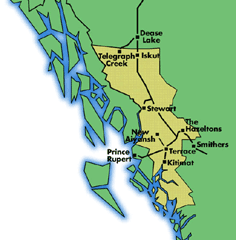
Map of Coast Mountain school district

B.C.’s north central coast

After seeing five schools close in 2001 and fearing more closures in the years to come, the Coast Mountains school district adopted a four-day school week for the 2003-2004 year to cut costs.

The district, which sprawls across 80,000 square kilometres in northwestern B.C., faced the same dilemma as many in B.C.'s shrinking interior: fewer people means fewer students, which in turn means less money from the province. Add in rising salaries and inflationary pressures and you have a recipe for shrinking budgets and closing schools.

For a while, the shortened school week did the job. The savings –- around three to five per cent of district’s budget per year –- prevented the closure of some schools. But even though they faced a potential $4.4 million deficit for the next year, the district has decided the savings aren’t worth the costs.

In a recent meeting, the Coast Mountains board adopted the four-day school week calendar for 2007-2008 while pledging to do all they could to return to a normal schedule as soon as possible. To do that, they say, they'll have to convince the province's Ministry of Education to change the way they fund schooling in the province.

More than curriculum

"The change of schedule has an impact on communities, it's why our school board decided to look at it," says Coast Mountains school district superintendent Bob Greenwood. "The district will do every effort to comply with the decision of the school board and to come back to the norm."

Erica Ball has been a teacher in Hazelton for more than 30 years. Some of her students have to commute by bus for three hours everyday, a problem made worse by the four-day week. "In winter, some travel in the dark in the morning and the evening," she says.

It was complaints like Ball's that convinced Art Erasmus, the school trustee who brought the motion to the table, that the four-day school week wasn't viable. "The teachers say the longer school day leaves them fatigued to a point there's no energy for extra-curricular activities," he says.

A retiree with 39 years of experience in education, Erasmus is not keen on the four-day school week. "I ran for the school board because I believe the four-day school week is not appropriate for a lot of kids," he says.

Erasmus believes that school is a safe place for kids to learn the curriculum, but to socialize as well. "School is more than learning skills," he says. "As a by-product, some kids who graduated and went to college said they couldn't stand the five-day school week."

Parents, who have to take care of their kids on Fridays, also raise concerns about childcare.

Inflexible formula

While the four-day school week has proven to be rather efficient cost saving measure, it still hasn't been enough for Coast Mountains. The district recently had to cut 29 more staff positions. Instructional services have also been targeted. More cuts are expected when and if they move back to a normal school week.

For Erasmus, that means the current provincial funding process needs to be reviewed. "I'm about addressing the distribution mainly equitably as opposed to equally," he says. "There are some districts where [the question of funding] is not an issue."

Since 2000-2001, the per-pupil grant in the province has increased by $1,716, to reach $7,932 per student. During the same period, enrolment has declined by about 42, 500 students.

A district like Coast Mountains also has to deal with a higher proportion of students with special needs, he says. This factor is not taken into account enough when the funding is awarded.

Currently, 81 per cent of the district's funding is based on student enrolment. Another 19 per cent is provided as a supplement to meet the costs of district-specific needs, including ESL students, Aboriginal and adult students. School districts with an enrolment decrease greater than one per cent in a year receive extra funds from the province. But that's not enough according to the Coast Mountains Board.

While the school board is aware the funding of the district is increasing while there's a decreasing enrolment, they argue you can't decrease the funding for infrastructure at the same rate as the decrease of children.

"A school bus that is half-full costs the same amount as a bus that is full. We closed a number of schools, but again, a school that is two-third used costs the same amount as a fully used one," says Erasmus.

According to the Ministry of Education it's the district's choice to implement a four-day school week rather than closing schools. The factors mentioned by the district are already taken into account, they say.

Mixed results for four-day week

Coast Mountains is neither the first nor the last district to thinker with a four-day school week. In B.C., the system was first implemented in the Boundary district, in the south central part of the province, after the government changed regulations governing the school year. Under the new rules, the year is measured in hours, rather than days.

A report released last month, five years after the implementation of the four-day week, in Boundary shows they have had a more positive experience than has Coast Mountains.

"We heard that the four-day school week is working well for our communities," writes Teresa Rezansoff, chair of the board of trustees. "We learned that some concerns that were voiced five years ago are now seen as strengths, such as long weekends, and extra time away from the school desks."

According to the report, no significant trend -- either positive or negative -- has been observed on student achievement. The report also states that the four-day school week has produced cost savings and has had a positive impact on reducing staff absenteeism.

The trend is consistent with what has been observed at the provincial level. "We are in constant liaison with these districts. They are accountable to us in case of bad achievement level, but no significant change has been observed," says a spokesperson from the Ministry of Education.

The Boundary school district switched to a four-day school week in 2001, after deficits between $176,000 and $640,000 were projected. Moving to the four-day schedule was supposed to save $207,000 annually.

When the provincial government changed the funding process in 2004-2005, the district's deficit problem disappeared. As a result, the surpluses generated by the four-day week were used for literacy initiatives, according to the report.

Despite the positive analysis of the schedule, however, some parents still raised concerns about the longer weekends and the long-term impact on students. For a lot of them, the four-day school week remains a sensitive issue.

The Nisga'a school district, which tried the schedule in 2003-2004, switched back to the normal schedule a year later. According to Superintendent Keith Spencer, the community wasn't very receptive to the new schedule. "There was a fair amount of concern from parents and the community. That was the basis for getting back to the normal school week," he says.

Across the country, the experience of Nisga'a school district has been the more common one. Alberta tried to implement the four-day school week in 1994 in some schools to reduce transportation costs. After a year and a half, the Rocky View school division cancelled its pilot program.

Although students and teachers were strongly in favor of the shorter school week, the parents were more divided. An independent evaluation also showed that students on the four-day week were faring worse than their counterparts on the five-day schedule. The study, however, remains one of only a few studies on the issue.

A recurring exercise

According to Catherine McGreggor, a professor in the faculty of Education at the University of Victoria, schedule fiddling has been a recurring policy exercise in North America.

From intensive scheduling to the length of the school day or year round schooling, a variety of alternative schedules have been tried for educational reasons. But overall, few studies have been made on the implications for learning under adjusted timetables.

"In my opinion, part of the reason is that we rapidly change our policy positions and options in order to adjust to contemporary economic or cultural contexts/demands," McGregor says. "So long term (or even short term) studies may be difficult to produce when changes are made relatively quickly on the basis of other policy measures."

For Erica Ball, though, the impact is clear. Reduced funds and the four-day week have had a direct impact on the classroom. While a large amount of money is put into bussing the students, there’s less money in education, she says. In the classroom, the cuts meant less choice in electives and fewer opportunities for extracurriculars.

In a community like Hazelton, where the major logging industry closed in 2001, this funding could be key to keeping the students motivated. “For a lot of kids who were planning to work in the bush, there’s not this possibility anymore,” she says.

These opportunities, she thinks, might have an important impact in their education. "I only hope in the future we will manage to provide activities outside of the classroom. Get back to the level it was 10 years ago, and go further than that," she says.

Related Tyee stories:

 [Tyee]

17  Comments:

Login or register to post comments

  • WillOwens

    5 years ago

    A thought...

    I recently read the article on The Tyee about the mining industry and the billions in revenues and expenditures that the industry see´s annually, and reading this article just saddens me. I fully understand the need to maintain business and the economy but what is the point of having a good economy and making lots of money when we squander these opportunities and resources. When times are good you paint your house and fix your roof so why in the face of such widespread economic prosperity are we constantly talking of lack of funds for important social programs. These discussions that include talk of school closures, bigger classes and "greedy teachers". The only message being clearly sent is that school is important... but not important enough to pay for, not at the cost of making rich people richer and middle class people happy enough to not ask questions. We ought to be ashamed of ourselves. These decisions further increase problems we´re seeing more and more each day as the have`s and have not`s of our country get farther and farther apart. If the economy is so good and we still don´t have money to pay for basic and unquestionably important necessities perhaps we should stop and question whether the system is in fact flawed. Perhaps capitalism has become to greedy to function properly and those in places of power are too high off their fat bank accounts to care. It all comes down to taxes and management of those dollars. Ah yes... taxes... the evil of evils, but if managed properly and responsibly with an eye towards maintaining the services that will most help our society to survive and flourish how can we complain about investing in children and our collective future. Like everything in life there is always a balance. There is a balance between the needs of society and the needs of business. It is a give and take relationship and I fear that right now we are giving far more than we are taking.

  • Realist

    5 years ago

    confused society

    Once again, the economy is here to support society, not society here to support the economy. Corporate taxes have been reduced to the point where we can no longer afford to educate our children in a proper environment and our health system is being intentionally starved of money to make it appear unsusstainable. Our society is sick and our politicians are racing towards it's destruction while we calmly aqccept their rhetoric and then re-elect them into office. We are all sheep.

  • Fiat lux

    5 years ago

    We have a long string of

    We have a long string of overloaded copper ore trucks breaking up our roads, even during breakup, when logging trucks are banned, without any repairs, taking our real wealth abroad at half million bucks per load, with BC and Canada receiving hardly any benefits, apart from some jobs, which are cancelled out by depletion and uncontrolled pollution from the open pits.

    At the same time all levels of governments are screaming for more "wealth creating foreign investment", selling the country off for imaginary, worthless money. Especially for US Dollars not worth a damn.

    When will Canadians, and the whole world, finally realize the old business law, that when you have resources, you can create your own capital and don't have to sell off your property.

    The carpetbagger, multinational corporate mafia is stripping this country bare, our economy is controlled from abroad, and
    then people moan and groan when little kids have to sit on the school buses for 3 hours a day, because we can't afford schools and teachers?

    Ed Deak.

  • murdock

    5 years ago

    More 'playing with the fraying edges'

    Quote:
    Alberta tried to implement the four-day school week in 1994 in some schools to reduce transportation costs. After a year and a half, the Rocky View school division cancelled its pilot program.

    These 'adjustments' are done as a kind of 'make-work' project for the school board/education officialdom. A layer of bureaucrats that are not needed whatsoever.

    Got a problem with schools being too far away from the children?

    Stop trying to cram 200-2000 students into one location, stop bussing them from one location to another (this is what is done with convicts = not students!).

    The sheer savings from firing the bureaucrats, cancelling the bus contracts and stopping the paying for summer operating of the enormous empty building would easily allow for the pay of many more one-room school teachers and the building (or renting) of many smaller sites, a lot closer to the children!

  • Bobbi

    5 years ago

    Bussing costs

    Could someone please explain why bussing kids to school is sacrosant? I have lived out of town and had to drive my kids in to school, you choose where you live. Either charge for bussing or have parents drive their kids. Bussing is expensive and subsidizes the choice of where people live at the cost of diminishing education funding for everyone else. There is only so much money in the pot and the per pupil funding is higher than ever when measured against historical funding numbers. As far as I am concerened, money should go to classroom time.

  • Elliot

    5 years ago

    per-student funding has not

    per-student funding has not been decreased, but rather increased dramatically since the libs took power. how much longer was the day that exhausted the poor teachers?

  • Fiat lux

    5 years ago

    Our grocery bills and many

    Our grocery bills and many others, have also have doubled since the Libs took over, therefore the increased funding is there only to cover the mostly ignored and covered up inflation.

    According to the Bank of Canada and StatsCan our inflation is 2% per year, which is a ridiculous, bloody lie with the usual economist playing around with imaginary figures. .

    Ed Deak.

  • Umslopogaas

    5 years ago

    4 day week

    Here in the Elk valley the coal trains rumble through town every few minutes. So much coal and where does all the money go?

    The school thermostat is turned down to save money, half of the lights were disconected a few years ago to save money and programs are cut and cut. Then the four-school-days-a-week experiment came along.

    I am glad the corporations are making so much money and also feel sorry that there are no skilled workers to help them make more. A lack of skilled educated workers is such a heavy burden for employers to face in boom times.

    No one likes to pay taxes for public education but the price of an education will always be less than the cost of ignorance.

  • Growlhisss

    5 years ago

    Re: Umslopogaas

    Unfortunately, what Kids learn in school isnt relevant to driving truck at the coal mine, so why bother educating them? If they receive a proper education, they might actually have options to leave town and work elsewhere! Oh wait, they do that anyway...

    I went to high school in the Elk Valley, got decent grades, but still spent a year (two years for math)and a lot of money upgrading at college to bring me up to an acceptable level to take some first year college courses like Chemistry, Math, and English.

    maybe parents would more in favor of the four day school week if they got a four day work week! I wish there were political parties that werent goonies advocating for that!

  • Elliot

    5 years ago

    in lower mainland school

    in lower mainland school districts this is a union issue. cupe won't agree to a four-day week b/c it means less hours for their members. doesn't matter whether or not it makes sense in every other way. it's a no go thanks to canada's most powerful public labour union.

  • Umslopogaas

    5 years ago

    6 days

    Personally I would support a 6 day school week like they have in Japan and (surprise) in Montana.

    Or how about something really inovative, no drivers license for students that do not attend school (a Florida policy.) N point paying to keep schools open if the kids don't attend.

    The four day experiment is a miserable failure. You don't see the Fraser Institute doing any studies on that though.

  • BC Mary

    5 years ago

    Attack on public education is nowhere more fierce than in B.C.

    From Salt Spring News:

    The New World Order attack on public education is nowhere more fierce than in British Columbia

    Related: Kids in the Gulf Islands only go to school four days a week because the school district can't afford to keep the schools open five days. Yet the district has spent $113,000 setting up a pre-school in Poland and marketing on-line education programs in Asia. ... The only way any of this might make some sense is if B.C. taxpayers were helping educate poor kids as a foreign aid project. But what these school boards are doing is beggaring the education of B.C. kids so that rich kids in other countries can get a good education and a chance to compete for spots in B.C. universities when they graduate with their Dogwood certificates.

    All of the overseas schools are private schools with tuition fees well in excess of what average Pole or Chinese can afford. The Gulf Islands' Polish pre-school, for example, charges $500 a month in a country where the average wage is just over $900 a month. ... - Daphne Bramham Vancouver Sun April 14, 2006

    Gulf Islands School Board chair May McKenzie is standing by the district’s business company, despite a $113,000 loss in 2004/05, and a call for a public inquiry. ... In the meantime, Gulf Islands parents concerned about increasing privatization of the education system in the wake of provincial government cutbacks and declining enrolment are calling on Education Minister Shirley Bond to hold a public inquiry into the workings of school district business companies across the province.

    “This is not the same as operating a coffee shop, this is our education system,” said Salt Spring parent Mona Fertig, who was a founder of the Keep Five Alive group opposed to implementation of the four-day school week. “We need to do our best to build it up and the secrecy just makes it worse.” Fertig questioned why the company was set up as a corporation instead of a non-profit organization open to increased public accountability. “We need to shed some light on the workings of the company,” she said. “How can we do that if they keep hiding behind that private business hedge.” McKenzie agreed the decision to start up a business company in 2003 remains a highly charged philosophical debate that has engaged teachers, parents and board members. ... - Sean McIntyre Gulf Islands Driftwood April 12, 2006

    School business company snuffed
    Stacy Cardigan Smith Gulf Islands Driftwood British Columbia Canada May 16, 2007

    School District 64 board members accepted a notice of motion last week to close down the SD64 business company after five years of operation. ... SD64 embarked on a path of revenue generation back in the late 1990s, said district secretary-treasurer Rod Scotvold. In general, the program has been successful, but the business company's specific success is hard to measure, he said.

  • BC Mary

    5 years ago

    Salt Spring News: http://saltspringnews.com/

    Sorry ... I got cut off at the 3,000 character limit ... so here's the necessary link to a very good little online news service:

    http://saltspringnews.com/

  • Mona Fertig

    5 years ago

    Four-day School Week is An Experiment in Mis-Education

    Contrary to popular misconceptions, there are no proven education benefits to the shorter school week—on the contrary, the only Canadian study conducted on the 4-day week showed that it was a bust.

    In the late 1990s, an Alberta school district, Rocky View, experimented with the four-day school week.

    After a year and a half, the Rocky View school division cancelled its pilot program. Although students and teachers were strongly in favour of the shorter school week (86% and 79%, respectively), the parents were far more divided (48% liked it; 45% wanted it scrapped).

    An independent evaluation also showed that students on the four-day week were faring worse than their counterparts on the five-day schedule.

    The 477 students in Airdrie’s Meadowbrook middle school were tested during November and April in reading, spelling, language, study skills and mathematics. Learning results between the two periods were measured and compared to students on a five-day schedule.

    The evaluation, headed by Calgary education consultants Kurtz & Associates found that: “Achievement test results appear to indicate growth in learning is below rates expected for the period tested.” Rockyview then cancelled its 4-day week experiment.

    Many school districts throughout BC and the rest of Canada have rejected the four-day week.

    Saskatoon, Parkland and Regina school divisions in Saskatchewan turned down the four-day week. Bob Brown, the Regina School Board Superintendent said he saw the four-day week “as an economic measure exclusively” and that it doesn’t “stand the test of being good for kids academically.”

    In the United States, this began some 30 years ago among poor school districts trying to save transportation and cooling costs during the 1970s energy crisis. But, at last count only 108 of the country’s 15,000 school districts are reported to be on the four-day week – that’s less than 1%.

    After 30 years, a 1% buy-in to the four-day week is hardly a ringing endorsement.

    Education academics in the US see the folly of reducing instructional days. Ted Sizer, former dean of the Harvard School of Education, says the four-day week is a “disgrace”, particularly in the “richest country in the history of the world”.

    Despite strong protest from parents and community members, the school board of SD64 (Gulf Islands) voted for a 4-day school week. But many students are struggling with the longer hours. The Fraser Institute notes a decline in academic marks. Many parents work the 5th day and have to find childcare. The students from the outer islands have 12 hour days. Approximately 60-80 children from the Gulf Islands are now attending private or public schools off-island that have a 5-day school week. This exodus exacerbates the declining enrolment, and increases budget shortfalls. The inability of school boards to stand up to the government as a unified force, demanding better public educational funding is at the root of this disaster.

  • Fii

    5 years ago

    2 days could probably do it

    Given the present curriculum in BC schools (has anyone really LOOKED AT what their kids are studying??), the school week could probably be cut down to 2 days and they'd do just fine in the real world. A lot less ADHD going on too, I imagine, if kids could get out hiking more and being creative rather than just soaking up so much irrelevant material.

    I know, who would take care of them while their parents worked?

  • Fish-counter

    5 years ago

    School budgets

    If you want to know where the money to educate our kids is going, look at the article on Creeping Militarism in this edition of Tyee. You can only spend a nickel once and you can't spend the same billion dollars in Afganistan AND on our schools at the same time. Funny how that works, isn't it? There is no debate about whether we should be in Afganistan, or for how long, but the consequences are borne by our kids in a very real and immediate way. In the schools and in the hospitals.

    Bucks for bullets and bombs; no problem.
    Bucks for books or bandages; no way.

    No one attacked Canada, except perhaps the guys who blew up Air India flight 182, over 25 years ago and they are still at large. Excuse me, but is anyone awake at RCMP HQ? They can't all be in Tim Hortons!

  • NorseHammer

    5 years ago

    $4 day week OLDER

    Windsor Secondary School in North Vancouver had the 4 day week from around 72 to 75, it was a long day as I recall, but survivable. The real issue here is we who live in North seem to take it on the chin for the financial benefit of the south, when the Ministry of Education or anything else for tht matter needs to cut, its the north that is hurt the most every time! We don't have the luxury of easy access to the scoundrels in Victoria nor are our opinions reported in the Lower Mainland Media to often. Perhaps we should hold a Northerner's referendum to consider wther or not to amputate the Region of B.C. that costs the most and provides the least to the rest, that is the region west of Hope and South of Comox.

    • The discussion for this story is closed. No more comments can be added.