

 SHARE:
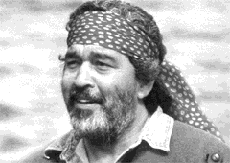
What a difference a blockade can make.
For two months in the spring, Haida and non-Haida alike blocked roads and halted major logging on Haida Gwaii.
The Island Spirit Uprising, as it was called, pushed the provincial government to begin high level negotiations with the Haida leadership.
The official agreement is still in the works, but when it all shakes down, say Haida leaders, islanders will see a significant drop in the annual allowable cut and the way resources are managed. The bear hunt will be halted and there will be a move toward eco-forestry.
"We're not done yet, but truly when is it done? I don't think there is a finish line," said Haida vice-president Arnie Bellis of a memorandum of understanding between the province and the Haida Nation.
That's the message audiences have heard in recent weeks in meetings, sponsored by the Council of the Haida Nation (CHN), in all communities of the islands. The meetings have featured a panel of Haida leaders, including president Guujaaw, Bellis and a facilitator, Gilbert Parnell, to begin the dialogue about change.
'Self-inflicted'
Big change is coming to this corner of BC, no doubt. The prospect brings worries as well as excitement to residents.
"At least it's self-inflicted change," said Tlell resident Lynn Lee at one of the recent public meetings, held in the island logging community of Port Clements.
Some like Lee are excited about the new possibilities for creating community stability.
"If we don't decide now and wait 20 years, we will have fewer options. Now we have a choice. It is not because we have no trees left to cut," Lee reminded those who were less sure at the jam-packed weeknight meeting.
The Haida will become a major license holder on the islands, with 120,000 cubic metres of forest land coming to them through the agreement with the province and there are further efforts underway to purchase the private and public lands in Brascan's (formerly Weyerhaeuser's) Tree Farm License 39.
Large areas of importance to the Haida including monumental cedar stands and archaelogical sites will now be protected. Just about anyone will tell you that logging on the islands will never look the same. Some have a smile on their face when they say it and others a frown.
But in the Haida vision of the future, there will also be a new focus on island economic stability, something people have been dreaming of for a long time.
Old issues, new plans
Go back through old issues of the local newspaper, the Queen Charlotte Islands Observer, and readers will find the same themes popping up over and over again.
Thirty years ago, in an editorial about land settlement, the paper asked questions like: do we have a right to share in the revenue from the resources on the islands and can we ever hope to rise above the local political in-fighting to better serve the needs of the people.
In the 1980s, before Gwaii Haanas became a park, the tumultuous fight for Lyell Island was on, and the South Moresby Planning Table met to discuss what this would mean to the resource economy of the islands.
Less than 10 years ago, the Island Community Stability Initiative tried to create a blueprint for a new forest economy. This ran aground when communities couldn't agree on what that would look like.
In 2004, a protocol was signed between the Haida and the communities of Port Clements and Masset, with the purpose of working together to design a future that will support a healthy environment and create a sustainable islands economy.
'Enough is enough'
At the blockade lines in March and April, people talked about the evolution of attitudes on the islands. Many of the older Haida men who manned the line every afternoon had spent much of their working lives as loggers.
These men can describe gargantuan Sitka Spruce they felled and dragged out to the sea only to be barged south. They witnessed the cutting of the old-growth along major river valleys on the island - the Yakoun and the Copper. They also feel most fiercely the slogan found on signs still posted at the blockade sites, "Enough is enough."
"If we'd tried this 40 years ago, someone would have come in here with a bull dozer and run over the whole show," said Dick Bellis, who used to be a heavy duty mechanic in logging camps before he retired and bought the local Sears outlet. He was standing at the campfire, surrounded by the temporary buildings, supplies and people that kept a blockade running through vicious spring storms, cold nights and much soul searching.
Many young Haida and non-Haida, joined the blockade as well, tired themselves of watching barges leave the island loaded with valuable cedar, while jobs are hard to come by.
Others, like a young man named Derek in Port Clements, left his family and the islands to seek work while the dispute went on. His employer, Edwards and Associates, which contracts with the forestry giant Weyerhaeuser, was most affected. More than 100 people were kept from their worksite behind the Port Clements line for the duration of the blockade.
He and others understood all logging was going to be shut down, but when he heard that Husby Forest Products, which operates further north out of Masset, shipped a barge off in the heart of the protest days, he was infuriated.
"If you were going to shut it down, why not shut it all down?" he said to the Haida panel. "It felt like it was just against our community."
Nervous entrepreneurs
The blockades also affected at least two locally owned businesses on the islands, both significant employers. These entrepreneurs expressed their unease at the coming uncertainty.
"What is the objective in the long run?" Jim Abbot, owner of Abfam Enterprises, a sawmill in Port Clements, asked Haida panel members.
He wanted to know whether the Haida intend to sell their new timber license or work it themselves with employees gathered from within the villages.
Or will it be left to sit and never logged, he queried.
To this Guujaaw replied that nothing is decided about how, operationally, the future will look.
"We don't have the machinery. We don't have a lot of things that we need. There is a lot we need to consider," he said.
Guujaaw indicated a resurgence of a local land-use plan, with a focus on strategies for the local economy, would help answer these questions. He hopes to see more secondary production on island, such as log home building.
The panel members also tried to reassure the room that the goals of the CHN are to maximize employment and create certainty of supply to entrepreneurs on the island.
'About people and families'
Still others at the meeting expressed fear about the long-term prospects for Port Clements and wonder who will be looking out for their best interests.
"The overall feeling in Port Clements is that we are going to lose the little bit of paradise we have," said Lisa Waring, who fears her family may not be able to stay in the area after the major employers and many of her neighbours are gone.
"I love living here. I would not live anywhere else. I want to be here until the day I die," she said.
For Guujaaw, Waring's reaction put the struggle into a focus that most can relate to.
"This is about people and families. We have the same concerns, you and I," he said.
Paul Pearson, a Haida from Skidegate, spoke about the people who have done well here over the years and how the Haida have not begrudged that.
"But I feel threatened too. By companies, government, all the people who come here," he said.
It is hard for anyone to understand the way they grew up, he added. "Talk about culture shock. I take my hat off to those who have helped us. We could all live comfortably yet."
Still others wanted to know how to keep the community stable while awaiting the new plan and looked for assurance there would be a transition period. Many believe the new Haida tenure is at the expense of the tenure available to small business people on island.
"Change is inevitable, but if we cut the flow too quickly we have a school to lose, a multi-purpose complex and many people in town," said Paul Waring, a Port Clements village councilor.
Bellis encouraged people to extend themselves and to come and talk with the Haida. "If you don't trust us, that is understandable. Trust is earned. Let's earn each others trust."
On a small island community with so many resources at stake, lines have been drawn in the sand before. One audience member asked with a certain amount of skepticism if what he was hearing is true.
'We are pro-good logging'
Is the CHN really saying it is now pro-logging and pro-tourism? asked logging road builder Dennis Reindl.
"We are pro-good logging and good tourism," Guujaaw replied. He also reminded people that even among the Haida, every opinion is being expressed.
"Anything from let's stop the logging, to let's do it all ourselves. We must strike a balance between ecology, culture and economy. Getting there is going to be an interesting ride."
Along with protecting areas of land, the Haida have also negotiated a halt to the local bear hunt. They hope to buy out the one licensee on island, but the owner has said, in no uncertain terms, that his license to shoot bears comes at a price which includes the luxury lodge he owns on the Tlell River.
Aware of how much work there is still to do, Guujaaw remains optimistic. Earlier, he spoke about the checkpoints and how important it was to take a stand.
"We must take responsibility for the future," he said. "People certainly stood up and did that. People did a great service to Haida Gwaii. History will show it was the right thing to do."
Tyee contributing editor Heather Ramsay lives in Queen Charlotte City. ![[Tyee]](/design-article.thetyee.ca/ui/img/yellowblob.png)







Tyee Commenting Guidelines
Comments that violate guidelines risk being deleted, and violations may result in a temporary or permanent user ban. Maintain the spirit of good conversation to stay in the discussion.
*Please note The Tyee is not a forum for spreading misinformation about COVID-19, denying its existence or minimizing its risk to public health.
Do:
Do not: