News

Enviros and Industry Ring Alarm over Great Bear Project

They fear government delay risks B.C.’s reputation and a $100 million investment in a complex Central Coast preservation initiative.

By Charles Campbell, 28 Apr 2005, TheTyee.ca

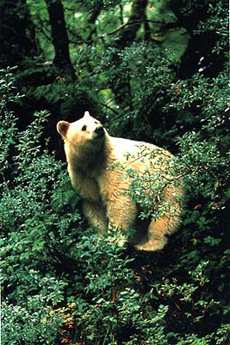
Spirit Bear

Key environmental movement leaders are speaking out about delays in establishing a comprehensive strategy for preservation, logging and development in the so-called "Great Bear Rainforest," after five years of quiet backroom negotiation.

Environmentalists, native groups, forestry companies and the government have been working toward a comprehensive plan for the region on the central coast of British Columbia. At stake, according to Merran Smith of ForestEthics, an international group that lobbies for both preservation and more sensitive logging, is a plan that would preserve 1.8 million hectares that includes between 50 and 75 watersheds, improve forestry practices, and create sustainable economic development in the region.

Smith, director of ForestEthics B.C. coastal program, said about $100 million in investment from foundations and private business is at risk because of the delay. She said it's hard to raise money for investment in the Central Coast, an isolated and economically depressed part of the province. And she fears other elements of the initiative may also unravel. "You can only hold a consensus agreement together for so long."

And in an April 12 letter to Premier Gordon Campbell, NorskeCanada president and CEO Russell Horner urged the government to move forward before the election, stating that the failure to do so might damage the forest industry in B.C. “I am writing to add the voice of our company to those you have already heard from to urge you to move forward … prior to the upcoming Provincial Election,” Horner wrote, in a letter obtained by The Tyee. Horner’s letter described NorskeCanada as the province’s biggest forest products customer, and the company is a key player in the Central Coast initiative.

Catherine Stewart, Greenpeace Canada forest campaigner and a key player in the process, said all the pieces were in place for a formal announcement on the Central Coast initiative. She expected that announcement earlier this month. "That's what we were told by people within government. We weren't being given guarantees, but we were being given assurances."

'Leadership' questioned

Last July, the government announced that it would move forward on the initiative, which began under the NDP. "I would hope we'd find a resolution in three to four months," Premier Gordon Campbell said at the time.

Stewart noted that the Liberal platform commits it to preserving habitat for the rare kermode "spirit bear" (which is being touted as a potential mascot for the 2010 Olympics). "It's the third time they've announced this. No conservancy, mind you. But they keep announcing it. It's very worrying that they're only talking about this one small aspect of the initiative."

Stewart said she is confounded by the delay. "We were all working to government-imposed timelines. We all worked insane hours … with the expectation that if we met the deadlines the government would act."

Smith said the complex, community-driven initiative represents a real breakthrough on land-use planning that brings together industry, First Nations and other interests. "I believe the government has failed to act because they're afraid of change." However, Smith wouldn't criticize Sustainable Resource Management Minister George Abbott, a key figure in the process who was recently endorsed for re-election by the Conservation Voters of B.C., along with Green party leader Adriane Carr and three NDP candidates. "This is a lack of leadership."

Stewart said the Liberal government's decision to roll back a consensus reached on preserving wilderness in the South Chilcotin after the last election leaves her worrying about the potential for a similar rollback should the Liberals win the May 17 election.

Forest companies want action

"All of the stakeholders who participated in the planning process are on board," she said, including native groups and key forestry companies, such as Interfor, Weyerhauser, and Western Forest Products. She allows that there are outstanding issues -- three native bands have unresolved concerns, and the exact nature of the protection areas has not been finalized -- but she said there will always be outstanding issues in a process as complex and comprehensive as this one.

Stewart told The Tyee that in terms of conservation initiatives this process ranks at the top of the heap in B.C. "[Temperate rainforests] are the rarest forest ecosystem on the planet," she said. "It's not just important for British Columbia; it's important in a global context." Smith noted that in Clayoquot Sound just six intact watersheds were preserved.

Stewart said the $100 million in money raised and pledged for economic development comes from private companies, philanthropic foundations, and socially responsible investment funds. "We've been raising that money for some time. They can't act until the government acts," she said, explaining that at some point that money will be directed to other projects. She added that there is a tentative commitment of an additional $30 million from the province, and she hopes the federal government will match that amount.

A coalition of Greenpeace, the Rainforest Action Network, the Sierra Club of Canada and ForestEthics has been relatively silent about the issue until today, when they released a "report card" critical of the B.C. government. "We committed to a peace accord -- no blockades, no markets campaign." In return the groups won a moratorium on logging in key areas being considered for preservation.

Markets will be informed

Now, however, that accord is fragile. Will the groups take aggressive action? "Not yet," said Stewart. But she added they intend to notify businesses that purchase B.C. forest products, such Home Depot, of the lack of progress.

The report card also said new logging protocols that the forestry companies have committed to aren't being employed in Central Coast forests currently being logged.

Bill Bourgeois, project manager for the Coastal Forest Conservation Initiative, which represents five forestry companies with economic interests on the Central Coast, says the industry is working to address those concerns. "Some areas have been approved under what you'd call the old system," he said, arguing there are always people who want things to change more quickly than is practical.

However, he acknowledged the industry's own frustration with the government's inaction. "We would like to see things move forward quicker than they have," Bourgeuis said. "We had worked with others to encourage government to make an announcement."

Government has 'own issues'

However, he said government has its "own issues." He said these include negotiations with First Nations and greater clarity regarding "ecosystem-based management." "This is a complex issue. This is quite a change."

Bourgeois said he doesn't object to the environmental groups informing the forest-products marketplace of the lack of progress, but adds that he doesn't believe the Great Bear Rainforest process itself is in peril. "Government has indicated to us that they will be able to make a formal decision by August or September."

Stewart said that while three bands do have concerns, they would support an announcement if they have a letter of agreement on the process for dealing with those concerns. She said any initiative as complex as this requires that those involved commit to a process for resolving details, and that agreement would be impossible otherwise.

Smith and Stewart insist their public criticism of the government is not mere electioneering in favour of Liberal opponents. Both carefully state that the environmental groups are trying to extract a commitment to respectfully complete the Central Coast initiative from all political parties. And while Stewart says doubts about the Liberals' good faith are mounting, she remains committed to the process.

Art Sterrit, a representative of the First Nations of Turning Point initiative that represents native groups on the Central Coast, could not be reached for comment. Ministry of Sustainable Development communications director Mike Long declined to comment, saying that would be inappropriate during an election. Representatives of the BC Liberal party did not return calls regarding the issue by deadline.

Charles Campbell is a contributing editor to The Tyee.  [Tyee]

13  Comments:

Login or register to post comments

  • seriousjim

    7 years ago

    Comments on "Enviros and Industry Ring Alarm over Great Bea

    This agreement marks a big leap forward as an example of what sustainable development might look like in practice.

    As Native land claims can show, it is possible for governments to drag sticky issues through the courts for generations. Do not tolerate the dragging of the heels, those boots were made for walking.

    Government is good at delaying tactics, punting political footballs on to the next administration while pretending they are doing something about it. An independent media can assure that the spotlight does not turn away. Kudos to the Tyee for that.

    It is odd that a bargaining chip of Greenpeace is the ability to cease media campaigns. Who says the culture can’t be jammed? I guess it can if business is willing to deal in order to make it go away. That is a victory in itself.

  • Coyote

    7 years ago

    Quote:
    "An independent media can assure that the spotlight does not turn away. Kudos to the Tyee for that."said seriousJim.

    Good post, Jim. Another variant of that Freedom of Invitation, Free/Corporate Press, story currently working it was through a number of different angles on Tyee.

    I mean, what the Hell did we do for a free, balanced and objective media before there was Tyee. I mean, the Stone Age Media is still with us, but pre-Tyee it was ALL Stoneage.

    Our Brownshirts here are a demonstration of that: We even allow the Stone Age in politics in here. And well we should, as they move towards extinction.

    No need for names. :-) They know who they are. :-D

  • KWD

    7 years ago

    This story isn’t new. Essentially it’s a recasting of eco-econo-politico stage plays that featured in the ‘60s, but with a cast of different directors and different actors. Unfortunattely, they never made it much past the first curtain call then, and today’s billing is bound to become no more than just another tragicomedy.

    The story of the Land of Sustainable Economic Development simply doesn’t have a believable script. It’s oxymoronic. It’s like a sexual predator telling the victim not to worry; somehow the condom will make rape less harmful.

  • sirjohna

    7 years ago

    "I mean, what the Hell did we do for a free, balanced and objective media before there was Tyee."
    wow! now that's outside the box. laugh my ass off. no fool like an old fool dogman.

  • touchwood

    7 years ago

    The GBR story should have been an apology from the referenced enviros for wasting precious time and blocking public consideration of more serious GBR conservation initiatives such developed by Suzuki, Raincoast and Valhalla. They should be apologizing for their idiotic optimism that participation in a strategic PR initiative to greenwash the coastal forest industry could be translated into anything other than further privileges and subsidies for a coddled industry. But there is one positive outcome to these naive enviros quitting the field. Nothing other than the forest industry's perverse addiction to old growth timber will now stand in the way of forcing it to survive entirely on the second growth forests that now owerwhelm the landscape. Old growth forest liquidation and conversion forestry is finished in coastal BC if we can now stop government from subsidizing this perverse industrial addiction. The end of industrial logging of coastal old growth is the end of the privilege of profitable timber value-subtraction. When industry can no longer profit by subtracting value from timber we will see a resurgence in value-added processing and an affirmative market for log and lumber processing opportunities. The real environmentalists wanted to bring this about while there was still some old growth forest left. Maybe its not too late right now.

    Touchwood/

  • ingkhai

    7 years ago

    Big Industry & Big Enviro Embedded in BC

    Ingmar Lee

    Special to the Victoria Times Colonist

    April 14, 2005

    Last week, The Land Conservancy and the Capital Regional District announced that the much-beloved Sooke Potholes had been protected forever in a 156 hectare park. Meanwhile, on that very day, directly across the Sooke River, TimberWest fallers were mowing down 40 hectares of spectacular ancient Douglas fir forest, all the way down to 10 metres away from the most fabulous stretch of Potholes.

    Two weeks ago, the Campbell government and American logging giant, Weyerhaeuser announced that 140 hectares was being added to Cathedral Grove park. Not mentioned: most of the acquisition is a logged-out stumpfield, basically a tax-burden wasteland for Weyerhaeuser, now unloaded onto BC tax-payers.

    What's wrong with this picture? Southeastern Vancouver Island's ancient fir forest has been 95% exterminated in 150 years of logging. The second pass is even more voracious, with Weyerhaeuser and TimberWest logging 30 year-old trees to supply their scandalous 1,000,000 cubic-metre raw-log exports annually. Deer populations are down 80% in the last decade, salmon runs are at a trickle and Canada's most endangered specie, the Vancouver Island marmot is virtually extinct, while wolves, cougar and Golden eagles take the blame. Does anyone care about Vancouver Island's fir forests?

    Well, not our biggest professional environmental institutions, namely Greenpeace, the BC Sierra Club, Forest Ethics and the Rainforest Action Network, known collectively as the Rainforest Solutions Project (RSP). Vancouver Island was abandoned for a behind-closed-doors deal with the logging industry over the 'Great Bear Rainforest' (GBR). In spite of an independent scientific panel conclusion that 40 - 60% of the largest remaining tract of temperate rainforest must be protected, RSP has settled for just 21% of the GBR. RSP members won't criticize Weyerhaeuser, Interfor, Canfor, Norske Skog and Western anywhere else in the province in exchange for the deal. Which explains what is happening to our island.

    The logging industry has done their homework and has been reading from Burson-Marstellar-type PR manuals about "How to Co-opt your Pesky Local Enviro-org" and they are following the advice to the letter. The results are astounding. Last year at Weyerhaeuser's AGM, CEO Steve Rogel flashed up the RSP member logos on his power-point, describing them as "Weyerhaeuser's BC Partners." Last week, RSP members stooped to accept a "ForestLeadership Award" at a gala Toronto event key-noted by the notorious logging and fish-farm apologist, Patrick Moore himself. This week, the Conservation Voters of BC, which is advised by senior members of the same groups, endorsed SRM Minister George Abbott, apparently for his services on the GBR file. Anyone watching BC's enviro-scene knows that Abbott is as green as an oil slick.

    Compromise-collaborationist environmentalism is taking British Columbia by storm. Big Industry and Big Enviro are firmly embedded. BC's professional enviro's stand by on the sidelines and watch while volunteer grass-roots citizens take action and do the dirty work. Charitable status, agreements with funders and backroom arrangements with industry preclude involvement by BC's environmental institutions in any direct action or civil disobedience. Now they await the final fate of their GBR deal.

    Campbell's environmental record is in the toilet, but shovelling money just isn't greening up what's in there. People know that the global ecological catastrophe is driven by his style of government. He badly needs a green announcement. Will Gordon Campbell buy into the Great Bear Rainforest compromise as yet another pathetic pre-election goody? Will he be endorsed by the Conservation Voters of BC?

    Meanwhile, demoralized, horrified and heartbroken BC nature lovers look north with admiration to Haida Gwaii, where Guujaw and the Haida Nation, with widespread community support are demonstrating exactly what it takes to expunge our province of the Weyerhaeusers and TimberWests of the world, and their government lackeys. Three cheers to the Haida! Would that we had that kind of leadership.

    Ingmar Lee is a Student of Asian and Environmental Studies at UVic. He has planted trees in BC's coastal clearcuts for 21 years.

    Backup referrences:

    RAN statement on GBR:

    http://www.buygoodwood.com/greatbear.html.

    RSP GBR website:

    http://www.savethegreatbear.org/

    Conservation Voters of BC website:

    http://www.conservationvoters.ca/31.3

    ForestLeadership Awards:

    http://www.forestleadership.com/article.php3?id_article=89

  • freebear

    7 years ago

    I think that some enviros and some preceding comments are forgetting the fact that the Central Coast Land & Resource Management Plan must work for the First Nations.

    Regardless of what kind of development takes place, First Nations should see some of the benefits. Up until now, millions of dollars have been gained from the resources of the Central Coast, but little has gone to First Nation communities. The goal of self-governmnet is not possible without that government having a source of revenue-just ask any municipal Mayor and Council.

    I also do not think that the philanthropist money from the United States is something to crow about, or use as a negotiating ploy-my understanding is that those dollars have "strings" attached.

    As long as society accepts the premise that sustainability includes growth, and that growth will be fuelled by fossils (fuel that is, texas tea .... and that the fossil fuel supply is limitless; we will continue to see degraded ecologies.

    Our impact on the land, air and sea will only lessen when we learn our lesson and run out of fossil fuel. Only then will "we" realize that "our" way of life was not sustainable. Of course by then for many it will be too late.

    Ask yourself, whatever the plans are-whether to harvest trees or protect them and bring vistors there (i.e. ecotourism)-are the plans based on the assumption that gasoline will be 0.90 cents a litre in 5 years?

    freebear

  • tommymoore

    7 years ago

    First Nations' interests are exemplified by what has happened in the Naas. Logging the hell out of it. To believe that the indians would be in any way better stewards of the land is asinine. It's all about money. Ecology be damned. Vote Lieberal.

  • crh

    7 years ago

    "no one owns their land, they simply borrow it from their grandchildren"

    Weyerhauser is the most morally corrupt rapist in North America, and must not be allowed in any more BC forests.

  • dfp

    7 years ago

    In my mind, for what little it's worth, the singlemost defining characteristic of this government is it's ability to discard concensus-based resource-sharing agreements. I've seen a slew of such agreements LRUPs, recreation accords, and the like, all getting tossed.

    I can't tell if it's because the government gets a kick out of screwing people over, or if it's scared to set a precedent where decisions aren't based on an exchange of favours. Or perhaps it's simply that they're afraid to be compared to Mike Harcourt who was quite good at concensus-based progress.

    And I have to say, looking to the Times Colonist for your pointers on how to improve environmental practice, is, well, funny.

  • anne cameron

    7 years ago

    Sad, but tommymoore has a point. The colour of a person's skin and hair is no guarantee of any particular type of ethic. We do tend at times to paint a patina of romanticism on all things "first nations". Most first nations adults are about eighty to a hundred years away from the original culture. For most of that time they have been harrassed by not always polite urgings to "get a job, ya welfare bum". The residential schools guaranteed generation after generation would in no way be educated and equipped for work as rocket scientists or brain surgeons and for years, even generations , it was against the law of our fair land for "them" to be employed in certain professions, trades, or industries. Most were educated only to be a vast pool of cheap manual labour. Throw in fifty or sixty years of every possible kind of abuse of children, add some incest and substance addiction, and you can hardly claim to be sane if you expect an overnight turn-around and for the survivors of genocide to suddenly become OUR saviours.

    As my thirteen year old Moachat grandson would say "Get a grip, eh?"

    The Haida have been working steadily since before the Lyell Island blockade to overcome the crippling burden placed on them by the missionaries and government lackeys. Their stand today is not a flash in the pan but a very carefully thought out and well planned politically savvy move. Their analysis is flawless.

    And it is downright stupid to expect that all of a sudden every brown-skinned person is going to share that analysis.

    Today's adults were trained not only in Residential concentration camps but they were carefully coached by DIA to follow a particular type of political system which has bugger-nothing to do with traditional culture. The present band council set-up is at best flawed, at worst corrupt and it is no accident. Helpful young non-native "consultants" made sure the political setup would be a mess. Our government paid those guys in suits to ensure that mess.

    We can all trot out examples of horrendous logging done by native crews, bands, and nations. We have no dearth of horror stories about fish poaching, illegal sales and downright waste.

    Too many people yelled "get a job, bum". So they have them, in dying industries where they are the last hired and first fired.

    Yeah, probably the Nass is being clearcut in a shoddy manner. About forty years ago most of the Nass was felled and the majority of what was dropped was left on the ground, only the best was high-graded. The logging company forester who was in charge of that was made Minister of Forests by the Social Credit government.

    Nobody is going to save our bacon for us. If we want action we have to be willing to take action.

  • kent

    7 years ago

    It seems sirjohna has the same problm as his namesake, too much of the bottle.

  • Aargh

    7 years ago

    What amazes me about the whole GBR debate is just how much criticism the Rainforest Solutions Project or enviro coalition gets for its tactics and the work its done. How many people whining in the Lower Mainland have sat through umpteen hours of land-use planning committee meetings? Dull, divisive, consensus based meetings? How many other enviro groups have worked to save THAT much forest and that many number of watersheds (somewhat, thanks to the Liberals stalling) successfully? Consensus agreement among these diverse actors (logging companies, enviros, First Nations, fishers, hunters, miners, other industry, community members, and government) is going to result in a strong agreement but one that has some shortfalls to all groups involved. I would argue too that this agreement for the GBF isn't the end of the story but a beginning on the road to preserving even more of it. For those critical and bitchy about the enviro side of the agreement, get off your butt and sit through your own land-use planning agreements, come to the sparsely populated northwest and devise your own 'agreeable' advocacy tactics, and vote for an agreement that will at least preserve SOME of the coastal forest.

    • No best comments selected by an editor for this story yet. To see all comments, click the All Comments tab, above.
    • The discussion for this story is closed. No more comments can be added.