News

Wanted in Rural BC: Politicians Who See Potential

Cuts sent small towns like Lillooet and Wells reeling, but researchers see value there.

By Chris Tenove, 26 Apr 2005, TheTyee.ca

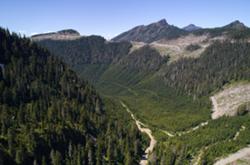
Hwy 26

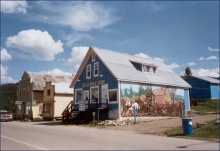
Outside of Wells. Photo: A. Beach; www.bcphototours.ca

Second in a two part series. Read the first here.

Kama Steliga has some good things to say about the BC Liberals. Steliga, the executive director of the Lillooet Friendship Centre, applauds the premier’s attention to early childhood education, for example. Lillooet now offers a limited amount of free pre-school to anyone who wants it.

But over the past few years Steliga also has seen an increase in use of Lillooet’s food bank to 300 people a month, about 10 percent of the town’s population. She’s seen an elderly couple suddenly lose their benefits and try to survive on a combined income of less than $370 a month. She’s been told that because Lillooet has fewer than 5,000 people it cannot have a problem with homelessness, making the town ineligible for related funding. “Tell that to the people living under the bridge outside town,” she says.

Like a lot of people in Lillooet and throughout BC’s rural regions, Steliga is strong on self-reliance, but shaken by the severity of cuts to her community’s hospital, schools and social services.

“I really believe in the Liberals’ motto ‘Communities taking care of communities,’” she says. “But the cuts took away our ability to do that. They were too deep, too broad, too fast, and without enough forethought. There just didn’t seem to be any kind of humane strategy to deal with social health.”

When the BC Liberals were elected in 2001, did they have a strategy for rural British Columbia? The party’s “New Era” campaign platform made few references to small town issues, aside from assurances that they would get the “health and education services they need.”

Rural issues briefly seemed to take precedence in early 2003. The Throne Speech, while making no mention of the bruising year that had passed, unveiled the Heartlands Economic Strategy. The term “heartland” – borrowed from the American political arena – was sprinkled across the province like confetti. Jim Beatty of the Vancouver Sun noted that on February 18th, “Kamloops MLA Kevin Krueger used "heartlands" 32 times in a single speech, proudly declaring himself from the heartlands, an advocate for the heartlands and a defender of the heartlands.”

How well has the “heartland” strategy been received? Just try saying the word in B.C.’s Interior or North and see what response you get.

‘You Flatbushers’

“Don’t you dare call us the heartland,” an angry citizen of Wells told me one night in early November of 2003 as we sought warmth in the orange light of the Legion Hall. “All you down in Flatbush,” the fellow growled, using a term he had coined for the Lower Mainland, “you Flatbushers just rape and pillage small communities!”

A local mining engineer joined in. “You see, when you write a column for a newspaper, it adds no value to the economy,” – ouch! – “but if we go out and extract minerals or timber, that’s different. We’re keeping this province alive.

“But people in Flatbush,” he said, savoring the new word for a moment, “reap all the benefits.”

It was easy to understand their frustration. Wells was struggling, and now its elementary school was slated for closure.

Quite a few B.C. towns have faced the same predicament. Since the 2001 school year there have been 113 school closures, most of them rural. District school boards have shut down schools in response to declining enrolment and tight resources. Rural schools receive provincial funding on a per-student basis, and enrolment has fallen by 26,000 over the last three years. Despite these constraints, a task force commissioned by the Ministry of Education in 2002 recommended that schools are the “heart of the community” and they should only be closed as “a last recourse.”

“The rural school represents more than a place for the children to be educated,” the report said. “In many ways, it also represents the right to preserve a rural culture and a viable economic development plan.”

Around the province, communities have taken desperate attempts to save their schools. In Forest Grove, angry parents occupied their school through to mid summer 2004, after the school board ordered it closed. In Wells, the Mayor, Dave Hendrixson, went on a hunger strike. Hendrixson is in his seventies. After 33 days of juice only, and 35 pounds lost, the media came. They rang his phone, they took pictures. Wells was on the map.

Of course, media success is not a victory — it’s a bargaining tool. Wells struck a deal and bought the school off the province for $1. They now pay building costs — over $10,000 a year — and the school board agreed to pay one teacher’s salary. It’s been a real struggle to keep the school, District Councilor Judy Campbell told me, but it’s worth it. “I don’t want Wells to become another of one of Gordon Campbell’s ghost towns.”

Squinting into the future

Here is one vision of rural British Columbia’s future: The young, educated, and upwardly mobile continue to trickle out of the hamlets and resource towns and into the cities. The people who remain tend to be impoverished, poorly educated, and elderly — those who don’t see the shining opportunities of urban life. Resource exploitation continues but the workforce is seasonal or housed in temporary work camps. They don’t spend much money in the local communities. Most industry profits flow to the Lower Mainland or to corporate headquarters outside the province. Some small towns boom as resort destinations or retirement idylls (think of Tofino and Chemainus) but many others become increasingly poor and desperate, slowly shrinking and then disappearing.

There are advantages to this situation. Public services can be delivered more efficiently in urban areas, due to economies of scale. Also, when people are packed into denser communities their per capita ecological footprint tends to be smaller — residences are generally tinier, public transit is possible, heating is more efficient. And cities these days are vibrant places of multicultural swirl, technological innovation, and the opportunity to find your own niche to inhabit. After all, more than half of British Columbians have chosen the metropolitan life.

Why, looking at the big picture, should we worry about the loss of small town life?

“That’s a question that could only be posed under the current political conditions, and I think it indicates our tremendous poverty of imagination,” says Bruce Milne, a former mayor of Sechelt and professor of political science, now collaborating with the University of British Columbia on a five-year study of coastal communities.

Milne argues that our society would be impoverished by the loss of small towns and the sensibilities they cultivate. When you live in a smaller community, he says, you are forced to see yourself as dependent upon and integrated with other people. You can’t become as specialized or niche-bound as cities allow. In fact, he believes that Canadians deserve the chance to choose among a diverse palette of lifestyles.

“We can be more of ourselves if there are more options available,” he says. “It’s not just about giving small town citizens the chance to go be doctors and lawyers in the city. It’s also about giving the children of those doctors and lawyers the chance to go back to the country, to cut down trees or fish or live in a quiet place and write poetry for a living.”

The key is diversity, says Milne. Smaller communities provide alternatives to cities in terms of political organization, economic activity, social networks, lifestyles, values, and ways of interacting with the natural world. “A society with diversity will always be stronger than a mono-culture,” he says. “It’s more resilient to change.”

A case for small towns

There are also strong economic arguments for small communities, says Greg Halseth, the Canada Research Chair in Rural and Small Town Studies at the University of Northern British Columbia.

“There are lots of ways that business can be done more efficiently in small towns,” he says. These go beyond having a stable workforce for resource extraction. Improvements in information technology allow companies to locate production and management components all over the world — the most obvious example being the call centres that pop up everywhere from Bombay to Scarborough to Surrey. Compared to cities, small communities offer lower tax rates, property values, and commercial rents.

To make use of these advantages, however, small towns need to attract and retain dynamic, entrepreneurial, well-educated residents. That shouldn’t be impossible. When Halseth asks his students to identify the best characteristics of small towns, they list the old standbys: “safe”, “friendly”, “strong sense of community”, “good place to raise kids or grow old”, and so on. Then he tells them to look at the Real Estate section of the Vancouver Sun — advertisements for suburbs and housing developments use the exact same qualities to lure homebuyers.

“Rural places have these desirable elements — and these are also marketable elements at the start of the 21st century,” says Halseth.

But to attract and keep citizens, you need services, amenities, and infrastructure. You need fiber-optic cables and decent roads. You need programs to help the community’s poor, disabled, or unfortunate. You need recreation centres, decent health care, and high-calibre, dependable schools.

“It’s not like Bella Coola expects to have a heart surgery unit, or that every town should get a university,” says Bruce Milne. “The problem is that services have been withdrawn very quickly, and without real consultation or accommodation of the people affected.”

Feds rethinking their cuts

Service cuts did not begin with the Liberals. Provincially, services declined under both Social Credit and New Democratic governments. But they really started in the early 1980s with the federal government — many will remember the great Post Office debates of that time. But in recent years, says Greg Halseth, the Canadian government has come to realize that many of these service closures weren’t economically efficient. They’re now trying to find innovative, cost-effective ways to re-introduce services.

Gordon Campbell’s cutbacks were not only more sudden than those that came in the past, they were also magnified by other policy changes. Large tax cuts and service reductions tended to reward well-to-do urban-dwellers and punish the poor and the rural. Changes in land use policies have made it more difficult to keep some profit and capital in small communities rather than metropolitan centres.

“What surprises me is how mean-spirited they’ve been,” says Paul Bowles, a professor of economics at the University of Northern British Columbia, speaking of the BC Liberals. He points to the reduction in minimum wage (the “training wage”), the changes to welfare, the closure of women’s centres and Legal Aid programs. “All these things have been hitting the people who are most insecure in the work force and in society. My view is that the costs of this strategy have been born by those who can least bear it, and the benefits have gone to people with high incomes.”

Even if we could afford to put a shiny new school and hospital in every hamlet — and no one suggests we can — there are other issues to tackle. Smaller communities need to develop their own strategies to exploit their assets. There needs to be a demographic shift in small towns so they come closer to reflecting the overall Canadian picture, including education levels and cultural diversity. And there needs to be a rehabilitation of the image of small towns — away from their frequent depiction as narrow-minded, insular, and career cul-de-sacs.

Even with the enthusiastic support of the provincial government, the revitalization of rural British Columbia is a daunting task. And small-town British Columbians recognize their precarious existence. As I travelled throughout northern B.C. and the Interior, I asked people whether they preferred to be called the “heartland”, the “hinterlands,” or “rural B.C.” Over and over I heard the self-deprecating remark:

“Why don’t you just call us 'beyond Hope'?”

To read ‘Hard Feelings in the Hurtland,’ the first of this two-part series, go here.

[Ed. note: a change has been made above to the reference that the Forest Grove school occupation was attempted in 2003. This was incorrect; apologies for the error.]

Chris Tenove is a contributing editor to The Tyee. This article was adapted from his chapter in Liberalized: The Tyee Report on BC under Gordon Campbell’s Liberals.  [Tyee]

21  Comments:

Login or register to post comments

  • BC Mary

    7 years ago

    Comments on "Wanted in Rural BC: Politicians Who See Potent

    Politicians can set policy in motion without understanding the consequences.

    Amalgamation, for example. Why not remove the boundaries between a few suburbs, put them all together under a single mayor and council with only one set of services ... oh, the taxes we will save. That's what Toronto thought under Premier Mike Harris. Didn't happen. Costs went up, not down. Dissatisfaction went up. People were downright livid.

    The former aide to that Conservative Ontario premier with his "Common sense revolution", now considers Toronto's amalgamation to have been a mistake.

    Guy Giorno — the brains behind the Harris regime and now a Bay Street lawyer — recently described amalgamation as both "bad public policy" and "bad politics."

    It is bad public policy because, far from producing more efficient administrations, it actually drives up costs, he said.

    And it is bad politics, at least for a Tory government, because it alienates small-c conservative voters in suburban and rural areas, he added.

  • BC Mary

    7 years ago

    The conclusion.

    It should be the people who decide upon changes to their communities -- not some Patron Saint who thinks he knows what's best for others.

  • anarcho

    7 years ago

    Exactly Mary! And we have to work toward some method whereby communities CAN decide their futures for themselves rather than have it decided for them by corrupt and authoritarian politicians, CEO's and bureau-rats. I would suggest decentralization plus a financial guarantee that makes these communitie's services viable, coupled with some form of local direct democracy.

  • peechie

    7 years ago

    I lived in the nearest small town to Vancouver (Hope) for a number of years. During that time, as resource based employment was dwindling, there was a proposal to open a destination Resort/Casino on a First Nations reserve just outside of town (yes, gambling has its own issues - they're not what I'm talking about here).

    Despite acceptance from town council and many of the "younger, well-educated" residents, the Mayor chose to side with the "con" group of residents and veto the motion. The Con argument was that not only would it introduce and increase the issues of addiction and prostitution in the community, but it would also be overrun with "tourists" who would obviously ruin the tranquil nature of the area. As a result, no new jobs were created, no new money made its way into other community businesses, no new tax revenue came in.

    Before we can begin to combat the current view of small towns,

    Quote:
    their frequent depiction as narrow-minded, insular, and career cul-de-sacs

    these small towns need to step up to the plate and take responsibility for what they can or can not do to help the community help itself. Guess what my family ended up doing when there was no resource work left? With no further opportunity to make a living or a community contribution, we left. For "Flatbush."

    Resources won't last forever, and things won't always be the way they've always been. Until small towns accept what they can't change, and work with what they can, no amount of "help" from the "flatbushers" is going to make a difference.

  • Frank

    7 years ago

    Unless all the towns outside the GVRD separated from BC en masse. Then they could indeed have gov't services located outside the GVRD and they could also keep the royalties from their resources.

  • Coyote

    7 years ago

    Busy, busy, but have to say that I agree with those who say, or have it suggested in their ideaa, that the problem is not so much a need for "politicians" who see the potential of rural areas, as it is a need for "folks" in these areas to begin those "regional movements" that will drive new, community centred agendas to improve their lives and control of the resource and land base. (Yes, I know what I'm saying ties in with what anarcho and Peter D. have been advocating all along.

    This election may help to finally demonstrate that, but it's clear, the politicians and party machines that wind up genuflecting and beholden to the corporate oligarchy's view of the economy, democracy and "the provincial/national interest, from rural or urban areas, are part of the problem. If it isn't entirely clear, it is being made steadily more so, and really listening to Carole James should be helping to drive that point home as well.

    It's a tough one, and a big leap I know, but rural folks and communities need to face that real lesson of the current neoconservative (Liberal Fascist) period, and build comminity and regional based "people's movements" that will work for and facilitate their securing collective control of their own economic future, frankly, by wresting it away from the great corporate conglomerates that have ripped, raped and run across their lands and resources, white folks no less that native folks, and are now about to finish the rip-off and leave them sans resources or futures, save impoverished options. All with the assist of whoever is in Victoria.

    Time to move kiddies. In the relationship between urban and rural, the rural areas are the feminine, the source. Time to learn that and understand what it means, and take control of your own lives and bodies economic and politic. And there ain't a drap of sarcasm or grandstanding in that statement. It's just the truth.

    We are never going to see forward movement or stabilization again in our rural communities, until rural folks get it, organize, and take charge of their communities, resources and regions.

    Fuck the ruling class and their politicians.

  • anarcho

    7 years ago

    Coyote sez "Fuck the ruling class and their politicians."

    I second that motion.

  • lynn

    7 years ago

    I think it would make a great bumper sticker.

  • lynn

    7 years ago

    ...or the motto for a new Charter.

  • Peter Dimitrov

    7 years ago

    Coyote...you say it with such vivid f**king 'panache'...and it is entirely true....what you have said in this thread....we need to throw out the existing 'rule' book written by those who've got way too much money, power, resources, political access, and commence the writing of 'new rules'....a new frame...and in my mind there is no better place to start then somewhere out there beyond the disconnected super- urban craziness of the 'coast', way out of Victoria/Vancouver ....with a parley between First Nations folks and the all the rest of ye that live in the 'interior'. ...indeed, a regional movement say on Vancouver Island or the Kootenays whereever the 'conditions' are ripe. Lets watch how this election goes down...then time for a parley, what d'ya say?

  • Coyote

    7 years ago

    Now, you guys know I love ya, right?

    Yes, time for a parley.

  • Coyote

    7 years ago

    But let's watch. Because part of it is about correct timing.

  • anarcho

    7 years ago

    Did you say party? When? I'll bring the beer.

  • Frank

    7 years ago

    No one is going to throw out the existing system of laws unless they're in power. And no one is going to get in power if they campaign on throwing out the existing system of laws. Especially if its anti-property. To have any validity, BC would have to separate from Canada so that it could in fact be free to toss out its current system assuming someone could get elected on both those platforms.

  • Coyote

    7 years ago

    Where I leave much of 19th and 20th Century Marxism and especially, Marxism-Leninism, and yourself, Frank, is in this acceptance of the infallibility and absolute importance of "State power". I'm not saying politics, parties, and state power will play no role in dramatically changing the prospects of the future, merely that I think the possibilities, especially within relatively "advanced" capitalism are greater than the hisorical experience has tested, or that "classic" , often ideological straight jacket has allowed for.

    Electoral politics has not thus far within "advanced" capitalism changed the essential inequitable dynamic that drives it, for sure, and shows no interest of or signs of intent in the currenty time.

    More important than the role of the state or parties, I think, arising out of a lifelong personal analysis of the record, is what the great mass of people decide to do and not do, under the pressure of, primarily but not exclusively, economic pressure, effected by many elements operating in the modern world, from the environment to the eventual collapse of the US Empire, probably out of events in the Middle East.

    So, in short, I don't think every possibility has been tested by the historical record, not by a long shot. And I am not impressed by the record to electorally alter "essential capitalism". (Though like I said at the beginning, nothing should be ruled out as playing a possible part.)

    What is clearly essential to be done however, is to rely more upon and encourage the organization and action of "the people", as opposed to mere politicians and their political machines.

  • Frank

    7 years ago

    What I'm saying is the state is here now. It exists. There is no way to do poleconomy divorced from the state.

    To run an economy and related political grouping outside of the state and its economy and laws would be nice but its not dealing with the problems of the here and now. I can only see such a polital sphere being able to operate in the aftermath of the end of a state and only as long as a new state doesn't intervene.

  • Coyote

    7 years ago

    Okay, the State is here now.

    To get rid of it, keep playing its electoral game?

    The logic escapes me.

    It is not necessary that the Capitalist State or any State absolutely be or not be. The issue is, how to influence it, maneuvre around it, separate it off from its loyalty/obedience to the ruling class, and wither it away through, alongside and/or in the course of evolving an alternative "People Power".

    Your thinking, in my view, is much to straight line and mechanistic. And influenced by past revolutionary and reformist theory and practice, which I think, too has to evolve.

  • Frank

    7 years ago

    Why is it necessary to get rid of the state?

    In a nutshell, I think this is the wrong time to walk away from electoral politics. Change is happening. There's no need to give up on electoral outcomes. Now a provincial election victory is not going to make any big change regardless of who wins. But real change doesn't happen on election night, it happens slowly over time in response to pressure.

    The present system is unsustainable. There is no way in creation things can continue on this path. Very few people of any political persuasion are not concerned with the present situation. Too many people, too few resources, grinding poverty, rising energy prices, falling supply and on it goes. I can see why people hope that somehow they can vote to restore the way things used to be. And I can certainly see why people would try to sell them that to get elected. But people aren't blind and deaf. They can see and hear what goes on. Their initial response may not be "progressive" but they can't be unaffected by it either. Over time they may still latch on to the same old parties but those parties themselves will inexorably be forced along a more progressive path because in the end people have to deal with the world the way it is, not as they wish it to be.

    The Chicago school of economics is ascendant right now but that won't last. I see it as more of a last gasp by the old order that won't survive the next major energy crisis.

    Same with the financial sector. How many times will taxpayer's bail them out? How many more Long Term Capital crisis will there be? How many nations will hit a debt wall and will agree to the same IMF formula that has failed consistently in the past? Already there are other states that are looking for a solution different than the one the IMF types would like.

    I just see no reason to separate from a system that will become more progressive on its own given the socio-economic pressures on it that will not go away. So yes, electoral politics matter because it serves as the arena of debate. Its how new ideas are exposed to people. And progressive ideas win out more often than not as they get adopted by so-called "right-wing" parties. Doesn't matter how many times you invade Iraq there is no way to put oil back in the ground, bring back lost species or make global warming or the disenfranchised go away.

    New ideas are required. Neither the left nor the right has the answer to all the problems. But hopefully, the arena of electoral politics will slowly generate those answers as needed. Sometimes the right will win, sometimes the left but the centre of the debate itself will constantly be shifting along a more progressive path just as it has for most of the past 150 years except for the odd hiccup. So I believe engagement, not isolation, is the only possible way of overcoming the growing problems that confront us.

  • Coyote

    7 years ago

    Frank, we have some fundamental differences.

    Ignoring for the moment, the issue of the State, in fact, historically being an instrument of one class's rule over others, or another, because we are not in a place historically where I really think that is about to be immediately challenged. And ignoring right now that there are conceivable alternative forms of "directing" society than through the vehicle of a State per se, for essentially the same reason.

    The problem vanguardists of the social democratic (NDP), school of thought especially have is, in practice, with them it is either one or the other, reflected in your own piece above. One puts all one's eggs in the electoral State basket, or one does not.

    And I suggest to you that has been the great historical failing of social democracy as an ideology and political movement across most, certainly its recent history: It has failed to sufficiently understand the role of organizing masses of people and helping set them into motion in defence of their own interests (other than as a tag along afterthought, when they (social dems) are dragged along by events, or when it serves their own electoral agenda). As a consequence they have failed to help build a sustainable, larger "movement" environment for either themselves, or to unselfishly assist folks to develop their own power base to influence and control the economic and political events that effect them, regardless who is in "formal" State power.

    So, to cut to the chase, I certainly do not entirely rule out all value of electoral politics, even within current ruling class controlled and manipulated democracy, to which all parties, in greater or lesser degree, bend and obey the written and unwritten laws of capitalist class rule. I simply DO NOT see that process as THE ONLY or even THE PREFERABLE avenue through which, in the end, working class folks will fundamentally change the circumstances of their lives, or secure any real or meaningful POWER, in which they have any hope in hell of playing a more significant part, other than as mere Xs on a paper ballot. (And I concede, that which is, four year dictatorial terms, is preferable to outright Fascist dictatorship, hands down. But just so, for now.)

    But what I do is, place the emphasis especially, in quite a different place than does social democracy , under its current and historical practice. Where they would put all the energies and monies of the "people's movement" into electing NDP candidates, as is their influence within the trade union movement for example, I say the great vaunted power of the capitalist State and democratic system is, especially in the hands of liberal social democratic reformers, largely a myth. Not entirely, but largely.

    And then I take it one stage further and say, the problem is not so much to elect NDP candidates, as it is to build movements (plural) of the people, around especially their own economic interests, but also whatever else effects and concerns them, and begins and maintains a process of building actual People Power, in more than just a formal political sense.

    While electoral politics, at this stage or that, even I concede, can be useful in assisting The People to arrive at a stage, where they exercise much more "management control" over their own economic and policital lives, and are less, preferably and in time perhaps,zero dependant on "professional" politicians and, society's real rulers, the capitalist class, at whose tolerance the politicians and State function in any case.

    So, at this particular moment in the history of our society, not the ancient or even near past, or off in the ether of the future, it is not either, A STATE or NOT A STATE, at least so much as you attempt to frame it. (It's part of your periodic desire to create straw personsl.:-) It is more a question of building a complete movement of people, that can actually take democracy to a whole other stage of development, first within the economy, but also the management and direction of society as a whole. For which I say "Statists" have not proven their case as being the sole instrument, and have in fact tended to become more a part of the problem.

    Things need to change, for you and for us, the Great Unwashed. And folks need to rely more on themselves and their own efforts, and less on the careerists and professional politicians.

    The issue of the State, to be or not to be, will be dealt with separately, in the fullness of time.

  • Frank

    7 years ago

    I'm not sure if you're completely disagreeing with me but regardless, disagreement is good. We come at things from different directions and I don't have a problem with that.

    You're saying that a complete movement is required that will encompass the body politic and from there take back control of the economy and their lives? That it can happen outside the sphere of the state? In other words, inside its physical boundaries but not within its socio-economic framework? That social democrats are wasting energy by fighting elections, the resuls of which are largely meaningless?

    Where I differ is that I don't think the chances of building a movement outside the nation-state (but within its boundaries) are good. I think people tend to focus their attention on electoral politics, its leaders and parties and their favourite opinion leaders. However, I'm not saying electoral success is all-important, its simply being involved that's important. The political debate is what's important because that's where people look for leadership. For most, including those that deny they do.

    Since the rise of mass politics and the subsequent rise of mass media, its easy to see why people look to electoral politics for the answers. They're used to it and the results of the elections seemingly do have the power to make real decisions. The necessities of politics and the wrath of the media when you step outside a small band may limit debate but not to the extent that the band itself has not moved.

    As an example of where I'm going, assume after the American Revolution and the beheading of the French king and the publishing of Adam Smith's Wealth of Nations that two guys are sitting in a cafe in Bordeaux discussing politics. Well, their discussion may focus on a variety of subjects such the personalities of Danton and Robespierre, the war with Prussia, whether killing the king was a good idea. What's important is being able to have the debate itself. The rise of participation in the political process and the realization that great change can take place in a short period of time and that the actors in the process are no longer confined to those of noble birth or immense wealth. The rise of capitalism and democracy is what's important, not who's being guillotined that week.

    I see the rise of the internet in the same context. Its still been a relatively short period of time but I think its already changing our political culture. Over the past 100 years we have arrived at full adult participation in the process and I would suggest that the band that our political discussion takes place in has moved steadily along a progressive path. The rise of mass participation and the arrival of the internet has made conditions ripe for a greater participation in the political process. The fact that you and I can debate ideas whereas we probably never even met in the past is a testament to the fact that electoral politics are changing. Opinion leaders still exist but their influence is waning. Same with political leaders. More and more they rely on constant polling and are getting instant feedback in the online salons of the nation. I see this process only accelerating in the future. The once narrow band in which politics was discussed in the large papers of the nation is being expanded constantly. Add to that is the fact that the looming energy problems, over-population, global warming etc are producing debate and an exchange of ideas on a 24 hour basis now, not just the odd letter to the editor or street demonstration that may have occurred in the 70's.

    So I don't believe social democrats are exhausting their energy by participating in an electoral process that is tilted against them. I think that participation at all levels expands the debate and moves the entire discussion along a more progressive path. Win or lose. And we often forget that these same debates are occurring in places like Venezeala and Brazil and across the globe where people for the first time are being able to access points of view that differ from the local political strongman or the entrenched position of the local editorial writer. No longer is the US military as free to stage a coup in Latin America or run roughshod over peasants. People are becoming more engaged and getting their strength from that engagement. Bolivians can access the internet and tell their story of what's going on with their water for the first time. Societies everywhere (except in many boardrooms) are becoming more open and changing their national leadership at the ballot box or at least making them much more responsive. The times are indeed a-changing.

  • Coyote

    7 years ago

    Quote:
    "I think that participation at all levels expands the debate and moves the entire discussion along a more progressive path." says Frank.

    I certainly do not think disagreement is necessarily bad. The vast amount of that which goes on here is unquestionably, a good thing. It has already enriched, and more broadly,I think, the contact and the intellectual life of the left in this province.

    Let the discussion and the disagreements continue! It is the fertile ground out of which future action and change will hopefully evolve!

    Part of the problem to here, in fact, has been that too many voices, views and ideas have been shut out of the discussion and pushed out into the wilderness, by ruling class and social democratic conventionalism, which has impoverished the political life of the province frankly, and limited the options available to folks.

    The only point I would reiterate, while humbly endorsing your call for "diversity in politics", only adding, "and action", is that while I have no problems with the insistance of social democrats on the value of playing the "corporate/capitalist" controlled electoral game, for it may, at some point be proved actually useful in a future period, even now some, that I place a greater value and importance on what ordinary folks do and do NOT, on behalf of their own interests, and in counter action to the ruling class State.

    Without this latter element, currently largely missing from our neoconservative dominant period, the status quo of social and economic decline, regardless of how many minimum wage "tourism" jobs are created, will continue. With a new and robust movement and involvement of "the people", the societal street, I would advance, serious opportunities for new and radical change can be opened up.

    I am dissatisfied with the status quo, and the role played in it by social democracy (NDP). It is NOT ENOUGH. I want the new element of The People brought into it, in order to open up a new dynamic and new possibilities for working class foks-, especially within the economy, the SPECIAL and overarching institution of society, as the ruling class well knows.

    What IS, must PASS. Be MADE to pass. Preferably peacefully and democratically. But PASS, it must.

    My view.

    • No best comments selected by an editor for this story yet. To see all comments, click the All Comments tab, above.
    • The discussion for this story is closed. No more comments can be added.