

 SHARE:
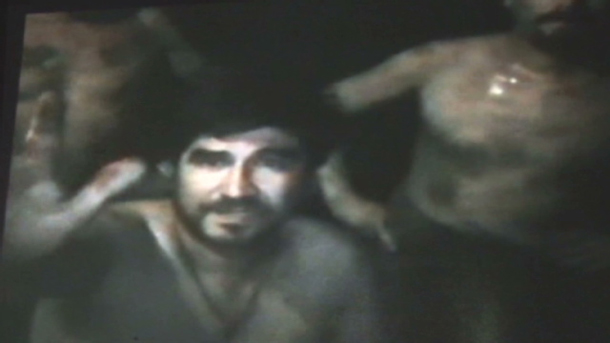
While audiences around the world watched 33 miners emerge from deep under the earth after a two month period of uncertainty and darkness, four families from another region of the country mourned the loss of their loved ones, also miners, who were not so fortunate.
As the 67 day saga of the trapped miners at the San José mine near the city of Copiapó dragged on, the international media coverage reached epic proportions. At one point, there were 1,000 journalists covering the story on location. The BBC spent $160,000 covering the story, and an estimated 1 billion people tuned in to watch the rescue.
The story, by the day of the rescue, dominated TV networks around the world. As worker after worker emerged above ground, they rejoiced in seeing their loved ones. Some shunned the media circus surrounding them, and their working class origins -- so rarely seen on television -- were made clear.
In the lead up to the rescue, the 300 colleagues of the 33 trapped men were fired from their jobs at the San José mine. They were released without pay, and almost totally ignored by the media.
For many of those whose life experiences are perhaps closest to that of the families of the rescued miners, the rescue was almost certainly bittersweet. Among them are dozens of families in Chile alone who lost mineworker relatives this year, and hundreds whose loved ones have been killed in Chile's mines over the past decade.
According to data from the Government of Chile, between January and August of this year, 31 miners were killed at their workplaces. Eleven of them were killed by machinery. Six died trapped underground. Seven fell to their deaths. Others were squished by falling rocks, electrocuted, asphyxiated or blown to pieces.
Do you know about Antofagasta?
On Sept. 7, 2010, four miners were killed on the job in Antofagasta, the next large city to the north of Copiapó, when their work truck collided with a vehicle carrying explosives for the mine. This story went almost unreported in the North American media.
The outpouring of solidarity with the rescued miners in Chile that came from other Latin American countries was also mixed with anger and sadness.
Though Mexican miners stated that they were overjoyed at the rescue, they said it also shined a light on the fact that when 67 miners died underground on Feb. 19, 2006 at the Pasta de Conchos mine in the state of Coahuila, there was no high profile rescue attempt.
On Oct. 14, the Mine Workers Union of Mexico wrote an open letter to past and present presidents of Mexico, admonishing them for leaving their brothers to die inside the mine.
"In Mexico, by comparison, in 2006 and until today, neither Germán Feliciano Larrea Mota, owner of Grupo México and the Pasta de Conchas mine, nor his investment partners, nor the then president Vincente Fox nor Martha Sahagún de Fox [his wife], ever put their feet down near the mine to support the rescue efforts, or to at minimum give their condolences to the widows and bereaved of the dead miners," reads the letter.
'God would never permit that'
In Argentina, President Cristina Kirchner drew criticism for her tweet that read: "Imagine for a moment if this disgrace had taken place here (God would never permit that)," in reference to the trapped miners in Chile.
Kirchner got flack for not acknowledging that a similar disaster did take place in Argentina, in a small coal mining town called Rio Turbio in the extreme south of the country. In June 2004, 14 miners died inside the coal mines.
I spent some time in the town a couple of years after the accident meeting with survivors of the incident, with the municipal government, and with widows and orphans.
One thing that was made clear to me while I was in Rio Turbio was that the series of fatal errors that led to the death of 14 men was not to be called an "accident." The fire that caused the 14 men to asphyxiate underground was completely preventable -- it was not an accident. It was a result of the privatization of the mine under the regime of Carlos Menem. Union demands for better safety in the years leading up to the accident were roundly ignored.
Safety reforms needed
Until miners have safe working conditions and job security, it will continue to rank as an often deadly trade. The media attention on the 33 workers brought to the surface allows us a moment upon which to reflect what stories are being ignored.
By way of example, the day following the rescue, four more men were trapped in a mine in Ecuador. They're still underground. The next day, 26 men were killed in an explosion in a mine in China. Life went on as usual in the North American media.
None of this is to take away from the rescue effort that saved the lives of almost three dozen working men in Chile. But so long as this level of regard for human life, and especially for the lives of workers, is considered exceptional instead of being the norm, there is little to celebrate. ![[Tyee]](/design-article.thetyee.ca/ui/img/yellowblob.png)







Tyee Commenting Guidelines
Comments that violate guidelines risk being deleted, and violations may result in a temporary or permanent user ban. Maintain the spirit of good conversation to stay in the discussion.
*Please note The Tyee is not a forum for spreading misinformation about COVID-19, denying its existence or minimizing its risk to public health.
Do:
Do not: