
Mediacheck

Slow Canada

Mobile internet is powerful, but we're losing the race.

By Michael Geist, 24 Jul 2007, TheTyee.ca

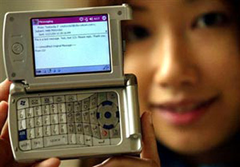
Internet-ready phone

Make mobile data cheaper.

The promise of an always-on mobile Internet -- delivered through cellphones and wireless devices -- has long been touted as the next stage in the evolution of electronic communication and commerce. That next stage is a reality in many countries, yet Canada finds itself rapidly falling behind even developing countries as a consequence of overpriced mobile data services in our cozy, uncompetitive market.

Until recently, the conventional wisdom held that there were two barriers -- technology and cost -- to the emergence of widespread mobile Internet use. From a technological perspective, most cellphones and wireless devices could manage e-mail and text messaging, but were ill-suited for the full Internet experience, including browsing and Internet video. That technology barrier has largely been eliminated, fuelled by popularity of devices such as the Apple iPhone.

The cost barrier still looms large, however. Canadian carriers have treated mobile Internet use as a business product, establishing pricing plans that force most consumers to frugally conserve their time online. Indeed, the mobile Internet in Canada is reminiscent of Internet access in the mid-1990s, when dial-up access dominated the market and consumers paid by the minute for their time online.

Shockingly expensive

Today, not only are cellphone data speeds comparatively slow -- the attractiveness of Wi-Fi access for Research in Motion's Blackberry or the iPhone is based primarily on the availability of substantially faster speeds -- but they are shockingly expensive since cost is measured by the amount of data downloaded.

For example, Rogers (the only Canadian telecom company currently equipped to offer the iPhone) offers a starter data plan that provides 1.5 megabytes of data per month for $15 (each additional megabyte is $21). Since that is not even enough data to download a single high-resolution photograph, most consumers presumably opt for more. The company's biggest data plan provides 500 megabytes, yet costs $210 per month -- far beyond the reach of most consumers.

This pricing, which is comparable to plans found with Bell and Telus (the largest offering from Telus is 250 megabytes for $100 with $3 for each additional megabyte), is not close to competitive internationally. The introduction of the Apple iPhone in the U.S. has placed the spotlight on the difference between the Canadian and U.S. market, where AT&T, the sole iPhone provider, offers unlimited data for only US$20 per month (the total monthly price is US$59.99, but AT&T divides the bill as two-thirds for voice and one-third for data).

Make data cheap

While it is tempting to believe that the AT&T offer is an anomalous product of pressure from Apple, the reality is that unlimited data plans are becoming commonplace around the world. For example, consumers in Lithuania can purchase an unlimited data plan for less than $3 per month, while similar plans can be had in the Netherlands and France for under $15 per month.

In fact, Canada not only trails the U.S. and Western Europe, but Eastern European countries such as Poland and Romania, Asian countries such as Malaysia, and African countries such as Rwanda all offer unlimited monthly data plans for less than $50.

Even in those countries without unlimited data plans, the pricing is often far better than what is found in Canada. Italians can purchase 1 gigabyte -- double the largest Rogers plan -- for $29 per month, while a 500 megabyte monthly plan is $45 in South Africa, $79 in Mozambique, and $103 in Tanzania.

Africa beats Canada?

The negative consequences of Canada falling behind even the African market should not be underestimated. RIM has expressed frustration with Canadian pricing, predicting that carriers could sell "eight or nine times" more Blackberries if they lowered data prices to levels found elsewhere.

Reduced sales are only part of the story. High data prices mean Canadians use the mobile Internet less than people in other countries, which Google has noted leads to lower Canadian usage of web-based e-mail or online mapping services from wireless devices.

Canadian carriers would do well to reshape their approach to mobile data by better servicing consumers; however, the longer-term solution lies in Industry Minister Maxime Bernier cracking open the wireless market by encouraging new entrants through a spectrum set-aside. The prospect of a new national wireless carrier offering unlimited data -- and perhaps even the red-hot iPhone -- would do wonders for a once-proud market that now lags behind the rest of the world.

Related Tyee stories:

 [Tyee]

10  Comments:

  • James Burns

    23-07-2007

    Rwanda has an unlimited data

    Rwanda has an unlimited data plan!?! and Canada doesn't....

    Even with an unlimited data plan, I'd never use the access the cellular companies here offer. They completely restrict what you're allowed to access on the internet through your cell. The oligopoly in Canada is utterly disgusting. The CRTC has become a rubber stamp way station for a few extremely greedy well-connected corporations. It's worse than the Canadian banking industry, and that's saying something.

  • shmendrick

    24-07-2007

    good ol' 'free market'

    I have a good laugh every time some nitwit suggests we are working in a free market here...

    You can get phones unlocked so they can be used on any network, and you can buy phones (like nokia series 60 phones) that can install many kinds of software, google maps, browsers, games, voip, webservers even. You can do this is Canada... you just can not use any of them unless you want to pay hundreds in fees.

    Cell phones seem poised to end up as the next personal computer, and here in Canada we are missing out big time in innovation opportunities. How ironic that the only canadian tech brand that has any recognition is part of a severely crippled industry.

  • shabbaranks

    24-07-2007

    Good!

    I for one, don't really think that us being economically limited to monile access is a bad thing.

    Do we need more people being ignorant to the world around us, checking emails while driving or on a busy sidewalk?

    Why does nobody ever stop to ask why do we need this stuff? Some business people sure do "need" this constant access, but it doesn't do a lot of good for the rest of us. Having this kind of "everywhere at all times" builds stress and anxiety, makes you more unaware of the world around you (for the one on the screen in front of your eyes) and creates numerous superficial relationships that are beginning to outnumber meaningful social interactions.

    And I ain't no codger either - I'm a tech-savvy 29 year old yuppie. I just believe in slowing 'er down, instead of speedin' 'er up.

  • James Burns

    24-07-2007

    Awareness

    No shabba, what makes people less aware isn't the technology, nor even using the technology. What makes people unaware is not taking the time to actively engage their attention to the present moment whatever they are doing.

    You could be physically doing nothing other than breathing in the most relaxing environment available, yet your mind can be a million miles away, completely unaware it is engaged in obsessing about minutiae of the past or the future.

    Ripping people off, and reveling in corrupt business practices are not useful ways of encouraging "meaningful social interactions". In fact, I'd argue the karma generated by such actions likely have a directly deleterious effect on positive social dynamics.

    If you have a hammer, and you look at the rest of the world as a nail, is that the hammer's fault?

  • Chris H

    24-07-2007

    When will people wake up?

    It is unbelievable that we cannot get better service in Canada. If the CRTC doesn't force Rogers, Bell, Telus, et al to provide competitive access to unlimited wireless internet, perhaps it is time to end this monopoly they have and open our market to the AT&Ts of the world. When will anyone think of the consumer?

  • jwstewart

    24-07-2007

    There's other factors to consider..

    with regard to internet access in Europe and Africa.

    Mainly, the availability and affordability of PC's is markedly different. How many Rwandas can afford a PC ? How many Europeans have PC's compared to Canada ?

    Some reasearch would show that outside North American, Internet access is much more common thru mobile phones than thru computers.

    The low demand in Canada for mobile Internet makes us easy pick'ins for price gouging.

    I beleive a comparison of cable(d) Internet access would bear this out.

    Having said that, there are wireless bandwith auctions happening soon, I'm sure the existing players will bid the prices out of reach of meaningful competition.

  • gaulois

    24-07-2007

    The price of "mobility"

    Opening up more spectrum may not be the greatest idea if we want to keep down emission levels in our RF environment and stop polluting with more towers, civil infrastructures and what not.

    How much more bandwidth do we really need to consume when we are "mobile"? Looks to me like it is time to say No to further wireless addiction when they are more pressing last 100m internet connectivity access issues.

    I really don't like the idea of an unchallenged wireline duopoly. I look forward to more coverage of the wireline world (-vs- wireless) by which us mortals do access independent new medias such as The Tyee. Bonne journée.

  • seth

    24-07-2007

    unwire us

    A good part of the answer to inexpensive mobile internet and voice communication is in free or low cost municipal wifi systems now in service and/or planned in hundreds of communities across North America.

    http://www.muniwireless.com/article/articleview/5868/1/23

    The cost of these systems is as little as $30 one time and $1 a month per subscriber with speeds up to 200 mbs using current technology. This is a fraction of the cost and orders of magnitude faster than obsolete Cable/DSL technologies offered by your local cableco/telco.

    http://www.muniwireless.com/article/articleview/5785/1/4/

    Anybody with a wireless equipped cell phone, PDA or laptop can make mobile voice and internet calls and connections on the wifi network for free using the cellular network only when out of range. Any household or business under city wifi coverage could replace wired home and business phone and internet lines with a free or very low cost VOIP (voice over IP unit) service.

    The city of Vancouver commissioned a study which came to similar conclusions as to cost and feasibility.

    www.peterladner.ca/municipal-wireless-white-paper.html

    The Vancouver system is now on hold supposedly because of budget concerns. Since the phone company routinely charges over $100 to connect a telephone, it is difficult to see why a Vancouver City Wireless service could not charge a $30 "membership" fee to get the system up and running at no cost to the city. One wonders if the real reason for delay is those lucrative telco/cable company campaign donations our "honorable" mayor and NPA councilor's love so dearly.

    To increase speeds and reduce airwave crowding, the one per city block wireless access points could easily be connected with 1000 mbs copper and/or fiber to homes, apartments and business's at an additional one time cost of roughly $100 a subscriber. Power line/phone line technologies or just plain copper data drop cable could be used.

    The BC Government's Green Plan requires BCHydro to replace all power meters with Smart Meters. By enhancing the data communication component of the SmartMeter, for almost no additional cost, Hydro could provide ultra high speed gigabit/sec wireless and wired internet access to all BC residences and businesses.

    Virtually free HDTV, telephone, HDvideoconferencing, cellular, and internet would be available to all.

    Unfortunately, along with the Vancouver NPA the BC Liberals have sold their oath to serve the public for corporate campaign donations including large amounts from telco/cable companies

    What is technically, and economically possible seems to be politically out of the question.

  • seth

    24-07-2007

    doing it for ourselves

    Of course, since we can't get the government to act, increasingly people are doing it for themselves, using the free mobile internet access available with open wifi networks on every block.

    With a $50 meraki wireless router one can actually get paid to share DSL or cable internet connections.

    http://meraki.com/solutions/

    Or join a world wide sharing network.

    http://www.fon.com/en/

    We citizens, first need to bypass the politicians and their corporate owners by sharing our existing old and slow internet connections.

    Next we need to start calling our MLA's and city politicians demanding they stop dithering and get our city towns and villages "unwired" with modern super high speed low cost communication systems as of yesterday.

    One thing for sure is the Telco/cable companies are making billions "ripping" us and they aren't about to stop until we run them out of town.

  • The discussion for this story is closed. No more comments can be added.