

Life

'Open Courses, Open Teaching, This Is Dangerous'

A BC teacher reports from the front lines of the open source education movement.

By Nick Smith, 15 Sep 2011, TheTyee.ca

Books thrown in the air

What if teaching tools were no longer packaged and sold, but digitally created together for free use?

Related

Though it is a muggy late-spring day in Edmonton, it is comfortable inside the conference room of the Mayfield Inn. Along with a group of other education geeks, I am seated around a table strewn with the usual continental breakfast detritus -- empty coffee cups on saucers along with small plates with balled-up muffin wrappers, strawberry stems and melon rinds. What is unusual, however, is the half-dozen or so smartphones resting on the table. No one is texting, reading Twitter feeds, or checking on their stock prices. Instead, we are hanging on every word from the man at the podium, Stephen Downes of the National Research Council Canada.

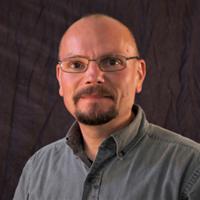
With his David Crosby-style flowing grey locks, Downes does not look like the other presenters at Moodle Moot 2011, a gathering of educators, united in their embrace of open-source software. His message is as radical as his appearance. "Control of the network must belong to its members," he tells us. "Open courses, open teaching -- this is dangerous."

I became interested in using open source software for the same reason that many do -- no licensing fees. It soon became apparent to me that I should use it with my students for the same reason. If I taught them using Microsoft Office or Adobe Photoshop, they would have to shell out to use these products at home. If, instead, we agreed to use Open Office and GIMP, they could download these programs at home for free. When a newer version appeared, the whole class could upgrade without forking out cash.

At Moodle Moot it begins to dawn on me exactly how subversive these ideas are and I am feeling more like a teacher-ninja by the minute. What Downes and the other speakers are advocating is the right to keep the tools and ideas of our age open and available to all rather than packaged and sold to the few who can afford them. "The more expensive it is to develop educational systems," Downes instructs us, "the greater push there is to commercialize programs."

Open source advocates are not against profit, but as Downes says, "Commercial use should not block access." Herein lies the schism: as long as a B.C. education is a rare commodity, it can fetch a pretty price. Some B.C. school boards have been turning to international students in order to balance their books. Offshore schools are sprouting overnight like mushrooms, mostly in China, offering B.C. dogwood diplomas from the comfort of one's own country, all for a fee, of course. A quick search of Learn Now BC reveals 58 distributed learning schools operating in the province. Many of these are independent schools.

It threatens the status quo when a group of people are working in order to give this away.

What 'open' means

Terry Anderson, of Athabasca University, defines open for us: "unobstructed, accessible, in view of all." Open source is driven by the sharing of resources, he tells us. This sharing results in its real strength -- transparency. "Quality scholarship is peer and public reviewed," he tells us. "It is the only ethical model." This gets to the meat of what defines open source here at Moodle Moot. We make education better by opening every aspect of it to scrutiny, by allowing all players to contribute, to share and to join the discussion.

Its essentially collaborative nature is what has propelled educators to the forefront of this movement. Yet he warns us that our rights as educators to collaborate and share is in need of protection. He insists that we should all "be able to go out there and grab what we need for our courses and make it ours."

I am at this conference as an affiliate of the BC Learning Network. We are a group of teachers who have been given access to dozens of distance education courses that we are now vetting, rewriting, augmenting, remixing and passing forward. Globally, we are not at the forefront of what is happening in open source education. I will leave that to the likes of MIT courseware and the Khan Academy, among others. Yet, at the secondary level, we are likely the most interesting project going in B.C.

This past year, in my role as part-time distance education teacher in School District 46 (Sunshine Coast), I was able to offer 11 online courses, made available to me through the BCLN.

What I really like about this arrangement, and this is where the "open" part comes in, is that I can go into the back of each course and modify the course content, and all of its settings, so that I can have my own version that works the way that I want it to.

Later, I can choose to make my modifications available to others who teach the course. This is where the value of peer review becomes clear. If my contributions are integrated into the master course, then I have done a good job. If they are rejected, I should go back and look at what I am doing. This is how open source projects are built. Content is created by the end user, then reviewed for scrutiny by a group of peers.

The BCLN courses run within an open source learning management system, what amounts to a course shell, called Moodle, hence "Moodle Moot." I can customize Moodle to look the way that I like to and to work the way that I need it to. If I were a programmer, like many at the conference, I could create programs to work for my particular context, then make them available to others just as I can presently do with the content. This would not be possible with a commercial product, as the source code would be hidden from view.

Right now, about half of the BCLN courses require a textbook, a vestige of their correspondence school past. As these new courses take shape, being rebuilt by the teachers who are teaching them with feedback from the students taking them, outdated and costly textbooks are being phased out. Eventually, students will be able to access everything that they need -- readings, images, animations, videos, glossaries, discussions and self-quizzes -- from within the course itself.

The goal of the BCLN is to build banks of resources so that teachers can adapt courses for enrichment and for special education. This could also allow students more leeway in pursuing individual interests and more choice over, for example, which novel to read.

Follow the money

The BCLN is available to a handful of districts in the province, through a paid membership. In the spirit of open source, we should make this rich resource available to all teachers and students in the province. Until we get some external funding behind this project the gates will be open only for those who have paid admission.

It isn't too hard to figure out the conflict here. The Ministry of Education appears to be the most obvious source of funds for opening up the BCLN. Yet it is the ministry itself that is encouraging school boards to get creative with finding alternative sources of revenue when funds run short. They are not yet falling over themselves to hand money to people who are essentially giving away their product.

It comes down to how we define public education. Open source advocates might say that all of the educational materials paid for by the public should be available to the public. Some, such as Stephen Downes, might go as far as to say that all users of public education, including teachers, students and their parents, should be the ones in control of the entire network.

Martin Dougiamas, the young and affable creator of Moodle, would likely agree. With his easy-going Australian twang, he tells the conference-goers how they can use Moodle to give students more power. He mentions that students can contribute to writing online textbooks and course content. He tells us that Moodle has evolved so as to allow students to have a say over how they structure their learning (he even introduces us to the soon-to-come app that will let students hand in assignments and contribute to discussions using their mobile devices). He mentions that high school students are asking him for integration with Facebook and Google Docs.

The stir that Dougiamas gets from the crowd is palpable when he asserts, "What it means to be a school is now up for grabs."

This thought returns to me later in the day when Stephen Downes is again on stage. "Schools create mechanisms so that students can learn for themselves."

Yes, this is thin ice. Teaching does not get anymore dangerous than this.  [Tyee]

20  Comments:

Login or register to post comments

  • igbymac

    1 year ago

    Of this I would not be so sure:

    This is where the value of peer review becomes clear. If my contributions are integrated into the master course, then I have done a good job. If they are rejected, I should go back and look at what I am doing.

    Knowing that the vast majority of educators accept the meme and world view of our culture, mass peer support 'may' still come up short. Just a warning,

    It's a slippery slope when the Left wants to oppose corporate privatization but in doing so sides with statism. The open source, community owned and operated, non-profit approach is a move in the right direction. The kicker is to compliment this horizontally with localized control of wealth rather than through a centralized administrative state.

    But, as it now stands, this is the sabotaging approach the modern Left has chosen: arguing for, or siding with, state administration simply to ward off the neo-liberal privatization movement. This is just the lesser of the two evils argument, the same argument used to support a vote for the NDP over the CPC.

    But both approaches fail to serve the people. Unfortunately the modern Left has lost sight of this truth. For in its 'lesser of two evils' detour, the Left has abandoned its ideals of developing a self-directed populace.

    As for the students involvement, (i.e., their participation in structuring the material), whatever works to keep their ongoing interest is in the best interest of learning, is it not?

  • RickW

    1 year ago

    igbymac

    Quote:
    Knowing that the vast majority of educators accept the meme and world view of our culture, mass peer support 'may' still come up short. Just a warning

    http://www.cbc.ca/thecurrent/episode/2011/09/14/campus-confidential/
    http://www.amazon.ca/Campus-Confidential-startling-Canadian-universities/dp/1552776506
    Our universities represent the very best in our society. They are the wellsprings of new ideas, the incubators of new companies, the centres of culture, the training ground for the leaders of tomorrow, and the meeting place for brilliant young minds and accomplished mentors. Or at least, that's how it's supposed to be. The truth is, our universities are floundering, and as a result they are coming under attack from all sides—from government, students, parents, and faculty. To respond to these challenges, the first step is to face the uncomfortable facts about universities today.

  • Blake

    1 year ago

    Brilliant Idea!

    This is a great idea. One that demands serious consideration from intellectuals, learners and the public in general. I see this as a new sphere of education, an open-source education. Though, as questioned above, how can it function? Within or without state, and the question of private ownership and profits,etc. This must be sorted out well in advance and stuck to religiously.

    As a long time student and employee at universities and colleges, I have seen our institutions turn into corporate hags. Disturbing for students and teachers. I have many stories of how the right-wing is infiltrating secondary education, taunting students with internships and scholarships while at the same time pushing free market right-wing ideology.

    I have always encouraged people to use open-source software. It is a prime example of how something collaborative and collective can be such a success.

    I really would love to become involved in something like this. Is there anything like this going on in Vancouver?

  • igbymac

    1 year ago

    Rick W

    The rhetoric and the truth rarely align.

    We all know that the US Empire has been long operating full throttle as a military-industrial complex. But we must never forget that Canada is also one of the world's top 10 suppliers to this industry, and as the top trading partner for the USA it pledges full support for the regime.

    In 1960, Eisenhower warned the people of the USA that this military-industrial complex would lead to an unchecked monopolization of authority.

    In the councils of government, we must guard against the acquisition of unwarranted influence, whether sought or unsought, by the militaryindustrial complex. The potential for the disastrous rise of misplaced power exists and will persist.

    And it has.

    But Eisenhower went on and said more. He also warned the people of its infiltration into the universities and the academic community:

    Today, the solitary inventor, tinkering in his shop, has been overshadowed by task forces of scientists in laboratories and testing fields. In the same fashion, the free university, historically the fountainhead of free ideas and scientific discovery, has experienced a revolution in the conduct of research. Partly because of the huge costs involved, a government contract becomes virtually a substitute for intellectual curiosity. For every old blackboard there are now hundreds of new electronic computers.

    The prospect of domination of the nation's scholars by Federal employment, project allocations, and the power of money is ever present and is gravely to be regarded.

    Yet, in holding scientific research and discovery in respect, as we should, we must also be alert to the equal and opposite danger that public policy could itself become the captive of a scientific-technological elite.

    EISENHOWER FAREWELL, 1961

    In short, virtually our entire citizenry has been polluted mentally with the message supplied by the corporate stakeholders controlling the planet. 'Their' interests have become 'our' interests. They may not be your nor my interests, but the collective believes in them all the same.

    Why else are people voting and propping up the bastardized political model in the process?

    Why else do we believe the Stephen Harper's telling us the radical Muslim is our greatest threat?

    Our leaders have all drank the Kool Aid, believing the lies they have learned which, not surprisingly, sound comforting to our similarly deluded minds.

  • corona

    1 year ago

    "With his David Crosby-style

    "With his David Crosby-style flowing grey locks..." Ha ha ha -- David who?

  • deeby

    1 year ago

    Open Source versus Commercial Software

    Well-taught courses that utilize MS Office or Adobe Photoshop should be no impediment to learners switching to Open Office or the GIMP.

    The problem lies in generalizing the instruction enough that the students are able to transfer their skills between the commercial software and their open-source equivalents.

    Rote, procedure-based learning won't suffice. Students need to understand the principles behind what they're doing.

  • mikev

    1 year ago

    open source -> free software

    Free as in freedom. Just open source is a step-not-far-enough:
    http://www.gnu.org/philosophy/open-source-misses-the-point.html

    "must be sorted out well in advance"

    It's already well on it's way. One Laptop Per Child already has hundreds of thousands of machines with free software out there:

    http://one.laptop.org/

    There are many groups working on the curriculum side:

    http://en.wikipedia.org/wiki/Open_source_curriculum

    BC has an open source library software project:

    http://sitka.bclibraries.ca/

    Politics and economics simply aren't able to interfere, this stuff is happening regardless, because it's the right thing to do.

  • David Wees

    1 year ago

    Misrepresentation of the LEFT by igbymac

    Quote from igbymac:

    "Unfortunately the modern Left has lost sight of this truth. For in its 'lesser of two evils' detour, the Left has abandoned its ideals of developing a self-directed populace."

    I think you are certainly misrepresenting everyone of this left by this characterization of them as being unwilling to change. As someone who considers himself is far left leaning politically, I support the open source movement, including the need of it to be participate driven, passionately.

    You certainly haven't represented my interests with your comment. The open source movement has representatives from both sides of the political aisle.

  • mopled

    1 year ago

    I concur with igbymac's analysis, as far as it goes,

    but would add that the choices given to the rank and file are preselected at some US based think tank.

    David Wees, I'm glad to hear there are "representatives from both sides of the political aisle" who support the open source movement. It is perhaps a good beginning to understanding our common opponents, those who would privatize not only education, but also air through "carbon credits" and food through patented GMOs.

  • gsarahs

    1 year ago

    igbymac and his use of "LEFT"

    I have got to the point that I immediately discard anything written by individuals who start using "LEFT" namecalling, as being worthless and not worth reading. They add nothing positive to a discussion.

  • mikev

    1 year ago

    free software transcends political boundaries

    http://conservapedia.com/Debate:_How_do_conservatives_view_the_Open_Source_movement_and_software%3F

    Free software, rather than being capitalist or communist, is a gift economy, much more ancient than either, more like the potlatch culture that thrived here in these parts pre colonization. Status is determined by what you can afford to give away, not by how much you can hoard. Success is determined by how much people appreciate what you give them, not by how much people envy what you have.

    Left wing or right wing is meaningless. The internet considers censorship as damage and routes around it, you can't make people do what you want them to do. If you suck you are ignored, if you have something worthwhile to offer you will become popular. Don't worry about a particular interest group taking over, just focus on maintaining freedom, free software being the best way to go about it, and amazement will continue to emerge.

  • igbymac

    1 year ago

    David Wees, mopled and gsarahs, in order.

    David Wees, how does my comment stating the political Left has, over time (i.e., roughly since the turn of last century), lost sight of its original ideals then transform itself into 'people are unwilling to change'? 'Desire' or 'willingness' to change has no connection with my remark.

    My point was entirely about a movement's focus (that movement being the Left). Specifically, how a shift in the focus - to ward off the evils of the private corporatist threat -- has embedded the movement with a state-operated social services project.

    I, too, support the open source movement. I run Ubuntu 11.04, to start. How about yourself?

    As for your 'far political left' leanings, I cannot comment. How you concluded your position would, I believe, have a lot to do with your historic perspective on the Marxist movement.

    I'd suggest, however, that if you did know a bit more about how things have progressed since Marx and The Commune, you certainly would not find my comments to be inaccurate, inflammatory nor offensive. Somewhat like yourself, I consider my politics to be leftward.

    mopled, for clarity, the 'rank and file' are the democratic middle, are they not? I fully agree ALL of us have been shaped by the spectacle. It's what we each do to pull ourselves out of the hypnotic-like trance that the show offers up that is most important.

    As for the 'supporters from both sides of the aisle' remark by David Wees, it, too, has a double edge. One edge gives everyone a chance to find common ground, a positive thing. The other edge makes one question the motive behind another's support, which may or may not be so positive.

    gsarahs, its disheartening to read of one righteously proclaiming that the/she has shut down his/her mind without investigation. Its also amusing to be told how I am attacking the Left or misrepresenting people's views when most of what I posted up was some analysis and historical perspective. For example, a comment like "it's a slippery slope" only means it is a potential danger, beware!.

    I'd be inclined to say more, gsarahs, but I have absolutely no idea where your head is at since you offered nothing beyond 'name-calling', 'worthless' 'not worth reading' and 'nothing positive to a discussion' after 'immediately discarding anything written' by me.

  • btrain

    1 year ago

    Post-secondary OER in BC

    Paul Stacey at BCCampus (an organization funded by the BC Ministry of Advanced Education to advance the public post-secondary education system through educational technology) has a good blog on open educational resources:

    http://edtechfrontier.com/
    http://www.bccampus.ca/online-program-development-fund-opdf-2/

  • VivianLea Doubt

    1 year ago

    hmmm...

    Apparently Nick accepts some of the memes and worldviews of the culture: consider the comparison to David Crosby. Nick, I am sure this will seem subversive - even dangerous - but I do not know who David Crosby is. I am uninterested in finding out who he is, by the way, I just find it a bit ironic that you use some very specific cultural reference that not everybody will understand. For this is the same problem that is encapsulated in the 'peer review' you discuss: as long as everybody understands what you are talking about, it shall pass.

    Open source software, open source teaching, well, the very heart of open source - is that the best contributions stand, but only briefly, because something even more brilliant or just moderately better shall take its place. This threatens the universities most, although the BCTF shall perhaps find it so as well. For it is not just 'peer reviewed', but 'peer and public reviewed', as Terry Anderson remarks.

    Students have always learned for themselves, and many in spite of repressive school and university systems. In any case, it does get more dangerous than this - when the whole idea of the hierarchy of teacher and student is thrown out the window. How we learn best is not by being instructed from a higher authority, but by the give and take of genuinely curious, searching minds building upon one another's contributions. Some teachers will admit to being taught by their students - how could it not be thus? But that is truly shivery scary to some.

  • michael maser

    1 year ago

    'Open Source' should be boon to learning, not boondoggle

    I'm of a mixed mind when it comes to the tenor of your essay, Nick.

    As an educator who has been on the front lines of innovation and online learning learning for almost 20 years I've come to appreciate the role of the Ministry of Education (particularly under the liberals, I might add) when it has come to supporting online learning. As I see it, the liberals opened it up to Independent Schools, it has 'regularized' the funding, and it has helped to sponsor some of the development orgs like the BCLN and LearnNow BC (from which Independent Schools are excluded are joining) and a few other development opportunities.

    I've also come to appreciate its non-leadership role; that is, it has left much of the innovating up to the players, and that has helped seed some richer kinds of innovation (as we do in our various SelfDesign programs).

    I consider OpenSource, in practice and in concept, a boon to our society in many, many ways. In education, OS been both ignored (conceptually) in the rush to standardize curricula and lock-in 'pseudo'-accountability through standardized testing - and it has been supported, as I describe above. It's when bureaucracies and vested interest groups - like teaching unions - hijack OpenSource learning, and they certainly do this, then learning in general is supplanted by a boondoggle, and that is regrettable.

    "Thin Ice" is precisely where learning should be, IMO. Where (educational) 'ice' is thickest is where vested-interest schooling impedes learning, as it has done throughout its beleaguered history. Perhaps this is what you're saying here, I'm just not that clear.

    And while we're discussing clarity - does your 'public' include Independent Schools? or is that just a euphemism for BCTF-controled schools? I'm truly curious to know.

    - Michael Maser (learnyourway.ca)

  • igbymac

    1 year ago

    As an educator who has been

    As an educator who has been on the front lines of innovation and online learning learning for almost 20 years I've come to appreciate the role of the Ministry of Education (particularly under the liberals, I might add) when it has come to supporting online learning. As I see it

    Would it not be fair to say that, on the whole, either the state acts in the public interest or it does not? I can find dozens, nay hundreds, of issues verifying that the BC Liberal government did not act in the interests of the public. I have no reason to think, despite the appearance of things to your eye, that this is the exception.

    As I see it, the Liberals had and have privatization of all things as a top priority, and this support for online learning is just one tactical maneuver to divide and conquer. How many times does the population have to be politically raped by one government to lose all trust and confidence? Amazing.

  • Logical_thought...

    1 year ago

    igbymac 's omission

    Just a brief comment regading igbymac's post referring "Why else do we believe the Stephen Harper's telling us the radical Muslim is our greatest threat?". In the interview that I saw last week, Mr Harpo, on several occasions referred only to the dangers of Islamism, with no reference to the word "radical". This was just after he stated his disagreement with the concept that the West might be in any way responsible for the feelings that led to the 9/11 attacks, and just before he announced his programs to combat crime in Canada by building prisons that we neither need nor want. I like the way the he does not let facts interfere with his policy decisions.

  • Fish-counter

    1 year ago

    The Internet is the medium

    Between Google, Wikpedia and similar sources, knowledge is already freely open to everyone who has a computer, a ISP and who can actually learn this way. Niot everyone can, and not all subjects lend themselves to open source learning.

    An instructor provides guidance and balance (or it is bias?) and the classroom provides a learning environment. Some of us learn best by hearing a real, live person speak. We will lose out to those who can self-teach from an LCD screen. Whatever the result, it radically changes the teaching and learning processes. It should save mountains of paper but it will produce interesting "experts".

    All sources can become equally valid in appearances and that is troubling. In the climate change debate for example, biased, self-serving, industry-sponsored sites are pitted against the overwhelming majority of scientific opinion, as if they were of equal value.

    One consequence of the ethereal climate change debate is that you can't actually lay hands on the idiots and choke them with your bare hands. That probably saves a lot of worthless lives. I suppose that is a good thing...

  • Fish-counter

    1 year ago

    The Internet is the medium

    Between Google, Wikpedia and similar sources, knowledge is already freely open to everyone who has a computer, a ISP and who can actually learn this way. Niot everyone can, and not all subjects lend themselves to open source learning.

    An instructor provides guidance and balance (or it is bias?) and the classroom provides a learning environment. Some of us learn best by hearing a real, live person speak. We will lose out to those who can self-teach from an LCD screen. Whatever the result, it radically changes the teaching and learning processes. It should save mountains of paper but it will produce interesting "experts".

    All sources can become equally valid in appearances and that is troubling. In the climate change debate for example, biased, self-serving, industry-sponsored sites are pitted against the overwhelming majority of scientific opinion, as if they were of equal value.

    One consequence of the ethereal climate change debate is that you can't actually lay hands on the idiots and choke them with your bare hands. That probably saves a lot of worthless lives. I suppose that is a good thing...

  • Fish-counter

    1 year ago

    There is a lot more going on in school than in the classrooms

    The whole process of socialisation for example. Friendships made in school last forever - well some of them. Kids learn to deal with their peers, be it through friendship or bullying. Post-secondary education is a little different, but all schooling could be improved by open learning.

    Elementary school is probably the most formative and it would be hard to replace with the internet but some apsects of high school could be improved with online instruction. How that could be accomplished in the present system when teachers are more interested in clawing money from the kid's parents; that is a good question.

    The Nanaimo School Board turned down a grant of $87 million to build a new high school because they couldn't deal with the merger of two run-down, earthquake-vulnerable facilities, for example. They are firmly mired in the past, so how can they possibly look to the future?

    • The discussion for this story is closed. No more comments can be added.