



 SHARE:
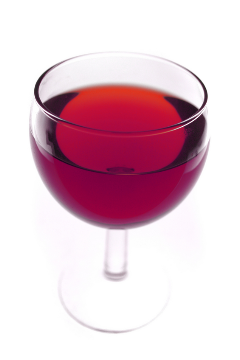
"Wine is the most healthful and most hygienic of beverages." - Louis Pasteur 1822-1895
If we truly are what we eat, what about the wines we drink?
Wine can easily be elevated into a truly hedonistic pleasure, or "bottled poetry," as Robert Louis Stevenson once described California wines.
But it should never be forgotten that wine also simply comes from grapes; a food product grown in the dirt on a farm amongst the bugs and animals.
And what goes into that dirt and onto those grape leaves and into the fermenting vat before bottling all comes out again - in your stemware glass at dinner time.
Unfortunately, that wine all too often includes the residue of pesticides, herbicides and chemicals used by agri-business to grow fruit and vegetables all around the world.
Increasing health concerns expressed by consumers have led to a dramatic growth in the sales of organic produce. While organic food only accounts for one to two percent of worldwide sales, since the 1990s, the market has been growing by 20 percent annually.
That rapid growth is no exception when it comes to organic wines.
David Hopgood, a senior portfolio manager for wine at the BC Liquor Distribution Branch, says BC wine drinkers are increasingly lifting a glass of organic wine.
"In BC, it's a very healthy category. We're experiencing strong growth - it's up to $3 million a year and it's up 50 percent over the last year," Hopgood told The Tyee.
"It's not just a BC phenomenon - you see it all over. But trends start here in BC. Look at the success of Capers, Choices; Safeway keeps expanding its organic section," Hopgood said, referring to retails stores with significant organic food offerings.
But with that said, Hopgood points out that there are only 23 organic wine listings out of the LDB's roughly 2,500 available wines, plus a few organic beers, sakes and spirits.
Kevin McKinnon, manager of Marquis Wine Cellars in Vancouver, agrees that organic wines are growing, but also says they still face a marketing challenge because of a perception that they were not well made.
"For the longest time, people wouldn't use screw tops because it was perceived to be low quality wine. In the same way, organic wines were felt to be not of good quality," McKinnon said.
And McKinnon says that due to the poor reputation of wines labeled organic, producers of many high-end wines have deliberately avoided calling their wines organic.
"It's not perceived by the wineries to be a major marketing tool," he said, although that is changing as consumers discover that winemakers like Chapoutier in the Rhone Valley of France feature exceptional wines retailing for over $200 a bottle that are organically produced.
Wine agent Luisa Deziel of Winspeer International Group, a wine importer, agrees with McKinnon but thinks organic has increasing appeal to consumers.
"It used to be seen more like a gimmicky type of thing," she said. "But it seems to be more and more important. It's something more and more wineries and farmers are hopefully striving for."
Is Organic a dirty word?
But the term "organic," and when it can be legitimately used on a wine label, is as opinionated and complex a topic as the often airy and contradictory ways wine critics use to describe a fine wine.
Wander through your local LDB store and you will likely find an organic wine section, while many of BC's private wine stores like Vancouver's Broadway International Wines helpfully label their organic choices.
Here in BC, several local wineries produce organic wines. Hainle Vineyards plowed the organic field in the early 1990s along with Summerhill Estate Winery, while more recent arrival Lotusland has a range of whites and reds.
So what is truly an organic wine? And do organic wines taste better?
The answers to both questions are, regrettably, highly debatable.
To give you some idea how debatable, consider that France, the world's largest wine producing country, has not one, not two but three different organizations that provide organic wine certifications - Ecocert, Terre et Vie and Nature et Progrés.
Or that according to the US Department of Agriculture's National Organic Program, an organic wine has been defined as "a wine made from organically grown grapes and without any added sulfites."
That excludes almost every wine on liquor store shelves, not just in BC, but the whole world, because sulfites are added in minute quantities to preserve wines and let them gracefully age from mere months to decades.
So, you will see on the labels of American wines the words "wines made from organic grapes" (or organically grown grapes) because with this definition, they are allowed to contain up to 100 parts per million [ppm] of added sulfites.
Vegetarian, vegan and sulfite free?
Then there is the question of whether wines are vegetarian or vegan, in addition to organic?
Not to sour wine drinkers with those beliefs, but yikes! Winemakers regularly "fine" their wines to remove sediment and clarify the product. That means adding egg whites or a variety of other fining agents that include some which come from animal or fish origins.
Exactly one wine sold in British Columbia would appear to meet all of those qualifications - a' Notre Terre, a red wine produced by Organic Wine Works of California.
It carries the USDA Organic certification proudly on the front of its label, as well as a California Certified Organic Farmers logo. And as soon as you peel the plastic label off the neck, the cork top reads "no added sulfites".
This could be important for about one in 20 of The Tyee's readers, as sulfites can cause an allergic reaction in roughly five percent of the population.
And once again, there is no consensus. An informative note on the BC LDB's website states that "consumers frequently assume that organic wine is sulfite-free but this is not the case. Typically, a small amount of sulfite occurs naturally in wine as a by-product of fermentation.
But as to every other wine you might want to organically quaff, well, it's a question of degree.
Biodynamic farming trumps organic
There's also another confusing term used by some wineries to describe their growing technique - "biodynamic" - which is sort of like super organic, even though sulfites are still added. Biodynamic is based on the research of Austrian philosopher and scientist Rudolf Steiner and sees the biodynamic farm as a closed, self-sustaining system.
As British wine author Jamie Goode puts it "biodynamics also sees the farm in the context of the wider pattern of lunar and cosmic rhythms. In this holistic view, the soil is seen not simply as a substrate for plant growth, but as an organism in its own right. The idea of using synthetic fertilizers or pesticides is thus an anathema to biodynamic practitioners."
One winery put it rather simply in an email interview with The Tyee.
Tom Pederson of Pares Balta, a family owned bodega since 1790 in Penedes near Barcelona in Spain was happy to explain their philosophy.
"Our approach to organic winemaking is fairly simple. Why? Because we do not use any kind of pesticides or herbicides, there are no chemicals in our vineyards. We were even organic winemakers before someone invented the concept and we are currently members of "Consell Catala de la Produció Agraria Ecològica (CCPAE)" (The Catalan Council of Ecological Agricultural Production)."
"Instead, we use sheep and goats to keep down the worst herb invasion, and at the same time, provide some natural fertiliser to the soil. We have approximately 800 sheep and goats that are circled through all of our vineyards after the harvest until the first wine stocks begins to sprout," Pederson wrote.
So, are sheep and goats integral to organic winemaking?
Probably not, but the LDB's David Hopgood understands how you might by now be wondering exactly what an organic wine really is.
"We're actually in the process of ironing out - to be more consistent - what's termed organic. We're trying to categorize what we accept as truth [when it comes to winemakers' claims to be producing organic wine]."
While this may be slightly confusing to the consumer, it is deadly serious in the wine industry. Legendary Santa Barbara winemaker Richard Sanford, whose winery and tasting room figures prominently in Sideways, the biggest wine movie ever, recently quit Sanford wines in a dispute with new owners over his preference for organic grape-growing methods.
Well, okay then - and I thought all this assignment would require is a corkscrew, a trip to the wine store and a little light elbow action!
But as Times of London wine writer Jane McQuitty humorously put it, when it comes to organic wines, it's clear as mud! "Despite two decades of research, I am very little clearer on what exactly constitutes an 'organic' wine," she wrote in September 2005.
Enough talk - let's have a drink!
Given The Tyee's vastly more limited resources than the Times, I am unable to invest 20 years into the topic, but thanks to a modest stipend from the editors, I can tell you a little.
More importantly to most readers, I can also tell you what tastes good, having spent all that stipend and more attempting to thoroughly research organic or near-organic wines available in British Columbia.
As previously mentioned, there are about 23 different organic wine listings at the BC LDB, plus several more available through private wine stores.
The quality ranges from excellent to barely drinkable. Here are a few standout wines to try and a couple that you may enjoy more than I did.
Reds
Pares Balta 2002 Mas Petit Cabernet Sauvignon-Garnacha $17.95 [product number or SKU 183004]
Excellent value, excellent taste. This Spanish red from Penedes is a flavourful and inexpensive way to try out an organic wine. The Wine Spectator gave it 85 points and said: "Plump yet supple, this easy-drinking red shows cherry, light herbal and tobacco leaf flavors, with lively acidity and just enough tannins for grip."
Bonterra 2002 Cabernet Sauvignon $21.99 [SKU 342428]
This big red from California's north coast is a real winner - full blackberry, cherry and chocolate flavours. Through a steak on the barbie - or whip up a nice vegetarian pasta.
Organic Wine Works 2004 A' Notre Terre $19.99 [SKU 86603]
This is apparently the only "no added sulfites" wine available in BC and is a little confusing. The label describes it as "Burgundian" in style, but it is not a pinot noir. Rather, it is an unlisted blend of red grape varietals. I would generously say it is fruity and fresh, but this does not taste like a $20 wine should, unfortunately, and is rather disappointing.
Chateau Pech-Latt Vieilles Vignes 1999 $24.99 [SKU 571083]
This French red from the Corbieres region is a letdown. While completely drinkable, this blend of carignan, grenache noir, cinsault and syrah lacks the distinguishing characteristics one expects from a $25 wine, particularly one with seven years in the bottle to age. Quelle dommage.
Chateau Pech-Latt Domaine De L'Olivette 2002 $15.99 [SKU #626242] Vin de Pays des Coteaux aux de Cabrerisse
Lower price, better taste - that's a Tyee pick for sure! This blend of merlot, syrah and grenache comes from the same producer and has more interesting flavours than its big, older brother. Perhaps its bottle variation or maybe the 1999 is just over the hill at seven years old.
Pares Balta 2002 Mas Elena Cabernet Sauvignon-Merlot-Cabernet Franc $17.95 Private stores only.
Pares Balta does a good job with this classic red Bordeaux blend. I prefer their Cabernet Sauvigon only Mas Petit slightly more but both are good value and tasty organics. Another Tyee-recommended organic wine.
Chapoutier Le Bernardine Chateauneuf du Pape 1999 $45.60 [SKU #432385]
Now we're talking hedonistic! And at this price, we better be. Awesome big monster out of the Rhone Valley, spicy, layered, leathery and smoky. The Wine Spectator gave it 87 points, but they are wrong - 90 points at least. If you have the money to drink organic at its best, this is a winner.
Whites
Bonterra 2004 Chardonnay [SKU #342436] $19.99
From Mendocino County, this chardonnay is classically Californian. The Wine Spectator magazine gives it 86 points out of a possible 100 and says it is "a pure fruit bomb of Fuji apple and fresh lemons, with appealing flavors that deftly balance crisp and creamy." How can you go wrong? And they kindly made a whopping 72,000 cases of it. Bonterra also makes an organic viognier white wine worth trying.
Summerhill Estate Winery 2003 Pinot Blanc $16.95 [SKU128769]
The folks who also call themselves "Summerhill Pyramid Winery" are just a little odd, unless you think Pyramid aged wines are the only way to go. This is a tasty Pinot Blanc - a grape that is not as bold and overpowering as chardonnay but often more food-friendly. Try it with barbequed salmon.
Chapoutier 2004 La Ciboise $14.90 [SKU #511022] Coteaux du Tricastin Blanc
This classic white Rhone blend gives peachy fruit with mineral overtones. This wine is blend of 20% Bourboulenc, 20 percent Grenache blanc, 20 percent Clairette and 40 percent Marsanne this wine is delightfully crisp and fresh. A nose of citrus and blossom. The palate is fresh, delightfully mineral and has a long clean finish.
Lotusland 2002 Gewurztraminer Stone's Throw Vines $15.90 Private stores only
Lots of lychee, peach, floral and citrus flavours in this spicy wine. Perfect for killer Szechuan, Thai or Indian hot dishes, gewürztraminer [pronounced guh-wertz-tra-meener] can hold its own in any food fight!
Pares Balta 2004 Blanc des Pacs $16.95 Private stores only.
This Spanish blend of macabeo, xarel.lo and parellada grapes not found in North America is fruity, crisp, floral and refreshing. Perfect for summer sipping and seafood.
Wine expert Bill Tieleman most recently visited Tuscany in his quest to see every major wine region in the world. Tieleman also writes a column on BC politics every Tuesday in 24 hours, the free weekday newspaper and can be heard talking politics every Monday at 10 a.m. on CKNW AM 980 on The Bill Good Show. Email him at [email protected] ![[Tyee]](/design-article.thetyee.ca/ui/img/yellowblob.png)











Tyee Commenting Guidelines
Comments that violate guidelines risk being deleted, and violations may result in a temporary or permanent user ban. Maintain the spirit of good conversation to stay in the discussion.
*Please note The Tyee is not a forum for spreading misinformation about COVID-19, denying its existence or minimizing its risk to public health.
Do:
Do not: