- Mary Carlisle is a Tyee Builder. You can be, too.
- Prem Gill is a Tyee Builder. You can be, too.
- Nancy Flight is a Tyee Builder. You can be, too.
- Justin Everett is a Tyee Builder. You can be, too.
- John Westover is a Tyee Builder. You can be, too.
- Nora Etches is a Tyee Builder. You can be, too.
- Edward Henderson is a Tyee Builder. You can be, too.
- Bharadwaj Chandramouli is a Tyee Builder. You can be, too.
- Dean Chatterson is a Tyee Builder. You can be, too.
- Marius Scurtescu is a Tyee Builder. You can be, too.
- Robert Parkes is a Tyee Builder. You can be, too.
- James Murton is a Tyee Builder. You can be, too.
- Susan Doyle is a Tyee Builder. You can be, too.
- Vincent Strgar is a Tyee Builder. You can be, too.
- Helen Spiegelman is a Tyee Builder. You can be, too.
- Subir Guin is a Tyee Builder. You can be, too.
- Kimball Finigan is a Tyee Builder. You can be, too.
- Joanne Manley is a Tyee Builder. You can be, too.
- David Leach is a Tyee Builder. You can be, too.
- Joel Berger is a Tyee Builder. You can be, too.
Preventing the Next Bad Pill
How I'm kicking Paxil. And how Pharmawatch is arming medication users to expose bad effects.
SECOND OF TWO PARTS
[Read Part One: My Paxil Nightmare]
I was a student looking for a quick lift from bouts with anxiety and depression when, nearly ten years ago, a doctor started me on Paxil. Nothing unusual about that. The anti-depressant has been prescribed with little fanfare to hundreds of thousands worldwide since its release in 1993.
But a lot of us Paxil users find ourselves today with something we never bargained for: an addiction. I certainly never expected to be on the drug this long, but when I've tried to quit - and I'm trying once again - I've felt intense vertigo, fatigue, nausea, headaches, extreme anxiety, drastic mood swings and slower mental reflexes.
A series of recent studies, lawsuits and government directives shows I'm far from alone. But how could so many suffer such symptoms and Paxil's side-effects remain so long under the health establishment's radar? After all, Health Canada does have an adverse drug reaction [ADR] reporting system, CADRIS [Canadian Adverse Drug Reaction Information System] mainly geared towards physicians and pharmacists, although consumers themselves can fill in ADR forms.
My story tells something about the limits of that system, and the promise of a new approach called Pharmawatch, a recently-launched Vancouver pharmaceutical watchdog agency and lobby group geared to giving medication users more power to share information and sound alarms.
'People fall through the gap'
When I first tried to reduce my dose of Paxil, only to be set upon by intense anxiety, a feeling of total 'spaciness' and unexplainable feelings of aggression and despair, I thought it was my illness - not the drug.
As for the dizziness and nausea that I did attribute to withdrawal, I'm quite sure my doctor didn't report it.
And I definitely had no idea that there was any such thing as an ADR reporting system. The first I heard of it was when an acquaintance casually mentioned that she was getting involved with PharmaWatch. Her name was Kathy Ferguson, and she had lost a diabetic son due to an adverse drug reaction to a new form of insulin.
Colleen Fuller, PharmaWatch founder and consumer advocate, went through a life-threatening adverse drug reaction herself when, like Kathy's son, she was forced to switch to synthetic form of insulin. "One of the weakest parts of the drug policy spectrum is post-market surveillance," she says. "Drug companies push very hard for quicker drug approval, and they really don't like to have any public oversight of what's happening. …We wanted to set up a consumer advocacy organization that would push for much better post-market surveillance and monitoring of people's experiences with drugs."
She notes that there is a gap between the number of adverse drug effects, and those that are reported.
"People fall through the gap between the number of experiences that occur with any given drug, and the number of reports that actually make it to the regulator," she adds. "People don't know what the track record is of any given drug. So, if you're trying, for yourself, to make a decision about a prescription that has been given to you by your doctor, part of the information that's important to you is the adverse drug effects that have been experience by other people."
Skewed reporting patterns
Some estimates put the number of reported adverse drug effects at just ten percent of the true number. The reason for such a disparity is a lack of impetus in doctors and pharmacists to report, according to Dr. Warren Bell, family physician in Salmon Arm and another member of the board of PharmaWatch.
"Adverse drug reaction reporting is pathetic," says Dr. Bell. "The [pharmaceutical] industry itself doesn't want bad news, and it doesn't occur to people to generate it. … If you look at each involved sector, you can see a psychological battle to engage anyone in reporting. As physicians, we have a barrier because you have to acknowledge that your intervention was a disaster. To say: 'Oh my God, I've poisoned you,' is psychologically difficult. And the corporation, in a generic sense, is designed to improve profitability, so [from the point of view of business and pharmaceutical corporations] the less said the better, as far as adverse drug reactions."
He adds that while governments may be considered to be an unbiased source of information, a study done at the behest of the Canadian Institutes of Health Research (CIHR) and published September 28, 2004, in the Canadian Medical Association Journal has proven otherwise. The study, led by Dr. An-Wen Chan, a hospital resident at Toronto's University Health Network, found skewed results in patient trials funded by independent government agencies - not just those sponsored by commercial interests.
Chan looked at 48 patient studies funded by CIHR and found that in one-third of published papers on an intervention's effectiveness, and more than 60 percent of those looking at safety, complete results were not reported. She also noted that researchers were more likely to report positive results than negative results. In 40 percent of the trials, the major outcome reported did not reflect what researchers said would be their primary objective.
"It's been known that industry-sponsored research is predominantly favourable to the products researched," says Dr. Bell, "and it's been trusted that governments don't do that. But this review showed that that's not how it works at all, because researchers are intensely lobbied on a constant basis by industry. The result is that either consciously or unconsciously, they're promoting the industry perspective on research that they do."
Pharmacare saw need for alternative
As for the efficacy of CADRIS, Fuller claims that it hasn't been accessible to people. The CBC has now made the database public on its website through the federal Access to Information Act, but, as Fuller points out, it is still not accessible through Health Canada. So, part of Fuller's mission is to collect ADR reports through PharmaWatch to create an alternative database, but encourage consumers to also report to Health Canada.
"We encourage people to report an ADR that they may have experienced to Health Canada," she explains. "But we're an advocacy organization, and if we get a number of reports about a specific drug, and it causes some concern on our part and we feel that the regulator should step in and investigate the situation and intervene in a more proactive way, the information that consumers give us will put us in a good position to do that."
Health Canada, for its part, states that it is busy expanding its ADR monitoring and, in a statement, says: "Health Canada recognizes that the issue of increasing post-market surveillance of health products is a priority and has launched a number of initiatives designed to strengthen Canada's post market surveillance system." These initiatives include two new Adverse Reaction Centres to be added in 2005 to the country's five existing ones and a new online portal to provide a "single, convenient and accessible mechanism for reporting and receiving information about the safety of marketed health products."
Time will tell if these initiatives make much difference to the awareness of adverse drug reactions and their reporting. And with so much fog around how pharmaceuticals are tested and brought to market, it might not be so surprising that it's taken so long for any of Paxil's less beneficial results to be brought to light.
Tapering off the doses
If doctors aren't given the whole truth about a drug's effects, and pharmaceutical companies can pick and choose which studies to make public, how can a patient be sure whether what he or she is really experiencing isn't something completely unrelated to the drug?
I can't help but wonder what would have happened if there had been a group like PharmaWatch around nine years ago - would I have called them and asked about any adverse drug reactions regarding Paxil? Would their presence have allowed my doctor more access and knowledge of Paxil's addictive qualities? Would I have spent the last nine years convinced that I was married to the drug?
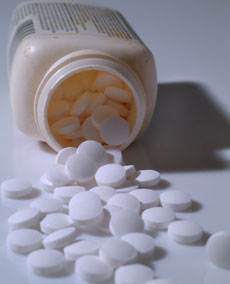
I can't change my past decisions, or those of my doctors, but armed with the accumulated knowledge about Paxil that I've had to seek out on my own, I am fighting it head-on. GSK claims that a tapering down to 20mgs a day and then nothing is the way to stop the drug. Well, my dose has only ever been 20 mgs. So, judging from my sensitivity to stopping it, I have taken an almost ridiculously slow approach to ending my dependence. With the help of a pill slicer, I have shaved off one eighth of a pill every two to three weeks.
Today, I'm on half the dose I was before - and the withdrawal effects, to date, have been manageable. The greatest help in dealing with them, though, has been the ability to recognize that what I thought was my so-called 'chemical imbalance' is simply a temporary withdrawal reaction. Something that, had there been more transparency in the drug policy sector, I would have known as a 22-year-old.
Jessica Werb is a Vancouver writer whose work appears regularly in The Georgia Straight, The Vancouver Courier and Shared Vision magazine. She has also written for The Knowledge Network's online resources as well as UK newspapers and magazines. ![]()


32
Login or register to post comments
anonymous (not verified)
7 years ago
http://www.mentalhealth.com/ ~~~ http://www.hans.org/ ~~~ http://www.sntp.net/fda/piper_griffin.htm
cypher (not verified)
7 years ago
I live to bold Tyee message boards.
Heeeeeheeeeeheeeeeheeeee!:)
anonymous (not verified)
7 years ago
The Vancouver Sun, Friday, October 22, 2004: a special report on alternative medicine.
Joseph (not verified)
7 years ago
I was on Paxil 3-4 yrs ago.More or less for the same reasons as Jessica. My first two weeks on them were hell, I had head aches, dry mouth ,out of body experince,tired, no energy, sweats, excesssive ringing in my ears, etc, etc. I consulted with my Doctor, his remady was to lower my dosage, he informed me that in order for this medication to work I must accept these symptoms .Ok I thought he's the Doctor he knows best, and not to worry about addiction as their not addictive, I could stop taking them any time he stated. Another week or so Im finally through the so called adjustment period. Now I really feel and think Im a some body. Don't care what I say to people, gladly give my opinion on just about any subject even though no one asked for it. This went on for about 10 months. My memory was also being affected although I never realized this untill after I had stopped taking Paxil but by then I got my self involved in a fairly serious matter. I made a judgement call, It cost me about 20,000 Bucks. While on Paxil, along with the previous mentioned symptoms,I found concentration very difficult at times, my mind would continuly want to wonder.My job called for a very high degree of concentration. Paxil took in into places and situations that I normally would never have ever taken. Finally I had enough I went to see my Doctor, he was away (again) I asked that my files be prepared for tranfer to another doctor, they were. I quit that Doctor and the Paxile the same day.I went through mild withdrawals for about 10-12 days I thank my lucky stars that I got off them when I did. I know for a fact that, had I not been on paxil, I would have never made that 20,000 dollar judgement call, it just is'nt my nature.
Anonymous
7 years ago
Anonymous
7 years ago
?
shirin (not verified)
7 years ago
These issues are exactly what I aim to launch a roundtable forum on involving both biotech/industry, medical practioners, and the public in the near future. As a life scientist, I am absolutely disillusioned by the end worth and objective my research - which has changed from discovery and enlightenment to massive drug production for public consumption. It is now called "intelligent drug design" - no talk of prevention of diabetes or removing toxins from our environment which lead to our cancers, our depressions, our endocrinological disorders. Science has turned into both the producers and "curers" of human disease. I am also weary now - despite being an immunologist - of the overenthusiastic jumping for the lucrative flu vaccines pumped out like oil from a well. There should be an independent group of scientists working with the Pharmawatch group to help put together clinical studies for reference and making sense of the nonsense - much like the CSPI (Centre for Science for Public Interest). It is ridiculous that drug companies are left to give the bad news on their pot of gold - like they are going to tell you it is actually lead in that pot when it is a pancea for the depression plaguing industrialized nations. The FDA just issued a warning of suicide in teens and children on antidepressants (serotonin uptake inhibitors like Paxil) - why are kids taking antidepressants? There is something wrong with this scene. I urge anyway prescribed ANY drug to look up its class, adverse reactions, precautions, and interactions with other drugs/food at Medscape.com under "druginfo" - this site is generally reserved for professionals who want to know what the heck they are prescribing - but I think it would be doubly useful for the patient (you may have to register for this information - but its free and very useful).
anonymous (not verified)
7 years ago
http://www.coopradio.org/ Wednesdays from 1 p.m. to 2 p.m. "Dynamic Health" (alternative perspectives)
anonymous (not verified)
7 years ago
The Vancouver Sun, Friday, October 22, 2004: a special report on alternative medicine
anon (not verified)
7 years ago
I have many problems with this article. Having been on antidepressants in the past, I feel the need to criticize Ms. Werb in her adding to the stigma that people like myself face. First of all, as has been pointed out earlier, the drug worked. The "debilitating panic attacks, anxiety and depression" were no longer. To add the dramatic fodder of garbage like "I burst into my university health clinic and explained that I thought it was time to try drugs. Ten minutes later, after being assured that there was no risk of addiction, I had my prescription. An hour later, I nervously took my first pill." is pure carelessness. As are the actions of anyone who "bursts" into anywhere looking for drugs. I, too, was on Paxil. Know what? My body didn't jive with it. And so I went off of it, as directed, very gradually, by a doctor. Effexor ended up being the drug that worked and gave me my life back. I've done as much homework as possible, and eventually was able to go off of it SAFELY by following very particular instructions. I am the 3rd generation who's suffered from Depression in my family. The anxiety and pressure (and not much understanding of treatment) caused my (otherwise healthy-as-an-ox) Grandfather to die of a heart attack in his forties. My mother was subjected to shock treatments, months of hospital care and other experiments in her early adult life, and through medication, was able to 'grab the reigns' by her mid-adult life, and is now very happy and functional. The drugs are not for everyone, it must be a personal and educated decision. A major depression going untreated can be extremely dangerous and harder to come out of. Your scare tactics can possibly do more harm to those suffering than the drugs themselves. What people have to do is educate themselves as much as possible, and talk to their doctor about all options, and get a 2nd and 3rd opinion. What people should not do is "burst into an office" and demand drugs. That is pure ignorance. And don't let TV commercials dictate your health care decisions.
Jessica Werb (not verified)
7 years ago
What I explained is exactly what happened. I was at the end of my rope, and was instructed by a psychologist to visit a university psychiatrist. I told him I thought I needed to try drugs, and walked out with a prescription. I had resisted drug therapy for months, opting for cognitive behavioural therapy which did not help me get a better handle on the problem. I was young at the time, and most people develop such issues in their early twenties. Confidence to challenge medical authority figures when you're at your most vulnerable is difficult. You go to these people with the hope and trust that they can help you. I don't doubt that the drug worked for me -- I explain that my symptoms dissipated. I have written another article about how much the drug helped me at the time, but it left me hooked. That was not the purpose of this article. My critique is that no one at the time-- neither my doctor nor myself, nor anyone else I spoke to later on -- told me that I could suffer from withdrawal. Everyone said the drug would be safe if I ever got pregnant. No one thought that the reactions I had to dropping my dose or to trying to quit the medication were withdrawal symptoms -- just that I had a biochemical imbalance that needed medicating for the rest of my life. That is what one psychiatrist told me. All I am saying is that I was not given the information, and neither were the doctors I saw, about the addictive qualities of the drug, and the possible withdrawal symptoms. Nor was I explained a proper course of tapering. The first time I tried, the method failed completely. Obviously, no one knew how to go about it correctly. Only through my own research did I find a system that worked for me. My point is that consumers and patients need a voice to call on more transparency in the pharmaceutical industry. The drug trials were short, and what negative side effects were found were muffled, at least initially until public outcry forced a change. I would never burst into a doctor's office now and ask for drugs until I'd done my own research, but back then, I did the best I could with the information I had available. The world wide web was not yet a big thing -- I didn't even have an email address at the time. Google was not part of my vocabulary. Getting information was not that easy. Patient autonomy is a relatively new concept, and it's growing. I put my story out there as a caveat to others, and hope that other people will learn that they can take control of their illness and medication, and that we need all the information available. This was not meant to scare people away from drugs, but to let them know that we all need to get as much information as possible about the drugs we use. And my point about the ads is that drug companies are skipping over the doctors and lobbying directly to consumers to "ask their doctor" about drugs -- but getting information about those same drugs can be tricky. The pharmaceutical industry can't have it both ways: asking consumers to demand drugs, but not providing enough information about those drugs to allow consumers to make an educated choice. I hope you'll reread my article with these points in mind.
anon (not verified)
7 years ago
I appreciate the response. The story is quite harsh and I had (have) concern that it might scare some people away from a lot of options that can help. Much respect for doing the article, no matter how much people say the stigma of the big 'D' is receding, it unfortunately is still a scarlet letter once you admit you have it. It's nice to read an article by people who know, rather than those who don't. There's a lot you can't speak for if you haven't been there.
Celexa/Wellbutrin user (not verified)
7 years ago
Thanks for the article, it raises some important issues. It's very important for people to have ALL the information they can get. I hope that people who read it will read the entire thing and not just pick out the parts they want to hear. It's important to remember that the drugs CAN BE effective--as somebody else said, let's not throw the baby out with the bathwater.
I haven't tried to quit Celexa yet. I'm thinking about trying to quit Wellbutrin since I don't think it's actually doing anything--and if I up the dose to the point where I can feel something I just get jittery and have annoying drymouth. If I miss a couple of doses of Celexa I start to get weird pulsing headaches, which go away as soon as I take the pill. I'm kind of dreading the day I decide to quit. Not just because of withdrawl effects, but because I've tried reducing the Celexa dose in the past, and I REALLY feel it in terms of my mood. I just feel like crap all the time. I was told once that I might have to be on the drug forever. I hope this isn't the case.
The last thing I'll say is that Celexa works for my mood, doesn't seem to affect any of my faculties, and has no side effects (except for a reduced sex drive, which can be almost pleasant). Other people I've talked to had huge problems with Celexa. So nobody really knows what's going on, and THAT'S what I wish the doctors would tell you.
Colin Smith (not verified)
7 years ago
There is no miracle formula designed to cure acute anxiety, depression, avoidant personality disorder, etc etc. But if precribed medication is properly administered by a competent physician, and the patient is willing to undergo psychotherapy with a certified therapist, then the results can far outweigh the risks associated with Paxil, Zoloft, etc. Everyone is different and chemical imbalances in the brain do exist. I think it is irresponsible to advocate one method over another or worde yet, to dismiss all of them entirely. See professional help and do your homework. Psychological and physiologial problems are everybody's business. Thanks kindly for your worthy contribution to the 'debate', Ms. Werb.
Bill (not verified)
7 years ago
I was on Paxil for about 7 years and I have been off now for about a year. The withdrawals do not get much easier, even a year later. I still experience vertigo, dizziness, and nausea on a regular basis. The "shivers" I am happy to report, disappeared after about 8 months. (If you have stopped taking Paxil, you'll know what I mean by "shivers") I am hoping that a year from now, I will be withdrawal free.
Aaaaaaaagh! (not verified)
7 years ago
Wellbutrin User (not verified)
7 years ago
Very thought-provoking article. It's certainly important for people to know the possible side effects of drugs... particularly addiction... (which quite obviously the drug companies won't want you to know!) Thanks for your insight, and please remember everyone is unique and just maybe some of these people are better off 'addicted' than no longer alive due to suicide from severe depression. It does, however, need to be a personal decision by the individual, in consultation with whomever they can consult with..... doctors, therapists, other people who have suffered, literature such as this. The better educated we are on the topic, the more informed decisions we can make for our own personal needs.
CB (not verified)
7 years ago
I was on Paxil for anxiety disorder for about a year and a half 4 years ago. It worked for some things (reduced anxiety and resultant depression) and created other problems (sluggishness, loss of memory, too much appetite, too much sleep). Knowing I was very sesitive, I reduced the dosage very gradulaly over a month and a half and did have some withdrawl but I could manage it. I went back on Effexor for a year, 6 months after coming off Paxil, because of stress and my nervousness of "handling" my moods without anmy "help". I weaned myself gradually, counting out the tiny pills one by one. Did the anxiety go away? Absolutely not, but I am not good on drugs, and obviously I can manage without, so my condition is mild enough that I want to try by myself. To others, I am sure, my condition is anything but mild. But I want to try on my own. I have learned many things through my various therapies. 1) First, we live in a very disconnected, stressful society. The natural environment is not there as a stress-reducer, cars, noise, multitudes of people all cause a great deal of stress. I have my worst moments when I am in "unnatural" places with people I don't know. This says more about the society than about me. People need peace and nature because they are mammals! 2) Cognitive behavioral therapy helped a certain amount. Being in a room with other people who had the disorder and talking about strategies with them made me feel less alone. I wish this had been available 20 years earlier for me 3) Anti-depressant dull the limbic system, which is a primitive brain that all mammals have. This deals with our primary mammalian responses, and in humans this goes out of wack because we rationalize why responses are okay or not, instead of just accepting what the mammal in us tells us is correct. There is some very interesting information in a book by Michael ? called The Wisdom of the Body. It is about Cranial Sacral Therapy and has lots of info about this. I would recommend finding a good Cranial Sacral Therapist and one who also knows Somatic Experiencing. This also helps reorient old emotional block created by the limbic system. Worth checking into as a partial healing measure.
Julia Shaw (not verified)
7 years ago
I am currently trying to come off Seroxat I think you call it Paxil in the US. I have been on and off it for about 3 years, this time, I have been on it for 18 months, and I am finding withdrawal a nightmare! I feel so ill!! Any support to help me hang on in there would be welcome!!
Anon. (UK) (not verified)
7 years ago
I am currently trying to come off Seroxat I think you call it Paxil in the US. I have been on and off it for about 3 years, this time, I have been on it for 18 months, and I am finding withdrawal a nightmare! I feel so ill!! Any support to help me hang on in there would be welcome!!
Arthur Joyce (not verified)
7 years ago
First: Jessica, you have done us all a great public service with your articles. Bravo! Second: In answer to the respondent who mentions Effexor, let me relate MY personal hell with that drug. During the 2 and a half years I was on Effexor, I experienced: 1) a gradual lessening of its effectiveness in treating my depression; 2) a gradual but steady decline in my weight (normally the side-effect is uncontrollable weight GAIN, but in those who tend to be underweight such as myself, little-reported data shows this to be an additional potential side effect) which left me, according to some friends, looking "gaunt and malnourished"; 3) a gradual but steady decline in my immune system's ability to fight off even the most common virus, so that where normally I am seldom ever sick, I spent most of 2002 in bed from persistent flus and colds; 4) the drug left my sexually impotent (another underreported but common side effect); 5) and the whole agony culminated in a suicide attempt in which I drove my car over a cliff. I am very lucky to be alive today. However, when I tried to go off Effexor, it took me three separate tries--the first two times the side effects--occasional dizziness, 'brain buzzing', insomnia, confusion, night sweats, etc.--were just too severe despite a gradual reduction in the dose. Finally the third time I made it! And on my own, too. I'm told that for some the only way off the drug is a 3-month stay in hospital. I have heard of similar stories of withdrawal only from former heroin users and other SSRI antidepressant users. Yet neither my doctor, nor any of the drug company literature that came with Effexor, even hinted at ANY of these side effects nor the addiction factor. Anything I learned I had to find out on my own. I must concur with Jessica that the medical profession, due to huge marketing pressures from the pharmaceutical companies, has largely failed us. As most anyone knows, the Hippocratic Oath taken by all physicians states simply, "First, do no harm." Unfortunately the billion-dollar gun held to the head of regulatory agencies like the FDA and Health Canada by Big Pharma has virtually eliminated consumers' first line of defense from potentially dangerous or even fatal drugs. Have we all forgotten already about Thalidomide? I've been off this SSRI poison now for 17 months and my immune system has been gradually returning to normal, as has my sexual function, thankfully. I'm learning to accept my depression as part of my life, make adjustments for it when it hits, and just ride it out the best I can. Yet I continue to hear of my friends being prescribed these dangerous drugs and being told by their doctors there are "no side effects" and that they are "not addictive". This is an outrage. These doctors should, at least, be charged with malpractice, at worst, have their licenses to practise medicine temporarily or permanently suspended. OUR GOVERNMENTS should be in the forefront of prosecuting Big Pharma for the indescribable damage to millions of lives. Thank you Jessica for bringing this to light and for highlighting the new PharmaWatch advocacy group! -Art Joyce, New Denver, BC
Colleen Fuller (not verified)
7 years ago
Thanks to Jessica Werb and to Tyee for a really fantastic article. People who are having problems with anti-depressants can get useful information from a couple of good websites, including the one that Jessica mentioned in her article. A UK-based group called Benzodiazepine Awareness Network also has good information -- its website is http://www.benzo.org.uk/. This network was started by a group of people having trouble getting off "benzos" -- drugs like valium, librium, ativan, etc. But they also provide a lot of support information on SSRIs if you go to the bottom of the side bar and click on "SSRIs/AD News & Links". When Prozac was introduced it was estimated that about 1 in 10,000 people would suffer from clinical depression in their life times. Today the estimate is about 1 in 10 -- a thousand-fold increase. Other drugs are seeing a similar pattern. For example, the number of people who are diagnosed with high blood pressure and high cholesterol has doubled in the last six years. Why? Is it because something happened? Yes -- the guidelines used by doctors to diagnose people with these conditions were changed, resulting in a significant expansion of the market for the drugs used to treat these conditions. Guidelines are developed by clinicians who rely on the best available scientific evidence, but too often that evidence and those clinicians are influenced by the manufacturers of the drugs used to treat the condition the guidelines address. This isn't to say people don't have high blood pressure that should be treated, but it does suggest that something is going on that demands greater public scrutiny. That's why we need a better regulatory system than we currently have -- we depend on evidence, and if the "best evidence" is overly influenced by drug companies that's a problem. However, even if we have the best and most objective evidence and clinicians who operate at arms-length from the industry, we still need a system to monitor consumer experiences. That would involve studies of those experiences, and more stepped-up monitoring of reported adverse reactions, more intense efforts to inform people that they have a right to report directly without waiting for their doctors, pharmacists or the drug-maker to report on their behalf. Health Canada should also improve its website so that consumers have better access to information about the drugs they are being prescribed. Health Canada should enforce the ban on drug advertising -- in fact, it should enforce the Food & Drugs Act period. It could also monitor discussions like this one so they could see that many Canadians using anti-depressants are experiencing addiction problems. I hope that the folks who read Jessica's article and who believe they're having problems with prescription drugs will take the time to report it to PharmaWatch. I also hope that people will find support and advocacy groups with some knowledge about the problems they may be having -- and if there are no support/advocacy groups I hope they will consider starting one. Thanks again, Jessica -- Colleen Fuller, PharmaWatch (pharmawatch@pharmawatch.net)
FDAsux, but not all drugs do (not verified)
7 years ago
I think people need to remember that medication is a big business and is they are a for-profit industry and that we are just customers to these companies. We are disposiable, if we get cured - great! and if their drug kills us - so what? It is like the tobacco industry, their product kills their customers but they just aim to get more new ones then they kill. The difference that these drugs do change and save lives. Synthetic insulin is saving and changing my life through an insulin pump every second of every day, but that doesn't change the horrible reaction it does to others. Unfortunately Seraquel, an atypical anti-pyschotic given to me many years ago, for PTSD flashbacks, when first on the market, is what gave me diabetes in the first place. The comapny knew it cause diabetes, it warned customers/patients/doctors in Japan, but not in the US, because the FDA didn't require them to until enough US patients taking atypical antipsychotics got diabetes. Even then they tried to blame the patients for getting the diabetes - they blamed our "lifestyles", our mental illnesses, every thing but the drugs they developed and sold to us that gave us diabetes in the first place. The FDA needs to be held accountable for some of the problems with drugs in the USA. How could the FDA not know that a drug labelled as causing diabetes in Japan would cause diabetes in the USA? How could the FDA NOT know that a "super aspirin" like Vioxx would cause heart and bleeding problems or at least ask for studies about this, any person who knows high doses of regular aspirin would what it does would know to do that, but the FDA has no power because the drug companies has them in their back pockets. So people with mental illness get horrible problems coming off of some of the SSRIs and they get diabetes from the atypical anti-psycotics and diabetics get reactions from synthetic insulins sometimes and people with arthritis get bleeding ulcers -- and I would like to say that I have had all of these problems, trouble coming off of SSRIs, diabetes from Seraquel, trouble with the synthetic insulin (although a different one is my Godsend) and a bleeding ulcer from a "super asprin" (in this case Celebrex) taken for Arthritis (in this case Rheumatoid Arthritis). Now you might say I have terrible luck, but I'm from Boston, so if the Red Sox had the curse of the Bambino then I think I have the Curse of the FDA mal-regulators. A least now I know curses can be reversed, it just might take 86 years.
anonymous (not verified)
7 years ago
http://www.mercola.com/
John, Remeron user (not verified)
7 years ago
I think that part of the problem is GPs being asked to dispense psychtropic meds, without advanced training. All SSRIs operate somewhat differently; the range of them is supposed to allow broader access to meds that work. I was on MAOs before I tried serzone--which gave me migraines. Venlafaxine (sic) worked, but it disrupted my sleep and sexual function. After 18 months I had a devil of time getting off it (like the author); ironically we used a wee dosage of Paxil to make the final leap. Eventually I ended up on Remeron. Sleep well, no sexual dysfunction, no major side effects. Before I found meds that worked for me I got through life OK, with brutal bouts of despair and an inability to set any sort of goals beyond day-to-day and week-to-week. Post-meds I've returned to university, am having a great career and in a wonderful marriage. I know--KNOW--that none of this would've been possible without the right anti-depressants. I hope others find similar results--but mine were prescribed by a psychiatrist, who had a wealth of experience to help him narrow the choices to proffer me.
Janice (not verified)
7 years ago
I find this to be very interesting. I myself was given paxil at the age of 40 for anxiety associated with pms. Oh my God!! Had I know then what I know now. Took it for 1 week and felt absolutley horrible. Dr. reassured me it would pass as my body adjusted. So, I continued for another 2 weeks all the time calling to report the side effects. Finally he said o.k. you probably need to stop. Cold Turkey!!! After only 3 weeks. It has now been almost 2 years and I still suffer from withdrawl side effects. I truly believe this is one of the most dangerous drugs available to the public. YOur damned if you stay on the drug and your damend if you go off. How many people have been thrown into deep depressions because of this drug? Adults as well as teenagers. I do not know how the makers of this drug are even able to sleep at night. Good luck to anyone going on or going off of this. It will literally be hell!!!
Anonymous
7 years ago
anonymous (not verified)
7 years ago
“Certain emotional patterns seem to make people more likely to find emotional relief in one substance rather than another.†-- Daniel Goleman, “Emotional Intelligence†(Bantam trade paperback edition), page 254, © 1995 by Daniel Goleman. ISBN 0-553-37506-7.
smartenupsoon (not verified)
7 years ago
Duh, it is about time people found out that for less than $6.00 a bottle, they can buy a natural anti-depressant supplement. It is called folic acid, and it has been around for eternity. And guess what, it has NO side effects, no withdrawal effects and it works!!!
Glen Downey (not verified)
7 years ago
Heres' Some Food for Thought!! I am a 41 yr old Student as of now.. My old Profession was a Long Haul trucker, and was successful @ it for 5 yrs.. Until my Depression raised its' ugly head, back in Aug. 2002.. Now I left this wonderful Profession and now am Pursuing upgrading, and have til Aug 2004 to decide what i want to take, given my Medical Condition.. I have been on Paxil for 5 yrs now, and I have to say, that it did wonders for me, but of course SSRIs' tend to poop out, and are not as effective overtime.. Needless to say, I did, However, see a Psychiatrist, and quit whereas she wanted me to go on Effexor.. "Another Total Different Animal"" So, one day last June my Pharmacist gave me Generic Paxil, as the Patent ran out on Paxil.. Well I paid for my Meds, not looking @ the Amount on the Debit Card Machine, and proceeded taking this Med.. However, I was not informed about the generic Paxil, and after all they are still the same Color.. I did not even look @ the Brand Name on the pill bottle, Hence I was on the Generic for about a week, when I started feeling what I can only describe as Brain Shivers.. I looked @ the Generic Paxil, and then and only then I realized that Generic Paxil is ineffective.. I was told by my Pharmacist, that it was probably a Placebo Effect, and I told him that I did not even look @ the label.. I was more pissed off @ the fact I was not informed that I was being given a Generic Brand.. I guess thats' what President George Bush meant by " Corrupt Canadian Drugs"" No field testing with Generic Drugs / Here in Canada anyway, thats my experience!!
Vanessa Anaya (not verified)
7 years ago
I was prescribed paxil when my 3rd daughter was about 6 months old. I have now been on the drug for 5 years. I have experienced major problems with this medication. At first it helped me alot. Infact, if it were not for lack of sex drive, I would have never tried to get off it when I did. I went to my doctor after 2 years of being on 40 mlgs. Told him that my sex life was less then pleasing, and I knew it was a side effect of the paxil. I was told if I felt like decreasing my paxil slowly, I could get off of it. Well, during the period of time I started the decreasing of paxil I felt as if my heart was gonna jump out of my chest!! I could hear it beating in my ears!!! The vertigo was soooo extreme I could barely function. The sweats and nausea were horrible. And the panic and anxiety took over me!!! I felt as if I were going crazy!!! So, thinking it was ME and not the effects of withdrawel from paxil, I went back to my regular dosage!! On top of that, I was told by the doctor at the time it WAS ME!!! The meds could not do such a thing, that it was unheard of!!! When I commented on how after being off the regular dosage for 2 weeks and going back on it for just 24 hrs I was better. She said...Thats impossible, and it was in my head! So, ofcourse I believed it and just continued the paxil at 40 mlgs. I could go on and on about how many attempts I have made to get off the drug. Or even cutting it down!!! I CANT DO IT!!! I am a 32 year old mother of 3 and a wife. I have too much to do in a day to go through the horrible withdrawels from this medication!!! I suppose if I had the money I could check myself into a hospital and get the needed help. And afford a babysitter or some kind of help for my children while I was gone... BUT THAT WONT AND CANT HAPPEN!!! I am a regular person, stuck in this horrible world of paxil FOREVER!!!!! All it takes is 1 day without the medication for me to loose it! My husband can see it on my face if I happen to run out, he trys soooo hard to help me. No one can though. I am alone in this paxil hell. If I would've known then, what I know now, I would have NEVER chosen to take this medication!!! Some people seem to have all the answers, you cannot know what you speak of until you get your back up against a wall like myself. I went into this innocently. I just confided in a doctor about some issues. And because of a little anxiety I was put on 40mlgs, from the start!! I think I should have been warned about the side effects. But from what I have read since that time (1999) I guess these effects were not known?!
Braden Mack - Sportswriter (not verified)
7 years ago
you don't say...