


 SHARE:
[Part one of a two-part series. Catch part two next Friday.]
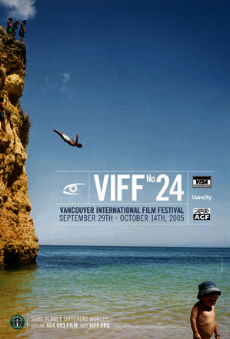
Oh VIFF, how I do I love thee, let me count the ways…all 329 of them. That's a lot of film, and sometimes picking the ones to see is simply a guessing game. But loyal Tyee people, I'm here to help, having had some intimate acquaintance with the VIFF lately (I watched 40 feature films and then I fell over). I was close enough to feel its hot breath on my face, and see its great luminous eyes staring out of the dark. Yes, it's a beast all right, but one that can be tamed and taught to fetch.
If you only have the time and energy to see a few VIFF Films, here is the pick of the litter:
1) L'Enfant or Caché
2) Princess Racoon
3) Punk: Attitude
4) As Hours Go By
5) Why We Fight
But for those of you who like to get down and wrestle, read on.
Dragons and Tigers
A local paper recently mis-termed the category "Dungeons & Tigers," which gives it an entirely different take, don't you think? Cherry-picked by the inestimable, if slightly terrifying, Tony Rayns, (speak his name in hushed tones, lest he suddenly appear before you, wreathed in coils of smoke and brimstone).
I jest, at least I think I do, but there are some choice offerings including Ryoo Seung-Wan's Crying Fist and Suzuki Seijun's Princess Raccoon. Princess Racoon has been getting good word of mouth for months, and when it screened at the Asian Film Festival in New York City, the critics were yipping like puppies. New York Times critic Manohla Dargis said of director Suzuki Seijun's musical opus, "mad, nuts, lysergic, wonderful, kitsch, genius...In other words: I had a blast."
Michael Atkinson of the Village Voice also had some love to give, calling the film "A self-mocking operetta whose song styles range from the Nippon-ized Jacques Brel-ishness to 70s album rock, set on deep-dish-Dada ballet sets that are regularly subsumed by digital mythopoeia and headlong design nuttiness."
Takeshis' is the newest film from Takeshi Kitano in one of his many different guises -- comic, host of TV shows, artist, auteur, writer and occasional bully boy. Kekexili: Mountain Patrol is also worth a look, unless you have a deep attachment to your pashima scarf. Nagasaki Shunichi's Heart, Beating the Dark has its world premiere at the VIFF. Kumakiri Kazuyoshi's The Volatile Woman and Kim Dae-Seung's Blood Rain are also worth lining up for.
NNF
That's non-fiction features to you, buddy. Again, the docs come out swinging with giant Buddhas, polygamists, ballerinas, and Michael Moore, always Michael Moore.
Since we appear to be living in the end days, it's fitting that many of the VIFF films take as their subjects the sorry state of the world. The terrible thing is that often, the whole world over, the problems are all the same: greed, violence and corruption so deep and thick you could wade through it in boots. Whether it's in Utah, where Morman polygamists trade in the flesh of women and children, and grow fat and rich in the process; or Haiti where the 33rd coup in the country's history removed Jean-Bertrand Aristide from power; or the sorry state of Argentina systematically sold off to multinational and conglomerates while its children starve in the streets. What can you do with injustice that systematic?
If you're Fernando E. Solanas, you make a film. And not just any film, but a howl of rage and protest so loud and sustained that even six bullets won't shut you up. Like the more passionate version of Naomi Klein's, The Take, A Social Genocide will burn into your brain like a brand. Come out and decide whether you can bear to keep on like you've been doing.
Better to move to mountains, set up a ranch and take all your clothes off, but even that comes with its own unique set of challenges, as the residents of Black Bear Ranch found out, when they started their commune in 1968. Thirty-seven years later, it's still kicking in Commune.
Many of non-fiction films need to be seen back to back, you can't watch Nicole Conn's Little Man, about the director's struggle with her severely premature infant son, without thinking about Kim Longinotto and Florence Ayisi's Sisters In Law, set in a tiny town in the Cameroon where female lawyers and judges are waging a battle for the lives of many children.
So too, Divided State, which takes as its subject Michael Moore's visit to a small college in Utah, and Banking on Heaven, a secretly shot documentary about the Morman polygamists sect, a branch of which calls Bountiful, British Columbia (near the town of Creston) home. The film alleges that the practice of human trafficking, child abuse, and welfare fraud (termed bleeding the beast) have been allowed to continue for 100 years without prosecution largely because of the Morman presence in every level of Utah State government.
Eugene Jarecki's Why We Fight, is necessary viewing. And if you simply want to feel happy then go see Don Letts' Punk: Attitude and mosh with pure joy.
He ain't heavy, he's my auteur...
Think you're cinéaste, well do ya? PUNK! Take this then -- Caché from Michael Haneke (winner of Best Director prize at Cannes), and L'Enfant from the Dardennes Brothers and The Brothers Quay. Michael Haneke again takes a bourgeoisie couple (Juliette Binoche and Daniel Auteuil) in trouble, (although there are echoes of the director's earlier films such as Funny Games, and Time of the Wolf) it bears more resemblance to a much earlier Haneke penned script, The Moor's Head, in which a father, also named Georg goes slowly mad. (Why Haneke calls his lead characters Anna and George in almost every film, I do not know.) The Moor's Head ended with a quotation from the German writer G.E. Lessing: "Believe me: if a person does not lose his mind over certain things, then he has no mind to lose." If that sounds like your cup of tainted tea, than welcome, come right in, my friend, pull up an aisle seat.
The Brothers Quay are back after a ten year absence, with the Piano Tuner of Earthquakes, another uneasy romp through a land of dead-eyed dolls, even deader opera singers, dread doctors and general malignancy. I still remember seeing The Quay's Street of Crocodiles in the Van East Cinema almost twenty years ago, and it hit like a brick in the head, the sense of atmosphere, as unwholesome and pervasive as a fevered dream. Like the Brother's earlier live action opus Institute Benjamenta, you may leave slightly odder than when you came.
The Dardennes boys picked up the Palme d'Or this year for their film about a thoroughly despicable young man who undergoes a sea change of sorts. Dogme 95 is well represented with Lars von Trier's Manderlay, and Thomas Vinterberg's Dear Wendy, both take as their territory, the American myth writ large.
Over and Above
Some films take place on an entirely other level, a place beneath conscious thought; try as you might to resist, they embed themselves in you, permeating your mind and memory. These are usually the films that initially you hate, that you struggle against. I still remember the feeling of coming out Godard's Weekend in a state of fury so profound, I could have committed murder and been found not guilty. But I also still remember the film. David Lynch's Mulholland Dr., Hayao Miyazaki's My Neighbour Totoro are two other, vastly different, examples of this phenomena.
Add to this list director Inés de Oliveira Cézar's, Hours Go By, a deceptively simple, but strangely affecting film, which consists of two trips -- father and child and mother and grandmother, and time -- that fragile, elusive third element, always taking us somewhere we're not quite prepared to be -- yet. Stunningly beautiful and terribly relentless, moving ever forward towards a destination as preordained as it is unavoidable.
After watching so many films one after the other, see if you too start to discern some larger patterns at work. It's more amorphous than any one culture or country, since the question is almost theological in nature, here we have the forces of good -- whether that good is the Ballets Russes, giant statues of Buddha, or the music of Elliot Carter and Arvo Pärt, ranged against the forces of corruption, stupidity, lust, greed, and violence.
I know I'm getting vague but bear with me here. It's not a binary system, but the ongoing perpetual struggle to make right, to expose wrong, to tell stories, to reveal, to document, all the millions of different human stories. Which in the end make up the one very big human story. Someone asked me if there was any single VIFF film that I really hated, and in all honesty I had to say no. Each one I saw had something, even if that something is as allusive and ungraspable as a sense of atmosphere, another place, time, or way of looking at the world. No wonder cinéphilia is a life-long love affair.
Dorothy Woodend reviews films for The Tyee every Friday. This year, she helped to write the program guide for the VIFF. ![[Tyee]](/design-article.thetyee.ca/ui/img/yellowblob.png)




Tyee Commenting Guidelines
Comments that violate guidelines risk being deleted, and violations may result in a temporary or permanent user ban. Maintain the spirit of good conversation to stay in the discussion.
*Please note The Tyee is not a forum for spreading misinformation about COVID-19, denying its existence or minimizing its risk to public health.
Do:
Do not: