

 SHARE:
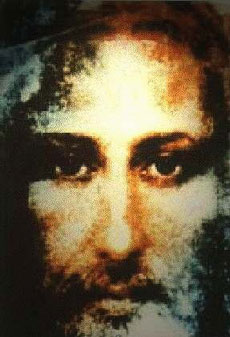
[Seventh in an eight-part series from The Impossible Will Take a While: A Citizen’s Guide to Hope in a Time of Fear, edited by Paul Rogat Loeb.]
You have heard that it was said, “An eye for an eye and a tooth for a tooth.” But I say to you, Do not resist one who is evil. But if anyone strikes you on the right cheek, turn to him the other also; and if anyone would sue you and take your coat, let him have your cloak as well; and if any one forces you to go one mile, go with him two miles. (attributed to Jesus in Matthew 5:38–41, Revised Standard Version)
Many who have committed their lives to working for change and justice in the world simply dismiss Jesus’ teachings about nonviolence as impractical idealism. And with good reason. “Turn the other cheek” suggests the passive, Christian doormat quality that has made so many Christians cowardly and complicit in the face of injustice. “Resist not evil” seems to break the back of all opposition to evil and counsel submission. “Going the second mile” has become a platitude meaning nothing more than “extend yourself.” Rather than fostering structural change, such attitudes encourage collaboration with the oppressor.
Jesus never behaved in such ways. Whatever the source of the misunderstanding, it is neither Jesus nor his teaching, which, when given a fair hearing in its original social context, is arguably one of the most revolutionary political statements ever uttered.
When the court translators working in the hire of King James chose to translate antistenai as “Resist not evil,” they were doing something more than rendering Greek into English. They were translating nonviolent resistance into docility. The Greek word means more than simply to "stand against" or "resist." It means to resist violently, to revolt or rebel, to engage in an insurrection. Jesus did not tell his oppressed hearers not to resist evil. His entire ministry is at odds with such a preposterous idea. He is, rather, warning against responding to evil in kind by letting the oppressor set the terms of our opposition.
A proper translation of Jesus’ teaching would then be, “Do not retaliate against violence with violence.” Jesus was no less committed to opposing evil than the anti-Roman resistance fighters like Barabbas. The only difference was over the means to be used.
Up against evil
There are three general responses to evil: (1) violent opposition, (2) passivity, and (3) the third way of militant nonviolence articulated by Jesus. Human evolution has conditioned us for only the first two of these responses: fight or flight.
Fight had been the cry of Galileans who had abortively rebelled against Rome only two decades before Jesus spoke. Jesus and many of his hearers would have seen some of the two thousand of their countrymen crucified by the Romans along the roadsides. They would have known some of the inhabitants of Sepphoris (a mere three miles north of Nazareth) who had been sold into slavery for aiding the insurrectionists’ assault on the arsenal there. Some also would live to experience the horrors of the war against Rome in 66–70 C.E., one of the ghastliest in history. If the option of fighting had no appeal to them, their only alternative was flight: passivity, submission, or, at best, a passive-aggressive recalcitrance in obeying commands. For them no third way existed.
Now we are in a better position to see why King James’ servants translated antistenai as “resist not.” The king would not want people concluding they had any recourse against his or any other sovereign’s unjust policies. Jesus commands us, according to these king’s men, to resist not. Jesus appears to say say that submission to monarchial absolutism is the will of God. Most modern translations have meekly followed the King James path.
Neither of the invidious alternatives of flight or fight is what Jesus is proposing. Jesus abhors both passivity and violence as responses to evil. His is a third alternative not even touched by these options. The Scholars Version translates Antistenai brilliantly: “Don’t react violently against someone who is evil.”
Turn the other cheek?
Jesus clarifies his meaning by three brief examples. “If anyone strikes you on the right cheek, turn to him the other also.” Why the right cheek? How does one strike another on the right cheek anyway? Try it. A blow by the right fist in that right-handed world would land on the left cheek of the opponent. To strike the right cheek with the fist would require using the left hand, but in that society the left hand was used only for unclean tasks. As the Dead Sea Scrolls specify, even to gesture with the left hand at Qumran carried the penalty of ten days penance. The only way one could strike the right cheek with the right hand would be with the back of the hand.
What we are dealing with here is unmistakably an insult, not a fistfight. The intention is not to injure but to humiliate, to put someone in his or her place. One normally did not strike a peer in this way, and if one did the fine was exorbitant (four zuz was the fine for a blow to a peer with a fist, 400 zuz for backhanding him; but to an underling, no penalty whatever). A backhand slap was the normal way of admonishing inferiors. Masters backhanded slaves; husbands, wives; parents, children; men, women; Romans, Jews.
We have here a set of unequal relations, in each of which retaliation would be suicidal. The only normal response would be cowering submission. It is important to ask who Jesus’ audience is. In every case, Jesus’ listeners are not those who strike, initiate lawsuits, or impose forced labor. Rather, Jesus is speaking to their victims, people who have been subjected to these very indignities. They have been forced to stifle their inner outrage at the dehumanizing treatment meted out to them by the hierarchical system of caste and class, race and gender, age and status, and by the guardians of imperial occupation.
Why then does Jesus counsel these already humiliated people to turn the other cheek? Because this action robs the oppressor of power to humiliate them. The person who turns the other cheek is saying, in effect, “Try again. Your first blow failed to achieve its intended effect. I deny you the power to humiliate me. I am a human being just like you. Your status (gender, race, age, wealth) does not alter that. You cannot demean me.”
Such a response would create enormous difficulties for the striker. Purely logistically, how can he now hit the other cheek? He cannot backhand it with his right hand. If he hits with a fist, he makes himself an equal, acknowledging the other as a peer. But the whole point of the back of the hand is to reinforce the caste system and its institutionalized inequality.
No limits to giving?
The second example Jesus gives is set in a court of law. Someone is being sued for his outer garment. Who would do that and under what circumstances? Only the poorest of the poor would have nothing but an outer garment to give as collateral for a loan. Jewish law strictly required its return every evening at sunset, for that was all the poor had in which to sleep. The situation to which Jesus alludes is one with which his hearers would have been too familiar: the poor debtor has sunk ever deeper into poverty, the debt cannot be repaid, and his creditor has hauled him into court to wring out repayment.
Indebtedness was the most serious social problem in first-century Palestine. Jesus’ parables are full of debtors struggling to salvage their lives. It is in this context that Jesus speaks. His hearers are the poor (“if anyone would sue you”). They share a rankling hatred for a system that subjects them to humiliation by stripping them of their lands, their goods, finally even their outer garments.
Why then does Jesus counsel them to give over their inner garment as well? This would mean stripping off all their clothing and marching out of court stark naked! Put yourself in the debtor’s place; imagine the chuckles this saying must have evoked. There stands the creditor, beet-red with embarrassment, your outer garment in one hand, your underwear in the other. You have suddenly turned the tables on him. You had no hope of winning the trial; the law was entirely in his favor. But you have refused to be humiliated. At the same time you have registered a stunning protest against a system that spawns such debt. You have said, in effect, “You want my robe? Here, take everything! Now you’ve got all I have except my body. Is that what you’ll take next?”
Serious clowning
Nakedness was taboo in Judaism. Shame fell not on the naked party but the person viewing or causing one’s nakedness (Genesis 9:20–27). By stripping you have brought the creditor under the same prohibition that led to the curse of Canaan. As you parade into the street, your friends and neighbors, startled, aghast, inquire what happened. You explain. They join your growing procession, which now resembles a victory parade. The entire system by which debtors are oppressed has been publicly unmasked. The creditor is revealed to be not a “respectable” moneylender but a party in the reduction of an entire social class to landlessness and destitution. This unmasking is not simply punitive, however; it offers the creditor a chance to see, perhaps for the first time in his life, what his practices cause—and to repent.
Jesus in effect is sponsoring clowning. In so doing he shows himself to be thoroughly Jewish. A later saying of the Talmud runs, “If your neighbor calls you an ass, put a saddle on your back.”
The Powers That Be literally stand on their dignity. Nothing takes away their potency faster than deft lampooning. By refusing to be awed by their power, the powerless are emboldened to seize the initiative, even where structural change is not possible. This message, far from being a counsel of perfection unattainable in this life, is a practical, strategic measure for empowering the oppressed. It provides a hint of how to take on the entire system in a way that unmasks its essential cruelty and to burlesque its pretensions to justice, law, and order.
Go the second mile?
Jesus’ third example, the one about going the second mile, is drawn from the enlightened practice of limiting the amount of forced labor that Roman soldiers could levy on subject peoples. A soldier could impress a civilian to carry his pack one mile only; to force the civilian to go further carried with it severe penalties under military law. In this way Rome tried to limit the anger of the occupied people and still keep its armies on the move. Nevertheless, this levy was a bitter reminder to the Jews that they were a subject people even in the Promised Land.
To this proud but subjugated people Jesus does not counsel revolt. One does not “befriend” the soldier, draw him aside, and drive a knife into his ribs. Jesus was keenly aware of the futility of armed revolt against Roman imperial might. He minced no words about it, though it must have cost him support from the revolutionary factions.
But why walk the second mile? Is this not to rebound to the opposite extreme: aiding and abetting the enemy? Not at all. The question here, as in the two previous instances, is how the oppressed can recover the initiative, how they can assert their human dignity in a situation that cannot for the time being be changed. The rules are Caesar’s but not how one responds to the rules. The response is God’s, and Caesar has no power over that.
Imagine then the soldier’s surprise when, at the next mile marker, he reluctantly reaches to assume his pack (sixty-five to eighty-five pounds in full gear). You say, “Oh no, let me carry it another mile.” Normally he has to coerce your kinsmen to carry his pack; now you do it cheerfully and will not stop! Is this a provocation? Are you insulting his strength? Being kind? Trying to get him disciplined for seeming to make you go farther then you should? Are you planning to file a complaint? To create trouble?
Throwing power off balance
From a situation of servile impressment, you have once more seized the initiative. You have taken back the power of choice. The soldier is thrown off-balance by being deprived of the predictability of your response. Imagine the hilarious situation of a Roman infantryman pleading with a Jew, “Aw, come on, please give me back my pack!” The humor of this scene may escape those who picture it through sanctimonious eyes. It could scarcely, however, have been lost on Jesus’ hearers, who must have delighted in the prospect of thus discomfiting their oppressors.
Some readers may object to the idea of discomfiting the soldier or embarrassing the creditor. But can people engaged in oppressive acts repent unless made uncomfortable with their actions? There is, admittedly, the danger of using nonviolence as a tactic of revenge and humiliation. There is also, at the opposite extreme, an equal danger of sentimentality and softness that confuses the uncompromising love of Jesus with being nice. Loving confrontation can free both the oppressed from docility and the oppressor from sin.
Even if nonviolent action does not immediately change the heart of the oppressor, it does affect those committed to it. As Martin Luther King, Jr. attested, it gives them new self-respect and calls on strength and courage they did not know they had. To those with power, Jesus’ advice to the powerless may seem paltry. But to those whose lifelong pattern has been to cringe, bow, and scrape before their masters, to those who have internalized their role as inferiors, this small step is momentous.
Jesus’ Third Way:
• Seize the moral initiative.
• Find a creative alternative to violence.
• Assert your own humanity and dignity as a person.
• Meet force with ridicule or humor.
• Break the cycle of humiliation.
• Refuse to submit or to accept the inferior position.
• Expose the injustice of the system.
• Take control of the power dynamic.
• Shame the oppressor into repentance.
• Stand your ground.
• Force the Powers into decisions for which they are not prepared.
• Recognize your own power.
• Be willing to suffer rather than retaliate.
• Force the oppressor to see you in a new light.
• Deprive the oppressor of a situation where force is effective.
• Be willing to undergo the penalty of breaking unjust laws.
What Jesus would have done
It is too bad Jesus did not provide fifteen or twenty more examples since we do not tend toward this new response naturally. Some examples from political history might help engrave it more deeply in our minds:
In Alagamar, Brazil, a group of peasants organized a long-term struggle to preserve their lands against attempts at illegal expropriation by national and international firms (with the connivance of local politicians and the military). Some of the peasants were arrested and jailed in town. Their companions decided they were all equally responsible. Hundreds marched to town. They filled the house of the judge, demanding to be jailed with those who had been arrested. The judge was finally obliged to send them all home, including the prisoners.
During the Vietnam War, one woman claimed 79 dependents on her United States income tax, all Vietnamese orphans, so she owed no tax. They were not legal dependents, of course, so were disallowed. No, she insisted, these children have been orphaned by indiscriminate United States bombing; we are responsible for their lives. She forced the Internal Revenue Service to take her to court. That gave her a larger forum for making her case. She used the system against itself to unmask the moral indefensibility of what the system was doing. Of course she “lost” the case, but she made her point.
During World War II, when Nazi authorities in occupied Denmark promulgated an order that all Jews had to wear yellow armbands with the Star of David, the king made it a point to attend a celebration in the Copenhagen synagogue. He and most of the population of Copenhagen donned yellow armbands as well. His stand was affirmed by the Bishop of Sjaelland and other Lutheran clergy. The Nazis eventually had to rescind the order.
It is important to repeat such stories to extend our imaginations for creative nonviolence. Since it is not a natural response, we need to be schooled in it. We need models, and we need to rehearse nonviolence in our daily lives if we ever hope to resort to it in crises.
Today we can draw on the cumulative historical experience of nonviolent social struggle. But the spirit, the thrust, the surge for creative transformation that is the ultimate principle of the universe—this is the same one we see incarnated in Jesus. His teaching reads like a practical manual for empowering the powerless to seize the initiative even in situations impervious to change.
To risk confronting the Powers with such clown-like vulnerability, to affirm at the same time our own humanity and that of those we oppose, to dare to draw the sting of evil by absorbing it—such behavior is unlikely to attract the faint of heart. But to people dispirited by the enormity of the injustices that crush us and the intractability of those in positions of power, Jesus’ words beam hope across the centuries. We need not be afraid. We can assert our human dignity. We can lay claim to the creative possibilities that are still ours, burlesque the injustice of unfair laws, and force evil out of hiding from behind the facade of legitimacy.
Walter Wink’s newest book is Jesus and Nonviolence: The Third Way (Fortress Press, 2003). He is the author of many other books including Engaging The Powers (Fortress Press, 1992) and The Powers That Be (Galilee, 1999). Printed with the permission of Walter Wink.
This is the Tyee’s seventh excerpt from The Impossible Will Take a Little While: A Citizen’s Guide to Hope in a Time of Fear, edited by Paul Rogat Loeb. One more excerpt will appear next Monday.
![[Tyee]](/design-article.thetyee.ca/ui/img/yellowblob.png)












Tyee Commenting Guidelines
Comments that violate guidelines risk being deleted, and violations may result in a temporary or permanent user ban. Maintain the spirit of good conversation to stay in the discussion.
*Please note The Tyee is not a forum for spreading misinformation about COVID-19, denying its existence or minimizing its risk to public health.
Do:
Do not: