

 SHARE:
- Consumer Republic
- McClelland & Stewart (2011)
Don Draper: "The product is good. It's high quality. Dogs love it, but the name is poisoned."
Client: "That name got us where we are. Do you think that was just luck?"
Don Draper: "I'm not saying a new name is easy to find. And we will give you a lot of options. But it's a label on a can. And it will be true because it will promise the quality of the product that's inside." -- Mad Men, episode 3.11
Don Draper delivers that advice with the gravity of a doctor telling his patient about their tumour. Bad press can kill you, but there's a solution: re-brand. Sell the same horse meat as dog food under a different name and you'll stay in business. A brand can make a company and a fortune, but it can also break it.
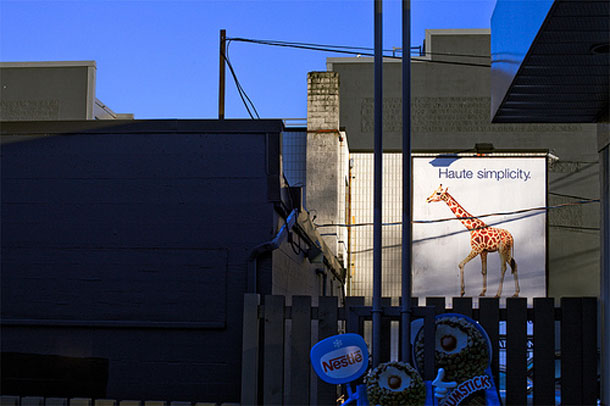
Bruce Philp's book, Consumer Republic, argues that brands are not merely the label on the can, but a relationship between corporation and consumer, which can be mutually beneficial.
Philp, a three-decade veteran marketer and teacher, surveys the state of the world's wealthiest and perhaps most consumption-driven society at the end of the '00s, with a near-collapsed economy, a fragmented culture and marketplace, and a battered environment and sees cause for hope, a third way akin to sustainable development.
The thesis is that a brand is the means by which corporation and consumer can each monitor the other and, most importantly for this argument, the consumer can exert control over the corporation by voting with their wallets. A brand is a promise the consumer can hold the corporation to.
Brands are slippery
Early in the book, Philp brings up an example of the Tylenol product tampering in the early 1980s, which resulted in the death of seven people, and how Johnson & Johnson recovered their brand from that. In part, they did it by implementing anti-tampering measures in their products and packaging. That brand, says Philp, is why we buy Tylenol brand pain relief, even when the same 325mg caplets of acetaminophen is available in a generic brand for a few bucks less on the same pharmacy shelf.
This seems an attractive idea. Consider how Naomi Klein hammered Nike for their overseas labour practices in her book No Logo, or how Morgan Spurlock's documentary Supersize Me got MacDonald's to change their menus. Compared to the slow and often fruitless grind of trying to force corporations to reform via the legislative process, using the media to shame them into doing the right thing seems quick, easy and effective.
Brands are slippery things to pin down, even though they can be valued as high as billions of dollars. They can be seen as a mediating interface between the corporations, the consumers and the actual physical products.
When we see a name or a logo on a product, one made familiar by decades of advertising, we naturally assume that the product can't be too shoddily made or destructively produced; otherwise, the corporation wouldn't have lasted that long. When we see "PEONY" instead of "SONY" on a stereo, even if it is in the same typeface, we are naturally suspicious.
In the era of global capitalism, however, a product may have some or all of it made in any number of different places, and suppliers can change at any time. The same physical product may be transported far from its point of origin and repackaged in any number of ways. Axe, whose commercials promise male sexual adventure, and Dove, whose commercials pedal a mildly feminist message of body acceptance, are owned by the same company, Unilever, and when you open the packaging, be it bold metallics or whites and pastels, they're soap scented different ways. Unilever's diverse brands do the job of getting different market segments to buy the same stuff.
Brands have little to do with the product's merits and much to do with creating associations with vague, intangible qualities like "individuality," "authenticity," "freedom," "family," "exoticism," "edginess," and so on. If a brand is no guarantee of even a modicum of quality, then it diminishes the value as a source of leverage against the corporation. The corporation simply attaches different adjectives to the product until something sticks.
The brand's relationship with the corporation is as unstable as its relationship with the product.
Brands are for cows
Philp disagrees with the The Corporation's metaphor of the corporation as a psychopath. He characterizes it as a cow: a big, dumb, potentially dangerous but useful animal, and the brand is both the ear tag we use to track it and the nose ring we use to keep it tethered. The problem with this analogy is that we're dealing with some very slippery cows, ones that keep changing their minds about things.
Remember Apple's legendary "Nineteen Eighty-Four" TV commercial, the one that depicted the company as heroic upstart against conformism and authority? Twenty-seven years later, Apple is hardly a plucky underdog, as it dominates the music and smartphone markets and seeks to expand into television. According to some reports, it's even using proprietary screws in the latest iPhones so customers can't change their own batteries. Now Apple's brand means security and reliability, not liberation.
A brand isn't necessarily even a fair reflection of a corporation's policies or products. Philp takes the example of Porsche, which makes efficient, durable cars in clean factories, but the brand is still associated with yuppie jerks and snobs. Philp sees this as branding in the absence of common sense, but it undermines his thesis that brands are a means of transparency.
The relationship between brand and consumer is equally complicated. Philp sees the new communications channel of social media as a place where corporations and consumers can watch each other and communicate better, but consumers can use brands in a way their owners don't like. Paul Fussell, in his book Class, identified "prole creep," which is the practice of aspiring lower classes appropriating the signs of upper class affluence and thus depleting the brand's status. The LV logo and the Burberry tartan, once symbols of luxury goods, have been poached by urban youth, forever removing their exclusive cachet.
Branded goods have a complicated relationship with social class. Industrialization resulted in cheap, mass-produced goods. When just about everybody can afford a suit, it is no longer an indicator of social status. As a defensive manoeuvre, elites developed the idea of taste. Conspicuous consumption is not enough. You had to know, or learn, the right things to consume to indicate your membership in the appropriate class. Hence, brands.
Brands are not accountable
This ties into Philp's solution to consumerism, a third way between the spiralling cheapness of the age of "Made in China" and what he sees as the radical, hair-shirt antimaterialism of the anti-corporate front. Buy less stuff, and make sure it is stuff you like or find useful. How do you know? Brands with a reputation for quality, which the consumer will recognize almost instinctively, instead of researching. The book Consumer Republic itself includes a small logo claiming it is "Ancient forest friendly," which a cursory Google search shows is approved by Greenpeace, but the phrase itself is vague enough to make one suspicious of greenwashing.
This is where Philp keeps running into problems. Why should the consumer pay more for something branded if, when you get rid of the packaging, the generic is the same stuff made in the same way? And what about poorer people who have to buy cheap, shoddy goods from Walmart because they can't afford to shop anywhere else, even if there was another store to go to? Philp spends a lot of time discussing how the old vertical class system of people aspiring upwards has been supplanted by a horizontal array of subcultures, each constituting a different market, each comprised of people buying goods that reflect their identities. He neglects that the inequalities of wealth that have grown in North America and made shopping for price instead of value a necessity for much of the population.
Philp is right that the media landscape has changed significantly over the past few decades. There are channels where people can critique corporate policies and products, where consumers can stage revolts (hopefully over something more substantial than the ugliness of this year's BMWs). This is one force that can apply pressure to corporations, but Philp does not make a convincing case that it is sufficient to change the way global capitalism operates, or even make sure that corporations make stuff that is functional, durable and doesn't poison our children.
Philp makes no mention of the role government can play in this system (and takes a few needless shots at socialism, giving a hint of his politics). Would you rather drive a car that is safe and clean because the law demands it, or because the car company decided that was the image they wanted to project this year? Would you rather learn about a corporation from its slickly produced website, or from the financial information it is required by law to disclose to public records?
Another, more recent corporate disaster, the Gulf of Mexico oil spill and fire, suggests the process of accountability that is key to Philp's argument can be evaded and even subverted. Cable news branded this disaster as the "BP Oil Spill," no doubt in part because BP, with its friendly flower petal logo, was a consumer brand known to the general public. And BP got stuck with the tab for controlling the situation, while other companies involved in running the oil platform, like Halliburton, stayed out of the spotlight.
Companies like Halliburton exist in the shadowy netherworld of government contracts and business-to-business transactions and exotic financial instruments. Secrecy to them is as fundamental as breathing is to humans. It requires considerable effort to dig up any information on them, and only the state has the muscle to actually haul them into the light. Most people have never heard of them, until an oil rig blows up or people's retirement funds disappear, and they couldn't give a damn what anybody says about them on Facebook.
When in doubt, rebrand
In the last few pages of his book, Philp actually acknowledges that the world's most harmful companies, environmentally and economically, are the ones that are almost completely outside this system of brand feedback, and this admission undermines his entire argument. He raises the hopeful possibility that the benevolent cycle of consumer-feedback will extend to these corporations as well, that how we train the corporate cows with brands will extend to the entire herd. There is also the possibility that the opposite will happen, and the cows will get stealthier and meaner, liable to slip away in the dead of night with the hay and the milk.
Over the course of Mad Men, we learn that Don Draper is a fiction, a brand if you will, created by Dick Whitman, a dirt-poor son of a sex worker who swapped dog tags with a corpse in Korea. He'll go to great lengths to preserve his brand and keep his past hidden. In season four, he sabotages a deal that could have saved his ailing company to avoid a government background check.
We also watch Don flirt with other lives, other identities, and realize that he is prepared, at any moment, to clean out his bank accounts, abandon his wife, his children, his business partners and his mistresses, move somewhere else and change his name again. Don Draper will not so much die as evaporate like a forgotten brand of refrigerator, leaving everybody who ever trusted him in the lurch. Rebranding is always an option. ![[Tyee]](/design-article.thetyee.ca/ui/img/yellowblob.png)







Tyee Commenting Guidelines
Comments that violate guidelines risk being deleted, and violations may result in a temporary or permanent user ban. Maintain the spirit of good conversation to stay in the discussion.
*Please note The Tyee is not a forum for spreading misinformation about COVID-19, denying its existence or minimizing its risk to public health.
Do:
Do not: