Opinion

Oil May Grease Quebec Separatism

Nation could split over Alberta's resources.

By Rafe Mair, 26 Jun 2006, TheTyee.ca

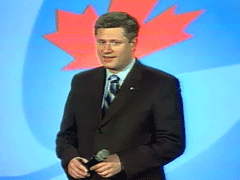
Stephen Harper

Harper's looming dilemma.

Canadians couldn't predict Wednesday on Tuesday. I don't think that's because of national stupidity but rather because we're a country of Pollyannas. Certainly we don't want to face any problems until they are no longer solvable and here we are heedlessly headlong towards a constitutional crisis that will make a Quebec referendum look like a motion to adjourn the annual meeting of your local gardening club.

First some history. With the arrival of the Organization of the Petroleum Exporting Countries (OPEC) in 1965, the oil price fix has been in and we all know about the crisis in 1974 that brought about huge lineups at the gas pumps in the U.S. What Alberta has amnesia about is the fact that back in the '60s, they were given subsidies at industrial Canada's expense because world prices were so low.

In 1980, oil prices went from under a dollar to $20 and the federal government stepped in with the National Energy Program which, in effect, forced Alberta to sell to Ontario below world prices. The agreement was, of course, much more complex than that. The cow pies hit the Alberta fan and Premier Lougheed cut production and threatened to hold back on exploration. Bumpers on Alberta cars had stickers saying "Let those Eastern bastards freeze in the dark." It wasn't a pretty sight.

There is an historic basis for this depth of Albertan hatred of the industrial heartland. In the beginning, control of resources was given to the provinces under the British North America Act. The idea was that Ontario would produce the goods from resource provinces and then, hiding behind the skirts of high tariffs and with very favourable freight rates, would sell the finished products back to captive consumers in Western Canada. This generated intense bad feelings towards the "East" which are felt today.

There is another tidbit. Alberta and Saskatchewan did not come into Confederation as a high contracting party, as did B.C., but were carved out of territory ceded to Canada at the time of the BNA Act and were made provinces in 1905. It wasn't until 1930 that they got the same powers over resources held by other provinces. When you have to fight like hell to get something, you tend to fight like hell to keep it.

Down a bad road

Now let's put on our seers hat and look a little down the road. Only someone recently arrived from Mars wouldn't see that the price of oil is (in spurts no doubt) steadily rising and there is no end in sight. Many experts believe that we have now "peaked," meaning we are using more oil than we are discovering and, of course, shortages breed high prices. Much of the world's oil is produced in politically unstable countries hostile to America and her friends. Those oil producers see Canada as one of those friends of the U.S., though that may not be the unanimous view of Canadians. It's not hard to imagine oil going to $90-100 dollars and, as Helmut Pastrick, economist for the credit unions told me a couple of weeks ago, when that happens, all economic projections are out the window.

Now comes time, as the cowboys say, for the nut cutting. As oil reaches new heights, what happens to Ontario industry already hard hit by globalization and the high-priced Canadian dollar? No points for that one. But the political issue then becomes: what options does Prime Minister Harper have?

There's no point consulting the Constitution for the answer because if the NEP is any guide, Ottawa acts first then dares the provinces to take the matter to the Supreme Court of Canada. It would be nice to think that the federal government would make sure they were on sound legal grounds before they move, but that's not the way it works. Especially when, as in this case, they are on very shaky ground indeed.

There's a reason for that. If Prime Minister Harper were to seek a Supreme Court ruling, the fuss that would cause in the far west would be as great as if he just did it and asked questions later, plus he would not get the big political buzz in Ontario he badly needs.

Let's get to the root of the matter. If -- no, make that when oil starts to flirt with $100 per barrel, industrial Canada, for which read Southern Ontario, will be in big trouble. Industries already hard hit will be demanding that Ottawa "do something," bearing in mind that at this point the province of Alberta far from being just rich, will be stinking rich. Rolling in lolly and loving every minute of it. If past experience is any guide, there will be no point to Prime Minister Harper asking Alberta to be good Canadians and share. Any Alberta premier who succumbed to that sort of sentimental twaddle would be boiled in some of that excess oil.

Harper's dilemma

While Mr. Harper has a solid base of support in Western Canada and is bullish about prospects in Quebec, he can't win without a goodly number of Ontario votes and he certainly will never capture a majority without solid support from Canada's industrial engine.

And, the Catch 22? He needs the far west but he can only get that by sacrificing Ontario, which he needs even more.

But the PM's troubles don't stop there. The Liberals know that if they are to revive, Ontario must be won back. And here's the crunch: they don't give a fiddler's passing of wind about the far west of the country. They've been governing without Alberta and B.C. for years and will cheerfully do it again, given the chance.

Assume that when the crunch comes, Mr. Harper, knowing that there is no middle way, gives relief to Ontario at the expense of Alberta. What's the likely fall-out in Alberta and B.C., especially the former? In my view it has the potential to split the country.

Another Catch 22 lands at 24 Sussex Drive in the form of Quebec. Seeing the mines exploding all over the political playing field, Quebec will sense an opportunity to demand it receive more federal concessions of power, and will demand it with the usual Quebec unsaid threat, "or else."

I contend that the foregoing is a very possible scenario and that our politicians are whistling past the graveyard on this. For, as I said at the beginning, Canadians and especially their politicians don't like to face problems until they are upon them. By then, they're hugely difficult if not impossible to solve without leaving constitutional carnage.

Rafe Mair writes a Monday column for The Tyee. His website is www.rafeonline.com.  [Tyee]

29  Comments:

Login or register to post comments

  • murdock

    5 years ago

    Comments on "Oil May Grease Quebec Separatism"

    Rafe ended with:

    Quote:
    Another Catch 22 lands at 24 Sussex Drive in the form of Quebec. Seeing the mines exploding all over the political playing field, Quebec will sense an opportunity to demand it receive more federal concessions of power, and will demand it with the usual Quebec unsaid threat, "or else."

    I contend that the foregoing is a very possible scenario and that our politicians are whistling past the graveyard on this. For, as I said at the beginning, Canadians and especially their politicians don't like to face problems until they are upon them. By then, they're hugely difficult if not impossible to solve without leaving constitutional carnage.

    Quebec need not make an real sabre-rattling any more as they have learned how to create the situation that will be what they want, 25% of the commons in perpetuity, ditto for the senate, the lions share of 'transfer payments' and any calculations changes regarding 'equalization' will always, somehow, come out in PQ's favor. No constitutional constipation in these operations at all.

    No it is for the western provinces to have to somehow prove their case and fight for the meal that their own gardens are providing to the rest.

    The total inequity of the current situation will only continue to make the situation worse.

    Better for the western provinces simply to walk away from the table now than try and make a better deal later, since no such 'deal' will ever be coming from the tyranny of a majority that exists in the 'golden triangle'.

  • onTheOtherHand

    5 years ago

    Bearing in mind that Alberta is really governed by the oil industry, I would be very surprised if said oil industry did not at some point seek a compromise solution, ceding something to the feds without running the risk of another NEP over which they would have no control. Besides, the oil industry have got their man in Ottawa now, and they probably want to keep him there. He's also being very helpful with that nasty business about global warming. As the writer says, the Liberals would not be so sympathetic.

  • Cycling Commuter

    5 years ago

    Rafe Mair wrote:

    As oil reaches new heights, what happens to Ontario industry already hard hit by globalization and the high-priced Canadian dollar?

    Instead of trying to steal from Alberta, Ontario could stop being inefficient wastrels. Canadian governments need to eliminate sales taxes and capital taxes on energy efficiency enhancing equipment and accelerate depreciation allowances on such equipment. That would allow Ontario industry to be fully competitive despite higher energy costs. Revenues lost by reducing these taxes can be regained by creating a Quebec-style provincial carbon tax to do an end-run around the federal Conservatives' refusal to do that. Ontario industry could also try manufacturing smart products instead of stupid products. And unionized floor-sweepers in Ontario factories should be satisfied with wages that are closer to the Canadian average instead of demanding $80 an hour for unskilled work with much of that $80 an hour coming from government subsidies squeezed out of taxpayers in B.C. who make $20 an hour working at skilled jobs.

    Japan has no oil of their own. Electricity costs a lot more in Japan than in Canada. Japanese Toyota Prius hybrids have been taking away lots of market share from Ontario's SUV factories despite Japanese industry's higher energy costs.

    The Canadian Auto Workers' union is responding to the situation by demanding massive import duties on Japanese hybrids to severely punish Canadian buyers of clean, efficient Japanese vehicles and prop-up Ontario's inefficient SUV factories. It's bad enough that Canadian taxpayers have been subsidizing Ontario's SUV factories for years and years with billions of dollars worth of grants. Now the unions want to expand the scam with huge import taxes on environmentally-friendly vehicles.

    If the NDP formed the federal government and the NDP's union boss overlords told the NDP to use trade barriers to keep efficient Japanese hybrids out of Canada, Ontario's automobile industry would have no effective competition and no motivation to stop producing gas-guzzling SUVs in energy-wasting factories. Fortunately, the union bosses' NDP political puppets do not form the federal government so GM and Ford are feeling the heat of competition. Because of these competitive forces, GM is now working on a plug-in hybrid vehicle which may be ready for the Detroit auto show in January and in production within a few years. See http://www.bloomberg.com/apps/news?pid=10000087&sid=asgN3d2yXdV4&refer=top_world_news

    Competition has worked wonders in this case. All the same, it would be good to level the playing field by levying a carbon tax on the fuels used to transport automobiles from factory to buyer. That would motivate both Japanese and Ontario auto producers to manufacture some plug-in hybrids in B.C. Several B.C. companies are already world-leaders in designing and building electronic control systems that allow electric vehicles, plug-in hybrids and regular hybrids to significantly enhance efficiency by using braking energy to recharge batteries. And a B.C. company produces a hybrid locomotive.

    Ontario could keep electrical energy costs down for industry and homeowners alike by giving tax breaks to ground-based heating systems (heat pumps / underground seasonal solar heat storage) instead of pissing-away another 40 billion dollars on expensive, unreliable, dangerous nuclear reactors. Here's a quote from a June 24, 2006 National Post article entitled A richer life in going green: From Algorithmics to Zerofootprint. http://www.canada.com/nationalpost/news/story.html?id=455205ea-05bb-4e85-9608-14bb1492c00e

    "...our governments feed us a lot of misinformation about energy. For instance, according to my information, 14% of the homes in Ontario use electricity for heating. If you retrofitted them with ground source heating, you would find you don't need two Pickering reactors."

  • Cycling Commuter

    5 years ago

    Rafe Mair wrote:

    back in the '60s, they [Alberta] were given subsidies at industrial Canada's expense because world prices were so low.

    What was the total amount of these subsidies? Haven't Alberta taxpayers already paid that back many times over with their massive contributions to the federal equalization fund? I realize the federal equalization fund comes from federal tax dollars taken from Albertans and Ontarians, not provincial tax dollars. But a big chunk of those equalization fund tax dollars are still coming from Alberta.

    Ontario industry may not be benefitting directly from equalization at the moment, but they've received hundreds of billions of dollars, maybe trillions in benefits through international trade barriers that have been imposed by Ontario-dominated federal governments. Trade barriers have been a massive hidden subsidy for Ontario industry and a massive financial drain on the rest of Canada. The total additional product costs paid by Western Canada's captive consumers have more than cancelled-out any equalization payments received from Ontario. And when you add the cost of additional energy and water consumed by inefficient Ontario-produced automobiles and appliances compared to the much more efficient European and Asian automobiles and appliances, Western Canadians have paid-out even more billions to keep Ontario happy. Europeans and Asians have been using extremely efficient front-load washing machines for decades, but trade barriers kept them out of Canada for years and we were forced to buy Ontario-made top-load machines, which wear out clothes faster, use a lot more water and energy, and are harder to repair. Now that international trade barriers have come down somewhat, that has forced North American manufacturers to start producing efficient front-load washing machines as well as hybrid cars and other energy-efficient products.

    Even Quebeckers are against the feds seizing control of Alberta oil. They're smart enough to realize that it would open the door to the feds seizing Quebec's hydro resources and giving Quebec electricity to Ontario industry at cut-rate prices.

    Instead of trying to drive Alberta separatism by seizing control of Alberta oil, it would be better to stop giving our money to Alberta to begin with by restructuring our transportation systems and communities in such a way as to significantly reduce the need to burn Alberta oil in our cars and buses. Plug-in hybrids will be a great start - especially if they're recharged with offshore wind-farm power. Better yet, we need to move jobs to within easy walking distance of workers' homes. These two steps alone will keep tens of billions of dollars per year staying in Canadian communities instead of being sent to Alberta in exchange for oil that will be burned to create smog in each community while destroying Alberta's environment through the extraction process. When you position yourself to NOT buy a harmful product, that's equivalent to levying a 100% income tax on the product's suppliers.

    If Ontario is smart enough to help their industry to become more energy efficient and they impose a carbon tax on transportation fuels used to import competing products, their industry will survive. And as long as Alberta remains a part of Canada, any laid-off Ontarians can always move to Alberta to find work as thousands of Newfies have done. I've been to Toronto. Given a choice between living in Toronto, Calgary or Vancouver, I would choose Vancouver first, Calgary second, Toronto last.

  • Percy

    5 years ago

    This article describes a coming constitutional crisis where a federal government tries to "do something" about the high cost of fuel. But it's pretty murky what's being suggested as options. I'm assuming the Free Trade Agreement doesn't let us set up a 2 tier system, so I can't really figure out what fact situation the writer is hinting at. So-called "equalization" is going to be irrelevant here, because both Ontario and Alberta are "haves".

  • jwstewart

    5 years ago

    Quote:
    Many experts believe that we have now "peaked," meaning we are using more oil than we are discovering

    Wrong!

    The term "Peak Oil" usually refers to the point at which oil production permanently peaks, not oil discoveries.

    Oil discoveries actually peaked many years ago, these discoveries were developed, and their production will peak in the near future. (or the near Past.)

    We are much closer to the coming petro collapse than the author seems to be aware, and it will have ramifications far beyond Canada's little political games.

  • Grumpy

    5 years ago

    Let's face it, Canada is going to split, simply because it's just too vast a country to govern by our corrupt politicians.

    I tend to think more darkly, I think the US will cause (fund) the split to happen then quietly march in and takw what they want.

    The only deterance to this if we arm ourselves with nukes, but that ain't goin to happen.

    Too many corrupt politicians, too many corrupt bureaucrats have ensured the collapse of Canada

  • BC Mary

    5 years ago

    Weeping Jezus, Cycling Commuter, when a situation requires a social conscience (usually found in the co-called "Left" party of the NDP), some idiot comes steamrollering along with the absurd notion that Unions will demand an embargo on hybrid vehicles and, boom! we are doomed. Instead of a sheep saying "Baa, baa" you're bleating "Unions bad, Unions bad." You call that thinking? You actually say it, right out loud, as if stupidity could fly and you're the international airport:

    Quote:
    If the NDP formed the federal government and the NDP's union boss overlords told the NDP to use trade barriers to keep efficient Japanese hybrids out of Canada, Ontario's automobile industry would have no effective competition and no motivation to stop producing gas-guzzling SUVs in energy-wasting factories. - Cycling Commuter.

    Think about it, CC ... if a situation requires a social conscience, look to the Lefties for help. Then (more important) keep an eye on the rightwing bigots who will do everything they legally can do, to thwart the conservation program. Look at the Alberta Tar Sands going great guns, giving environmental pollution a new meaning even before the oil gets into engines. It's sickening, to watch people proudly shooting themselves in the foot, and wondering why they lack toes ...

    Grumbling, I am off to the beach at Parksville for the summer ... grumble, grouch, grrrr.

  • Capitalism

    5 years ago

    Who knows what we are supposed to do..

    I have an idea - decentralize - Alberta, Ontario, BC, Quebec, the praries and maritimes all have different needs and demands.

    I don't see any reason why we can't keep our country together, and if we can't - we should be ashamed of ourselves. Canadians are fickle and often negative.

    Look at the USA - you have bleeding Liberals in California and the Northeast, you have religious conservatives in the South, you have the good old boys in Texas, and the a blend of farming/manufacturing concerns in the midwest.

    Yet - this diverse and polar country is perhaps the most patriotic. The reason is because of decentralization. Individual states have great powers on how their state is run, and are able to ensure that the demands of their statesment are considered.

    The Federal government should focus on big picture politics like defense, general economic issues and the environment. Provinces should have absolute control in all other areas, without political interference from Ottawa.

  • jwstewart

    5 years ago

    Pollyana's ??

    Maybe we should just join OPEC, get in line with Hugo, jack oil prices up, and Alberta would have some much cash a little spill-over into the have-not provinces wouldn't matter.

  • Yammer

    5 years ago

    Hm. Very good article with lots of background. But I don't quite get why Ontario will be seen out west as being diametrically opposed to Alberta's interests.

    1. Ontario is a market. Producers like markets!

    2. Ontario is the industrial heartland. Presumably some of their expertise, capital, and skilled hands will prove to be of great value to Alberta in order to get the oil out of the tar sands at something approaching competitive costs.

    3. The NEP retains a great taint from the Peter Lougheed years. If the feds were smart they would relocate NEP headquarters to Calgary, which would have great symbolic value.

  • BC Dude

    5 years ago

    Cycling Commuter check this site
    http://dontcrush.com/

  • rafe

    5 years ago

    commentor: Cycling Commuter and others

    The point is - and it is very difficult for me to defend anything from Ontario that I'm not related to - is when the shoe was on the other foot and Alberta producers and the Alberta government were hurting big timw, Ontario paid higher than world prices for Alberta oil.

    The term "peaking" seems to have a couple of meanings and my definition, admittedly, is but one of them. The reality is that we are, or soon will be, consuming more than we are finding with the inevitable bad news to follow.
    The popint of the article is that sooner than later, the Prime Minister of the country will be faced with the problem no one wants to talk about - the proverbial elephant in the room - Alberta is coining it while Ontario is facing near ruin because tf the world price for oil.

  • Frank

    5 years ago

    I still say that there aren't that many people living in BC whose ancestors were "ripped off" by Ontario. Its an adopted outrage for the most part that I find childish in the extreme. Its especially galling when the people involved are from the US, offshore or central Canada.

  • Jay Currie

    5 years ago

    At this point the game in Alberta is mainly oil sands. Billions and billions of dollars in investment going on for years. And, guess what, of those billions nearly half are spent in Ontario.

    Prime Minister Harper is not going to impose a made in Canada oil price. Why should he? It would cost him the West and do little to really change the economics of a potential worldwide oil shortage. And, as one commentor above points out, it is probably illegal vis a vis the US under NAFTA in any case.

    What he may do, an what might make some sense, is impose a small export tax on all forms of energy. (Which would include Quebec's hydro.) That would provide the feds with the revenue cushion to ease the transition of Ontario industry to a future with $100.00 a barrel oil.

    He might also get serious about encouraging alternative fuels and energy sources. Not because of the silly Kyoto treaty; rather because it is going to be a huge growth area if, in fact, we've hit peak oil.

    (I note on the later that there are potentially rather a lot of sources of oil for the US which are currently blocked by enviornmental concerns. Particularily offshore. This is also true of BC when you look around the Charlottes.)

  • RickW

    5 years ago

    Grumpy:

    Quote:
    I tend to think more darkly, I think the US will cause (fund) the split to happen then quietly march in and takw what they want.

    Except:
    http://en.wikipedia.org/wiki/Civil_War_II

  • Grumpy

    5 years ago

    Rick, still a fragmented USA would still have far more arms and weapons to invade Canada. I think the USA covets Canadian water, minerals and oil and will do anything to get it. Only nuclear arms would prevent an invasion. nothing stays the same forever and I think dark times will be soon upon us.

  • quite riot

    5 years ago

    Cycling Commuter: We cannot blame unions for anything we can only blame GM,ford and dodge for designing shitty vehicles. Here in Canada Toyota and Honda have plants and Toyota is building a new one. Toyota owns Hino and are moving the plant from California to Canada. Canada is attractive to big business 1.because of our healthcare system 2.our skilled workers thanks to unions we have skilled workers. I am sure there are other reasons too i do not think Ontario is in bad shape with high oil prices but should be looking into green ways of powering the province. Japan did it with there steel industry and put American steel businesses out of business.

  • verso

    5 years ago

    At this point the game in Alberta is mainly oil sands. Billions and billions of dollars in investment going on for years. And, guess what, of those billions nearly half are spent in Ontario.

    Whoa, can you give me a source that backs this up? Not saying your wrong but I haven't heard that before.

    Its an adopted outrage for the most part that I find childish in the extreme. Its especially galling when the people involved are from the US, offshore or central Canada.

    Well put, Frank.

  • RickW

    5 years ago

    Grumpy:

    Ain't sayin' we don't (or shortly won't) be living in "interesting times", and that in fact Trudeau's reference to mouse and elephant doesn't have a significant poignancy, AND that they'd rather take our resources than conserve their own, but what they do (or are about to do) will be short-lived. Though it will be messy, what with all the Quislings around and amongst us.......

  • dave49

    5 years ago

    I am a Quebec-born "anglophone" who left Quebec in 1979 and has continued to watch the whole Quebec 'situation' evolve over the years. A few years I coined a phrase to descibe what I saw when PQ leaders and ministers would go out and talk about how life would be in a separate Quebec. They would instantly get national press coverage and depending on the financial markets, our dollar often dropped.

    Quebec is the tail that wags the dog.

  • dave49

    5 years ago

    Yammer,

    The National Energy Board was moved to Calgary years ago.

  • freebc

    5 years ago

    YYYYYYYYYYYYEEEEEEEEEEEEEEEE-HAAAAAA!!!!!!

    I for one can't wait for this dumb-ass excuse for a country to split.
    Either confederation will be re-worked bringing absolute fairness and democracy, (meaning submission of all politicians to the voters) or Canuckistan parts like a bad hair do.

    If oil and the far east provinces are the issue by which it happens... works for me.
    Oh, and when it does happen, the US won't need to help. We can and will do it by ourselves.

  • Capitalism

    5 years ago

    quiet riot -

    you moron!! these plants are only building in Canada because of massive government incentives, and avoidance of unions in America. You are right, they love our healthcare system, because in the US - their employees have brokered tremendous health care coverage.

    You neglect the fact that Toyota is building a massive plant in Texas to build all of its trucks. They have a massive plant in West Virgina, and are vastly increasing their capacity in Alabama.

    The only place they aren't building is Michigan....

  • freebear

    5 years ago

    Quebec will not separate any time soon. Where will they get the $ that cover the public services provided? Perhaps from the U.S., though I think 'liberal' (read moderate) Quebecers would not want to be a U.S. state.

    I too left Quebec, miss the place, but not the political make work (and careers) program that Sovereignty Association and/or seperation entails. If Rene Levesque was still alive, I am sure he would still be 'employed' in the Sovereignty Association business!

  • quite riot

    5 years ago

    Capitalism
    posted: 10 Hours Ago
    quiet riot -

    you moron!! these plants are only building in Canada because of massive government incentives, and avoidance of unions in Ameican unions.

    What i ment was our helthcare is a incentive. As far as i know toyota and honda are not union in north america. But pay union wages thanks to unions.

  • stan

    5 years ago

    Cycling Commuter writes:

    Quote:
    And unionized floor-sweepers in Ontario factories should be satisfied with wages that are closer to the Canadian average instead of demanding $80 an hour for unskilled work with much of that $80 an hour coming from government subsidies squeezed out of taxpayers in B.C. who make $20 an hour working at skilled jobs.

    It amazes me how you can turn any topic into an anti-union diatribe. Get your facts straight: there are NO sweepers anywhere in Canada making $80/hr.

    Quote:
    Europeans and Asians have been using extremely efficient front-load washing machines for decades, but trade barriers kept them out of Canada for years and we were forced to buy Ontario-made top-load machines, which wear out clothes faster, use a lot more water and energy, and are harder to repair.

    Again, get your facts straight: top loader washers are cheaper to make,cheaper to fix and last longer. No doubt, in your mind it's the unions that kept front loaders out of the country.

    I could go on poking holes into some of your other statements, but lets just say that you need to do some research and provide some proof before anything you post can be considered credible.

  • Alcibiades

    5 years ago

    Speaking of oil, did anyone see the Alberta premier's oleaginous performance in Washington yesterday? There's someone who's truly bought and paid for - he even got a private audience with the Dick.

  • hannibal

    5 years ago

    Quote:
    Speaking of oil, did anyone see the Alberta premier's oleaginous performance in Washington yesterday? There's someone who's truly bought and paid for - he even got a private audience with the Dick.

    The odious one makes my skin crawl.

    • No best comments selected by an editor for this story yet. To see all comments, click the All Comments tab, above.
    • The discussion for this story is closed. No more comments can be added.