Opinion

Harper: Hard on Nature

Four alarming enviro policy shifts in the Tory platform.

By Mitchell Anderson, 20 Jan 2006, TheTyee.ca

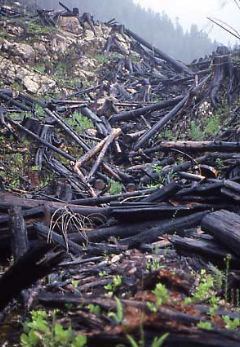
clearcutburned

With the prospect of Prime Minister Stephen Harper looming large - perhaps with a Conservative majority- Canadians should be asking themselves what this would mean for our environment.

Lord knows, there were many failings of the Liberal regime on environmental issues. However, a close look at the Conservative platform relating to the environment is truly alarming.

Property rights

Harper has promised to enshrine property rights in the constitution. This might sound fairly innocuous, but this one act would have enormous implications for the effective enforcement of environmental regulations throughout the country.

First of all, the constitution is the "prime directive" of government. It overrides all other federal, provincial and municipal laws, and is not something to be tinkered with lightly.

The Conservative plan would put property rights on the same legal footing as human rights. The result could be demands for compensation whenever an environmental law prohibits a property owner from doing something (like putting a toxic site in the middle of a community), or requires them to do something extra (like building subdivisions to a higher density to prevent urban sprawl).

This has already come to pass in Oregon, where "Measure 37" voted property rights into the state constitution in 2004.

The Washington Post commented, "the property-rights law …is on the brink of wrecking Oregon's best-in-the-nation record of reining in sprawl, according to state officials and national planning experts." Put more bluntly, "Measure 37 blew up our land-use system," said Democrat Senator Charlie Ringo, from suburban Portland.

In Canada, such a measure would undermine the ability of all levels of government to encourage smart growth of sustainable cities - a major challenge of the 21st century. Since property rights would be in the constitution and protection of the environment is not, it could also effectively trump any environmental law in the country.

Nor is this intervention even needed. Our common-law system of justice was primarily designed to protect private property, and it does a superb job of doing just that. What Canada needs, instead, is a constitutional guarantee of a clean environment.

Climate change

Harper has said that he will "address the issue [of climate change]…with a made-in-Canada plan, emphasizing new technologies, developed in concert with the provinces and in coordination with other major industrial countries." He also told Radio Canada this month that the Kyoto protocol is "not the right approach" to combat climate change.

This coded message is music to the ears of oil executives everywhere, and is clearly the type of shameful retreat from mandatory emissions targets that has taken root south of the border.

The science behind climate change is clear and becoming more worrisome almost every day. Every additional delay will make future solutions more difficult.

Fiscal conservatives like Stephen Harper should understand the simple principle of living within our means. His apparent retreat on mandatory emission reductions would damn future generations of Canadians to deal with the environmental deficits we are recklessly racking up today, while wasting time looking for technological fixes to our oil addiction.

The management of resources

The Conservative platform states that they will allow stronger involvement of the provinces in the management of natural resources. This is also not necessarily great news, given the shoddy environmental records of many provincial governments.

Consider the plight of the critically endangered spotted owl in BC. There are only 23 of these birds left in the country - all in the province of British Columbia. The destruction of remaining old growth forests through industrial logging is the overwhelming reason for their decline.

The leading logger of remaining spotted owl habitat in BC? The British Columbia government, through their BC Timber Sales Program. Even companies such as International Forest Products have stopped logging owl habitat and, therefore, have a better record at protecting this imperiled species.

Enforcement and staffing

Lastly, consider the infamous environmental record of the Mike Harris government in Ontario. Canadians might well expect the type of widespread gutting of environmental staff and enforcement that Ontario became famous for in the 1990's should the Conservatives be given free rein. Laws to protect the environment mean nothing unless there is the political will, backed up by the necessary resources, to enforce them.

Disasters such as Walkerton happened not so much because environmental laws were changed, but because enforcement staff were cut, and responsibility for environmental quality was devolved away from central governments without the required increase in local resources.

The environment may well become the defining issue of the 21st century. We need a bold and progressive vision to build a future Canada that will be able to meet these national and global challenges.

When you cast your vote on January 23, ask yourself: is a Conservative majority government really up to this important task?

Mitchell Anderson is a freelance writer based in Vancouver. His blog can be found at http://mitchellanderson.blogspot.com/  [Tyee]

63  Comments:

Login or register to post comments

  • Elliot

    6 years ago

    Comments on "Harper: Hard on Nature"

    pump it up tyee!!! you've only got 3 days left.

  • allan

    6 years ago

    Concerns about environmental degradation ought to be forefront in everyone's mind.

    It's not even so much that Harper would radically change environmental laws.

    Worse and more sleezily, he is likely to take up the cheap trick played out here in the past five years by Gordon Campbell's conservative-based Liberal government.

    Of course Campbell's government gutted environmental laws, but worse, and it's now evident right across BC, he slashed the hell our of all the professional staff who used to police and regulate so many apspects of the land and resources in this province.

    Parks have been abandoned or simply allowed to deteriorate, pollution standards have been tossed aside and monitors sent packing(fish farming), industry has been given free rein to monitor themselves and do whatever they want.

    Now, a major opinion survey of BC (today's Globe has a story on it), suggests that three out of four BC residents are adamently against oil takers plying our coastal water or oil and gas drilling in the region.

    Yet the issue hasn't even warranted a media question yet. Strange.

    Can you see the well oiled Stephen Harper telling his business buds in Calgary they can't play on our coast?

    Will people on the Sunshine coast retain their sunny disposition if an oil slick adds a new sheen to their beaches?

  • Bobb999

    6 years ago

    I agree with allan on the BC Libs record, which suggests we likely have more to worry about from Gordo than Harper.

    I'd be much more pesimistic about Harper if I thought he was poised to take a majority.
    Multiple polls predict a minority gov't.
    Harper will have little chance of passing radical
    new laws or Constitutional changes without the
    clout of majority. Thank goodness for that!

  • loblollyboy

    6 years ago

    Quote:
    It's not even so much that Harper would radically change environmental laws.

    Regarding environmental law constraints limiting private, corporate and government insults to the environment, the situation in Canada is actually far worse than in the USA where they at least have actual environmental law (even the Bush administration and its allies have to pussyfoot around the Endangered Species Act, for an example), whereas no such actual law with teeth exists in Canada. In this country, environmental law is mostly a matter of ministerial discretion in setting 'guidelines'. BC's grizzly bears can tell you how well that works. It would be a pleasant surprise to be wrong but, on appearances, a Harper majority government would be a major disaster for our environment, far more destructive than the effect that the lazy and bespoken Liberals have had.

  • moodyguy

    6 years ago

    Seems like the best we can hope for now is that some of those who are bound and determined to vote "against" the Liberals might actually take a look at what they might vote for-look at all of the positions taken over time up to this well coreographed campaign.

  • ripponfalls

    6 years ago

    Tremonti (CBC) had the environment critics from the three parties on the other day.

    The Conservative policy is a single sheet of paper... but the implications of "new technologies" are as follows:

    These don't exist yet outside of the imagination of a few boffins. (carbon sequestration, anyone? yeah, it's on the list). Meaning Canada won't do anything until they are developed, and then it will be up to the profit motivated entrepreneur to do it.

    They had no answer to Peak Oil (Tremonti brought it up...)

    It's going to be a disaster. At least until Bush is impeached. Will Harper start brownnosing a Democratic president?

    The Liberal policy was their traditional one, and the Tory critic caught them on it: hire a whole pile of people to have meetings, write position papers, and do nothing. That's why Canada has been doing so badly over the last 12 years.

    Not mentioned was that the staff will probably be 50% French speaking, and the rest will be divided according to the proper ethnic considerations, but when you aren't actually doing anything, that is I suppose a big plus.

    The NDP actually sounded good (the critic is from B.C). Probably too little too late, but since the greens (who should be better) won't get elected it's what we have.

    R. Smiley

  • ripponfalls

    6 years ago

    Tremonti (CBC) had the environment critics from the three parties on the other day.

    The Conservative policy is a single sheet of paper... but the implications of "new technologies" are as follows:

    These don't exist yet outside of the imagination of a few boffins. (carbon sequestration, anyone? yeah, it's on the list). Meaning Canada won't do anything until they are developed, and then it will be up to the profit motivated entrepreneur to do it.

    They had no answer to Peak Oil (Tremonti brought it up...)

    It's going to be a disaster. At least until Bush is impeached. Will Harper start brownnosing a Democratic president?

    The Liberal policy was their traditional one, and the Tory critic caught them on it: hire a whole pile of people to have meetings, write position papers, and do nothing. That's why Canada has been doing so badly over the last 12 years.

    Not mentioned was that the staff will probably be 50% French speaking, and the rest will be divided according to the proper ethnic considerations, but when you aren't actually doing anything, that is I suppose a big plus.

    The NDP actually sounded good (the critic is from B.C). Probably too little too late, but since the greens (who should be better but seem to be more about Harris receiving a salary than anything else) won't get elected it's what we have.

    R. Smiley

  • Aargh

    6 years ago

    The environment was TOTALLY ignored by the media as an issue during this election and it's one of the main scary places of distinction (and destruction) between the parties. When Jack Layton came to the international climate change negotiations in Montreal to talk about the NDP climate change plan, the media ignored him and berated him about whether or not he had used private health care.

    While I agree that the Liberals have been slow on the mark, we do also need to recognize that Kyoto didn't come into affect until Feb of 2005. Yes Canada is behind, but we CAN achieve our targets with the political will to do so. The Conservatives are 100% not going to lead us there. Even scarier is that Canada is the Chair of the UNFCCC this year meaning one of Stephen Harper's old reformers, who still believe climate change is naturally occurring and good for such a cold country, could be sitting at the helm of this international treaty. Aack! Remember the environment when you vote Monday!!!

  • Birch

    6 years ago

    Sometimes I think the phrase "remember the environment" is something akin to "remember the Alamo!", that is, remember the disaster. Or, perhaps it means, fondly, "remember what we used to have?" while we gaze over the clearcuts and beetle kill wondering what pesticides are in the apple we are eating.

    Although the Greens scored highest on the environment scorecard put out by the Sierra Club, the NDP were only very narrowly behind. The Conservatives were so far behind that one is tempted to imagine that they don't really believe there IS an environment: only concrete and pavement, with the odd park in cities, and a huge tree farm outside.

    The possibility of a Conservative majority is tremendously worrisome on so many fronts it's hard to imagine how they do so well in the polls.

  • Moat

    6 years ago

    Ugh, the problem is that in my riding, the candidate is former BC MLA Joyce Murray. Although she may be a good person, I cannot vote for her based on her disgusting performance as Minister of Water, Land, and Air Protection.

    I just hope that my usually federal liberal vote that will shift to the NDP this time does not allow that slug of a Conservative to get in again.

    The irony, convervative is not related to conservation.

  • The brain

    6 years ago

    Yah. Any premier that comes into power and demands 34% slashes on environmental programs, has rocks in their head. Sooo... Gordon Campbell has rocks in his head. In small defence to Joyce Murray, how can you deal with that?

    Joyces choice was to quit and sit as an independent, NDP, or... try to do what she could given the situation. She chose the latter and it will follow her wherever she goes now.

  • Working Man

    6 years ago

    While I agree with you, elliot, this union finded site is only preaching the converted.

    That said, it would be extremely difficult to get a property rights ammendment in the constitution. Hell, no government has of yet managed any ammendment, which requires the assent of six provinces containing 2/3 of Canada's population.

  • Elliot

    6 years ago

    property rights were included in diefenbaker's bill of rights in 1960. trudeau the communist left them out. i'm not sure it would be all that difficult as i don't see any reason for the provinces to disagree with this, although it would have hampered the bc ndp's blatant disregard of private property when it came to native land claims.

  • allan

    6 years ago

    Elliot, if there were real property rights then perhaps the Indians wouldn't need land claims to get their land back.

    Just a court to agree the entire country was stolen from them.

    Of course that would send you into apoplectic shock requiring the services of the public health care system.

    Which might be a good thing because you could have that lobotomy you've been in need of.

  • Coyote

    6 years ago

    Quote:
    "Which might be a good thing because you could have that lobotomy you've been in need of." Allan.

    LOL. Indeed, we need to do some assembly line lobotomizatios on this entire braunshirt crew.

    Where's Ronnie? You get to the front of the line in this "public" Lobotomy Clinic. We'll even let you hold hands with your "partner", Harpo, and look deep and longingly into his "old blue eyes".

    Snip, snip.

  • Coyote

    6 years ago

    Quote:
    "Working Man
    posted: 20 Hours Ago
    While I agree with you, elliot, this union finded site is only preaching the converted."

    Wrong again, Honey. And all you wingnut asssholes who love to hang out around here for about the only intellectual stimulation you otherwise get in your knuckles dragging on the ground lives.

    Oh, there you are Ronnie. Speaking of which, we better bandage up those knuckles of yours while we're at it too.

    Just one more little snip here, and then we'll tend to that.

  • Moat

    6 years ago

    Coyote wrote:

    Quote:
    Wrong again, Honey. And all you wingnut asssholes who love to hang out around here for about the only intellectual stimulation you otherwise get in your knuckles dragging on the ground lives.

    It is not about intellectual stimulation for them. They are not interested in bringing up debate and attacking “the left” with reason and rationale. There are right leaning posters (dangrice… and even murdock) here that from time to time put foward a solid presentation of a conservative perspective. However, we all know of the three or four that seem to draw out the negativity to fulfill some other personal need. If they feel that they can become self-actualized through this site, let’s let them try it. I know some of us feel that their posts are almost a form of “cyber vandalism”, however, there is little we can do as we want the Tyee to be inclusive of all ideas. Acknowledge their feelings, and move on.

  • Working Man

    6 years ago

    Quote:
    Wrong again, Honey. And all you wingnut asssholes who love to hang out around here for about the only intellectual stimulation

    You people are soooo angry. You are about to be highly disappointed again.

    Have a look inside yourselves and ask:

    Why cannot we form governments? Maybe it is something we have done?
    The name calling is very self reflective.

  • Michael Clift

    6 years ago

    WM:

    Quote:
    The name calling is very self reflective.

    Does that include all of your cheap shots regarding welfare wednesday?

  • Working Man

    6 years ago

    Only two more sleeps, man!

  • Michael Clift

    6 years ago

    I guess you are the "do as I say not as I do" type.

  • Steve P

    6 years ago

    Re: Property Rights & Environmental Protection

    Setting aside Mr. Harper's specific recommendations for a moment, I think it
    is important to note that the perception that environmental regulations take away property rights is a very serious obstacle to their implementation.

    Traditionally property rights have exercised a very important role in the capitalist democracies. Many people rightly regarded property rights as a key liberty which distinguished the west from the totalitarian communist world. Property rights are also commonly viewed as a counter-balance to
    state power. I think as citizens, planners & activists we need to do a better job of describing how (some) property rights can be compatible with forms of environmental regulation, especially since some environmental regulations effectively remove from an owner what had hitherto been considered a right (e.g. Fisheries setbacks, tree bylaws, etc.). The BC Community Charter seems to delegate even more authority to local governments to draft environmental protection bylaws.

    There is a large portion of the population who will resist environmental regulations where it is seen to conflict with historic property rights. This will be a great discouragement to those seeking election with an environmental platform, as many property owners will distrust and not support candidates who will undermine their perceptions of property rights.

    Perhaps the discussion needs to start with looking at how property is a bundle of rights, not a single right (e.g. use, excluding others, mineral rights, collecting rent, right to transfer or sell)? Perhaps property rights
    should be nested within a broader statement of responsibilities (i.e. a duty to protect defined environmental qualities, etc.)? Maybe we can find some wiggle-room to protect the environment and clarify what rights property owners could expect retain under a greener regulatory regime. It would clarify to owners what their rights actually are and define how the environment could be protected within that framework. Moreover, it would help those concerned about encroachment of state power to support progressive environmental initiatives.

    In conclusion, I think it is important to protect the best of the (small-l) liberal tradition while seeking to improve our regulatory framework -- let's not pretend that we are not taking rights away by promoting greener development: let's clarify the trade-offs in a manner that makes property purchase
    decisions predictable and, hopefully, easy to settle outside of the courtroom.

  • climber

    6 years ago

    First post here, I'll try not to be too evil right away. I commented on this story in the election blog, people took different viewpoints but they presented thier ideas well without attacking me, something "true believers" would have done. I am a conservationist not a preservationist and I feel that the latter view sadly, is becoming more strongly held by the urban populations. The pres. take the view that resource extraction is inherently a bad thing, it is viewed with a skeptical eye more and more. The "good" old days of logging are over, significant enviromentaly beneficial rules and standards have been increasing over the last fifteen years. But there is more derision and opposition to logging now than there was back in the "good" old days. The picture at the begining of this article is an example, looks ugly, ten years from now it will be green with little trees, full of life. My job is only there because of clear cut logging but I don't log. I climb trees that have to be left beside creeks, lakes and wildlife areas. I cut some branches and top them so they don't blow down. This is known as windfirming, it is a new job created by increased positive requirements. In the old days they used to log everthing, right over creeks, whatever. Now logging companies have to plan work with registered pro foresters and the D.F.O.. Yes, they still clearcut, but the clearcuts are a lot smaller (patch cutting). Logging is a very dangerous job, as everyone in B.C. knows, clearcut logging is much safer than selective logging, making it safer for the guys. B.C. Hydro recently mandated that all chainsaw users doing powerline work for them have to use vegetable oil in saws instead of the old non-biodegradable oil. These are just a few of the many changes that have come along lately. If one never ventures out of the cities and way into the bush they could easily think that we are down to the last few trees. When is a the last time you saw a logging story in the media that cast logging in a positive light? Idealy we could leave it all alone but logging with all its faults is our heritage and way of life for thousands of people. To parprase the article "consider if you will the plight of the threatened logger, he has four kids, a wife, mortgage and a grade nine education. All he knows is how to log, he has people depending on him......." So we are supposed to, as the article strongly hints, shut down logging on the coast? For 23 birds? I think we can live without the birds, real hard for many to live without logging. This province is huge, people have got to stop thinking that it is Stanley Park.

  • Deadend

    6 years ago

    Happening upon ownership is, in the grand scheme of things, a pretty arbitrary process to begin with. Hard work - and luck both come into play.

    Protecting the environment over protecting property is about protecting people over protecting things - or more specifically protecting power structures over public health.

    Comparrisons to as blatent anachronisms as "communism!" or facist boogeymen are fear mongering campaigns befitting of the bumbling ex-PM.

  • Moat

    6 years ago

    Climber

    Ah, ok, so you say it is you first post here. Welcome… you have come to the right place to anonymously waste your time, but strangely feel ok about it.

    Now to “attack” ya….

    The argument over defining conservationist vs. preservationist is a good one. The way I look at it, do we value our natural heritage. If we remove all “old growth” (never been logged) forest on the westcoast, what do we have for future generations? Second growth farms? “Production” forest simply is not the same. It is difficult to measure the value of natural history.

    climber wrote

    Quote:
    I feel that the latter view sadly, is becoming more strongly held by the urban populations.

    I do not buy this urban/rural split. Living in Greater Vancouver, we are just as connected to the forest as someone in Prince George or Castlegar. Don’t believe me? You can take the SeaBus from the financial district downtown and be in the “wilds” in less than one hour. Oh, yes, bear, cougar, and deer make regular appearances in the backyards on the North Shore. And yes, local hiking trails are always busy. The only difference is that the employment for those in Vancouver does not rely on exploiting the natural resources.

    Quote:
    I climb trees that have to be left beside creeks, lakes and wildlife areas. I cut some branches and top them so they don't blow down. This is known as windfirming, it is a new job created by increased positive requirements. In the old days they used to log everthing, right over creeks, whatever.

    Nicely done. I am glad that these positions have been created. It does sound like rewarding work.

    Quote:
    The picture at the begining of this article is an example, looks ugly, ten years from now it will be green with little trees, full of life.

    Yes, but so is my backyard in the city. But that does not mean it resembles the complex eco-system of a forest. And you, a professional in the forest, should know that after 10 years, those trees are not going to be that high. Try walking through a 10-year-old cut. You can’t…because of the stumps and the “waste” that was not burned or trucked out.

    Quote:
    So we are supposed to, as the article strongly hints, shut down logging on the coast? For 23 birds? I think we can live without the birds, real hard for many to live without logging.

    But why continue this dependency on exploiting natural resources. We act more like a colony rather than a province with a developed economy. The “23 birds”, that is an oversimplification.

    Quote:
    This province is huge, people have got to stop thinking that it is Stanley Park.

    Hmmmm, why don’t we consider exchanging some second growth in our "city" parks (Mount Seymour, Allouette, etc.) and exchange it for some old growth. I am up for a compromise. We have put far more than enough “old growth” into production.

    I have been in every corner of this province, and almost every corner of this province has seen some significant logging. By putting more old growth into production, we are acknowledging that our practices are still not sustainable.

  • climber

    6 years ago

    Moat-thanks for not murdering me. Your post was pretty good, you have been around this province more than me, thus you have more knowledge of the province than the huge majority of people in the g.v.r.d. You are connected to the land. Many people there have never been north of Hope. I think that the urban/rural split is there, mostly because of this. A lot of people in the big smoke are directly dependent on forestry for employment, mostly in machinery, Finning and many other heavy equipment dealers, forest companies head offices for example. There are many others for which forestry plays a role, banking, tugs, air services etc. Thanks for showing favor to my job, I used to cut down trees for B.C.Hydro in the g.v.r.d., might as well have been clubbing baby seals. You are right, Christmas size trees in logging slash are a very pale imitation of an old growth forest. Pretty hard to walk thru, I have juvenile spaced young trees before, I know. I brought it up because in ten years that picture will at least look better. Second growth forests can never replace old growth forests, fact. There is no way they will all be felled though. Much (12%) of the province is provincial parkland. Some is federal park, some is otherwise protected or to hard or uneconomical to log. Many people in Vancouver cannot tell a big second growth fir from an old growth spruce. Maybe that is a good thing. Remember all that whining when they expanded the road thru the park to the Lions Gate? Until high paying jobs come along to replace the resource jobs people and communities will be dependent. Tour guide or call center work just doesn't cut it. We are like a colony, not very much has changed since confederation, we rise and fall based on the value of our resources, true.

  • Moat

    6 years ago

    climber wrote

    Quote:
    A lot of people in the big smoke are directly dependent on forestry for employment, mostly in machinery, Finning and many other heavy equipment dealers, forest companies head offices for example. There are many others for which forestry plays a role, banking, tugs, air services etc.

    Fair enough, but even those jobs are being limited as mills do not need nearly as many people to run the mills.

    Quote:
    Remember all that whining when they expanded the road thru the park to the Lions Gate?

    Oh yes! I remember this, and it was killing me to see these "environmentalists" who could not see the for the trees. If they were really concerned about urban trees, they would be asking the GVRD to start planting douglas fir and cedar in freeway roundabouts. Same thing with those fighting for Eagle Bluffs in West Van. There are many more sensitive places that need protection.

    Quote:
    Tour guide or call center work just doesn't cut it.

    You are right, but some people in small towns need to realize that they are there for lifestyle reasons. And we, the taxpayers (ugh, I sound like a conservative), are subsidizing their lifestyle through our forests which belong to all British Columbians. We can move to other industries, we just choose to focus on the resources because it is the easiest.

  • climber

    6 years ago

    Planting trees in freeway roundabouts. I like to see what is going on around me when I drive. Especialy entering or leaving freeways. But yes, planted somewhere, anywhere. Subsidized people living in small towns for lifestyle reasons? People that live in small towns and make big money logging pay large tax, which, along with the logging business taxes and stumpage subsidize the province. Lots of the money that flows to Victoria comes from resources, not really the other way round. The taxpayers could never subsidize through the wood no matter what, they never paid for the trees. Kind of like the oil in Alberta, it was already there. We can move to other industries, no doubt, where are they? People work at what they know and live were the money is. I really wish all those Newfies could be at home with their families but they have to go where the money is, the oilpatch.

  • Moat

    6 years ago

    climber wrote,

    Quote:
    Planting trees in freeway roundabouts. I like to see what is going on around me when I drive. Especialy entering or leaving freeways. But yes, planted somewhere, anywhere.

    Of course common sense needs to prevail. However, we have some massive "cloverleaf roundabouts" that can be creatively landscaped. As well, some of the large medians could also be planted. Noise and light pollution could be cut down. When you are driving on the freeway next time have a look at the many places that could be planted without significantly interfering with lines of sight.

    Quote:
    Lots of the money that flows to Victoria comes from resources, not really the other way round. The taxpayers could never subsidize through the wood no matter what, they never paid for the trees.

    No, we never did pay for the trees. They are an asset that we are endowed with. However, they do have value ascribed to them, and when we choose to release them to the market, we are essentially converting wood to cash. How much money are we getting per square foot? And you should know that a lot of the hemlock is just being mowed down and just left there because the market is not really that good for that product.

    Quote:
    I really wish all those Newfies could be at home with their families but they have to go where the money is, the oilpatch.

    Glad that you chose to bring up the Newfie example. There was the cod, a "renewable" resource that was poorly managed. There was enough fish for everyone, but large scale operations put the little guys under and destroyed the cod fishery. It was not the regular Newfie killing the fishery. It was the automation and new technology that allowed the fish to be taken out faster than they could be replenished.

    Think that cannot happen in the forest industry? Guess again.

  • climber

    6 years ago

    Stumpage on wood is by the cubic meter (1000board ft.=2.35 cubic meters) A highway logging truck hauls 35-40 meters. Hemlock is not left to rot, all wood up to a certain (4-6") diameter top has to be hauled out. I see it everyday on trucks, at the sort, up here. Last summer I bucked endless truckloads of hemlock pecker poles at Stave Lake. That doesn't mean it is as profitable to log as the other wood, if it is in the cut block, too bad. Years ago, wood could be high graded, no longer true. And yes, maybe the logging companies get it cheap and have been getting it cheap forever, but trees are not making money for anyone just standing there. Newfoundland fishing and B.C. logging are much different. The fish there were mainly taken by foreign factory ships off the coast, no one stopped the Spanish and others from the rape of the fish. You are right, the Newfies didn't cause it all. Here in B.C. we log all our own wood. As far as logging it out of the bush goes, it takes people to do it. What changes have come along in regards to automation on the coast since the 70s? I think your idea that "automation has taken all the jobs" has only and can only go so far on the coast, but maybe I have missed some wonderfull logging machine out there that can do it all. The annual allowable cut in B.C. may not be "sustainable" like some say. But even if we stay at this level it will take forever to cut all allowed. Much of it is off limits in parks, too costly too log, restricted one way or another anyway. Mining is never sustainable, does that mean we should leave all the moly and copper alone?

  • Sometimes Frien...

    6 years ago

    Quote from Moat: "They (trees) are an asset that we are endowed with."

    Endowed, huh? Well, native claims and the creator's purposes we'll leave aside, as "endowed" implies all kinds of things. In actuality, though, they weren't even endowed; they were stolen by legislative fiat. Rewarding the big forest companies for helping the Socreds back to power in '75, the Miniwac government the following year passed its new Forests Act.

    That law took the 85% of BC still at that time in "Government Reserve" (G.R.) and gave it over to Timber Supply Areas and placed it all under the MoF. That Government Reserve had been the material assets set aside in the early days of the province as a "bank" account against eventual resolution of the native claims/treaty issue, and was a compromise between the feds and the province towards that end. That's why mega-logging hadn't penetrated big areas of the Interior and the North until the late 1970s: - the weren't "endowed" with it yet.....

  • Moat

    6 years ago

    Sometimes Friendly Giant wrote:

    Quote:
    That's why mega-logging hadn't penetrated big areas of the Interior and the North until the late 1970s: - the weren't "endowed" with it yet.....

    Thanks for the bit history. This is what is people are not getting, just imagine how much of BC was put into "production" just in the last thirty years.

    As far as "ownership" of the forests go, I still want to hold on to the ignorant belief that the citizens of Canada, residents of British Columbia, and future generations still have a stake in our forests.

    Probably wishful thinking.

  • climber

    6 years ago

    So what-log it or lose it. Just pecker poles there anyways. Not meaning to be flippant but explain why opening up more of the interior and the north to logging was so bad. The land is still there, all of it still belongs to the prov., so really what is and was wrong with making something positive happen?

  • Moat

    6 years ago

    climber wrote:

    Quote:
    The annual allowable cut in B.C. may not be "sustainable" like some say. But even if we stay at this level it will take forever to cut all allowed. Much of it is off limits in parks, too costly too log, restricted one way or another anyway. Mining is never sustainable, does that mean we should leave all the moly and copper alone?

    Ahh, but the difference is how you view the forest. Just because it is "green", does not mean it is healthy. We have lakes in the east that appear beautiful, but are not the majestic wonders of nature that they once were due to acid rain.

    Mining is a slightly different scenario. If the minerals can be taken out without polluting the water and needing intrusive roads, go for it. Hard "rock" is not a complex ecosystem like a forest.

    So take the moly and copper, just don't destroy everything when extracting and processing.

  • climber

    6 years ago

    We are not the east-not even close. The trees around Van. are healthy even with the smog. Back in 93/94 I was working in the mountains above Harrison lake, you could see the massive cloud of smog that hung over the lower mainland, over 80 miles from Van. itself. If it is green here it is healthy. Mining companies have to jump through so many regulatory hurdles designed to protect the enviroment I am suprised they keep going. As well there are the preservationists and land claims. There is a mine up in northern B.C. that Redfern Resources has been trying to reopen for 12 years! Reclamation is a huge part of mining now, not like the old days. What do you mean by "intrusive road" aren't they all?

  • allan

    6 years ago

    So what, rape it or lose it.

    Is that your prescription, climber?

    Did you think that up yourself or borrow it from an old COFI distraction?

    Drive into the Central Interior for an emmersional course in forest crisis folks, and then ask yourself why our honourable Forests Minister is allowsing one branch of healthy wood to be harvested.

    And quit whining on behalf of the mining speculators, climber. You're giving this site a bad name.

  • climber

    6 years ago

    Allan-I am not a miner nor do I hold stock in a mining company, I just want to see mines go into production to provide jobs in the north. This region (northwest B.C.) has the highest level of unemployment in the province. People here need jobs and if you have some good ideas that will provide high paying jobs here lets hear it. The "log it or lose it" saying has been around for years, can't remember where I first heard it but its a good one. There are lots of logging sayings- "log it, burn it, pave it", "Earth first-we'll log the other planets later". As far as logging in the interior goes, a lot of the wood is not healthy, so this logging really does make sense. It is mainly bugkill. As for the rest, what is wrong with logging it? If the preservationist mindset that you and others like to espouse was around fifty years ago this province would have never been built. Consider that. Why do you want to stop everything and destroy rural communities? They have no other reasonable means of making a living beside resources.

  • Sometimes Frien...

    6 years ago

    Quote:
    Thanks for the bit history.

    Many current promo sheets on BC towns have rewritten history, claiming centre stage since the founding of the colony, as if this was always a timber colony, and only a timber colony; even notable goldfields such as the Bridge River have psuedo-histories talking about how the towns survived on forestry when the mines shut down; or how logging has "always" been in the Chilcotin. No, until large-scale extraction of logs began in the late '70s, any logging in the Bridge River was to provide timbers for mine shorings and buildings, or for the concrete pours on the Bridge River dams.

    The logging types - the "Share BC" types (another imported psuedo-American political organization wrapping itself in the colours of 'community resistance') - want to pretend as if mass-scale extraction has been the historic norm and that anyone who wants to do anything else with the land and resources is "robbing" them of "their" livelihood; as if the trees and lands only belonged to their economic group.

    Climber's comment that "they're all pecker poles anyway", and Climber's presence here, suggests to me that the same party-hack rabble that write letters for CanWestGlobal are making a point of writing their redneck bumpf around here. Climber says why not just log the whole damned place, it can't do that much harm.....

    Buddy, y'know, it's people like you and the guys who say that global warming is a leftist conspiracy perpetrated to offend hard-working resource guys that remind me that some people are determined to remain in the past, and can't see beyond the end of their noses - or their chainsaws.

    Deforestation has contributed to climate change conditions in BC, affecting wind and rainfall patterns, it's warmed up the Fraser River and others and thereby impacted the fishery, and the amount of "fibre" from our "fibre farms" that's been taken out did not stay on the ground as mulch, to eventually become soil. We are creating a desert that in its time will rival the drylands of Morocco, Spain, Turkey and Persia - all once lushly forested mountains like our own.....but NO, say the Share BC types, that's impossible because there's so many trees. And we don't want to have to sell popcorn or run motels or squirrel-watching companies, WE WANT TO CUT DOWN TREES BECAUSE WE CAN'T THINK OF ANYTHING ELSE TO DO.

    Quote:
    really what is and was wrong with making something positive happen?

    "Making something positive happen"?? I'm sorry. Positive what? Empty towns with the jobs moved to $5/mo labour places like Brazil and Indonesia, hills stripped of their forest resources so Japan and China can sink whole logs into the ocean to preserve them for eventual milling by Japanese and Chinese workers?

    "Something positive"?? I can't call what happened to my valley "positive" in any way, nor the effects on the main local centre (Lillooet, which after a century of gold, ranching, farming and hydro proclaimed itself "Logging Capital of BC" in 1979, with the mill less than a year old). Long-term development? Community enrichment? Sorry, most of the trees in the Lillooet Country went to keep the mills in Ashcroft, Savona and Boston Bar open, and did zilch to benefit Lillooeters other than those who were logging truck drivers.

    And I'll never forget the day the local Asst Super of Forests said to me, straight out, that they had no intention of allowing tourists/tourism into the upper Bridge River until they were done logging, so there was no way Forestry would allow the paving of the Hurley Main from Pemberton to Bralorne. Yet the old timers in that country have been pushing for pavement since the '60s or before, and have lost out on several major development proposals BECAUSE FORESTRY WANTED A LOCKDOWN ON THE VALLEY. "Share" BC my ass.

  • Sometimes Frien...

    6 years ago

    Similarly, most of the hundreds of miles of road they DID build in that region - all eastward-flowing roads - were decommissioned after use, even though the expense of building them was partly justified by the supposed idea that they would be used by recreationists afterwards. And throughout the region, many, many dire instances of poor reforestation and ugly logging practices have gone hidden, covered-up, and the roads leading into them blocked or water-barred.

    What's positive about raising a whole generation of workers who think it's their god-given right to have trees to cut, and who look with disdain on any other trade or industry? What's positive about areas with dynamic tourism or heritage being ruined to keep a few guys working, some lumber brokers a few houses richer, and the guys who own the companies able to make payments on their estates and cocktail party expenses?

    As for mining, yes all roads are intrusive. And hard rock mining can be polluting because of the other minerals and chemicals involved (mining for gold involves arsenic, cyanide, mercury and toxic silver compounds). Places like the Tulsequah could maybe be reached without roads if we had better subarctic aerial freight of some kind; but mining these days is less about hard rock mining, than it is about tearing down whole mountains (especially for copper and coal, which are most effectively strip-mined rather than shaft-mined).

  • climber

    6 years ago

    Giant-I find it funny and also sad that some people who expect thier own views to be considered can be so intolerant of others. Why the racist insult "redneck", a term that was first used to put down poor white sharecroppers? Do you rally have that much contemp for people who log? Party hack rabble, Can West global type. You label and demonize to make your coming statements sound better. You see me as a defender of monsters. I have been through your area, driven from Darcy to Seton Portage a few times, driven to Clinton from Pavillion. I did powerline tree work above Kelly Lake. I really like it around there, but really, what is sustainable in that area, other than logging? Ranching and guiding, not big employers. At least when people mined at Bralorne or logged in the area they were making money, again, something is better than nothing. Some of your talk is true, here is my take on the problems. The forest industry in B.C. has not been run properly since they started handing out forest management licenses (t.f.l.) in the late 40s. The small loggers were wiped out by the big guys, just as H.R. Macmillan predicted they would be. If it would have been set up with community owned logging companies logging smaller t.f.l.s they would have taken better care of the land. The B.C.F.S. has been under the thumb of giant corporations and subject to goverment meddling ever since. Logged land has not been satifactorily restocked in many places. Obviously it is a lot harder to grow trees in that dry climate than on the coast, forestry never made sure the forest was properly perpetuated because, under the thumb. I do think it is a little harsh to say we are making a desert though. The land does not, with rare exceptions stay treeless forever. The fact that raw logs are exported is the real scandal, not that those logs are being logged in my mind. Governments, like the present one have never had the balls to stand up to big logging companies and act in the best interests of B.C.. I know there are big, historic problems with logging here. Changes have been made, smaller cutblocks, riparian zones, wildlife corridors etc.....but we need systemic changes, we need control put back in the hands of the communities. But, in the meantime, keep it rolling. I think the attack mode makes people respond in a panic. Kind of like old W.A.C.- "the socialist hordes are at the gates" Or the enviros "the Great Bear (sic) rainforest is going to be ruined forever unless we stop all logging" We all need to step back and look through other people eyes, I try to do it, I am trying to keep an open mind. I cannot pretend to be objective, I don't have all the answers, until something better comes along I think that we should keep going, while making changes.

  • Sometimes Frien...

    6 years ago

    Sorry, I can't equate a bull-necked logger with a poor white sharecropper. That may have been the origin of the word, but in BC it means something totally different. And what other word to apply to people who obstinately - and often violently - threaten people over alternate economic opportunities (such as happened in the Lillooet Country, e.g. the violent blockade of the Tyax Mtn Lake Resort, and personal assaults and threats on tourism/environmental advocates after meetings in Lillooet.

    Thick-headed people who don't want to learn anything, don't like people who dress differently or have other ideas than they do, etc. Sure, that can apply to a certain type of Green, too, but the specific type of person I mean is commonplace enough for "redneck" to indicate exactly who is meant; if you can come up with a better word please tell me what it is. And I repeat, that term has no racist imputation in BC, other than the fact that most of the people who deserve the appellation are (but are not necessarily) "white". Lots of Indians and East Indians I know of are redneck, too, though, so....

    As for what else the Lillooet Country could be making dough at? Gee, for over 100 years every diarist through the place has commented on its amazing scenery and climate, and on the tourism potential and also the agricultural potential of the area.

    Long before the Okanagan wine industry freed itself from the chains of Calona Muscatel and Baby Duck, Bruce Hutchison in his book The Fraser opined on how suitable the Lillooet Country would be for wines and orchards, once the hydro power being built in the district was applied to irrigation.

    During the 1900s-1930s the Lillooet area was one of the main fresh produce suppliers to the Lower Mainland, and also of course to the booming goldfield towns and camps of the upper Bridge River. Also exported from Lillooet, and a money-making concern, was fresh ice (in the days before refrigeration) thanks to a mysterious self-generating ice-cave at the base of Fountain Ridge http://www.cayoosh.net/fountainridge.html.

    Zillionaire uranium prospector and recluse Vernon Pick had no illusions about having to be a hewer of wood and drawer of water. Sure, he built his own powerdam, but he used it to manufacture photocopier drums, computer components including early chips and such, and who knows what else. Pick's estate is now sold, and the factories sold off and some mysterious operation now is in control of the huge underground bunker/lab next to Cayoosh Creek (said to be larger than the Diefenbunker). Point is that with a little vision and courage you can have high-tech industries away from the big cities.

  • Sometimes Frien...

    6 years ago

    cont. As for the upper Bridge River - what kind of alternatives are there? Gee, that would have to be the dozen-plus ski proposals shot down for lack of pavement to Pemberton and also by internal-memo whining from Forestry, and also Whistler's opposition to having any other significant tourism operations in the nearby district. And people in Bralorne and Gold Bridge have been asking for and wanting that highway since before Whistler was a wet dream; but they didn't get it, even after the agitation for Whistler to get a "back door" after the M Creek Disaster in '82 that produced the paving of the Duffey Lake Road. The Gold Bridge route is only slightly longer, and the communities there needed a highway; but Whistler vetoed their needs, because Whistler is only interesting in lining its own pockets, not in advancing development. Both Lillooet and Bralorne-Gold Bridge would be booming tourist centres now if the Hurley had been put through. Similarly, deteriorating and finally cancelled passenger service along the BC Rail line was Lillooet's tourism lifeline; now shot down even though more money was spent on restoring the Kettle Valley trestles than it would have cost to keep the Budd Car in operation. D'Arcy, Seton Portage-Shalalth have always been eyeballed for an increased tourism economy; pending better access and, oh yeah, all that money spent on marketing rainy, rocky Whistler as "year-round resort" with "BC's best scenery"....

    What else could people in the Lillooet Country be doing? Lots, if they hadn't been shunted into a one-industry mode from 1978 onwards.....

  • Sometimes Frien...

    6 years ago

    Further thought: the Churn Creek Protected Area, Big Creek Provincial Park, and the Southern Chilcotin Mountains Provincial Park (which isn't fully park but has that name) are all road-accessible only from the Lillooet/Gold Bridge side of things; someone please tell me why the provincial parks offices in charge of these parks are in Williams Lake, and not Lillooet or Gold Bridge......either of which could obviously use a few more government paycheques (of which Williams Lake has plenty)

  • climber

    6 years ago

    Some people have nothing against blacks, they just don't like niggers. Same with Asians, nice people, when they drive they are chinks. Redneck fills this category for white people, partially, how about roundeye, infidel, white devil, it goes on and on, no need for it. Why not just say thickheaded, intolerant. No slur, more descriptive. Your history of development being obstructed by forestry and the Whistler crowd is new to me. Disturbing, I had no idea, thanks for the education. The Budd car and the whole B.C. rail deal was just totall b.s., I travelled from N.V. past Williams Lake a few times on it. Had always wanted to do it again, now its gone. It pissed me of that the sea to sky gets so much hype and money. I have driven on many roads, nothing wrong with that one. Just don't drink and do coke and speed when you take your Porsche to go skiing and you won't crash. The whiners in Whistler, Gords buddies must have a lot of pull. Giant-I can't compete with you talking about your region, I like it but don't have the knowledge you do. I should just speak generally about logging and mining province wide.

  • Sometimes Frien...

    6 years ago

    Basically, province-wide, consider this: the amount of money spent on subsidizing forest development, forest roads, silviculture, the marketing of forest products and forest ventures and forest "high-tech" (newer and better ways to rip up even more trees for less and less money involving fewer and fewer workers).......if that same money had been spent on investing in and promoting other sectors than forestry, how many single-industry forestry towns would there be out there? Oh yeah, still a few, but you wouldn't have 200+ towns hooked on logs like junkies on speed.

    The Swiss and other small countries make a point of ensuring that EVERY small community has more than one industry, and NEVER bank on only one venture.

  • Sometimes Frien...

    6 years ago

    Another issue blocking nearly every other kind of economic diversification OTHER than mining and forestry (which are relatively immune for some reason) - the unresolved native land claims.

    That's a big barrier in the Lillooet Country, and helped finish off the Cayoosh Ski Resort at Melvin Creek (at the east end of Duffey Lake on Hwy 99). And it's a big barrier everywhere. Until land ownership/title and local sovereignties are finally resolved, other economic engines are going to run into the native-politics roadblock; even if those economic ventures might help local natives, because of the unresolved claims they're often hostile to ANYTHING.

    In Lillooet's case, the oldest town in the Interior, the third or fourth oldest on the Lower Mainland (after Ft. Langley, Yale and New Westminster), and the basetown for an amazing eight or nine gold rushes (depending on how you count them); and a hanging tree, a suspension bridge, an ice cave, amazing lakes for water skiing and for fly-fishing, canyons to rival Yosemite and high country rivalling Colorado's, sunny weather, and only 4.5 hours from North Vancouver by train....oops there's that train thing, again, y'see.

    Anyway, Lillooet's approaching its 150th Anniversary. And who's getting the zillions for a cultural heritage centre, and already has received millions for a museum to enshrine a history that largely had to be invented (because there wasn't one)?? Whistler. Same place that just tore down the 101-year old Jordan Lodge boasts about how much it values its cultural-tourism; yet it has no appreciation at all for the history even of its primary suburb, Pemberton.

    Lillooet has a museum badly in need of funding, including one of the largest and oldest frontier photographic collections in the province and the vintage press equipment of Ma Murray's Bridge River-Lillooet News. There's also the site and plans for a St'at'imc Cultural Centre, which has sat fallow for over 15 years now for lack of funding. But Whistler wants some natives to dress up the Olympics, so a deal was struck with the Squamish and Lil'wat to celebrate their cultures in some new fancy tourist-friendly cultural centre; millions again, for a town that doesn't have history, and only wants culture because it helps sell hotel rooms.....

  • climber

    6 years ago

    If the forest development had been carried out like people that knew it best (H.R. Macmillan, Gordon Gibson, Ian Mahood etc..)it would have never gone down like it has. Those decisions were made long ago, workers can do little about it, and many as you say, don't care as long as they can log.What could have been and should have been is of little help now. That it is troubled doesn't mean it should grind to a halt. The huge companies are interested in profits above all else. The preservationists couldn't give a flying **8& for the well being of loggers and thier families. Look at how they want 1.8 million hectares of what they call the great bear rainforest put aside, thats like 4 million acres. Too much park is not enough for them. And the landclaims that are everywhere. Consult with first nations says the Supreme Court. Consult means pay off. The Federal Govt. should take care of it and pony up, they have the responsibility under the BNA act. Forest extraction companies are not subsidized like mostly eastern companies (or Skeena Celluose was), they get the stumpage rate reduced based on what it costs them to log. But yeah, kind of helped out. Your idea of diversification is good, of course. I would like to see your town get help for sure. I worked at Kelly lake on those 500kv transmission lines, slashing back in the 80s, stayed in Clinton, went to Lillooet many times. Had some hippy friends that lived in Seton Portage then too. I drove the highline a few years ago, still cool. I have driven there from Van. along Harrison lake out to Sloquet hotsprings. That road is now closed because a bridge is out, they haven't fixed it yet. That whole area is really nice, especially in the spring, up here in the Charlottes it's nice too but not as. The history has to be preserved, the pioneers led fascinating lives need to be remembered , your bitch about funding going to pet projects for the politically connected is right. Up here on the Charlottes the federal money that poured in here for the new cultural center is kind of stunning, nothing wrong with that but, like you point out, it could get spread around a little. Have you ever read that book Bull of the Woods by Gordon Gibson? There are some pretty good tales in it,when he was defeated by the socreds in Lillooet "they spent a lot to defeat me, every cabinet minister visited, they paved every road, kissed every baby twice-on both ends." I have read about Judge Begbie who often held court in town there, sounds like he would have made a good premier.

  • Moat

    6 years ago

    Whoa! I will respond to some of this tomorrow. But the key is to remember is how we each value are forests. But one line here struck me.

    climber wrote....

    Quote:
    Look at how they want 1.8 million hectares of what they call the great bear rainforest put aside, thats like 4 million acres. Too much park is not enough for them.

    Sorry climber, I take issue here. The space on earth is finite. Do you really think these "preservationists" are making millions of preserving this forest?

    Really, is those people are WRONG, all that will happen is that some forest will preserved. If they are "right", future generations will thank them for the forethought.

    I would rather err on the side of the preservationists. The risk to future generations is minimal.

    Too bad more people are not involved in this dialogue.

  • Moat

    6 years ago

    oops, I meant, *if* those people are wrong... (but I don't think they are)

  • climber

    6 years ago

    Moat-you mean MORE forest will be preserved, 12% of B.C. is already provincial parkland, also there is federal parkland, private land, land protected by other regulations, land that is too hard to log, etc.. As far as the preservationists not making any money from this land, they get their money elsewhere of course, hopefully by working. Preservationists, this is an accurate view of them, they want to preserve it all. 4 million acres is a pretty big chunk of real estate. I don't want to see it all logged, just some of it, over time. By comparison the Tatshenshini-Alsek park is a little more than 2 million acres and it is huge, check it out on the map. There are proven deposits of over $10 billion worth of copper, gold and silver just sitting there now. A mine there would have employed hundreds for many years, but as you must know the NDP stopped it. The mine would have only occupied a small part of the area, how many people enjoy that remote park? This name "great bear rainforest" really pisses me off, there is no such place on a map, it is a name they made up to get sympathy from people who don't know any better. I guess "coast mountains" doesn't quite have the same ring to it. If you really want to see some bears, go to a former clearcut on the coast, they are there eating berries. I used to space and our strips were just thick with bears, saw them, heard them, constantly. There are bears right in the g..v.r.d., but all you hear is how they are nearly extinct, right. Check out the old logging history and you will discover that much of what some claim to be pristine has already been logged and grown back. Some of the second growth, the obvious second growth has already been logged twice, making it third growth. Back in the real old days men handlogged, falling the trees right into the chuck. Then came the A-frame yarders with steam donkeys, they took everthing from the shoreline about 1500ft up the hill. This went on for years, just floating around the coast, logging, hard to tell now.

  • Sometimes Frien...

    6 years ago

    4 million acres may be a lot of land; try 400 million acres, which is the land allotted to forestry (or more, I'm not sure of the exact figure). "Preservationists" have some skewed priorities, and I truly dislike their penchant for dubbing areas with quasi-mystical or otherwise trendy names like the Great Bear Rainforest, or my own shibboleth, the "South Chilcotins" (which aren't in the Chilcotin but none of the environmental group want to deal with a name change "because it would confuse the public".

    Anyway:

    Quote:
    Consult with first nations says the Supreme Court. Consult means pay off. The Federal Govt. should take care of it and pony up, they have the responsibility under the BNA act.

    Well, yes and no. The problem is the unresolved status of claims that were still pending - still unbrokered, and unsigned - when BC entered Confederation. The BC position was that Ottawa was supposed to have assumed those responsibities; Ottawa demurred because the settlements could only come with a tripartite deal with the province because of the legal vacuum not having the treaties implied under British Common Law.

    Now, as it happens, thanks to the appellate (or Supreme Court, I'm not sure) decision on Delgamuukw vs the Queen, the oral tradition and hereditary rights and privilages are now considered part of Common Law; in the same way that the growth of Common Law in England integrated the ancient oral traditions and customs of various villages, dynasties, and so on.

    As adjuged by our courts, there's no real difference between the traditions that underlay the Common Law which is our own legal basis, and the traditions of aboriginal law which are now becoming incorporated into the body of Common Law. Well, there is a difference - that the BC government (colonial and provincial, other than Gov. Douglas) - refused to recognize the native peoples of the colony and early province as having no civilization, no laws, no real rights - especially concerning land occupancy and water rights and so on.

    The "let Ottawa deal with it because the BNA Act says so" is incorrect; but it's also the stock line and position of the various BC governments that have failed to do anything for natives but screw them around and sell off the trees and other resources right around their villages to some company whose stockholders are largely in TO, NYC or ??

    You're just parroting the old line, climber; and it's just as incorrect and weaseling as it was when BC's representatives negotiating the terms of union tried to fit in in there with the railway and the other bits of the deal; Ottawa said no, and the matter was left unresolved until the native claims movement was reborn because of the assimilation-oriented white paper of the Trudeau Govt in 1970 (or was it '69? '71?).

    If second growth grew back as fast and as consistently as you point out it apparently does in the Charlottes, then there wouldn't be the unreforested clearcuts that have ruined so much of the wild country of this province. I'm not a "preservationist" in the sense you're using. "Preservationist", BTW, is one of those pejorative terms like "redneck" which you criticized ME for using, and was actually coined by the corporate shills who helped organize the "rednecks" into Share BC and all those other neo-republican resource-industry agitation groups; our very own "contras", and contrary they remain to this day.

  • Sometimes Frien...

    6 years ago

    cont.And don't forget that protected parks are an entirely different thing than active recreation/tourism areas. The latter can fringe upon the former, but it's not just the parks that drive tourism; especially since limiting access to sensitive areas is crucial to the whole point of making them park. Which is why you need commercial recreation areas adjoining preserved areas that ALSO have wilderness and scenic value, and whose sensitivities have been compromised to provide room for economic growth to enjoy them.....In other words, the preservationists, as you insist on calling them (over and over) have only half of the picture; they're only trying to preserve that magical 12%; it's another 25% that's needed OUT of the forest-extraction landscape-lawnmowing mode in order to provide for alternative economies that draw on the appeal of the protected areas, while dishing up adjacent non-protected areas for commerce and the hoped-for hordes of visitors to enjoy.

    Again, if as much money as has been spent on developing and marketing so-called "forest products" were spent on marketing and promoting our actual tourism resources (and not just Whistler, Victoria, Kelowna and Vancouver's claim to have a nightlife), we'd already have a booming tourism economy like California's or Colorado's. But when BC began its first teensy steps towards more emphasis on tourism, 95% of the ministry's marketing budget targeted only British Columbians - the captive market. When asked why they didn't advertise BC in the big travel markets (the Atlantic Seaboard/Midwest, UK-EU, and Japan in those days) the ministry said "we're doing what we think is best". "We" want people who already know British Columbia to be reminded to stay here for their holidays; actually having someone come "from away" and say "what the hell are you doing cutting the trees off all your scenery" (as so many Swiss and Germans have asked me over the years, and Americans too).

    Such visionary thinking, huh? Maybe they should have only marketed our "forest products" to British Columbians as well; in other words, if the same NEGLIGENCE had been applied to forestry as to other economic directions in this province, we wouldn't have much of a forest industry. But since that industry chews up the budget (and as Stuart Parker once asked, how is it that the MoF runs a deficit if forestry's the largest industry here?) there's no wiggle room for other growth. Oh, except real estate, mega-tourism (Jumbo, e.g.) and mining.

    One cabinet minister (Hansen?) during the film-tax worries last year actually said something along the lines of "well, the industry doesn't have to be here...it can move to Toronto if it likes". He said that with a straight face, no less. Can you imagine him telling that to any of the forest co's? Oh, but they're not really here anyway, right? I mean, a few jobs for a few years, but the actual value of the extracted resources goes to benefit someone's bank account in some tax haven somewhere, and also to develop ANOTHER country's economy instead of our own....(be it the US, China, Japan or ??)

  • Moat

    6 years ago

    Sometimes Friendly Giant….

    You know your history, even tying your argument to the relatively recent Delgamuukw ruling. Impressive. However, the main issue is, when you break it down to it’s basic parts, is society’s competing value of our forests. The SHARE BC folks as well as people like climber do not see how forests that are not “in use” can be valuable. Rightly or wrongly, they are “here and now people”. They feel that forests will grow back, and do not consider how the values of the future may change. If it were legal to do so, there would always be someone willing to take the last salmon on the guise that “I am just feeding my family”.

    Here is an example of this….

    climber wrote:

    Quote:
    The mine would have only occupied a small part of the area, how many people enjoy that remote park?

    Now climber ignores the fact that roads up river valleys will need to be built, and that roads completely change the character of a region as well as the ecosystem.

    But the quote above also shows the “here and now” mentality. I challenge you, climber, to imagine what BC looked like 60 years ago, when Squamish was considered too remote for anyone but industry to enjoy. But then the road when through in 1958, at a time when resources were “endless”.

    I ask climber to consider how future generations are going to view the NDP’s decision to create more parkland. Are they going to seriously say that it was too bad that the NDP did not log and mine more? Or are they going to say, “I wish that they preserved more”.

  • climber

    6 years ago

    First- I use the term preservationist, not to demean but because it is very descriptive, just as I see myself as a conservationist. Demeaning would be words like "treehuggers, granola eaters, dogooders" I can't see anyone with the desire to preserve everything objecting to this word. I have no problem being called a conservationist, thats what I am. And they are not "trying" to preserve the 12%, it is preserved. In regards to the land claim issue my contention that the federal government is totally responsible for the care (what a joke that has been) of the natives is found in law. The Constitution Act of 1867 is very clear....Exclusive legislative powers of the Parliament include such things as the military, banking, money, weights and measures, prisons, on and on to section 24 which is "Indians, and lands reserved for the Indians". The Degamuukw case that was decided in the Supreme Court of B.C. in '91 was won by the province hands down. Allan McEachern ruled that, treaty or not, military conquest or not, the last 200 tears of history are far more significant..."The reality of Crown ownership of the soil of all the lands of the province is not open to question". This was modified a little by the appeal court, but when it went to the S.C.C., they came up with the wishy-washy "some claim to land, have to consult" The natives have an obligation to thier bands to get the best deal possible, the province has an obligation to all, and an obligation keep the economy stable. Native bands claim all of B.C., do you guys want to give it to them, even in spite of all they have suffered?. When I use the term pay off, I am serious, the right thing to do is for the bands, both levels of govt.(even though its a federal responsibility) to sit down and resolve them. Everybody involved needs certainty, a realy good solution will not satisfy everbody, but it has to be resolved, compromises have to be made. I said earlier that a lot of logged land has not been properly reforested, I have seen some of it but what I said at the end of my last post is true, is it not? The MOF always runs a deficet because, like I said in earlier posts, they are subjected to political meddling. Provincial goverments have always used forestry as easy money for other programs, kind of like the employment insurance surplus scam. When the Tats-Alsek controversy was going on the Sierra Club and the WCWC wanted land protected along the rivers, fine, the mine could still go ahead, compromise. It was the NDP, enviromental radicals and people from the U.S. like Al Gore as well as the usual suspects from Ottawa like Shiela Copps that "did the right thing". Check it out on the net, the decision to make it all a park wasn't decided by B.C.ers thats for sure. Roads change things but they hardly change the ecosystem and the character completely, c'mon. Moat, imagine what Europe looked like 500 years ago, before they logged the shit out of it, forever. B.C. is still very recognizable from 60 years ago, some land that was logged then is getting logged again, what do you have to say to that?

  • climber

    6 years ago

    Also look at what Giant said about how they should have made the Hurley f.s.r. into a proper highway to open up the Bralorne, Lillooet area to tourism. Is he wrong?, would the benefits have outwieghed the alleged bad? I understand how logging roads are more invasive because of all the spurs that go everywhere after the mainline goes in. A road to a mine just goes to the mine, why would a mining company build other roads. In the bush now they have to take roads out that are no longer used, its called deactivation, they also have to take out the bridges. They have even taken out bridges on mainlines that were no longer up to "spec". Another thing that pisses me off. There used to be a massive log bridge over a creek on the Fleetwood/Chehalis f.s.r. (by Hemlock ski hill)that was built from logs that were like 6ft at the butt. You could drive yarders and lowbeds with d-8 cats over it, it was solid enough for campers in thier pickups, thats for sure. Now it is gone, boulders are piled up on the road before it. They are trying to make it seem like man was never there, they could stop at just pulling out the culverts and making a huge ditch like they do prior to complete closure. Oh well the road will have to be put back in when it gets logged again. Most everthing you can see from either side of the roads that run alongside Harrison Lake was logged before and after WW1, some of it is being again logged now. Explain this, it bothers me that some think logged land is destroyed, ruined land.

  • Moat

    6 years ago

    climber wrote

    Quote:
    They are trying to make it seem like man was never there, they could stop at just pulling out the culverts and making a huge ditch like they do prior to complete closure. Oh well the road will have to be put back in when it gets logged again.

    We are moving away from the original comment about forest ownership, sustainability, and old growth forest. Logged land is not "ruined", however, it loses it's heritage. Enough land has been logged, do we really need to get all the old growth? Don't believe me? Pick up a sattelite map.

    The blocking of Forest Service Roads (FSRs) bothers me as well. I used to be an avid, camper, 4x4er, fisherman, and hiker. I have explored the roads on both sides of Harrison Lake.

    Closing these roads is crap, and it is manipulation by the forest companies and governemnt of ill-informed "environmentalists". Areas that have been logged never return to their pre-logged state. They may appear similar, but they are never the same. Therefore, why close them? Let them deactivate themselves.

    The closing of roads is an attempt to get the public out of the forest so that the industrialization of the forests can continue. It started with the NDP and gleefully continued with the BC Liberals. For example, you close the Elaho road (near Squamish/Whistler), environmentalists can no longer get up there to cause "trouble". You also keep out the fishers, hikers, campers, and snowmobilers. Whatever your environmental stripe is, no one wins as the land is basically handed over to the companies.

  • climber

    6 years ago

    Roads can deactivate themselves by washing out, often taking lots of trees, dirt and rocks for a big ride. This can lead to fish streams being damaged and more slides. The reason they are deactivated, I believe is because they are too cheap to do the upkeep. Nothing wrong with walkng down the road with a hoe and cleaning out ditches. Kind of hard to use that road to fight fires when its gone though. Also, around Van. people dump bodies, stolen cars, get lost, start forest fires etc. that could be a reason too. I think when there is active logging the public should stay out. At the Elaho the protesters drove up the road the loggers had built to harass them. Tempers flared, people were assaulted, the police came out, bad scene. When the last load is hauled out, let them back and keep it open. This will prevent vandalism, confrontations, people driving without radios and so on. As far as logging old growth, like I keep saying, they can't log it all, for a variety of reasons. Moat, you have spent time in the bush, you have a good clue about what is what. I'll bet most people in the g.v.r.d. couldn't tell the difference between old second and true old. Second or third growth is way better than ruined, no doubt not the same as old. Also there has been quite a bit of standing stem heli logging in old growth. Guys climb big trees and top them, they get two backcuts and a helicopter picks it up and flies it to the chuck or a landing. No roads, no clearcut, but they pay less stumpage because of the cost to run the helicopter. I think this is an awesome idea, I know guys that have done it. Even this is controversial, some see it as high grading the best wood, really it is like picking hairs out of your head, a few don't matter. Yes, the tenure system has big problems, more has to be spent on silvicuture, there needs to be more diversification and community involvement. All true.

  • Skookum1

    6 years ago

    It's me, Sometimes Friendly Giant, under my usual/developing "nom de plume" (and I am single). Skookum1 is a name I use on other sites, lately particularly Wikipedia, where I've been fleshing out BC history and gegoraphy entries and whatever else interesting I stumble across. I invite all of you to look up placenames, rivers, towns, ranges and your electoral districts and add to 'em as you see fit. I think in terms of words-as-action consensual and collaborative knowledge building, and exploring information while writing it up, is one of the best ways you can use the new interactive blog/wiki space that's emerging, where content isn't dictated, but collaboratively generated.

    I decided to switch to Skookum1 for simplicity's sake, and to avoid accusations of double-identity etc. It's been my name on the Tyee's Election Blogs, also. Suits me better for various reasons too lengthy to get into here.

    So, I do happen to agree with climber's point that roads, if to be decomissioned, should naturaly degrade. One potential impact of the big rip-rap he's talking about, and artificial water-bars and worse, is the change in erosion and drainage patterns that can result, especially in steep territory.

    From my earlier point about the expense of resource extraction road-building having been justified as being of benefit to recreation access and recreational traffi comes up here, too. The whole point of decomissioning roads is questionable in areas where recreation and scenic values are highly rated, and public access to view them is of beneift. Rather than keeping them invisible, you see.

    But during logging, roads are radio-controlled and public traffic is discouraged during working hours. MoF and the truckers wanted to extend this to include Road 40 (now Hwy 40) and the Mission Mountain Road down over into Shalalth and Seton. That got kiboshed by the local communities concerned - for obvious reasons. Similarly the Lillooet River Road to the Meager Creek Hot Springs from Pemberton, and the logging highway0main down the old Douglas Road route to the head of Harrison Lake, were radio-controlled for a long time, discouraging visitor traffic. Finally the upper ends of roads and all the hundreds (thousands?) of spurs were shut down, and are impassable to all but a Humvee or Unimog or ATV; or mountain bike.

    Limiting access is a good thing; doing it spitefully, and without regard to the needs of another sector's use of the resource, is what the issue is. This is both whether it's to do with the supposed recreation/shared access of the roads paid for by public money/write-offs, and in the case of how the roads should be decommissioned, when they are.

    In the Van Horlick basin off the south flank of Cayoosh Creek, the roads were barred to hide some of the worst forest practices violations in the Interior (c.1976-79), and the complete lack of adequate silivcultural rehabilitation of what had been a semi-dryland semi-coast subalpine forest; and that's just the one the survey boss I worked with commented on as among the worst of many.

    Also in the Big Canyon of the Bridge River (not its official name, but it doesn't have one, except maybe in the native tongue), there was a steep switchback - really steep - built up the side of a canyon which makes Yosemite look boring. All reforestation efforts failed due to drainage, and despite the road's access to high-altitude views of the canyon, it was gated and rip rapped and ditched a few times over to keep anyone from using it. Story is the run-off wiped out the soils, nothing can grow back, and the road is carving away at the canyon wall; which is fine, I suppose, becaus eroding is what canyons do.

  • Skookum1

    6 years ago

    cont.
    Point is with one industry in control of so much of the landscape, and being an industry with little regard for the needs and value-adding nature of tourism and recreation, the tourism sector

    The mining industry's a bit different; and there's the inevitable lure of a gold town to visitors, whether it's any of the Kootenay or Lillooet towns or up in the Omineca or Atlin. Same with ranching; but forestry, done as it's done, and despite efforts to tidy up and make good, has been a destructive force to the economic potential of other sectors, and therefore the economic future of the region from which the resource is getting so thoroughly ripped. Unlike any other sector, it has had free rein over the landscape in a way enjoyed by no other industry - i.e. no other group of investors.

    Tourism sector vs tourism industry: note that I've been using tourism sector above. Something I've been wanting to add as I've followed this discussion is the different conception of tourism you find in the US Mountain and Pacific States, and in Europe and elsewhere, vs the negative view of tourism as expressed by Climber and ... Jim? ... and yeah, there are wage-slave issues in the mass tourism industry, as well as housing issues and more (been there,done that: I lived in Whistler for about seven years during the '80s). But tourism isn't all bad - anything but- if it's done right.

    And kept small, i.e. small businesses, not big mall-towns and mass marketing. Tourism here was approahced like anything else - as a megaproject. From the RMOW to Expo to the Olympics; it's grand-shebang spending that's supposed to kick the economy up, or in the case of the RMOW to establish a tourism-resource extraction plant something like a pulp mill or saw mill. They're all licenses to print money; for those who can get the licenses, that is. Thing is when all tourism marketing - and political clout - is focussed only in a few communities, other areas can't get the marketing attention and therefore don't see any of the spending.

    And, to tell the truth, given what people from farther upcountry see of what tourism means in Whistler, they don't like it and are extremely wary of it; especially the First Nations peoples.

    None of the towns want their towns ruined by megahotels, bus tours, and real estate speculation that eventually drives the locals out (unless they manage to cash in at the start). And the examples of phone rooms, popcorn sales and tour guiding are trotted out in contempt.

    Well, aside from the fact that popcorn sellers on English Bay make phenomenal amounts of money in their five months or so of season (back in the '70s it was in the five figures, right when Jack Munro first made his quip about popcorn), and tour guiding is great work and can be paid as well as any professional salary if you know what you're doing and can take care of people (in both senses). Tourism jobs aren't necessarily degrading; and they don't have to be low-paid.

    There's also a completely different kind of tourism largely unseen here, except maybe in the Kootenays. At one time, too, in the days of the old Fraser Canyon highway towns. Small operations, little restaurants, zoos, campgrounds, fishing guides, motels and cabins, fruit and antique sellers. And it was good trade, and a good time.

    Small tourism is way more common in the States and in Europe. I was amazed around the off-Interstate highways in western Colorado; all these little towns, no big developments, thriving, some very wealthy and also enjoyable for visitors; but not tourist traps. A lot of funky old mining towns, and the requisite scattering of the usual five-star resort complexes. But even those, other than Vail, are interesting and have historic and scenic value - stunning, in fact (Aspen and Telluride).

    But it was the smaller places that got me. Inventive small businesses, unusual local specialties and unique eateries or artists. All over the place. cont.

  • Skookum1

    6 years ago

    cont. Same in parts of Cali, although they get like places like La Conner WA, which get majorly yupped. But then there's Birch Bay and Maple Falls, both of which do well without being overpriced and overbuilt.

    So that's the deal with tourism; it's ingenuity, entrepreneurship, and local pride that can give small tourism zing, and even small places get good names and still remain nice places to live. Thing is we've been only offered examples like Whistler and Sun Peaks and now Jumbo. And places like that drain surrounding areas of visitor money - and escalate land prices - while also claiming the bulk of provincial tourism marketing dollars.

    If the Tulsequah or Tatshenshini-Alsek had involved rollicking goldfield towns with wild saloons and dance-hall girls, I woulda been all for it, by the way. The Swiss were very intelligent with their gold, by the way: they kept it, and loaned it out as paper money and sold it to serve as capital on loans, keeping it in nice deep vaults and becoming the focus of the European currency system. They also were good at turning gold into beautiful things, and coming up with the idea of watches that cost $20,000, and didn't just send it off in ingots to some other country's current account.

    The Bralorne Mine produced $370 million in about seven years - in the '30s when the price was, oh, $4/oz ($40? - no, because it was 35 when Nixon took the greenback off the gold standard). Is there a single goldsmith in town? Even one ingot in the local bank? What bank? Same deal with jade in Lillooet; you can buy polished chunks and keychains, but actual local artwork (native or otherwise) doesn't exist to be had, nor gold work either.

    Even copper towns should think on value-added uses for their product, IMO; works in other countries, why not here?

    I'd like to suggest something like a small-tourism and alternate-development education/propaganda initiative - informal, as a "words as action" campaign; gently started in the rural areas who need the long-term stability that independence from resource markets will assure. Getting people like climber and jim to forget about the Share BC hype about how crappy any other kind of work is, and instead open their minds to the possibilities of a nicer way of life, and a good place for your kids to grow up in and come home to; or stay in.

    Even big resource towns don't have much to offer someone independent-minded, and so the young are constantly moving away, despite the ambition of loggers and truck drivers for their daughters to follow in the old man's footsteps; but small tourism/recreation or smalltech towns or ?? can and do keep young people, and also encourage "resident tourists", people who move in for the low-key lifestyle who also contribute to the place (e.g. artisans, writers, musicians) but who aren't interested in flipping property or mass bookings of hotel rooms for mega resorts. You can still have the nice restaurants; you don't have to have the crass. Or the exclusivity of swank upmarket mass tourism, for that matter...

  • Moat

    6 years ago

    SFG/Skookum1

    Thanks again for another informative post – they are a bit long, but they do not go in circles and are very readable. I am afraid though, only about three are four people are reading them, as we are not doing enough Harper vs. NDP bashing here.

    Quote:
    climber’s view of the forests and there uses will not change, not matter how much information he has. His view is not necessarily wrong based on his moral and ethical standards. He has spent time in the bush, and really is not being unreasonable. However, he is in a strong believer in that a forest can be put into production, as it will always grow back. People like climber will get just as angry as any “preservationist” if a forest company was caught dumping old diesel into a river system. However, climber is stuck in a present day mindset that “old growth” is not the same, but it is simply forest, like any other forest. And that overtime, it will be almost the same.

    climber wrote

    Quote:
    Moat, you have spent time in the bush, you have a good clue about what is what. I'll bet most people in the g.v.r.d. couldn't tell the difference between old second and true old. Second or third growth is way better than ruined, no doubt not the same as old.

    Yes he is right, most people cannot tell the difference. But this is because most people do not have easy access to old growth. Now, I am going to make a stretch here… but as we close roads, people are going to have less access to old growth. Part of a conspiracy? Am I paranoid? Maybe, but notice the closing of FSR campgrounds, provincial campgrounds, and fees for day use in Provincial Parks. There is no doubt a political move to assert that our forests are for industry.

    Now climber, I get a kick out of this statement

    climber wrote

    Quote:
    c'mon. Moat, imagine what Europe looked like 500 years ago, before they logged the shit out of it, forever. B.C. is still very recognizable from 60 years ago, some land that was logged then is getting logged again, what do you have to say to that?

    BC is not he same, not even close. But I was not around 60 years ago, so I need to refer to photographs and satellite maps. However, I have also spent a lot of time in three neighboring valleys. The Stein, the Nahatlatch, and the Kwoiek. All three are beautiful places, and look similar on the surface. However, where you spend time in them, you really start to see the major differences between them. The Stein has not been logged. It has had some mining exploration, but that is it. All three have suffered fires, and have a similar climate. However, the Stein with its intact ecosystem appears to be a completely different place. The flora and fauna are more visible and behave differently. Climber, do you really think that in 60 years, Kwoiek and the Nahatlach are going to be the same? Not a chance. Hmmmm, and I wonder how many of the loggers who worked on the Kwoiek are still living in town.

  • climber

    6 years ago

    Skookum 1 good post. To clarify what I feel about deactivating roads is that all the mainlines should be kept and the best spurs that people use for camping, hunting, sightseeing should be kept up as well. The deactivation described in the MOF leaflet I saw talks about taking out culverts, ditching, making it real hard to drive. Then after a couple of years of that, actually taking the road out, I guess with a big hoe with a twist o wrist bucket and grading it of to the angle of the ground type of deal. I may have said tourism jobs were not high paying and could not compete with extraction jobs, causing perception that I was anti tourism. Rural B.C. needs all the jobs it can get and tourism should be supported. Your take on mom n pop tourism is great, I remember the Fraser Canyon before the Coq. went in. That road has so much history and cool places to stop, eat look around, like the Alexandria Bridge for example. The Coq. hurt business on that road, and what lies at the end of the Coq. is turning into the kind of B.C. that I don't like. The Tats-Alseck is in the middle of nowhere, desolate, a road to a mine could have been used by eco-tour outfits, river trips, etc. Only determined tourists would have gone there. If you are willing to see a road built for tourism, might as well use it for a mine as well! Moat-you commented that forest service campgrounds are being closed and fees are being charged, that is very shabby, but typical of the scam that is the reduce taxes-increase fees. Campbells gang are hardcore nickel and dimers but not scared to throw around millions on questionable projects. Out at 20 mile bay on Harrison Lake there was a logging camp/sort for many years, when I was there in 93 it was gone. We spaced just above the lake, MOF paid the company I worked for. I went back there last year to check out the (don't choke on this) forest that I had built. The little spit there is now a campground run by natives, campers all around, no amenities that I could see, maybe there was a johnny on the spot. It will never be logged again, the spacing was money wasted and people are paying to use land they already own. So what isn't closed you have to pay for. B.S., pay for a clearing in the bush? Again, logged land is not the same, admitted, the Stein is protected, good, now it seems many want everything else protected too. About a conspiracy to keep people out of the old growth/bush in general, I don't think you have to stop most people, they are too wrapped up in thier own little worlds back in Van. Most people don't want to go out into the real bush, they want to be in a safe park with a hotdog stand. Check out Chilliwack Lake or Cultass Lake in the summer, just infested with thousands of happy campers "getting away from it all in the wilderness"

  • Moat

    6 years ago

    climber wrote:

    Quote:
    Again, logged land is not the same, admitted, the Stein is protected, good, now it seems many want everything else protected too.

    But there really is not that much land to protect. Take out a map of the province, an up-to-date one, and one with logging and mining roads on it. You will see that the vast majority of the province is now accessable by road.

    The Stein was protected, but almost every other vallley in the region has been logged. Emory, American Creek, Kwoiek, Spuzzum, Scuzzy, Squeah, Lizzie Creek, Van Horlick, Blowdown Pass, Big Bar, Anderson Creek, Nahatlatch, Uztlius Creek, and I could go on and on. I have been up all of them, and plenty more. All logged, and all show permanent damage. I have also hiked the Stein, and it does not compare to these valleys.

    Now don't assume I am against all logging. I just feel that we have taken enough "old growth" (never been logged), and that we do not need to take any more.

    The Tat is not in the middle of nowhere. It will be used by future generations who will be looking for the unique experience of "getting away from it all", which is next to impossible these days. Even in the most remote corners of the earth.

    • No best comments selected by an editor for this story yet. To see all comments, click the All Comments tab, above.
    • The discussion for this story is closed. No more comments can be added.