- Ms Kaye is a Tyee Builder. You can be, too.
- Mary Carlisle is a Tyee Builder. You can be, too.
- Prem Gill is a Tyee Builder. You can be, too.
- Nancy Flight is a Tyee Builder. You can be, too.
- Justin Everett is a Tyee Builder. You can be, too.
- John Westover is a Tyee Builder. You can be, too.
- Nora Etches is a Tyee Builder. You can be, too.
- Edward Henderson is a Tyee Builder. You can be, too.
- Bharadwaj Chandramouli is a Tyee Builder. You can be, too.
- Dean Chatterson is a Tyee Builder. You can be, too.
- Marius Scurtescu is a Tyee Builder. You can be, too.
- Robert Parkes is a Tyee Builder. You can be, too.
- James Murton is a Tyee Builder. You can be, too.
- Susan Doyle is a Tyee Builder. You can be, too.
- Vincent Strgar is a Tyee Builder. You can be, too.
- Helen Spiegelman is a Tyee Builder. You can be, too.
- Subir Guin is a Tyee Builder. You can be, too.
- Kimball Finigan is a Tyee Builder. You can be, too.
- Joanne Manley is a Tyee Builder. You can be, too.
- David Leach is a Tyee Builder. You can be, too.
When Money Buys Grizzly Lives
How good a deal was the purchase of coastal hunting rights?
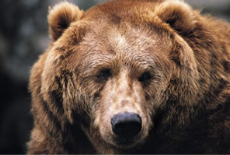
From the wilderness of British Columbia comes an innovative conservation tactic about which I am strongly... ambivalent. Raincoast Conservation Foundation is acquiring the guide-outfitting hunting rights to five areas along the central BC coast, a remote area of vast wilderness that is home to the rare "spirit bear," among other species. The angle here is probably obvious: Raincoast bought the rights in order to put a stop to hunting.
Raincoast and other conservation groups have a strong interest--one that I share--in protecting biodiversity and relatively pristine wild places. So what's my beef? It's a two-parter. First, I'm not sure that hunting is bad for the species being hunted. Second, I'm not sure the price--Can$1.35 million plus annual licensing fees--is the best conservation use of the money.
Now on one level, hunting is obviously bad for a species because it involves, well, killing it. But the formula isn't really so simple. For at least two reasons, hunting can actually be beneficial. First, hunters often form powerful constituencies supporting conservation. Ducks Unlimited, a powerful voice for wetlands protection, is probably the best-known example, but it's worth remembering that National Wildlife Federation also first took root in the hook and bullet crowd. Just as hikers often become advocates for trails, hunters and fishermen often become advocates for protecting their recreation. In the Northwest, for instance, you can find plenty of farmers who don't care much for salmon regulations, but you can't find a single steelhead fisherman who doesn't get animated about water quality.
Shoot to save
Second, as globetrotting naturalist David Quammen argues in his recent book Monster of God, hunting can actually be the lifeline that rescues species from the brink of oblivion. In the Russian far east, India, Australia and Romania, Quammen finds compelling evidence that hunting of the most objectionable sort--big game trophy hunting of endangered species by well-heeled foreigners--can spell the difference between life and death. The reason is depressingly venal: a lot of money gets spent to bag a saltwater croc or a Siberian tiger. When done right, some of the money gets ploughed back into habitat conservation. But, by far, the biggest benefit, according to Quammen, is that locals see a direct, tangible (read: cash money) benefit for conserving that species. And without local protection, imperiled species are all too often victimized by poaching or habitat destruction. To localize Quammen's reasoning, the perpetual specter of logging in coastal BC is a far more pernicious threat to wildlife than hunting.
So hunting, which creates a conservation constituency and provides a financial incentive, is not unequivocally bad for biodiversity. Indeed, I suspect that on balance, it's actually a boon. But hunting also doesn't sit well with many environmentalists who are, for perfectly legitimate reasons, ethically opposed to gratuitously killing animals. And I must admit, I have a hard time keeping my blood pressure down when I think about certain kinds of hunting, especially of big predators like grizzlies, cougars and wolves. When I think that those emblems of wildness may wind up as adornments of faux masculinity in a Texas drawing room, I get positively pissed off. But still, that doesn't mean hunting is a bad deal for biodiversity.
Raincoast and other conservation groups argue that ecotourism can supplant hunting. Ecotourism, they'd argue, can infuse cash into the region and create a constituency, just as hunting is alleged to do. Perhaps, it can. Indeed, recent studies in the US show that Americans spend more money watching wildlife than fishing or hunting for it. But ecotourism, despite its green appellation, can also carry tremendous environmental consequences--everything from carbon emitted by many people traveling to remote locations to habitat-destroying development to keep pace with the hoped-for crowds.
Moreover, I don't see why BC can't reap the benefits of both ecotourism and sustainable limited-tag hunting. So while ecotourism confers many benefits, I don't see why hunting can't add more.
A million ain't peanuts
Finally then, there's the question of whether $1.35 million plus annual fees is worth the benefit. Owning up to opportunity costs can be a painful choice when it comes to protecting places and animals that we love, but it's even more painful for the wilderness when we choose poorly. The model Raincoast is using--buying a license and holding it for conservation--is a good one. It's been done with increasing success with water rights (keeping water in streams for fish), grazing rights (keeping livestock off fragile public lands that need breathing room to recover), and development rights (buying easements on farms, for instance, to prevent them from subdividing).
Hunting rights have even been purchased before, too, though never on the scale that Raincoast is doing it. But unlike rights for water, grazing, timber, minerals, or development, the biodiversity threats of hunting rights are far less clear. I would like to know what else might have been accomplished with that money. How many acres of land could have been protected from impending habitat-destroying development ? How much logging could Raincoast have prevented with that money? And how much logged-over land could have been restored?
The conservation world needs a steely-eyed list that prioritizes the ecosystems and species that are most imperiled. And then it needs an even more steely-eyed accounting of the costs of protection. What are the best buys? What are the investments that are most stable, most leveraged, most likely to reap benefits in the future? As far as I know, that accounting has never been done, but I have a strong suspicion that hunting rights would probably pencil out as a rather bad buy.
Eric de Place is a senior research associate at Northwest Environment Watch, a Seattle-based think tank. A version of this appeared on their Cascadia Scorecard weblog. ![]()


28
Login or register to post comments
gordon
6 years ago
Comments on "When Money Buys Grizzly Lives"
on the subject of ecosystems and species in peril, I suggest planet earth and humans with common sense.
Chris H
6 years ago
I can understand hunters going out and killing something good to eat. I love moose meat. But, what is the justification for shooting a bear for sport? Is it really a sport? Not very sporting of the hunter to take such a large advantage over his combatant. I say, put down the gun and fight like a man!
hunter
6 years ago
Chris H- I'll make you a deal- the guns will be put down when the "green" tourists walk , paddle, and climb to view the cuddly bears.
DenisB
6 years ago
Unfortunately, you have to look at human impact. Because we destroy habit and ranges we have altered the balance between predator and hunter. Regulated hunting is a good way to keep both populations healthy. Too many predators in an area is unhealthy as are too many prey. The only way to restore things naturally is to eliminate human peresense all together.
But in BC game is harvested in approxiamately the following ways:
25% - legal hunting
25% - illegal poaching.
50% - killed on roadways by vehicular traffic.
If you really want to save wildlife the most effective means would be to ban driving between dusk and dawn. Any bets on how long that will take to happen?
jamez
6 years ago
Many do though
stinkysalmon
6 years ago
what people really need to address is the services the bears provide to ecosystems and put a price tag on that. I think you will find that a million or so dollars is peanuts in comparison. one griz could provide enough nutrients to an area more efficient and environmental friendly than us humans. And what good is it saving and restoring an area if no animals are present. You will find it pretty hard to restore environmentally impacted areas without key animals providing their services such as moving marine derived nutrients to forested areas which depend on this for survival. We also need to be careful when we talk about restoration and take a good hard look at what our goals are such as: restoration before human contact which in my opinion is impossible. Do no harm.
Aurora
6 years ago
Not to sound trite, but I say, three cheers for the Raincoast Conservation Society! Way to go, group! Having followed the work and actitivism of this Society for the past 15 years, I think their efforts, out on the front lines, have proved persistent, tenacious and successful and should be recognized and acknowledged as such. For whatever perceived faults Eric de Place may find in this solution, I think the hunting license purchase serves as a much-needed immediate stop measure to an activity that most of us in this province and country find extremely barbaric and out of date. If we can at least begin to save the beasts, the land preservation measures can come next. First things first. I, for one, am grateful to all the contributors of that $1.35m. What is even more telling and indicative of the calibre of Raincoast's efforts are their abilities to bring all First Nations groups onside as well. To Mr. de Place, no solution is ever perfect in this day and age, but we have to celebrate victories where we can and move forward from here.
Thank you Raincoast for your commendable actions, efforts and accomplishments.
mcfur
6 years ago
i think the author may have rushed into his opinions too early. from what i read on a website, they plan on discontinuing allowance for foreign hunters but allowing domestic hunting. also, let's give them some time to work things out as to the future of the area involved. otherwise, good aricle. robert furness.
Eric de Place
6 years ago
Thanks for the feedback, everyone.
Aurora, as I mentioned in the article, I too find some forms of hunting extremely objectionable. But our conservation resources are simply too scarce and important not to evaluate our investments in the cold light of day. I'm not looking for a "perfect" solution, but I am looking to make sure we're spending our money as wisely as possible. So I want to know: 1) Is big-game trophy hunting by foreigners (the worst kind, in my book) actually bad for biodiversity? 2) Is it worth $1.35 milllion to buy a very small number of hunting tags that won't eliminate hunting when we could use that money for other forms of conservation? I think there's evidence that the answer to both questions is probably "no."
DenisB, can you provide me a source for the percentages you listed? I'm fascinated.
Finally, Mark Hume in today's "Globe and Mail" takes up the same them. He provides some hard numbers about the money generated by hunting, which may give us a better sense about how likely ecotourism is to offset the economic/conservation benefits of trophy hunting. Here's the link: http://www.theglobeandmail.com/servlet/ArticleNews/TPStory/LAC/20051214/BCHUNT14/TPNational/BC
DenisB
6 years ago
percentages. I'm pretty sure they're from BC Wildlife.
Bob Rogers
6 years ago
Now if we could just get our Forest harvesters to think like Ducks Unlimited...
Chris H
6 years ago
Hunter: "Chris H- I'll make you a deal- the guns will be put down when the "green" tourists walk , paddle, and climb to view the cuddly bears."
Cool, I kayak all the time, and those cuddly bears often wander into my yard. I'm not sure if I am a "green" tourist though since I intend on voting "liberal" in the upcoming election.
chippy
6 years ago
Oh yeah, hunting - the "evil" sport. How many of these anti hunters have tried to survive without the harvesting of grains, fruit, veggies and protein that they have their "hired guns" collect. You know the "hired guns" I mean - the ones who will clear the forests, drive off or kill the wildlife to prevent the wildlife from consuming that which is meant for the human predator. The "hired guns" who slaughter on mass domesticated animals for your local fast food outlet or grocery store.
How many of these anti hunters rely on transportation provided by those "environmental prostitutes" who are willing to do the dirty deed of mining the minerals that that are then processed into their cars, trucks, buses, or bicycles. Who do these anti hunters count on to drill for and process the oil for their use in home heating and transportation. What of the "environmental prostitutes" who develop the forests, etc., into subdivisions so these anti hunters feel safe from the wildlife around them. I can already hear the kayakers and campers scream as they grab their factory provided gear and point to their SUV's!
Where do Raincoast and other conservation groups get their funds? Are the funds "environmental clean"? Or are the funds just being "environmentally laundered" by those whose conscious bothers them because they have hired "environmental prostitutes" to do the daily dirty work that keeps them warm, dry, well fed and mobile.
Compare how much money is spent per capita on the "demand for the natural existence of wildlife" by these conservationists with the money that is spent by those who actually make the effort to go out and harvest the fish and game for their own use.
As you may have guessed I am a hunter. At different times in my life I have worked both as a "environmental prostitute" and a "hired gun" in the effort to clear land and develop your property or provide your dinner. There is a balance to be reached and it will only be reached through common sense application of good science. Perhaps it starts with the next anti hunting hypocrite walking to their "environmentally friendly" (is there such a thing) job and asking for a little less today than yesterday.
allan
6 years ago
To me the purchase is the same as turning swords into plowshares.
We need more plowshares so donate your swords and guns to a better cause.
Hyderized
6 years ago
I always find it ironic that urban environments suggest that logging destroys large mammal habitat; while every geographic region is different, most areas that are logged results in new growth of willow trees that attract moose, and blueberry bushes attract bears. First nations people used to start forest fires near their settlements for this very reason.
Though I'd never want to shoot a bear for sport, many first nations people in rural B.C. rely on guiding trophy (bear) hunters for their livelyhood. Though the personal motivation for hunters who want to kill bears is suspect, as long as it managed correctly by the ministry of Environment, it should still be permitted in B.C.
Stuart
6 years ago
Cheers for the Raincoast society, I love this and I applaud them. It's about time environmental groups start acting more business like and not just be marginalized sitting by the road with a sign or blocking
a logging truck only to be removed later via court order. What is the difference between the Raincoast society buying a land permit or a company like warehouser buying a permit to log out a section of crown land.
Raincoast is not banning hunting, it is banning trophy hunting, the art of killing big predators like grizzlies, cougars and wolves , cutting of their heads and leaving the body to rot in the woods. This kind of practice is barbaric and does not belong in the 21th century, just like whaling is not longer needed. Rich US and European tourist coming up hear to find heads to hang in their homes, disgusting. Hunting for food is not banned at all, hunting for the sake
of killing is banned. The Great Bear Rainforest is one of a kind and the sprit Bear is world known, hunting them is
a smear on Canada's reputation. What the author failed to mention is that native groups have also signed onto this deal in cooperation with Raincoast and are sick of tourist coming in to kill their economic opportunities. Yes this is not only immoral , its bad business. Many guides including natives are making big bucks taking tourist on sight seeing tours of the bears etc. Even the most prominent trapper is converting his business to a sight seeing one.
What would happen other wise is usually a European company uses a Canadian as a front man and buys the permit, making up a 1.35 mil investment is allot of dead bears. Theirs much more money to be made taking tourist on sight seeing tours, and yes this is a great deal. We can educate to the cows come home but it does nothing to change behavior of those willing to behave badly with no vision for the future, what this purchase does is halt the destruction of one of the most diverse areas of BC's coast. And please don't brag about Ducks unlimited, they own a bunch of land out in Maple Ridge, I usually find gun casings and garbage all over the place, once is a while you see a couple of yahoo's in a boat sneaking up on some mallard ducks and blasting them, yea real sports men. Ducks unlimited is into the same game of owning land to control the use of it, I say the environmental movement is on the right tract.
Stuart
6 years ago
"Though I'd never want to shoot a bear for sport, many first nations people in rural B.C. rely on guiding trophy (bear) hunters for their livelihood."
Actually first nations people are on board with Raincoast on this purchase, they are making more money running sight seeing tours. Killing big game is bad economics and a thing of the past.
hunter
6 years ago
Sorry Stuart- while the purchasing of the guiding rights will prevent non-Canadian residents from hunting in this area, BC and resident Canadians will still be allowed to do so. Also, there is no such place as the great bear rainforest on a map that I'm aware of. It's simply a trendy name given by some people to a specific area that they hope will suit their purposes.
Stuart
6 years ago
I never said hunting will not be allowed, Raincoast is buying the guiding rigts to the land, they are banning trophy hunting but not dear etc. Native groups are also involved and are sick of US citizens and othes coming in and wreaking their tour business by killing for the sake of it.
Vancouver, BC Â* BC-based Raincoast Conservation Foundation, with the support of five coastal First Nations, has bought one of the largest trophy hunting licenses in North America in an unprecedented move to make conservation the primary objective in managing wildlife – not sport or profit.
No public funds were used for the purchase of the $1.35 million commercial license, which covers an area of more than 20,000 square kilometres of wildlife rich habitat, including grizzly bear, black bear and the rare white Spirit or Kermode bear, along with wolf, cougar and wolverine populations.
"Buying the commercial trophy hunting rights is a major first step towards shutting down the carnivore trophy hunt on the coast of BC,â€
Colin
6 years ago
Considering the Grizzly population in that area is quite healthy (Andarko River), the life for a young immature grizzly just got harder. The area will only support so many bears and it means that the dominant males will have to drive off young males in order to survive.
People forget that it was actually Hunters in that area that set up the first conservation areas for bears. Hunting is also a natural part of the ecosystem and is part of our natural interaction with nature. Hunters have recognised that hunting methods have changed to make them extremely efficient and that controls are needed to maintain healthy populations for all purposes. I frankly have a lot more respect for the hunter that take their own meat than those that only buy it. I personally don’t like trophy hunting, but realize that it is a important employment factor in the North along with trapping, mining and logging.
The Problem with tourism is that it is a fickle beast that ebbs and flows as it is affected by many global factors. Many tourism businesses only last a few years and they often do not do co-exist well with other users. Plus eco-tourism also panders to the rich.
Stump
6 years ago
I think it's safe to say guided hunting trips aren't exactly within reach of your average low-income person either. Further, those trips are just another form of tourism.
Stump
6 years ago
Does anyone know roughly how many animals an average grizzly takes in an average year?
Colin
6 years ago
I suspect that a healthy deer will keep a male for 1, maybe two weeks in addition to other food sources. (That’s just a guess on my part) However the bear may take the carcass from another predator, roadkill, natural, accidental death. In the fall Grizzlies have a strong carcass defence stance, which shows they value the high protein at that time of year. Many people that have been killed by bears or have had to kill bears, have accidentally stumbled into a carcass. In some areas bears will actually travel to the sound of a gunshot as they equate it with a food source, either a carcass or gutpiles. Many hunters report being forced off their kills by bears, it is illegal to kill a bear because they claim your kill, unless in self-defence.
corvid
6 years ago
Response to chippy: Whoa! It's apparent why chippy is your name ... you have presented many valid (accurate) points (albeit severe and cynical tone). I support your belief that the whole "eco-friendly weekend warrior" thing is a modern hazing over the ME generation's continued high consumption gig. Go holistic or go home I say - Lycra and mountain bikes does not a conservationist make. I support wildlife preservation at the "back-off" level: Everyone out, or if human access is to remain, then high level knowledge should rule who enters. This is not government or capitalist driven ... rather it's biologists, ecologists, "leave no trace†guides and yes, solitary "for food" hunters. Trophy hunting guides are capitally motivated and very seldom regionally, nationally and ecologically responsible.
Who plays in the woods must know the woods and deeply care for them – the “pleasant habitat visit†stuff is best kept near home and in the pages of fascinating (but unfortunately ill advising) magazines like Outside and National Geographic Explorer. I too have got a hankering to get heli-lifted into no-mans-land and chase around after lions, tigers and bears with my camera … but I also have a strong chance of becoming a predator attack statistic. Hunters can indeed be respectful, habitat and specific species stewards just as biologists and conversationalists are – but don’t pretend that none of these folks enters the domain of big predators without a gun (or guns in the hands of guides). It’s not the guns and it’s not the resident/indigenous hunter that I have a problem with. It’s the disregard for life in general: the blatant indifference and ego driven high-grading of game targets for trophies that cranks my nads. (Like the forestry game in it’s youth)
I would certainly hope that the funds Raincoast received were from environmentally and socially responsible sources - but I expect they were, as Raincoast is even more diligent than ambitious.... and to that (attention all!) I still applaud them for this bold move on the "players" court. No kidding this is heckovalotta money PER YEAR and I seriously wonder if it's sustainable, but they own this move and should stand tall in having the courage to play this aggressively. Sure it’s a kind of guns for ploughshares thing … just a bit scary when your first transaction involves Howitzers and bazookas!
corvid
6 years ago
Response to Eric de Place: You are a talented writer and support your work well with additional food for thought. Your article rounds out by saying: the intent is good, the budget sucks, the money/annual fee probably won’t be sustainable and targeting hunters/hunting is misguided … right?
Well I can see how Raincoast’s situation easily parallels the Wildlife Bridge scenario (see “choose poorly†link in Eric’s current article). And your ambivalence is again well matched. But this time I think there isn’t a candy coated frosting on anything. Actually it’s the EXACT OPPOSITE. Raincoast has to pay a fortune for a small piece of plain cake that the government is happy to forget about – save for the fact that now without improvements and expensive legislation the gov. can collect hefty annual fees.
Talk about your value-added shtick!
Raincoast has worked in this project for a very long time and simply took the bull by the horns. If the conflicting parties only communicate through actions supporting hunting interests, then Raincoast simply met the competitor on his “home†turf. Non-profit folks playing in the profit seekers world must be prepared for scary numbers!
Does Raincoast see this as a long term sustainable solution? I hardly think so.
They are buying valuable time in hopes that legislation can be developed to further protect the region. Valuable time isn’t just a saying – it’s tangible and has a price tag.
Hunters make a valuable voice for habitat protection? Right you are … but trophy hunters and their guides? Please. The pivotal error is in collectively labeling anyone with an animal in his/her gun sight cross-hairs as being of one interest group – the cumulative good guys or bad guys. Who, in modern times, would believe a guy wearing hip waders fly fishing up a mountain stream; three West Coast Native youth netting eulachon from the beach; a Langara fishing lodge guide; a commercial trolling skipper; a fish farm site foreman and CEO of a Norwegian aquaculture consortium are all basically the same guy with similar interests and motivations?
The control issue is so sketchy, just as it is for the fishing industry. Conservationists running next years numbers can imply (quite unintentionally) false promises for hunters hoping the meet a quota or have the chance to go after game that was strictly limited or not available for several seasons. This is a stupid game of craps to play at the very top of the food chain. We are not talking about tens of thousands of deer, or rabbits or chickens. The Pacific West Coast predators are huge, have huge territories and eat huge quantities. Every one makes an easily measurable impact on its environment. The whole notion of using hunting as a control for maintaining biodiversity levels is a terrible idea -for a centuries old FAILED example look at the wolf culling program.
Eco-tourism is our proud oxymoron, almost a nationalist statement of endorsement. The notion of shooing out the guns and gunmen so it’s safe to thrash through on our mountain bike is pathetic. Hunters have dropped the use of lead shot and typically leave little trace behind – a reasonable indicator of intended sustainability. Hunting fees can be steep so one has to pay to play. In general I support that most hunters can be responsible, will take no more than their legal limits, and does not markedly impact the biodiversity without APPROVED CONSENT TO DO SO by government agents and regulations that quantify hunting limits.
I am not a hunter. I do not support increasing opportunities for further hunting by raising take limits or expanding territory. I do not in any way support high grading and trophy hunting. I eat commercially produced and processed meat. I make a diligent effort to purchase grain fed/organic/free range beef/poultry.
AND … I’m very happy to see that you favor buying a license and holding it for conservation … because that is something we do too!
xanthocyparis
6 years ago
DenisB says:
"Because we destroy habit and ranges we have altered the balance between predator and hunter. Regulated hunting is a good way to keep both populations healthy. Too many predators in an area is unhealthy as are too many prey."Â*
Response:
Grizzlies are opportunistic predators only. For the most part, they eat fish and plant matter. So the whole comment is basically irrelevant in the case of grizzlies, unless one is talking about fishing. And the general idea that the prey are going to be killed, so there will be too many predators, so their numbers have to be "adjusted" by hunting, which is, I would guess, pretty much the opposite of what usually
happens. The apex predators with low reproductive rates get shot off, the game stays behind. How often have there been "too many predators"? Always the same silly management hubris in one guise or another.
DenisB goes on to say:
"But in BC game is harvested in approxiamately the following ways:
25% - legal hunting
25% - illegal poaching.
50% - killed on roadways by vehicular traffic."
"If you really want to save wildlife the most effective means would be to ban driving between dusk and dawn. Any bets on how long that will take to happen?"
Response:
And then the road mortality figure, with the strangely round numbers, which are somehow assumed to apply to all populations and species equally. Like, how much roadway mortality of grizzlies is there in the raincoast? Â*Like next to none. The bella coola road, the kitimat road.
And of course the sophistical insinuation that the greenies logically want to ban night driving.
It all basically looks like slick propaganda that people crib and regurgitate in slightly inappropriate contexts. Not a word in this entire comment about the specific context: trophy hunting of grizzlies on the Raincoast.
Eric de Place
6 years ago
Corvid,
Thanks for taking the time to write your response. It was tremendously thought-provoking and well-reasoned. Be assured that I will be chewing over the issues you raised.
Eric de Place
Collins
6 years ago
After reading all of these letters! and their reasons why this is such a great deal for all!! I am realy perplexed as to what has been acomplished here. It appears that no "forieners" will hunt, tho they were guided mainly by natives for money. Now to keep this license, 1.35 million a year will be needed, guesse how it will be done and by who. Also since when do organizations like this go into agreements with people, "natives" who in the same article state that they will try to stop other Canadian Citizens from hunting as well, but we can bet our last dollars that they will continue to hunt year round, and also killing what this organization is trying to protect and it will also be done for money. I hunt and fish and I pay my own way, I also use what I kill, and I do not sell it or make money from doing this. I also do not practice racism to stop other Citizens from hunting or fishing. While I agree that grizzly Bears should not be hunted for profit nor for food, any other game is fair game for those who hunt for food, I and thousands of none-natives do just that and our money pays the conservation bills for this wildlife management, what do any of these groups put into conservation. I am damn tired of listening to others tell me that I am a sports hunter or fisherman and then watch others rape that same resource. It is time for these people to realise that we all have the right to fish and hunt as citizens of this country and to say otherwise is descrimination.
Without prejudice