- Ms Kaye is a Tyee Builder. You can be, too.
- Mary Carlisle is a Tyee Builder. You can be, too.
- Prem Gill is a Tyee Builder. You can be, too.
- Nancy Flight is a Tyee Builder. You can be, too.
- Justin Everett is a Tyee Builder. You can be, too.
- John Westover is a Tyee Builder. You can be, too.
- Nora Etches is a Tyee Builder. You can be, too.
- Edward Henderson is a Tyee Builder. You can be, too.
- Bharadwaj Chandramouli is a Tyee Builder. You can be, too.
- Dean Chatterson is a Tyee Builder. You can be, too.
- Marius Scurtescu is a Tyee Builder. You can be, too.
- Robert Parkes is a Tyee Builder. You can be, too.
- James Murton is a Tyee Builder. You can be, too.
- Susan Doyle is a Tyee Builder. You can be, too.
- Vincent Strgar is a Tyee Builder. You can be, too.
- Helen Spiegelman is a Tyee Builder. You can be, too.
- Subir Guin is a Tyee Builder. You can be, too.
- Kimball Finigan is a Tyee Builder. You can be, too.
- Joanne Manley is a Tyee Builder. You can be, too.
- David Leach is a Tyee Builder. You can be, too.
Stop Rewarding the Guzzlers
If Martin is serious about Kyoto, give us 'feebates'.
Canada's plans for reducing its emissions of greenhouse gases under the Kyoto Protocol remain two bits short of a loonie. But one word buried deep in the recent federal budget holds the key to realizing Canada's climate promise: "feebates."
Feebates are a novel combination of fees and rebates, designed to continuously tug the entire car and truck market toward better fuel efficiency. The basic idea is elegant in its simplicity: vehicles that are more efficient than average come to the showroom carrying a rebate for their buyers. Those rebates are proportional to the efficiency of the vehicle, so superefficient vehicles come with whopping big rebates.
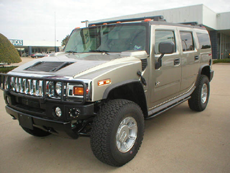
Conversely, cars and trucks that are less efficient than average, come with a fee-a fee that, as you guessed, grows with the vehicle's inefficiency. Gas guzzlers, therefore, pay big fees. (Still, the fees are unlikely to be as large as the massive, $4,000 rebates car makers have lavished on purchasers of their largest trucks.) The fees pay for the rebates each year, so feebates are self-financing.
The Martin government's budget does not promise to implement feebates, but it does promise to consider them. It asks the National Round Table on the Environment and the Economy (NRTEE) to develop feebate options and seek public input. Weak feebates are already on the law books in Ontario and Austria, and stronger feebates are under consideration in France, the United Kingdom, and the US state of Connecticut.
Boost to economy
The public has much to gain from feebates, but few people know about all their pluses. Feebates are a plus for the economy, because they correct a documented market failure called the "payback gap." Typically, consumers will only pay extra for vehicle fuel economy if the investment pays itself off within three years, which is just one-fifth the expected operating life of most vehicles. The result is productivity-sapping economywide overconsumption of fuel. Feebates close the payback gap by posting a foretaste of lifecycle energy costs on the one label that no car buyer ignores: the price tag.
Feebates are dynamic, nonregulatory incentives. As the average fuel economy of the fleet rises, the fees and rebates recalibrate and keep the entire market shifting toward fuel savings. Regulatory standards cannot imitate this market-wide benefit.
Feebates are a big plus for clean air and a secure climate, because they put prices in line with Canada's Kyoto commitment. They put the power of the marketplace behind the agreement automakers have signed with government to markedly reduce greenhouse gas emissions from new vehicles.
And feebates are a huge plus for communities, because inefficient vehicles hemorrhage dollars from local economies. British Columbia currently sends $5 million a day to Alberta to pay for its oil habit. By speeding the advent of superefficient cars, feebates keep more of that money at home.
Feebates are a plus for car buyers and makers, too. Buyers get paid to choose vehicles that save them money anyway. And automakers get consistent rewards for investing in fuel efficiency; at present, the roller coaster of oil prices makes consumers fickle about fuel.
Big cars, big lies
Unfortunately, some automakers have already started spreading misinformation. The Canadian Vehicle Manufacturers' Association (CVMA) claims that feebates "unfairly target" buyers of large vehicles. This ignores the variety of feebate options that the National Round Table will develop. For example, feebates can be applied within each size class of vehicles. Those who need large vehicles still get them, and they get a rebate for buying the most efficient ones. Those who choose small vehicles have a similar incentive to buy the most efficient models. Common perceptions aside, feebates work by accelerating technological advances, not by shunting SUV drivers into subcompacts.
Even more spurious is CVMA's claim that feebates are inferior to "financial incentives for consumers to purchase advanced fuel-saving technology, such as hybrids and other alternative fuel vehicles." Such incentives-largely income or sales tax credits for hybrids-are nice, but they're tiny. They apply to a fraction of one percent of new vehicles. Their promise is infinitesimal compared with feebates'.
The potential contribution of feebates extends even beyond vehicles. For household appliances and other energy-using devices, too, feebates can turbocharge progress toward a climate-friendly way of life. But in the here and now, vehicle feebates are simply this: the missing link in Canada's climate plan, the ticket to Kyoto.
Donna Morton directs the Centre for Integral Economics based in Victoria. She was awarded an Ashoka fellowship in 2003 for her work on market-based policy innovation and participates in the national Green Budget Coalition.
Alan Durning directs the Seattle-based research center Northwest Environment Watch and is lead author of Cascadia Scorecard 2005: Seven Key Trends Shaping the Northwest. See www.cascadiascorecard.org for more on feebates. ![]()


225
Login or register to post comments
Stemalot
6 years ago
Comments on "Stop Rewarding the Guzzlers"
Canada has very few plans on how to meet the Kyoto target. This "feebate" is a great idea and a great step towards the right direction!
deeby
6 years ago
Watch for backroom lobbying by North American manufacturers to try and undermine this initiative. They have a lot of surplus inventory in the SUV market, and far more manufacturing capacity for gas-guzzlers than they need. Even CAW might get on that bandwagon as they stand to lose too....
quietpenguin
6 years ago
why do we even allow vehicles with more than 6 cylinders to be sold on a personal basis?
8 cylinders and up should be commercial. tax them appropriately.
6 cylinders are more than capable of towing that Prarie Schooner RV or 5th Wheel you're lusting for.
skeptikool
6 years ago
Talk about hypocrisy!!
We get lip service on the environment but governments and the oil and auto industries have always been in it together.
Don't look for whistleblowing from a mainstream media that gives us auto writers who rarely touch on anything but the superficial. After years of puff pieces on the promise of hydrogen fuel cell
powered-vehicles, the number of articles on how the hydrogen is obtained, its cost and environmental impact in procuring it, could be counted on one hand.
One need only consider the Smart Car or even the Vespa scooter. The owners probably bought them for the dual purpose of needing less fuel and contributing to air quality but in both cases the owners would have been penalized by the exorbitant cost of the vehicles.
If an equivalent, socially beneficial vehicle is not made and sold on this continent, duties and tariffs to run interference on behalf of the negligent home industies should not be imposed.
bike-anarchist
6 years ago
How about levying surcharges not only on the relative fuel efficiency of a vehicle, but on the HOURS that vehicle is being used, also relative to fuel efficiency.
For example, a vehicle that gets 15km/l is commuted 25km/day and takes 1 hour would pay more than a vehicle that gets 7km/l and is commuted only 5km/day that takes 10min.
But I see the real problem isn't just the fuel efficiency/greenhouse gas distraction, but is the fact we as a society do not wish to change our behavior - that is get out of our vehicles. From a resource-wise point of view we cannot all still be driving our personal motorised vehicles no matter what.
The fuel efficiency solution is 30 years too late. Alternative fuels will just shift the the energy over-consumption from fossil to hydrogen, or whatever. As well, the resource demand on raw materials, or even recycled materials will become just another unsustainable problem. Then we are still left with the real problem: getting out of our personal motorised vehicles.
Because, we all cannot continue driving.
freebear
6 years ago
I am waiting for real change that will only come about when oil is too expensive, whcih will be quite soon.
Despite the work of ENGOs, I do not think things will change for the better until we get of our fossil fuel addiction!
Yes, I know I am a pessimist!
freebear
6 years ago
Oops! Cursed typos!
...until we get off our fossil fuel addiction!
Birch
6 years ago
Great idea! Contact your MP. Let's get this one on the road.
freebear
6 years ago
Hey why not give non-car owners (with proof) a tax rebate?
Hey why not make public transit free and let it be payed for by other taxes/fees such as the guzzler fee?!
Why are "we" planning to build more highway lanes-seems a wasted investment to me!
dangrice.com
6 years ago
I've bought a scooter, and I can laught at my footprint. Every week or two when I fill up, I almost feel embarred ringing up $3.50 in gas!
skeptikool
6 years ago
In England, during the war, I recall a small 2-stroke gasoline engine that drove the front wheel of a bicycle. I'd love to get my hands on one of those today.
I don't know even if they are still manufactured but with gasoline prices as they are, I'd think there would be a ready market for such an attachment - particularly on the West Coast.
The bicycles could still be pedalled, with the engine running or not; so you could still have the advantage of exercise that cycling offers.
Yammer
6 years ago
Feebates, what an interesting idea.
A potential caveat is that the vehicles with the least fuel consumption -- electric and hybrids -- have big batteries which are full of toxic stuff. I suppose they are recycleable, however.
My understanding is that big vehicles are in trouble regardless of government party-pooping. North American gasoline may hit European price levels in a few years.
The unfortunate thing about big vehicles is that they do actually function quite well in other respects. They do protect drivers better than little cars. They do get from A to B in comfort. They can haul the Airstream on weekends. Large motors go faster on the highway; going fast is fun.
These things are addictive.
People can give up their addictions, but usually they don't.
Mel from Calgary
6 years ago
A big part of the problem is people can lease and then write-off on taxes the expense and gas of these vehicles. This encourages people to go for the biggest most expensive vehicles on the road. People don't relate to the cost of owning and operating.
Take away this tax break then this will encourage people to get the least expensive to operate cars.
Besides in this era where we are expected to take cuts in health care and education we should not be subsidizing the vehicles of the well off. Funny you never here the Fraser Institute condeming this subsidy.
KWD
6 years ago
Given that the planet, according to Hubbert, has passed the halfway point in terms of oil supplies – that approximately half of all oil that will be recovered, has been recovered, and oil production has peaked – the “feebate†approach to reducing greenhouse gas emissions produced by personal vehicles may be too little, too late.
The full effect of greenhouse gas build up (and other pollutants) that result from hydrocarbon consumption to date has yet to be felt. Controlling the personal vehicle (car and truck) pollution output and consumption of the remaining 50% of global oil supplies, through fee and rebate recalibrations, merely extends the time lag component in the cause and effect relationship.
Pessimism aside; if “feebates†are to have a significant effect on greenhouse gas emissions and other petrochemical based pollutants, they must be across the board. Why stop at personal vehicles? It doesn’t make sense. Our lives are 100% totally dependent on the petrochemical industry, not just the personal vehicle transportation segment. Why not apply “feebates†to commercial transport systems, to the housing industry, to air travel, or to luxury items like Jimmy Patisson’s yacht?
Of course the answer is simple: Government is not going to attack the captains of capitalism. It is much easier to attack the individual working class consumer by socializing the costs to maintain a positive growth in the GDP and corporate profit. And, in the public’s eye, it looks as though they are actually concerned about climate change.
“Feebatesâ€, like the concept of full cost accounting, are noble ideas but to be meaningful they need to be universally applied.
Yammer
6 years ago
So you're against it?
allan
6 years ago
KWD, you've touched on an important issue. Why is it that commerical traffic is not discussed here?
I simple case in point is the growth of the trucking industry across Canada in the past two decades.
Anyone with a eye can see the inefficiency of shipping goods cross country in the back of a truck when those same goods and a little strategic planning could be delivered quicker and using far less engergy and labour on a rail car.
There is also the issue of paying to maintain roads. I live in a community where transport trucks, moving wood chips, with 32 wheels spread over a cab and two trailers cause deep ruts in asphalt pavement.
However, the trucks, which are often registered and licenced in Alberta are hit with absolutely none of the cost to fix those ruts. Nor does the pulp mill that digests the wood for profit.
We, the simple resident tax payers get to eat those bills. The same happens right across this country. A 100 1,500-pound mini cars carrying two people each don't have anywhere the impact on highway wear and tear as does one larger logging druck.
When Ottawa does get around to repairing its national highways it dips into general revenue rather tahn gas taxes or oversixzed truck taxes to finance the work.
Why do we have to subsidize trucking or the industries it hauls for, especially when there are alternatives?
Yammer, it's never as black and white as 'for or against' unless it's GWB speaking.
billy pilgrim
6 years ago
there needs to be a special idiot tax levied on all engines bigger than 4 cylinders.
when i look for a new car it's simple, i want the littlest engine available and the biggest stereo available.
KWD
6 years ago
Thanks for elaborating Allan. Yammer, the simple answer is that I’m for it if includes all addicts and polluters, not just you and me ... however, yours is a ‘complex question’ and can’t be answered with simple yes or no.
I concede that change is incremental, must start somewhere and takes time, but if “feebates†are limited in application to personal vehicles as this article indicates, the “feebate†idea is simply hot air. My concern is that we are running out of time.
Yammer
6 years ago
So, you're against it unless it includes everything, commercial haulers, boats, smokestacks? What about "every little bit helps?" What about "think globally act locally"? Sure, it's not fair. So?
sirjohna
6 years ago
i'll quit driving my beautiful gas-guzzler when the good folks of the gulf islands quit burning wood in their furnaces.
Stump
6 years ago
A couple of observations from a cyclist.
The number of cylinders doesn't determine mileage. An eight cylinder engine can have a smaller displacement than a four cylinder one. Usually doesn't... but let's not start or perpetuate an inaccuracy. Displacement (total volume of the cylinders) is the variable (among others) that raises or lowers fuel consumption and power.
I have litle faith in alternate fuels being a solution. Turning water into hydrogen for little $$$ seems a long, long way off. Don't current methods take more energy to convert than they actually capture? Spot the unsustainable conundrum Batman!
The hybrids are better, but all those batteries chock a block full of toxic compounds are a good reason to be wary of roads full of them.
Even if we manage to create zero emission vehicles we're still stuck with capacity and congestion issues, esp when it's one person per vehicle. Effective carpooling schemes could do more for our environment faster and more cheaply than most technological solutions IMO. Car co-ops seem like a workable solution to me, as another big problem with cars is storing them when not in use. Co-ops can minimize idle vehicles. Neighbourhood co-ops in conjunction with a well-designed computerized car-pool match-maker seems like a no-brainer to me... not sure why governments aren't doing everything in their power to promote them. Oh right, carmaker$ and the associated union$ don't want to sell LESS cars.
But... if only there were a time-tested transportation device, simple to use, inexpensive, and perfect for those 5-15 kilometre solo trips that most of us make twice a day....
The problem is one of branding. Branding is hard. Car culture has a big head start. To that end, if you ride a bike, remember to smile. Seriously. By branding ourselves as happier, healthier, and richer for our lack of reliance on a car, we can usurp the lifestyle images car makers have tried to associate with their product.
Glad to read somewhere else that Translink is expanding their bikes on Skytrain policy. Multi-modal solutions also rock!
I could go on and on and on....
Stump
6 years ago
extracting hydrogen from water rather, not turning water into hydrogen. :-)
Eddy Haskel
6 years ago
Sirjohna... you will quit driving your gas-guzzler when good men stop bleeding to death during thier effort to secure you a supply of fuel. Of course, it's someone else's blood so why would johna care?
sdgreen
6 years ago
Freedom is the hallmark of our democracy. If I can afford a gas guzzeler than so be it.
The fact is that the whole Kyoto issue is flawed with so much BS that such can not be taken seriously. Kyoto is nothing more than an economic tool contrived by the socialists to feed funds from the west to that of lessor endowed countries.
The market will establish the essentials. Rather than outlaw, overtax larger vehicles, why not demand from our governments to withdraw from Kyoto, provide funds to manufacturers so that they can produce alternate power systems.
Our society cannot do without effective private abd commercial transport. Obviously rapid transit, rail, buses are not the answer.
What we need is strong support of the manufacturers to produce effective power systems to replace the conventional systems.
But of course environ freaks will disagree!
--
skeptikool
6 years ago
sdgreen,
I believe that global warming is real and that the main contributing factor is our use and missuse of fossil fuels. If that makes me an enviro-freak then so be it.
Riding the bus is often cheaper for me than driving my Pontiac Firefly - plus I can read a paperback while traveling. When I read your statement, "... Obviously rapid transit, rail, buses are not the answer." my first thought was, is this guy for real?
Attempting to stimulate a rather dead board, perhaps? Very laudable. If so, you're forgiven.
On the matter of more public funding going to research energy alternatives., NO BLOODY WAY! If the technology is viable it will sell itself - just as the demand for hybrids is, reportedly, currently exceding supply.
I'm tired of financing research boondogles that are primarily stock promotion scams, in my opinion. One local plant working with regurgitated hydrogen technology seems to have had little difficulty in enlisting a lapdog media that has given us nothing but puff pieces on the operation.
ursus
6 years ago
Peak oil will take care of the gas guzzlers!
sdgreen
6 years ago
But the problem is that the cost to either provide the number of buses or rapid transit is just too high. Then again how do we deal with the movement of goods?
It is true that petroleum products will shortly become to high in price for even bus companies to afford so we had better find another source for energy.
It might be alright for you to take the bus, but how many others have the same option?
Kyoto says that we will be paying billions in penalty costs likely paid to a blackhole! Why not take that money put it into R&D for better alternate energy?
dangrice.com
6 years ago
while i'd hate to call myself an environmentalist, i do think its very much to canada's advantage to become a leader in green technology. eventually we will move closer to peak oil, modernizations in china and other countries leads to increased usage, and to rely on heavy consumption will be more expensive in the long run rather than moving to efficient technologies now.
its our competitive advantage, let ecological dinosaurs become economic ruts, while clean, efficient canada becomes the winner.
Stump
6 years ago
"It might be alright for you to take the bus, but how many others have the same option?"
Oh, and what was the other one..??? Oh yeah, transit can never solve all our problems, or something to that effect.
I challenge you to prove the latter with something more than an opinion masquerading as a blanket statement of fact and would dearly love to hear your own answer to the first question.
skeptikool
6 years ago
Further, another reason I'm peed off is that a Lower Mainland industry has just sold thirty diesel bus engines offshore with ninety to follow (Asia, I believe) These have been converted or designed to burn natural gas.
Well, bully for this industry and its stockholders. Since, if I'm correct, there is considerable public money in that technology, it would be great to see those emgines first going into the hundreds of diesel buses serving the Lower Mainland.
Budd Campbell
6 years ago
Recently I read a letter to the Editor of the Georgia Straight. The writer said that to save the planet gas prices should be doubled. IOWs, from 90 cents to $1.80 per litre. It occured to me that he would have said the very same thing two years ago when gas was 60 cents a litre, that it should be doubled to $1.20 per litre.
My point is that few people outside the oil industry have any idea, or are even motivated to find out, what the demand elasticity for oil and gasoline are.
In the GVRD, virtually all of the gas tax is going to subsidize the bus system and Skytrain, with the investment in roads a mere $170 million, compared to ten times that for RAV alone. Motorists are very definitely subsidizing the transit user, because it's policy in Vancouver not to make property owners pay for the public services that increase the value of their properties. A very poor decision in my opinion.
Bytesmiths
6 years ago
Hey, Alan's supposed to be on vacation! Just can't keep a good activist down, I guess... :-)
clubofrome
6 years ago
The US passed it's own "peak oil" decades ago. The Asian continent is shifting gears in economic terms and were giving out coupons to buy more cars. I'm sorry I'd say it's irrelative if peak oil is here or 10 years away. We'll never have 50% on the downside anyway, the last few barrels will not be recovered. The technology doesn't yet exist for us to perpetuate our so called civilization at these consumption rates. So exactly what alternative source of energy is it that will drive the economy? What exactly will we be using to mine, manufacture transport and market our consummer driven addiction? Hmmmm? I'm no engineer, but from what I've read, we'll need a lot of oil before we can move to a new platform....that, I repeat, doesn't exist yet. At least not on any scale to even remotely serve the global scale. Some of you sure have faith in new technology when it's technology that put us in this mess. So put that in your pipe and smoke it. We may have the universes most elaborate system of paved bicycle paths one day. Looking at some of the models for the future, I'd sign on to that one right now.
Colin
6 years ago
Stump
Some good comments, taxing things based on size, number of cylinders, etc rarely achieves the result intended. In fact some of serious design flaws in 18th century sailing ships could be traced to attempt to evade custom duties. Same in England when they taxed vehicles as cars if less than 10 seats, Landrover added bench seat and it became a 12 seater with no tax.
The large SUV trend is already on the wane and by the time you have targeted them the target may be already gone. Also I don’t think that SUV are an actually vehicle class, so they would be hard to target.
The hybrids do offer certain advantages. It is unlikely that enough infrastructure would be built to sustain large use of alternative fuel vehicles. GMC just introduced the gas/electric pickup, this type of vehicle will go a long way to reduce fuel consumption & emissions. Also why is there a virtual silence on small turbo-diesels as used in Europe. I put a Turbo-diesel in my truck and cut my consumption in half. Modern diesels combined with modern fuel makes it far cleaner than the ones offered even 10 years ago. People are quite correct that the manufacturing of Hydrogen is expensive and requires a large source of electrical power. Basically with Hydrogen you are transferring the environmental load from one region to another.
Remember also that not everyone lives in the city and that not all city dwellers remain in the city either. Someone driving a large vehicle may also pull trailers, go camping, traveling, plus anyone who has more than 2 kids knows just how much extra stuff you get to carry. People that live in the country drive large vehicles for a reason, they need the cargo capacity and fuel quantity.
I have two cars, one 4x4 for the above sort of stuff and a economical beater that I use for getting to work. As I do my own repairs this is fairly cheap way to go, but not everyone can do it.
Kyoto is a scam, this whole “green credits†thing is going to be a smorgasbord for corrupt regimes to make money trading their credits for cash that will disappear into bank accounts. Instead the cash should go into research into more sustainable ways of doing things.
As regard to changing our society to be without cars, then you need to change your outlook on all aspects of day to day life. Our expectations of everyone will have to change and the pace slowed. Also the geographical distances we are accustomed to covering will need to be reduced. Cars became popular because they gave the average person freedom of movement they did not possess prior to their introduction. People want to help the environment, but they don’t want to give up their freedoms, so you better make an attractive alternative before you try.
Stump
My last job had no transit nearby and 18 mile trip from my house. I know lots of people that can't make transit work for them.
Stump
6 years ago
"My last job had no transit nearby and 18 mile trip from my house. I know lots of people that can't make transit work for them."
What percentage of the people you know fall into this category? Caveat... must be "can't" make transit work for them, not "won't".
Stump
6 years ago
"My point is that few people outside the oil industry have any idea, or are even motivated to find out, what the demand elasticity for oil and gasoline are."
Drug Dealers don't care how much their customers will pay. They know they're (the customer) addicted and cost isn't the biggest factor by a long shot. We have a similar situation with cars and gas.
Stump
6 years ago
BTW, who says we have to go to a society w/out cars? Why not just a society where we only have a quarter or half as many as at present? Why is that an unattainable goal?
Stump
6 years ago
"Motorists are very definitely subsidizing the transit user"
And all taxpayers subsidize motorists.
Winnipeger
6 years ago
I would also like to remind people that natural gas looks to have peaked in North America (good book on the topic is "High Noon for Natural Gas") and we could peak globaly in 10-30 years. Also keep in mind that Kyoto has big plans for natural gas for electricity production. Natural gas doesn't travel well over long distances due to the fact that it has to be turned into a liquid. I agree with the above posters that say we must loose our addiction to fossil fuels, but there will be a time where we won't have a choice. The end of cheap, easy energy is over.
Budd Campbell
6 years ago
I gather that what you are saying Stump is that you believe that demand for gas/oil is perfectly inelastic, like the demand for alcohol, or tobacco for example. If that is the case, Govt's could raise road taxes on a per litre basis to whatever level one cares to imagine and the amount of gas sold and the amount of driving done would not change.
I personally don't think demand for gas or oil is anywhere near that inelastic. As prices rise, consumption will decline. In terms of home heating, people will turn down the heat more frequently, and in terms of gas for the car, discretionary journeys will tend to be cancelled. However, I don't imagine it to be a 1 for 1 relations, that is, that a 10% rise in gas or oil prices will result in a 10% decline in consumption. It's somewhere in between, a bit inelastic, but not quite in the alcohol/tobacco region.
If you're right, though, remember what it means. No matter how expensive gas gets people will just keep driving and driving and driving no matter what.
Colin
6 years ago
As I mentioned, driving has a great deal more about it then transportation. The freedom to hop into a car and just drive is very intoxicating and people will not give it up easily. A raise in the gas prices will hit everyone in the pocket book as the cost of goods will raise with it and small business will get hit twice over as people will have less disposable cash and will stay at home more.
I would also argue that driving makes our society more efficient, as you can readily adapt your traveling to a changing schedule, location far more efficiently than with public transport. In example I used to live near the Capilano Suspension bridge, I could walk faster to park Royal than the bus could get me there. To drive to the bus loop near the 2nd narrows from the same location took 8 –10 minutes, the same trip by bus took me 1 ½ hrs. Our transit system at peak hours and to peak location is relatively efficient. However if your work or life takes you away from those corridors and times, then it quickly becomes less so. Or perhaps you need to take a bunch of luggage at rush hour onto the bus, guess how delighted people will be see you? Another friend of mine came down from up North with his pack, snowshoes and rifle(properly secured), they wouldn’t let him on. I also know someone that tried to take a bus with a bucket of free horse manure, she was not welcomed either. So if you wish to depend on transit it is better that you are a round peg for the round hole.
Yes you can force people out of their cars, but it will not succeed until you change the social expectations of what people can achieve in one day.
clubofrome
6 years ago
Society and economics are man made. If they even considered the environment in any GDP calculation it would be it's relative cost to bring to market. No other costs are associated with this model. Pollution, climate change, loss of diversity (bio), health care costs and thier impact on us do not get factored in. The model is flawed. The only thing efficient about it is how fast it is driving us to extinction.
Stump
6 years ago
"I would also argue that driving makes our society more efficient, as you can readily adapt your traveling to a changing schedule, location far more efficiently than with public transport."
I would argue that a public transit system that received the same level of funding as our private one would be as convenient and easy to use as using a private vehicle.
Stuart
6 years ago
It's folks like Budd Campbell that make the system worse. It's not really his fault , its just the general mentality when it comes to transit issues that's propagated on the news. Transit is actually quite effective and cars are the ones sucking the most from the system. Lets look at the true cost of driving to the taxpayer.
1) Cost of new roads and infrastructure( how much do you think building new bridges and hwys cost) .
2) Water and Air pollution, we all pay for the clean up and medical cost due to auto manufacturing and cost of folks suffering from asthma, 25% of Canadians need treatment for asthma largely due to air pollution.
3) Enforcement, ambulance , hospital and insurance costs.
4) Subsidies to big oil and auto manufactures, 2 of the biggest tax payer subsidized industries on the planet.
Just think about it , how can we pump oil out of the ground in the mid east, ship it across the ocean and then refine the oil and ship it to gas stations and still make a profit at a buck or less per liter. Incredible.
5) The loss of life and endless war over oil, our black gold.
5) Loss of valuable land , green space and bio diversity at all levels.
So as a public we cry over subsidized transit yet ignore the true cost of the driver . In the 21st Century we are actually building the dirtiest cars ever made. So we raise the cost of transit and cut routes making more go to their cars, when in fact we should be paying more to use cars and less to use transit . Look at the UPass at UBC and SFU, rider ship is up 40%.
And yes the RAV line is a joke, their were many less expensive options. We could have built 1100 buses with the interest and maintance alone per year. But that would mean slowing down cars.
Stuart
6 years ago
Maybe we should not be building up mountains or into our agricultural land reserves. We should be building density around our transit system not building off in the sticks and then complaining we have no service . Their is major development around Brentwood and Gilmore skytrain and also a huge dev going into the King George area.
Budd Campbell
6 years ago
You're absolutely right Colin. A car is more than a means of transporting a person. It takes their tools, goods, luggage as well. To some degree, transit can do this, provided one is taking a purse, bookpack or attache case.
There is an imported Euro-secular religion at work in many of these debates that is really mind numbing to deal with. It's a mantra, we must get people out of their cars, ... global warming, ... environmental footprint. Mumbo Jumbo.
You know, anyone who can log onto this site can also use the Google Maps and air photos feature:
http://www.google.ca/maps
Try looking at Greater London in the UK. Use the maps and then the air photos. You'll see they have quite an extensive system of superhighways, some of which are called motorways, but many are not called that, just "roads", yet they have multiple lanes and interchanges.
In Vancouver, starting in the 1960s, there has been a holy war waged against "the freeway" and "Los Angeles". (Another website worth looking at is the CalTrans Dist 7 site for Los Angeles and Ventura counties: http://www.dot.ca.gov/dist07/index.php). It's really just a cover story for refusing to pay for transportation infrastructure. As for rapid transit, we have Skytrain, with a maximum speed of 50 mph or 80 kmh. We run the West Coast Express at 80 kmh max, while this same rolling stock in Ontario goes 120 kmh.
The Skytrain Millenium line was routed through the Grandview Cut, so as to remove this route from contention as an eventual highway connecting downtown Vancouver with the Trans Canada, something that East End residents would like to see happen so that traffic came off their streets and went onto a dedicated highway (See this Vancouver City Report: https://vancouver.ca/ctyclerk/cclerk/010605/tt4.htm).
There's a pattern overall here of refusing to build workable infrastructure, partly to save money on taxes, and partly to make movement as difficult as possible. The reason for that is to cause property prices to escalate as far as possible, which is the real object of the game.
Stuart
6 years ago
"There is an imported Euro-secular religion at work in many of these debates that is really mind numbing to deal with. It's a mantra, we must get people out of their cars, ... global warming, ... environmental footprint. Mumbo Jumbo."
I would just call it informed debate Budd , but of course your not interested in hearing a point of view that clashes with your belief system that "people will drive no matter what." folks in the UK have being paying 2.50 per liter for years now. We are not paying the true cost of diving here, we are so uncreative when it comes to new ideas. We have a huge success with the UPASS but insist the only was to save us is building super hwys and bridge expansions at taxpayer expense.
Go Google induced congestion, it is basically a study done in 14 major US cities . It shows that once hwy expansions are done it only takes 6 - 12 months to fill in that extra roadway. You see less folks car pool, less take transit and more people decide to live in those outlying areas. So you end up with a 16 lane rolling parking lot like in LA.
Stuart
6 years ago
The major US auto makers are in a nose dive, major layoffs and restructuring are on the way. Basically people of not buying the SUV's like they used to. So price does matter.
skeptikool
6 years ago
Something to think about: If I take a Smart Car on a ferry to Vancouver Island, it will cost me the same as for one of those anti-social monstrosities, a Hummer.
Since there is the mother of all gluts of used cars currently across N.America, I suspect the auto industry will shortly experience a difficult period as motorists, in increasing numbers start attempting to dump their gas-guzzlers.
Rod Paynter
6 years ago
TransLink's UPass for SFU and UBC students is a huge influence for me. It's pretty seldom that I drive to school anymore.
Grumpy
6 years ago
Ah, but our transit system has the 'German' disease - used mainkly by the poor, the elderly, and students! I avoid public transit now because it is slow, dirty, and in the case of SkyTrain, dangerous.
We must mandate compulsory 20% ethanol in auto gas. We must send mor freight by rail. We must start a regional rail passenger network for the province.
You want to stopauto usage, you must provide an attractive alternative.
mikev
6 years ago
i dont support building up another bureaucracy. i'd rather see tax breaks / incentives being removed rather than added to. if there's a tax break for a business buying the biggest suv you can find when a simple pick up truck would do, then obviously lets get rid of that tax break. if gas taxes dont cover the cost of road maintenance, then increase them until they do. i do like no pst on hybrids, thats simple enough. i dont think that environmentally sane transportation options need gift wrapping, i think they're atractive enough as it is and are becoming even more so. i do think we need to take away the gift wrapping that comes on our whole fossil fuel burning industry though. if it was a level playing field no reasonable person would take oil and just light it on fire.
there needs to be a shift away from the attitude that having a personal vehicle (1 person = 1 car) as a right and being forced to take public transit as some kind of limit on that right, and towards simple mobility being a right and being fortunate enought to be able to afford a personal vehicle as a luxury. with simple mobility being a right, then the question becomes why can't the person in chilliwack who can't afford a car not get into vancouver on public transit? that's the question. where's the valley wide commuter rail service? not why can't the guy driving his suv (by himself) whiz accross the port mann at 110 km/h in peak traffic. making that bridge 10 lanes wide won't solve the problem, nevermind the idiocy of pandering to the privelaged few instead of investing in public transit and helping the needy masses.
that change in attitude needs to come. it will come, one way or the other. $1/litre? our children will laugh at our pathetic whining about it. what will we do WHEN it's $2/litre? $5? $10? think good an hard about it folks - it is NOT going to get any cheaper. when it's $25/litre and they're rationing it out only for plastics and other uses besides simply lighting it on fire, how silly will a palty few billions for the rav line look? vancouver should be criss crossed with skytrain lines. the societies who put a little thought into the situation and plan ahead with projects like this will be the ones who hurt the least when the going gets tough. and tougher. and tougher.
ps i don't like the p3 side of the rav line at all, i think its treason for a government to guarantee a profit to a private corporation with our public tax dollars, but im all for getting it built. give them their ridiculous little p3 agreement, we can always just nationalize it after the revolution ;-)
Colin
6 years ago
Stump
"In the 21st Century we are actually building the dirtiest cars ever made."
I am sorry but I can't agree with this at all.
I have had a chance to work on cars made from the 1920’s to 2000. The modern car is incredibly more efficient than it’s predecessors. I love old cars but there is no way a carbureted vehicle is more efficient than a fuel injection per horsepower.
You can’t compare Canada to Europe, we have so much land mass and such a small population that we can not afford the same efficiency in mass transit. That is not to say we should ignore it, we just can’t afford to get rid of the private vehicle. In fact forced mass transit may cause a increase in density which causes all sorts of other problems. There is no one solution for this problem, it will take a mix of solutions to create a sustainable solution for Canadians.
RickW
6 years ago
Mel from Calgary:
I read some time ago a proposal to base taxes on costs, rather than on profits. The more one spends on operating a business, or on the day-to-day expenses of living, the more one pays in taxes. Would this be an incentive treduce costs, knowing that the (relative) increase in profits would stay in one's pocket? Rather than create a whole other bureaucracy, keeping track of vehicle efficiencies, kinds of fuel used, etc.?
Yammer
6 years ago
1. Bikes
I take transit only when it is too cold/icy to use my bike, because I am fortunate enough to live near work.
I appreciate what Vancouver has done for bike riders, and the bike riding culture is wonderfully vivid in this city.
I hope other cities can emulate it.
2. Alternative fuels
MikeV has a very good line above about fossil fuel eventually being rationed only for plastic, which we need, instead of burning it. Do we need to burn it?
What about biodiesel (vegetable oil-based fuel)? We bought our VW diesel in part because of its excellent mileage and the possibility of putting biodiesel in it (when the warranty runs out). It is supposed to be low in toxic particulates and can be refined from used french-fry grease, which is killing multiple birds with one stone if you ask me.
Currently there is only one biodiesel source that I know of in town, but I bet it will be the next big thing for oil companies or smart investors who want to outfox the oil companies.
Also, the VW diesel is a blast to drive!
3. Electric cars
The battery problem aside -- in the future, I would imagine recycling on a mass scale -- one of the problems is that people like the performance of internal combustion. They just flat-out enjoy driving. Yes, isn't that shallow.
Until recently, electric vehicles were considered to be pokey little utilitarian experiments.
I just saw an article about a British motorscooter, the Vectrix, which reviewers have declared to be the first exciting-to-drive electric vehicle. The acceleration has been compared to an "invisible hand of God."
It's not being imported into Canada yet, but someone should be looking into this.
Budd Campbell
6 years ago
Stuart, I don't know why it's part of Vancouverism, but for some reason deliberately misquoting people is part of the anti-freeway debating game in these parts.
"I would just call it informed debate Budd , but of course your not interested in hearing a point of view that clashes with your belief system that "people will drive no matter what." folks in the UK have being paying 2.50 per liter for years now. We are not paying the true cost of diving here, we are so uncreative when it comes to new ideas. We have a huge success with the UPASS but insist the only was to save us is building super hwys and bridge expansions at taxpayer expense."
As you well know, it was Stump who argued that gasoline was an addictive product with a perfectly ineslastic demand, IOWs implying that people would keep driving, more or less the same amount, no matter what the price.
You give the example of England where gasoline costs $2.50 per litre. Since the English are paying the same $50 to $60 per crude as Canadians and Americans, how can this be? Surely it must be simply the result of much higher taxes per litre of fuel. Now, ... where does the UK Govt spend all those additional fuel taxes? Would it be fair to say that a very large percentage of those fuel taxes pay the costs of constructing the Motorways and Autoways? How much is used to subsidize transit? How is that rationalized in rural areas where transit is not an issue?
I said it was a Euro-secular religion and you have proven my point, refering to England as a shining light, a path to be followed, without telling us anything about how they really do things in England.
Did you actually look at the air photos of London. You can actually see huge interchanges there that are no different from the "spagetti junctions" found in Toronto, Montreal, Los Angeles, Seattler, ... everywhere except Vancouver.
freebear
6 years ago
Zero emissions vehicles!
The term is similar to the now meaningless one of "sustainable development" or "sustainability".
So this "zero emmission" vehicle does not pollute?!
How was the vehicle built-were no emissions creating manufacturing the car? Where did the raw material to build the vehicle come from? No emissions in the mining activity? Where did the material for the batteries come from. How was the car transported to the car dealership?
and so on and so on ....
Sustainability has to look at the full circle, not just a point in the journey.
Budd Campbell
6 years ago
mikev posted this comment:
"...if there's a tax break for a business buying the biggest suv you can find when a simple pick up truck would do, then obviously lets get rid of that tax break. if gas taxes dont cover the cost of road maintenance, then increase them until they do."
The extra tax break on 4x4 trucks is an American thing, it's not in Canadian tax law.
In the GVRD, a mere $170 million of all the fuel taxes collected will be spent on road construction. The lion's share will go to subsidize the bus and Skytrain systems. The only road construction planned is, for the most part, in Doug MaCullum's Surrey-Langley home turf. And as far as the City of Vancouver is concerned, that matches their "transportation plan" exactly, as it calls for absolute zero in terms of increased road capacity, with all the emphasis place on travel by foot and bike. Why one needs a government transportation plan in an supposed utopia where people can get wherever they need to go by foot or bike I have no idea.
mbraun
6 years ago
Budd, a few things: London, to use your example, has 5 times the population that Vancovuer; yes they have motorways, and expressways, but they also have worse traffic problems than Vancouver. Furthermore, they have taken progressive steps instead of further highway construction. The transit is superior, not only within london proper, but also between cities, towns, and regions. Then you further your arguement for more highways using LA, Toronto, even Seattle - Budd, all these centres have worse traffic than Vancouver as well; yet they all have a "better" system of highways and byways. You can go on and on about transit being inefficient, but that just isn't true. Ask anyone who takes transit frequently, and they'll tell you that transit is far superior than taking a car. Just check the schedules (hint: they're on-line), and you'll be able to get to where you need to go. It might take a little longer Budd, but not the 1 - 2 hours non-transit users like to claim.
clubofrome
6 years ago
GNN coverage on peak oil. Something about the cost of alternative fuels, bio diesel, ethanol, whatever..... How much energy is used to produce it.... might as well burn primary fuel. So go ahead, fill up your SUV on alternative energy and wash down your farm fresh salmon with imported Evian water from Finnish glaciers....
Looks like someone will have to give us a definition of "Sustainable." Can we even get a consensus on this one word?
Hint: Leave out the word growth. Think beyond your life time and the lives of the next 20 generations. Does that help?
clubofrome
6 years ago
When you have proof it is a proof you know? Proof is proof that it's proven. A solution for Canadians, will be a sustainable solution, that is a mix of solutions to fix the problem. Is that about right Colin?
Eddy Haskel
6 years ago
Renting a vehicle for occasions when one actually needs one is far more economical than owning one. The insurance premium alone will buy a couple of road trips in a brand new, hassle free, car of your choice. That's information that advertisers don't want you to know.
Stuart
6 years ago
Good posts mbraun, I think the problem with non transit users is their stuck on the old way of thinking and are obsessed with the mantra that more hwys and bridges are going to save them. It is basically a lack of creativity, God If you have driven in LA or Toronto you basically know its a rolling parking lot. The theory of induced congestion is proven in 14 major US centers. In expo we ran trains threw the valley and over existing rail crossings in New West, we could use the same line now to get folks into the city. Just hook up the line with existing Skytrain stations in the area.
We I ride the 160 express line into Vancouver , we get downtown in 35 min with almost 60 people on the bus. Try and put
55-60 cars on the road and tell me its cheaper. We just need more modern day thinkers, not old conservatives like Gordo and company. And the Rav line is a boon daggle, don't use Gordon's little pet project as an positive example of transit, the RAV is going to be like the fast ferries times 10. (430 mil and counting already )
Just a little side bar, a report on corporate Welfare for big oil in the US. this is just their tax breaks.
"Oil and gas, which paid an effective tax rate of 12.5 percent in the late 1990s (would you like that rate?) already have gotten $10 billion in tax breaks from this administration over the next five years. Now they get another $10 billion from the energy bill."
That's allot of buses and transit improvements folks, wow 20 billion ,
Stump
6 years ago
Stump
"In the 21st Century we are actually building the dirtiest cars ever made."
Not why this is being brought to my attention as I didn't make that claim.
Budd Campbell
6 years ago
mbraun posted this:
Budd, a few things: London, to use your example, has 5 times the population that Vancovuer; yes they have motorways, and expressways, but they also have worse traffic problems than Vancouver. Furthermore, they have taken progressive steps instead of further highway construction. The transit is superior, not only within london proper, but also between cities, towns, and regions. Then you further your arguement for more highways using LA, Toronto, even Seattle - Budd, all these centres have worse traffic than Vancouver as well; yet they all have a "better" system of highways and byways.
Tell me this mbraun. What portion of the UK's gas tax goes to road construction and maintenance and what percentage goes towards subsidizing transit? How do those percentages in London compare to the Translink allocation of gas tax? Are there no more highways being built anywhere in the Greater London area?
By what measure is traffic congestion words in Los Angeles, Toronto, and Seattle than in Vancouver? Who did these measurements?
ursus
6 years ago
Budd Campbell if you were too look into it I think you might find that there is a tax break on one ton dual wheel pickups! I took a look at the electric scooter and it is very interesting thanks Yammer. Hook it up to a Solar Cell while at work or home during the summer and you would be doing the environment and our lungs a big favour!
I think we need a tax break on Solar for houses, if all new houses over 2500 square feet were required to have built in solar systems for back up etc and to reduce the amount of electricity they require off the grid we would not need any more power plants or hydro dams!
Hydro should be also be buying back electricity from the houses on Solar as an incentive for people to go Solar and help reduce their costs, something about the electricity not being used to charge batteries etc going into the grid?
These idiots building monster homes for two little old retired shits should be paying a bloody tax, it is rediculous around here, building 4-5000 square foot houses for two people??? (on prime farm land) Who are obvously afraid of the dark since they have every light in the house on plus all the outside lights on day and night, talk about wastefull old swine with their escalades and lincoln town cars!
It's no wonder they need to build more dams and power plants, the developers should be sharing some of the costs since they are responsible for plugging our highways with more cars, buying cheaper land (farm land) out in the burbs and putting in mega housing, they get rich and we are stuck with the traffic etc, talk about paving paradise, pretty soon it won't be worth living here anymore.
How can you call it paradise when it is covered with monster houses condos and golf coarses and lit up all night by wasteful people with their lights on twenty four seven just because they can afford too!!!
Stump
6 years ago
"As you well know, it was Stump who argued that gasoline was an addictive product with a perfectly ineslastic demand, IOWs implying that people would keep driving, more or less the same amount, no matter what the price."
I think people will keep driving until they step back and take a look at their own behaviour, its parallels with addictive behaviour, and the things they are giving up to support that addiction. I think they'll keep driving as long as they believe the out-dated trope that a car equals freedom.
I think Budd will always try to misrepresent my position, because its pretty hard to argue with a common sense approach and a long-view perspective that posits a way towards a dramatic drop in people's need to rely on a private vehicle.
Budd Campbell
6 years ago
Stuart tried the following neat dodges about 22 Minutes Ago:
"...I think the problem with non transit users is their stuck on the old way of thinking and are obsessed with the mantra that more hwys and bridges are going to save them. It is basically a lack of creativity, God If you have driven in LA or Toronto you basically know its a rolling parking lot. The theory of induced congestion is proven in 14 major US centers. In expo we ran trains threw the valley and over existing rail crossings in New West, we could use the same line now to get folks into the city. Just hook up the line with existing Skytrain stations in the area.
We I ride the 160 express line into Vancouver , we get downtown in 35 min with almost 60 people on the bus. Try and put
55-60 cars on the road and tell me its cheaper. ..."
Your theory of induced demand is not sourced and is not accurate. Induced demand, meaning the additional demand placed on a road as it is widened and the time it takes to travel it diminishes, thereby decreasing the time cost of travel, may fill up a portion of an additional highway lane, but it will not fill it entirely. Most intellectually honest analysts (ie those not at BC universities sitting in "research chairs" funded by companies with a vested interest in selling their own special brand of public transit rolling stock) will tell you that induced demand might fill something under half of the additional capacity constructed. You can indeed build sufficient capacity in the highway system, just as you can with the transit system, the electrical system, the water system, etc. A good example is the Annacis Island Bridge, which many Greater Vancouver anti-highway ideologues falsely claim is now over capacity. The Golden Gate Bridge in San Francisco, built in the 1930s but with tolls on it to this day, is another good example.
A Stuart well knows, there were no trains run in the Valley during Expo. Indeed, the fact that none of Vancouver's transportation and housing price problems are any closer to solution now than they were before we hosted an "international transportation exposition" is totally typical of Vancouver's political and business elites and their never ending pattern of selling the sizzle, not the steak. And getting some idiot to think there actually was a steak!
Stuart tells us about the 160 bus. It takes more like 45 minutes, not 35, but the basic point is that the buses run on roads. That's right. The bus system depends on the highways system. Your bus system cannot possibly be any better than your highways system. Try to get the anti-highways nuts and kooks to understand this utterly elementary observation and you're wasting your bloody time on these indoctrinated zealots.
And remember, the 160 bus didn't take 45 or 35 minutes prior to the widening of the Barnet Hwy, something all the anti-highways people vociferously opposed.
ursus
6 years ago
glad that you mentioned tolls, the lions gate bridge if you use the neo-cons ideology should be a toll bridge, why should the rest of the Province pay for their upgrades when we are not using them? We pay for ferry service when they could be considered part of the highway system!
Why should someone who does not live in the lower mainland see their taxes go to highway updrades, want new higways in the City put a bloody toll on so the rest of us are not paying for your convenience!
Budd Campbell
6 years ago
As you know, Stump I have not misrepresented you position at all. You called it "addiction", not me. And you do so again:
Here is the quote from me: "As you well know, it was Stump who argued that gasoline was an addictive product with a perfectly ineslastic demand, IOWs implying that people would keep driving, more or less the same amount, no matter what the price."
Here is from your latest post: "I think people will keep driving until they step back and take a look at their own behaviour, its parallels with addictive behaviour, and the things they are giving up to support that addiction. I think they'll keep driving as long as they believe the out-dated trope that a car equals freedom."
How am I distorting your position? You say that people's demand for oil and gas is like an addiction, then you say I am misquoting you or misrepresenting you? Where is the misrepresentation?
Budd Campbell
6 years ago
You know, ursus, in the mid 1990s when the BC Govt talked about replacing the Lions Gate Bridge with a new four lane structure they talked about paying for it with tolls.
The North Shore WASPS and their local yokel councillors and mayors all screamed bloody murder, there is no way we poor North Shore types can be asked to pay tolls. Then the City of Vancouver NPA political hacks got in on the act. Parks Board Chair Duncan Wilson, eyeing a run for provincial MLA, chaired many meetings at which the Parks Board layed on more and more and more requirements, all of which would have driven up the cost of the project. At the same time, Wilson was repeating the North Shore "no tolls" mantra. Then on City Council, Gordon Price, now entertaining audiences of faux environmentalists and real life anti-highway nuts with his various Gordon Price Inc. power point slide shows, decided to lay on the ultimate demands.
He got the City Council to pass a resolution stating that no matter what was done it must not increase the carrying capacity of the Bridge one iota. And the other NPA types, like Mayor Owen, and the COPE types too, were all so god-damned afraid of Price and his lobby of rent-a-kook anti-road crusaders that they all knuckled under and passed this piece of lunatic fringe illogic.
And then the provincial government got scared too, because then-MLA Tim Stevenson was worried even then that Vancouver Burrard was slipping away from him. So that's how we ended up with scaled down project that consisted of simply rehabbing the existing structure with no additional lanes.
Tell me this ursus. Do you really think it's good form of you to describe retired people as "shits"? Do you really think they are the market for larger homes? You say 4 to 5 thousand square feet, but except in rare cases there are no homes that size unless you do the Vancouver realtor trick of including the basement.
Do you not think that the ALR, for the most part, prevents farmland from being used for housing? Do you not realize that there are already enormous DCCs charged on hew homes and apartments, helping to drive up their cost wherever they are built?
mbraun
6 years ago
Budd, I'm not too sure where your arguements are going. Noone is disputing that roads (heck even highways) are unnecessary. And please take the mocking 'tone' out of your posts inferring that people are making stuff up only to turn around and say "[analysts] not at BC universities sitting in 'research chairs' funded by companies with a vested interest in selling their own special brand of public transit rolling stock".
I'm sure in London, road construction is being done as we speak; and what they spend on road construction doesn't matter to this debate (which is why I made of population comparison). My points about London is that it's a city that has progressive ideas about curbing its congestion problems - i.e. the charge to get into the city core.
And Budd, congestion is measured. The U.S. department of transport publishes numbers, rankings, whatever you want.
I think Budd, our arguements is that increasing the road infrastructure does not alleviate congestion. It has in fact, lead to further traffic problems. You've asked us to look at LA, etc. to see their beautiful spaghetti interchanges. My opinion is that cities with a larger network of highways have greater commuting time and worse congestion problem. I emphasize that it's my opinion Budd, but lets face it, it's time for new solutions. Decades of highway contruction, suburban sprawl, and car culture, hasn't gotten us anywhere (pun intended).
Eddy Haskel
6 years ago
If BC was ruled by a bunch of car dealers for some twenty years wouldn't it make sense if they set it up so that a lot of people would require automobiles to get around?
clubofrome
6 years ago
I'll go with air quality and volume for a thousand Alex. What measurement do you need exactly? Like a proof that it's worse in London, Toronto, L.A. Mexico City...?
Stump
6 years ago
Hi Budd:
"As you know, Stump I have not misrepresented you position at all."
Wrong again. Your ongoing tactic is to position my attitude as one of 'no cars at any cost', despite the fact I have consistently said progressive reductions in usage are the path, some car trips are inevitable, and better, more efficient use of our current system is the gradual path to less pollution, cost, and resource depletion.
Now I just take it as a given you'll put up spurious arguments to my opinion. Frankly, I rarely read your posts at all anymore.
kurt
6 years ago
I'm in favour of London's congestion charge, but have recently read it only transplanted the traffic to other arterial roads. Also it hurt commercial trade in London proper, overall biz down by 17%. Mayor Red Ken has been putting this congestion charge revenue into buses.
Colin
6 years ago
Stump
I apologize, it was Stuart that made that statement about the dirtiest cars.
In case people forgot, the lions gate was a toll bridge for a long time as it was built as mainly a private venture through the Guinness family with government assistance. Guinness wanted 2 lanes, government wanted 4, they compromised with a bridge deck that could squeeze 3 lanes in, but started with 2 large ones.
It would have taken a great deal of engineering to make it a four lane bridge, as the inside width of the towers is the limiting factor. It’s a shame that they did nt cut and cover back in the 50’s, the park would be much nicer.
You will also notice the strategically placed housing development on the Northwest side. The natives got screwed on the first bridge and they wanted to be dam sure that there was no chance of a second bridge going in beside it.
Colin
6 years ago
I drive downtown, it takes me 15 minutes in the morning and 20-25 in the afternoon.
I do sometimes have someone carpool with me.
Budd Campbell
6 years ago
Eddy Haskel, using about as many smarts as the Beaver himself, posted this:
"If BC was ruled by a bunch of car dealers for some twenty years wouldn't it make sense if they set it up so that a lot of people would require automobiles to get around?"
So tell us, Eddy, why didn't the Socreds build a bigger network of freeways? The answer is simple. Some of them had an interest in selling cars, but ALL of them had an interest in owning land, and that was their real target. Increasing land prices. The cars would sell themselves for the most part, with a bit of help from the central ad departments of the auto companies.
Budd Campbell
6 years ago
Stump posted:
Hi Budd:
...
"As you know, Stump I have not misrepresented you position at all."
...
Frankly, I rarely read your posts at all anymore
I see. So how do you quote them?
Budd Campbell
6 years ago
mbraun posted:
"And Budd, congestion is measured. The U.S. department of transport publishes numbers, rankings, whatever you want."
"My opinion is that cities with a larger network of highways have greater commuting time and worse congestion problem. I emphasize that it's my opinion Budd, ... "
If congestion is measures by the Americans, why is it just an opinion on your part that congestion is greater in cities with more freeways?
clubofrome
6 years ago
It will become increasingly expensive to maintain the infrastructure already in place. Where did you say the money would come from to build new and maintain the old? Does this not seem a bit short sighted? I hear opinion that seems to suggest we will be driving cars over the triple decked, twin Port Mann bridges, having this same argument in the year 2090. This is a one way, dead end road.
"...OH MY GOD, Uncle John, Look! The train bridge is out!!!" "Ha ha ha, there, there little Timmy, you just keep shoveling coal into that furnace......"
Stump
6 years ago
"I see. So how do you quote them?"
Oh, it's easy, cuz you just spit out the same mumbo jumbo again and again and again, just like me.
Budd Campbell
6 years ago
Colin posted:
"In case people forgot, the lions gate was a toll bridge for a long time as it was built as mainly a private venture through the Guinness family with government assistance. Guinness wanted 2 lanes, government wanted 4, they compromised with a bridge deck that could squeeze 3 lanes in, but started with 2 large ones.
It would have taken a great deal of engineering to make it a four lane bridge, as the inside width of the towers is the limiting factor."
Yes it was a private two lane bridge. And it had a toll on it long after the Govt took it over. Tolls were removed by Wacky Bennett for the 1966 election, IIRC.
I don't know of any source saying that the Patullo Admin wanted a four lane bridge.
mbraun
6 years ago
Budd, you're quickly becoming the straw man. i mentioned the u.s. dept. of trasport because you wanted numbers and a definition of congestion. my opinion about congestion levels have nothing to do with the fact that congestion levels are mentioned in the first place. Once agina, i'm not sure where you're going here...
Stump
6 years ago
"Eddy Haskel, using about as many smarts as the Beaver himself, posted this:"
The Beaver usually learned from his mistakes, and in less than half an hour ;-). We should aspire to be so astute.
ursus
6 years ago
campbell says
"Tell me this ursus. Do you really think it's good form of you to describe retired people as "shits"? Do you really think they are the market for larger homes? You say 4 to 5 thousand square feet, but except in rare cases there are no homes that size unless you do the Vancouver realtor trick of including the basement. "
You don't live in an area being over run by a bunch of spoilt boomers who think the world owes them everything and because they have money the rest of us are supposed to kiss their butts!
They are rude and arrogant, the americans are the worst and yes they are building monster houses for two not so old shits with their escapades, doddling along on the local highways in the fast lane going slower then the speed limit! Because they are sunday driving seven days of the week or on their way to another bloody golf course!
Don't know or care how they are measuring the houses but they are building them bigger and uglier every day and yes they leave the dam lights on all the time.
ursus
6 years ago
btw campbell I am not talking about the elderly people who actually built this Province! I have tons of respect for them!
mikev
6 years ago
ethanol - not so efficient:
http://slate.com/id/2122961/
boidiesel rocks! i just bought my first car (at 29!). i would have loved to have gotten a hybrid prius, but $30K is just silly even if i had it. a diesel jetta would have been my next choice. but until there is a coop refinery going up near by (look it up, they are simple and appearing all over the place) that would just mean higher repair costs. so i figured if i had to get a normal car i would just buy local and ended up with a used grand prix :-( maybe when its time to trade up ill have more sensible options available to me.
http://www.straight.com/content.cfm?id=4877
solar panels - very nasty to manufacture, and they wear out fast. net minus to the environment. people who feel good about coating their rooftops with silicon based solar panels have been tricked. there is research going on in plastic based solar panels, thats promising but not currently available. hope that the oil supply holds out!
http://renewableenergyaccess.com/rea/news/story?id=20812
and PLEASE let's be civil here and not perpetuate the stereotype of the angry leftist/environmentalist. no need to get personal with someone and/or throw in superfluous insults, thats just bait for trolls and a deterant to people who might want to learn something from the discussion.
skeptikool
6 years ago
Those who think tolls are an answer should think again. Indifference to a toll where you believe you will never travel does not mean that a toll won't, at some time, be established in your neck of the woods.
To a province, city, or municipality, like gambling revenue, polls will become addictive and will support more bureaucracy.
Although already paid for, the tolls remain on the Cocquihalla Highway and are simply, in my opinion, theft.
If it is known that any project will be tolled, that will most probably assure construction cost overruns since it will be reasoned that the tolls will absorb those costs.
We must fight tolls. Every time we gas up, buy auto insurance and pay all the other considerable costs associated with operating a vehicle, we are paying a toll.
I've never driven the Cocquihalla and would not pay a toll to do so. The fact that people have just rolled over in the face of what might be considered extortion makes us really a pathetic and wimpish lot.
It's an issue that should be exploited before the next Provincial election.
ursus
6 years ago
mikev do you have to put up with these retirees on a regular basis, I am not a leftist enviromentalist if you were referring to me more of a grumpy ex socred who is getting pissed at these people who think they own the road and everything else around here!
I did not know the story on solar panels thanks for the link, thought they were cool after watching a story on the local news!
Biodiesel is still pumping Carbon Dioxide into the atmosphere is it not?
I use a solar panel in my vehicle to keep the battery topped up and it seems to work fine!
Stump
6 years ago
"Every time we gas up, buy auto insurance and pay all the other considerable costs associated with operating a vehicle, we are paying a toll."
No you're not. How do you rationalize that statement? Those are the costs associated with vehicle ownership. Don't like 'em? Don't drive.
skeptikool
6 years ago
For twenty years I've been watching autoshow bs where various manufacturers attempt to win Brownie points by showing how they have been seriously working on alternatives to the internal combustion engine.
The truth is that we have been made victims of deliberately withheld technology - particularly in the area of rechargeable batteries for vehicle use.
While solar panels alone may not be enough to power a vehicle they can be an extremely useful supplement. My car is presently sitting in full sun and has been for about eight hours.
In an annual race, light vehicles, powered solely powered by solar panels, cross Australia.
The auto industry could not have remained so backward without the mainstream media that it owns.
ursus
6 years ago
more on the electric scooter, scroll down to the discovery link and there is a nice little video.
http://www.vectrixusa.com/news/inthenews.html#dailymirror
mikev
6 years ago
ursus not trying to point fingers at anybody, but your comments along with the way that budd campbell gets treated just give this site the air of a playground for armchair dictators sharing the halucination that the the world would be utopia if everybody just agreed with their viewpoints. i dont have to agree with budd in order to be saddened when people belittle him. he has posted some interesting facts in amongst his opinions. if you think his opinions are wrong then try to educate him, not chase him away.
burning biodiesel puts co2 into the atmosphere yes, but its the same co2 that was taken out of the atmosphere by the plants that were used to make the biodiesel. closed loop.
solar cells are great for situations where you have other factors to consider like remoteness or portability. but the amount of energy you get out of a solar panel lifetime doesn't equal the amount of energy going into creating them in the first place, and/or the energy to dispose of them after they have degraded beyond usefullness. if you're parking your car at home, skip buying the solar panel and just plug it in to your hydro power.
people have this notion that if we just built enough solar panels to cover every rooftop that we could just turn off all the coal fired power plants and we'd be in some kind of ecological heaven and that's just wrong. on the other hand if every building was built properly in the first place to take advantage of passive solar energy we'd be getting closer. windmills are much friendlier. tidal and geothermal are nice for large installations.
wait until there are cheap plastic solar panels. that will be a revolution on the scale of rolling out the internet. if we dont burn all of the oil in the meantime. or so much of it that it becomes prohibitively expensive.
and have you heard of flexible plastic displays?
http://www.physorg.com/news5142.html
http://news.bbc.co.uk/2/hi/technology/3506289.stm
http://www.e-ink.com/
http://www.universaldisplay.com/
http://www.plasticlogic.com/technology.php
etc... check it out!
Stump
6 years ago
I too think biodiesel is the best choice for those internal-combustion type of needs. It offers diesel's torque and adding a turbocharger gives the engine the high speed horsepower for road vehicles. The CO2 closed loop is vital.
Better batteries are obviously a key factor in successfully integrating intermittent alt-power generation like tidal, wind, and solar. Without them, AC power conversion is just too wasteful. Perhaps we will gradually change to DC systems.
As to whether solar, wind, or tidal can replace fossil fuel burning power plants and stave off a switch to nuclear... I hope so.
Stump's wacky-sounding prediction... we will find a use for clockwork (if that's the right term for a wound spring setup) as an energy storage medium again. You heard it hear first.
Stump
6 years ago
"heard it here"
Dawn!!!
We want the ability to edit our posts, don't we gang?
Colin
6 years ago
Good comments Mikev
Solar cells have improved greatly and the technology is expanding all the time, just look at Carmanah Lights made here in BC, great product. However they are best suited for stationary application and in conjunction with other energy saving products. They are great for the remote rural users.
Lot’s of people I know are looking hard at bio-diesel and I am a fan of Turbo-diesel engines, for Canada it makes good sense for vehicles that are multi-use. Electric and Hydrogen powered are ok if you plan to stay within the city limits, but useless out in the country. When I put a Turbo-diesel in my Landrover I doubled the fuel mileage, which worked out to 600 gallons of fuel saved. If half the people driving switched to modern diesels, and it saved each person 400 gallons a years multiplied by say 7 million. That is a lot of fuel not needed, transported or processed.
Hydrogen and electric would be ok here in BC where we have a fair capacity for electrical power. But it would overload the power grid back east.
I helped build passive solar houses years ago, amazing what a few design changes can do to reduce the heating bill. Also I see a lot of applications across my desk for geothermal loops in rural areas. This is about as free as you can get for energy.
Budd Campbell
6 years ago
Stumpposted: 14 Hours Ago
"Every time we gas up, buy auto insurance and pay all the other considerable costs associated with operating a vehicle, we are paying a toll."
No you're not. How do you rationalize that statement? Those are the costs associated with vehicle ownership. Don't like 'em? Don't drive.
How do you come to this conclusion? It has always been the policy of BC, and of every other province, and of most jurisdictions around the world that specific volumetric taxes on road fuel are intended to pay, or at least to help pay, for the road system. There may be a need for additional tolls on certain sections, such as the Coquihalla or the BC Ferries. Translink is proposing to toll the new Golden Ears Bridge. We don't know yet if the Port Mann project is going to be tolled, we have been told, more or less officially, that the new Pitt River Bridge and the new Lake Okanagan Bridge will not be tolled.
However, the point remains that gas taxes, at least at the provincial level, have always been rationalized as a means of paying for the road system.
Colin
6 years ago
The policy about toll roads If I remember correctly is that there is a free alternative, although that alternative does not need to be convenient. The “Coke†is an excellent example of toll roads gone bad. After the road was paid for the tolls were supposed to go to the local regional district to pay for road upgrades. The Liberals as we well know tried to sell the road, or more rightly the right to the tolls. The locals screamed bloody blue murder (I remember listening to them on CBC North on my long drives up North) and the Lib backed off, but none of the tolls are going to the local area from what I have last heard.
The reason the us locals in the North shore screamed about tolls on the Lions gate bridge, was that that no one else was paying twice for a bridge upgrade. We actually would be paying three times, provincial taxes, gas taxes and tolls.
herbie
6 years ago
Does anyone read the financial pages of the newspaper and notice how the "system" works? GM, Ford and Daimler Chrysler are taking a shit-kicking. We've been buying more and more cars from Asia precisely because they get better fuel economy. Gas prices are higher and gov't revenues are soaring so people driving those SUVs are paying for the priviledge.
No handouts needed, no simple minded policy to encourage stop-gap technology like 'hybrids', the real thing will be delivered because that's what people want, so that's what manufacturers will eventually deliver.
The 'system' works so well, it is now cost effective to use the Alberta oil sands and make money doing it. One could even conclude it's helping clean up an environmental disaster, as that's exactly what the oil sands are.
Budd Campbell
6 years ago
Colin I don't think one should confuse a particular government's rhetorical shell games with real, ongoing government policy that doesn't change with the election cycle.
Yes, the present Liberal Govt has what purports to be a policy statement on when and where tolls. The reality is that tolls will not be imposed where the ridings are thought to be critical to the Liberal Party's electoral need for a working majority. In the parliamentary system, our "swing ridings" are like Florida and Ohio in the US Presidential Electoral College, wielding vast influence on public policy.
"The “Coke†is an excellent example of toll roads gone bad. After the road was paid for the tolls were supposed to go to the local regional district to pay for road upgrades."
Actually I don't recall ever hearing this from Bill Bennett, or from that matter, from Bud Smith, who was the real architect of the Coquihalla project, including the fast tracking that cost taxpayers, but enriched road builders and their employees.
"The reason the us locals in the North shore screamed about tolls on the Lions gate bridge, was that that no one else was paying twice for a bridge upgrade. We actually would be paying three times, provincial taxes, gas taxes and tolls."
I am afraid my sympathies for the hard working taxpayers of the North Shore are somewhat diminished, diminished in fact to zero. A new four lane bridge could have been built for affordable costs of about $200 million. The great tunnel schemes would all have been many times that. However, the BC Govt did not have money for a $200 million project that will serve local commuter needs of less than 100,000 people, and figured tolls would be needed. If the North Shore people had been smart, they would have gotten on board and agreed to pay up. By hollering NO, they played into the eagerly waiting hand of Gordon Price Inc., ... and now you have a three lane bridge forever. Not smart politics when you think about what could have been achieved.
ursus
6 years ago
Colin which turbo diesel did you go with I was looking at putting a TDI into a Van a couple of years ago but the cost of the engine was to high, had I known gas was going to hit a buck a litre I would have gone for it! I have not seen so many RVs on the road this year, which has to be hurting the tourism sector.
It would really surprise me if the neo-cons tolled the new Lake Okanagan Bridge, might annoy some of their supporters, like selling the Coq! If it was an NDP riding the story would probably be a little different! Black top politics, alive and well in B.C.s new era!
Stump
6 years ago
"However, the point remains that gas taxes, at least at the provincial level, have always been rationalized as a means of paying for the road system."
A toll is a fee to get from a specific point A to a specific point B. Taxes aren't tolls.
clubofrome
6 years ago
My mechanic just finished overhauling a marine diesel, from a boat that had been purchased in the states. The previous owner used bio diesel and it cost my friend 4K to rebuild the engine. The cost of diesel fuel in a 30 foot sailboat is not even worth factoring in to the cost of sailing. Does this apply to vehicles? No idea. Anyone? Is there any conversions or precautions that are required to run bio diesel?
Budd Campbell
6 years ago
Stump says:
"A toll is a fee to get from a specific point A to a specific point B. Taxes aren't tolls."
Perhaps this is becoming a semantic issue.
If Hwy 407 in Ontario is electronically tolled in such a way that the toll charged depends on the distance along the road that you go, ... how is that in any way different from a number of cents per litre burned on that same trip?
Granted, the amount of fuel tax paid would also differ according to the fuel efficiency of the vehicle, but given any particular vehicle, the amount paid in tolls will vary in direct linear proportion to the amount of gas tax paid over the same trip.
So in fact, since gasoline taxes per litre vary with both distance and fuel efficiency, one could describe gas taxes as a more intelligent toll than the electronically tolled Hwy 407 which can only charge for distance without distinguishing the fuel efficiency, or lack thereof, of the vehicle.
Stuart
6 years ago
If you keep doing what you have always done than you will keep getting what you have always got. Which is congestion pollution and endless hwy expansion for our god the automobile. It just takes courage for elected officials to make tough decisions that some folks are going to get upset about. We keep making it easier to drive and harder to take transit, we subsidize the car by the billions while transit prices go up and service is cut. If it became more expensive to drive and cheaper for transit with expanded service the economies of scale would kick in. More rider ship equals expanded service and cheaper cost passed on to the riders. I don't know why some folks have such negative attitudes when it comes to funding transit , maybe because the true cost of driving is hidden while the cost of transit is open for the public to see. We need a society where bus is boss and the car comes second, so what if fuel prices go up, maybe we should go back to more local economies and not ship products half way around the planet. Maybe we should build more density in the city and not expand out into the valley etc, maybe employers should give their employees bus passes etc, maybe more folks could work from home. Come on their are allot of ideas before we throw in the towel and go Budd's way,
Cars and trucks are the welfare bums of the system. See the following for the true cost of driving, report was expensive and
done in the US, not reported by CANWEST, LOL
"There are essentially two types of subsidies to driving: (1) private services that are paid for with public funds, and (2) social costs that do not involve and exchange of money. A private cost is one that involves only those directly involved in a transaction, such as the costs of operating a vehicle or access to roads, while social costs include the costs of pollution and congestion. This paper estimates that the unrecognized private costs of driving amount to $59 billion annually (top cost: $40 billion for the costs of streets and highways not covered by fees and tolls) while social costs total $125 billion (top cost: $56 for health damage due to air pollution). (The social cost estimates in the paper rely on conservative or mid-point estimates from sources with wide ranges of values.)
The basic finding of this report is that the social costs of driving amount to at least $184 billion per year -- not including the $50 to $100 billion subsidy in free parking and or the cross-subsidy caused by congestion. These costs could be recouped by gradually raising the price of driving by $1.60 per gallon of gasoline -- although a gasoline tax only imperfectly captures the social costs. "
Stump
6 years ago
Tolls are a fees for a specific area. Gas taxes are fees you pay independent of where you drive. If it's a semantics issue fine, but let's be accurate with our word usage right?
Budd Campbell
6 years ago
Well yes Stump, but if the goal is to attach prices to all auto usage, then surely it makes sense to consider these gas taxes in conjunction with tolls.
They are paid by motorists, and they are paid in respect of ALL road usage, not just particular routes or chokepoints.
Budd Campbell
6 years ago
Say Stuart, who did the study you quoted from. I understand that Prof Zane Spindler of SFU did some work for BCAA a number of years ago, but I don't have a ready link. I will try to find one.
skeptikool
6 years ago
Bud Campbell,
Semantics is right!!
Tolls shmolls - taxes shmaxes - duties - shmuties - tariffs - shmariffs!!!
Bottom line: As bureaucracy grows, from cradle to grave, we exist to be milked.
Colin
6 years ago
Ursus
I put the Landrover 2.5 TD into my truck cost at the time was $6,000 landed. Factoring in the cost of rebuilding the existing petrol engine and 12,000 miles a year, it paid for itself in about 4 ½ years. When I sold the truck I incorporated $4,000 into the price for the engine, so that was all gravy.
Brazil makes a 2.8L TDI for Landrovers, Discoverys Rangerovers. I think the cost landed is around $9,000 with installation kit. If I was doing more mileage I would buy this engine, but I am not doing enough miles lately to justify the capital costs. Check with Chris at Disco-tech (604-985-TECH) for costs.
A friend of mine is thinking of putting the Volkswagen TDI into his Suzuki 4x4, this would be an interesting conversion.
I looked at conversion kits for the GM 6.2 and 6.5 diesels. The engines were cheap 3500-4500 but they aren’t that reliable and the fuel mileage is not great for a diesel.
There is a guy in Calgary importing Righthand drive Landcruisers from Japan and the 5 cyl TDI for them, cost is about $25,000. Very good vehicle and motor. Having driven RH drive cars in the city I would not recommend it, however if I was in a rural area I would buy one these in an instant.
Read some of the British/Aussie 4x4 magazines they have lots of articles of people swapping engines. Pay attention to your cooling system and tranny. I highly recommend a intercooler, for every degree of temperature on the compressor side equals 3 degrees on the exhaust side.
Budd
Toll bridges are political decisions? Tell me it’s not so….
Don’t forget all the problems we had with this road because of the pushed ahead build program. Build it now and we will fix it later. My comments were a repeat of what I heard from the head of the local regional district up there, Merritt I think..
In regards to biofuels/multi fuel engines. Any time you use different fuels in a diesel, you must pay attention to the Lubricatisy (spelling?) of the fuels. The fuel pump, injector system uses the fuel to lubricate the parts, low sulphur diesel is also a problem in this regard.
Stuart
Welfare bums of the state? I think not, in fact everyone here benefits from the economic boost that easy freedom of movement that we get from automobiles and trucks. How do you think your computer got in front of you? Yes you can have to many in one area. However I would also argue that all of these “traffic calming plans†are making the matters worse by restricting traffic to certain routes.
Stump
6 years ago
Biodiesel has better lubricating qualities than the fossil-fuel variety. I don't believe there is 'a problem in that regard.'
"I would also argue that all of these “traffic calming plans†are making the matters worse by restricting traffic to certain routes."
I'd like to hear that argument. Please elaborate if possible.
mikev
6 years ago
clubofrome & colin - if you want to use vegetable oil (biodiesel) there are 2 options. it is thicker stickier stuff so:
1. you refine it. its a simple process. these are the coops springing up everywhere. then you just put it in your regular diesel tank.
2. you modify your engine. if you heat the fuel first it will work. so you have a small tank to start the engine, then when it's warmed up you switch over to straight vegetable oil (should be strained of course). check it out:
http://www.greasecar.com/products.cfm
hybrid is not a stop gap, nor is it the ultimate fix, it is simply an incremental improvement in internal combustion technology. just like the carbeurator, fuel injection, turbo, etc (obviously i'm no mechanic).
even if every vehicle on the planet switched to biodiesel tomorrow, there would still be effiniency improvements to make. every litre produced would not go to end user propulsion, some would have to go to the farmers tractor, some to tankers, etc. so what do you do? hybrid diesel! hybrid biodiesel!!
http://www.wired.com/news/autotech/0,2554,65273,00.html
Stuart
6 years ago
"Clifford W. Cobb is a researcher, scientist and thinker in California. His "The Roads Aren't Free" project was conducted for Redefining Progress, a public policy organization. For the full 70-page report, contact Redefining Progress at 1-510-444-3041, extension 300. "
Their you go Budd, their are literally hundreds of studies showing the same findings but the MSM usually ignores anything that conflicts with corporate free market interest. Things can actually kill you and the the media weights the benefits vs. the cost HMMMM, let me see how many die vs. how much profit is reaped. Its a formula that always puts shareholder value first , public good second.
" fact everyone here benefits from the economic boost that easy freedom of movement that we get from automobiles and trucks. How do you think your computer got in front of "
Colin your comment is actually wrong and supports the general fear out their that if things change and we did not depend on shipping cheap goods 1000's of KM's our whole economy would collapse, its this fear that we would all be lost without heavily subsidized auto and oil industries that is ill founded. I wonder what would happen if we stopped subsidizing these industries by the billions and invested locally in building business . In 1920 we had over 200 small auto makers supplying locals with cars now we have 5 auto makers who are the biggest welfare bums on the planet.
ursus
6 years ago
Colin nice setup with the Rover, this was the Volkswagon 1.9TDI, was originally looking for one of the Westphalia Synchros, the four wheel drive version but gave up since it would cost around 20k for one in top shape with low miles and another 6-10k for the TDI with labour. One hell of a nice combination but still a lot of money.
Still watching for the deal of a life time tho and if I get one I will definately consider the TDI in either the 1.9 or 2.5. Have read they get around 35 miles to the gallon on the highway, which if true would be good for a nice little camper to take into the back country!
Budd Campbell
6 years ago
Stuart thanks for the information on Clifford Cobb. Does his organization have a website where you can download his reports?
Stuart
6 years ago
Okay, you get what you ask for..
http://www.rprogress.org/publications/wpts3/wpts3_execsum.html
Imagine the benefits of local economies making their own products, imagine the profit to be made by switching over to
alternative energies that already exist. Solar , Wind, geo thermal, Ballard Fuel Cells etc. They had a project in Ottawa that retro fitted all government buildings saving over 18 mil per year in energy cost in just a few buildings.
How about this, give companies incentives to have stay at home workers, I bet over 50% of people commuting into Vancouver over the Port Mann are going to sit behind a desk all day behind a computer. With the internet, MSN we could have all these folks telecommute from their own home. To many old fashioned bosses that need to see bums in seats .
In short with the developing countries like China and India on their way soon the planet will be lost. If the whole world had
our thirst for oil and resources we are headed in the wrong direction. Keep going the way we are and the planet is headed for endless war and degradation.
Colin
6 years ago
Stuart
I believe things will change without the private car, I personally think that it has become so PC to see the car as bad, that the benefits that it gave us are forgotten or glossed over. Few of us have grown up in a society where was no cars (my mom helped her dad deliver milk in horse drawn wagon in 1930’s Vancouver) The car had major impacts on the average person and gave them a chance to succeed and a mobility that the average person in previous centuries could only dream about. The car has been the major driving force in North American society and has defined our culture. If you wish to get people out of the car, you must understand what it is that they get from ownership and use of the car and try to give them the same or something else. My argument is not about numbers but to deal with the emotive and cultural side of the equation’s.
There are still a lot of car makers out there, that we never hear about. Proton from Malaysia has just signed a deal to produce cars in Iran and will likely target the Iraqi market when it settles.
Stump
(Rushing for a teleconference0, all over the lower mainland you see secondary route being closed to through traffic or reductions to deal with local complaints. As the traffic density does not change to much, these cars are forced onto the major arteries creating more congestion. A temporary version of this is happening around Broadway because of the 12th street work.
Budd Campbell
6 years ago
Well, Stuart, I am not sure how I should respond. You're relying on something that one has to phone and presumably pay for.
Suffice it to say that the Exec Summary gives a good outline of some general principles that no one would argue with. However, I am sure there would be vigorous argument with the dollar estimates derived. For example, the figure of $50 to $100 billion in uncollected parking fees. To whom, exactly, is this a hidden subsidy? To the motorist, or to the merchant? If we collected these fees, would people stop shopping for necessities, such as groceries and liquor, or only for uneeded luxuries, ... like books and bicycles?
Land use patterns would undoubtedly change if driving a car cost more. And it does cost more since gas prices have gone up by over 50% in the last few years. Yet have you seen any reponse at all to that fact from local governments or land developers in terms of the price and availability of family oriented housing? Yes, you have. They have raised the prices considerably, and local governments have basked in the flow of Development Cost Charges, all the while denouncing the auto culture and the Port Mann Bridge expansion.
skeptikool
6 years ago
I, too, like diesel and believe that in N.America it has received a bad rap. As far back as I can remember, certainly for the past 20 years, its price when close to that of regular gasoline, has been a monumental rip-off.
As far as the lubricating qualities of the fuel are concerned, I don't recall the grade, but a German diesel mechanic told me that he would put a little transmission fluid in his tank to keep everything running sweetly. I don't know its environmental effect.
Stuart
6 years ago
" The car has been the major driving force in North American society and has defined our culture. If you wish to get people out of the car, you must understand what it is that they get from ownership and use of the car and try to give them the same or something else. My argument is not about numbers but to deal with the emotive and cultural side of the equation’s."
I agree with this statement , cars have a useful purpose . The romantic idealism of the open hwy and the road trip adventures is bread into us all. I myself like to go for a drive for the sake of going for a drive, the point of me showing you the article is to put into perspective that their is an enormous cost to maintaining this kind of lifestyle. The cost of oil has been kept artificially low to drive our auto culture and the auto manufactures have been the beneficiaries off huge corporate welfare to keep running. We have been (spoiled) conditioned to believe that this romantic idea of America and its auto culture must be maintained for our benefit, that our way of life would be over without it. What were not talking about it the incredible poverty and exploitation that comes along with our "ME" society, the endless wars, environmental destruction and incredible robbing of the public purse to private capital interest. Most of us are working pay check to paycheck but those large auto dealers and oil companies are on the doll 24/7. We are all outraged when say Air Canada gets a handout or Bombardier, but we don' t mention big oil who probably gets as much in one month as all other companies combined. The system is flawed when we have to support people like Saddam in the 80's, or the family in Saudi Arabia via 5-7 billion per year in military aid to basically keep its people down so we can have our dirty cheap oil.
The oil , car culture has been kept alive by public funds sacrificed by us out of fear that life would change for the worse. Their are major embedded self interest in keeping the status quo ( I forget the #'s but some dozen or so members of the BUSH regime are involved in big oil) We have the technologies now to make things better, we need to stop being afraid and act.
More status quo will not suffice, your right . Allot of folks are dreaming right now about being just like us, the American dream of having it all is very seductive. Imagine another 400,000 SUV's on the planet, imagine a world with our material standards. Image what that world would look like.
So the question to ask is, what society do we want to build for our grandkids. One with endless war and depleted resources , or one in which money is spend on people and communities that are sustainable. We need more imagination .
Stuart
6 years ago
Housing is based on low interest rates mainly, to many folks lost hope in the market so their driving folks via low rates to housing as investments.
sdgreen
6 years ago
The stupidity of 'most' on this group in incomprrehensible.
Think for a moment folks. What is the distance that needs to be travelled? Oh you say just from x street to y street. What little minds.
Our Province, our nations is one hell of alot larger than most. We need to establish fuel costs and vehiclular means to travel these distances.
The bicycle will just not do and is over emphasised for anything greater than about 5 miles. What the hell do we do with the guy that travels from Hope BC to downtown Vancouver?
The real answer it to abolish the stupidity of Kyoto, take the funds therein and tell our scientists to work aggressively towards establishing a better econ friendly fuel source.
Rail, buses, and the rest of the mass transportation means is by just a very small part of the solution.
Stump
6 years ago
"What the hell do we do with the guy that travels from Hope BC to downtown Vancouver?"
Put his bike on the bus.
The bike is the perfect single occupant vehicle for any trip under twenty miles. Deal with it people.
mikev
6 years ago
right on stump! :-)
heh sdgreen i guess thats me your talking about being stupid. plus i am the guy that lives in hope bc since 1990 and has travelled from there to downtown vancouver countless times. bullseye i guess.
up to now ive never done that trip in a car that i owned though. always 'carpoolong' with people who were 'going my way', most who i knew but lots who i didnt know. or almost as often on greyhound. hope used to be the major bus change over stop, with 5 highways heading out of town. bus stop used to be open 24/365, for years and years and years. they moved it all down to chilliwack a few years back though. and now theyre talking about cutting it down from like 6 stops a day here to like 1 stop. i guess they're more of a feight company now. and i guess we'll just be that much more of a commuter community. there's really no other mass transit option. via comes through town at like 4am to vancouver from banff for rich tourists. there's nothing else.
i also lived for 2 and a half years in burnaby in the mid 90s and i loved my monthly transit pass because i was lucky enough to find 2 different places within easy walking distance of the skytrain. how many more people can live like that now that we have the surrey extension, and the millenium line? plus how many more after the rav line? thats 'raising the bar' and improving life for everyone. well i guess as long as you keep the ticket price down. i wouldnt mind my income taxes going up a bit if they just made it all free. like the roads are (except The Coquihalla Highway Inc). that would 'level the playing field'. but i just dont see it happening anytime soon.
i think transportation is the major component of the solution, if you're talking about the 'problem' of earth turning into another venus through global warming.
ps what do you think about secured stalls or something for shopping carts on the skytrain? i took groceries home from metrotown a few times on the skytrain, up until a security guy told me to knock it off. it just seemed like the handy thing to do at the time. thankfully they didnt have guns back then!
Colin
6 years ago
I would certainly agree that they seem to forget about the little things that would make transit easier. I have friends that bike to work, but 10 miles seems to be the max that is doable on a day to day basis.
In Europe they have secured lockers and bike rentals at the train stations.
I do adhoc car pooling, but my schedule is to chaotic to do any planning beyond a week.
Stump
6 years ago
We need a massive expansion of car-pooling. Wasn't the slogan back in the 40's during the war: "When you drive alone, the terrorists win" or something to that effect? At least then the propagandists were up-front about the war/oil connection. :-)
Stump
6 years ago
Taking a shopping cart on $kytrain! Awesome. I'm not sure if I'd be able to resist the urge to mutter biblical quotes laced with obscenities to myself so I'd have the whole section to myself!
Seriously though, it probably didn't take up more room than a bike would.
Colin
6 years ago
This has been one of the better discussions I have had here, thanks to all for your thoughtful comments.
Budd Campbell
6 years ago
I say, Stump, old chap. Please don't misunderstand, I am not trying to be unduly argumentative. [LOL!]
However, I could not help but notice that in a posting here you finally put some distance limits on how far you think people should be travelling by bicycle:
"The bike is the perfect single occupant vehicle for any trip under twenty miles. Deal with it people."
Now Stump, I know I can trust you to immediately correct me if I am wrong, but in another recent discussion you reported that your longest bike commute had been from Broadway and Burrard to Metrotown, which we agreed was 15 km, though another poster stated it was more like 12 km.
In any case, here is my question. You have now put forward 20 miles, or 30 km, as the practical range for bike travel. Yet your own longest commute was only half that. Since you want the rest of the world, including 55 year olds like myself with arithtic knees to "Deal with it", I am wondering if you can deal with it? Can you actually handle the prospect of following your own advice?
Stump
6 years ago
"Perfect" doesn't mean "the only way"
Do you think that part of the argument is ever going to sink in for you Budd?
Stump
6 years ago
"Can you actually handle the prospect of following your own advice?"
I'm looking forward to riding my bike until I'm too decrepit to wipe my own ***. Hopefully, a good diet and plenty of exercise will keep that day at bay for a few more decades.
Stump
6 years ago
pwned by the filter. Ha ha on me!
Budd Campbell
6 years ago
As usual, Stump, you're wriggling around.
Are you prepared to accept that there are limits to the practical range for bike commuting in cities, at least insofar as using the present street network is concerned? Do you think those outside limits are at about 20 miles, that is 30 km, as you said today? Or are they more like your 15 km max commuting distance that you have actually done, as in your posting about a week or so ago.
As far as I can see, for most people with an above average but not extraordinary fitness level, daily bike commuting would tend to become unduly burdensome at about 10 to 15 km. It would also depend on the origin/destination and practical choice of routes. For example, if you live in North Surrey but work in New West, the distance might be less than 10km, but if it takes one over the Patullo Bridge it might not be a very safe or pleasant trip (correct me if I am wrong, but I don't believe there are any dedicated bike ramps on Patullo, or on Port Mann for that matter).
Stump
6 years ago
Any trip that can be done in around about an hour seems reasonable to me. People are prepared to sit in their cars that long to get somewhere, why not pedal off some fat instead?
Basing my guesstimates on the rider being able to maintain an average speed of 15 to 20mph.
Sound reasonable?
Budd Campbell
6 years ago
Your assumed average speeds are a bit generous. You're assuming no major hills and no substantial interference between bikes and the rest of the traffic. Barriers, such as bridges with no provision for bikes, tend to reduce the possible bike commuting paths.
We're also assuming that the person can shower at the other end before beginning the day's work, or for that matter, social activity. If you imagine a trip to a play or concert in the evening, well, ... I think you can see that we now have a number of problems. You don't get to shower at the theatre. Travel at night, even with bike lights, isn't going to be as easy as travel by day. In winter, with rain or other inclement weather, a one hour return trip starting at 10 or 11 at night isn't going to be feasible for people who have to work the next day.
Biking has to be kept in context with the rest of a person's life, and the rest of the society around them. Just as much as driving a car imposes some need for responsibility on the part of the driver.
Here's another one for you. Should bicyclists be required to carry insurance? Should they pay some kind of tax or licence fee for their use of the public roadway?
clubofrome
6 years ago
Biking has to be kept in context with the rest of a person's life, and the rest of the society around them. Just as much as driving a car imposes some need for responsibility on the part of the driver.
Don't forget to factor in the wind. If at all possible, we should try and take the sea breeze into work, and ride the shore breeze home. But...ha, ha, this assumes we all live at the beach....
Colin
6 years ago
Not to mention the joy of coming home into N. van on a bike the last 3 km are all up hill.
Stuart
6 years ago
While you folks figure out the logistics of bike riding I just want to reiterate my previous points . Biking works for some but is not the total answer, riding for me would mean a near death experience everyday. It is just not feasible to ride for everyone.
Points to ponder.
1) The auto sector(culture) has and only exists due to large cash subsidies from the public sector, see previous post on this
issue, the system cannot stand on its own two feet, it is an artificial and unsustainable industry.
2) This current system we are propping up is killing our green space, air and water quality and creating havoc
on the planet .
3) Its not working, building massive hwys and bridges and expanded infrastructure are only short term solutions , traffic is getting worst in most major centers.
4) With emerging economies like China and India who want the American dream puts the planet in deep trouble if we don't start leading a better example. Unbridled consumption will not work for everyone, imagine if say 500,000 middle class people in China started living to our material standards. What would be left of the planet.
5) We have the technologies to move away from fossil fuels and should be doing so. Imagine just dropping the subsidies and paying the true cost, start investing in switching over to alternative energy and stop living in the fear of change.
I can make a large list of simple easy ways to use less Fossil fuel if you want.
ursus
6 years ago
I was looking at a smart car yesterday in a parking lot and I want one, this one has a convertable top and is a very cool little vehicle, I think they get around 78 miles per gallon of diesel. Unfortunatel it only carries two people. Interesting read here, it addresses the safety issue.
http://www.msnbc.msn.com/id/5217861/
Stump
6 years ago
"Should bicyclists be required to carry insurance? Should they pay some kind of tax or licence fee for their use of the public roadway?"
Yes. Of course, the price should be in keeping with the actual costs society incurs for cycling (roadway erosion, accidents, etc)
I'm guessing $5.00 a year should cover it. :-p
Stump
6 years ago
Again Budd you're falling into the trap of assuming all trips must be by bike. If you have to go to the opera in tux and tails, by all means, catch a bus, taxi, or drive.
Appropriate use of the appropriate technology is the key factor. Using a one ton box to transport a 150 pound sack of carbon and water 10 km everyday just doesn't make any sense except in terms of convenience... and convenience is killing the planet one tank of gas at a time.
Honestly, if you stopped looking for reasons 'why not', and started searching for ways 'to' you might find sustainable transportation choices actually enrich your life in many ways.
Budd Campbell
6 years ago
Stuart, I don't know where you get your information from. I think you should start doing a little pondering.
"1) The auto sector(culture) has and only exists due to large cash subsidies from the public sector, see previous post on this
issue, the system cannot stand on its own two feet, it is an artificial and unsustainable industry."
On the contrary, the cash subsidies go in the opposite direction. In BC at least, gas taxes are used to finance the bus system, which can never raise enough revenue to pay even a fraction of it's costs. In most other jurisdictions, it's property taxes that pay for the transit system.
"2) This current system we are propping up is killing our green space, air and water quality and creating havoc on the planet."
What are you talking about? What system? Urbanization? Yes, urbanization reduces greenspace, whether it's connected by highways, or transit.
"3) Its not working, building massive hwys and bridges and expanded infrastructure are only short term solutions , traffic is getting worst in most major centers."
In the BC Lower Mainland, due to pressure from real estate interests and the local councils that serve them, we have carefully avoided building massive highways. Our freeways, the two and a half that we have, are four lanes, except for parts of the Trans Canada in Burnaby, as opposed to six or eight lanes. We simply have NOT built the massive highways you falsely claim we have. BC taxpayers refused to because they are cheap, and then they hid behind some fake environmental arguements to justify their refusal.
"4) With emerging economies like China and India who want the American dream puts the planet in deep trouble if we don't start leading a better example. Unbridled consumption will not work for everyone, imagine if say 500,000 middle class people in China started living to our material standards. What would be left of the planet."
Your racism is showing. That's happened in the past with American uptopian movements. They used to call it the yellow peril. How is this argument any different.
You might be interested to know that the IMF predicts that by 2030 there will be nearly 400 million vehicles in China, compared to 300 million in the US.
Stuart
6 years ago
Lets go over this one more time, we already have the technology to move forward. We just need politicians with courage
and the will go move forward. The key factor is to make doing the right thing affordable in the marketplace. The way to do this
is to stop subsidizing big auto and oil companies , even a mild reduction in the subsidy would bring up the cost, take that extra savings and invest in or give equal subsidy to alternatives hence making them cheaper for the end user or consumer.
If hybrid and Ballard Fuel cell and say smart cars came down in price they would flood the market. We don't need to be scared of a downturn in the economy, their is billions to be made switching over to alternatives.
Europe is starting to charge an extra tax on SUV's , why not, they take up more road and produce more pollution and more wear and tear on the roadway. They should pay more.
Why not give employers incentives to have employees work from home, I bet we could reduce the commuting traffic by 35% min if we just had employee's work from home. Why do we need to see bums in seats.
Have a program like the UPASS at UBC and SFU, if you sign up more that a certain # of employees you get massive discounts on transit passes. The UPASS has increased ridership by 35% at the universities .
Have people pay for parking at the malls. Have developers fund transit, their are bring more traffic to the area and should share in the cost of transit.
Build more density in the city, have more car pooling and riding bikes etc.
Use more solar, wind and geo thermal power. Ottawa has retro fitted some government buildings saving the government over 18 mil last year alone. Anyway just a few ideas, their is no excuse to keep going the way we are now.
TTFN
Stuart
6 years ago
I'm not going to argue with you Budd, some folks are okay with the status quo and will have a peeing contest all day, more interested in getting one up on the other guy than actually trying to improve anything. I am not interested on arguing simple truths with you , I gave you links yesterday to an extensive research paper showing the clear fact that enormous subsidies are going directly to auto industries and big oil etc, plus the hidden cost . Their are literally hundreds of studies online showing the same data, the MSM has been propping up the auto industry and undermining and planting seeds of discontent about transit funding for decades, I cannot help you with this negative attitude and don't care to.
And if you can't even agree on a simple fact that the expansion of hwys and more cars is bad for the environment , what can I say. "System " refers to the way in which we live now, always looking to accommodate the car via major infrastructure projects. Yes transit reduces green space but pales when it comes to automobile usage.
And Budd, we are in the process of major hwy expansions which is wrong headed, and the BC Taxpayer has resisted before because that have the basic common sense of not wanting air, noise and environmental degradation in their area to save you a 5-10 min commute.
And regarding the racist comment, whatever, go and do research on your environmental footprint and see how you compare to other nations, and then deduct what will happen if everyone wants to live up to the same selfish standards of the "I want it all North American" In short if we don't find other ways to live we won't have a place to live much longer.
What is your stick anyway, I think your just awkward for the sake of being awkward, Why are you so scared to change anything , Do you think the planet can keep going like this forever
Stuart
6 years ago
Budd , I have seen your tireless determination to disrupt and antagonize others on the simplest of issues, I will no longer go out of my way to educate you if your not interested in making things better, It's okay not to want change, your not alone out their. I just put out some real alternatives free of charge to make life better, even your life Budd. If your not coming back with alternatives than don't waste your energy, Pun intended.
Stump
6 years ago
"On the contrary, the cash subsidies go in the opposite direction. In BC at least, gas taxes are used to finance the bus system, which can never raise enough revenue to pay even a fraction of it's costs."
Budd:
Would you claim that gas taxes if applied only to the costs of car usage could cover those costs? Please remember to include not only road construction, but also health costs, enforcement costs, and all the other ancillaries that come with using cars to get around.
"Yes, urbanization reduces greenspace, whether it's connected by highways, or transit."
Perhaps you mean suburbanization? Building taller housing complexes isn't going to take away greenspace, and that which is lost is certainly less than if we continue spreading outwards with more and more single-detached home.
"BC taxpayers refused to because they are cheap, and then they hid behind some fake environmental arguements to justify their refusal."
Perhaps you should confine your rationalizations to your own behaviour. I know plenty of BC taxpayers who see where more freeways lead, and it ain't to a paved paradise.
And the charge of racism is totally bogus. You'd have to be an idiot to think that the planet can support six to ten billion people living like the average North American. I think that's the point Stuart was making, not one of who is entitled to such a standard of living.
clubofrome
6 years ago
I think Budd has taken a bit of a beating here lately and he's just plain tired. He's probably off for a while now, taking time to ponder and rethink his position....
Stuart
6 years ago
Well put Stump, thanks for laying it out so eloquently for Budd. Basically if the rest of the planet goes the North American route we are in for endless war and environmental problems that would make today's issues look like ant hills.
The frustrating part is that I went over the real cost of driving in my posts one day ago. Check out
http://www.rprogress.org/publicatio...s3_execsum.html Or just Google Redefining progress.
We have many alternatives to the status quo, I think some folks resist for one of the following reasons.
1) They profit from the current system and are afraid to change.
2) Their just afraid to change, the MSM has them in total shock.
3) Their *** headed and argue over and over and will never admit their wrong.
4) They know what's going on but are dishonest in an effort to kill any healthy debate. ( Like the oil industry hiring
scientist to go around disputing Kyoto and misinforming the public)
Anyway , until folks admit their is a problem we will never get to any real solutions, sometimes you just have to give up on some people and move forward.
Stuart
6 years ago
Weird the same link from a day ago works.
Lets try it again.
http://www.rprogress.org/publicatio...s3_execsum.html
Budd Campbell
6 years ago
Stuart posted some material:
"If hybrid and Ballard Fuel cell and say smart cars came down in price ... "
The Ballard fuel cell is never going to be economic. Our governments are about to take a big bath on that one.
Fuel efficient gas cars and diesels, such as VWs that are perectly comfortable and burn just 5 litres/100km are undoubtedly the way of the future, except for those who have a need, which may be a recreational need, for a truck or SUV that can pull or carry big loads. If someone is pulling a horse trailer or a big boat, they may need a towing capacity of 10 or 12 or 15 thousand pounds, and that will bring them back to the V8 3/4 or 1 ton truck. But that's going to be a minority, obviously, and they are going to have to pay to play, just as they do now.
However, if you believe the IMF projections, over the next 30 years oil is not expected to be any more expensive than it is now, that is, about $55 to $60 per barrell US, and may well be less than that over much of the next quarter century. Remember, the Canadian oil sands, the largest oil reserve outside of OPEC, is profitable at about $20 per barrell, so there is no need for any further subsidization of those projects. On the contrary, at today's prices they are undoubtedly reaping a substantial profit, and are, if they are being responsible and prudent, putting those profits into R&D for better fuel efficiencies and alternative fuels.
"Europe is starting to charge an extra tax on SUV's , why not, they take up more road and produce more pollution and more wear and tear on the roadway. They should pay more."
I suppose this begs the question, what is an SUV. Simpler I think to simply base it on mileage, and to hell with image based classification schemes. BTW, what do you mean by "Europe". Is there only one country in Europe now? I must have missed that one.
"Have people pay for parking at the malls. Have developers fund transit, their are bring more traffic to the area and should share in the cost of transit."
Downtown, at malls like Pacific Centre, you do pay, and very steep charges too. In suburban areas where property is cheaper, it wouldn't make sense to charge the consumer. One could argue that the stores and malls should pay some surcharge based on the number of parking stalls, but its really kind of Mickey Mouse. The reality is that property taxes need to go up to pay for both transit and highways. And please try to understand that the bus system runs on the highway system.
"Build more density in the city, have more car pooling and riding bikes etc."
Build more density in the city? And near the Skytrain stations. I don't know what the Hell is happening here, Stuart. You finally got one right!
Now, tell me, why isn't that being done by the local yokel politicians like Derek Corrigan who pretend to worship at the altar of the "livable region" plans, but who show their true colours when they bring out their zoning maps? And why is it that not one single well-known environmental pressure group with either a major BC base or presence, not WCWC, not David Suzuki, not the Sierra Club, not Greenpeace, has ever come out with a clear and forceful statement in favour of higher densities in Vancouver and Burnaby? Just tell me what's holding them back, why are they so reticent on this point???
Budd Campbell
6 years ago
Stump posted some comments:
"Budd:
Would you claim that gas taxes if applied only to the costs of car usage could cover those costs? Please remember to include not only road construction, but also health costs, enforcement costs, and all the other ancillaries that come with using cars to get around."
I don't know. Do you? Remember, if we are going to include uncounted pollution costs, we should also include uncounted benefits such as greater job and housing choice. All of these are difficult to quantify since they are not presently measured, and reasonable and honest people can disagree on how to estimate them. While that debate proceeds, less honest people who have axes to grind can start making unsubstantiated claims and putting them forward as the result of "research", when in reality the research may be no better than that done by such bucket shops as the Fraser Inst. Generally, I don't think gas taxes presently cover all costs, and certainly not all the costs of building the highway system we need in order to maximize the mobility benefits of the private investments consumers have made in their cars. So yes, I think there is an argrument for higher gas taxes and tolls, but I want that money going into a system of modern, multi-lane, controlled access highways. IOWs, a proper freeway system of the type found in the US, ... or the UK, ... or France, ... or Germany, ... or Japan, ... or Ontario, ... or Quebec, ... or Alberta, ... in fact just about anywhere in the developed world except one, single, solitary place. B.C.
"Perhaps you mean suburbanization? Building taller housing complexes isn't going to take away greenspace, and that which is lost is certainly less than if we continue spreading outwards with more and more single-detached home."
Higher densities are indicated in Vancouver and Burnaby? Why aren't they being approved by councils that pretend to believe in the "compact Metro" plan? It's because that's just a cover story. Their real interest is contrived scarcity and higher prices.
"Perhaps you should confine your rationalizations to your own behaviour. I know plenty of BC taxpayers who see where more freeways lead, and it ain't to a paved paradise."
BC taxpayers are very cheap, especially in terms of property taxes. A good freeway system is needed in the suburban areas of the GVRD, and there needs to be some kind of highway into Vancouver to get traffic off of city streets and put it onto a dedicated highway. The residents in the affected neigborhoods of East Van have said so, but they get overruled by Yuppie creme-de-la-creme property interests on the Westside, masquerading as environmentalists (read: Gordon Price, Inc.). If you don't believe me, look up this link:
https://vancouver.ca/ctyclerk/cclerk/010605/tt4.htm
Eddy Haskel
6 years ago
Budd, believe it or not, the tar sands are an 'energy sink'. It will always take more energy to create the oil than the oil recovered can deliver. So it doesn't matter how much per barrel the oil is worth because the cost is measured in energy required versus the energy gained, not by assessing a dollar value. This is the big problem in a nutshell. Nothing can replace our dependance on fossil fuel and the fuel is becoming increasingly more difficult to extract and lift to the surface as the wells are forced deeper and deeper into the earth. So don't go investing in a tar sands project.
Budd Campbell
6 years ago
Eddy Haskel posted:
"Budd, believe it or not, the tar sands are an 'energy sink'. It will always take more energy to create the oil than the oil recovered can deliver. So it doesn't matter how much per barrel the oil is worth because the cost is measured in energy required versus the energy gained, not by assessing a dollar value. ... "
Eddie, if you put this neurotic theory to the Beaver he could have helped you out. He would have reminded you that if the amount of natural gas burned in the oil sands extraction process REALLY exceeded the energy content of the oil produced, the process would be financially a bust, since the gas companies and gas markets will price natural gas on a BTU equivalent basis to oil.
I don't deny that big quantities of gas are consumed in the tar sands. In fact, there are proposals to bring in overseas LNG, landing it a Prince Rupert or Kitimat, in order to fuel the oil sands process. But any idea that the amount of energy used exceeds the amount of energy that results is ridiculous. However, that unfortunately IS the picture with the production of hydrogen. It takes more energy to produce the hydrogen than can be extracted from it, so it only makes sense if it's byproduct H2 that is being produced passively.
Eddy Haskel
6 years ago
OK Budd... I guess that's why the tar sands are being commercially exploited as we speak, not. Tar sand oil extraction is exactly just as you describe hydrogen ectraction, a loss of product. One day the tar sands will make sense. But that will be when we place a higher value on oil for lubrication and synthetic products than as a fuel source.
allan
6 years ago
I understand the cost of producing a unit of oil sands requires a half unit of energy. Two-to-one.
Sounds just like one of those good ol' gushers Albertans once bragged about before the Americans started sucking us dry.
So that should push my fuel fees up to about $10-$15 per km.
skeptikool
6 years ago
Yammer,
That Vetrix electric scooter looks really interesting. I was limited in what I could get from the link you provided because of my computer's limitations. Could you tell what type of batteries drive the motor?
One very positive feature that those familiar with the Lower Mainland will understand is that the scooter would be permitted to travel through the Deas/George Massey Tunnel.
Here's a thought: Get two of the them and a little Cromoly tubing. Tig-weld the two together. Link the steering. Add an aluminum canopy and doors and you have the near-equivalent of an electric SmartCar.
You might have insurance difficulties, and you wouldn't want to get sandwiched between a Mini and a VW Bug but it would have to as safe as riding any motor cycle.
Moat
6 years ago
Budd,
In which major North American cities does the freeway system work effectively with regards to the cost of building and maintaining them? We know that Los Angeles went for a freeway system and has been suffering from the effects ever since. The region around New York City has both the Interstate system as well as an established public transit system. However, I rarely hear New Yorkers boast about their freeway network. I do know that they now look at their subway network with pride. Yes, public transit is expensive if it is done right, but so many future costs that may be difficult to measure are reduced.
It is indeed true that Vancouver does not have the great “spaghetti junctions†that these cities have. However, to say that Vancouver suffers because of this is misleading. Our “rush hours†are actually better than those of most other cities. The problem is that our rush hour seems to last most of the day.
I do agree with you that biking to work is impractical for most people, however, many people would gladly leave to their car at home if a clean and reliable transit system was available.
Why put the money into freeways when they have proven to be (time after time) only short-term solutions?
Stump
6 years ago
In all this discussion we've overlooked another benefit to society that effective public transit can bring: reducing the injury and death rate associated with motor vehicle accidents and its attendant human and monetary costs.
Budd Campbell
6 years ago
Moat:
"In which major North American cities does the freeway system work effectively with regards to the cost of building and maintaining them? We know that Los Angeles went for a freeway system and has been suffering from the effects ever since."
That's not what the people in LA say. They think their highways are a practical solution. According to Caltrans, there are over six hundred miles of freeway in LA and Ventura Counties:
http://www.dot.ca.gov/dist07/index.php
"The region around New York City has both the Interstate system as well as an established public transit system. However, I rarely hear New Yorkers boast about their freeway network. I do know that they now look at their subway network with pride. Yes, public transit is expensive if it is done right, but so many future costs that may be difficult to measure are reduced."
So let me see. In New York they have both freeways and mass transit. Do you know of anyone running for Mayor of New York, or Governover of the State of New York, who would say that the freeways were a big mistake and should be removed?
"It is indeed true that Vancouver does not have the great “spaghetti junctions†that these cities have. However, to say that Vancouver suffers because of this is misleading. Our “rush hours†are actually better than those of most other cities. The problem is that our rush hour seems to last most of the day."
Road trips around the outside of Greater Vancouver take far too long and are being deliberately impeded as part of a policy of land price increases radiating out from the city centre. Whether or not there should be freeways in the City of Vancouver, there certainly should be freeways connecting the outer ring of suburbs, from Richmond, to Delta, Surrey, Langley, Maple Ridge, Pitt Meadows, Port Coquitlam and Coquitlam, Port Moody and the North Shore. IOWs, a system similar to Edmonton's Anthony Henday Drive.
http://www.trans.gov.ab.ca/Content/doctype353/production/ahdmap.htm
"I do agree with you that biking to work is impractical for most people, however, many people would gladly leave to their car at home if a clean and reliable transit system was available."
I would be happy to support the construction of dedicated bike routes, especially over all major new bridges, even though that would cost tens, perhaps hundreds of millions. This is something that irresponsible people like Gordon Price, Inc. do not understand. The only place you're going to find support for the costs of serious bike routes is from motorists. But then why expect Price to care? His real game is NPA property owner politics, the bicycling thing is just a publicity gimmick. Which people predictably fall for because they find it so cute and comforting. Same thing with Ladner.
Budd Campbell
6 years ago
B]Stump[/B]: "In all this discussion we've overlooked another benefit to society that effective public transit can bring: reducing the injury and death rate associated with motor vehicle accidents and its attendant human and monetary costs."
Freeways, that is, divided, multi-lane, controlled access highways reduce the accident rate, and the death and injury rate, compared to other roadways, for given amounts of travel. When the City of Vancouver refuses to upgrade any city streets to highways, and instead makes them do duty as proxy highways, it knows very well what the consequences will be. The City is now going to upgrade one of the Knight St intersections with left turn bays. Why?
Because ICBC has blown the whistle and made it plain that if the City still refuses to spend the money to re-engineer this intersection, there will be legal liability implications for the City. That's when Vancouver finally gets off the pot and stops being an accident waiting to happen. When it's going to cost them some money, and when a judge is going to call them negligent in so many words.
Stump
6 years ago
Budd:
You're just the lone voice in the wilderness on this freeway issue. Are you the only person who get's it, and everyone else is out to lunch, or are you simply unwilling to accept the fact that more and more cars and more and more highways are not the solution? Occam's razor may be at work here Budd, and it's not slicing things in your favour I'm afraid.
Budd Campbell
6 years ago
Stump:
"You're just the lone voice in the wilderness on this freeway issue."
Surely you're not suggesting that respondents here are representative of the general public. People I talk to all agree that Vancouver needs a major expansion to its overall highway system. There is governmental blockage coming from key municipalities, Vancouver and Burnaby. Burnaby already has all the freeway access it needs for basic business purposes so it's opposed to Port Mann and widening Hwy 1 which they think will be to the advantage of the further out municipalities.
Vancouver is more complex. They want cars coming into the city as much as possible without having to provide them with a highway. The answer is to use East End city streets as substitutes for highways. That way West Side property owners don't get taxed to build a freeway that will benefit East Enders by removing traffic from their local streets.
The people who actually live in East Vancouver get this just fine. If you don't believe me, take a look at this link:
https://vancouver.ca/ctyclerk/cclerk/010605/tt4.htm
Stump
6 years ago
Surely you're not suggesting the general public have a full and informed understanding of the often counter-intuitive truths surrounding transportation issues?
Budd Campbell
6 years ago
I suppose if public opinion is one your side you can say, see, people favour my position. If not, then you can dismiss it as the attitudes of the uneducated masses.
It will be interesting to see how the BC Govt handles the politics around Gateway, and whether at some point they threaten Vancouver and Burnaby with a referendum on the issue.
Stump
6 years ago
It's not a question of opinions. The inability of highway expansion to provide lasting relief from traffic congestion is pretty much a given for those who pay attention, and has been substantiated by research and real-world examples. But don't let that stop you from suggesting this time it will be different.
Moat
6 years ago
Budd,
You have sidestepped the question. In which major North American cities does the freeway system work effectively with regards to the cost of building and maintaining them? Are there any models of the North American freeway network where we can say, “This is it! Freeways work there! Let’s go for it!â€
Are you suggesting that we should be envious of the Los Angeles traffic network? Are they really getting a return on the amount of money that it has taken to construct and maintain their network? Traffic is a part of their lifestyle, but it seems that sitting in traffic is something that we are all trying to avoid (including LA residents). Rarely do those freeways live up to what they were intended to do – and at a cost to the physical environment.
It is interesting that you say that. There is a forward thinking mayor in Milwaukee who advocated the tearing down of the Park East Freeway. He claims that, “widening freeways to fight congestion is like loosening you belt to fight obesity, it just doesn’t workâ€.
Check it out! An American city demolishing a freeway! It should also be noted that San Francisco finished off what was left of its Embarcadero Freeway.
So are you claiming that the greedy developers are in cahoots with the city councils to drive up land prices so that we as a society will eventually be unable to reap the future benefits of urban sprawl?
You cannot you really fairly compare Edmonton to Vancouver. The geography of the Edmonton region does not really compare to that of Vancouver’s. Mountains, international borders, oceans, major rivers, hills…
This is strange comment. Are you sure the city “wants cars coming in as much as possible� Have you tried parking in Kits, the West End, near the PNE, Commercial Drive? Residents only! Parking is scare, and becoming more expensive.
I do appreciate your argument. But again, why put money into freeways when they have proven to be (time after time) only short-term solutions?
Stump
6 years ago
I scanned your link to the First Ave. report. What do you mean East Van residents 'get this' just fine. What 'this' are you referring to?
Budd Campbell
6 years ago
Stump posted:
"I scanned your link to the First Ave. report. What do you mean East Van residents 'get this' just fine. What 'this' are you referring to?"
I think you know very well what I am referring to. It's these passages, which are near the end of the document:
Meeting Summary:
Although the gathering was intended to be an open house with informal and personal discussions of the Noise Attenuation Study, this proved to be impractical for the size of the audience. Shortly after 7:30 pm, the gathering formed into a more traditional meeting.
...
There was a lively debate about livability, noise, parking, speeds, trucks, land-use-planning and transportation policies. Comments from the residents included the following:
...
· Close the First Avenue access to Highway 1.....this neighbourhood has endured the traffic too long. It should go to other arterials, like Hastings Street or the Grandview Cut.
· The City should pay funds to First Avenue property owners to compensate them for their decrease in home values caused by the increasing traffic.
· The City's policy of "no more highways" should be revoked.... and a new roadway should be built in the Grandview Cut.
Budd Campbell
6 years ago
Moat:
“Budd,
You have sidestepped the question. In which major North American cities does the freeway system work effectively with regards to the cost of building and maintaining them? Are there any models of the North American freeway network where we can say, “This is it! Freeways work there! Let’s go for it!â€â€œ
Yes. Everywhere except Vancouver. It’s the lone wolf, not only in North America, but throughout the developed world. There are freeways in London and Paris in case you didn’t know. Maybe Gordon Price, Inc. and other UBC planning types have brainwashed you into thinking that freeways are an American thing, a Los Angeles thing, to be ridiculed and looked down upon. Well, not everyone is so dutifully blinkered as to accept that kind of propaganda in an atmosphere of obedient credulity and self-imposed ignorance.
“It is interesting that you say that. There is a forward thinking mayor in Milwaukee who advocated the tearing down of the Park East Freeway. He claims that, “widening freeways to fight congestion is like loosening you belt to fight obesity, it just doesn’t workâ€.
Really? What was this Mayor’s name? When did me say this? Have they actually dismantled the freeway yet? Are they really going to?
“So are you claiming that the greedy developers are in cahoots with the city councils to drive up land prices so that we as a society will eventually be unable to reap the future benefits of urban sprawl?â€
The game is obvious. Make transportation difficult, thereby placing an extreme premium on the price of properties closest to downtown. Then sit back and watch as prices inflate endlessly. When you add to the no-freeways policy the outright mendacity of calling Skytrain rapid transit, when it’s top speed is 50 mph, or 80 kmh, it’s pretty clear that the intention is to spend billions on building transit systems that cannot possibly deliver the goods, and which preclude the installation of transit systems that could deliver satisfactory results. All this to support a game in which tight zoning picks up the rear and makes unaffordable housing a part of every Lotuslanders political birthright. Aren’t you glad you don’t have to shovel a ton of snow each winter!?!? Hey kid, if you can’t afford your apartment, celebrate, you’re lucky to be living in Boootiful BeeCee!!!
“You cannot you really fairly compare Edmonton to Vancouver. The geography of the Edmonton region does not really compare to that of Vancouver’s. Mountains, international borders, oceans, major rivers, hills…â€
We are not allowed to make that comparison, is that it?. More blinkered thinking, more obedient credulity. Yes we have mountains, a border and an ocean, but, correct me if I am wrong, the North Shore Mountains did not preclude the construction of the Upper Levels Freeway, and I5 meets Hwy 99 at the border, and it should be possible to build, if not a complete circumfrential route, at least three quarters of it linking the areas I listed (North Shore, Tri-Cities, Ridge-Meadows, Langley, Surrey, Delta, Richmond). If you think about it, you’ll realize that the biggest difference is in local government. Edmonton, except for St Albert, is one municipality. The GVRD is a quagmire of competing tax jurisdictions intentionally designed to avoid responsibility and to confuse the issues and the electorate.
Stump
6 years ago
Skytrain runs at 80kmh. I wonder what the avg. speed is on the Number 1 at rush hour. I'll bet it's not as 'rapid' :-).
As to the First Ave residents... people not wanting excess traffic in their neighbourhood is hardly a revelation. Putting it in somebody else's (neighbourhood) is hardly a solution.
If I suggested that the crack whores and drug dealers in my neighbourhood were sheperded up to Kerrisdale or out to Point Grey, would that strike you as fixing the problem?
W/R/T housing prices, you've got quite the conspiracy theory going on there Budd, but you'll have to include some alien overlords or at least raise the spectre of an evil clone army to pique my interest.
Stump
6 years ago
OK, I haven't travelled much, but I've been to London. I didn't see any freeways there, unless you count the motorways that connect the city to other parts of England. Which roads exactly are you referring to?
Stump
6 years ago
Excerpted from the Van city public meeting document referenced by Budd re: First Ave.
"The participants generally agreed that First Avenue should no longer be required to carry so many cars and that an alternate connection to Highway 1 should be built on some other arterial street. (snip) It should go to other arterials, like Hastings Street or the Grandview Cut."
Can you say NIMBY? Which is not to say I don't understand First Ave concerns, but simply exporting the problem to another neighbourhood is no solution IMO.
BTW, Budd, I'm also wondering where you plan to park all these additional cars that will accompany more highways into the city?
regards
Stump
Budd Campbell
6 years ago
Stump posted:
"Skytrain runs at 80kmh. I wonder what the avg. speed is on the Number 1 at rush hour. I'll bet it's not as 'rapid' :-)."
The speed limit on Hwy 1 is posted as 90 or 100 kmh, it could easily be 110 khm. If you're in the HOV lane you can do that most of the time. Off peak hours you can do that in most lanes, most of the time. If rapid transit is no more rapid, in fact less rapid than the highway, how do you plan to persaude the marginal user that transit is the preferred alternative if they put a high price on their time?
Budd Campbell
6 years ago
Stump posted:
"OK, I haven't travelled much, but I've been to London. I didn't see any freeways there, unless you count the motorways that connect the city to other parts of England. Which roads exactly are you referring to?"
The motorways. Plus many of the so-called A-roads are also to motorway or near motorway standards, with interchanges rather than intersections and good access control.
Budd Campbell
6 years ago
Stump posted:
Can you say NIMBY? Which is not to say I don't understand First Ave concerns, but simply exporting the problem to another neighbourhood is no solution IMO.
BTW, Budd, I'm also wondering where you plan to park all these additional cars that will accompany more highways into the city?
NIMBY? Actually, 1st Avenue is in their front yards, not their back yards, but who's counting. If the Grandview Cut had not been occupied by the Skytrain Millenium line, if that line had instead gone straight down Lougheed from Burnaby and then into Vancouvera long Broadway, then the Grandview Cut could have been a road way. That was the City's evenutual plan, till Skytrain was put there. Why was it put there? Why didn't it go down Broadway where the apartments and businesses are, why was it put in a railroad trench?
I suppose the cars should be put in various parking lots, depending on where they are going. Probably the same parkades as what they use now. But on the journey into town, they would have avoided stop lights and they would not have been racing down a road that is someone's local street because they would be on a separate, dedicated highway.
Stump
6 years ago
"If rapid transit is no more rapid, in fact less rapid than the highway, how do you plan to persaude the marginal user that transit is the preferred alternative if they put a high price on their time?"
Most people don't commute in off-peak hours, making rapid transit's travel times roughly the equivalent, esp. when you start to factor in the time you have to work to pay for parking, gas, etc.
Stump
6 years ago
"I suppose the cars should be put in various parking lots, depending on where they are going. Probably the same parkades as what they use now."
You suppose? Have you been downtown? The parking lots are both very full for the most part and rather expensive.
Budd Campbell
6 years ago
Stump
"Most people don't commute in off-peak hours, making rapid transit's travel times roughly the equivalent, esp. when you start to factor in the time you have to work to pay for parking, gas, etc."
"...Have you been downtown? The parking lots are both very full for the most part and rather expensive."
In off peak hours there is no incentive whatsoever to use the Skytrain in terms of travel time as it's then definitely slower. Is that a good arrangement? Do you think we should invest billions in rapid transit systems that will only be used during weekday peaks?
And do you seriously believe that all, or even most trips, are necessarily commuter trips? Does no one ever leave their home for social activities, shopping, visiting, sports, the theatre? Does everyone just commute to work, then go home at watch the TV set, or play on the computer, till it's time to go to work again?
I don't anticipate that there will be any great increase in traffic headed downtown during peak hours, as these people are already getting to work by their preferred means. But they will be getting there more safely and with less interference with East Van neighborhoods if there was a proper highway connecting downtown with Highway 1.
Stump
6 years ago
"I don't anticipate that there will be any great increase in traffic headed downtown during peak hours, as these people are already getting to work by their preferred means."
A faulty premise, as has been demonstrated by previous attempts to create more capacity as a means of speeding up travel times, that additional capacity being quickly absorbed by ever more cars.
This is a truism of highway building. I ask you again: Why will this time be different?
Stump
6 years ago
To answer another of your questions Budd. I don't think commuters from the 'burbs come into downtown Vancouver for many of the activities you describe, such facilities being available in the outlying areas already. Why would I drive dowtown to watch the latest Hollywood blockbuster when there's a movie house in my suburb. Same for shopping and so forth. Certainly, a theatre-goer will probably be downtown to enjoy that part of the arts, but surely you wouldn't suggest additional road capacity for that very small segment of trips?
Frankly, yes, I think plenty of people go downtown to work, and then cocoon at home and that trend has been going on for some time. There's been more than a few studies to that effect AFAIK.
Budd Campbell
6 years ago
Stump posted:
"A faulty premise, as has been demonstrated by previous attempts to create more capacity as a means of speeding up travel times, that additional capacity being quickly absorbed by ever more cars.
This is a truism of highway building. I ask you again: Why will this time be different?"
The faulty premises are your's Stump. The truism you refer to is nothing more than junk science and fake planner propaganda. Reliable research shows that while a portion of additional highway capacity may be absorbed by increased utiliziation of that new capacity as the time travel cost is diminished, it will in no way account for all of that additional capacity. Some fraction, yes, but not all of it.
Why should a highway system be treated differently than other public utilities? If Skytrain cars are crowded, or buses are overflowing, no one thinks it unreasonable to suggest that this means we need more buses and Skytrain cars. (Overlooking the fundamental problems of Skytrain for the moment). Why then is it lunacy to suggest that if Hwy 1 is at or over capacity, it should have an additional lane put on, which is all that any one is suggesting, one additional lane, taking it from six to eight.
Stump
6 years ago
Because Hwy One ISN'T overcrowded. When a car has four seats but only one occupant it's at 25% capacity. Fill up the cars and then come begging for more lanes.
I don't know where or how we came to the idea that convenience and comfort are an inalienable right. If you want those things you have to be prepared to pay for them yourself, not expect the general populace to finance the desire for privacy and convenience. When it comes to transportation, that cost may translate into spending more time or money. If you need to be by yourself in your car to and from work because of lack of foresight (by not seeing, as many of us have, that single occupant vehicles are a costly, inefficient way to move people), or a conscious choice to live in the suburbs for whatever reason, that's fine, but don't do it on my dime please and thank you.
Budd Campbell
6 years ago
Stump posted:
"Because Hwy One ISN'T overcrowded. When a car has four seats but only one occupant it's at 25% capacity. Fill up the cars and then come begging for more lanes."
There is an HOV lane on Hwy 1, a good idea in my opinion. Still, there is a need for more general purpose capacity. If Hwy 1 is expanded to 8 lanes, travel will be safer and more efficient, saving people time and fuel.
"I don't know where or how we came to the idea that convenience and comfort are an inalienable right. If you want those things you have to be prepared to pay for them yourself, not expect the general populace to finance the desire for privacy and convenience. When it comes to transportation, that cost may translate into spending more time or money. If you need to be by yourself in your car to and from work because of lack of foresight (by not seeing, as many of us have, that single occupant vehicles are a costly, inefficient way to move people), or a conscious choice to live in the suburbs for whatever reason, that's fine, but don't do it on my dime please and thank you."
Most people are willing to pay for convenience. It's Stalinist era planning types who think people should be herded like livestock for their own good. The old Skytrain cars, for example, weren't air conditioned. Thankfully the new ones are, but Translink had to dispose of a small fleet of mini-buses they bought because the ordered the manufacturer to remove the a/c units to "save money" (Translation: To do it in a way that looked cheap and is cheap). Then they found that without the a/c installed, carbon monoxide was entering the vehicle cab in unacceptable amounts. Translink's solution? Sell the dozen or so buses at a loss to some other sucker.
As for whose dime is being spent, in BC's Lower Mainland gas taxes are being devoted to subsidizing the bus system. They should be used to finance the highway system on which the buses run. The subsidies to transit should come from business and residential property taxes, since it's merchants who benefit from more customers, and more employees being available, and homeowners from having a house that is worth more in an urban area with transit.
Eddy Haskel
6 years ago
Hundreds of thousands of automobiles use the streets of New West everyday. There are only fifty thousand New West residents. Who pays? Right now the maintainence of most of the roads comes from the municipal budget. In other words, most of the motorists using New West roads are doing so on someone else's dime.
Stump
6 years ago
"If Hwy 1 is expanded to 8 lanes, travel will be safer and more efficient, saving people time and fuel."
That's a bold statement. Anyway you could back it up?
Budd Campbell
6 years ago
Eddy Haskel posted:
"Hundreds of thousands of automobiles use the streets of New West everyday. There are only fifty thousand New West residents. Who pays? Right now the maintainence of most of the roads comes from the municipal budget. In other words, most of the motorists using New West roads are doing so on someone else's dime."
What major highways in New West reponsible for? None. Major roads are either Translink or BC Highways. In both cases its the gas tax that is levied to pay for those roads. But in the case of Translink, most of the money is being used to subsidize transit, not to build highways.
New Westminster property owners are only paying for local streets, not for Hwy 1 or Hwy 91 or Queensborough Bridge. I don't know who you're trying to kid with this little sob story. Don't you think people in Kelowna could put forward the same argument. "Golly, my local street is used by tourists from out ot town, and I have to pay for it on my property taxes."
Budd Campbell
6 years ago
Stump posted:
"That's a bold statement. Anyway you could back it up?"
Certainly. The installation of the HOV lane improved the traffic flow on Hwy 1 very considerably and the addition of another general capacity lane would have the same effect. My personal guess is that 8 lanes at Port Mann and throughout the system would be good for 10 plus years, but that we should be looking at a ring road similar to Edmonton's Anthony Henday Drive, utilizing the proposed Golden Ears Bridge, plus the new Pitt River Bridge, or perhaps a second further north crossing of the Pitt, plus highways connecting the southern suburbs to each other. That will help to decentralize the GVRD and bring down excessive property prices.
Eddy Haskel
6 years ago
You ought to know about New West, hey Budd! Tourists do use Kelowna almost all year. The traffic in New West is by commuters who never stop and spend thier money and the rate payers here do pay for the roads the commutors use and thier properties are not appreciating because more and more people want to live further away from the traffic they cause. I hope they put in tolls and tax gasoline 1000% because all that traffic is killing us. Sometimes it takes more than an hour to cross the 7 kilometer wide city.
Budd Campbell
6 years ago
Eddy Haskel posted:
"... The traffic in New West is by commuters who never stop and spend thier money and the rate payers here do pay for the roads the commutors use and thier properties are not appreciating because more and more people want to live further away from the traffic they cause."
It sounds like you're in the same boat as those people on East 1st Ave in Vancouver who told the City they wanted an end to the 'no highways in the City' policy, and a dedicated highway constructed in the Grandview Cut.
"I hope they put in tolls and tax gasoline 1000% because all that traffic is killing us. Sometimes it takes more than an hour to cross the 7 kilometer wide city."
The last bit about an hour to cross town is clearly exaggerated, but that's what this discourse is always like. Irreponsible exaggerations, cry poor stories, victim speeches, etc., etc. As for tolls, I certainly agree that tolls should be re-imposed on all the major bridges and tunnels in the Lower Mainland. And the GVRD's Transport 2021 study of the early 1990s said so too, and predicated all it's plans on the assumption that tolls would be back in place by the year 2000. But nothing happened. Do you have any idea why not?
My guess is that if tolls were collected, on top of BC's gas taxes which are among the higher rates in Canada, the political pressure to use them to construct additional highway and bridge capacity would be insurmountable. And that would be contrary to the whole property price manipulation scams that are the basis of the no highways, no freeways policy.
Eddy Haskel
6 years ago
It's not "clearly exagerated" Budd. You could easily spend an hour in New West traffic if any one of three bridges had a problem with traffic flow. My appartment overlooks the Puttella bridge. Grid lock all day long is the norm. Take out a bridge with the daily accident squad and kaos is the result.
Stump
6 years ago
"My personal guess is that 8 lanes at Port Mann and throughout the system would be good for 10 plus years."
That's not what I would call a long-term solution. Nor a cost-effective one.
Budd Campbell
6 years ago
Eddy Haskel posted:
"It's not "clearly exagerated" Budd. You could easily spend an hour in New West traffic if any one of three bridges had a problem with traffic flow. My appartment overlooks the Puttella bridge. ... "
I suppose you mean Patullo Bridge? You're claiming it's backed up during the weekday? Where are they all going, Whalley? Again, why treat the highway system differently than Skytrain. If Skytrain cars are full at rush hour, someone is bound to say, lets order some more Skytrain cars. But with highways it's always an uphill battle against the iron combination of psuedo environmental ideologues and property-owner interest groups.
Stump posted:
"That's not what I would call a long-term solution. Nor a cost-effective one."
Why isn't it cost-effective? How permanent does an investment have to be for you to be satisfied?
These roads, with proper maintenance, will last essentially forever. In Europe they still use roads built during Roman times. Just imagine where Canada would be in terms of industrial infrastructure and international competitiveness if, over the last two decades, one third of the money squandered on desktop computers and laptops by industry and individuals had instead gone into the highway system. Those computers are now mostly in landfills, but the Annacis Island Bridge, the Coquihalla Hwy, and the Inland Island Hwy, are all still there, and are all permanent assets that will still be paying a return to BC and Canada in the year 2100, ... Hell, 2200!
In fact, Stump, why don't you try to give me one single example of a more permanent investment than roads, bridges, and the like.
Stump
6 years ago
Education.
Stump
6 years ago
"Again, why treat the highway system differently than Skytrain."
As I already said, fill up the cars and then come begging for more lanes.
Eddy Haskel
6 years ago
Nobody in New West really cares where the traffic goes. We, the majority that is, just want it to go away. And thanks for clearing up my spelling, buddy. I'm dyslexic so I'm rather used to the put down.
Stump
6 years ago
"These roads, with proper maintenance should essentially last forever."
Too bad the oil, just like the Romans, won't.
Moat
6 years ago
Bud,
AGAIN, you sidestep the question...
In which major North American cities does the freeway system work effectively with regards to the cost of building and maintaining them? Are there any models of the North American freeway network where we can say, “This is it! Freeways work there! Let’s go for it!â€â€œ
Really? What was this Mayor’s name? When did me say this? Have they actually dismantled the freeway yet? Are they really going to?
Have a look Budd, you often offer websites for others to examine....
http://www.mkedcd.org/parkeast/
Yes, the city of Milwakukee is TEARING DOWN A FREEWAY! GASP! What will become of them? Will the economy grind to a halt?!?! AHHHH! Madness... I am sure Gordon Price and his stupid bike is involved!
The rest of your post strays for your usually thoughtful style, so I will not address it and hopefully you will answer the original question....
In which major North American cities does the freeway system work effectively with regards to the cost of building and maintaining them? Are there any models of the North American freeway network where we can say, “This is it! Freeways work there! Let’s go for it!â€
Budd Campbell
6 years ago
Stump posted:
Education.
Really. Well, if we're going to play silly bugger word games where debating points are scored that are simply designed to appeal to people's occupational jealousies (teachers = good, engineers = evil {and probably American evil, ... Hell, even Californian evil ... think Los Angeles}) well, fine. I guess you won that round, Stump. Tell me, ... what did you win?
Are you seriously attempting to deny that major highways and bridges are just about the longest lasting investment in physical capital that any society ever undertakes?
As for the bit about the oil running out, you need to remember that as conventional oil declines, non-conventional oil becomes economic, as it already is in the Alberta oil sands. And in the longer run future there are other hydro-carbon sources that can be tapped as well. Physicists have told me that while fossil fuels are finite, hydro-carbons are for all intents and purposes infinite.
You can rest assured that your great, great, great, great grandson or grand-daughter will be bugging their parents for the keys to something called "the car" when they reach 16. And they will likely be saving their money to buy something that has doors, a steering wheel, four other wheels, a paint job, and some kind of audio and maybe audio-visual entertainment gadget, and is called a "beater" or "student mobile".
Stump
6 years ago
Actually, my point about education was that without it, you can't be an engineer, or build a bridge, or an armchair expert for that matter. Good luck getting a road to figure out how to find other ways to process and refine your precious gasoline.
I didn't win anything, because I'm not competing with you.
At the rate we're going, my great-great-great grandchildren will be too busy scrabbling over the last can of beans in a bombed out supermarket to worry about customizing their car.
Budd Campbell
6 years ago
Moat posted:
"Bud,
AGAIN, you sidestep the question..."
I answered your question directly, as you well know.
In all North American cities, and in European cities too (which you continue to deliberately ignore in an attempt to hook up your argument to the underlying distrust of the US that exists in Canada) where there are freeways they are solving part of the urban transportation problem. Not all trips are feasible by transit, and the freeway is the safest type of highway. Used in conjuction with a good transit system, freeways will work and transit will work. Neither can function effectively without the other.
It's a deliberate falshehood for any informed analyst to even suggest that these two types of transportation are substitutes. They are not, they are complements.
Can I ask who dictated this phrase for you, which you have used twice now:
“This is it! Freeways work there! Let’s go for it!â€
It has a sort of idiotic, sophomoric ring to it. Which sort of reminds me of the time, back in the 1960s, when Gordon Price, Inc was vastly over-employed as President of the Lansdowne Junior High School Student's Council in Saanich. Ask him about that, will ya? Is he still giving those great "we need more school spirit" lectures?
"Have a look Budd, you often offer websites for others to examine....
http://www.mkedcd.org/parkeast/"
I did look. And so should you. This particular link from that site is very worthwhile.
http://www.mkedcd.org/parkeast/pdfs/MasterPlan/Chap1MasterPlan.pdf
If you read it you'll see that what was demolished was "a remnant of an abandoned
1960s plan to encircle downtown Milwaukee with freeways". As a result, "because the freeway system was not completed, the freeway spur remained overdesigned", or underutilized to put it another way. It's this "spur" or "remant" that was demolished. "The freeway spur, which extends from I-43 to North Milwaukee Street, ...". If you count off the blocks, it appears that this segement amounts to about 11 or 12 city blocks in the downtown area that wasn't being used.
And your friend Gordon Price, Inc can get really excited now because this area, instead of having a freeway spur, will have "an at-grade six-lane boulevard that is fully connected with the existing street grid", and that in turn will spur the construction of more "townhomes, condominiums, and apartments" in the East Pointe Neighborhood. It's a matter of public record that, next to the Bosa Bros themselves, few people are more enamoured of small, fashionable, downtown, owner-occupied apartments that Gordon Price, Inc.
Stump
6 years ago
"or BE an armchair expert"
BLONDE PITBULL
6 years ago
I agree with both sides of this debate. We need to open up the lower mainland. It is estimated that we lose 1.5 billion $$ yearly because of congestion. That's alot of revenue for gov't at all levels. Expansion of the freeways is only a short term solution without an expansion of transit, preferably rapid transit. So it seems to me we need to demand loudly, that with every expansion or building of bridges comes with some form of transit. Using the the twinning of the Port Mann as an example sure widen Hwy 1 but at the same time continue the skytrain from Braid St station along the freeway to the new bridge into Surrey with the ability to go farther south and out to Langley, etc.. It won't get cheaper with the passing of time that's for sure so we might as well plan for it now. Now I'm not saying that we have a bottomless purse but if we make sure that the "new" infastruture has the capablity to handle both we will be that much further ahead. Yes?
Eddy Haskel
6 years ago
See Budd... even Blondie agrees that the traffic in New West is ridiculous. Her suggestion that we build more infrastructure however is just as risible as it will just add more congestion into the system. Less use of the automobile is the answer. You should get your facts straight on the tar sands. The best estimates indicate that less than ten percent are exploitable. Of course if you really believe that 20 bucks could create a barrel of oil from the sands then why aren't more companies lining up to get that 40 dollar a barrel pure profit? Can anyone say Bre-X?
Eddy Haskel
6 years ago
The City of Coquitlam built a huge industrial park and shopping centre between the freeway and the Fraser River. Of course the resulting developement brought with it huge amounts of traffic. Coquitlam's solution was to build an "arterial route" that would dump the traffic into New West. New West met the challenge by placing a barricade accross the road. When you have one municipality foisting it's traffic problems into another municipality, I'd say you've got problems.
BLONDE PITBULL
6 years ago
Eddy, you are right the traffic can be ugly but I don't see an end to the car or the population growth any time soon so lets be realistic, and try to force the twits who make the decisions to combat both sensibly. As for your comments about the Patullo did you know that before its construction the train bridge was double decker allowing cars above and trains below? Maybe to lighten the load we could create a similar situation with trucks above connecting New West's Front/Columbia Sts to Surrey's Bridge/Scott Sts; removing the largest vehicles from this twisting, narrow, structure. I'm no engineer but....
Eddy Haskel
6 years ago
It's no use Blondie. New West is the geographic centre of the populated areas of the Lower Mainland. The roads have reached saturation and one cannot expand the roads against the river. The truckers need to travel along the river to get to Vancouver and New West is located in between the Province's most populous cities, Surrey and Vancouver. Also, the train bridge is very busy and it is very unlikely that the railways will want to share any infrastructure that they pay 100% of the costs of with any tax-subsudized trucking outfit or commutor.
Eddy Haskel
6 years ago
I believe that the railways actually paid municipal taxex against thier infrastructure at one time but Glen Clark put a stop to that. You know, because the NDP is so unfriendly to business.
BLONDE PITBULL
6 years ago
Eddy, they built into the river for the skytrain extension. You are probably right that the railway wouldn't want to do it, also their bridge has to swing open for river traffic. But something along this line of thought would work, I believe.
There is already a truck specific bridge to Annasis Island(spelling is incorrect I know) from the Queensboro side. We need more crossings through out the lower mainland and so such ideas should be explored and utilized. If truckers had specific routes and crossings it would quicken their deliver times and increase their profitibility without increasing their prices helping to avoiding such incidences as the dump truck and container truck strikes.
NewWestdoesn't have a choice on the increasing traffic unless you think that they can make flying trucks and cars some time soon, so we need to find a way to spread out the traffic. And New West has several skytrain stops already that thousands of commuters use daily. So its not like they don't have good transit service, well, as good as it gets here. So what would be your suggestions be for improvements?
Eddy Haskel
6 years ago
The trucks use New West to get from the freeway, south, on both sides of the river. That supports all the industry along the Fraser as well as the airport. They must travel through New West to get south on the Fraser because Surrey does not want to deal with them and build a truck route through thier city. So the trucks going to the airport and to points south of the river like the container port at Brownsville or Robert's Bank cross the port mann and then cross over again on the alex fraser bridge. That's a good zig zag into two different bottlenecks. Perhaps tolls might get a few more folks thinking about how necessary that auto trip to work really is.
Budd Campbell
6 years ago
Eddy Haskel posted:
"You should get your facts straight on the tar sands. The best estimates indicate that less than ten percent are exploitable. Of course if you really believe that 20 bucks could create a barrel of oil from the sands then why aren't more companies lining up to get that 40 dollar a barrel pure profit?"
Companies are lining up, Ft MacMurray is booming. My source for the figure of $15 to $20 as the profitable point is an IMF report on the oil industry. If you have better sources, fine.
"When you have one municipality foisting it's traffic problems into another municipality, I'd say you've got problems."
I agree, and that's one reason the GVRD road system is a shambles, the rivalry and outright gamesmanship between competing municipal fiefdoms. Translink was supposed to solve this, but it has no real teeth. The answer is what Mike Harris did in Toronto, and what they have in all the big Prairie cities, be it Edmonton, Calgary or Winnipeg. Amalgamation.
Budd Campbell
6 years ago
Eddy Haskel posted:
"The trucks use New West to get from the freeway, south, on both sides of the river. That supports all the industry along the Fraser as well as the airport. They must travel through New West to get south on the Fraser because Surrey does not want to deal with them and build a truck route through thier city. So the trucks going to the airport and to points south of the river like the container port at Brownsville or Robert's Bank cross the port mann and then cross over again on the alex fraser bridge. That's a good zig zag into two different bottlenecks. Perhaps tolls might get a few more folks thinking about how necessary that auto trip to work really is."
The trucking situation you refer to, somewhat in comic opera terms, is what the North and South Fraser Perimeter Roads are intended to address. Tolls would indeed help to limit usage, but they won't be imposed becuase if they are the revenues will have to be used to build more capacity. And that is what the property interests and their allies of convenience, all the fake Yuppie "greens" are violently opposed to. They do not want a decentralized Metro area in which residential and other real property is affordable, that is not in their financial interest. That's why they are opposed to freeways and also opposed to any effective rapid transit. They keep buying 80 kmh rolling stock that's intended for shorter runs, and then press it into service over routes up to 30 kilometres or so.
Stuart
6 years ago
On and on and on goes Budd, you just never quit. Obsessed with winning a peeing contest no matter what facts get in the way. I guess we are all wrong Budd, the environment is great , the impact off cars can go on for ever regardless of what world scientist tell us about Kyoto , you know better. The planet is not heating up, the air is not getting dirtier, their are no other options but the status quo and more off it. We should be building more SUV'S, Hummers, invest less money in transit and alternatives and just build , build build . The only way to save Vancouver and BC is to rip up entire areas , bulldoze homes and bring that traffic rolling into the city. Gee how did we all survive without the mega hwy and Gateway project promoted by your hero Gordo, cut books to the blind, let those sick old folks eat crap in the hospital, throw those bums of welfare, destroy small communities and privatize everything you can. Budd needs more hwys. I hate folks who put hwys as a priority while the homeless rates have doubled and the poverty rate is skyrocketing.
Simple facts that are generally accepted principles and not up for debate.
1) The planet is heating up due to human activity.
2) If would be insane to keep going the way we are now.
3) Many studies have shown that you cannot build yourself out of congestion.
4) The auto and oil industry are not self sustaining industries, without gov handouts they would collapse.
5) The true cost of oil has been kept artificially low compared to other commodities.
6) With emerging economies the status quo will create endless war , environmental problems, and issues that would make
today's look like mole hills.
Budd you have rejected even alternative people have put forth. You have refused to accept any findings put forth.
In concluding I have come up with 2 alternatives.
1) You are not interested in debate , you are a Gateway promoter (aka Hack) here to muddy the issue and stifle debate. Shame on you . Just like the scientist hired by big oil to discredit Kyoto
2) You will profit by the building of new Hwys and bridges,
That aside folks, we must organize and block insane ideas of building hwys threw the city. I know the east side has a coalition already.
Stump
6 years ago
I'm riding from Nanaimo to Port Alberni this weekend Budd. Give me an avg speed and time to beat. Make it realistic good buddy.
Equipment=Road bike, one small pack. I'd tell you the kinds of times I'm clocking around town on my new (to me) road ride, but you'd gobsmacked.
peace
Stump
Stump
6 years ago
"be gobsmacked"
post-cocktail posting is an invitation to typing errors.
Budd Campbell
6 years ago
Stump posted:
"I'm riding from Nanaimo to Port Alberni this weekend Budd. Give me an avg speed and time to beat. Make it realistic good buddy.
Equipment=Road bike, one small pack. I'd tell you the kinds of times I'm clocking around town on my new (to me) road ride, but you'd gobsmacked.
peace
Stump"
'gobsmacked'(?), ... er, ... ah, ... what's that?
I am going to guess that you'll be getting momentary speeds of up to 40 kmh (more on downhills) but your average will likely be somewhat less than the 30 kmh you were thought to be getting in your Broadway-Metrotown route because you'll be encountering some much longer and more formidable grades.
I am going to guess that it will take you about five hours to make this trip, which Google puts at about 80 kilometres, because I think you're going to need a couple of pee and water breaks, especially if the weather is warm.
Budd Campbell
6 years ago
Stuart posted:
"On and on and on goes Budd, you just never quit. Obsessed with winning a peeing contest no matter what facts get in the way.
...
Simple facts that are generally accepted principles and not up for debate.
1) The planet is heating up due to human activity.
2) If would be insane to keep going the way we are now.
3) Many studies have shown that you cannot build yourself out of congestion.
4) The auto and oil industry are not self sustaining industries, without gov handouts they would collapse.
5) The true cost of oil has been kept artificially low compared to other commodities.
6) With emerging economies the status quo will create endless war , environmental problems, and issues that would make
today's look like mole hills.
...
2) You will profit by the building of new Hwys and bridges,
That aside folks, we must organize and block insane ideas of building hwys threw the city. I know the east side has a coalition already."
No one is more stubborn in their view than you, Stewart. I don't know if you have attended one of the Gordon Price, Inc. training camps, but you certainly do know how to toe the line.
As to your Six Points Not Up For Debate, we agree on Points 1) and 2). Your Points 3), 4) and 5) are erroneous, at least as stated. The oil industry is very profitable, even though it may be getting some public subsidies. Similarly, the auto business is profitable, though some American producers may be headed for a rough patch. I agree that the price system does not fully or even substantially account for the reality of resource depletion, and we see that with renewables as well as non-renewable resources. Your Point 6) is just mumbo jumbo.
I am not in the construction or engineering business so I have no personal financial stake in seeing more highways and bridges built. As a citizen, I think it's desirable to have a balanced transportation system that includes efficient highways and good rapid transit in major urban areas. In Vancouver, we have neither. And we are committed, aparently to wasting another few billion on more light duty, slow speed non-rapid transit projects to both the Airport and Richmond, and to Coquitlam as well. It's all a farce, and yet a tragedy too.
Stuart
6 years ago
Budd
Okay we agree on points 1 and 2, this alone should force you to consider drastic measures and not the status quo.
Points 3- 5
We went over this a few days ago which is the funny part . I gave some some links to the true cost of the auto culture and oil industry. If you remove subsidies the industries would collapse over night. You know
this, you also know that these industries are destroying the planet and profits do not calculate the tax relief and subsides to their bottom lines, they also never calculate the externalities, (the tax payer cost of the Exxon
Valdese spill etc) Health care cost of one in 5 Canadians having asthma. Military support for brutal regimes, we calculate the
cost of oil but never the means to keep it safe.
Which brings me to the most important point. 6) Mumbo Jumbo my ***, We see western powers, mainly the US supporting an illegal occupation of Iraq to secure oil so we can have our oil and car culture. Unless you think the US is having troops die and spending billions to export democracy.
If this is the case , how about Saudi Arabia, out ally and most brutal repressive government in the area. We prop them up with billions in military support.
You see the oil profits belong to an elite bunch while the cost to secure the oil belong to all of us.
So in short , with emerging economies the demand for oil will increase and put more pressure on the need to secure or control the resource. How do you think this will play out on the global stage, to ignore this fact is to basically put your head in the sand. What we do matters, we should be thinking long term beyond our immediate needs.
" Gordon Price" I really don't know the man which shows me your more interested in winning than making some
progress.
Moat
6 years ago
Budd asserts
Budd
And yet, again! You have sidestepped the question once more with a rant about Gordon Price, anti-Americanism, and UBC types as your smokescreen.
The question is...
In which major North American cities does the freeway system work effectively with regards to the cost of building and maintaining them?
Can you be specific? Or are you simply saying that Vancouver’s is the worst? What major North American cities would you say are role models for Vancouver? Los Angeles and Edmonton? Be specific, give me a list of your top five and explain why these cities are role models for Vancouver.
Happy BC day!
clubofrome
6 years ago
By emerging economies if you mean China, India they are here now and to not recognize their potential for wreaking havoc on the planet is just burying your head in the sand. As for the oil/automobile industry being profitable??? How would you know??? This would have to be one of the most secretive deals started over 100 years ago. It's been changed and reworked and the cause of many wars! And you want us to just believe your statement they are profitable??? Based on what? Government statistics? Shareholder information? Bahhhhhhhhhhhh.......
The entire world economy is based on oil. I'd say that makes it the most likely target for corporate collusion. IE: Price of oil, I rest my case.
Colin
6 years ago
Well in my trip last week I noticed that the price difference between Vancouver and Boston Bar is .17 a litre. Most of that is Transit taxes, every time I fill up, I am subsidizing the transit system.
People aren’t going to give up their private vehicles unless you hold a gun to their head. So I suggest working on another solution. I like the Bio-diesel Hybrid idea already suggested. Within the cities you will be able to support other types, from pure electrical to Hydrogen fuel cell.
People will happily change to a fuel efficient vehicle that is affordable and comparable to what they are driving now. Unfortunately most people can’t afford the alternatives or the vehicle offered can not fulfil the roles required or do not have the support network.
Iceland is being used as a testbed for Hydrogen fuel cell vehicles. However they benefit from a small road network and a abundant geo-thermal energy supply to create the energy inefficient production of Hydrogen.
You will also see a decrease in the use of Diesel generators for small towns as new technologies come on line. Dawson just went off diesel as the Yukon finally ran powerlines out from Mayo to Dawson. These towns still on generators consume a huge amount of fuel as they are running 24/7 365 days of the year.
clubofrome
6 years ago
Agreement universally on point one and two. Thank you Stuart, Budd. Lets look at point two a little closer, shall we? "It would be insane to keep going the way we are now." That would mean what we are doing "now" is insane and those in charge of our course must therefore be insane. It would mean that we have been and will continue to be insane for the foreseeable future. Isn't there a term for that? When you know what you are doing is harmful but you keep on doing it anyway? Besides insane, I mean.
Budd Campbell
6 years ago
Moat posted:
"Budd
And yet, again! You have sidestepped the question once more with a rant about Gordon Price, anti-Americanism, and UBC types as your smokescreen.
The question is...
In which major North American cities does the freeway system work effectively with regards to the cost of building and maintaining them?
Can you be specific? Or are you simply saying that Vancouver’s is the worst? What major North American cities would you say are role models for Vancouver? Los Angeles and Edmonton? Be specific, give me a list of your top five and explain why these cities are role models for Vancouver.
Happy BC day!"
I had a reasonably happy BC Day. My wife and I were pouring concrete, mixed by hand, into some sidewalks.
I would suggest to you that both Edmonton and Los Angeles have better highway systems than Vancouver. And Edmonton has at least as good a transit system for the size of the city and Los Angeles, now that they are investing in some rapid transit lines, may not be far behind.
Generally speaking Vancouver has about the worst overall transportation system, and I believe that is intentional. I think policy makers at both the provincial and local level have deliberately refused to build adequate freeways and at the same time insisted on building ridiculous transit systems which they call rapid, but which are not, all to support a very clever game of property price manipulation. The idea is to contive scarcities by blocking access and movement, and then sit back and cheer as favourably located properties rocket upwards in price. This process of demand side manipulation is considerably assisted by the abuse of public policy in the field of supply side restrictions. The zoning maps and other building code restrictions of most Lower Mainland municipalities, certainly Vancouver and Burnaby, are designed to make certain that family accommodation in apartments is impossible, except for the poor in subsidized units. That drives families in the direction of single family housing and ensures that the price of that type of housing will rise endlesslessly regardless of what happens with wages.
I think it's fair to say that Gordon Price, Inc. and the various UBC planning school types he now hangs out with are prime spokespersons for this set of policy prescriptions.
Colin
6 years ago
Just had a conversation with one of our people, the Toyota Prius that our department bought needed a jump start, but apparently it is not easy to do, and they were have problems getting it started, I will try to find out what makes it problematic.