
Opinion

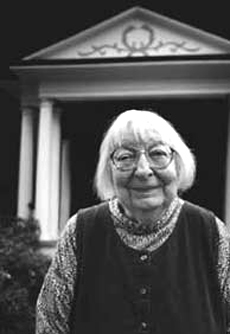
Jane Jacobs Jars Our Memories

For all our technical advances, says the noted thinker, we’re forgetting a lot of crucial stuff.

By Crawford Kilian, 5 Jan 2005, TheTyee.ca

slide6jane1sm

Last spring Jane Jacobs, the renowned philosopher of what makes cities and societies work, was in Vancouver. She took the occasion to publicly attack the whole concept of the RAV line:

“There’s been very sad experience of the last generation of ill-planned routes, transit routes,” she said. “This is partly the onset, the genuine onset, of a genuine Dark Age. The traffic engineers have forgotten how to plan successful routes. They used to know how. Their ancestors used to know how.”

Jacobs sees that kind of forgetfulness as the very definition of a Dark Age, and it’s not only traffic engineers who suffer from it. But early in her latest book, Dark Age Ahead, she triggered a memory from my boyhood in Los Angeles, a memory almost no Angeleno under 65 can share.

My brother and I had traveled from our grandparents’ East Hollywood home near Vermont Avenue. We went down Hollywood Boulevard, through Cahuenga Pass, to the train station near Lankershim Boulevard in North Hollywood. I was 8 and my brother 7. Unescorted, we had traveled across Los Angeles and into the San Fernando Valley by streetcar.

I don’t recall if our parents met us at the station on that 1949 afternoon, but we could have walked safely from the station to our home a half-mile away on Burbank Boulevard. We might even have gone down to play before dinner in the dry streambed we called The Wash. When our mother wanted us home, she had only to call from the front yard; two blocks away, we would hear her.

The streetcars have been gone for fifty years. Highway 170, a roaring freeway, now fills The Wash. Los Angeles is a half-century older and immeasurably poorer than it was in 1949. And most Angelenos have forgotten that it was once very different.

The United States of Amnesia

A dark age, Jacobs says, results when people forget how they used to do things. Many Canadians already live in a dark age: the First Nations, struggling to regain scraps of their ancient cultures, and second-generation immigrants who can’t even speak their grandparents’ language. Most of a culture, Jacobs says, is unrecorded and unrecordable: people talking in public and private spaces, interacting with family, friends and strangers, forming communities.

“During a Dark Age,” Jacobs argues, “the mass amnesia of survivors becomes permanent and profound. The previous way of life slides into an abyss of forgetfulness.”

That abyss contains the cultures of countless conquered peoples. But rather than ask what advantages their conquerors enjoyed, Jacobs asks: “What dooms losers?” Her answer: “Losers are confronted with such radical jolts in circumstances that their institutions cannot adapt adequately, become irrelevant, and are dropped.”

Jolts can be internal as well as external. Rome suffered internal economic and political jolts as well as external pressures from barbarians. Overfishing the cod was an internal jolt to Newfoundland’s culture. “How to fish for cod is not forgotten yet,” she says, “but it will be if the fish stocks don’t recover soon, which they show no sign of doing.”

Five Crumbling Pillars

Jacobs singles out five “pillars” of North American culture that are suffering jolts that make them increasingly irrelevant:

•community and family
•higher education
•effective practice of science and technology
•taxes and governmental powers
•self-policing by the learned professions

These may not seem intuitively correct, but Jacobs makes a good case for their crucial importance—and their interwoven nature.

The initial jolt, Jacobs says, was the Great Depression. While not as terrible as, say, present-day Iraq, the Depression traumatized a whole generation and changed its attitude toward those pillars. Mass unemployment led to a new “national purpose”: the assurance, at any cost, of enough jobs. That purpose led to the U.S. highways program in the 1950s and to a host of social programs in both countries.

One such social program was vastly expanded post-secondary education. Its purpose wasn’t to enlarge the pool of scholars, but to give graduates credentials for the job market. (It also provided millions of jobs for teachers like me.) Now university grads return to college to pick up “employable” skills and yet another credential.

Meanwhile, families and communities came under siege. General Motors, using subsidiary corporations, began to buy up streetcar companies from cash-strapped city governments during the Depression. They tore up the streetcar tracks and brought in GM-made buses that gave much worse service. Urban housing decayed during the Depression and World War II, while cars provided workers with access to cheaper housing in the suburbs.

“Dumbed-down” taxes kept cities from maintaining and improving their infrastructure. Once the decayed inner city became a reality, it was just another incentive to move to the suburbs. Abuse of scientific methodology led to harmful city planning, such as creation of expressways that only made traffic worse.

Meanwhile, professions that claim to be self-policing have been nothing of the sort. Accountants declare Enron fiscally fit. The Catholic Church suppresses public knowledge of sexual abuse of children by its priests. Public trust in such institutions rapidly erodes into apathy, cynicism, and a sense of personal helplessness. Spin doctors detach this demoralized public from reality and from memory of how it used to be—preparing us for another amnesic dark age.

Regaining Community

A longtime authority on city planning, Jane Jacobs sees community emerging from high-density cities, not from the sprawl of suburbs where no one knows their neighbours’ names. Cities offer amenities where friends and strangers alike can interact: public transit, parks and open spaces, pedestrian-dominated shopping areas. The people living in the city should decide, by taxing themselves, how to maintain that community. If they must rely on federal and provincial politicians, urban communities are doomed.

Jacobs is no Utopian, and she does not equate memory with nostalgia. Nor do I. In 1949 I could safely traverse Los Angeles on a streetcar, but the U.S. was deep into the Cold War. Harry Truman’s spin doctors had already made us forget that Stalin had ever been Uncle Joe, our brave wartime ally. Neighbours visited our suburban home only on Sunday evenings—to watch Milton Berle on our TV, the first on the block.

The potential for community was already fading at the mid-century. Whether we can regain that potential in this new century is far from certain. But Jane Jacobs’s wisdom at least shows us the scope of the issues we face, and some promising directions. If we choose to ignore her, our democratic institutions will soon be ripped up, paved over, and forgotten just as the streetcar tracks were.

Regular Tyee contributor Crawford Kilian teaches at Capilano College. He occasionally comments on politics on his blog The View From Seymour.  [Tyee]

39  Comments:

Login or register to post comments

  • Percy (not verified)

    7 years ago

    As Jane Jacobs points out, cities can facilitate community, or they can actually take steps which undermine it. My city, Toronto, has a huge infrastructure deficit. It is ironic to hear Torontonians congratulate ourselves about our city, while Europeans tend to snicker. A European guest described the TTC to me as "your miniature, antique transportation system". This infrastructure deficit doesn't stop the city from pretending that it is all levels of government for all purposes: while our subway languishes, there are arts grants, foreign aid, and gold-plated local social programs. Toronto is truly the city where the vagrants who have "privatized" your public space (and that's effectively what people do when they camp out in your parks) receive more attention than the city residents trying to cope with daily life.

  • anarcho (not verified)

    7 years ago

    Another important part of Jacob's book involves the notion of subsidiary. The idea that the power should lie with the smallest level of government that can do the job properly. Here in Canada power is concentrated at the provincial and federal level. The cities are subject to these higher levels of government. And the large cities in turn dominate the neighborhoods. It is necessary to decentralize power to the local level and combine this with the fiscal sanity that Jacobs talks about.

  • allan (not verified)

    7 years ago

    Percy, perhaps if you took the time to talk to some of those down and out capitalists who are privatizing your precious friggin' public spaces when the temperatures dip well below zero, you wouldn't spend so much space here whining like a spoiled capitalist who is being forced to pay nomimal taxes. In fact, I would recommend you find your European friends who are so upset about the TCC and ask them how European centres deal with the homeless. I can only imagine that those Euro-centrics likely live in a country that has an active deportation policy for the poor. I've had the opportunity to see the crowds of homeless in your fine city. They seldom take up park space until well after the nabobs ride out to their homes in the burbs anyway so, unless you operate flop houses and feel you're missing out, why do you decry the free space to the needy?

  • Burgess (not verified)

    7 years ago

    Jane Jacobs should be required reading by all politicians on pain of having their remunerations halved. Look what (all) the Provincial Governments have done to the public school system here in BC and Canada. By removing the ability of school boards to tax on a budget for local needs the school system is now almost in a state of collapse from a lack of funding. This stripping was done on the excuse of fiscal responsibility and giving the local taxpayers (and whining business leaders) a break. (Which never happened and allowed the Province to cream off extra dollars from larger districts for general revenue.) The question is why do this? Can you say private enterprise profit? Why the push now for fundeing Charter Schools, Religious Schools, Private Schools, and so on? Why the increase in funding dollars to the private sector while starving the public one? The 'wealthy' see this as giving their children a one up on the rest of the children. Can't have the elite mixing with the peons so to speak. To put it bluntly the rich, the elites, the power brokers or whatever label you care to use really don't like the fact that they can't emulate the robber barons of the turn of the century even though a few have managed to do just that. Just how much money does one need? Why does a CEO need a life time's earnings of ALL his employees every year? And we all know who they are from Disney to Enron CEOs. And in many cases they literally robbed their employees pensions funds as well. When was the last time anyone needed $154 million US a year to live on? And now poor Mr. F. Collins whining that he can't afford a house in his riding on $120,000 and perks, well 'BOOHOO! This while there are folks living under cardboard boxes just down the road from him in his riding and he doesn't see them because in his parties words 'They choose to live that way.' Why is the RAV line going down Cambie ignoring all rational planning, expense and common sense? It is because there are a very few folks that stand to make a lot of money from the public purse because another political ego wants a monument up and running before 2010. Isn't it fortunate that the RAVsters have unlimited public money to hire 'spin doctors' to shill excuses for them? (Like the fish farm spinners.) And it will be the folks and developers that have the 'inside' track that will walk with the money. Trouble is these folks hire the likes of the Fraser Institute and its ilk to write the propaganda for their greed. It will be interesting to see the label attached to this post by the rabid right and lolling left. Who knows maybe the middle will come up with the best postings.

  • fhb (not verified)

    7 years ago

    Mr. Killian notes the 'professions' but excludes the post secondary institutions that begat them. Someone say 'tenure' to an economics prof that espouses the Chicago school and its attendant 'competitive' outlook. Frankly, I lay "where we're at" almost entirely at the feet of universities and colleges. They breed tiny minded yes men and women. It is the standardization of processes that has infected nearly every aspect of Western civilization and the mindsets within it that leads us down this road. Duplicating what has come before is far more efficient and economical than starting again. If the goal is economic, the process must adhere to that end. Automating human decision (or indecision) processes then becomes the next control mechanism to put in place. Computers in the classroom? F*** that shit. The following book explains the subject further The Control Revolution: : Technological and Economic Origins of the Information Society Additionally, the book User Illusion by Tor Nrretranders gives a marvelous overview of the dangers of 'forgotten information' and provides an inspiring look at what *real* knowledge is as opposed to *process* knowledge.

  • Percy (not verified)

    7 years ago

    Sorry, Allan, the "nabobs riding out to the suburbs" (whoever they are) don't need park space. Working people do. The appropriation of public space is an issue for working people, who can't afford other amenities. And letting the homeless sleep in our parks is not a compassion issue either, in my view. Indeed, I toured our "fine city" with a Belgian mental health worker in the fall who told me that, from a European perspective, most of these people should be institutionalized where they could receive appropriate care. She didn't mention anything about deportations, and I imagine she would have roared at the straw man, too. Maybe it's possible to care about these people, too, and still make our cities work.

  • allan (not verified)

    7 years ago

    It's good that you are involved in Toronto's problem Percy and I too suspect many of the homeless are in need of more than just a warm, dry place to sleep. Just the fact that some humans in Toronto are waking up under the eaves of city hall in the wealthiest city in Canada on a daily basis, is enough to give many people another reason to have their sanity checked. But I would suggest that the sanity and compassion of various politicians also be checked as a first priority. They seem to be among the most ill-equipped to look after the needs of others. I'm sure your Belgian social worker didn't talk about deportations, but it would appear that immigrants are the bottom of the totem pole in many European countries and when the economy turns sour, guess who is most often encouraged to go back home. Perhaps Belgium, with its unusual number of foriegn residents who work for the UN, other government and non-government agencies, has a somewhat better image of immigrants than say some mid-European countries. My concern with your initial post was over the way you portrayed the homeless as being involved some form of vile capitalist take-over of your parks. There is no question that the unpleasentries of capitalism have been imposed on a good number of Canada's unfortunates, but parks, like welfare and police patrols, are social services and perhaps the homeless are correct in viewing them as such when they lay down at night. Maybe you just have to start looking at parks from the same perspective rather than feeling cheated by someone getting more play time than you.

  • Truman Green (not verified)

    7 years ago

  • Truman Green (not verified)

    7 years ago

    What's new? The rich and powerful always decide where bridges, tunnels, transit lines go. But, if we're not too gluttonous, the rest of us can still have a lot of fun. Before Jacobs gets too upset she might visit Nairobi, Kenya, where a million people live in a filthy slum in hovels Vancouverites wouldn't allow their dogs to live in--and 50% of them have Aids. The "coming dark age," eh. Right! Stop whining. This is pretty well heaven, comparatively speaking. "A dark age," Jacobs says, "comes when people forget how to do things." What's this? Does she mean slavery and herding aboriginals around the continent like animals? Trust me, Jacobs, it's a far better world we live in today. (My great, great grandfather worked his entirely life and was never paid a single penny) Our coast Indians had their own slaves; Mayan priests ripped hearts out of peoples'chests for god; Europeans stole entire continents. Most of the past may be better forgotten. No, a poorly-placed RAV line is not necessarily a good indicater of the demise of democracy. Don't make me bring up the trees and forest cliche. Try to think global.

  • Crawford Kilian (not verified)

    7 years ago

    Is that the Truman Green who wrote "A Credit to Your Race"? Hey, Truman, people have been looking for you! Drop me a note at

    .

  • anarcho (not verified)

    7 years ago

    Truman, the point of a social critic like Jane Jacobs is to BE a social critic, and not to do a Panglossian take on things. Of course, she is aware about slavery and herding aboriginals and the conditions in Nairobi. Indeed, many things are a lot better than say back in tne 50's, but this doesn't mean we give up on trying to democratize society and therefore make it a better place. Nothing happens in isolation. Our lack of control over corporations and the state are part of the reasons for the disasters in the underdeveloped world. Furthermore,what Jacobs is referring to is an intellectual dark age, which is certainly what the Neocons have been trying to impose upon us these past 20 years or so..

  • Jay Currie (not verified)

    7 years ago

    I've loved Jane Jacobs since "Cities and the Wealth of Nations" and think her "The Question of Seperatism" should be required reading for politicians of every party at every level.

    Her new book is an almost perfect illustration of what happens when an acute social philosopher no longer quite understands the world she is living in. It is not so much that it is wrong, indeed concepts like subsiduarity are absolutely needed and the feds in Canada should listen up, it is that it is refighting old wars.

    What has actually happened is the collapse of the systems of deference which make such things as the "learned professions" important. People are simply no longer buying the idea that a guy with a white coat on, by definition, knows more than they do or could with an hour or two of online research. (How true this is is an entirely different question.)

    What the right - if it could manage to shed its socons - is actually up to is giving voice to the increasing sceptism many people have about the ability of the great and the good to properly conduct the affirs of the nation. When people see, as Burgess so eloquently elaborates, their kids schools stripped of the resources they need to teach, those people have two choices. The first is to try to elect another government which promises to do better. The second, and more interesting, is to opt out entirely.

    Up until a few years ago, the option of opting out entirely, or partially, was more or less impossible. People were stuck with Lib/Tory governments at the federal level which changed nothing. At the provincial level they faced corrupt politicians of the left and the right whose central contribtution seemed to be rewarding different, tiny, set of friends for their support.

    Opting out - educating your own kids, working at a job you create, using health resorces in a throughly informed way, leading an ecologically responsible life - was simply not an option. Now it is.

    The greatest challenge facing elites on both the left and the right in Canada at the moment is that they are only elites so long as people take them seriously. But the collapse of deference, spurred by the information technology which makes knowing more than your local MP, your doctor or your lawyer, a matter of a bit of application, means the deference is fading away.

    Does that signal a dark age? I don't think so. But it does mean that the traditional thinking on both the left and the right no longer commands much respect. It means that MSM (mainstream media) is no longer believed implicitly. It means that teacher, doctor, lawyer, poltician can no longer comand respect because of pure credentialing.

    This makes people more than a little uncomfortable. What if we are on the way to the dystopian LA of Bladerunner? How will we know what to believe? Who will have authority?

    The answer is probably embodied in the Southpark kids knowledge that every authority figure, everyone who demands positional respect, from their parents on out, is likely lying to them. There is no longer any comfortable pew, no certainty that because a union leader or CEO said it, it must be true.

    Personally, I think this is the dawn of a golden age of personal responsibility and power. To age myself and quote Dylan,

    Look out kids,

    They keep it all hid,

    Twenty years of schooling

    and they put you on the day shift.

    The kids, at least the ones I talk to, are wise to their elder's BS. They are finding ways of living in the world which disconnects them from that BS. Ways which would be entirely incomprehensible to Jane Jacobs, not because she is not smart enough to understand them; rather because they embody value systems which are unknowable to the good jobs, good houses, good neighbourhoods ethos Jacobs so successfully defended for fifty years.

  • Jay Currie (not verified)

    7 years ago

    To get a sense of how this shift is happening you could do worse than read the lead story in this week's Macleans on the passion aroused in Quebec by the industiral age CRTC's decision to take away CHOI's broadcast licence. Here's a quote from Jeff Fillon the shock jock at the center of the story:

    Filion himself describes les X as follows. "They're an interesting animal -- you can't describe them by their look or their age, though there are a lot of thirtysomethings among them. It's more an attitude. They're people who have become allergic to the sacrosanct consensus, they're fed up with the inertia and the complacency, they're people who have realized the years ahead will be a load of shit and they're the ones who'll have to clean up the mess. They're people who are fed up with the Péquiste view of the world, tired of living in a society where the real premier is union leader Henri Massé, no matter who gets elected. Tired of a society where I can take my dog to a private clinic, but not my mom. If the old gang that lives in the past with retrograde ideas and referendums could go away, we'd be a bit less angry already."

    And here is a bit of reaction,

    Mira Falardeau, an author in her 50s who used to teach at a local junior college, says she understands Radio X's appeal -- especially to the young. "They like what they hear, and it's not just the music," she says. "Youth has changed. It used to be that CÉGEP students were leftists, and idealistic. But the kids today don't believe in much. It's the end of utopia, that of the sixties, of May '68 in Paris, of Jane Birkin, the feminists, all that."

  • fhb (not verified)

    7 years ago

    "... the collapse of deference, spurred by the information technology which makes knowing more than your local MP, your doctor or your lawyer, a matter of a bit of application, means the deference is fading away." LOL. Obviously this is over Jay's head. What Mr. Currie just suggested is that people (like, uhhh.. .'the kids') would, should or could *defer* to technology in lieu of experiential based knowledge. Take a step away from that love affair with the box and you'll understand the *darkness* written of. Computers do NOT teach people. Mr. Curries observance of this phenomenon isn't about *LEARNING* as much as *copping answers*. The technology supplies information - NOT experience. This type of idiocy that defers to technology implies we could all just "teach ourselves" to speak Haida, for example. (to use a recent article here on the Tyee to highlight the ridiculousness of such thinking) Information without context. Gosh. How useful is that? About 2p3 - 3/8". As far as Jay's suggestion that choices weren't available to past generations - it's an apology for a lack of guts - not a polemic against the 'guvment'. Cry me a river Jay, you overfed baby. It's such a pity you weren't crushed economically by the weight of post secondary tuitions, left optionless by one-sided U.I. requirements, hung out to dry by contract work, or squeezed into 'taking something else' because of a lack of jobs in the field you degreed in. Your stance is a sickening, self congratulatory one finger salute to future generations after your ride through the baby boom. How fearless of you to only *NOW* offer to bite the hands that've carried your fat ass thus far into retirement. Your quasi-libertarianism could almost pass as 'cutting edge' if it weren't so pathetic and transparent. How transparent? Well, besides tanking yourself on the whole 'deferment' issue, I see you critiquing 'mainstream' media (they're elites ain't they?) one minute and the next quoting articles from that same mainstream media to back up your 'argument'. I suggest maybe next time you could 'defer' posting to someone with a more rigorous approach, or find an 'opinion' on the web and paste that in...

  • Anonymous

    7 years ago

  • ad hominem = trash (not verified)

    7 years ago

    Hey fhb -- your ad hominem slags only undermine your point. Why bother? If you have good arguments, they should suffice to debunk those with whom you disagree. It is hard to be sympathetic to your arguments when they are buried in trashy personal attacks. If you can't make a good argument without personally attacking other writers, maybe you should "defer" posting to someone who doesn't confuse a good debate with insulting their opponent ... =^)

  • allan (not verified)

    7 years ago

    fhb, I'm on your side on this issue. If it sounds like tripe, call it tripe and don't worry about insulting someone who is engaged in insulting your intelligence with such utter 'we are modern - therefore we are wiser' fantacies. It seems every new generation has to be pulled down a peg or two off their own self-inflated belief in their specialness that often arrives in the shiny chaos of new technology. Personally I find "trashy personal attacks" as interesting, informative and as stimulating as trashy personal predictions any day.

  • Truman Green (not verified)

    7 years ago

    Anarcho. I thought of everything you wrote while I was writing my comment, and, of course, you are right. I wanted to make my point, anyway.

  • Coyote (not verified)

    7 years ago

    An extremely interesting article, I thought. And in starting to read the comments, to no surprise, I immediately shared Anarcho's reaction. Especially:

    "...power should lie with the smallest level of government that can do the job properly. Here in Canada power is concentrated at the provincial and federal level. The cities are subject to these higher levels of government. And the large cities in turn dominate the neighborhoods. It is necessary to decentralize power to the local level..."

    Though I would be careful how far I took that. The city states passed and had their day for very good reasons, and even more so now, in an age when advances, and I do think they are advances, are moulding and shaping the emergence of a truly "global community". And I'm not talking about "corporatized" globalization, which is the bastardization of it it, in self-serving hands. Corporations themselves need to be radically "democratized."

    I am also less certain about the future value of, at least, the growing "mega-cities", which reflect as much the distortions of "over population" themselves, as they do a progressive alternative to over population of the rural landscape. No doubt we will continue to need cities, but such more to a human and sustainable scale than at present, sucking less from its manifold tentacles spread out into the far flung "wild regions". Cities have a place, but they must deal with ancient religious obscurantisms and their chauvanist notions of wildplaces being there ONLY to serve the "dominance" and needs of human populations over all other values in wild nature. Reproduction restraint is going to continue to be given a greater place in future urban and population planning and action. Which means that "scientific thinking" needs to deal an even greater major body blow to "religious/creationist thinking" than has even thus far been delivered since the time of the industrial revolution. That thinking is the greatest enemy to the future of all environmental values, urban, rural or wild.

    And which is NOT to say that a rediscovery of reality based "family values" and family creation does not have a place in the future. The human herd will continue to need to reproduce, if at reduced levels, and to provide environments more nourishing than the current "irresponsibility/ factory" model that is the present outcome of capitalism in the 21st Century. There is much smartening up amongst men and women on this score, that needs to occur over the coming years, in my view. It is not all a matter of our economic and political institutions, as profoundly problemmatic as they are.

    Which is enough this go around. Besides, Mrs. Coyote is taking me out to supper. (If she wants my loving, she has to wine me and dine me some. I need to know that I am desired. :-D

  • Coyote (not verified)

    7 years ago

    "There is no question that the unpleasentries of capitalism have been imposed on a good number of Canada's unfortunates, but parks, like welfare and police patrols, are social services and perhaps the homeless are correct in viewing them as such when they lay down at night." wrote Allan.

    No bloody question they are correct in viewing them as that. The problem is capitalism, not the poor. Percy is just another victim blamer on this score, as is the predilection of capitalism's apologists.

  • Chris Bouris (not verified)

    7 years ago

    I had the pleasure of being at Jane Jacob's UBC presentation in the spring of last year. Ms. Jacobs's perspective is indeed vast (and accurate)..and her comments on transit planning practices of the past (putting new transit where the ridership exists already), unfortunately, is no longer the model in use.

    It is seems obvious that big ticket transportation projects are concerned with Real Estate developmental opportunities (and job creation), and not principally to provide for the “current” ridership of whatever kind, basically. Municipally, these “vehicles” are basically for real estate development, and municipal tax base creation, generally high density development (hopefully more sustainble), as seen near Metrotown and elsewhere on the current skytrain route. It is also a great financial gamble. Do the Olympics and the Sea to Sky Highway ring a bell?

  • tag (not verified)

    7 years ago

    .

  • lokijy (not verified)

    7 years ago

    jane jacobs is now touting a book that will get bought,that is her agenda.So you say who cares,apathy is born as a tool to in fact use against allowing input ,deflecting input say. But i do think that this new form of sharing ideas on this tyee blog like letters to the editor , a vast leap forward and ms.j might not even know we are opining about her Good use of literacy i say.

  • tag (not verified)

    7 years ago

    test

  • tag (not verified)

    7 years ago

    tag. end tag

  • Burgess (not verified)

    7 years ago

    NIMBY equals the square root of the West Side times money. (wait till you get your transit levy this year.) While the Developers who live on the West Side of Vancouver make their dollars on the East Side they make sure to protect their own baliwicks from development. (For this comment property East of Oak Street is EAST SIDE.) Cambie was chosen RAV route for only one reason no political clout from the mostly elderly, renters and immigrants who live in the area between Oak and Cambie and thus have little influence on city development. One has only to look at the 'expensive' row house development just East of Oak on 15th which had very little political and Nimby opposition. But the furore over a small lot duplex deep in West Side's heart is a major event that generates NIMBY heat far in excess of its impact. ( Remember the night lights for soccer on a school ground on 16th?) So who drives the city's right to densify and where? (Is this the time for a discussion of Southlands Vancouver's last large tract of undeveloped land?) Obviously, to be trite, the Creme de la creme figure they have the right to determine how Vancouver should grow and if there is money to be made it should be they and their agents that get it. Never once in so many of these arguments petty and otherwise have these folks given an inch on their priviledged turf. Chilliwack's Military base and facility were closed and transfered to Edmonton so the useless and obselete Jerico facility would not be closed and returned to the rightful owner the Squamish/Capilano Indians. A political decision based on a comment at the time that the residents of the area didn't want the 'Indians' moving back into THEIR neighbourhood. Thanks to the spineless government of the time they closed the wrong facility. The sooner Vancouver is densified WEST and East the better. Walking the streets of downtown Vancouver was never a problem until the developers saw dollar signs by driving out the families from the city core. The developers and their agents at city hall really screwed Vancouver. Just look at the orphan houses in the downtown core that are now useless pieces of property except that when the houses are gone will become parking stalls. Look at the empty lots on downtown Granville, and the blight on East Hastings, it has happened because someone stands to make a lot of money by letting the rot happen. It is interesting to note that when there is a problem building anywhere in the city that the TV crews always end up trying to talk to folks in the richest enclaves West of Granville and West Vancouver. When developers control City Hall cities decay. And we can thank the NPA and Mayor Gordon Campbell for much of Vancouver's rot and now that he is the premier he can speed up the process of decay for moneymaking.

  • lynn (not verified)

    7 years ago

    Interesting article, Mr. Killian. Jane Jacobs seems a wise soul. I'm not familiar with her work but she seems to be suggesting that things should make sense to be effective, ( how radical!) - and that the physicality of doing things keeps that sacred generational knowledge in our blood that helps us remember what's important. I don't think that kind of wisdom is ever old hat. We seem to have been sold overly complex, expensive, solutions to transportation just as we now depend far too much on needlessly sophisticated and very expensive gym equipment to keep fit, all because we seem to have forgotten how to walk, how to garden, and how to paddle our own canoe.

  • allan (not verified)

    7 years ago

    Chris Bouris, good point about the real estate angle. Unfortunately, the general public is most often sold the mega-projects on the basis they will improve our lifestyles, relieve congestion and pay for themselves quickly. I wonder what JJ would say about the unfetterred development of ski resorts in BC. While ski hills (and golf course), are most often sold as a place to flee from urbanity and commune with nature, the reality is these are simple real estate developments aimed at selling wall-to-wall condo units. But wait, getting to the new Whistler/Blackcomb, Sun Peaks or Kootenay area resorts, is suddenly a problem as traffic increases. New highways and airport improvements to provide more and swifter access routes are required and guess who is expected to pay for the infrastructure? You and I, even if we have neither the time, the money nor balance to ski or snowboard, see our tax dollars spent on improving access to these non-primary residential developments, while we also struggle just to get across town on antiquated infrastructure we've been paying for since the first politician/developer said "trust me". Jane Jacobs has been offering hope to city dwellers for several decades and while acedemics, professionals and even the general public can see her wisdom, politicians and developers are still hobbled by a growth at any cost, is better than no growth mentality. I am a firm believer in development cost charges (DDCs), whereby devleopers and or their buying customers pay upfront fees to cover the added burden the developemnt will exert on municipal, regional or provincial infrastructure and services. The current hidden subsidies to developers is unfair, unethical and should be the first issue resolved before any development or building approvals are given.

  • lewis swift (not verified)

    7 years ago

    Community, memory -and out of memory -language, are the essence of what makes us human. We ignore attacks on any of this triad at our peril. Neoliberalism attacks all three supports of this trinity by its orwellian attacks on language; its assaults on memory (tell a lie enough times and it may become a self-fullfilling prophecy); and its attacks on community in the social, the moral the intellectual, and the legal sphere.s

    Those who think the excesses of the past can't reoccur should consider that a mere eighty years ago, it was commonplace for the RCMP to beat union workers and organizers on Vancouver docks, that a few decades earlier eugenics figured prominently in Canadian political discourse, and that so called modernity encompasses but a fraction of the world's population today. The past looms more heavily on us than the future, a nebulous condition which the powers that be are ever eager to transmute into yet one more reprise of total and absolute power by elites. How can tomorrow still be yesterday? It's easy, just ask the pundits at canwest, who are more than eager to feed us all, the same damned day, lived eternally, again and again, without renewal...which is essentially always the end goal of all facists -as long as they come out on top.

    Loss of community is indeed what ails us, for the community IS the wellspring of society not the reverse. When there is no community, the golden rule of treat others as you would be treated is thrown onto the trash heap. Nor am I being idealistic: community does not prevent human selfishness, but it does ameliorate it, providing social remedies to social problems, and enforcement of social contracts. When community dies, professionalism dies, for professionalism entails responsibility to the community. This is why the right is so easily able to summon nostalgia for the fifties for all the wrong reasons. For there was a social contract in the fifties, even if it was only extended to the white middle class. No middle class persons would have thought of driving at sixty miles down residential streets, because they didn't want people driving at sixty down THEIR streets. Now, among many middle class people, ANYTHING GOES, because after all they've ALREADY been betrayed, THE TERRIBLE HAS ALREADY HAPPENED, which most know, whether they're able to admit it to themselves or not. The only social contract left is the one belonging to elites, which would seem best surmised as Aleister Crowley's "Do what thou wilt shall be the whole of the law..." Unfortunately, the environment, the economy, undivorced from ecological economics, and even old mother earth herself have their own agenda and unbreakable, without consequence, natural laws.

    So if you want to save yourselves, rethink developing community and community spirit. Especially the middle class, unless your idea of community is endless peonage in the fields of the elites, who currently own you lock, stock, and barrel. Are the poor to blame for your sixty hour work week, for you having to work a lifetime to buy accomodation often inferior to what a warehouse worker in the fifties could pay for outright with a factory job in a mere decade? We need to restore and reclaim community by making senior governments work for us, rather than the elites who own governments lock, stock and barrel...

  • Vero Bridge (not verified)

    7 years ago

    People have only a finite capacity for knowing. As too much information comes down the pike, it is inevitable that previous knowlebge will be forgotten. If the new stuff involves, say, knowing how to use the Windows operating system, and the old stuff involves how to grow your next meal, well, trouble is in the works. With so much of our culture involved in creating high-level (and in large part practically useless) knowledge, is it not inevitable that older, important, even vital, knowledge will be lost. The end result? We'll be capable of making astounding skyscraper accommodations, but will have untold people living on the streets in misery.

  • Vero Bridge (not verified)

    7 years ago

    People have only a finite capacity for knowing. As too much information comes down the pike, it is inevitable that previous knowlebge will be forgotten. If the new stuff involves, say, knowing how to use the Windows operating system, and the old stuff involves how to grow your next meal, well, trouble is in the works. With so much of our culture involved in creating high-level (and in large part practically useless) knowledge, is it not inevitable that older, important, even vital, knowledge will be lost. The end result? We'll be capable of making astounding skyscraper accommodations, but will have untold people living on the streets in misery.

  • devils advocate (not verified)

    7 years ago

    Used to be you had to know how to plant a field, build a house, butcher a hog, birth a baby, set a broken limb, make beer, preserve foods, read the weather, fix an engine, care for a horse, light a fire anywhere, build a block and tackle, catch gut and cook a fish...an endless list of things. We, with our modern "conveniences" blissfully produced out of our sight, no longer remember the idea of the "generalist". We revere the specialist. We revel in our ignorance, enjoy our stupidities, and expect that others are doing the same. Our sense of social responsibility is withered; what have we done to grow it? As long as we can deny our responsibility by choosing our ignorance, we will. We're a socially lazy animal. I grew up reading Robert Heinlein; did anyone else? And is anyone else waiting for The Prophet Scudder to take over the US?

  • lewis swift (not verified)

    7 years ago

    I was a big heinlein fan myself, devil's advocate, and I admired heinlein's take on things. Heinlein was in amny ways a conservative, but one in the old sense, where being a conservative contained the possibility of human decency and social responsibility, unlike the neoconservative PIMPS around today, all to eager to sell out their kids for nickles...See Spider Robinson's defense of heinlein...I understand gordon campbell is promoting Nehemiah Scudder for mla for the downtown eastside...it's interesting that heinlein, a conservative in the old, often more honorable sense warned of a religious theocracy taking over the states, long before Atwood's The Handmaid's Tale...rest assured that many Nehemiah Scudder types have president bush' full attention, give the states 10 more years of republican rule and a real life scudder may well dispense with the nuisance of democracy...Fifth Column, was that the name of the heinlein novel? Oh, wait, it's coming to me...Fifth Column was a short novel included in a heinlein collection...

  • hills_sathy@sancharnet.in (not verified)

    7 years ago

    please send me grant in application of your organization.

  • Bailey (not verified)

    7 years ago

    Heinlein was a self confessed propagandist for a style of revolutionary democratic thought more characterised by Thomas Jefferson and Thomas Paine than anybody else. Democracy from a time before it became confused with economics, Capitalism in particular. His ideal societies, and his stories are full of them, always seem to be small, self contained co-operative groups pursuing a common goal in an environment pervaded by big soulless interests without principles.

    It sounds familiar, doesn't it? I like the point made by devil's advocate. The generalist he describes was the real cornerstone of democracy in the century past. Those skills are still useful for a person who wants to be free, but fewer and fewer find freedom possible that way. To be free like that now needs a skill set more appropriate to cityscapes, you have to know where to find food, warmth and above all people who will be somehow on the same track. In cities. Most everybody seems to live in cities, and everybody has to know how to operate one.

    I'm quite surprised that so few people pursue a co-operative type life these days. To me it seems the only real way to protect yourselves, to use for your own ends the laws of property that are used against you so effectively. I keep expecting to see groups of like minded people forming up into some kind of holding companies and creating spaces of their own design. Maybe I'm just out of touch, are there such things going on that I'm just not aware of?

    In my mind, it seems like the only sensible approach to the shape of things in the world today, and the thing is, I think I think that because of what I learned from Robert Heinlein too.

  • ,,, (not verified)

    7 years ago

    Maybe the best deal is to become like Waldo, disabled, who, from living in a brand new environment -low gravity- learned how to dance, for real dancers dance only to their own tunes, if they're really dancers...yes, heinlein as romantic co-operativist, good take bailey...

  • Bailey (not verified)

    7 years ago

    I haven't had the honour of reading Jane Jacobs yet, the library says I'm twelfth on the list waiting for one of their nine copies of her works. But I've read three articles and reviews of her newest one about darkness, and listened to a longish piece on CBC radio a week or so ago.

    I'm fascinated by her take on the evolution of societies being a phenomenon of sudden lurches. I've long suspected all evolution to be like that. One day you're all dinosaurs together, fat and many and carefree. Same time next year you're just gone. A rock arrives and knocks at the door unbidden and now the new tenants are all small and furry.

    And I find it interesting that Heinlein should pop up in this context. The two of these ought maybe to be read and considered together, given their apparent commonalities of excentricity.

    I think there are be two others who might also find a place in this consideration; Buckminster Fuller, also very concerned with processes in societies, and Ayn Rand, a Russian emegre to New York City whom I've always suspected of full blown psychopathy, but whose influence on the thinking of our current leadership is probably analogous to Heinlein's on mine.

    If you want to dance, four commas, at least lets get some interesting backbeat in the music.

  • Truman Green (not verified)

    7 years ago

    Bailey: "A rock arrives and knocks at the door unbidden and now the new tenants are all small and furry." Excellent sentence, Bailey! Sounds like Stephen Jay Gould's, "punctuated equilibrium," a device he invented when he couldn't rationalize the "sudden lurches" in the fossil record. I've always thought that these kind of observations may be chimerical responses, more descriptive of the way our neurons are organized, than any events really occurring in the world. That is undoubtedly because I see teleological processes in evolution--not automatic or homeostatic. Certainly, many of the wisest new evolutionists are beginning to believe that the genetic system is intelligent and dynamic--far too complex and elegant to be otherwise. And probably cities evolve similarly, in response to the changing exigencies of the people who live in them. Perhaps any theories of cities are doomed as much as the theory of evolution by natural selection and the survival of the fittest. Weird, I know, but I think intelligent forces are at work everywhere--experimenting.

  • ,,,,,, (not verified)

    7 years ago

    Good comment, Truman.

    • No best comments selected by an editor for this story yet. To see all comments, click the All Comments tab, above.
    • The discussion for this story is closed. No more comments can be added.