
News

Skimpier Schools to Replace Heritage Buildings?

Wrong approach to quake-proofing say Vancouver parents.

By Colleen Kimmett, 21 Apr 2008, TheTyee.ca

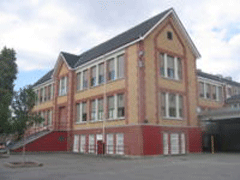
General Gordon Elementary

General Gordon elementary: upgrade or knock down?

When the "big one" hits the West Coast, our grand, beautiful heritage school buildings likely will be among the first to crumble -- and we can only hope the kids are out.

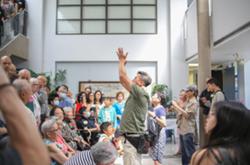
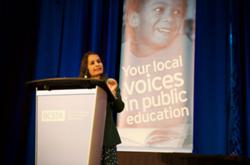
At a Think City schools forum in Vancouver earlier this month, one panelist's presentation drove home the need for seismic upgrades here in B.C., with devastating images of post-quake school buildings from Long Beach to Pakistan.

"Even in developed countries, schools face a disproportionate risk in earthquakes," said the presenter, Tracy Monk of Families for School Seismic Safety.

"I felt sick to my stomach when I realized what could happen."

Yet government plans to replace these aging structures are being met with criticism from parents and teachers who say the province's funding formula means some schools end up safer, but smaller.

Schools aren't just a bunch of classrooms, pointed out delegates and panelists at the forum.

Instead of building to a minimum square-footage, they argued, we should use this province-wide reno as an opportunity to reinforce and enhance the school's role as a sustainable community hub.

Huge task ahead

In 2004, the provincial government allocated $1.5 billion dollars for a seismic mitigation program for B.C. schools.

More than 700 schools were identified as needing upgrades in order to decrease the chances of children and adults getting injured, killed or trapped inside a school should an earthquake hit.

The government has stated this will happen in the next 15 years or sooner, but so far, of the 63 schools short-listed for immediate action only 13 have been completed. Another 17 are currently under construction.

If a feasibility study determines that the cost of renovating an existing school exceeds 70 per cent of the cost of building a new one, the latter option is taken.

This is the situation at many heritage schools, which require more work to bring them up to par.

Save or knock down?

One of these schools next in line for seismic upgrades is General Gordon Elementary in Vancouver's Kitsilano neighborhood.

Last year the Vancouver School Board presented staff and parents with two options: renovate the existing building, which would keep occupants safe during a large earthquake but likely not be functional after, or demolish the existing building and replace it with a new one that would better withstand a disaster.

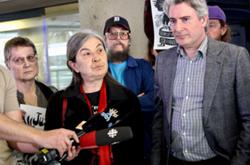
One parent, Z Smith, wasn't impressed with either option. Maintaining the existing building meant students might not have a place to go to school after an earthquake, but the proposed new facility would be about 1600 square feet smaller.

Students would lose their lunchroom, there would be no room for hallway cloak areas and the library would be slightly smaller.

"We're having to choose between adequate and unsafe schools or safe and inadequate schools," he said.

Is older greener?

According to Smith, the seismic mitigation plan is actually working against another government mandate to make schools carbon neutral.

"Old buildings turn out to be the most energy efficient," says the architect. Using a benchmarking guide from Natural Resource Canada, Smith calculated that General Gordon actually uses slightly less energy per square meter each year than brand-new Heritage Woods school, built specifically to be energy efficient.

"There's a perception that old means leaky or something," says Smith.

"But buildings built pre-1920s are designed to use less energy...they are designed to use natural light and natural air flow."

Centres of community

Annabel Vaughan, who was the driving force behind the Think City schools event, says another "unintended consequence" of the seismic mitigations program is the loss of much-needed childcare and community space.

She chairs the Friends of Dickens committee, a group trying to save the 1913 heritage wing of the school that is slated to be demolished this year.

The committee wants to retain the wing, currently used for community activities, at a cost of $3-5 million for seismic upgrades and add childcare, arts and music facilities.

Another Vancouver school, Kitchener Elementary, stands to lose its YMCA after-school childcare program because the new multipurpose room will be too small to accommodate the minimum requirement of 30 children.

New school facilities must meet minimum area standards of square footage that are determined by the number of children and use of the space. In elementary schools with fewer than 425 children, there is no minimum requirement to provide multipurpose space.

"It's not the goal of the [seismic mitigation] program being questioned but the process," said Vaughan.

"If we're getting schools that are smaller and less equipped to provide unique programming, then there's something wrong with that process."

Premier 'seemed receptive'

Both Vaughan and Smith met with Premier Gordon Campbell earlier this month to discuss what they view as a major disconnect between the seismic mitigation program and his government's other mandates of carbon-neutrality and expanding the school's role to provide more childcare space.

"He seemed receptive," said Smith. "He acknowledged these three initiatives seem to be working as silos . . . . He said he would set up a working group."

Ken Denike, chair of the Vancouver School Board finance committee, said the board's first priority is safety, the second is providing childcare space.

He says the province funds capital projects on a per student basis, and doesn't count children who use the space unless they're students in the building from 8:30 to 4:30.

The exception is the province's Strong Start program -- which technically isn't daycare as parents or guardians are required to attend activites with their children. In that case, the children are included in the school's capacity.

Denike says it's possible the Ministry of Children and Family Services may help fund more space for childcare in schools, but nothing is on the table yet.

Related Tyee stories:

 [Tyee]

9  Comments:

Login or register to post comments

  • Yammer

    4 years ago

    Size matters

    Quite amusing that the linked related story is about how schools are being built too BIG.

  • Name

    4 years ago

    Let's get real

    Folks trying to "save" old schools are asking VSB to spend $$ for community benefits that aren’t funded under the Education mandate. Unless BC taxpayers are willing to pay billions more, it means robbing students and/or further delaying painfully slow seismic upgrades

    Some thoughts to support rational debate:

    1) It’ll cost $1.2 BILLION more (i.e. on top of the $600 or so million already allocated for school seismic upgrades) to save all Vancouver's old schools. The current approach weighs each project case-by-case and proposes a retrofit, demolish/rebuild or combination based on cost, heritage value & school needs.

    2) Vancouver has excess space due to declining enrolment. Costs of maintaining surplus space contribute to chronic deficits & frontline classroom cuts. We need to downsize anyway. Smaller schools are a reality & getting on with it will support efforts to build urgently needed new schools at UBC & Yaletown.

    3) It’s misleading to claim older buildings are greener. It's not black & white & may be untrue for many older schools. You need to assess case-by-case.

    3) Rebuilding creates a larger carbon footprint initially (in most cases). But efficiency gains over the life of a new green school would reduce that. And a quake in the next 60 years would require tearing down/ replacing retrofitted schools (only so much you can do to hold up 100-year old masonry) so the carbon footprint would be far higher than rebuilding in the first place.

    4) Repurposing schools to serve the broader community is a great idea - if the community will pay for it. Otherwise students pay the price when groups demand things the Ministry does not fund. Communities need to plan ahead & secure funding in advance for such repurposing.

    5) Vancouver parents fought for decades for the seismic program now underway. There is alarm to see progress halted while outside groups (whose kids are not at risk) demand extras without providing $$ to fund them.

    6) In a city where most taxpayers can barely afford tiny condos, it's unreasonable to ask them to pay hundreds of millions more so our kids can enjoy 20-foot ceilings & classrooms bigger than many homes. Other Vancouver schools have accepted new, smaller buildings as reasonable, if not ideal, & are working with planners to max out space & green features, etc.

    8) Endless past delays mean it will take 60+ years to fix all Vancouver's unsafe schools at the current rate, with a 20% chance of a major quake in the next 50 years. Schools are tackled in order of risk, so Gordon's stalling is holding up all the other schools behind them, & many would be very happy to take what’s being offered.

    9) Saving "heritage" has been a key issue at Gordon, with Kitsilano parents complaining their new school would be "aesthetically substandard" and demanding a costlier refit instead. Gordon is not on Vancouver’s heritage A-list, so spending more here will leave less to preserve real Heritage gems.

  • Name

    4 years ago

    ...ran out of space

    ...It would be great to save big old schools with unique heritage value, where we can utilize space efficiently and where long-term costs & benefits support it. And we should be thinking more creatively, so kudos to these groups for encouraging the Province to broaden their own planning framework to cover costs of repurposing schools, building green, etc.

    But you can't be doing that at the cost of safety and the urgent need to get on with seismic upgrades, school downsizing, etc. The Ministry's capital program is far from perfect but with so many other urgent needs competing for tax dollars, we need to get real (Divide the extra $1.2 billion by Vancouver's 300,000 or so households to consider your share of what's being requested here). Until taxpayers decide to open their wallets, we need to operate within the fiscal realities we face. And we need objective assessment within that framework that balances local demands with reality & the big picture of what's best for all Vancouver students so that we're not getting decisions driven by politics and squeaky wheels.

  • Yammer

    4 years ago

    Another thought

    There's heritage, and then there's old.

    Dickens Elementary being crashed down? Why not? Burn it down now!! It's a creepily Victorian, crumbling, workhouse-like, inaccessible, and hideous edifice, albeit with quite nice teachers and parents (except for me).

  • loblollyboy

    4 years ago

    Cut The Crap

    Quit arguing about niceties. What option saves most of the kids most of the time when a Big one hits?

  • Patti

    4 years ago

    Well lobollbyboy

    I've asked some engineers about which is the safest option. They tell me that both approaches — retrofit and rebuild — would be done to "life safety" standard, which means occupants should get out alive and reasonably unscathed. But a new building would generally be expected to perform much better, with new components etc. and would have a greater likelihood of being useable or repairable after a good shake. A new building could also be built to an even higher standard (costs more) so that it could be use as an evacuation centre for communities.

    If I had the choice of where my kids would be during a quake, I'd be choosing a new school, hands down, over an upgraded one.

  • Barneys Revision

    4 years ago

    Let's Get Real - Really

    Whenever I hear someone use the term "rational" debate I usually find that they are referring to their own particular rationale but here goes anyway.

    1. Where does this number $1.2 billion come from? If you are to look at spending over the last ten years you will see that the amount of money spent on MoE Captial Projects has declined significantly under this government. While money has been earmarked for Seismic upgrades this really is money that should have been used on capital upgrades anyway - it is not "new" money. As for the case by case analysis the process has been laughable. Essentially, schools are given a false choice. You can have a school which satisfies your educational and community requirements or you can have a safe school but you most certainly can not have both. This is just plain wrong.

    2. Wrong again. The number of school age children in Vancouver is not declining and is anticipated to increase significantly as soon as 2-4 years from now. What is declining is the number of children enrolled in the public school system. Parents are becoming fed up with the crumbling school infrastructure and starved public school system and are voting with their feet. As someone who is passionate about the role of public education this is saddening but when you tour private schools and see how wide the divide is growing you understand why people would make that decision.

    3. It may well be the case that new buildings may be greener if life cycle costing was applied to the process. Unfortunatley, life cycle costing is not considered to date. Look at the new "green" school of Dickens and you see materials (hardiplank) that will be lucky to last 20 years let alone the 100 found in brick "heritage" schools. Take a look at the Seattle School program if you would like to see how schools can be renovated and still provide 21st century teaching environments and neighbourhood centres.

    5. Nobody is arguing that schools need to be safe environments. We have the ability to make new and old schools safe. However, why should students lose out on performance spaces, gymnasiums, lunchrooms, music rooms, after school care spaces, playgrounds and outdoor covered play areas. Why, when it rains 8 months of the year and we know that outdoor play is critical to a child's development would the area standard's not pay for a single square foot of covered play area?

    6. What a petty comment. We can't have 20' ceilings so neither should our children. Somehow, citizens of Vancouver in 1920 with far less money at their disposal were able to fund schools with wide corridors, high ceilings and outdoor covered play areas. It was called having an imagination back then...

    9. Kitsilano High scored 25 out of 25 on the heritage evaluation but it is going to be knocked down as well. Are we that callous with regards to our histories and narratives that this acceptable.

    What an apathetic population that we can demand so little for our children.

  • Name

    4 years ago

    Really getting real

    1. The $1.2 billion was provided at Think Schools based on Seattle’s costs - probably a low estimate.

    2. Yes, capital funding for seismic dipped dramatically under the BC Liberals & so far what’s being doled out won’t meet the Premier's 2005 promise to fix all schools in 15 years. If we can't get BC govt & taxpayers to even fund the very modest program we now have, I don’t see them agreeing to pay 3 times as much if we hold the seismic program to ransom (...which just allows them to dole out $ more slowly)

    3. Several schools found the options do satisfy both safety and education needs, so this complaint is subjective, not factual.

    4. Yes, I question VSB's enrolment projections (& the Ministry's capacity calculations) but those questions don’t negate that we have surplus capacity & that it will continue in the short to mid-term.

    5. Yes many parents are choosing private school, but reasons relate to public attitudes & classroom resource cuts – which continue to be aggravated by reluctance to address costs of carrying surplus capacity. Given they're moving to private schools with modern buildings, it's unlikely that saving our old schools will stop this worrying trend.

    6. Vancouver could build schools that are greener & more cost effective in the long run if more $$ were provided. Until then, demanding that seismic projects meet unfunded standards just holds up the queue and leaves less in the pot to do others adequately. Seattle had a mechanism to raise the money & a public willing to pay. BC taxpayers have not indicated willingness to pay more for public education. If they did, is this the top spending priority? (vs. say on more teachers, etc.)

    7. Other schools worked to max out space creatively to address most needs. Not perfect, but not a crisis.

    8. If we suggest it's petty for taxpayers in condos smaller than many classrooms to question paying millions more for 20’ ceilings, we'll have trouble maintaining support for the current measly seismic budget, & forget the extra $1.2 billion to preserve older schools.

    9. People built to the standards of the time in the 1920s, based on population/density, available materials, labour costs & technology. What's proposed now must be consistent with 21st century realities & standards etc.

    It's not reasonable to ask taxpayers to spend more on our kids than on themselves. Doing so in a society where fewer than ever have school-age kids, with a looming recession & 2010 Olympic hangover, risks undermining already fragile support for public education and efforts to address more serious challenges than ceiling height or "aesthetically substandard" schools.

    That's why we need to get real.

  • Name

    4 years ago

    A further point

    Downsizing schools as part of the seismic process also reduces the number of Vancouver schools that will have to be closed outright as part of the current district facilities review. With schools on the frontline like Garibaldi fighting for their very existence, it's a lot easier to cut them some slack if we can point to an overall reduction of suplus capacity occurring across the district as part of the seismic program.

    • The discussion for this story is closed. No more comments can be added.