

 SHARE:
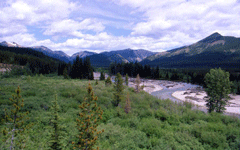
The section of the Rocky Mountains that straddles the Canada-U.S. border has long been recognized as a region of outstanding biological diversity, often referred to as the Crown of the Continent ecosystem. But few British Columbians realize that their province owns a share of this treasure in the form of the little-known Flathead Valley.
In recognition of the Crown of the Continent's natural beauty and abundant wildlife, Waterton Lakes National Park was established in Alberta's southern Rockies in 1895. Fifteen years later, the Americans created Glacier National Park next door in northern Montana. In 1932, the two parks were honoured as the world's first international peace park.
In 1995, UNESCO designated Waterton-Glacier International Peace Park a World Heritage Site. But it noted that the adjoining section of British Columbia's Flathead Valley was "a missing element," and recommended that the site boundaries eventually be expanded to include it.
This was not a new idea. Waterton's first superintendent, John George "Kootenai" Brown, wrote in 1911: "It seems advisable to greatly enlarge this park . . . it might be well to have a preserve and breeding grounds in conjunction with the United States Glacier Park." Others also espoused this idea throughout the following decades, all without success.
In 1980, the Canadian Parks and Wilderness Society took up the cause and began pushing for establishment of a large provincial park in the Flathead's southeast corner. "Fifteen years later, we got Akamina-Kishinena Provincial Park," recalls Bob Peart, one of the original campaigners, "but it was woefully inadequate." At 109 square kilometres, he says, it was too small, lacked important valley-bottom habitat, and, like many B.C. parks, remained open to hunting.
'Peace Park Plus'
Undeterred, conservationists set their sights on a new goal: a national park. As proposed by CPAWS, the 405-square-kilometre park would incorporate Akamina-Kishinena Provincial Park and extend from the U.S. border to Haig Brook, about 25 kilometres to the north, and from the Flathead River's west side to the Alberta border. According to a 2001 Wildlife Conservation Society report, this area, which represents approximately one third of B.C.'s share of the watershed, is "especially vital for carnivores."
Dubbed "Peace Park Plus," this new proposal quickly gained momentum. First, forestry company Tembec Inc. offered to relinquish its logging rights within the projected park area in exchange for financial assistance to upgrade its mill at nearby Elko. Then in 2002, Jean Chrétien, as prime minister, announced federal interest in the park idea.
Since that time, however, the plan has been in limbo. Tembec's original offer is no longer on the table, as the company has already completed the mill upgrade, and lack of cooperation from the B.C. government has prevented Parks Canada from moving forward.
"The province isn't interested in a feasibility study for a national park and that's kind of the beginning and the end of it," says Doug Harvey, Parks Canada's chief for new park proposals. On the other hand, there is support for a feasibility study from the Regional District of East Kootenay, the City of Fernie, and the Ktunaxa Nation, whose traditional territory includes the Flathead Valley.
'We don't need any more parks'
One outspoken critic of the proposal is Mike Sosnowski, a Fernie-based backcountry snowmobile-tour operator who was elected as a regional district director in 2005. "People in the area are opposed to the Flathead area becoming a park because of the restrictive nature of national parks," Sosnowski says. "If it's a national park there can't be any more logging, there can't be any mining, there can't be any oil and gas, any hunting, any fishing, any random camping. . . . We don't need any more parks."
Even if the provincial government was to give its blessing for a feasibility study, it could still take a decade for the park-establishment process to unfold. No matter, Peart says; he isn't about to give up now. "I've been working on this issue for more than 20 years," he says. "I'm still as keen as ever."
Meanwhile, for provincial biologist Bruce McLellan the debate about establishing a national park in B.C.'s corner of the Crown of the Continent ecosystem obscures a more critical issue. After nearly three decades of studying the Flathead Valley's grizzlies he believes that the one thing that would most undermine the bears' prosperity here is development.
Settlers coming?
"The biggest threat in the long term is that someone decides we should settle the valley and put in homes and ranches and all that," McLellan says. "People are not good with attractants and bears get lured into people's yards by compost or beehives or fruit trees or garbage." When wild bears become "problem bears," they are relocated or shot. "That's why there are relatively few bears in all these settled valleys," he says. And why the B.C. portion of the Flathead, which has no resident humans, supports the highest documented density of grizzlies in inland North America.
While other conservation groups concentrate on watershed-wide initiatives in the Flathead, the Nature Conservancy of Canada has focused its attention on the valley's privately owned real estate. In 2002, the group purchased a small riverside property along the international border where a hunting guide-outfitter and his family had lived.
"It's the only piece of private property down in that part of the Flathead Valley and when we purchased the property it was unzoned, so it was quite ripe for some type of development," says Dave Hillary, the conservancy's Canadian Rocky Mountains program manager. Under the conservancy's stewardship, the land -- just under one square kilometre -- will remain in its natural state.
Timber company eyes development
Another area of interest is a 9.9-square-kilometre block of private land that straddles the Flathead River near the valley's north end. Commonly known as the Flathead townsite, the property, now owned by Tembec, was surveyed in the 1920s in anticipation of an oil boom; but the oil wells were never drilled and the town never built. Now, with recreational property sales booming around Fernie, there is renewed interest in the site's settlement possibilities.
In October 2006, Tembec included the property in a portfolio of company lands being offered for sale. These properties, explains Dennis Rounsville, Tembec's president of forest products, "potentially have value beyond just growing trees."
In its information package for prospective buyers, Tembec acknowledges its 2004 agreement with the Nature Conservancy to place a 10-year moratorium on subdivision or residential development of the townsite. It also notes that: "The agreement does not restrict other uses within the zoning such as backcountry lodges or guest ranches."
Whether the yet-unsold townsite property will be the wedge that opens the Flathead Valley to settlement -- with the attendant risks McLellan predicts for grizzlies and other wildlife -- remains to be seen.
Related Tyee stories:
- Threat to Bear Heaven
In BC's Flathead Valley, zero people makes paradise for other predators. Not for long? Part one of two. - Who Are Great Canadians?
Five people who prove our nation's potential, including a Flathead Valley activist. - Clash over Coalbed Methane
Northern towns rebuff push by government. Special report.
![[Tyee]](/design-article.thetyee.ca/ui/img/yellowblob.png)
Read more: Labour + Industry, Environment






Tyee Commenting Guidelines
Comments that violate guidelines risk being deleted, and violations may result in a temporary or permanent user ban. Maintain the spirit of good conversation to stay in the discussion.
*Please note The Tyee is not a forum for spreading misinformation about COVID-19, denying its existence or minimizing its risk to public health.
Do:
Do not: