
News

Canadian Miners Sour on Burma

Ties with junta earned millions for BC-based Ivanhoe.

By Christopher Pollon, 12 Oct 2007, TheTyee.ca

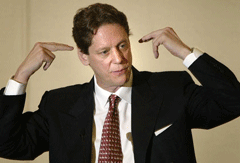
Robert Friedland

Ivanhoe chief Robert Friedland.

It was still dark on the morning of Nov. 6, 2005, when the snaking convoy of trucks departed the Burmese coastal city of Rangoon for the jungle. The ruling military junta had just ordered all 32 government ministries to move 320 kilometres north to a new capitol (named Nay Pyi Daw -- "resting place of the king") with little more than a day's notice. The move was apparently motivated by fears of U.S. invasion, after Condoleezza Rice renounced the country earlier that year as an "outpost of tyranny" for its human rights record and complicity in drug production and trafficking.

In a scene reminiscent of Apocalypse Now, State Peace and Development Council (SPDC) General Than Shwe secured his seat of power in the midst of a vast fortified compound surrounded by mountains and dense tropical jungle.

It is in this environment of paranoia and bureaucratic instability that legendary Vancouver mining financier and Ivanhoe Mining Ltd. executive director Robert Friedland has thrived and prospered in Burma since the early 1990s. Friedland's Ivanhoe umbrella of companies is credited with bringing to production the US $90 million Monywa copper mine in 1999, by far the largest mining investment by a foreign company in Burmese history -- and a cash cow for the government which retains a 50 per cent interest in the joint venture.

Today Ivanhoe Minerals Ltd. is one of a dwindling group of B.C.-based resource companies connected to the Burmese military government. But in the wake of the recent violent repression of protests in the country, Friedland surprised many last week by not only denying his Ivanhoe Mining Ltd. was still connected to Burma, but by denouncing his former military business partners.

"We share the revulsion of right-thinking people everywhere against unwarranted assaults on Buddhist monks and civilians," read a statement from Ivanhoe directors released Oct. 3, adding that the company "deplore[ed] the fact that so many years of discussions within Myanmar about constitutional change now appear to be jeopardized by the reactions of the state."

The day before that statement, Vancouver-based junior miner Jet Gold Corp. announced it too was leaving Burma -- and abandoning its Set Ga Done gold concession in Shan province, which it had planned to explore with Calgary's Leeward Capital Corp. in a three-way partnership with the an arm of the military junta.

The timing of both departures had more to do with business than ethics, despite the influence of ongoing US/EU sanctions, shareholder activism and kindled Western public sentiment toward the plight of Burmese monks. As the 2005 relocation of the capitol demonstrates, doing business in modern Burma has in many ways become untenable.

"There are pros and cons of doing business in a place like Burma," says Catherine Coumans, Research Coordinator for Mining Watch Canada. "Because the government gets a percentage of all mining projects, it's in their interests to ensure a project has smooth sailing ... there won't be problems over environmental impacts, labour impacts, community impacts, and that makes for easy mining. But the downside is that military dictatorships are often unstable internally, doing things like moving its capitol into the jungle."

Ivanhoe's troubles in Burma

Ivanhoe's past success in Burma hinged on the closeness of personal connections to the dictatorship. In the early 1990s, Vancouver businessman and Burmese national Reggie Tun Maung was hired as senior vice president of Ivanhoe Myanmar Holdings. (Tun Maung's son is married to the daughter of SPDC Deputy Prime Minister Vice-Admiral Maung Maung Khin.) It was this company that sealed a compact with the Burmese regime in 1994 to exploit the Monywa copper deposit.

Reliant on good relations with his military joint venture partners, billionaire Friedland has been a defender of the regime, preaching a philosophy of engagement with the military as an agent of political reform.

"I am firmly convinced that Canadian companies going to a country like Myanmar to engage in business will help the average person there," he told the Globe and Mail in 1997. "I will tell you there is no country in Asia that is a perfect democracy."

Despite enjoying a privileged status with the regime, Friedland was looking to sell his stake in the Monywa Copper project as far back as March 2004, when he hired investment bankers to review "strategic alternatives."

Friedland's frustration with the military bureaucracy was growing. Plans to expand the mine in early 2005 -- which were deemed necessary for the "continued economic development" of the sites -- were stymied by the Burmese government. The mine was unable to obtain the required import permits for its mining equipment needed for expansion. Also in 2005, the regime suddenly placed an 8 per cent commercial tax on the mine's commercial copper exports, despite a previous agreement stating exports would be exempt from all tax.

Economic sanctions imposed against Myanmar by the United States had also started to "seriously impact the mine's ability to function in a normal way," according to regulatory documents filed in March 2006. In the fourth quarter of 2005, both the mine's insurance broker and the off-shore banking institution terminated their relationship with the mine on account of the sanctions. This caused the mine to temporarily shut down in spring of 2006.

'Divested' from Burma, but still profiting

Added external pressure was coming from high-profile partners concerned about the optics of Ivanhoe's Burma activities. In October of 2006, Rio Tinto of Britain agreed to partner with Ivanhoe on the Oyu Tolgoi project in Mongolia (among the world's largest undeveloped copper deposits) on the condition that it divest itself from Burma.

"Clearly, Myanmar was not a country that we as a company wanted to have an involvement with, so we did make it a condition that as part of the agreement with Ivanhoe that they would dispose of it," a Rio Tinto spokesman told the Globe and Mail on October 3.

Friedland complied. In February of 2007, Ivanhoe Mines Ltd. transferred its 50 per cent stake in Monywa to an unnamed third party trust, which took control of the assets with the intention of selling them off. This move has satisfied Rio Tinto, but since July, the company has received dividend payments from the joint venture with the Burmese dictatorship, including a payment of US $6.6 million.

Ivanhoe therefore is still indirectly profiting from its Burmese assets, despite Friedland's October denunciation of the ruling Burmese junta. (Officials at Ivanhoe Mining Ltd. in Vancouver did not return calls to The Tyee, in order to clarify).

Leeward Capital Corp and Jet Gold Corp.

In the case of Vancouver's Jet Gold Corp. and partner Leeward Capital Corp, the Oct. 2 decision to abandon its Set Ga Done gold concession -- encompassing 70,000 square hectares of land bordering China's Yunnan province -- was motivated by funding problems of a partner and what Leeward management called "recent political instability."

"...in the last several years, it has become increasingly difficult to operate under inflexible bureaucratic rules imposed on our operations," read a statement from Leeward president James W. Davis. What rules are referred to are uncertain, as both companies involved did not respond to calls from the Tyee before deadline.

Leeward Capital Corp, and in particular, mining geologist James W. Davis who leads the corporation, is an example of an ambitious Canadian miner who has repeatedly suspended Burmese operations but never actually left. Davis's presence in the region pre-dates the Bre-X mining scandal of the mid-'90s, which saw most financing for mining exploration completely dry up. Leeward Capital survived in Burma during this time by developing a side-business buying Burmese amber called Burmite from local miners in Kachin state and reselling 100-million-year-old amber-embedded insects and botanicals to such customers as the American Museum of Natural history.

In the late 1990s Davis set up a local company with a partner in Kachin state, and established relationships with both local miners and the northern military commander of the region. In an interview with Business Edge magazine in 2001, Davis said the partnership would mine 500 kilograms of burmite that year.

Questioned about the ethics of operating and partnering with the dictatorship on the amber project in 2001, Davis echoed Friedland. "There's only two ways that a country like Myanmar [Burma] can advance democratically, which is by revolution or by evolution. I prefer evolution because a lot less people get hurt that way."

Like Ivanhoe Mining Ltd., Davis's company has paid a price for operating in Burma. Leeward Capital's amber business was listed on the 2007 "Dirty List" by the London, England's The Burma Campaign, which publicizes companies operating and cooperating with the dictatorship.

Included on the list was another Davis vehicle -- Taiga Consulting Inc. of Calgary -- which the Burma Campaign describes as a Canadian geological consulting firm with offices in Burma, which "works closely with the regime exploring for base and precious metals."

Greener pastures in Mongolia, Kazakhstan and... Terrace

Canadian resource companies leaving Burma -- whether for ethical reasons, or due to the challenges of dealing with a military dictatorship -- are hardly without hospitable places in the developing world to explore.

Mongolia is in Friedland's sights as the company moves forward with the development of the world's largest copper-gold porphyry project (mentioned above). This is in addition to Ivanhoe's exploration rights through central and southern Mongolia, where copper, gold and coal discoveries have reportedly been made. An Ivanhoe subsidiary also holds a 70 per cent interest in the Bakyrchik gold project in north-eastern Kazakhstan.

Jet Gold Corp.'s CEO Robert Card's mind is also far from Burma -- his company is involved with oil and gas exploration in Texas and North Dakota, coal exploration near Terrace, B.C., and earlier this year, it abandoned a gold exploration program near Atlin, B.C.

Leeward Capital Corp is busy exploring the comparatively low-risk Northwest Territories for diamonds and northern B.C. for molybdenum. Yet for geologist-executive Jim Davis, breaking ties with Burma has been hard to do -- despite receiving world-wide attention for his presence in Burma, regulatory documents show that Davis's "amber project" recently spent over $200,000 on mineral property exploration in 2007.

Related Tyee stories:

 [Tyee]

69  Comments:

Login or register to post comments

  • lynn

    4 years ago

    Genocide, hypocrisy and greed

    Quote:
    "Friedland complied. In February of 2007, Ivanhoe Mines Ltd. transferred its 50 per cent stake in Monywa to an unnamed third party trust, which took control of the assets with the intention of selling them off. This move has satisfied Rio Tinto, but since July, the company has received dividend payments from the joint venture with the Burmese dictatorship, including a payment of US $6.6 million.

    Ivanhoe therefore is still indirectly profiting from its Burmese assets, despite Friedland's October denunciation of the ruling Burmese junta."

    And that's the important part to remember: "still indirectly profiting from its Burmese assets, despite Friedland's October denunciation of the ruling Burmese junta".

    ....Or "How to Look Good While Still Propping Up A Murderous Military Junta"...

    Quote:
    Questioned about the ethics of operating and partnering with the dictatorship on the amber project in 2001, Davis echoed Friedland. "There's only two ways that a country like Myanmar [Burma] can advance democratically, which is by revolution or by evolution. I prefer evolution because a lot less people get hurt that way."

    hmmmmmm....so I guess the horror of that brutal crackdown in the streets of Burma we just witnessed was a mere "advancement" of democracy?....so Davis "prefers evolution" to revolution does he? How civil of him as he oh-so-altruistically helps the military junta "evolve" into something better through his amberous humanitarian endeavours.

    Meanwhile the military junta aka The State "Peace" and Development Council, propped up by corporations such as the US's Chevron pipeline project and the mines mentioned in this article can continue to bash the heads of monks and Burmese citizens into rock walls, load their bodies into trucks and deposit them half alive into secret crematoriums.

  • G West

    4 years ago

    Thanks Lynn

    This is coming a little late to Tyee - but glad it's finally here. Perhaps you can bring readers up to date on a few other details - it you have the time.

    I know you have the information.

  • lynn

    4 years ago

    Burma, Mr. Friedland and the BC Government

    I'll post this one, G West, From The Canadian Friends of Burma:

    CFOB concerned by Ivanhoe Chairman Friedland's at presence at
    conference supported by BC Government

    October 1st 2007

    "The Canadian Friends of Burma (CFOB) is gravely concerned by the inclusion of Ivanhoe Mines founder and Executive Chairman Robert Friedland as a featured speaker at the Inaugural Asia Pacific Forum
    on Mining and Minerals in Vancouver BC on Oct 1st 2007. A forum whose "founding partner" is the BC government.

    In the press release announcing Mr. Friedland's luncheon speech he is
    heralded as an individual who is "in the vanguard of North American natural-resource sector leaders who have pioneered business links in Greater China and the Asia Pacific region during the past 20 years."

    The press release neglected to mention that Friedland's business
    links included a 50/50 partnership with Burma's military dictatorship. The very same group of generals presently massacring
    peaceful demonstrators in Rangoon and across Burma.

    As monks, journalists and students are gunned down at point blank range Ivanhoe continues to profit from a copper mine located in Monywa, Sagaing Division operated in a fifty-fifty partnership with
    the Burmese military junta.

    Since February this year, Ivanhoe has claimed that it is in the process of relieving its self of its 50 percent stake in Monywa. At present they have yet to find a buyer for their share of the mine.
    In preparation for an eventual sale the firm has sold its stake to an "Independent Trust" in return for a guarantee that when
    the "Independent Trust" sells the stake Ivanhoe will then be paid.

    While this agreement may give the impression that Ivanhoe is no longer in Burma, the firm continues to accrue profits from the mine and will do so until the "Independent Trust" sells their stake.
    Ivanhoe refuses to say who operates the "Independent Trust" but asserts that the operators are independent of Ivanhoe.

    Reports from the Monywa area are that the mine has caused a great deal of environmental problems and has severely affected nearby farmers. An independent environmental study commissioned by Ivanhoe
    reveals a considerable portion of the land used by the operation is severely contaminated. Yet Ivanhoe's cleanup plan is vague and relies heavily on the involvement of their joint venture partner, a state owned enterprise of the Burmese Junta.

    Burma's mining and environmental regulations are some the weakest in
    the entire world. Furthermore Burma's extremely repressive dictatorship does not allow for the kind of climate where those
    living near the mine can openly state their concerns about its operation or its cleanup. It is our believe that long after Ivanhoe has left Burma, the environmental problems caused by the Monywa mine
    will remain.

  • lynn

    4 years ago

    contd.

    "The Canadian Friends of Burma and other organizations that are concerned with the plight of Burma's people voiced their opposition to the Monywa mine when Mr. Friedland's firm first announced their
    interest in the area. Little that Ivanhoe has done in the ensuing years has reassured us.

    Mr. Friedland often stated that Ivanhoe's operations in Burma would
    do good for the country, : "I am firmly convinced that Canadian companies going to a country like Myanmar [Burma] to engage in
    business will help the average person
    there. I will tell you there is no country in Asia that is a perfect democracy....... And I have no doubt that the true situation in Myanmar is improving and we can go and engage in business there,
    subject to following our own code of conduct."

    In reality Ivanhoe's involvement in Burma only served to enrich a brutal regime and give it more money to buy weapons to use against Burma's population. Those risking their lives in Rangoon's blood
    soaked streets would certainly prefer that Mr. Friedland had pioneered somewhere else."

    A good blog to follow about the present situation Burma is actually from Thailand ( the blogs inside Burma are closed).

    http://jotman.blogspot.com/

    The Burmese Digest is also a good source of articles and news.

  • realisticman

    4 years ago

    Hitch is right

    Burma's foul regime depends on Beijing.
    By Christopher Hitchens
    Posted Monday, Oct. 1, 2007, at 1:26 PM ET

    Joining the young and passionate demonstrators outside the office of a certain Washington military attaché last week (and there was I, having thought that my "demo" days were over) helped me to settle one trivial question. The crowd was united in chanting "Free, Free, Free Burma." This may seem like a detail, but I think it's right to object to the grotesque renaming of Myanmar and Yangon, and I am glad that the Washington Post, at least, continues to say Burma and Rangoon.

    Glad to see, and hear, CBC has reverted to Burma.

    Tough territory to fight in. When I was a child I was playing ball with friends and the ball went into a large area of stinging nettles. We couldn't go after it. An older man in shorts(!) just walked in and retrieved the ball for us and we watched in awe. How could he possibly not be in agony? He said that he had been in Burma in World War II and had seen swamps and jungle with all kinds of dangerous things and that this was tame in comparison. Later we did some research and learned much about the horrors that happened in one of the worst theatres, Burma.

  • realisticman

    4 years ago

    to be fair

    to Hitchens, only the first paragraph above (ending with 'Rangoon') should be attributed to him.

  • G West

    4 years ago

    Hitchens forgot about Condi's favorite company - Chevron

    http://www.sfgate.com/cgi-bin/article.cgi?file=/c/a/2007/10/04/MNNBSIK4D.DTL

  • G West

    4 years ago

    And the British don't deserve a pass either

    "A mild, middle-aged Burman came by, balancing a huge bamboo, which he shifted from one shoulder to the other with a grunt as he passed Ellis. Ellis's grip tightened on his stick. If that swine, now, would only attack you! Or even insult you - anything, so that you had the right to smash him! If only these gutless curs would ever show fight in any conceivable way! Instead of just sneaking past you, keeping within the law so that you never had a chance to get back on them. Ah, for a real rebellion - martial law proclaimed and no quarter given! Lovely, sanguinary images moved through his mind. Shrieking mounds of natives, soldiers slaughtering them. Shoot them, ride them down, horses' hooves trample their guts out, whips cut their faces in slices!" (Burmese Days)

    First published 1934 - by Eric Blair (George Orwell) who spent the years 1922 - 1928 in Burma with the Indian Imperial Police.

    The British are not without responsibility.

  • bob the cat

    4 years ago

    Saw Hitchens once

    He took on Mother Theresa in a three rounder..it never even went the distance.
    the old girl was game..tough as nails but Hitch was just too quick on his feet and packs that big right hand..it ended mercifully mid way through the first.

  • frank2

    4 years ago

    I'd very much appreciate

    I'd very much appreciate introductions to any "unnamed third party trust" which agrees to pay me US 6.6 million in dividends from any selected nefarious enterprise.

  • realisticman

    4 years ago

    Oh for those days at the Rangoon Club

    Quote:
    Burma played a significant part in World War Two for the British Army. It was in Burma, that Orde Wingate and the Chindits found fame and it was in Burma where the Japanese Army suffered serious military setbacks that led to them retreating back east.

    The Japanese had advanced to Burma as her army had steamrollered all before it between 1942 and 1943. The British had surrendered at Singapore and the Americans, lead by Douglas MacArthur, had left the Philippines. As the Japanese advanced west, they came to Burma. Here their supply lines were stretched to the limit and only a minority of the Japanese Army was stationed there – the majority were in the Pacific region.

    The main threat to the Japanese came from ‘Vinegar Joe’ Stilwell’s Chinese Army in India (CAI). The Indian Army, under the British, had lost their best men to the campaign in North Africa. The British military hierarchy was also only prepared to take on the Japanese when it felt that British troops were sufficiently trained in jungle warfare.

    In January 1943, Indian troops were given the task of advancing along the Burmese coast to the port of Akyab. This was done by the 14th Indian Division. They found only light Japanese resistance and many Japanese posts were manned by just a few soldiers. The real problem for the Allies was the environment. Burma was criss-crossed with jungle, mountains, rivers and mangrove swamps. Moving equipment was a nightmare across such hazardous terrain and worse was the constant threat of disease. Malaria was a very real problem.

    Quote:
    Burma became nominally independent in 1943 under Japanese occupation, but that taste of limited home rule was enough for the Burmese nationalists to begin negotiating the country's future with its colonial masters when the Pacific War was over. Sir Reginald Dorman-Smith was reinstated as British governor in October 1945, but his main duty then was to oversee Burma's transition to independence.

  • realisticman

    4 years ago

    The Longest Civil War

    Quote:
    While the Pacific War marked the beginning of the end of colonialism, it had another, more severe impact on Burma. In the beginning, Aung San and his Burman nationalists had sided with the Japanese. His Burma Independence Army was armed and trained by the Japanese, while the Allied powers armed and equipped hill peoples such as the Karen and Kachin to fight the occupiers. Centuries of mistrust between the Burmans and the hill peoples resurfaced, and those wounds have not yet been healed. Even today, many Karen talk with bitterness about atrocities carried out against them by the BIA during the Japanese occupation, and the Kachin are proud to point out that they already had celebrated their victory manau in Myitkyina by the time the Burman nationalists in March 1945 turned their guns against the Japanese.

    The arming of the hill peoples, and vast quantities of weapons left behind by the Japanese, meant that Burma's ethnic conflicts from the very beginning turned violent. The hill peoples had the means to form their own militias and armies and the first, the Karen National Defence Organisation, was set up in 1947, a year before independence. The Mon formed a similar militia in 1948, while the most militant of the Burman nationalists, the Communist Party of Burma, dismissed independence as a sham and resorted to armed struggle in April 1948. That war continued until 1989, when the hill-tribe rank-and-file of the CPB's army mutinied against the aging Burman leadership of the party and drove them into exile in China. But the army remains under a different name, the United Wa State Army, and although it has had a ceasefire agreement with the government in Rangoon since the mutiny, it still has at least 16,000 soldiers--and they are better armed and equipped than the CPB's army ever was.

    Although younger generations may view the Pacific War as something that happened in the past with little or no relevance to today's Asia, the impact of the Pacific War can not be underestimated. It paved the way for independence for countries in the region. In Burma, it also led to the world's longest-lasting civil war. Thus, the war never really ended in Burma. The leaders of the Karen rebels, Bo Mya and Tamla Baw, even began their military careers as anti-Japanese guerrillas, and they are still fighting.

  • G West

    4 years ago

    Although apologists

    Although apologists for ‘Imperial Britain’ throughout the subcontinent, Ceylon and the Far East might like to characterize the English as benign and civilizing influences in these areas, a somewhat more comprehensive understanding of the role of imperialism in the current unpleasantness would never suggest that the situation which has evolved there since the start of the 19th century is a result 'only' of the Japanese. On the other hand, if the Americans had listened a little more carefully to what Joe Stilwell advised and a little less attentively to what Dugout Doug had to say the current situation where nations like Korea, Vietnam, Laos, Cambodia, Burma and Taiwan are poised precariously on a geo-political knife edge between China and the West might never have obtained. But that’s another story.

    Orwell is a fine witness to the depredations and lies of the 'system' he served - I'll post a couple more examples when I have my library at hand this evening

    For the moment, any attempt to hang all this on the Japanese is simple idle revisionism and historical myopia…even if it does come from a source with no citation.

  • lynn

    4 years ago

    Human rights when the price is right

    Hardly had an independent breath for Burma - controlled from every direction.

    If - realisticman, through the quotes above , you are attempting to excuse this brutal regime as a mere result of a long history of warring factions .....and thus imply that in no way is this brutal military junta being advanced, propped up, and more importantly, maintained in power through foreign investment that is "partnering" with this brutal military junta in resource-rich Burma - you are sadly and deeply mistaken.

    As John Pilger has stated about Burma: "crimes against humanity are allowed to continue" through the hypocritical face of foreign investment. What he calls a two-faced code of "human rights when the price is right".

    Eyewitness account:

    "For one instance, the monastery at an obscure neighborhood of Yangon, called Ngwe Kyar Yan (on Wei-za-yan-tar Road, Yangon) had been raided early this morning.A troop of lone-tein (riot police comprised of paid thugs) protected by the military trucks, raided the monastery with 200 studying monks. They systematically ordered all the monks to line up and banged and crushed each one's head against the brick wall of the monastery. One by one, the peaceful, non resisting monks, fell to the ground, screaming in pain. Then, they tore off the red robes and threw them all in the military trucks (like rice bags) and took the bodies away. . . .

    When all is done, only 10 out of 200 remained alive, hiding in the monastery. Blood stained everywhere on the walls and floors of the monastery."

  • lynn

    4 years ago

    It is now we are most fearful

    From Jotman blog:

    The hidden crackdown is as methodical as it is brutal. First the monks were targeted, then the thousands of ordinary Burmese who joined the demonstrations, those who even applauded or watched, or those merely suspected of anti-government sympathies.....

    "Some of the novice monks were under 10 years old, the youngest was just seven. They were stripped of their robes and given prison sarongs. Some were beaten, leaving open, untreated wounds, but no doctors came."....

    On his release, the monk spoke to a Western aid worker in Rangoon, who smuggled his testimony and those of other prisoners and witnesses out of Burma on a small memory stick.

    The scale of the crackdown remains undocumented. The regime has banned journalists from entering Burma and has blocked Internet access and phone lines.

    Mark Farmaner of the Burma Campaign UK says the number of dead is possibly in the hundreds. "The regime covers up its atrocities. We will never know the true numbers," he said.

    At the weekend the government said it has released more than half of the 2,171 people arrested, but exile groups estimate the number of detentions between 6,000 and 10,000.

    In Rangoon, people say they are more frightened now than when soldiers were shooting on the streets.

    "When there were demonstrations and soldiers on the streets, the world was watching," said a professional woman who watched the marchers from her office.

    Friday, October 12, from inside Burma:

    "But now the soldiers only come at night. They take anyone they can identify from their videos. People who clapped, who offered water to the monks, who knelt and prayed as they passed. People who happened to turn and watch as they passed by and their faces were caught on film. It is now we are most fearful. It is now we need the world to help us."

  • realisticman

    4 years ago

    Who What? Deeply Mistaken!

    Lynne, I'd be most interested in what you think might be some smidgen of justification or excuse for the present regime. I was giving some historical perspective, just as other posters have. Too busy to remember to cite origins. Wiki has lots, particularly the Burma Railway, as do many historical sites. Some of the above came from a Swede in Hong Kong;
    http://www.asiapacificms.com/articles/

    As I said above, Hitchens has vigorously criticized the present foul regime and I'm glad that CBC has reverted to calling it Burma, not what the military will have you call it, Myanmar!

  • lynn

    4 years ago

    Copper, Rubies, Amber and Suffering

    realisticman, I don' think there is any excuse for the present brutal regime - including coy excuses by the whole foreign investment community (not just China and including Canada) who behind closed doors are profiting through their ventures.... while trying to present an innocent face of concern to the world.

  • realisticman

    4 years ago

    Sorry you were, "sadly and deeply mistaken", Lynn

    about any misreading of previous comments. Glad to see that you say that you, "don't think there is any excuse for the present brutal regime..."

    BBC is on to this story;

    http://news.bbc.co.uk/2/hi/asia-pacific/7041203.stm

    The Mother network doesn't seem too interested only some chat about the nomenclature. I suppose more blood has to flow before they find it on a map.
    http://www.cbc.ca/world/

  • lynn

    4 years ago

    still not close and no cigar

    realisticman,

    how very naughty of you... but not half so clever as you think -

    okay, I'll cut to the chase and say it as I see it - your "historical piece" appears to be an attempt at distraction.

    This Tyee article is about Canada's mining industries' ties with a brutal military junta - ties that have "earned millions for BC-based Ivanhoe."

    Why not address that issue?

  • realisticman

    4 years ago

    Context

    Context can tell us much, Lynn. It's not unusual to research contentious issues and Burma certainly has an extremely interesting history that gave me more perspective after some digging, that I thought I'd share. Perhaps you're not interested in that, sorry. As Christopher Hitchens says on Slate, without China's support the thugs in Rangoon wouldn't exist for long. That's the big picture and that to is a big question. At least Friedland says he's out. Do you have other suggestions?

  • yacub

    4 years ago

    canadian miners? sour on burma

    who writes the headlines for tyee?

    is friedland, the corp exec supposed to be the miner(s)?

    ey

  • G West

    4 years ago

    As least Friedland says he's out

    And yet,

    Quote:
    Ivanhoe therefore is still indirectly profiting from its Burmese assets, despite Friedland's October denunciation of the ruling Burmese junta. (Officials at Ivanhoe Mining Ltd. in Vancouver did not return calls to The Tyee, in order to clarify).

    As always, capitalists protest too much....but still manage to cash their cheques.

    As to the Chinese connection, Chris Hitchens' notwithstanding, the US is not interested in offending its chief creditor - especially over a situation in Burma that is far from new. Hitchens should start criticizing the real source of much of the world's problems - and it's not China.

    The behavior of the military in Burma is, and has been, every bit as appalling as anything Saddam Hussein was up to in 2003.

    No more excuses for corporate sniveling and dissembling and pretenses about caring. They care about their bottom line - until shareholders and others (as happened in the case of Talisman) start complaining - nothing happens.

    The reputation of the Canadian mining sector was tarnished long before its involvment in the current situation in Burma.

  • bob the cat

    4 years ago

    Context can tell us much, Lynn.

    [OFFENSIVE COMMENT REMOVED. PLEASE TRY AGAIN WITHOUT THE PERSONAL INVECTIVE. -TYEE EDITOR.]

  • realisticman

    4 years ago

    Legs?

    Not much to presume with you bobbie. Think it's got legs?

  • ME2

    4 years ago

    No Rman, Lynn has it

    No Rman, Lynn has it right.

    Quote:
    This Tyee article is about Canada's mining industries' ties with a brutal military junta - ties that have "earned millions for BC-based Ivanhoe."

    There is something very obscene which goes even beyond hypocrisy, with Canadian mining companies spouting all their blather about "Democracy" and their "concern for the environment".

    Even though kickbacks to ruling regimes may be impossible to block, since we can't stop them even here at home, we should - as a democratic country - be able to block investment, etc, in the worst of them.

    And as for the mining companies' claimed concern for the environment, this is a pretty cynical joke, since wherever they go, they abide by the lowest standards they can, while knowing full well the damage and/or the hardships to locals they are causing.

    With the foregoing in mind, it becomes pretty hard to look at the photo of Friedland at the head of the article, and rather than recognising what appears to be a normal person, not to see instead the Pharisee of Biblical mention.

    What he represents is not just corporations, companies or mining outfits, but decision-making flesh and blood people.

    Perhaps it is time to ferret out such people and make their activities, names and faces known.

  • bob the cat

    4 years ago

    blow it

    DELETED FOR PERSONAL INSULTS -- TYEE MODERATOR

  • reality_check

    4 years ago

    From someone who knows this region ...

    actually ... the countries surrounding Burma are the ones all too happy to keep the status quo. Thailand, China, and India being on top of that list.

    From a Thai perspective (most Thais), history as being brainwashed into them by movies and books and school books, Burmese are all evil (they attacked Thailand so many times) and deserve everything they are getting now. How do I know? I got it from the horse's mouth. The Thai also benefit from cheap labour and resources, as most people who have travelled in those regions should know: cheap food, cheap gold and gems, cheap teack,... and it goes on and on. Of course, China and India and a few Russian republics do benefit as well. They are too many players that have a vested interest in keeping a status quo in that region (Western or not). The Chinese needs the oil and gas pipeline from the Russian republic. The Chinese love the beautful gems (jade in particularly). No doubt all ladies love it too, regardless of their background. They could not care less where it came from and at what price they were extracted. In other words, I am glad I am not Burmese or an Iraqui at the moment. If only they could find (or invent) a nuclear plant in the middle of nowhere. Time to boycott the Beijing O. Money ... they understand!

  • realisticman

    4 years ago

    Thanks, reality_check

    for the perspective. Too bad a few of the posters here, some with censorial comments, do not seem interested and prefer to concentrate on their provincial preoccupations.

  • G West

    4 years ago

    Tuchman

    Oh I think we can't just dismiss the British and their important role from the not-so-very distant past r'man - Hitchens and other apologists for American ‘power’ to the contrary.

    Britain's main concern at the Japanese expansion began was to use Burma as a buffer against Japanese incursions into India - and not much else. They were little interested, until the Americans became engaged, in keeping Burma open as a supply route to China.

    The Chinese were already suspicious of Britain as the dominant Imperial power in the first third of the 20th century and they were more than aware that Britain was using Burma (over which the Chinese felt they had a long-standing claim) for its own purposes - as it had done with every single part of its eastern empire since the earliest days.

    Ironically, it was the United States, not Britain, that was interested in creating a strong and independent China after the war anyway. You have to be careful what you wish for.

    If the junta behaves with bad manners today, it learned them at the knee of both American and British teachers. These monsters are, in essence, just another holdover of an earlier era where 'who' one supported was always more important than 'how' one behaved toward their own citizens.

    In my view.

  • realisticman

    4 years ago

    Don't confuse Bobbie

    with too many facts and context West, otherwise he might be calling you a posterior too. Then I'll be able to call you a maudite cul too, as you are now me.

    This story is about Canadian mining companies and since Canada has great expertise and capability in mining controversial issues will arise. Mining is not going to stop, unless civilization ends. The big issue that should be addressed is whether or not Canada, the UN or NATO should be sending in troops to overthrow a brutal government.

    Ultimately, the business morals of one Canadian businessman will pale into insignificance.

    Short-sighted thinking without considering context is exactly what landed the USA in trouble in Viet-Nam and cost the lives of thousands of Americans and many more lives of others. North Viet-Nam was run by communists, so, "let's saddle up!" led to a disaster.

  • G West

    4 years ago

    sorry r'man..not guilty

    You're the fellow who posted these comments:

    Hitch is right
    Oh for those days at the Rangoon Club
    The Longest Civil War

    Therefore, I think I'm perfectly justified in taking this situation back to its pathetic British Colonial roots and not pretending that Christopher Hitchens’s highly selective memory has much to teach anyone.

    Nobody gets a free pass.

    As for that little bit of information about North Vietnam...who do you think 'runs' Vietnam today?

    Every time I hear someone say we should invade and not use sanctions and non-lethal pressure I like to refer them to South Africa and the 1980s. Now why didn’t we invade there to punish the white racists of Joburg?

    As for the results of saddling up - have you checked Iraq lately?

    How many Iraqis would still be alive today if George had stuck with sanctions and left his six-shooter at home?

  • G West

    4 years ago

    As for confusion

    You might find this little item in today's Vancouver Sun interesting:

    http://www.canada.com/vancouversun/news/story.html?id=c7f1c119-0ac3-45b0-adaa-a89612379328&k=15467

    Seems as if Graham Bruce, former Campbell minister and now undeclared lobbyist - (who does pay his monthly salary anyway?) for what I've heard is $10,000 per month - is a little 'confused' about the rules too.

    This should be a nice 'contra' indication about the way Campbell and his friends really operate - wouldn't you think?

    'Confusion reigns.'

  • lynn

    4 years ago

    You just don't get it, do you?

    You just don't get it, do you?

    Or you don't want to.

    Yeah, the Chinese, the Thais, the British, the Americans, the Japanese - all have played their part.

    But this important Tyee article is about our own Canadian culpability in the dictatorial horror that is now Burma.

    As ME2 suggests perhaps we should develop policies that block investments in the worst of these regimes.

    So instead of distracting, and continuously and slyly pointing the finger conveniently elsewhere....so you can absolve yourself of all guilt and.... don't actually have to do anything about - ( the Bad Guys "are all over there" - trick # 341) try actually dealing with this article - you know the one above about Canadian mines that are propping up a barbarous military junta while pocketing millions for themselves....halos all aglow.

  • lynn

    4 years ago

    And furthermore, realisticman.....

    This story is about Canadian mining companies and since Canada has great expertise and capability in mining controversial issues will arise.

    "controversial issues?" What is happening in Burma is merely "controversial?" The brutal crackdown and the deaths of what could be thousands is merely controversial?

    Quote:
    Mining is not going to stop, unless civilization ends. The big issue that should be addressed is whether or not Canada, the UN or NATO should be sending in troops to overthrow a brutal government.

    No, the big issue is: Is the Canadian government and the BC government through their unchecked support of mining and resource industries supporting brutal murderous, military regimes - causing many innocent people to lose their lives, not to mention, their right to democracy ?

    And in consequence, if Canadian troops are called upon, are they not also causing Canadian troops to not only endanger but lose their own lives so that mining CEO's and the so-called resource investment community can grow ever richer... while continually evading accountability and responsibility for the situation they have wrought through their own greed?

  • lynn

    4 years ago

    And just to be clear, this

    And just to be clear, this is realisticman's ******* quote, not mine:

    Quote:
    This story is about Canadian mining companies and since Canada has great expertise and capability in mining controversial issues will arise.

  • realisticman

    4 years ago

    Sorry Lynn

    Maybe you're new around here but I can tell you that discussions frequently, in fact, almost inevitably, wander and meander, often into the abyss.

    I was also interested in the people in Burma, rather than one mining exec. in Vancouver. I became incensed at the brutality of a military junta torturing, shooting, burning and, according to the latest reports today, burying people alive. But you want to discuss corporate law. OK.

    What's the progress on this, Lynn, did it result in a law and did that law receive Royal Ascent?

    Quote:
    Wednesday September 7, 2005 01:00 PM

    In a landmark report, the Parliamentary Standing Committee on Foreign Affairs and International Trade (SCFAIT) calls on the Canadian government to ensure "socially and environmentally responsible conduct by Canadian companies."

    In their 14th report, the Committee members state that they are: "Concerned that Canada does not yet have laws to ensure that the activities of Canadian mining companies in developing countries conform to human rights standards, including the rights of workers and indigenous peoples."

  • G West

    4 years ago

    Why indeed?

    Why would you expect Canadian mining companies or the Canadian government to give a damn about what they do 'for' and 'to' people in Burma or Mexico or Indonesia?

    They don't care about what they do to the environment, the indigenous peoples and/or the ordinary citizens right here in Canada.

    I think you are the one who is 'new' here, by the way. These are old issues going back generations - stretching back, as it were, to our colonial British past...deeply seated in the institutions and habits of a government that can't seem to overcome the past and is breathlessly anxious (often at the same time) to adopt the equally-malignant global vision of America and her billionaire boondoggle of phony market economics.

    Spare us the crocodile tears.

    Orwell has a list of, as I remember, 6 things that he thought was necessary to create a decent society in England. I’ll dig them out and post them for you.

  • G West

    4 years ago

    Orwell's List

    (and please, excuse the atrocious syntax in the last para above)

    I had intended to provide Orwell's list, which I will do at some future date, but, since the subject here is Burma and, at least as I see it, commercial colonialism and its bedfellows I think I'll find a better place to use that than here.

    Instead, I'll just quote a very short letter Orwell wrote to the author of a 'flawed' book about Burma.

    I think it sums up the issues quite nicely.

    14 March 1946

    Dear Miss Tennyson Jesse,

    I am ill in bed, which is why I haven’t answered earlier, and even now I cannot write a proper letter.

    I think you have missed my point. It isn’t what you did say about the British in Burma, but what you didn’t say. No one would infer from your book that the British had done anything worse than be a little stupid and sometimes follow mistaken policies. Nothing about the economic milching of the country via such concerns as the Burma Oil Company, nor about the disgusting social behaviour of the British till very recently. I do know something about this. Apart from my own time there I have family connexions with the country over three generations. My grandmother lived forty years in Burma and at the end could not speak a word of Burmese – typical of the ordinary Englishwoman’s attitude.

    Yours sincerely,

    George Orwell

    [collected Essays, Journalism and Letters of George Orwell: Vol. 4]

  • lynn

    4 years ago

    The intention behind the distraction

    As far as I know the Martin government rejected that report for more "voluntary measures"....about which Ed Broadbent said:

    Quote:
    "That's just balderdash," said NDP MP Ed Broadbent, who sat on the foreign affairs committee.

    "We've been talking about voluntary codes for 14 bloody years," Mr. Broadbent argued yesterday, pointing out that it was a major issue as far back as 1991, when he was appointed to run the Parliament-funded watchdog group now known as Rights & Democracy.

    ...and Graham Saul of Friends of the Earth Canada said:

    Quote:
    "If holding companies to human rights standards is too complicated for the Canadian government, then the Canadian government is incompetent," Mr. Saul said, adding that its response "makes a mockery of Paul Martin's supposed commitment to human rights."

    "The committee report came in the wake of a series of violent conflicts associated with Canadian mining operations overseas. They included three clashes that prompted Amnesty International to raise the alarm about alleged human rights abuses, and two cases in which Canadian companies have been accused of complicity in massacres."

    btw...There's a difference between "meandering" and "distraction".... and it's all about "intention"...I'll let you figure that one out, realisticman.

    Quote:
    I was also interested in the people in Burma, rather than one mining exec. in Vancouver. I became incensed at the brutality of a military junta torturing, shooting, burning and, according to the latest reports today, burying people alive.

    But apparently not genuinely interested enough in the people of Burma to confront the part "one mining exec. in Vancouver" may have played in helping to sustain the power of a military juta whose brutality includes "torturing, shooting, burning and, according to the latest reports today, burying people alive. "

  • realisticman

    4 years ago

    STRIKE A COMMITTEE Lynn

    If you must. Work on laws at the Federal and then the Provincial levels, if that's what turns you on. Got it in for 'one mining exec." perhaps. Good for you. Some people have trouble multitasking. Stick to what you know best and avoid any context. I'll try to not confuse you with any facts.

    Meanwhile, back in Burma...

  • Canis Latrans

    4 years ago

    Miners???

    Miners?!?!

    Miners?

    These guys ain't actual miners. Most have probably never done more than a white hardhat "management tour" of a goddamn mine. These guys are just pencil pushers and calculators like any other ownership/management type in any industry. It could as well be bottle caps.

    Miners actually do work in mines. These guys, like all ownership/management/investment types, just talk the talk and like to think of themselves as actual miners-, when all they really are is the enemy, or the bootlick management class for the enemy.

  • lynn

    4 years ago

    Safe and sound on Howe Street

    Quote:
    Got it in for 'one mining exec." perhaps

    realisticman, you're a big boy now....leave the games behind.

    We have perhaps thousands of undeniably brave people, against great odds, standing up against a ruthless dictatorship....who are being tortured, shot, burned and buried alive.

    But far far...far away from the danger of the firing line, it's that poor ol' mining exec safely ensconced and waiting in line to deposit his big "bloody" cheque from overseas who ultimately gets your real sympathy.

    It's a strange kind of logic, realisticman. Has it served you well?

  • realisticman

    4 years ago

    who ultimately gets your real sympathy.

    What a line. Do you absolutely have to be so despicable, Lynn? Got it in for me too, eh? Were all you shouting posts just Junta-like torture hoping I might squeal some gem you could nail me with? Ultimately is big word for a little girl to use. Think.

    My philosophy has served me well, since you ask. My studies of Buddhism are more towards the Zen form, not the Theravada style predominant in Burma, combined with the concepts of relativity both Eastern and Western. That's where my logic comes from, again, since you ask. From this I have learned that all actions are the result of other actions; that is why, much to your and your side-kick the Pastor's chagrin, context in all is paramount.

  • G West

    4 years ago

    all actions are the result of other actions

    Glad you didn't miss that point at least.

    Perhaps you'll like this little gem too:

    "Not everything has made money," said Richard E. Salomon, who has been Mr. Rockefeller's financial adviser for 30 years. "But I don't remember a single instance of second-guessing. And believe me, that is not the norm."

    For Mr. Rockefeller, the $100 million gifts cap a lifetime of philanthropy. He has served as chairman of both Rockefeller University, which his grandfather founded more than a century ago, and the Museum of Modern Art, which his mother helped to found in 1929. He has already given the museum $100 million and the university $64 million.

    He said that his family had been well taken care of through a variety of trusts. "That enables me to pay less attention to leaving money for the children and more for leaving money for institutions," he said.

    Over his lifetime, he said, he has donated about $350 million. The two new gifts will bring the total to more than half a billion dollars.

    Mr. Rockefeller has a home on the East Side of Manhattan, another on the family estate at Pocantico Hills in Tarrytown, and yet another in Maine. His art collection numbers more than 15,000 pieces, among them several hundred paintings, but also brightly colored glass, porcelain, petrified wood and furniture. And he is still passionate about collecting.

    Peter J. Johnson, one of Mr. Rockefeller's associates, recalled a trip to Burma two years ago, when they visited small towns with markets. At each stop, Mr. Rockefeller would dart ahead to explore the offerings and to reserve his favorites.

    "He was just fascinated," Mr. Johnson said. "And he loves to bargain."

    this is from a piece about David Rockefeller's 90th birthday bash (2005).

    Do you suppose he was observing the US sanctions on the Burmese?

    Yes, r'man, actions do have consequences.

    Let's pay MORE attention to context shall we?

  • G West

    4 years ago

    perhaps a little bit of information from the CIA - for 'context'

    Quote:
    Burma is a source country for men, women, and children trafficked to East and Southeast Asia for sexual exploitation, domestic service, and forced commercial labor; a significant number of victims are economic migrants who wind up in forced or bonded labor and forced prostitution; to a lesser extent, Burma is a country of transit and destination for women trafficked from China for sexual exploitation; internal trafficking of persons occurs primarily for labor in industrial zones and agricultural estates; internal trafficking of women and girls for sexual exploitation occurs from villages to urban centers and other areas; the military junta's economic mismanagement, human rights abuses, and policy of using forced labor are driving factors behind Burma's large trafficking problem.

    Perhaps we can discuss 'that' and how it has all just popped into existence since 2003 when capitalist icon David Rockefeller was enjoying himself famously bargaining in the small town markets of Burma.

    What do you suppose HE was buying? Are you sure you want to hang with that statement about context being 'everything'?

  • lynn

    4 years ago

    I feel your pain

    Quote:
    Got it in for me too, eh?

    Cry me a river, realisticman.....yup, everything's all about you......that whole tragedy unfolding in Burma, I'm sure, is nothing, absolutely nothing compared to your own angst over the situation.... and of course that of Mr. Mining Exec's as well.

    Ohhhh......the humanity!

    hang in there.....

    ....a fruit basket is on the way.

  • ME2

    4 years ago

    Could Burma happen here?

    Some twenty-five years ago, when on an environmental lobbying trip to Ottawa (self-financed), and having wined a little too much at an unrelated reception, I became involved in a heated argument with a lobbyist for a gasoline company.

    He was of those who believe fully in the right of business to operate in any country - including ours - without interference, just as long as it obeyed the laws of the country. He felt that business should hold no moral values other than obeying those directly concerned with legality.

    On the face of it, this sounds logical, since one can see all kinds of problems arising, for example, with a business being pro or anti-abortion and then pressuring Gov't. However, few see any real problems arising when a business "lobbies" for preferential treatment by Gov't - home or abroad - which will mean increased profits. Hey - Doesn't EVERYBODY do it??

    And if we get too fussy about the ethics of doing it in foreign countries, won't that set in motion dangerous ideas about doing the same at home?

    And so, in the end our heated discussion wound up with him declaring that if people were being mistreated - even killed - in a "business friendly" country, it was of no concern to us, it was up to the citizens of that country to clean up their own mess.

    We hear that mantra constantly repeated by businessmen and reported in our media. But why then, was it so conveniently forgotten by almost everyone when Bush and Co first invaded Iraq in order "Bring Democracy" to the people of that country?

    I thought about that discussion for some time without forming any firm conclusions until I saw a critical comment which sarcastically noted re oppression in another country: “Well, they’re only brown people anyway, Right?”.And then the light came on. Sorry, but the occurrence cannot be sloughed off simply as a case of racism.

    In our own times we’ve seen the willingness of Christian, Capitalist countries to arbitrarily take away the rights of their own citizens, to throw them in jail, to “disappear” them and even to publicly line them up for the firing squad. We’ve seen it in Spain, Portugal, Italy, Argentina, Chile, and throughout Central America, where Death Squads still roam freely, just to name a few.

    The percieved threat in these countries has been Socialism, which would bestow upon their citizens rights to things we take for granted, such as health care. And who is crying bloody blue murder we can’t afford such here either? The business community of course, and the gov’ts they get elected.

    My point then, is that if they saw profits being threatened (whether in reality or not), if pushed, our own elites would line us up against the wall for the firing squad too, even if we aren’t brown. So it DOES matter if we do or don’t protest what goes on in places like Burma. You say "That couldn’t happen here"? Other people have thought so too, but it did.

  • reality_check

    4 years ago

    Yes, G West ... All true,...

    And, I recall seeing a BBC doc. about this Thai man on the Thai border who was trying to reunite the women (and the men) with their family or at least send them back to where they came from. Let's be clear,... this is about poverty, addiction, and/or low morals on the parts of the patents who sold (or send) these youngsters to "better" places and conditions (but often way worse). As I recall, women pimps or agents of recruits people as well! In any case, let's not forget about the Burmese men who work for dirt cheap cracking stones or gems in and out of Burma for rich and selfish merchants, and selfish women/wives.

    As far as this Canadian story goes, it is in my view a drop in the bucket, but it proves that capitalism is a alive and well. HUsband CEOs and wives as wekk as shareholders are all happy! And some even have the guts to speak about human rights!

    Let's remember that women are part of the problem as well here. Prostitutes live everywhere. Some are dressed a little better and luve in better places and countries, but they still are prostitutes! So, are the CEOs and the politicians allowing these attrocities to take place! As we know though, the system forces the worst CEOs and politicians. Competition and reproduction make people do attrocious things. Is there any doubt that some humans (women and men) are more animals than others. How I dream of a world without alpha males and females! To dream! Per chance, to dream!

  • reality_check

    4 years ago

    Oh! And that Thai man ...

    had to move several places as his life had been threatened by Thais and Burmese (women and men) who were in the business of human traficking. Of course, let's not forget the men who go to Thailand to exploit that situation. Although, rest assured that most would consider returning to their home country if they were not treated like criminals by men-hater feminists who make laws that are sexist. Of course, the lot that need children, well, we can thank some religions (the rules and the priests), some men, and some women for their condition. But, I digress! Isn't life and mankind ... beautiful?

  • reality_check

    4 years ago

    ME2 .... so true ...

    We are heading that way in Canada. Being so close to the States and being populated by capitalist-lover cultures, we might. It is practically unheard of in Western democracies that teachers should not be given rights to vote, but, in BC, teachers lost those rights. And the capitalists with the big brotyher watching will always want to erode that, like healthcare and public education for the poor (or the ones in the rural areas). Anything for a buck! But, then, how many of us go to Walmart? I don't! Our system is so flawed in so many ways, but the elite knows it and they will never ever make a system where they lose their power and/or money. HOw many millionaires/how many kings and emperors? How many castles and palaces? How many mansions are there out there? Things have not really changed a whole lot and we are heading in the wrong way with all those baby boomers wanting safety in their mutual finds portfolios, be it from a company in Burma or in China! Who cares? As long as it makes profits!

  • lynn

    4 years ago

    The incorporation of the world

    Excellent points ME2 and reality_check.

    Burma is very much the world now - we are just talking varying degrees of intensity.

    The monk-led protest was born out of ever-rising fuel prices, rampant poverty, exploitation, and the devastating loss of human and civil rights...the pure human misery that is life for so many in Burma.

    As a resource-rich country Burma has been exploited for its riches fueled by the thirst for more and more corporate profit. Corporate profit in turn requires the loss of more and more human rights....that in turn, once again, is ensured by the corporate support given behind closed doors to a brutal miltary junta. Thus people are kept in their place and.... "things" are kept ever so.

    Given the above systemic corruption, real democracy in Burma is, and must, be viewed as a threat and an obstacle to those unchecked profits and power....and that is why Aung San Suu Kyi, despite a democratic victory remains year after sad year under house arrest.

    Meanwhile, the same foreign corporate heads, mining companies' CEO's, ( including those in Canada) hypocritically feign sympathy for her and Burma's cause.

    No, not an exagerration at all, ME2, to ask if it could happen here -

    That is definitely the state of the ominous incoming weather here in Canada as well...the thunder and lightning just isn't quite breaking overhead yet.

  • Umslopogaas

    4 years ago

    Lest we forget.

    How conveniently Canada forgets Tianamin Square and trades with China. We are such hypocrites when it comes to a fast buck. We preach democracy and practice support for the foulest regimes as long as they give us a profit.

  • ME2

    4 years ago

    We are wrong, I think, to

    We are wrong, I think, to Blame Capitalism and Western greed for the conditions we see in third-world countries like Burma. It is just too eay to forget that these countries have a history of millennia of unconcern for human rights.

    We are too quick to forget that our own culture has been at least one thousand years developing the human rights concerns we now share and which we are still in the process of refining.

    Our culture has been fortunate to have seen such rapid change that challenges to the power of our ruling elites - both in terms of economics and mores - have been mostly successful. This is because of our rapidly developing technologies, one of which is Capitalism, which have permitted economic freedom to the "common man" for the first time that we know of.

    Enough of the riches of the "New World" have filtered down to have speeded up that process, since the poor and oppressed have no power to pressure for change.

    While that's been happening for us, most third-world countries have been mired down by centuries-old traditions and immovable ruling elites.

    But in China, the Revolution changed all that, destroying old traditions and totally disempowering its old ruling class. Now, 58 years later it is poised to become the worlds foremost superpower, and its citizens - for better or worse - seeking economic freedom for the first time. You can bet the personal freedoms will not be far behind. And so too India.

    All of which has been to say, don't single out Capitalism or our culture for doing what has been routine in other countries long before we or Capitalism came on the scene.

    If you want to lay blame, lay it on those greedy bastards like our mining CEOs who know better and who only perpetuate the corruption. So if we don't cooperate with the Junta, someone else will? Ok, let them, and refuse to do business with them too.

  • lynn

    4 years ago

    The Many Faces of Capitalist Eve

    Quote:
    All of which has been to say, don't single out Capitalism or our culture for doing what has been routine in other countries long before we or Capitalism came on the scene.....

    While that's been happening for us, most third-world countries have been mired down by centuries-old traditions and immovable ruling elites.

    I understand your point in referencing "those centuries-old traditions and immovable elites"...Burma had a very short period of independence under Buddhist rule many centuries ago - then a series of overlords: China, France, Britain and later coming under the control of the British raj in India.

    But I disagree that Capitalism is somehow a more refined and progressive influence that has freed the "common man".

    In the end, it all really amounts to the same thing....the many faces of power...and the ugly face generated by the fear of losing that power.

    "The immovable ruling elites" have operated under different guises throughout time. Capitalists wearing crowns presently abound here and around the world - a certain premier comes to mind.

    And the robes of the capitalist cowboy emperor to the south of us swish with a cruel arrogance around the world.

    It has always been about the quest for absolute rule, whether they be kings, emperors, church or CEO's.

    What is capitalism but corporate colonialism? .... and because capitalism is now all about creating an insatiable global climate of greed...the hunger for more and more - what we are really talking about is the corporate colonization of the world.

    And the saving grace that technology could have been becomes a threat - rather than serving mankind as it should.... it now holds all the potential to destroy it instead.

  • PeteL

    4 years ago

    Burma's Flag of Convenience

    Just to advise readers that Burma also derives significant foreign currency through the registration of foreign ships under "Myanmar" flag and also deploys more than 10,000 seafarers to the global supply.

    This deployment is managed by the Seafarers Employment Control Division. If that sounds like a nasty name beleive me it is a nasty department.

    Why do foreign shipowners recruit Burmese and fly that Flag of Convenience? Because its cheap!!! And because it affords control. You see, a Burmese seafarer is unlike most of the global seafarers. If a seafarer is being cheated or abused, and believe me, there have been many cases of abuse, the seaman has no right to complain to foreign labour unions. In fact if he does complain, then its a quick trip through the city of Rangoon to Insien Prison for him.

    On any given day you will find conections to Burma washing up on our shores through vessel arrivals in B.C.s ports.

    Just because the generals of Burma say we can't intervene, we often do so nonetheless. We have assisted in wage claims, ensured medical attention that was being denied and even convinced a certain company to take Burmese nationals off their ships calling at our ports and stop putting money in the pockets of Burma's criminal generals.

    We have to find ways to make a difference, finding ways to do more than stand in protest.

    We need to insist that our government envoke strict sanactions on Burma. So that Burmese ships and crew are not allowed to visit our ports and take away our valuable commodities on sweatships putting foriegn currency into the pockets of the junta.

  • margot

    4 years ago

    chevron

    When I think of Burma, I think of UNOCAL.

    In 2005, Chevron took over from the infamous UNOCAL. Check out the Yadana pipeline, the subject of a video about terrible human rights abuses, and the law suit which was actually won by American lawyers on behalf of people who suffered.

    I'm sure Chevron execs could have a useful word or two with the generals.

  • ripponfalls

    4 years ago

    "Toxic Bob" Friedland

    has, in the past, been willing to do just about anything for a buck. So he met Rio Tinto's conditions, but is still getting paid...

    My bet is that things in Burma are so bad that nobody from outside wants to buy said assets. And the 'boys' are eventually going to take them away from him without paying.

    That could really create quite a bit of moral outrage.... but Burma isn't the only state where foreign miners are getting done over and where human rights really don't carry that much weight: Russia and a couple of the 'stans come to mind, and there are others...

  • margot

    4 years ago

    toxic bob

    A major cyanide spill in Guyana? The Summitville mine spill in Colorado?

    I didn't attach the name, but remember the Vancouver "news" report featuring a diamond mogul bragging that a huge sum of money spent on mercenaries in an African country (Angola?) netted him much more indeed in diamonds.

    For a good time google "toxic bob".

  • ME2

    4 years ago

    nit-picking ??

    Well, I've said this before, Lynn, but no-one seems to get the idea,

    Capitalism is NOT a political system, it is a very efficient economic system which is used by people of every political stripe from communist to kingship. Today all of us, from rich to poor, practice Capitalism.

    In the Western World, the dominant political system is Democracy, and that in turn is broken down into two main types, Socialism and Fascism. While Democracy and Capitalism can work very well together for the public benefit, uncontrolled Capital cannibalises the society which employs it.

    Socialism, (which its detractors deliberately mislabel Communisn), seeks to put in place rules which try to keep the various forces within society such as the Military, Religion. Capital, and Labour, on an equal basis. Thing can go very wrong when one sector can unduly influence the others or society as a whole. Thus, Socialism must have a strong Democratic system to function as designed.

    OTOH, Fascism - which is what we are expriencing today - is the partnership with, if not the domination of government by Capitalists. They believe there should be no public ownership of anything. And while they propagandize their belief in Democracy, for them voting is only a shell-game, as we are noting in the various ongoing stories in the Tyee.

    Since no modern society could succeed today without the Capitalist money system, anyone who suggests otherwise is a fool. But if you correctly call these greedy pigs Fascists instead of Capitalism-ists :-), then you are identifying them as they should be and with a term that shows WHY they are different.

  • lynn

    4 years ago

    No, not nit-picking at all

    ME2, I found your comment extremely interesting and thoughtful in its response... I think you make some really good points that I had not thought of.

    Quote:
    While Democracy and Capitalism can work very well together for the public benefit, uncontrolled Capital cannibalises the society which employs it.

    Much agree that "uncontrolled Capital" cannibalizes the society which employs it - a bit like that potato chip ad : "I bet you can't take just one".

    I do think it is less about the system and more about the checks and balances that are written into it.... and into the design that ensures "the common man" has a way to access and uphold those checks and balances when things and "all too human" human beings go wonky....

    I want time to think about it but I found your comment well worth the read.

  • Fiat lux

    4 years ago

    There's never been any

    There's never been any religion, or ideology that couldn't be, or hasn't been distorted into crime waves and mass murder by power elites.

    The present day, uncontrolled and reconstituted version of laissez faire capitalism is rapidly becoming another form of Soviet type collectivization and colonization with the perceived power of imaginary money, created by banks to take over the resources of others.

    The Bilderbergers, Trilaterals, WEF etc. are little more than legalized versions of the mafia, planning and executing total control of the markets.

    The purpose of the much touted and propagandized "competition" is control by power elites, and the oppression of humanity by lowering payments to producers and raising them to users.

    The best examples are the oil and food markets, now under the control, globally, of a few major corporations. The last prices I've heard paid for prime calves, last week, was .72 cents a pound, about half the price ranchers were receiving 10 years ago, while store prices doubled. Thanks to the control of 2 multinational corporations in control of the world's food supplies, ruining producers. Hundreds of BC farmers and ranchers will be ruined this year alone, in the service of the "globally competitive marketplace", where we can import even foods, from China.

    Foreign investment is a fraud and legalized theft. It brings nothing to a country, except perpetual, irrepayable debt, extortion and blackmail. It is not needed, because when you have resources, you have capital and countries can "create" their own capital against their own resources.

    In short, democracy and capitalism can not exist under the same roof, they are totally opposing concepts. When an economic system is based on the legalized power of elites, it is no longer a democracy.

    The Soviets and satellites also called themselves "free" and "democracies" and under the present "globally competitive equilibrium of the marketplace" and the "free movement of capital" we're well on the way to serve a gilded version of the same crime wave by another "ideologically pure" aristocracy.

    Ed Deak.

  • G West

    4 years ago

    Thanks for this Ed - couldn't have put it better myself

    In short, democracy and capitalism can not exist under the same roof, they are totally opposing concepts. When an economic system is based on the legalized power of elites, it is no longer a democracy.

    Democracy ≠ Capitalism

    And that's why capitalism is so frequently associated with non-democratic governance in places like Burma, China, and the UNITED STATES - to mention just three; sadly, if Harper manages to bully his way to power here in Canada, we won't be much better...

    Technology is often little more than the 'means' of keeping the levers of power in the hands of elites like the Burmese Generals...

  • PeteL

    4 years ago

    Citizen Suu Kyi?

    I note our Prime Minister wishes to bestow Honourary Citizenship to Aung San Suu Kyi.

    I think most understand the motivation here, but so what.

    But will we put our money where our mouth is?

    If the House doesn't fall, its time for a comprehensive sanctions bill. I hope those who care about this issue will be communicating with their MP regardless of party affiliation.

  • lynn

    4 years ago

    Lotsa Questions

    I have no intention of championing capitalism.... I think its "gone loco", and as I wrote above to ME2: "I disagree that Capitalism is somehow a more refined and progressive influence that has freed the "common man". In the end the many guises and the truly ugly face behind all "immovable ruling elites" is generated, I think by the fear of losing power." Still, I found that ME2's comment posed some real depth and some interesting questions and considerations to take on....and I liked the directness and the honesty of his/her approach.

    I don't think ME2 is saying democracy equals capitalism. Precisely the opposite- apples and oranges - that they are in fact, different kinds of systems. Anyway, that's ME2's view, not mine, so I will let ME2 defend that. And I understand when Ed says they cannot exist under the same roof as they are opposing concepts...but co-ops involve the sharing of profit, are not elitist (supposedly), and yet exist in capitalist systems. Though my experiences with co-ops is that eventually they become elitist as well....someone always think they are the cream that must rise to the top.

    So this morning on our grocery run to town I was thinking the real question is more about democracy itself. What do all our "isms", political or economic, do to the state of (or our chance at) real democracy?

    They corrupt it would be my answer.

    So what is the next step? What really works, if anything?

    Even Bhutan, with its royal appointed government, with its Buddhist heart, with its emphasis on "gross national happiness", with its pristine environment is about to embark on a "democratic" course and I have been reading some comments by the people in Bhutan who are not sure they will actually be as happy as before....as they are already encircled by corrupt and violent...yup, good ol'... "democracies." Suddenly and ironically the creation of political parties, elections, that sound so good ...have an almost ominous ring to them.... complex baggage for what was once more simple.... the beginning of the end for "happy" Bhutan?

    So what is wrong with all this worldwide democratic mess... that is not at all really democratic...just posing as such? Is it our unenlightened systems? Is it just unenlightened us? And should we really be thinking in a whole new way?

    Because to be really honest none of this makes much sense to me because it is not effective. But I freely admit it could just be me and my lack of understanding of economics - and what is clear to some of you is not to me.

  • lynn

    4 years ago

    not quite correctomundo

    sorry...should read "had real depth and "posed some interesting questions".

    ....went clamdigging through the night tide 'til early this morning...I'm lucky I'm still breathing - let alone able to write a coherent sentence.

  • ME2

    4 years ago

    Who's Capitalism?

    ED, I have no trouble at all with your first two paragraphs. The body of your letter only rephrases those ideas.

    I take issue, though, with your statement:

    "In short, democracy and capitalism can not exist under the same roof, they are totally opposing concepts."

    But in your second paragraph, you were careful to qualify capitalism with "Laissez faire", which is Fascism and is exactly my point - that uncontrolled capitalism will cannibalise the system it lives in.

    But just like money itself, Capitalism is not inherently bad, it is how some people use it that is bad. And so GWest quotes ED, and retains the last sentence in the quote above which also only rephrases my point:

    "When an economic system is based on the legalized power of elites, it is no longer a democracy."

    And so, Gwest ten recites a list of countries ruined by Capitalism. Where, pray tell, is there a country today which doesn’t employ Capitalism ?? Are there acceptable Democracies which do use Capitalism?

    I’ve yet to hear from Ed what economic system he would institute in place of Capitalism – back to the Barter system??

    Every culture, every system, becomes prey to ruling elites. As I've made quite clear, in our case it this has resulted in Fascism, which mocks Democracy.

    Our task then, is to somehow repair our Democratic system so that it becomes responsive to our wishes, for today it clearly is not.

  • ME2

    4 years ago

    Bhutan

    LYNN, Many years ago during a discussion of our admittedly clumsy Democratic process, I learned that the best, most efficient political system of all can be a benevolent dictatorship. OTOH, because it all depends upon the whim of one man, it can also be the very worst of all systems (eg, Stalinism)

    A benevolent dictatorship would be pretty much the Bhutan situation you described. If its religious administration had been educated in the Western traditions of Capitalism and Democracy, and then been able to regulate them with Buddhist precepts, it may have produced very pleasant results.

    Unfortunately, Bhutan must modernise or become prey to greedy neighbours. But maybe the buddhist philosophies will mediate positively, Let us hope so.

  • G West

    4 years ago

    ME2

    I'll post Orwell's six point program now ME2; seems about the right time for it:

    1. Nationalization of land, mines, railways, banks and major industries.

    2. Limitation of incomes, on such a scale that the highest tax-free (by this he means 'after tax') income does not exceed the lowest by more than ten to one.

    3. Reform of the educational system along democratic lines.

    4. Immediate Dominion status for India, with power to secede when the war is over. (Orwell was writing in Feb of 1941)

    5. Formation of an Imperial General Council, in which the coloured peoples are to be represented. (again he's addressing the treatment of Indians, Burmese, Africans and others who found themselves under British hegemony at the time)

    6. Declaration of formal alliance with China, Abyssinia and all other victims of Fascist powers.

    Orwell goes on:

    "The general tendency of this programme is unmistakable. It aims quite frankly at turning this war into a revolutionary war and England into a Socialist democracy."

    His object was to create a nation where the common people can feel that the state is themselves - and will hence be willing to make the necessary sacrifices whether there is war or no war ahead of them.

    5 and 6 are more or less self-explanatory if they are understood in the context of war-time Britain.

    However, it is not difficult to understand how (in respect of First Nations Canadians and immigrants who are not European) similar ideas of inclusive openness might be more approriate than, for example, the kind of thing that we heard from Stephen Harper in the throne speech today. (I refer specifically to promised changes to the election act addressed toward Muslims and which are patently racist).

    Also, point one needs to be understood in the context Orwell meant it - that is, to eliminate the..."class of mere owners who live not by virtue of anything they produce but by the possession of title-deeds and share certificates. State ownership implies, therefore, that nobody shall live without working."

    For anyone interested, the quotes are taken from Orwell's long essay called : The Lion and the Unicorn: Socialism and the English Genius.

  • ME2

    4 years ago

    re Orwell

    Thanks for that, GWest. Like yourself, I think Socialism is the only means by which we can benefit from the efficiencies of Capitalism while at the same time keeping it from becoming our oppressor, as is now underway.

    Since the value of money and the power of such as the Corporations are both entirely dependant upon the structure of favourable laws enacted by Government, the remediation of that structure can be legislated by government.

    The only other way that can happen is through Revolution, which nobody in their right mind would want to experience.

    But that is unlikely to happen anyway, since it would be forestalled by the the Gov't's manipulations as "Big Brother", which Orwell so chillingly portrayed in the novel1984

    The War against Drugs, The War against Tobacco, The failed War against Alcohol, our excessive Gun Laws, The US' Homeland Security Act and Patriot Act - both of which Canadians are slowly being drawn into, are all examples of coercive social manipulation by Big Brother Gov't and our captive media, and IMO are just harbingers of more to come.

    IMO, Orwell's 1984 should be required reading in Grade 8 and further discussed in succeeding grades.

    • The discussion for this story is closed. No more comments can be added.