

 SHARE:
Also today: The Tyee interviews Vision Vancouver mayoral candidate Jim Green and the NPA's Sam Sullivan.
When Vancouver's Coalition of Progressive Electors chose not to run a mayoral candidate against Jim Green, the breakaway COPE councillor who now heads the Vision Vancouver slate, they helped a former colleague but hurt their ability to get their own message out.
So when we sought interviews with Green and NPA mayoral candidate Sam Sullivan to discuss a wide range of civic issues, it seemed only fair to give COPE a seat at the table. After all, the division between the five remaining COPE incumbents and the three breakaway Vision Vancouver candidates has dominated civic political reporting during the last three years.
Although the split is clearly final, the issues underlying the division remain. When does leadership become bullying? When does a point of principle become the knife-edge of self-destruction? How best do you build consensus, within a party and within a city council?
On Saturday, November 19, voters will also be casting their ballots based on COPE councillors' opposition to slot machines. The longstanding ban was reversed with the support of COPE's breakaway faction. Then there's the matter of the form, timing and cost of the Richmond-Airport-Vancouver rapid-transit line, which won narrow council and regional approval after the province pushed hard to develop it as a 2010 Olympics legacy.
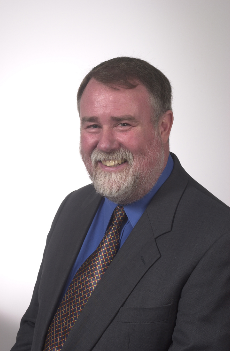
Chances are that David Cadman, a COPE mayoral candidate two terms ago who tried to bridge his party's divide, is the COPE councillor most likely to represent the party in a way his party colleagues won't dispute, so The Tyee talked to him last week in his city hall office.
On why Vancouver voters are facing a divided left.
We divided over two substantive issues. One was the RAV line. Another was the whole issue of slots. The other issue that was as strong as anything was personality. You had Tim Louis and Fred Bass, who had already been councillors and had finished very high in the polls. And along came Jim Green and Larry Campbell. What said it all to me was that Vancouver magazine cover with Larry the boxer and Jim leaning over him. You're not fighting, you've got a majority here.
[Mayor Larry Campbell's executive assistant] Geoff Meggs, having come from the provincial side, was basically operating on the leader is the commander and we do what the leader says. That's not the way civic politics works. It works with individuals who come to the table as their own person to make a decision based on the best information put before them.
On whether Tim Louis is also culpable for the split.
Of course. He sits there in his wheelchair, you don't get anything by him, and he's pugnacious. Can that dynamic can exist within a coalition? I think it did, it could and it should have. I talked with the people who formed Vision and they said they did that because they weren't sure they could get [COPE] nominations.
On whether Louis's advocacy of a city-owned brothel was good for the COPE campaign.
No. It was the wrong thing to say. I think he got absolutely baited by the Vancouver Sun editorial board and he rose to the bait. The reality is that you look in any newspaper and look in the back pages and all sorts of services are being offered in apartments and homes around this city. What we're dealing with is a particular form of street prostitution, which involves the most oppressed group of women. How do we solve that problem?
I don't think a red light district is necessarily the answer, but we need to engage with the community and say "How do we make sure these people are safe, and that their health and addictions are attended to. I think that's what Tim rose to: "I'd be prepared to have a brothel if there was health inspection, if there was drug treatment…" I think he honestly believes that, and he got baited to make a news story. He speaks entirely for himself. We put together an extensive policy-platform based on discussion with the [COPE] membership. That appears nowhere. It came entirely out of left field.
On who is answerable for the defeat of the wards in last fall's wards referendum.
I think we all are. We so wanted to have it in place for 2005 that we didn't make sure people understood what wards was about. And once it got defined [partly due to a city-funded educational brochure] as "Do you want one slice of pizza or 10 slices?" it was pretty obvious that we were in trouble.
Our staff at COPE said if you want to enter into this campaign, this is the budget you need. And because we had debt from the election, nobody was prepared to incur that kind of budget, and so financially we got rolled over. You don't go into a battle unless you're prepared to put in the resources needed to win. It would have been a much better idea [for council] to function as though wards existed, and put the question on the 2005 ballot.
On campaign finance reform and the status of related recommendations from Vancouver electoral reform commissioner Tom Berger, whose report to the city prompted the wards referendum.
I think we ought to have more disclosure. I think we ought to have to ask candidates when they're voting on an issue where they have received monies from an interested party, that they declare that…. People ought to know whether this bar owner, or this casino, or this developer, or this union, has contributed to your election and may expect their due when they come before you.
There's a whole variety of things that [Berger] suggested, but one of the crucial ones is that municipal parties and municipal individuals ought to have the same tax status as senior levels of government. Right now, you can't offer a tax deduction for a donation. We've taken all the recommendations and have forwarded them to the province: "We'd like you to make the [city] charter changes that will allow us to implement these." Not one has been done.
On the financial risk of the Richmond-Airport-Vancouver rapid transit line.
Eighty percent of people who ride the public transit system take buses. We are finally breaking even on the Expo line. The Millennium line is virtually empty. We're subsidizing that from the bus system now.
And with the RAV line, there are 43,000 people who travel on transit within that corridor right now … from Richmond, Delta, White Rock … and including the Vancouver bus lines from Granville all the way over to Fraser. The supposition is that all those people will transfer to RAV, and that from day one there will be 100,000 riders. We will be paying, from day one, as if there are 100,000 riders riding the RAV system. I think you are going to have a very hard time attracting an additional 57,000. I don't think people are going to travel from the airport. Give me a break. They're going to take a cab. We're going to have to subsidize this line from the public transit system, and we're going to have to subsidize the profit of the private company that's building it.
There are 60,000 riders in the Broadway corridor, from Commercial Drive west. We've put the RAV line ahead of the Broadway west line. I think we could have built both the RAV line and the Broadway line if we hadn't put so much money into a tunnel underground.
On whether there would have been a political cost if Vancouver city council had killed the RAV line.
If Larry had gotten on the phone, and said this isn't going to fly as a public-private partnership, and we need to figure out a way to keep the dollars here but do more with them, I don't think the federal Liberals anyway would have said "No way."
On whether the Hastings Park Racecourse would have migrated to the suburbs without the current council's decision to approve slots.
That's an unknown question. Let's remember, they're paying a very nominal rent. I don't think you could acquire a site in the suburbs and recreate what you have there. I think the capital costs would be too exorbitant. What frustrates me, is that we had a situation where we got the park back. The PNE was leaving, Playland was leaving. And now all of a sudden, the PNE is staying, Playland is staying and we're going to have slots. And the $40 million that we're getting as a result of slots, very little of that is going into the park. Only 16 percent of that area is green.
On whether we failed to understand the PNE's importance to the City of Vancouver when we almost sent it packing.
We weren't sending it packing. We were taking what was traditionally an agricultural fair and moving it to a place that was more agricultural. And we were taking Playland and moving it closer to Skytrain. I think that would have been a solution. Unfortunately, the people who live and work there had a vested interest in it staying where it is.
We've had an acceptance by the community that the PNE is going to stay, that Playland is going to stay and that the racetrack is going to stay. The quid pro quo is that is was going to be a park, within which there would be a two-week fair, and an amusement park and a racecourse. Where it seems to be drifting now is that the PNE continues to manage much of that space and doesn't have much of an interest in making a green amenity for the community.
On whether there too many orthodoxies associated with the process of imagining the PNE's future, including an obsession with making it the East Side's Stanley Park.
What you have is turf, with the PNE wanting to maintain some buildings to earn revenue from the film industry. Instead of really creating outside-the-box thinking, you have vested interests trying to protect their turf and they are not prepared to see that there are real solutions that could make this a better place. This is actually going to be our signature site at the 2010 Olympics. We can use the next four years to transform this site into a legacy and I think we're missing the game.
On the challenge of policing high crime rates in Vancouver.
Crime, as a whole, has dropped 11 percent over the last three years. What has remained static, and is relatively high, is crime of opportunity, break-ins to homes and cars, mostly to feed drug addiction. That's a problem. We have to figure out ways to deal with that….
We seem to have a catch and release program for crimes. You can be selling drugs, you can be fencing stuff and rarely are there consequences for that. I'm not saying fill up the jails, three strikes and you're out. What I am saying is that if somebody is addicted and is going to commit more crimes if released, [we ought to have] the option of saying: "You've got a choice here. There's a program that we can put you into if you're serious about getting off your addiction, or there are other consequences." You talk to the police, and it's just like a revolving door.
We're the metropolitan heart of this region. When there's a hockey game, or a concert, or a football game, it's people from the outlying areas who come here and get sauced up, and we have to deal with that. We have to look at where the costs are. With late-night openings for the bars, we said you're going have to pay the cost of policing, and they're not happy with that.
On the importance of services for the mentally ill in restoring the health of the Downtown Eastside.
They're absolutely critical. Ever since we deinstitutionalized mental health services, these people have gravitated to the Downtown Eastside. Many of them have gotten involved in the drug culture down there and they are now very severely disturbed. We've worked on a Downtown Eastside homeless strategy, we've worked on the four pillars drug strategy, we've worked on a housing strategy. That said, because it is a health service, the responsibility really lies with the provincial government. And successive provincial governments said they were going to put services in neighbourhoods and they never did it. Now, whether a person lives in Surrey or Burnaby or Coquitlam, they have gravitated to the Downtown Eastside because … there are food and shelter services that are easier to access on the Downtown Eastside than they are in their own communities.
On Sam Sullivan's best qualities.
I can talk to Sam and there are areas where we've had his support on certain issues. Sam was the guy who nobody ever listened to for nine years. The George Puils and the Lynne Kennedys and Jennifer Clarkes told him the way of the world…. He found himself as the only survivor from the former council and he assumed his role to be opposition. And rather than say "I'm going to oppose pretty well everything" I wish he'd been a little more nuanced and asked "How do I work with these guys to get some of the things I want?" Part of his problem is, if you look at Sam's record since he's been on council, there are very few initiatives that you can look at and say "This is what Sam did."
On COPE's own efforts to build bridges within council.
In a very real sense, there was the bully pulpit of "We're in control and we're going to do what we bloody well want." And I don't think that's healthy in any democracy.
On COPE's representation of the range of civic interests, as opposed to a segment of those interests.
This past council, I think, represented a pretty broad group of interests. I think if you went around to the various neighbourhoods, you'll find people who say "We may not get what we want, but our views will be duly considered." Which was very different from the NPA. Even the business people could tell there was arrogance. The business improvement associations, we went out and met with them. The NPA never met with them. We approached things in a different way, and tried to hear and respond to all communities.
On COPE's ability to build the kind of coalition represented by Vision Vancouver recruiting Chinese Benevolent Association President George Chow, who ran as an independent candidate in 2002.
I think in the Chinese community it's very hard to recruit candidates. But you've got to see who George Chow was in the last election. He was the guy who was saying forget the safe injection site, we're not going to have it. So he's not a candidate who, last time, I'd say let's recruit George Chow. He's a different candidate today, because he's accepted that it's a benefit, and is now behind the four pillars strategy.
If you don't have good inroads into the cultural communities - be that the Chinese community, the East Indian community, the Filipino community, the Vietnamese community - getting in there and finding out who the best representative of that community is can be very difficult. Traditionally, the Chinese community here has been very strongly NPA.
On whether Vancouver commercial property owners, whose taxes are going up by as much as eight percent in 2005, pay too much tax.
Ninety percent of the commercial property taxes are paid by small business. What we've asked for as a council is the ability to differentiate between a Royal Bank tower and a mom-and-pop grocery store. They're all in one class. The ability has to come from the provincial government. We've requested it from the provincial government. We're in danger now of small businesses being squeezed…. In the case of most commercial properties, the cost of the tax increases are being passed onto the tenant, while the increase in property value is being captured by the owner.
We only have one source of revenue for the city. Property tax. If you go down to the United States, they have all sorts of sources of revenue. They have a few cents of the sales tax. When we attract things to the city - the Grey Cup, or the Festival of Light or the World Junior Hockey Championships or the Olympics - none of the money that's spent in the city comes back to the city. It all goes to the senior levels of government. We need to have a reduction in the sales tax that can be given to local jurisdictions. Cities don't have the resources they need to maintain the services that people require.
On where COPE would cut services if that proved necessary.
I would hope that we wouldn't do that. It would be a very hard decision. You would look first at the soft services, and that would be the parks and recreation stuff. We're trying to keep the fees down, particularly for young people, so they can exercise and use those facilities. The previous government closed the library down for a week. We said no to that, and we've extended hours. I would prefer to find ways of growing the pie. All the polls have indicated that people are prepared to pay a little bit more, because they like the services.
On NPA charges that it is plundering the property endowment fund to underwrite uneconomic projects at the expense of the city's credit rating and long-term financial future.
Absolute poppycock. We've used the property endowment fund in a very strategic way. You can say, well, you didn't get the maximum return that you could have gotten out of Southeast False Creek. And I say, "No we didn't, because we put a 26-acre park in there. We put a community centre in there. We put a faith centre in there. We put things in there that were public amenities and public goods that we felt were important to the livability of that community. We could have said let's flog the land and [as staff proposed] build towers like we did on the north side and that would have provided the largest return.
I see [the fund] as a strategic land assembly asset, so that we can buy strategic pieces of land, assemble larger blocks of land, like False Creek, to do bigger projects than we would otherwise do. Acquiring for $5.5 million a property like Woodward's and turning it into a $280 million investment. Acquiring property that you can put social housing or health services on. If you don't have a property endowment fund, you can't do that.
We've basically recouped our investment in Woodward's. We've got SFU Downtown, we've got 30,000 square feet of public amenity space, we've got a plaza larger than the one in front of the art gallery. Those things have value that obviously if we covered it to the max we could have gotten more money.
On the best building constructed in Vancouver in the last decade.
Probably the public library. I like the feel of the plaza, I like the feel of the concourse. Many of our buildings tend to seek height but don't seek very much in the way of character. I wish the buildings that had been built along the north shore of False Creek, for example, that we'd really pushed the energy conservation thing there. But we didn't. I think we've lost opportunities because we've built things that can be turned over quickly and sold.
On whether our buildings are sufficiently beautiful and architecturally important.
I don't think so. But we're not in an age of building beautiful buildings. That was the age of the robber barons. I think some of the things that Arthur Erickson has done … are beautiful buildings. But I don't think people now are looking to create a legacy for future generations. What other cities in the last 10 years in North America have built architecturally aesthetic buildings? They have in Europe, yes, but that comes from a cultural understanding that these buildings may be around for a long, long time. You're looking at how much of the public amenity do you want to go into the building and how much do you want to go into community benefit, and we've tended to seek the community benefit.
Charles Campbell is a contributing editor to The Tyee.
Also today: The Tyee interviews Vision Vancouver mayoral candidate Jim Green and the NPA's Sam Sullivan. ![[Tyee]](/design-article.thetyee.ca/ui/img/yellowblob.png)




Tyee Commenting Guidelines
Comments that violate guidelines risk being deleted, and violations may result in a temporary or permanent user ban. Maintain the spirit of good conversation to stay in the discussion.
*Please note The Tyee is not a forum for spreading misinformation about COVID-19, denying its existence or minimizing its risk to public health.
Do:
Do not: