- Ms Kaye is a Tyee Builder. You can be, too.
- Mary Carlisle is a Tyee Builder. You can be, too.
- Prem Gill is a Tyee Builder. You can be, too.
- Nancy Flight is a Tyee Builder. You can be, too.
- Justin Everett is a Tyee Builder. You can be, too.
- John Westover is a Tyee Builder. You can be, too.
- Nora Etches is a Tyee Builder. You can be, too.
- Edward Henderson is a Tyee Builder. You can be, too.
- Bharadwaj Chandramouli is a Tyee Builder. You can be, too.
- Dean Chatterson is a Tyee Builder. You can be, too.
- Marius Scurtescu is a Tyee Builder. You can be, too.
- Robert Parkes is a Tyee Builder. You can be, too.
- James Murton is a Tyee Builder. You can be, too.
- Susan Doyle is a Tyee Builder. You can be, too.
- Vincent Strgar is a Tyee Builder. You can be, too.
- Helen Spiegelman is a Tyee Builder. You can be, too.
- Subir Guin is a Tyee Builder. You can be, too.
- Kimball Finigan is a Tyee Builder. You can be, too.
- Joanne Manley is a Tyee Builder. You can be, too.
- David Leach is a Tyee Builder. You can be, too.
Who Decides on Mines that Pollute?
One lake-killing plan, opposed by First Nations, highlights a growing controversy.
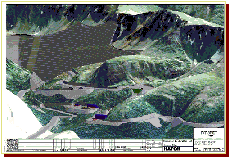
Rendering from Kemess North pre-feasibility study
A controversial plan to turn a northern BC fish bearing lake into a dumpsite for mine waste has a coalition of four First Nations calling foul on government’s responsibility to consult and accommodate.
This unprecedented plan to kill a lake by filling it with acid rock has many others in the north questioning the decision-making process in the mining industry.
The project, now being scrutinized by a federal-provincial joint review panel, is being pushed forward as the Liberal government touts 300 regulations cut from government services such as mining, forestry and consumer protection.
Kemess North is the second phase of Northgate Exploration’s remote mine holdings 250 kilometres northeast of Smithers, BC. The new project is set to produce 120,000 tonnes of ore per day, up from 55,000 at the existing Kemess South.
First Nations, which include the Gitxsan, Bear Lake, Kwadacha, Tsay Keh Dene and the Takla Lake First Nation, say the project shouldn’t even have reached the review stage.
Under current federal fisheries legislation, it is illegal to wipe-out a fish-bearing lake, which is exactly what Northgate Explorations is proposing to do.
“How many lakes are you going to destroy?” asks Grand Chief Edward John of the First Nations Summit, who support the northern chiefs in their concern.
‘A toxic business’
If the plan goes through, the lake which streams into the Finlay River, would never be recovered. And if something goes awry with the tailings, this could threaten an entire watershed used extensively for hunting, fishing and trapping by the area First Nations. Is this considered sustainable, John asks.
“Mining development is at best a toxic business.”
He says First Nations in the area are not opposed to all development, but John reminds us of the Supreme Court of Canada ruling in the Haida case last November which stated the government can not continue to run roughshod over aboriginal rights.
“Deregulation butts up against the government’s obligation to consult and accommodate aboriginal rights,” he says.
The controversy over the Kemess proposal highlights a broader controversy building in BC’s mining regions over how much say local residents should be given over mining projects in their own backyards.
Enviro assessments now ‘discretionary’
The mining industry has seen major growth over the last six years, says the president of the Mining Association of BC, Michael McPhie.
There are now 14 potential mine projects in various stages of review and development, he says, which represent $2.4 billion in capital investment over several years, 2,800 new direct operational jobs and many more spin-off jobs in construction, services and supplies. This compares to the one lone mine under review in 2001.
Investment in mineral exploration in BC topped $130 million in 2004, four times the total for 2001. More than 47,000 mineral claim units were staked and recorded in BC in 2004, the most in 13 years, says the BC government’s deregulation website. This growth is largely due to high commodity prices that many say is thanks to huge demand from China.
Keep the lights on, said a Mining Association of BC ad during the election, “Find out where your candidate stands on mining.” But according to some, it is the public who are being left in the dark.
Mining watchdog Glenda Ferris says it is more and more difficult for the public to access information like mine plans and reports on the potential impacts of proposed mines. This is a direct result of Liberal laws and policies introduced since they were first elected in 2001, says Ferris, who helped found the Environmental Mining Council of BC.
Ferris, who lives in the Bulkley Valley Stikine riding where large mining projects such as NovaGold’s Galore Creek, BC Metal’s Red Chris Project, and Redfern’s Tulsequah Chief mine are at different stages of development, is particularly concerned about the changes to environmental assessment process.
According to a West Coast Environmental Law report, under the new act or Bill 38, environmental assessments (EA) are now discretionary.
“If the executive director of the EA office considers that a project will not have significant adverse environmental, economic, social, heritage or health effects, the project can proceed without an EA. The new Act does not identify a process by which this internal determination will be made, and there are no safeguards to ensure that decisions will not be politically driven.”
Prices zooming
Understanding the potential impacts of mining requires a level of technical knowledge beyond most residents who might be affected, noted Ferris. She points to a recent headline in The Interior News in Smithers: “No acid mine drainage.” The headline reflected assurances made at a town meeting by the CEO of Blue Pearl Ltd., which wants to start a molybdenum mine in the area.
Ferris claims CEO MacDonald, didn’t tell the whole story to the mostly supportive crowd at a community meeting held in April.
According to Ferris, molybdenum mines leech metals not acid. In fact, she says, a closed moly mine in Peachland, called the Brenda Mine, is still leeching toxins into water, causing copper deficiencies in cattle who eat hay watered with the contaminated liquid.
Jim Borland, investor relations director with Blue Pearl, says the mine is still in its conceptual stage, and the company doesn’t have enough information for a mine plan yet.
Molybdenum, an alloy used to strengthen iron and steel, is now listed at US $35, up from a low of $5 a few years ago. These favourable prices, the quality of the deposit and ease of access to the rail line a kilometer or two away make this property attractive.
Getting at the deposit, which is deep within Hudson Bay Mountain, the behemoth backdrop which gives Smithers’ alpine-village theme a sense of legitimacy, means tunneling, and this, Ferris says, means disturbing rock – always a potential source of acid.
Borland says environmental tests are being done as we speak, which will lead to a feasibility study to be completed by mid 2006 and mine development to begin early 2007, and production a few months later.
Ferris wonders whether the public will be able to see the results of the thousands of tests that must be done.
She remembers when the Telkwa Coal project was under review in 1996, the website would be updated routinely with reports like geochemical analysis and geotechnical reports.
Under the new EA act, public access to these documents is also discretionary.
Mining firms want faster decisions
Ferris says she is even more disturbed by the Kemess North lake-killing proposal that has roused First Nations opposition.
Ferris says something like this hasn’t come up in the mining industry since the 1950s and the possibility of Northgate being allowed to dam a natural lake to use as a tailings pond sets a dangerous precedent.
“There hasn’t been near enough public dialogue about the implications,” she says of using an existing aquatic ecosystem instead of building a tailings pond.
The mining industry has a different perspective on the environmental assessment, but they are dissatisfied too. McPhie says the environmental assessment process doesn’t necessarily lead to better decision-making about mining operations, just longer timelines.
With the Kemess North project, he says industry is frustrated because a public review panel was agreed to last August, but it took until May to get the process underway. This, he says, was a hold-up on the federal government’s end.
McPhie also thinks the environmental assessment process is too focused on the environment and not enough on the economic and social sustainability of projects. He thinks there needs to be a better balance.
“There is always and upside and a downside when people see so much activity going on. It was very quiet for a number of years… with new projects on the horizon, a big thing for us, as an association and an industry, is to make sure we are interfacing with the groups we are working with,” says McPhie.
As for exploration, internet claim staking introduced in January means at the click of a mouse companies have the right to set up camps and drill for samples in some of the most pristine regions of northern BC.
Loss of government staff in places like Smithers means no one is monitoring where camps are located, or whether exploration teams leave drill cores and other detritus around.
According to a 2002 Mining Watch Canada report called “Below the Surface,” over the past ten years there has been a 60 to 70 per cent reduction in environmental protection agencies. While cuts to the Ministry of the Environment started with the NDP, in 2001 the Liberals dealt a serious blow by eliminating at least 1,000 positions in the department which they renamed the ministry of Water, Land and Air Protection.
Natives call for mining moratorium
Liberal policy changes have also left First Nations with no funding to become involved in the process.
Already overwhelmed with stacks of resource project documents to review, it is not surprising that some First Nations in the north have called for a moratorium on mining activities in their territory.
The Tzalten Nation north of Fort St. James issued a moratorium on new mining activities in their territory after Teck Cominco, the federal and provincial governments failed to act on a tailings dam break in November 2004, which saw anywhere from 6,000 to 8,000 cubic metres of rock, dirt and waste water spill into Pinchi Lake.
This is only the latest in a long saga of trouble the Tzalten have faced since the now-closed mercury mine was open in the 1940s and 1970s. Fish-eaters, now up to 99 per cent of Tl’azt’en people have suffered health problems from mercury poisoning.
In Tahltan territory, elders have taken over the band office, protesting a recent agreement with the provincial government, which they fear will enable Gordon Campbell’s Liberals to fast-track three massive mining projects, a gas field, a hydroelectric dam and possibly a controversial road to the Alaskan coast.
They issued a moratorium on all resource development in their territory in February.
The Taku River Tlingit have been trying to prevent the re-opening of the Tulsequah Chief copper-gold-zinc mine on their traditional territory since 1987. The original mine operated by Cominco Ltd, is now owned by Redfern Resources.
The big controversy here is the proposed 160 kilometre road through the undisturbed watershed. Not only will this road cause extensive damage to fish and wildlife habitat, but it will open the way for even more mining projects already on the books.
Although Redfern had been approved to go ahead with the mine after a lengthy environmental review process which was later appealed and then upheld in the Supreme Court of Canada, is now citing financial difficulties due to high construction and operating costs. The company recently decided to put the mine on hold for another couple of years while they do more exploration in hopes of increasing the mineral property.
Open roads?
One of Gordon Campbell’s election promises was a $2.5 million pledge to complete an environmental assessment of a different northern road, the proposed Stewart-Omineca resource road, a project that would see a connector between Mackenzie, north of Prince George, and the open port at Stewart.
This would save Northgate millions of dollars each year in transportation costs from Kemess North and South says Ferris. Presently they truck and barge ore to Prince George and ship by rail to ports.
“This road gets them straight to tidewater,” she says.
Although they are the only company operating in the area, Northgate insists the road is not for them and it is the government who intends to pay for the project.
The road is a contentious issue for some Gitxsan hereditary chiefs, who don’t want to see their territory opened further to resource extraction.
Roads are like death by a thousand cuts says Ferris, citing impacts on wildlife and fish bearing streams. “You make that profound land use decision to open a mine and you make two or three errors along the way and everybody is paying for a long time afterwards,” Ferris says.
Ferris lives down stream from the Equity Silver mine which shut down in 1994. A security bond pays for the ongoing maintenance of the contaminate site, but the risks will not go away for 500 to 1000 years, she says.
Big BC Liberal donors
Mining companies, led by giant Teck Cominco, have given more than $750,000 to the Grits. Northgate has donated over $30,000 since the Liberals were elected. NovaGold and Redfern have also chipped in.
Even the NDP support mining. Gary Coons, the North Coast MLA says his party supports the “one window” permit and review process, a sort of one-stop shopping for mine developers, which the previous NDP government set in place.
But the amount of development being proposed in the north has turned up the strangest bedfellows. In the Upper Kispiox Valley, an unlikely group has come together to protest resource development in the north, this time coalbed methane drilling in the headwaters of three great rivers, the Skeena, the Stikine and the Nass.
The Skeena Watershed Conservation Coalition is comprised of what fourth generation resident Shannon McPhail calls farmers, hippies, big-game outfitters, environmentalists, miners and fishermen.
“It is the unlikelihood of this union that has made people realize there is something to be concerned about,” she says.
McPhail believes few mining jobs go to locals. And although public consultation was listed as a number one priority in the tenure acquisition, three wells were drilled in the wilderness area before anyone knew gas rights had been sold.
Borland, of Blue Pearl, underlines the mining industry’s interest in engaging the public, but didn’t give any dates for the next consultation in Smithers.
“We want to know what the issues are so we can address them. Without local support, no commercial venture is going to go very far,” he says.
Grand Chief Edward John agrees with this sentiment and suggests both the federal and provincial government pay heed to their duty to consult with First Nations when aboriginal rights are in question.
Demanding more consultation
As it stands, the Kemess North joint review process allows First Nations and a limited amount of other participants to apply for travel money to attend the meetings. John and the other chiefs say they need to do their own independent studies to determine the impacts on the territory and they need to be consulted in a government to government manner on this and other resource development concerns.
“Do you deal with it on a case by case basis in the courts? Are you going to risk ongoing confrontation and blockades? How do you conduct business when you have two conflicting authorities?” John asks.
“We need to re-examine how government dialogues and listens to us,” says Ferris, “and not just by talking to the mayors of these towns. People live in rural areas too. Whatever real catastrophe happens on their watch, we will all be living with it forever.”
Heather Ramsay, based in Queen Charlotte City, is a contributing editor to The Tyee. ![]()


20
Login or register to post comments
Peter Dimitrov
6 years ago
Comments on "Who Decides on Mines that Pollute?"
yup...BC is open to business...14 more mines due to be opened...dam the torpedoes, lakes, fish, grizzley bears, wild salmon, gerrymander park boundaries, squeeze even more profits out for our friendly Mining industry, cut a few side deals with the First Nations communities - oh, the politically correct wording is "aboriginal business associations/opportunities"...and Ministerial discretion on impact assessments - isn't that the 'high culture of de-regulation' ...and the NDP's North Coast MLA agrees with the 'one window' approach- really, eh?
...here is one question, re: the proposed moly mine up near Smithers...just what is the concentration of uranium ...have the figures on that been released...because my understanding is that where there is moly there is often uranium...so we need complete disclosure here folks...otherwise ...the lid may be blowing off uranium exploration in this province pretty soon. ...given the rise in price increases for uranium and Bush's plan to build more nuclear reactors!
jesterjogger
6 years ago
So-called "environmental assessments" under the liberals are a joke.
Look at who is charge and then as deep throat famously said "follow the money".
stan hagen, the pavin' pagan, dick "nixon" neufeld, george "bag-man" abbott, and last and certainly least the disgraceful bill "landfill" barisoff. If ever there was a rogue’s gallery from an environmental perspective these 4 are it. I hope that their numerous crimes will be well documented so that future generations know who to blame for the tragic mess they are leaving behind.
If you think I sound a bit to partisan listen to the following excerpts from a speech given by george "bag-man" abbott in April 2004 at the sheraton wall center (where else!): "We have been steadily removing impediments to major projects...One of the important things that we have accomplished in BC is the introduction of a new Environmental Assessment Act in December of 2002. Under the new process, most proponents draft their own terms of reference for their Environmental Assessment applications. Terms of reference set out the information requirements for the review. This removes the Environmental Assessment office as a potential bottleneck and puts the proponent in the drivers seat..."!!- yeah you wouldn’t actually want to slow ‘em down by say performing an environmental assessment or something!
Wait there’s more: "The improvements in the new legislation and process have allowed more projects to be reviewed with fewer staff and budget resources. Environmental Assessment Office average review costs have been reduced by almost 60 percent since the core review of the environmental assessment process we undertook in 2001 after forming the government."
Yeah right! after all how much does it cost to buy a rubber stamp and fire a bunch of biologists!!! Sleazy shmucks!
seriousjim
6 years ago
Word coming out of the Vancouver Conference of International Forestry Companies is that BC is the most profitable place in the world for logging despite the high Canadian dollar and the US trade embargo. Go figure.
These companies enjoying record profits are not BC based, nor even Canadian, so what gives? Oh, political donations give.
It's funny that the media is all up in arms about the NDP ties to the Unions but not a drop of ink is spilled on the political donations given to the BC Liberals. Funny how the most generous donors get the sweet regulatory rides.
If these are the good times, man is it going to suck when the forests are gone, the water is polluted and there are no jobs for anyone. But who cares about that, these are the good times right? Whee.
Settle the land claims first, injustice has a way of leeching into every aspect of life just like a heavy metal.
anarcho
6 years ago
If the First Nations people who live in the vicinity of the lake don't want the dump then there should be no dump. Once again a pure example of why communities and regions ought to be the ones with the final say on development. Why hasn't the NDP raised this as an issue? What happened to the "Democratic" in the New Democratic Party?
Colin
6 years ago
Couple of points
The use of existing lakes to dump tailings is not unprecedented. ARD rock needs to be covered by water to prevent the creation of the acid. The problem with building a tailings dam is that the dam has a specific lifespan (average 50-100 years) and it falls far short of the lifespan of ARD rock. So if they build a dam then who gets to maintain it? The taxpayer. Using a existing lake removes this issue, although it does create a host of others. In the case of Duncan lake, they propose to build a dam to increase the depth of the lake, which will allow for more storage.
As far as the Omineca resource road goes, they are basically patching together existing logging mainlines with the use of short interconnecter roads and upgrading to support the traffic. It will certainly be good for Stewart and the Northern communities who are hurting for jobs. It will also likely increase the need for better port facilities in Stewart.
Consider also that the computer you are using, the servers and infrastructure for the Internet all use components that are mined. Although some projects should be blocked, if you stop all of them, then you will prevent people from feeding their families and earning an honest living. It is always a tough tradeoff. Would you give up your job or job prospects when there is unlikely an alternative?
Birch
6 years ago
As a resident of the region at issue, I have a few thoughts about it.
1. Most of the benefits of the mines (profits, dividends, etc.) go to people who will not feel in any substantial way many of the possible costs. Cashing your dividend cheques in West Van or LA is not much like suffering mercury poisoning in one's home somewhere in the neighbourhood of a tailings pond. Thus, the people of the region should have a substantial veto/vote on whether or not such projects go ahead.
2. There is no doubt that we need minerals for our industrial infrastructure. However, we should be prepared to pay the true costs of getting those minerals. If paying for sufficient environmental protections to prevent the creation of toxic rivers, poisoned people, decimated wildlife, etc. makes it too expensive to open the mine, then the mine should not be opened. We can't afford to participate in a race to the bottom in environmental standards just because Chile or China is willing to do so. It's a false economy.
3. The Liberal government's deceitfully titled Minstry of Water, Land and Air Protection shows no sign of living up to its name. As the author above has aptly shown, it has been so hobbled by cutbacks that it cannot do any kind of realistic job in providing the protections the population at large would likely prefer to have for the crown land it owns.
All the above being said, I expect that the government will continue full speed ahead and leave the cleanups to a future government (that can't manage money) and the poisonings to an already overburdened health care system.
allan
6 years ago
Looking for answers?
I'd talk to those elders who took over the administration building in the Tahltan nation and then declared a moritorium on mine development.
Someone has to start the process.
If it appears as though a mine or other resource sector industry is going to ruin the lands and water you feed your family from, and no one in authority will protect you from it, I would think protecting your family would be your first priority however that plays out.
Unfortunately, this provincial government will not honour agreements, has shown anything but concern or fairness to First Nations and is so obviously beholden to these corporate contributors to their cause, that unless you stand up early and firmly you're toast by the time the government dances through the so-called review processes arm in arm with the developers.
qwertyuiop
6 years ago
Dear Birch:
Mercury poisonning for tailing ponds? Where did you come up with that?
There are many ways to legitimately criticize the Kemess project. Talking about mercury poisoning from tailing ponds is nonsense. Mercury is not used. To use such soundbites causes the loss of credibility for environmentalists.
Further to Colin’s comments above acid rock only generates acid if it is exposed to air and allow to oxidize. In fact it is more environmentally sound to put this rock under water. It was this no doubt creates other real environmental problems.
Let's deal with real environmental issues not rhetoric
Peter Dimitrov
6 years ago
Hey Jesterjogger..your quotes from the "de-regulation' man are great!. So the Fiberals have put corporations in the drivers seat when it comes to establishing the terms of reference for impact assessments & carrying them out...even a blind person can see the conflict there. Some time ago I worked for a First Nations community and together we designed the terms of reference and carried out our own impact assessment...and managed to get the mining company & government to each fork over 50%/50% of the money required to do that work...with no strings attached. The report & land use mapping atlas was the basis for the community empowering itself in a multitude of ways, including treaty negotiation matters. Suffice it to say, I'm all for community controlled & designed impact assessments and NOT for proponent designed & driven impact assessements. If they arecarried out in a competent, transparent way...then the community can decide whether they wish to support, modify, or oppose the proponent's plans, also what conditions do they wish attached if the project proceeds, etc. etc. ...otherwise it is charade!
Secondly, Birch ..I fully agree with your comment that : . Most of the benefits of the mines (profits, dividends, etc.) go to people who will not feel in any substantial way many of the possible costs. Thus, the people of the region should have a substantial veto/vote on whether or not such projects go ahead. ..
...indeed who profits, who pays, what risks get shifted to whom, what the environmental, social, economic, cultural impacts are, positive & negative...all needs to be looked into very, very carefully...and with no Minister of the Environment...and 'de-regulation'... the worst possible outcomes are not only possible...but probable. The Fiberals have put the wolves in charge...and their primary focus is to extract profit from workers and environment alike. ....and there are 14 new mines expected to be expedited by this de-regulation process. ..what a mess!
Budd Campbell
6 years ago
This discussion seems to have centred on the BC Govt's environmental policies. People shouldn't forget that the federal Fisheries and Oceans Dept can veto any project that is harmful to fisheries. The article points out that a lake and its fishery will be affected, so what is DFO doing?
BC voters, both right and left, tend to be a bit narrow minded. They forget that Ottawa runs a lot of things.
Of course, this could change if there is ever a constitutional amendment or even just a major "management" accord that, rather like some immigration agreements, would allow the BC Govt to take control over fisheries issues.
seriousjim
6 years ago
The DFO is guilty of managing fish stocks into practical extinction on the east coast and looks like they are doing a pretty good job of it on the west with salmon.
Finallym the feds are snared in a minority situation that seems to be the best outcome for humans on the ground as each step is carefully chosen and debated.
The BC Libs are used to having 77 of 79 seats and the ability to run over anybody that disagrees with their policies. I believe forced cooperation in all levels of government is a great thing. All interests should be taken into account, certainly local communities and First Nations, and not just large donations from big industry and their precious profit.
Profit once was a dirty word.
freebear
6 years ago
DFO often permits such activity provided the proponent remediates some damaged fish habitat somewhere else.
This of course avoids the examination of the cumulative impact of all development.
kenmo
6 years ago
The "mining" we should be doing is of our landfills and much of the materials destined for them. R&D efforts should be going into recycling as much as possible. Most of the exotic minerals that go into our high-tech gadgets would be recoverable, had we the will to work toward that end.
As for the livelyhood issue that is always trotted out to justify bad practices, I think we need a bit of a paradigm shift here... let's take care of those caught in the livelyhood bind and help them get started with new ventures, retraining, etc. and buy ourselves some economic diversification in this province while we're at it. And let's not allow development that negatively impacts our environment... in the long run it's not worth it.
Do you want to face your children down the road when they ask, "Why did you let this happen?"
allan
6 years ago
kenmo, your closing comment is forceful if you stay with it for a time.
I wonder who will stand up and do the right thing by apologising to the future generations for the nightmare we are creating.
No one can say, it wasn't me' when asked your question, if they haven't tried to stop our fall into environmental Hades.
It will get difficult when they ask "Why not."
"Because I was saving for my early retirment," probaly just won't cut it.
Colin
6 years ago
I fully agree that mining our dumps is a smart thing to do, even if we can’t viable remove the materials now, at least the separation of materials at this point will make it more viable in the future.
However the issues of jobs and infrastructure in the North still does not go away. The mining jobs all pay in the $40,000 plus range, this is hard to ignore. It is easy to retrain someone, but then what? How many tourist businesses can we support in one area? How many of the jobs pay more than $40,000?
Also the mining does promote increased infrastructure such as improved roads, electrical services and communications. Those are real benefits to the people that live up North.
However, one of the problems with mining and forestry is the boom/bust cycles, it’s hard on communities as they rarely plan for the future closure of the mine and lost revenues. If you have 5 potential mine sites in one area, you are better off opening one mine at a time and then slowly opening the next and closing the old one, therefore maintaining a steady revenue stream for the province, local community and to help with the clean up of the old mine.
josefmyles
6 years ago
It is curious to see how many comment on the nature of mining (and Kemess North) in particular with no real understanding of the mine design or parameters beyond what the clearly biased article states.
For example, an earlier post states that tailings dams are designed for a laughably short time, 50-100 years. According to professional practice, tailings dam (and similar structures) are designed to specifications conforming to that of 1000 year events. Furthermore, all tailings impoundments require bonds in the tens (if not hundreds) of millions of dollars to ensure that long term monitoring and maintenance is performed.
I strongly suggest that those of you who have concerns about this (or any other) proposal take the time to e-mail the companies and engineers involved before extolling made up assumptions and generalizations.
Colin
6 years ago
Well my brother actually does the Geo-technical reviews of tailing dams and I can ensure you that no dam in BC is built with a 1,000 year lifespan. There are only a few dams that are that old and were built by Roman’s in Europe, they are considerable smaller and built into rock.
In BC many of the dams suffer from leakage and require ongoing maintenance to keep them serviceable. BC Hydro is currently trying to deactivate a number of dams to reduce their liability of a major dam failure. The water reservoir in Faro also had to be deactivated because of the risk of failure from “pipingâ€
There are tailing dams in BC that are currently creeping by 2-3†a year because of the poor construction and placement.
Normally when reports talk about “events†they are talking about flood events such as 1 in 100 years water level or Q100. Engineers try to build their structures to withstand the possibility of a major event through the expected life of the dam. The level they build to is determined by the local conditions and standards being used.
Here is the BC gov dam safety web page
http://www.lwbc.bc.ca/03water/dams/index.html
pmacphail
6 years ago
Contrary to Heather Ramsay’s article of June 2, 2005, “Who Decides on Mines that Pollute?â€, the Kemess Mine, owned by Northgate Minerals Corporation, is governed by some of the most stringent regulations in Canada. We have been recognized for our work in the environment and are proud of our record. Sound environmental management is important to us. Kemess North, the proposed expansion of the existing mine, will be held to these same high environmental standards.
In particular, the article predicts the demise of a northern lake if the expansion is approved. In fact, containing excess rock under water is a proven method of preventing acid production. We have examined a number of options for the expansion and, after carefully reviewing the scientific evidence around underwater storage, believe this to be the best option that will keep environmental impacts to a minimum.
Our relationship with the local community is also a priority. We have been very open with First Nations throughout the review process. We’ve shared the details of the proposal and provided funding so the First Nations could do their own evaluation of the project. We take this responsibility seriously, and are working hard to earn their support.
It is now up to the Joint Review Panel to decide on the merits of Kemess North.
Peter MacPhail
Vice President, Operations
Northgate Minerals Corporation
allan
6 years ago
Ok, so let me get this straight. By dumping the mine tailings into the lake the mine will not be killing off the lake or the fish it sustains because the rock won't spew out acid.
What about the water and oxygen that will no longer be where the rock will be and how do you get the fish to expel all that wonderful new rock through their gills without choking on it?
jamez
6 years ago
http://www.sierralegal.org/m_archive/SLDF_This_Land_Report_web_version.pdf
THis came out today, if anyone is interested. Not regarding this project in particular, but none the less goes over the massive shortcomings of mining in B.C.