News

Angus Reid Says Polling Shaky

Voter turnout, other factors could create ‘bit of a surprise.’

By Tom Barrett, 3 May 2005, TheTyee.ca

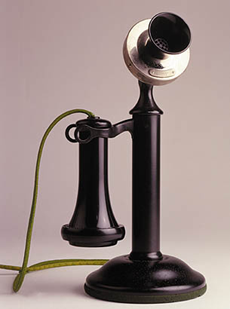
telephone2

Phone surveys antiquated?

Pity the pollsters - even when they get it right they can get it wrong.

So far the provincial election polls have been remarkably consistent, showing the Liberals out in front of the NDP by seven or eight percentage points.

But veteran pollster Angus Reid cautions that results on May 17 may not match the polls.

"We'll probably get a bit of a surprise on election day," Reid said. "I'm not sure that I'd blame the polls. I think the big fact is who's actually going to turn out to vote."

Turnout rates for elections have generally been dropping in recent years and B.C. is no exception; the turnout rate here has dropped in every election since 1983. The problem is that the people who bother to vote may be different as a group from the general population.

A poll may be correct when it indicates that, say, 46 per cent of eligible voters in the province prefer the Liberals and 39 per cent like the NDP. But at least 30 per cent of those eligible voters probably won't bother to vote. And if there's a disproportionate number of one party's supporters in that stay-at-home group, the result is going to be a surprise.

"Your poll could be exactly right in terms of what is the perception overall in the province, but when you actually look at the people who turn out to vote, if that ends up favouring one party or the other then you end up off base," Reid said.

Most refuse surveys

The polling business is also grappling with a second trend: eligible voters don't like to talk to pollsters. This is a trend that has many in the polling industry worried.

The Professional Marketing Research Society, which represents Canadian pollsters and market researchers, reports that about four out of every five respondents contacted by Canadian pollsters refuse to participate. Because of answering machines and call display technology, half the calls that pollsters make are never answered.

This means that it takes 10 phone calls to reach one respondent. For a typical B.C. election poll, a pollster must dial 6,000 to 10,000 numbers to get a representative sample.

In addition to increasing pollsters' telephone bills, this also raises questions about the people who are being interviewed. Are the people who agree to talk to pollsters different from other voters? Are people who are fed up with the government, for example, more likely to take a pollster's call?

'Dirty secret' of polling

In a story in The Tyee last year, Reid called this "the big dirty secret" of the polling industry. After that story ran, people in the industry called him a "traitor," he said this week.

Reid remains adamant that increasing refusal rates are going to bite pollsters sooner or later: "This could be a good test, this campaign. Maybe they'll get this one right, I don't know."

But he adds: "The tide is definitely going out, not in. And at some point you're going to be stuck in the sand, whether it's this election or the next election. The days of telephone polling as we know them, the glory days of the '80s and '90s, those days are over."

Reid made his reputation during those "glory days," when he became one of Canada's best-known pollsters. He sold his company to the international market research giant Ipsos a few years ago and currently heads Angus Reid Consultants, which is not involved in polling in this election.

Pay as you poll?

Reid said that Canadian pollsters will eventually have to switch from telephone polling to online polling, as practiced by the U.K. company YouGov. YouGov sends online questionnaires to people selected from a master list of more than 50,000 British voters who have agreed to participate. For each poll, a sample is constructed from the master list that mimics the population at large in terms of age, gender, class and type of newspaper read.

Controversially, YouGov also pays respondents, as much as five pounds per questionnaire.

"Some of the purists say that's awful, but I say, 'What the hell else are you going to do?'" Reid said. "You've got 80 per cent of the population that wants you to bugger off. You're charging your client for this stuff, why shouldn't these people be paid a little bit for sharing their views?"

Veteran political reporter Tom Barrett is a contributing editor to The Tyee.  [Tyee]

19  Comments:

Login or register to post comments

  • verso

    7 years ago

    Comments on "Angus Reid Says Polling Shaky"

    Someone please refresh my memory: who was leading the polls in the 96 election? Was the Clark win viewed as an upset, or was it pretty clear by voting day that the NDP would win?

  • allan

    7 years ago

    verso, I seem to remember Clark's support started to become noted only in the closing days of the race.

    I find it difficult to ball park that race because we have been treated to a liteny of bullshit about the outcome ever since with the right insisting Clark stole the government with fewer votes than Campbell's Liberals.

    Funny, same thing happened in 1979 when the Socreds managed to cling to power with fewer votes than the NDP, but that race appears to have been forgotten by our BC media.

  • Budd Campbell

    7 years ago

    In the United States it is standard procedure for any credible poll to restrict it's reported party standings to "likely voters".

    While a 1,000 people may be interviewed, out of several thousand called, only some 500 or 600 or so who can satisfy a battery of time tested questions designed to identify those who will actually vote are reported in the main reults on voter intentions. Those with a weak probability of voting may be asked some questions to assess the impact that aggressive turn out the vote exercises may have if they can convince non-voters to become actual voters instead of merely being elegible. But for the most part the reported data will stick to the group of likely voters.

    In Canada, pollsters have assumed they don't need to do this, that turnout is generally higher than in the US, and if it's falling, it's falling equi-proportionally for all parties.

  • verso

    7 years ago

    Thanks, allan...

  • Tom Hawthorn

    7 years ago

    Bill Bennett's Social Credit party got 677,607 votes in 1979 (48.23 per cent), while Dave Barrett's NDP got 646,188 (45.99). Socreds won 31 seats to the NDP's 26.
    You can check it out at the Elections BC Web site at: elections.bc.ca/elections/electoral_history/32ge1979-1.html

    In 1996, Glen Clark's NDP took 624,395 votes (39.45 per cent), while Gordon Campbell's Liberals got 661,929 (41.82 per cent). The NDP took 39 seats to the Liberals' 33. Reform elected two members, while Gord Wilson of the Progressive Democratic Alliance took Powell Ribver-Sunshine Coast. Say, whatever happened to that guy?

  • Ranbir

    7 years ago

    Taking a political survey involves understanding human brain-patterns and correlating them to human voting-patterns. In most scientific studies/ surveys the researcher has a thorough understanding of the topic, before the researcher conducts research and is able to publish it in a peer-reviewed journal.

    If the individuals conducting political surveys are so adept at understanding human brain-patterns, why have I not seen their work published in reputable peer-reviewed neurology journals? If the individuals are so skilled in gathering statistics, why don't they also do scientific studies to prove themselves competent, such as long-term tracking of cancer-survivors, sex-offenders, or anything.

    Sadly the truth is that "political-pollsters" have little or no understanding of human-brains, primate-brains, or any species for that matter. Neither "political-pollsters" nor does any of their bogus-research merit any attention.

    Elected-representatives(politicians) and journalists are the only ones who pay attention to "political-pollsters" and their faux-scientific surveys. What this means is that the elected-representatives(politicians), who establish public policy and the journalists, who criticize public policy, rely on the findings of "political-pollsters", when nobody else does. Both elected-representatives(politicians) and journalists would be better, if they depended more on reputable peer-reviewed scientific journals when either establishing or criticizing public policy.

  • Tom Barrett

    7 years ago

    Allan may be thinking of the 1979 federal election, when Joe Clark formed the government even though he had fewer votes than Trudeau.

    Or maybe he's thinking of the 1952 B.C. election, when the CCF took 30.78 per cent on the first count, compared to 27.20 per cent for the Socreds. On the final count (they used the infamous Alternative Ballot system that year), the CCF had 34.30 per cent of the vote compared to 30.18 for the Socreds.

    The Socreds, however, formed the government with 19 seats to the CCF's 18.

    Details at:

    http://www.elections.bc.ca/elections/electoral_history/23ge1952-1.html#3

  • Coyote

    7 years ago

    Quote:
    "We'll probably get a bit of a surprise on election day," Reid said. "I'm not sure that I'd blame the polls. I think the big fact is who's actually going to turn out to vote."

    And this is the really big story behind current polling, like the functioning of current democracy; actual "participation rates". The number of people who consider "our democracy" sufficiently inconsequential, not worth a rat's ass or worth even being bothered to involve oneself in has been expanding for a considerable while now. Some right wingers say that is actually a positive, indicating that folks are generally content enough to not feel motivated to even bother voting. It is a measure of satisfaction, as opposed to dissatisfaction rates.

    I think the evidence is the contrary, with precisely those folks in the business, professional and overall greater benefitted class and strata of the status quo, have in fact, the highest participation rates. Contentment here actually points to involvement not withdrawal.

    Again, these same wingnuts credit that to differing education levels as their out, but regadless how you cut it, it is those who benefit the least from the status quo, who are the more likely to opt out, and demonstrate the least faith in the usefulness of the electoral system.

    There is a change occurring within current capitalist society along a broad social, economic and political front, and one of the consequences of that, I would suggest, is the number of people who are more or less conciously withdrawing from participation in its so-called system of democracy. Frankly, for capitalism, with the continuation of this trend, there is a point out there where this becomes extremely dangerous for them, because where the democratic system comes to no longer be seen as a viable solution to people's problem, other conclusions more threatening to the system are going to emerge, as sure as nature made little green apples.

    Electoral participation rates need to be watched very closely, for they are a useful indicator of peoples attitude to the status quo, and entirely possibly, even likely, a leading indicator or harbinger of the future coming up out there.

    Unless you are rich, and the system isn't set up so that everyone can be, no matter what they did about it, capitalism sucks and its "democracy" is riddled full of holes, inequities and imbalances, and more and more folks are coming to the most extreme conclusions about that. I actually think they are correct, and have for a long time. I just pursue a different set of tactics right now, with regard to the bullshit electoral system, while specific social and economic conditions continue to evolve and mature.

    Pay attention to those participation/nonparticipation rates, I suggest. They are the most ignored, least valued, and yet potentially the most important election that is taking place in current society. It's people voting with their feet. When and if those feet ever start to go looking for "other ways and means" to manifest their interersts and solutions, the really, really "interesting times" could be on us quicker than a blink.

  • allan

    7 years ago

    Tom Hawthorne, I stand corrected. Thank you.

    Tom Barrett, thanks for the reminder of that Socred win in the early '50s. It just goes to show that scrutineers are still sometimes the most important campaign volunteers a political party out of power can have.

  • freebear

    7 years ago

    I would support an election law that prohibits election polling. What kind of election campaigns would then result? Perhaps then candidates would actually have to talk to the voters, attend all candidate debates/forums, etc.

    Remember it is supposed to be a secret ballot!

  • Tom Barrett

    7 years ago

    BTW, Allan asked about the polls in '96.

    At the start of the campaign, Clark had a lead of between 8 and 12 percentage points. By mid-campaign, the Libs and NDP were neck-and-neck.

    On election day, the polls reflected a statistical dead heat, which is as accurate as you can get for a race that was decided by less than 2.5 percentage points.

  • dearpremier.ca

    7 years ago

    Jean Binette writes: - Useless information

  • Banquos ghost

    7 years ago

    Polls are snapshots not portraits. Just as you don't mount every frame of every roll of film you shoot (or frame of digitized information) neither should polls be treated as anything other than casual, one time jolts of information that may or may not be interesting. Much depends on methodological things like sample sizes, weighting formulae, time of day/month/week, typing and verbal skill of interviewers and maybe most importantly, the language, syntax, grammar and sequence of the questionnaire.

    Mr. Reid is quite correct. I'll go further. Many, many studies end up being based on the opinions of the lonely, the housebound, the elderly and the just plain mad.

  • dearpremier.ca

    7 years ago

    Jean Binette writes: I rest my case

  • Brent

    7 years ago

    I agree that polls mean very little as they are only a snapshot in time...and we've seen from the last Federal election how a supposed Conservative minority predicted by most polling firms evaporated into a Liberal minority...people DO change their minds near election day, depending on how they are feeling, regardless of what they may tell pollsters on one day (eg: fear factor of Conservatives instilled by the Liberals).
    This country and province has a very sizeable "flexilbe electorate"--perhaps around 20% of the total-- which can easily swing one way or another from one election to another, as they are NOT loyal to any one party. I also agree, however, that we could be in for a surprise on May 17-- the turnout couuld be higher than in past elections, based on the record number of registered voters; this could make a difference in several swing seats and be of benefit to the Opposition parties.

  • allan

    7 years ago

    Binny, Binny, don't fall into that same negative thought trap that has sirjohna, JIm, the Punisher and other people of the right sounding so glum here on the Tyee.

    You can actually be funny some times, especially when you get angry.

    "Useless information" or "I rest my case" add nothing to the discussion Binny. If you can't offer a real reply better to remain quiet or unseen and then you're more apt to keep us lefty fans.

    I'd put a happy face on here to cheer you up, but I don't know how Binny.

  • Bobb999

    7 years ago

    The U.S. election gave a good example of opinion poll failure. Election day exit polls from decisive swing states showed Gore would win enough of those states to take the election. The polling could not be made public till voting ended that day, but the media and the parties were aware of the polls and
    were expecting a Gore win. "The Democrats didn't just taste victory, they had it down their throats", one wag wrote.
    So, what happened? Leaving aside conspiracy theories that vote counting was rigged, we're left with opinion poll failure, which may have come down to this: Republican voters refused to
    divulge their choice, while Democratic voters were happy to announce they'd supported Gore.
    Another explanation had it that women were more likely to answer the poll, and since women tended to favour Gore, the results were skewed
    towards Gore.
    It was a good example of problems now afflicting polls that Angus Reid points out, the difficulty in getting a representative sample.

  • Colin

    7 years ago

    I am one that normally refuses polling or places limits on it. The last few survey/polls wanted 20 minutes of my time. If I am feeling nice or sorry for the poor bugger on the end of the line I will give them 5 minutes. I also dislike the lack of honesty around who is conducting the poll and the rather slanted question that they ask. I would have to really want my opinion heard to listen to a pollster/survey for 20 minutes.

    Plus why should a business get to collect your information for free and then sell it to others? Hello!! I tell them now that anything over 5 minutes is $70.00 an hour in advance with right of refusal on any question.

    I think Reid is right the day of the telephone polls is near it’s end

  • Anne

    7 years ago

    And I say good riddance!

    Coyote, you are right on! I, for one, have decided not to vote this time, for the first time in my life. It is a completely emotional and irrational decision, but I'm sticking to it.

    • No best comments selected by an editor for this story yet. To see all comments, click the All Comments tab, above.
    • The discussion for this story is closed. No more comments can be added.