

 SHARE:
The Tyee.ca
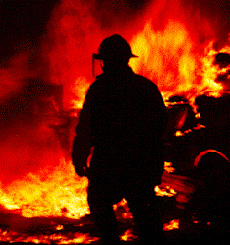
B.C. firefighters say the Workers' Compensation Board is failing to recognize the increased cancer risks they face on the job. And the B.C. Professional Fire Fighters Association is campaigning for change, citing several cases where firefighters who have contracted cancer have been denied compensation.
They want the WCB to do what Ontario and four other provinces have done to expedite compensation for certain cancers. They also believe the move would reduce the enormous costs faced by small fire departments fighting on behalf of their sick employees.
In B.C., the WCB is in charge of designating occupational diseases. Critics say it is dragging its heels amending the province's list of occupational diseases to reflect the strains of cancer associated with firefighters' exposure to hazardous materials. The amendments would expedite the process of linking their illness to their profession.
Significant increased risk of brain, kidney, and bladder cancer, as well as non-Hodgkin's lymphoma and leukemia, have been linked to fire-fighting. However, B.C. firefighters who succumb to these cancers are forced to compile both scientific and personal data linking their condition to their profession and present it for WCB adjudication.
The process is both costly and time-consuming, according to Tim Baillie, B.C. Fire Fighters Association vice-president. Baillie says collecting the necessary information can cost up to $40,000, with no guarantee of results, which makes it prohibitive to smaller fire departments.
Victims face tough times
Two members of West Vancouver Fire and Rescue were recently diagnosed with non-Hodgkin's lymphoma. One of the two fire fighters retired without compensation and the other returned to work on light duties.
After going through chemotherapy, radiation treatments and a bone marrow transplant, the firefighter that returned did so, in part, because he was denied workers' compensation, according to Scott Jones, assistant chief of training at the West Vancouver department. Jones declined to release the firefighters' names.
In fact, since 1985, not one of the five B.C. firefighters diagnosed with non-Hodgkin's lymphoma has received compensation, according a WCB report.
Only 10 of the 15 fire fighters in the same period diagnosed with bladder, kidney, and brain cancer or leukemia received compensation.
The amendments to the provinicial legislation would virtually eliminate the cost of arbitration, Baillie said. "The issue is not about cancer, it's about whether the job causes cancer. What presumptive legislation does is that the WCB recognizes this type of scientific evidence, so we don't have to go through the same scientific evidence with every case," he said.
Presumptive policies or legislation are used in other jurisdictions for compensating police officers for stress-related disease, U.S. Vietnam vets exposed to Agent Orange, and even for people with chronic fatigue syndrome.
However, correlations between illnesses and their causes rely heavily on laws of probability. Several studies, including two commissioned by the WCB, found no occupational link between fire-fighting and certain cancers. Until now, the WCB has been unwilling to designate these forms of cancer as being job-related, under provincial legislation that allows it to do so.
Other provinces acted
Yet several other provinces have already changed their rules for firefighters with these cancers.
Ontario was the first to act. In 1999, the Ontario Workplace Safety and Insurance Board developed a policy where any firefighter with a minimum of 20 years on the job who develops either brain or lymphoid leukemia is deemed to have likely contracted the disease on the job.
In 2002, the Manitoba government commissioned a study by Dr. Tee Guidotti, a leading epidemiologist at the George Washington University Medical Center, which linked several cancers to fire-fighting. Guidotti's study resulted in legislation that extends benefits to those who have been on the job for a certain period and have been exposed to the hazards of a fire scene. Alberta, Nova Scotia, and Saskatchewan followed suit in 2003.
In 1997, the firefighters' association asked the WCB to recognize a probable link between brain cancer and the profession, but a subsequent report found inadequate evidence for that contention.
In 2003, after the legislation in the other provinces was introduced, the association commissioned a report of their own by Guidotti that found a reasonable link between the cancers already mentioned and B.C. firefighters. It also found evidence of an occupational link with testicular, lung and colon cancer.
Studies' methods questioned
However, Guidotti's methodology was questioned by a report commissioned by the Greater Vancouver Regional District, the largest employer of firefighters in the province.
In Oct. 2003, the WCB commissioned Cancer Care Ontario to review medical and scientific data linking occupational fire-fighting and cancer. The CCO report concluded there was limited evidence of association between fire-fighting and brain, nervous system, and colorectal cancers.
However, the CCO report was deemed "incomplete" under review and Guidotti himself questioned the methodology used in that report.
Guidotti also told The Tyee that although the B.C. WCB is generally "head and shoulders" above other jurisdictions, he does not agree with the methods it uses to determine causation.
Statistically, the chances of any one study finding an incidence of occupational cancer in a firefighter is rare, Guidotti said. By including studies that found no instance of the disease, Guidotti argues, the CCO report diluted its own test pool.
"[The CCO] made a bunch of funny choices. The choices they made seemed to throw out all the studies that confirmed that there were effects. The impression you get is that is that they were selectively detaining a lot of studies that didn't show an affect. I don't think they were doing it intentionally. I just think they weren't very experienced in this area and they don't know which studies are biased in which direction and they don't know how to weigh it," Guidotti said.
"A single case can make a pretty significant difference," Guidotti said. "Kidney cancer is very rare. In a city the size of Vancouver, you may only find a handful of cases over the last 20 years among firefighters. So, if the Vancouver firefighters had not had a case, it wouldn't mean much, because they could have one tomorrow."
Probability, not proof
Workers' compensation standards are not as stringent as those establishing a scientific probability. WCB standards run on a system of "more likely than not," Guidotti said.
"If you don't have evidence to refute a suggestion that something may be the case, even if it's not at a level of scientific probability, that's the evidence you have, and if it's more likely than not, you have to go with it," Guidotti said. "If it's more likely than not, presumptive legislation would streamline this and say, 'We're going to save people a lot of trouble. We're going to admit that the balance of probability favours this form of causation and we're going to make it particularly easy for fire fighters because they're heroes.'"
Susan Hynes, the WCB's director of policy, said the issue of occupational cancer in firefighters has been given a "high priority," but the way compensation is determined in B.C. is different than in the provinces.
"In other provinces, you'll note it was actually the government that implemented the legislative changes, whereas here, it's actually WCB that makes the decision. Because of our unique relationship, it's incumbent upon us to go out and get an expert scientific report on whatever diseases our stakeholders are looking at," Hynes said. "Part of the reason why we have a peer review is to ensure the response and the methodology is checked."
Firefighters and their employers were given a copy of the WCB discussion paper, the CCO report, and its peer review in January. Their responses are expected back in March and will be presented to the WCB. All the information will then be considered, along with Guidotti's work. A decision expected in June, Hynes said.
Scott Deveau is on staff at The Tyee.
![[Tyee]](/design-article.thetyee.ca/ui/img/yellowblob.png)





Tyee Commenting Guidelines
Comments that violate guidelines risk being deleted, and violations may result in a temporary or permanent user ban. Maintain the spirit of good conversation to stay in the discussion.
*Please note The Tyee is not a forum for spreading misinformation about COVID-19, denying its existence or minimizing its risk to public health.
Do:
Do not: